EU funds

EU Funds - News 2020

How to upgrade the EU’s COVID response in the territories


This op-ed by CEMR Secretary General, Frédéric Vallier, was originally published in English in Euractiv and in French in Le Courrier des Maires and in Euractiv France.

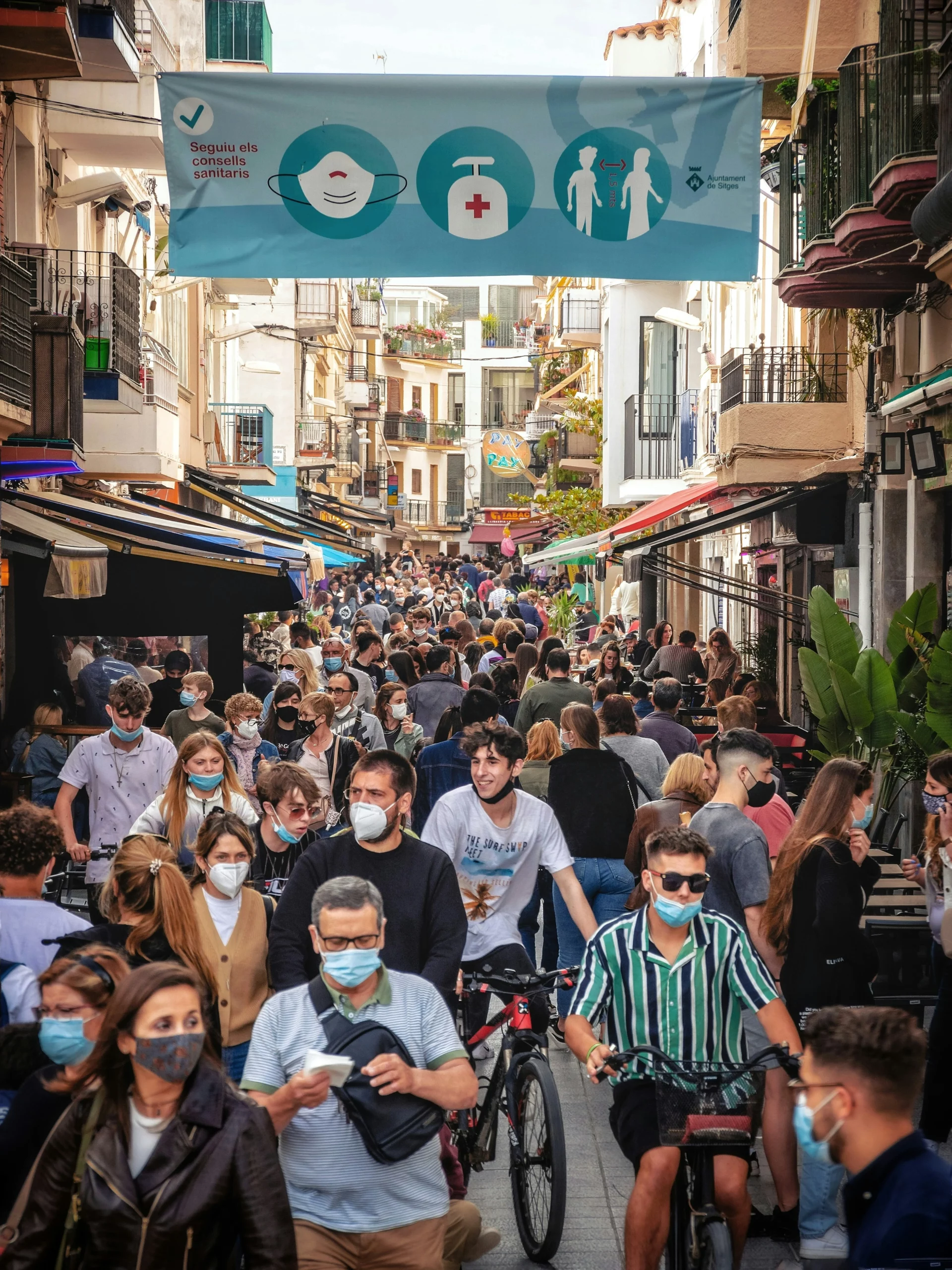
While all of Europe is reeling from the coronavirus pandemic, the crisis undeniably has a strong territorial dimension. Some localities and territories are more severely affected and different regions are not equally well equipped to deal with such a rapidly propagating virus. There is unbearable pressure on hospitals and health services, most severely in areas such as northern Italy, Spain, northern England, or eastern France.

Municipalities and regions are at the forefront of this crisis, whether in enforcing lockdowns, continuing to provide essential public services – above all healthcare and support for the most vulnerable – or in leading the gradual relaxation of containment measures. At the same time, many of their sources of revenue are falling due to the closure of public facilities and the general economic slowdown.

The European Commission has taken steps towards addressing these challenges by creating the Coronavirus Response Investment Initiatives (CRII and CRII+). These will provide unspent cohesion funds to finance medical assistance and economic and social support to fight the pandemic.

The new rules feature some welcome flexibility. Member States will be able to redirect money from the European Regional Development Fund (ERDF) towards the priorities they identify, such as direct support to SMEs. They will also have the option of transferring money between different thematic priorities and cohesion funds.

In this difficult moment, we are fortunate to be able to build on solidarity and cooperation between European regions. This is what European Cohesion Policy is all about.

Improving the Coronavirus Response Investment Initiatives

However, there continue to be obstacles to the rapid and smooth implementation of the new measures and the EU’s territorial response to coronavirus could be improved. In particular, the rules of audits and control need to be drastically relaxed to allow the Managing Authorities to make rapid and secure use of these measures. The controls on state aid, public procurement, traceability, justification of expenses and eligibility of beneficiaries must be adapted to the new needs and the emergency situation created by the crisis. 

The possibility of transferring funds between categories of regions should be solely motivated by high local or regional impact of the current health, social and economic crisis. Otherwise, there is a risk that funds will be recentralised at the national level at a time when Member States are defining how they will work with the local and regional level for the next budgetary period. 

The impact of the COVID-19 crisis on the local and regional level is tremendous and the proposed support will not be sufficient to address it completely. What’s more CRII and CRII+ will only use unallocated cohesion funds from the previous spending period and hence the money available in various countries will not necessarily be proportionate to COVID-19’s impact there.

At CEMR, we strongly believe the European Commission and Member States should explore additional possibilities to support municipalities and regions. The Commission in particular should consider extraordinary measures for 2021 in order to ensure continuity of the response to the economic and social challenges that are only beginning to emerge. 

The EU’s long-term response

We can’t go back to business as usual. We need a long-term budget and strategy to be prepared for future pandemics and crises. 

Member States are struggling to contain the pandemic because of a structural lack of investment in critical sectors. This shows more than ever the need for a strong Cohesion Policy, which is not designed to respond to an urgent crisis situation, but rather to structurally strengthen regions’ social and economic development (including health and climate action) through long-term planning.

This crisis has also shown that European states have failed to ensure their collective capacity to respond to such a situation. We will need to rethink our model of development, so that our continent can provide for our basic needs and not be dependent on others when it comes to safeguarding the health and life of Europeans. 

Without an agreement on the EU’s next long-term budget, we will not have the resources to answer the dire needs of citizens and the territories most affected by the crisis. I urge legislators to promptly reach an agreement for an ambitious Multiannual Financial Framework (MFF). This must provide the necessary funds to dampen the COVID-19 crisis’ short- and medium-term socio-economic impact and promote robust territorial, economic and social cohesion in all Member States and regions.

Municipalities and regions have a wealth of experience and expertise of practical management in our territories. As such, to ensure CRII and CRII+ can be swiftly and practically implemented, we call on Member States to include their country’s associations of local and regional governments in the reflection on how to implement these new measures. The associations will be able to identify the remaining barriers to the full application of the CRII and CRII+. At European level, the Council of European Municipalities and Regions will both collect and share information on the effective implementation of CRII and CRII+ in different Member States.

We must do all we can to help those in need and put an end to this pandemic. The need for a vigorous immediate response should not however make us lose sight of our long-term goals: resilient and equitable societies founded on sustainable development. A strong Cohesion Policy is needed more than ever to make sure all of Europe’s territories can thrive and look to the future with confidence.

Statement on COVID-19

COVID Statement - News 2020

Stefano Bonaccini: Strong local and regional governments are crucial to tackling COVID-19


This op-ed by CEMR President Stefano Bonaccini was first published by EUobserver.


The COVID-19 pandemic is an unprecedented situation for virtually all of Europe’s citizens, territories and Union. So far, over a million Europeans have been infected and 100,000 have died from this disease. These grim figures can only increase in the coming weeks and months. All of our lives have been affected in one way or another.

As President of the Italian Region of Emilia-Romagna and of the Council of European Municipalities and Regions, I have witnessed first-hand the efforts and sacrifices of our doctors, nurses, police officers, waste collectors, civil servants, volunteers and countless others in the struggle to protect our citizens from the virus and continue to serve their community.

As is often the case during crises, municipalities and regions are on the frontlines against this pandemic. They continue to provide essential services all the while doing their utmost to limit the risk of further infection. Simultaneously, local governments face huge shortfalls in revenue due to the collapse in business activity and general economic slowdown, as well as the closure of theatres, museums and sports facilities. In Italy alone, cities face a shortfall in revenue estimated around €3 billion.

At a time when solidarity was needed, European States’ initial response was dismaying. Nationalistic reflexes reappeared in many countries, with export embargoes on certain medical products and even expressions of xenophobia. All EU countries and levels of government must now work together to fight this virus, which respects neither borders nor nationalities and restore our continent’s well-being.

We have been happy to see the swift mobilisation of resources by the European institutions. More will have to be done however to overcome this crisis and be better prepared for the next one. The Council of European Municipalities and Regions and its members are committed to a strong and united Europe, based on joint action, shared values, and solidarity.

Though EU Cohesion Policy is not designed to respond to emergency situations, it will in this crisis show its usefulness as a concrete expression of European solidarity. The European Commission’s new Coronavirus Response Investment Initiative (CRII), allocating unspent cohesion funds to help municipalities and regions to handle the crisis, will provide much-needed support.

It is true that the new financial assistance will not be sufficient and will even be marginal compared to the large-scale national support schemes that are being prepared in the Member States. Beyond the emergency response, CEMR urges the Commission to consider extraordinary measures for 2021 to ensure continuity of response to the economic and social challenges that are only beginning to emerge.

More generally, we call on the European Commission to work with us and Member States to include the national associations of local and regional governments in their immediate and long-term working groups responding to coronavirus.

Why? Because, our expertise, knowledge of territorial realities and continuous contact with local and regional officials can be of invaluable assistance. In all affected countries, and in particular among the worst-hit as I can bear witness in my own country of Italy, we have seen that a coordinated response and dialogue between cities, regions and national governments are crucial.

As we enter a new phase of gradually withdrawing restriction measures, municipalities and regions will continue to have a crucial role. As the European Commission observed in its recent coronavirus exit strategy roadmap: “The lifting of measures should start with those with a local impact and be gradually extended to measures with a broader geographic coverage”. Close collaboration with local and regional governments will be essential in safely executing this great task.

The ordeal of COVID-19 must lead us to reflect on our policies and stimulate us to prepare for the future. Addressing the immediate crisis should not make us overlook the need to invest in the future-oriented sectors necessary for a prosperous and sustainable future. The European Green Deal and the European Digital Strategy are steps in the right direction and others should follow.

This crisis shows yet again the need for strong international coordination and resilient territories. As such, Europe should continue to promote worldwide both vertical and horizontal cooperation between all levels of government, as well as the achievement of the Sustainable Development Goals.

It is often said that the European Union takes the necessary steps when it is challenged by a crisis. If this is true, we should not remain passive in this ongoing tragedy, but make the most to prepare for a healthier and safer tomorrow. It is not too late to unite and to build a sustainable future based on solidarity.
Europe’s municipalities and regions are ready to play their part.

Gender equality: A local matter

Gender Equality - News

Exploring the EU Gender Equality Strategy 2020–2025 and what it means for Europe’s local and regional governments 


In a significant move for gender equality in Europe, the European Commission has adopted a new Gender Equality Strategy for 2020–2025. As the first high-level communication of its kind in years, this strategy sets out a clear ambition to achieve a Europe free from gender-based violence, stereotypes, and structural inequalities. 

The Council of European Municipalities and Regions (CEMR) has conducted an in-depth analysis of the strategy, identifying its opportunities, shortcomings, and implications for local and regional governments. 

Key developments and opportunities 

The Commission’s strategy adopts a dual approach, combining targeted actions with systematic gender mainstreaming, and for the first time, takes an intersectional perspective. The strategy touches on six key areas, from violence prevention to women’s representation and gender equality in the workplace. 

Local and regional governments stand to benefit from new funding and networking opportunities, particularly in the areas of gender-based violence prevention, childcare provision, care infrastructure, and women’s entrepreneurship. The establishment of an EU network for preventing domestic violence, EU-wide awareness campaigns, and future updates to childcare targets all offer a space for local actors to lead and share practices. 

New investment and support opportunities through the European Social Fund Plus, Horizon Europe, and Common Agricultural Policy also provide avenues for local authorities to implement gender-sensitive services and policies. 

Gaps and concerns 

Despite these strengths, CEMR highlights areas where the strategy could go further. The role of local and regional governments is not sufficiently acknowledged, and the Commission misses the opportunity to reference the European Charter for Equality of Women and Men in Local Life, which has nearly 1,800 signatories across 36 countries. 

Furthermore, while the strategy rightly focuses on gender balance in the private sector, political representation at the local and regional levels is underdeveloped. There is also no mention of violence against elected women, a critical issue that undermines women’s participation in democratic life. 

CEMR’s key messages 

CEMR puts forward several recommendations to strengthen the strategy and better support local authorities: 

  • Recognise local and regional governments as strategic partners in implementing, monitoring, and reporting on the strategy. 
  • Include the European Charter for Equality in the EU Platform for Diversity Charters. 
  • Address the underrepresentation of women in politics and promote initiatives supporting female political leadership at all levels. 
  • Strengthen protections for women in public life, particularly against gender-based violence and harassment. 
  • Improve data collection on women’s representation and leadership and fund new studies across all European countries. 
  • Support local gender equality initiatives through EU funding programmes, including the Charter and work on men and masculinities. 

A call for greater collaboration 

Local and regional governments are not only essential for implementing EU policy, but they are also drivers of innovation in equality. As the level of government closest to citizens, they play a unique role in translating ambition into action. 

CEMR urges the European Commission to fully recognise and support this role in the implementation of the Gender Equality Strategy, ensuring local authorities have the tools and resources to build a truly inclusive Europe. 

Read the position paper here 

For more information, contact: