Cohesion Policy Alliance

Cohesion Forum - News 2022

EU-wide new Cohesion Alliance mobilises to strengthen Cohesion Policy in the future


The consequences of the ongoing climate emergency, the Covid-19 pandemic, Russia’s war against Ukraine and the current record inflation rates triggered by increased food and energy prices make the strengthening cohesion as a fundamental value of the European Union more pressing than ever.

For this reason, the partners of the Cohesion Alliance – the EU-wide coalition of 12,000 signatories advocating for a stronger Cohesion Policy – gathered in Brussels during the 20th edition of the European Week of Regions and Cities to reaffirm their commitment to reinforce Cohesion Policy and increase the territorial impact of all EU investments in order to make them fit for Europe’s long-term challenges.

Through a joint declaration signed today, in the presence of the EU Commissioner for Cohesion and Reforms, Elisa Ferreira, and the Chair of the European Parliament’s committee for regional development, Younous Omarjee, the European Committee of the Regions together with the leading European associations of cities and regions together shared the common will to keep Cohesion Policy as:

  • the EU’s most important investment policy;
  • the EU’s most visible instrument at local and regional level;
  • a long-term development policy based on principles of shared management, partnership and multilevel governance;
  • ​a policy that follows a place-based approach and addresses the territorial diversity of the Union;​​
  • a key tool to supports territorial cooperation and promote solidarity and integration.

Let us remind all EU and national decision-makers of the indispensable role that Cohesion Policy plays in the European integration process!” states the declaration, with which the #CohesionAlliance wants to start a forward-looking work to make Cohesion Policy stronger, simpler, more effective and result-oriented now and in the future.

The Alliance also calls to ensure that cohesion remains an overall value for the European Union by ensuring that all relevant EU policies contribute to reduce disparities among and within Member States.

Commissioner ElisaFerreira welcomed the signature of the new joint declaration saying: “I am very happy with the relaunch of the Cohesion Alliance. It could not be timelier in these extremely challenging times. You have been a very important partner in shaping Cohesion Policy and keeping regional and local communities at its heart, and you will remain so in the future. We need a strong Cohesion Alliance to advocate the place-based approach for all policies under the “do no harm to cohesion” principle. And we need your testimonies and experience to speak up for Cohesion and remain engaged in the discussion on the future of the policy.

The Chair of the REGI committee Younous Omarjee praised the renewed mobilisation of the Alliance, and stated: “Europe needs a strong and ambitious Cohesion Policy to tackle the multiple crises that it is facing. Cohesion Policy is the main EU policy for structural investment and solidarity. It allows us to respond to urgent, medium and long-term challenges by guaranteeing strategic and much needed investments in every region, in order to leave no one behind. Cohesion Policy deserves to be defended and supported, because it is one of the pillars of the European Union.

Voices from the ‘Cohesion Alliance’:

Vasco Alves Cordeiro, President of the European Committee of the Regions (CoR) and Member of the Parliament of the Autonomous Region of the Azores (PT), said: “Today’s challenges call for more cohesion in Europe and a stronger role for Cohesion Policy, but at the same time we need to join forces and close ranks to defend this policy. This is why we launch a new Cohesion Alliance for new challenges, to promote the importance of Cohesion Policy for our communities, coordinate and work together, especially to convince those that do not yet realise how crucial cohesion policy is.

Emil Boc, Chair of the CoR’s commission for Territorial Cohesion Policy and Budget and Mayor of Cluj-Napoca (RO) said: “The future of Cohesion means a better multi-level governance and effective decentralization to ensure that the local and regional levels have the necessary capacities to manage the change, to provide citizens with the trust that they will have a fair chance to reap the benefits of the digital and green transformation.

Jean-Luc Vanraes, Vice-President of the Assembly of European Regions (AER) and Member of the Municipal Council of Uccle (BE), said: “Cohesion Policy enables regional authorities to recover from today’s crises and seize future opportunities. This is why the partnership principle must be a guiding light to achieve robust growth in our villages, towns, and cities.

Karl-Heinz Lambertz, President of the Association of European Border Regions (AEBR) and member of the Parliament of the German-speaking Community in Belgium, said: “European Cohesion should guarantee a sustainable development and equal opportunities for the citizens living in handicapped territories, such as (cross-)border regions, mountains, islands, etc. Instead of empty places, we need living and functional cross-border spaces boosting integration on a daily basis.

Jean-Claude Marcourt, President of the Conference of European Regional Legislative Assemblies (CALRE) and of the Parliament of Wallonia (BE), said: “While underlining the European Commissions’s efforts in simplifying Cohesion Policy procedures, the CALRE stands with the European Committee of the Regions in promoting these, in order both to guarantee equal opportunities in access to funds by the European regions and to ensure the irreproachable use of these at the benefit of their people.

Karine Gloanec-Maurin, member of the Council of European Municipalities and Regions (CEMR) and President of the community of communes of Collines du Perche (FR), said: “Local and regional projects financed by Cohesion Policy are the most visible sign of the EU added value for the Europeans. It can allow us as local elected representative to talk about Europe in our territories and to engage with our citizens. Cohesion Policy is not only a fundamental solidarity pilar, it is also in the DNA of the European project.

Cees Loggen, President of the Conference of Peripheral Maritime Regions (CPMR) and Regional Minister of the Province Noord-Holland (NL), said: “Cohesion Policy must become more flexible to remain relevant in an increasingly unpredictable world. However, we demand flexibility that enables tailor-made interventions, strengthens local and regional authorities and reduces administrative burdens.

Dario Nardella, President of Eurocities and Mayor of Florence (IT), said: “Cohesion Policy is crucial to accelerating urban transformations. As cities, we reiterate our strong support for the renewal of the Cohesion Alliance. With the energy crisis looming in our cities, cohesion funds are once again demonstrating their strategic value. Investments in energy efficiency renovations and clean urban transport infrastructure are already promoting the energy transition in cities. With a strong Cohesion Policy we can reduce Europe’s dependence on Russian gas faster .

Post-COVID 19 recovery plans

Regions and cities still have little say in post-COVID 19 recovery plans, a new consultation warns


Weaker plans, misallocated funds and increasted territorial disparities are among the main risks identified by local and regional authorities. 

As EU leaders gather in Brussels for an extraordinary summit and the European Parliament prepares to present its assessment on the implementation of post-COVID 19 recovery plans, a new CoR-CEMR joint consultation sounds the alarm about the worrying lack of involvement of EU territories in the governance, execution and monitoring of National Recovery and Resilience Plans.   

The European Committee of the Regions (CoR) and the Council of European Municipalities and Regions (CEMR) have teamed up again to explore the involvement of local and regional governments in the implementation of the European Union’s 724 billion euro Recover and Resilience Facility (RRF), the cornerstone of the post-COVID recovery plan for Europe.

One year after an earlier CoR-CEMR study, the results of the new targeted consultation remain largely discouraging: despite some improvements, too often National Recovery and Resilience Plans (NRRPs) have been implemented as top-down processes, on which municipalities and regions seemingly have little to no impact.

While respondents were broadly positive about the recovery plans’ ability to support the green and digital transitions, they were more ambivalent regarding other policy objectives, such as territorial cohesion.

Regarding the implementation of the NRRPs, only a very small share of local and regional authorities declared having an appropriate role in monitoring, or being sufficiently taken into consideration based on their competencies. Ownership of the plans is therefore worryingly low, the results of the consultation suggest.

In this context, respondents identified a strong risk of failing to reach targets and milestones in the recovery plans. A risk of funds being misallocated was also highlighted by a significant share of participants, while the interplay between the NRRPs and other European funds is still unclear for many of them.

The lack of involvement of cities and regions in the plans is worrying, but I believe that there is still time to correct course, by ensuring that local and regional governments are recognised – in practice, and not just on paper – as full partners in the recovery plans’ implementation. This will allow us to make sure that the RRF is not just an historic agreement, but also a success story on the ground,” declared Rob Jonkman (NL/ECR), Alderman of the municipality of Opsterland and CoR’s rapporteur on the implementation of the RRF.

CEMR Secretary-General Fabrizio Rossi stated: “Local and regional governments know and understand best the challenges faced by their communities and businesses in the post-pandemic era. Central governments would make a huge error of judgement by failing to work in genuine partnership with Europe’s municipalities and regions. Only by all working together can we ensure these 

Cohesion policy Forum

Cohesion Policy Forum - News 2022

Cohesion policy is vital to cope with the fallout of the ongoing historic crisis


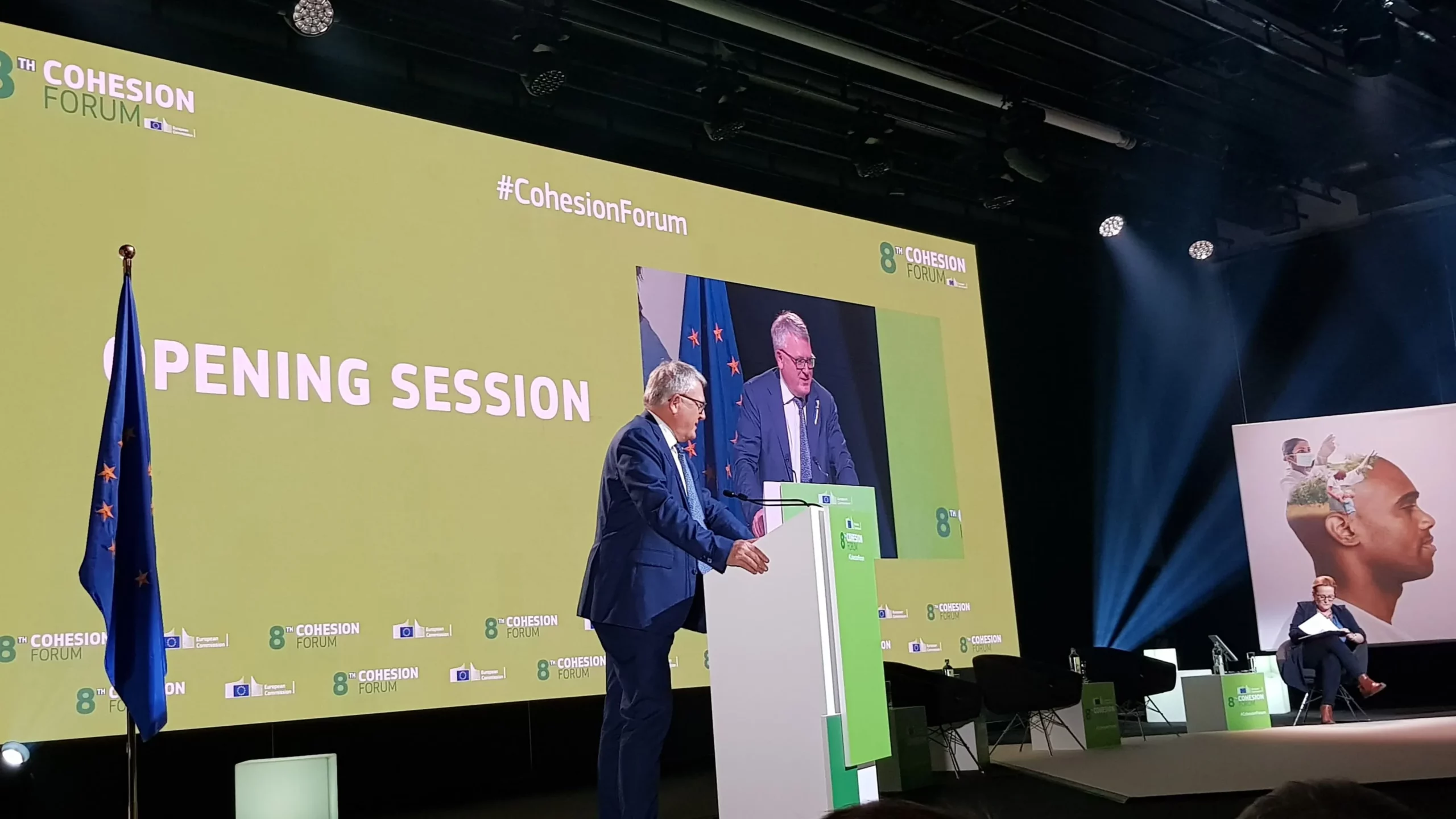
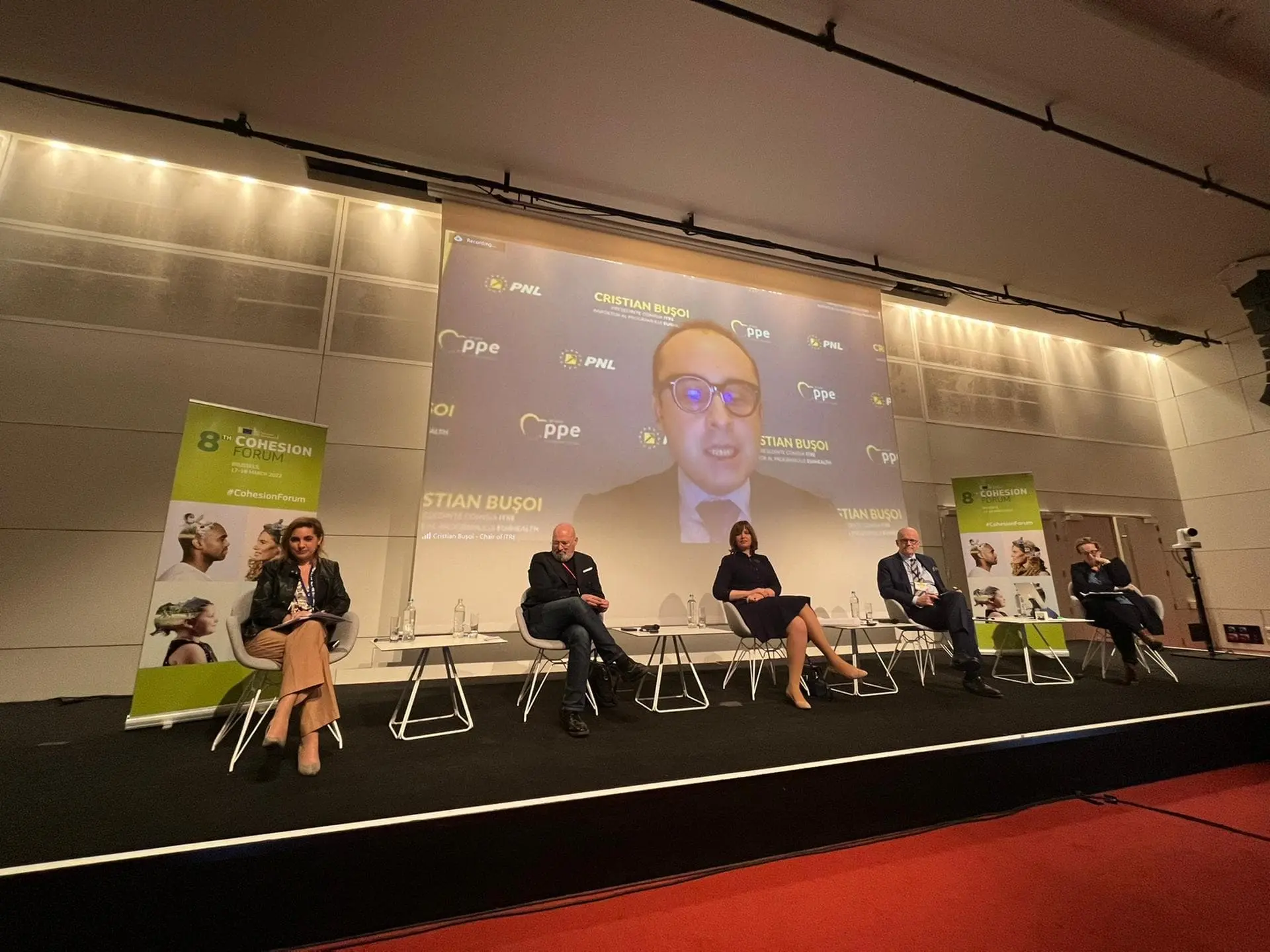
Following the publication of the 8th Cohesion Report, the EU-wide coalition put forward a series of joint observations towards the 8th Cohesion Forum, which takes place on 17 and 18 March. Members of the Alliance welcomed the positive results highlighted by the report: less-developed regions in Eastern Europe have been catching up , the number of people at risk of poverty and social exclusion fell by 17 million between 2012 and 2019, and economic modelling indicates that in 2023 GDP per head will be 2.6% higher in less-developed regions thanks to recent support from the EU’s cohesion policy.

However, several middle-income and less developed regions in the south of the EU have suffered stagnation or decline, caught in a form of development trap. The local and regional capacity in economic development is still uneven, and key challenges remain to be addressed if no one and no region is to be left behind.

The future of the cohesion policy will be closely linked with a possible reform of the EU economic governance framework. Nevertheless, there is no acknowledgement of the role of the EU Semester in the implementation of cohesion policy, the #CohesionAlliance pointed out, arguing that local and regional governments will have to be formally involved in the EU economic governance and will need their investment capacities to be strengthened.

The European Commission’s strong message to reinforce multi-level governance and partnership principle is timely and reassuring, members of the Alliance said. However, this acknowledgement comes in contradiction of the recent trend of the EU to recentralise the management of its funds and policies back to Member States – a trend evident in implementation of the national recovery and resilience plans and in the development of the upcoming national Social Climate Plans.

Members of the Alliance said that it remains to be seen how the new concept proposed by the European Commissioner for Cohesion and Reforms, Elisa Ferreira, on the “do no harm to cohesion policy” will effectively be applied across all other EU policies that have an impact on territorial development and at local level.

The President of the European Committee of the Regions (CoR) and Governor of the Region of Central Macedonia, Apostolos Tzitzikostas, said: “This report shows that cohesion policy works, but also that all EU policies must help reducing social and economic gaps. People need EU, national, regional and local actors to work together to create jobs, fight poverty, and bring the green and digital transitions in every region, city and village across Europe. This policy is the only EU policy that heavily invests on this cooperation. The pandemic – as well as the tragic situation caused by the war against Ukraine ordered by a ruthless regime – have proved how vital cohesion policy is for the EU to cope with both emergencies and longer-term change.

For his part, the President of the Council of European Municipalities and Regions (CEMR) and of the Emilia-Romagna Region, Stefano Bonaccini, said: “We are not yet out of the pandemic and we have imagined everything but a new war in Europe. The crisis we have experienced in recent years show that European cohesion policy is more relevant than ever in the long run and that it must be strengthened in the years to come. It is a policy that connects European citizens to Europe through municipalities and regions. It is our best tool to pursue the European project and strengthen local democracy. 

Since its creation in October 2017, the #CohesionAlliance – an EU-wide alliance of 12,000 signatories advocating for a stronger cohesion policy – has managed to avoid dramatic budgetary cuts after 2020, helped maintain a cohesion policy that benefits all regions in the Union, and advocated simpler and more flexible rules for cohesion funds.

Cohesion Alliance

Cohesion Alliance - News 2021

The EU recovery will not be effective without a solid cohesion policy built in genuine partnership with European cities and regions


EU-wide coalition urges EU institutions and national governments to promote synergies between the recovery instruments and the structural funds to maximise the impact of European action. 

The COVID-19 crisis has shown that cohesion policy is needed now more than ever to strengthen resilience in Europe, protect citizens, bring the recovery to every corner of the European Union and leave no one behind. Since its creation in October 2017, the #CohesionAlliance – an EU-wide alliance of 12,000 signatories advocating for a stronger cohesion policy – has managed to avoid dramatic budgetary cuts after 2020, keep a cohesion policy for all regions in the Union and put forward simpler and more flexible rules. During a videoconference dedicated to the new course of the #CohesionAlliance, its founding members renewed their commitment to join forces and keep cohesion policy as a EU top priority. The #CohesionAlliance will be vigilant that the partnership principle will be fully applied by Member States in the design and implementation of the cohesion policy 2021-27. Coherence and synergies between the recovery instruments and the structural funds are of paramount importance to avoid overlaps and maximise the impact of the European action.

Two months after the entry into force of the new cohesion policy regulations for the period 2021-27, the #CohesionAlliance took stock of the results of its activity so far and outlined its future commitments, based on the renewed Declaration 2.0 adopted in July 2020. The #CohesionAlliance’s work will be focused on the successful implementation and delivery of cohesion policy without further delays in the spirit of genuine partnership and in synergy with other instruments, thereby promoting the concept of cohesion as an overall and fundamental value of the European Union. 

Local and regional authorities highlighted the urgent request to extend the flexibility measures introduced last year to mobilise EU structural funds and state aid in the fight against COVID-19. This issue was also raised in an exchange of letters with president Ursula von der Leyen, who acknowledged the budgetary constraints that many regional and local authorities may be currently facing due to the pandemic. With regards to the potential extension of a 100% co-financing rate for structural funds, the Alliance’s partners strongly appreciated the Commission’s commitment to closely monitor the situation closely and consider further action if deemed appropriate. 

The discussion showed that the #CohesionAlliance’s mission is far from over. The European recovery must start from citizens on the ground, and it won’t be successful if their voices and the ones of local and regional politicians – who are closest to their needs – are not taken into account by EU institutions and national governments.   

During her intervention, Commissioner for Cohesion Policy and Reforms Elisa Ferreira said: “Cohesion has to remain a cornerstone of the Recovery. It is in the aftermath of crises that asymmetries grow. The Cohesion Alliance is more necessary than ever. The Partnership Agreements for Cohesion 2021-2027 will be instrumental. We have to speed up their negotiation, but quality cannot be compromised. I count on your support to also ensure that the implementation of our other policies and instruments is not spatially blind and supports the long term development of all regions. I’ve asked Member States to be mindful of the territorial dimension in preparing their Recovery and Resilience Plans, both in consulting and engaging with regional stakeholders as well as in the implementation phase. We will only achieve our objectives by making sure that our instruments work in the same direction. Promoting Cohesion cannot be the responsibility of Cohesion policy alone. That is why we must mobilise all the relevant actors, including local stakeholders and citizens as full partners, making sure that the new green and digital priorities work for all.”

Younous Omarjee, chair of the European Parliament’s Committee on Regional Development, declared: “It is essential that the recovery funds go as a priority to the least-developed regions and to the ones most affected by the economic and social consequences of the Covid-19. I call on Member States to involve regions and cities as much as possible and to ensure that these funds go to the ground as close as possible to the needs. I also call on Member States to be consistent. Short-term recovery and longer-term cohesion policy are two sides of the same coin and must serve the same purpose. If short-term recovery is not consistent with the longer-term objectives set by cohesion funds, then the economic, social and territorial disparities will only deepen and all our efforts for the long term will be destroyed.”

VOICES FROM THE #COHESIONALLIANCE: 

Apostolos Tzitzikostas, President of the European Committee of the Regions (CoR) and Governor of the Region of Central Macedonia (GR), said: “The #CohesionAlliance’s efforts contributed to avoid major budgetary cuts after 2020 and promote cohesion as guiding principle for the EU’s recovery plans. Now, we need to turn our focus towards programming and implementation. To do this, we need to carefully consider key aspects like the application of the partnership principle in the new programmes; the impact of Covid-19 related measures and the consequences of their shutting down – a topic we addressed in a fruitful, exchange of letters with President Von der Leyen; the rural and urban dimensions of cohesion policy; and the synergies between cohesion and the Recovery and Resiliency Facility.”

Ilaria Bugetti, spokesperson for territorial development of the Council of European Municipalities and Regions (CEMR) on Cohesion and Councillor for the Tuscany Region (IT), said: “In the programming phase of EU cohesion funds, we could still see cases where local and regional governments were not properly involved, either due to insufficient time for consultation or inadequate contact at the ministerial level. We must overcome the remaining barriers in the years to come for the implementation and monitoring of the funds. The work of the Cohesion Alliance is then far from over!”

Cees Loggen, President of the Conference of Peripheral Maritime Regions (CPMR) and Regional Minister of the Province Noord-Holland (NL), said: “Unprecedented delays could materialise under future cohesion policy due to late adoption of legislation. Regions will feel the brunt. They are prevented to start spending while regional economies are desperate for investments to support the recovery. We urge the Commission to facilitate a smooth implementation of cohesion programmes and participation of regions in recovery plans, as synergies between funds bring results closer.”

Karl-Heinz Lambertz, President of the Association of European Border Regions (AEBR) and Member of the Parliament of the German-speaking Community in Belgium, said: “Cross-border cooperation is an essential element of the EU’s cohesion policy. What happens around the Union’s internal borders has a major impact on the Union’s ability to respond to the major challenges of our time. The EU’s capacity to act would be considerably strengthened if the cross-border cooperation mechanism proposed by the Commission is finally adopted by the Council.” 

Kata Tüttő, member of Eurocities and Deputy Mayor of the City of Budapest (HU), said: “The forthcoming investments through EU’s cohesion policy will be more important than ever. It will be crucial to finance the projects and reforms that can bring all Europe’s cities and regions on the path for green and just recovery. As local leaders, we have a central role in making sure this money is targeted where it is most needed and where it benefits people the most. We can be invaluable partners to the EU when the partnership principle is fully implemented in all parts of the EU. Investing in Europe’s urban areas will support the longer-term resilience of Europe and help all of us stand stronger in the face of future crisis.”

Jean-Claude Marcourt, Chair of the Conference of European Regional Legislative Assemblies (CALRE) Working Group ‘European legislation and public investments’ and President of the Parliament of Wallonia (BE), said: “Cities and regions must have the ambition to strengthen the cohesion of their territories, to reduce disparities and inequalities while raising economic, social and environmental standards in compliance with the democratic values and principles that are the founders of a prosperous and sustainable European Union.” 

Magnus Berntsson, President of the Assembly of European Regions (AER) and Vice President of the Region Västra Götaland (SE), declared in the margins of the conference: “The new Cohesion Policy can be truly transformative for rural communities across Europe. The AER is fully committed to working together with national governments and the European Commission to deliver a Cohesion Policy that builds back better for rural regions; ensuring that they are better connected, more resilient, vibrant and prosperous by 2040.”