
“Right to Stay” strategy

Right to Stay strategy news

CEMR calls for a place-based “Right to Stay” strategy

468 words
2–3 minutes

In its contribution to the European Commission’s call for evidence on the upcoming “Right to Stay” strategy, the Council of European Municipalities and Regions (CEMR) calls for a politically ambitious, place-based framework that puts local and regional governments at the centre of Europe’s response to territorial, social, economic and demographic imbalances.

For CEMR, the right to stay means that people must be able to live, work and thrive in the place of their choice: whether in a city, a town or a rural area, without being forced away by lack of public services, economic opportunity, poor connectivity or rising living costs.

This is not just a matter of territorial cohesion. It is also a question of fairness, democracy and trust in the European project. If the EU wants to respond to growing territorial inequalities, it must start by investing in the places people call home and by recognising the governments closest to citizens as strategic partners.

In its response, CEMR underlines that there can be no right to stay without access to services, housing and opportunity. Across Europe, too many territories still face shortages in healthcare, education, mobility, childcare, energy and digital infrastructure. At the same time, rising housing costs are pushing people out of cities, while many rural and shrinking areas continue to suffer from depopulation and underinvestment.

CEMR therefore calls on the EU to strengthen support for services of general interest, affordable housing and integrated territorial development. It also stresses the need to create enabling conditions for local economic opportunities in every territory, including through better transport and digital connectivity, support for entrepreneurship, and action to tackle labour shortages in key local public services.

CEMR also highlights the growing importance of climate resilience, sustainable mobility and local energy production for territorial attractiveness and energy security. Investments in adaptation, renewable energy and accessible transport must therefore be part of any credible Right to Stay agenda.

For CEMR, Cohesion Policy must be the main delivery tool of the future strategy. In the next EU budget, the Right to Stay should be recognised as a clear strategic objective, backed by strong funding, integrated territorial instruments and genuine partnership with local and regional governments in the design of national and regional plans.

CEMR also calls for the Right to Stay to be embedded in EU governance, including through the European Semester and stronger territorial impact assessments. Europe cannot continue to shape policies for territories without systematically involving the authorities responsible for delivering them.

The message is clear: the right to stay will only be real if the EU gives territories the means to remain attractive, affordable, connected and resilient. That requires political ambition, long-term investment and a genuine multilevel partnership with local and regional governments.

For more information, contact:

Event: future Cohesion Policy

Future Cohesion policy news

Event “Strengthening the territorial dimension in the future EU-Cohesion Policy”

404 words
2–3 minutes

12oct17h0020h30Strengthening the Territorial Dimension in the future EU-Cohesion Policy (in-person)CCRE-CEMR, Square de Meeus 1, 1000 Brussels

Event Details

This high-level Brussels event, held during the European Week of Regions and Cities 2026, will bring together EU, national and local leaders to discuss the future of Cohesion Policy and its territorial dimension. It will focus on upcoming decisions on the EU budget and investment framework, while promoting balanced, place-based development across urban and rural areas and strengthening cooperation between key European stakeholders.

Organisers: German Federal Ministry for Housing, Urban Development and Building in cooperation with the German Association for Housing, Urban and Spatial Development (DV) and Council of European Municipalities and Regions (CEMR)

Time

2026 10 12 5:00pm - 8:30pm(GMT+02:00)

Location

CCRE-CEMR, Square de Meeus 1, 1000 Brussels

Other Events

Against the backdrop of the European Week of Regions and Cities 2026, this high-level evening event in Brussels creates a timely political space to take stock of where Cohesion Policy is heading—and what is at stake for the territorial dimension in the next EU programming period.

The Week brings together European institutions, Member States and local and regional leaders around the central question of how Europe can deliver place-based solutions to shared transitions. This event deliberately connects that overarching debate with one of the most consequential upcoming decisions: the shaping of the new Multiannual Financial Framework (MFF) and the emerging architecture of National and Regional Partnership Plans (NRPPs), where priorities, governance and delivery tools for future EU investment will be negotiated.

In this context, the territorial dimension is not a technical add-on, but a core condition for impact. Climate neutrality, competitiveness, social inclusion and resilience will only be achieved if EU investment recognises different territorial starting points and capacities across cities, surrounding areas, functional regions and rural territories.

The event responds to this moment with three interconnected objectives:

  1. To anchor key recommendations for a strong territorial dimension in the forthcoming negotiations on the MFF and NRPPs;
  2. To safeguard a balanced territorial approach that addresses urban and rural territories in a complementary way; and
  3. To strengthen a European coalition for integrated territorial approaches bringing together Member States, European institutions and the organised local and regional government community, notably through CEMR, the Committee of the Regions and the European Commission.

Designed as a politically oriented panel discussion followed by a networking reception, the event will convene a targeted community of decision-makers and practitioners: representatives from EU institutions, national and regional managing authorities, cities and regions with hands-on experience in territorial tools, European associations, as well as researchers, think tanks and civil society organisations working on cohesion policy and spatial development.

By combining policy dialogue with exchange among practitioners, the event aims to build shared understanding—and strengthen alliances—at precisely the time when Europe’s future place-based investment framework is being defined.

Please note that spaces are limited. Your registration does not constitute confirmation of participation. You will receive a separate confirmation once your participation has been approved.

For further information on the event, you can reach: r.hohmann@deutscher-verband.org.

For more information, contact:

Local finance and housing crisis

Fiscal tools must play a central role in tackling the housing crisis


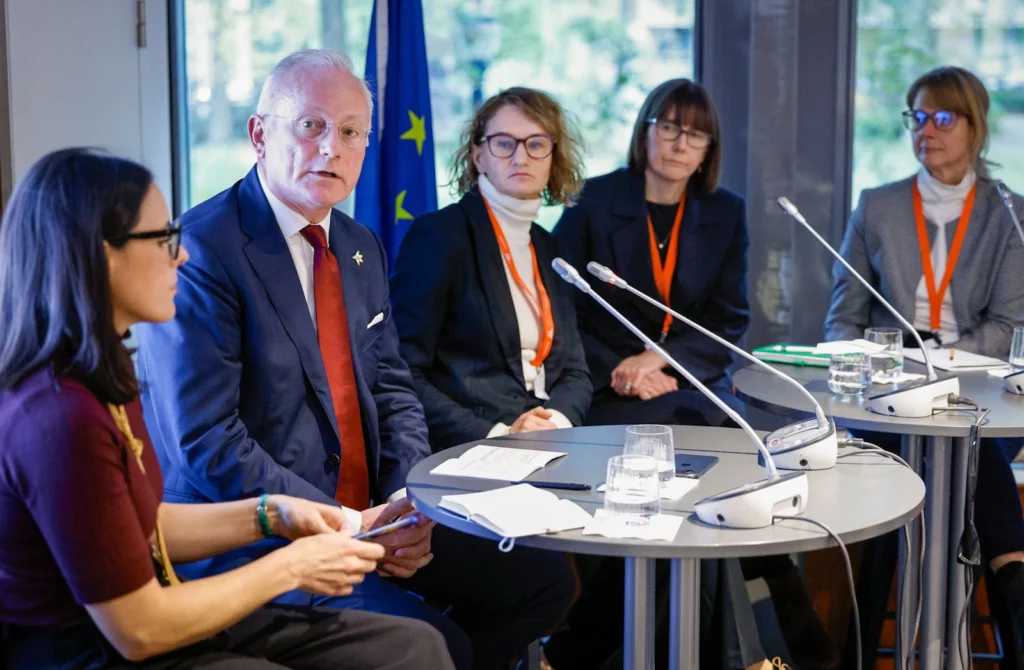
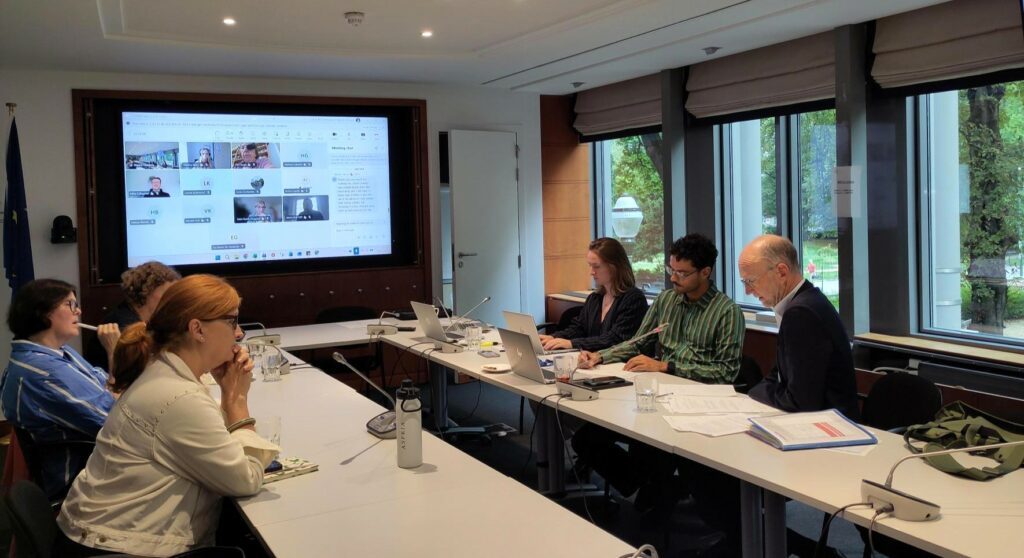
On 10 June 2026, CEMR held an online event that brought together policymakers, local leaders, researchers, EU institutions and financial experts to explore how local and regional public finance shapes housing affordability, availability and investments.

A key message emerged from the discussion: Europe’s housing crisis cannot be addressed through planning or construction policy alone. It also depends on whether local and regional governments have the fiscal room, investment tools and policy flexibility to act.

Opening the event, Ellen van Selm, Mayor of Purmerend (The Netherlands) and CEMR spokesperson on housing, underlined that housing must be approached as an integrated territorial challenge rather than a single policy field. “There are as many housing markets as there are local realities,” she said, warning against one-size-fits-all solutions. Her intervention set the tone for the discussion: local governments are on the frontline of housing pressures, yet they do not always have the resources, instruments or flexibility needed to respond effectively.

Why local solutions are a must in the housing crisis

Benedikt Herrmann from the European Commission’s Joint Research Centre invited participants to look more closely at the incentives created by local tax systems. His key point was that local finance does not simply support housing policy: it can also shape it in unexpected ways. Property taxation, often seen as a stable and appropriate local tax, may create unintended incentives when municipalities depend on rising property values for revenue. “Local taxes can play a fundamental role for mitigating local housing crisis. The property taxes on residential property can be a hidden catalyst of local housing crisis,” he noted. 

Building on this framing, CEMR presented the first results of its survey on the links between local finance and housing. The preliminary findings point to a familiar but important contradiction: towns, cities and regions hold many of the practical responsibilities related to housing, but their room for manoeuvre often remains limited. In many countries, local governments rely heavily on property-related taxes, but within national limits that constrain their ability to use such tools strategically. At the same time, more targeted instruments, such as taxes on vacant dwellings or short-term rentals, remain fragmented, underdeveloped or unevenly available across Europe.  

…And why so is multilevel governance

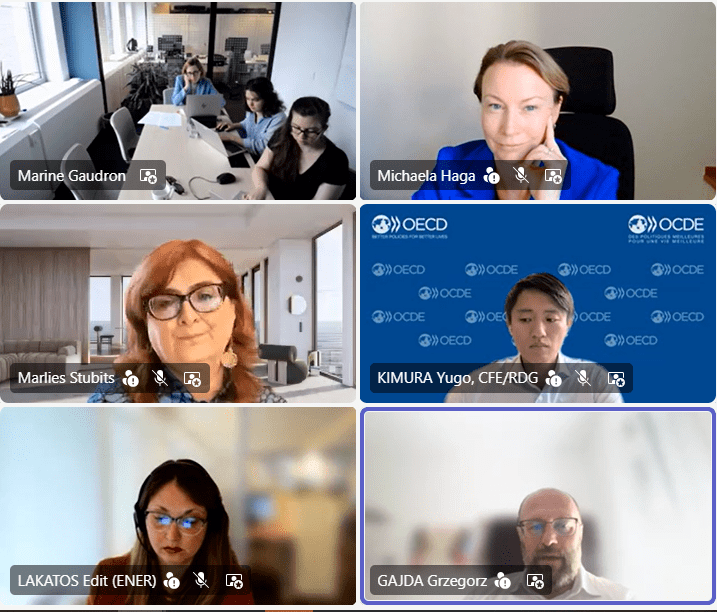
The panel discussion confirmed that housing is fundamentally a multilevel governance issue. Bringing the OECD perspective, Yugo Kimura from the Centre for Entrepreneurship, SMEs, Regions and Cities, highlighted both the scale of subnational involvement and the need for stronger coordination. Across OECD countries, local and regional governments account for a very large share of public expenditure linked to housing and community amenities. Yet many of them struggle to access funding, mobilise their own revenues, or navigate fragmented support structures. “Housing is not only cross-sectoral, it spans many policy sectors as well, but it’s also a multilevel governance issue,” he said. 

This point resonated strongly with Michaela Haga, Councillor of the Region Stockholm and CEMR spokesperson on local finances, who brought the conversation back to the political reality faced by towns, cities and regions. In her intervention, she stressed that local and regional governments are expected to deliver housing solutions while also financing the wider ecosystem that makes housing liveable: transport, schools, care services, utilities and social infrastructure. The real question is whether all places have the tools and resources they need to respond to their own realities,” she argued. Her final message was also one of the clearest takeaways of the day: match responsibilities with resources, make investment easier and more strategic, and trust local governments more and equip them better.   

From EU frameworks to local realities

The event also offered a timely look at how housing is moving up the EU agenda. Edit Lakatos, from the European Commission’s Housing Task Force, explained the significance of the 2026 European Semester, which for the first time includes dedicated housing annexes in the country reports and a stronger housing dimension in the policy guidance to Member States. For local and regional governments, this matters because it opens a new channel to connect national reforms, investment priorities and local housing realities. She also pointed to the work under way on the Affordable Housing Act, which is expected to provide a framework for public authorities in areas under housing stress, including the possibility to address the impacts of short-term rentals. 

This EU-level perspective found a strong echo in the contribution from Marlies Stubits, from the Austrian Association of Cities and Towns, who showed how Austrian cities combine fiscal instruments, regulation and investment strategies to respond to housing and tourism pressures. She pointed in particular to the Viennese model, where public land policy, limited-profit housing and long-term investment help the city to actively shape the market rather than merely react to it. At the same time, she highlighted the specific difficulties faced by smaller tourist municipalities in dealing with vacancy, holiday homes and short-term rentals. “The most effective Austrian approaches combine regulation, taxation and investment,” she said, insisting that taxation alone is not enough without a broader and more coherent housing strategy

From the European Investment Bank, Grzegorz Gajda focused on the practical conditions needed to turn policy ambitions into housing delivery. Access to finance remains a major challenge, especially where local governments or housing providers struggle to build robust project pipelines or meet creditworthiness requirements. At the same time, he stressed that European-level decisions on state aid, procurement and debt treatment can make a decisive difference for what becomes possible locally. His message also added an important nuance to the debate: tools alone are not enough if decision-makers are not incentivised to use them. “We really need to work on both ends,” he said: both on the tools available, and on the motivations and incentives shaping local action. 

The path forward

One conclusion stood out across all interventions: housing policy cannot be separated from local finance. Whether through land policy, taxation, transfers, investment rules, planning, or social infrastructure, the financial frameworks around housing shape what local and regional governments can actually do. If Europe wants more affordable, sustainable and inclusive housing, it must give local governments not just expectations, but also the means to act.  

The discussion will now feed into CEMR’s ongoing analytical work on local finances and the housing crisis, with a publication expected in fall 2026. By connecting evidence, practice and policy, CEMR aims to continue strengthening the case for a housing agenda that fully recognises the role of cities, towns and regions in delivering solutions on the ground.  

For more information, contact:

CEMR welcomes Parliament’s direction on NRPP

ODELL - Democracy news

Our reaction to the European Parliament draft report on National and Regional Partnership Plans (NRPP)


The European Parliament has taken a significant step towards shaping the future EU budget for 2028–2034 with the publication of its draft report on National and Regional Partnership Plans (NRPPs). Drafted jointly by three Members of the Parliament (MEPs) from REGI (Andrey Novakov), BUDG (Karlo Ressler) and AGRI (Elsi Katainen) Committees, the draft report is a first steps towards the Parliament’s position on how EU funding should be designed and delivered across Europe’s regions and cities. 

For the Council of European Municipalities and Regions (CEMR), the report sends an encouraging signal: local and regional governments must remain at the heart of EU investment policy

The draft report reflects several key CEMR amendment proposals. These include: 

  • Stronger and enforceable multilevel governance, recognised as a horizontal conditionality.  
  • A dedicated earmark for integrated territorial and urban strategies  
  • More favorable conditions for local and regional governments including reduced national co-financing, increased pre-financing and the return to N+3 decommitment rule.  

It also secures concrete gains such as support for administrative capacity building and clearer territorial delivery tools, acknowledging the central role of local authorities in delivering EU priorities on the ground.  

A particularly important provision for CEMR is the proposal to earmark a share of EU funding for integrated territorial and urban strategies: 

“We welcome the proposal to secure at least 11% of the European Regional Development Fund (ERDF) funding for integrated territorial and urban strategies. This reinforces a place-based approach and gives local and regional governments the certainty to plan, invest and deliver results.” 

Kamila Blahova, Mayor of Litvínov, CEMR Spokesperson on Territorial Cohesion.  

This commitment would help ensure that investments respond directly to the needs of communities, while strengthening the ability of cities and regions to plan long-term development. 

Full details of CEMR’s amendments are available here. 

Cities and regions united 

CEMR is part of the Local Alliance, a coalition of leading networks representing around 2,000 cities and regions across Europe, which has jointly reacted to the Parliament’s report. The Alliance welcomes the strengthened role for local and regional authorities and calls on EU institutions to ensure that these commitments are fully reflected in the final EU budget. 
 
Read the full Local Alliance press release here

For more information, please contact:

Parliament questions centralised MFF model

MFF - banner text

European Parliament sets MFF 2028–2034 priorities, questions the “one plan per Member State”


On 28 April 2026, the European Parliament adopted its interim report on the Commission proposal for the Multiannual Financial Framework (MFF) 2028–2034, a key political milestone as this will be the basis for the European Parliament to engage in negotiations with the Member States in the Council on the next long-term budget for the EU. With this report, the Parliament sends a clear signal: the budget architecture proposed by the European Commission risks recentralising decision-making and weakening place- based investments.

Many of the report’s messages echo CEMR’s calls to have a budget that strengthens Europe through its towns, cities and regions.

 In particular, while confirming new priorities in defence and competitiveness, the EU Parliament safeguards funding for the Cohesion policy and the Common Agricultural policy. It also emphasises the need to make partnership and multilevel governance a reality, especially in the proposed National and Regional Partnership Plans (NRPPs).

Arjen Gerritsen, King’s Commissioner of Flevoland (NL) and CEMR spokesperson on EU budget, pointed to the significance of the Parliament’s stance:

“Cities and regions plan investments in regional innovation, sustainability and strategic autonomy over decades. The next MFF must guarantee predictable funding and support long term sustainable investments at local and regional levels.”

What the European Parliament’s interim report says

A more ambitious EU budget, shielded from inflation and debt pressures

Parliament calls for the MFF to reach 1.27% of EU Gross National Income (GNI), and insists that NextGenerationEU debt servicing should be treated outside the MFF ceilings (i.e., not competing with programme spending). It also supports an adjustment method that better protects the budget’s purchasing power during inflationary shocks. This allows the Parliament to increase the budget of the three main headings: Europe’s social model and quality of life (including the NRPPs); Competitiveness, prosperity and Security (including European Competitiveness Fund and Horizon); and Global Europe by about 10% compared to the Commission’s proposal.

 A firm rejection of the “à la carte approach” for Member States
One of Parliament’s strongest political messages is its opposition to the Commission’s approach of “one plan per Member State”, warning it risks renationalising EU policies, undermining the European dimension of spending, creating competition between beneficiaries, and weakening subsidiarity and multilevel governance.

Ring-fenced funding for cohesion and social priorities
Parliament calls for strong, clearly distinct and adequate funding for cohesion policy, the European Social Fund (ESF+), and other long-standing policies, and argues that “non-ringfenced” amounts under NRPPs should be fully allocated to provide predictability for beneficiaries. It also stresses cohesion policy’s treaty basis and calls for a dedicated and robust envelope for cohesion funds. However, one of the great omissions in the report is the European Agricultural Fund for Rural Development, which is the only Cohesion Policy fund not clearly allocated a specific budget, putting at risk rural municipalities and regions relying on the rural development fund

Clearer governance: regional chapters and full involvement of local and regional governments
The interim report calls for the establishment of regional chapters (in line with Member States’ institutional frameworks) and the full involvement of regional and local governments in the design, implementation, monitoring and evaluation of programmes, explicitly referencing shared management, partnership and multilevel governance. It also notes that shortcomings seen in the Recovery and Resilience Facility model were not sufficiently addressed in the NRPP proposal. 

New priorities with territorial impact: housing, resilience and crisis response
Parliament flags the housing affordability and availability crisis and calls for more strategic investment in decent, sustainable and affordable housing, energy and security across the different headings. It also pushes for stronger crisis-response instruments and a dedicated solidarity reserve for natural disasters.

“We welcome the European Parliament’s position—it sends a clear signal in support of multilevel governance and the role of local and regional governments in delivering EU investments,” said the CEMR spokesperson. “As negotiations move forward, it will be crucial for local and regional governments to actively support these priorities in their dialogue with national authorities.”

Just as the European Parliament was adopting its interim report, the CEMR Expert group on territorial cohesion met to exchange with Member States representatives on the state of play of MFF negotiations and on the ongoing process of elaboration of the National and Regional Partnership Plans. Discussions highlighted that this process is already underway in several Member States, with varying levels of involvement of local and regional government associations.

For more information, please contact:

CEMR Housing Task Force

EU housing news 2026

Affordable, sustainable, livable: what local governments need from the EU on housing 


The housing crisis has become one of the defining societal challenges of the 21st century, affecting communities across Europe: from major cities to rural areas, and reshaping social, economic, and demographic realities. Rising housing costs, homelessness, and chronic underinvestment are undermining equality, cohesion, and sustainability. Addressing this emergency requires integrated, place-based solutions that link housing with services, mobility, jobs, and quality of life. As frontline actors, local and regional governments must be recognised as key partners in Europe’s response, working with national and EU institutions to deliver affordable, sustainable, and inclusive homes for all.  
 
Europe’s housing crisis is felt most sharply where people live, work and study. On 9 April 2026, CEMR’s Housing Task Force brought together local and regional perspectives on how to measure affordability and how to respond to short‑term rentals and accelerate housing delivery.  

The discussion comes at a pivotal moment as the European Commission’s European Affordable Housing Plan has placed housing firmly on the EU agenda, and preparations are underway for an Affordable Housing Act aimed at supporting public authorities in addressing pressure in “areas under housing stress”, including through measures linked to short‑term rentals. With the European Parliament also intensifying its work on the housing crisis, the political momentum is clearly rising.  

Affordability beyond a single number 

A key takeaway following an exchange with Sandra Di Biaggio, Research and Policy Manager at ESPON for a presentation on the project Housing4All, was that affordability is multidimensional. It cannot be reduced to prices alone: income and residual income matter, but so do energy bills, mobility costs, access to services and housing quality. Participants also stressed that data gaps, including limited harmonised income data at the local level, can make comparisons difficult, reinforcing the need for placebased analysis.  

Tailor-made policy mixes 

The Task Force discussion underlined that no single instrument can fix affordability everywhere. Housing pressures vary widely from urbanisation and tourism to student demand and financialisation, alongside supply constraints such as rising costs and construction capacity. This calls for policy mixes adapted to local realities, where EU action adds value by enabling conditions (investment, legal clarity, better data, smart simplification) rather than prescribing uniform solutions.  

Shortterm rentals and local autonomy 

On short‑term rentals, participants highlighted the need for legal certainty for local governments when adopting policies on short-term rentals,  without undermining local competence. Overly rigid definitions in the norm risk limiting local capacity to act, especially if rules apply only within narrowly defined “stress areas”. At the same time, better enforcement of existing tools and clearer guidance on what is compatible with EU law could strengthen local action.  

Building faster and better. Finally, the Task Force discussed how industrialisation, standardisation and digitalisation in construction, alongside renovation, circularity and energy performance, could speed up delivery while supporting Europe’s climate objectives.  

CEMR will continue to bring local and regional perspectives into the EU debate as work progresses towards the Affordable Housing Act (expected for the end of 2026).  

Learn more about the CEMR position on Housing

For more information, please contact:  

Amendements to the EU budget

Shaping the future of EU Cohesion Policy: CEMR’s amendments to the proposed National and Regional Partnership Plans


The EU’s place-based approach to policymaking — which recognises territorial diversity and builds on the role of local and regional governments — is under critical pressure. The European Commission’s proposal for the next Multiannual Financial Framework risks weakening this approach by centralising investment decisions and blurring the distinct objectives of EU policies with very different territorial logics.

CEMR has therefore developed targeted amendment proposals to the regulation establishing the National and Regional Partnership Plans. These proposals aim to preserve place-based policymaking across EU investments, strengthen democratic and territorial governance, and ensure that policies designed in Brussels and capitals continue to deliver concrete, long-term benefits in cities, towns and regions. 

The main messages driving CEMR amendments

1. Safeguarding cohesion as a core EU priority
CEMR calls for a stronger budgetary commitment to economic, social and territorial cohesion. Reducing the relative weight of cohesion policy — while expanding access to funds to all private actors — risks undermining public services, increasing competition for limited resources, and weakening Europe’s capacity to deliver resilient territories and communities. 

2. Putting territories and people back at the centre
Cohesion policy must work across all regions and respond to territorial diversity. Our amendments reinforce the territorial dimension of EU investments, ensuring that no region or community is left behind and that the objectives of the EU Treaties are fully respected. 

3. Making partnership and multilevel governance real
While the Commission proposal refers to partnership and multilevel governance, it lacks strong guarantees. CEMR proposes clear obligations, monitoring mechanisms and consequences to ensure that local and regional governments are genuinely involved in the design, implementation and monitoring of national plans — not merely consulted in name. 

4. Preventing over-centralisation of EU investments 
Recent experiences with the Recovery and Resilience Facility and other national plans have shown the risks of centralised approaches. CEMR therefore calls for mandatory regional and territorial chapters in national plans, ensuring place-based strategies and meaningful involvement of subnational governments throughout the programming period. 

5. Strengthening integrated territorial development 
Integrated territorial approaches — in urban and non-urban areas — bring Europe closer to citizens and have proven their value on the ground. CEMR proposes a minimum 30% earmarking of national allocations for integrated territorial development, supported by higher EU co-financing and increased pre-financing to enable local authorities to participate fully. 

6. Supporting rural areas, cities and functional territories 
Our amendments reinforce support for rural development, sustainable urban development, urban-rural linkages and functional areas. These approaches are essential to tackling demographic change, climate challenges and social inequalities in a coherent and coordinated way. 

A call for a stronger, fairer cohesion policy

CEMR’s amendment proposals are guided by a clear conviction: Europe’s resilience, prosperity and democratic strength depend on strong local and regional governments and on cohesion policy that is ambitious, inclusive and place-based

We call on the European Parliament and Member States to take these proposals seriously and ensure that the future EU cohesion policy delivers for all territories and all citizens. 

👇 We invite you to consult the full set of CEMR amendment proposals for a detailed overview of our recommendations and legal changes to the Commission’s proposal.

More information:

New task force on housing

ADD ME project

CEMR strengthens the voice of local and regional governments in Europe’s housing agenda 


With housing fast becoming one of Europe’s most pressing social and economic challenges, the Council of European Municipalities and Regions (CEMR) has launched a new Task Force on Housing to shape the local and regional contribution to the EU’s forthcoming European Affordable Housing Plan but also beyond the EU agenda, to foster exchanges within CEMR membership to consolidate the voice of local and regional governments on the housing crisis. The new task force is bringing together close to 30 housing experts from 11 European countries.  

What European solutions to local challenges?  

At its inaugural meeting on 3 October 2025, participants highlighted how the housing crisis takes different forms across Europe: from overheated urban markets and speculative investment in short-term rentals, to depopulation and poor housing quality in rural areas. Despite these diverse contexts, all agreed that housing is a human right and that local governments must have the means and autonomy to act. 

Members discussed how the EU can best support local and regional efforts through more accessible financing, simplified permitting, stronger subsidiarity, and fairer fiscal rules, without replacing or duplicating existing national and local initiatives As one participant put it, “We need to define what the EU can add to national and local support systems to housing and look where local expertise could lead.”  
 
The task force also exchanged with Matthew Baldwin, Deputy Director General at the European Commission Directorate General for Energy, responsible of the Commission’s own task force on housing. He presented the European Commission’s vision for the European Affordable Housing Plan, emphasising that affordability, sustainability, and decent living standards are now recognised as core EU priorities. He invited CEMR and its members to contribute to the public consultation. 

What are the priorities of local and regional governments on housing? 

From the first meeting of the CEMR housing task force, some common messages already emerged:  

  • A multi-level governance approach, respecting subsidiarity and proportionality in all EU housing and urban policies; 
  • Long-term, flexible, and accessible financing tailored to both urban and rural needs; 
  • Reformed fiscal rules to give municipalities more autonomy and capacity to invest; 
  • Simplified permitting and planning frameworks that reduce delays without compromising democratic accountability; 
  • And a holistic view linking housing to energy efficiency, mobility, and access to public services — ensuring that every home is part of a sustainable, inclusive community. 

In the discussion that followed, participants stressed that “housing cannot be solved through construction alone. It must be part of a wider territorial vision that connects affordable homes with climate neutrality, social inclusion, and quality of life.”  

CEMR will build on these messages to consolidate a European local and regional vision to address the housing crisis. By coordinating local and regional voices, CEMR aims to ensure that Europe’s response to the housing crisis fully recognises the essential role of municipalities and regions: those who plan, build and care for their inhabitants.  

CEMR inputs for EU agenda for cities

Matchmaking Platform - Launch

Towards an inclusive EU Agenda for cities of all sizes 


As the European Union prepares to shape its next urban strategy, CEMR has published a new input paper calling for a truly inclusive EU Agenda for Cities — one that recognises the vital role of Local and Regional Governments (LRGs) in shaping Europe’s future. 

LRGs are the first responders to many of Europe’s most pressing challenges. From tackling the energy crisis to investing in sustainable mobility and managing public services, cities and regions are not just implementing EU policies — they are innovating, adapting, and delivering results on the ground. Their proximity to citizens places them in a unique position to foster trust, ensure inclusive governance, and respond effectively to the evolving needs of their local communities. 

Yet too often, EU policies are developed without fully engaging the very authorities responsible for delivering them. Over 70% of EU legislation is implemented at the local and regional level. Despite this, subnational governments still lack a formal role in shaping that legislation. 

CEMR’s paper sets out a vision for a new EU Agenda for Cities that is not only inclusive of every territory — from smaller municipalities to major metropolitan areas — but also equipped with the governance mechanisms, funding tools, and institutional recognition to deliver real impact. 

Key proposals include: 

  • Establishing a permanent, structured process for multi-level governance consultations for any new EU regulation proposal that could have an impact on LRGs. 
  • Using the “reforms” component of the next EU structural investment policy to ensure LRGs have the capacities (financial, technical, human) to implement EU regulations. 
  • Streamlining and simplifying access to EU funding, and including a 15% earmark for sustainable territorial development in the next EU budget period, CEMR also calls for greater alignment between EU funding opportunities and local realities, simplifying access and strengthening the administrative capacity of subnational governments. As the paper makes clear, the time has come to transition from fragmented engagement to a systemic approach that incorporates local and regional voices at every stage of the EU policy cycle — from design to implementation. 

The new EU Agenda for Cities presents an opportunity to bridge the gap between ambition and implementation. With the right tools and governance in place, LRGs can power Europe’s green and digital transitions, drive economic resilience, and make the promise of inclusive, sustainable communities a reality for all. 

CEMR will present these ideas at the Cities Forum in Krákow, taking place from 17 to 19 June 2025. Our Secretary General, Fabrizio Rossi, will join the discussion on the Agenda with the Executive Vice-President of the European Commission, Raffaele Fitto. 

Read the full input paper here

For more information, contact:

For more information, contact:

Consultation on the EU Budget

MFF - Position paper News 2025

CEMR contributions to the European Commission consultation on the EU budget  


From 12 February to 6 May, the European Commission opened a public consultation to collect feedback on its roadmap towards the next Multiannual Financial Framework. The Council of European Municipalities and Regions (CEMR) shared the following key messages for a reformed EU budget in partnership with Local and Regional Governments (LRG).  

1 – From the ground up: multi-level governance at the core 

A rebalanced governance model—one that embeds LRGs in the planning, not just the implementation, of EU investment priorities. The next MFF must strengthen multi-level governance processes at both the EU and national levels to ensure that EU funding addresses the real and diverse needs of European municipalities and regions. 

2 – Smarter funding: simpler, more flexible, more accessible 

 CEMR calls for a simplified and harmonised approach when it comes to access to fundings with reduced bureaucratic burdens, a unified rulebook across funds, and streamlined audit systems. Strict thematic concentration and fragmented administrative processes have made EU funds difficult to access and adapt at local level. Flexibility from the programming stage will allow further predictability, essential for beneficiaries’ uptake of the funds.  

3 – Cohesion and competitiveness, hand in hand 

CEMR underlines that cohesion and competitiveness are not contradictory goals. A fair and inclusive EU budget must tackle regional disparities while strengthening the single market. High-quality local public services are essential for a competitive Europe and must be properly supported by the MFF. 

Therefore, the next budget must: 

  • Strengthen LRGs’ capacities, boost small and medium enterprises (SMEs) competitiveness, and expand access to essential digital and green services. 
  • Recognise LRGs as strategic actors in shaping local economic development and regional attractiveness for start-ups and businesses. 
  • Strengthen the public workforce: labour shortages are holding back LRGs’ ability to deliver innovation and services—this must be urgently addressed. 

4 – Local action, global impact 

Empowering LRGs through a decentralised management of EU funds will not only align investments with local priorities but also unlock greater impact, from social cohesion to digital transformation. Supporting local supply chains, the circular economy, and skills development across all regions will be critical in achieving Europe’s digital and green transitions. The next MFF must contribute to the achievements of  SDGs, both in Europe and through international cooperation. The EU’s budget has a key role in closing the gender gap, enhancing democracy and transparency and inclusive societies. At the international level, LRGs and their associations are untapped assets for the EU’s external action agenda. Their role must be elevated in initiatives like the Global Gateway and Team Europe, including as key actors in fragile contexts, decentralisation reforms, and infrastructure sustainability. 

Find here CEMR contributions to the open public consultations: