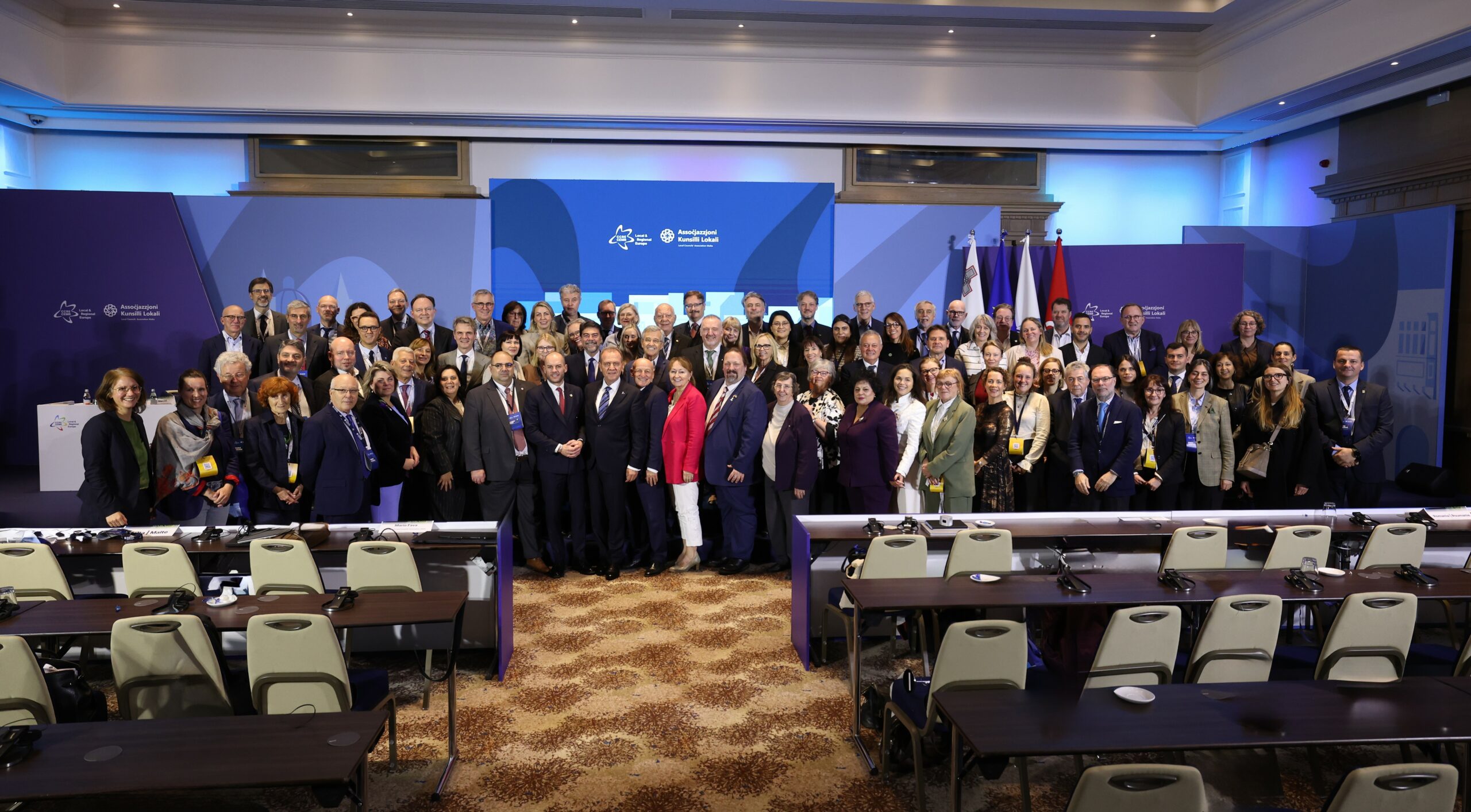
CEMR local leaders reaffirm political leadership and confront Europe’s demographic turning point
St. Julian’s, Malta, 5 December 2025 – Over 160 European mayors, councillors and representatives of national associations of local and regional governments gathered in Malta for the Council of European Municipalities and Regions (CEMR) Leaders’ Summit 2025, hosted by the Maltese Association of Local Councils. During the event, CEMR confirmed its political leadership for the 2026–2028 mandate.
The confirmed leadership reflects a strong commitment to stability, continuity and collective action at a time when Europe’s territories face accelerating demographic change, geopolitical instability and shifting investment priorities.
CEMR Leadership for the 2026–2028 mandate
- Gunn Marit Helgesen, President of CEMR; President of the Norwegian Association of Local and Regional Authorities (KS); Member of Telemark County Council
- Philippe Laurent, CEMR Co-President; President of AFCCRE; Mayor of Sceaux; Vice-President of Territoire Vallée Sud – Grand Paris; Member of the Ile-de-France Regional Council
- Christoph Schnaudigel, CEMR Co-President; President of the German Section of CEMR (RGRE); President of the County of Karlsruhe
- Vince Maple, Chair of the CEMR Financial Management Committee; Councillor of Medway; Vice-President of CEMR (Local Government Association, UK)
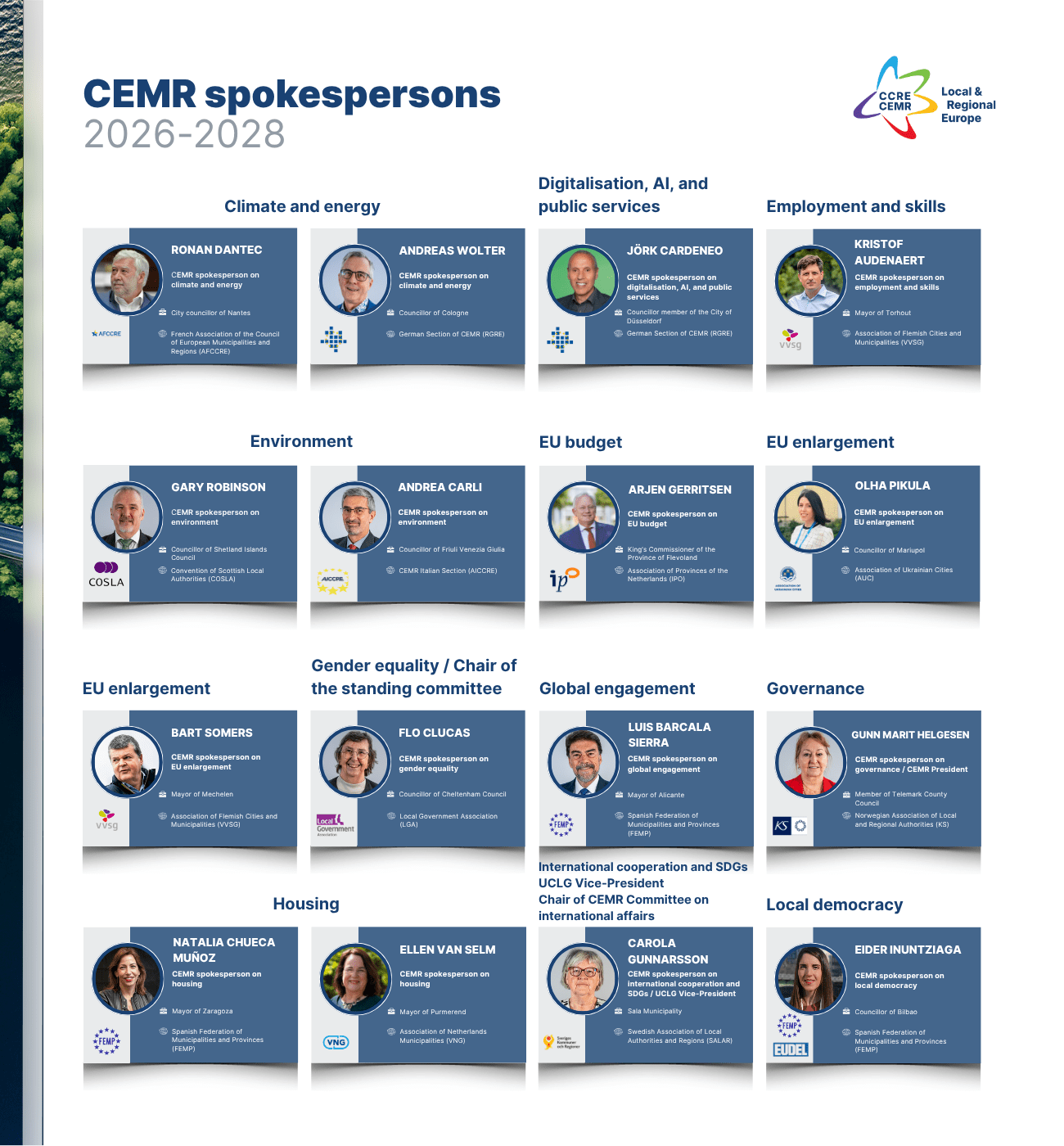
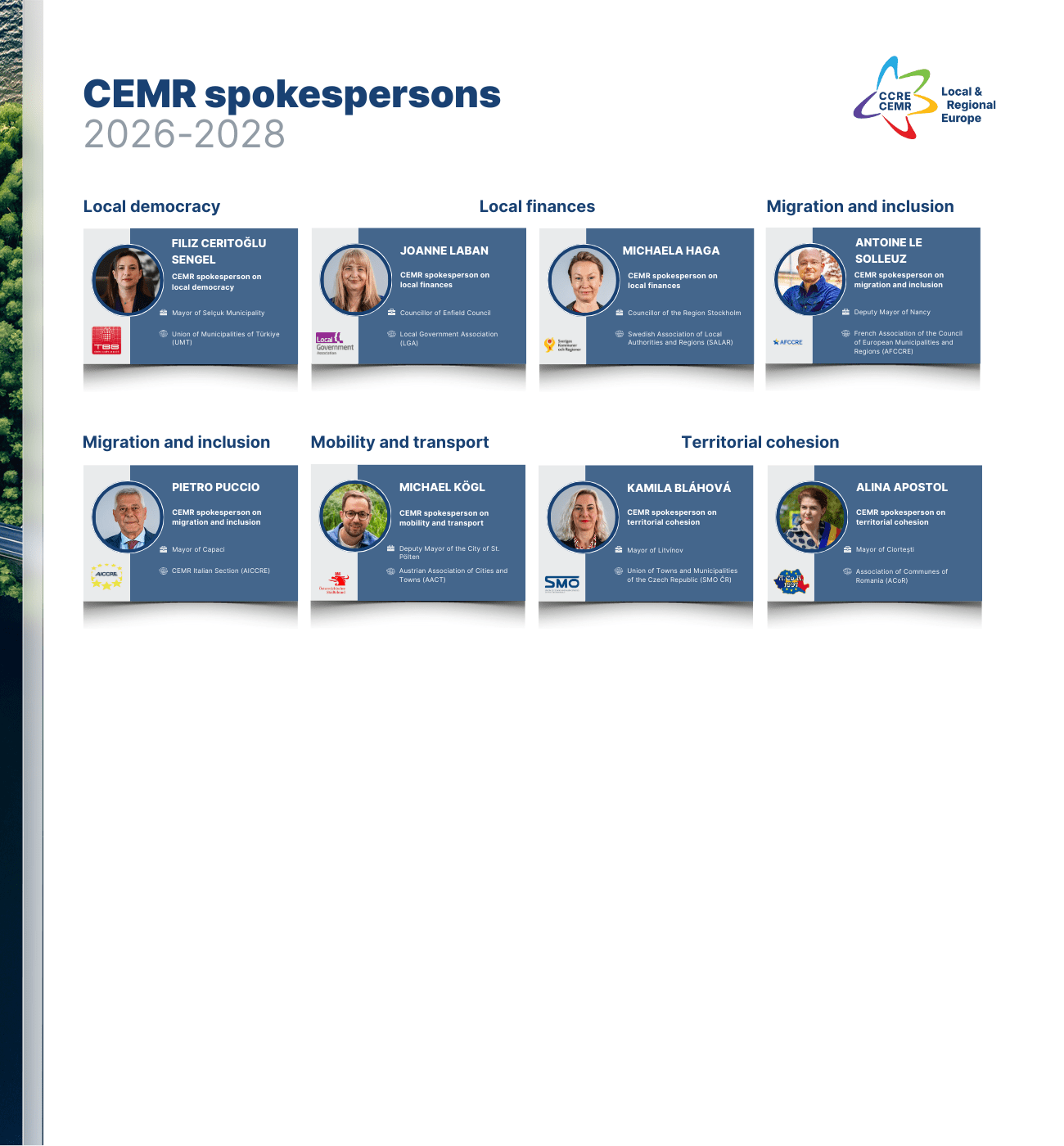
CEMR also announced the appointment of 24 new spokespersons, who will serve as political voices for Europe’s local and regional governments on key issues such as the EU Budget, cohesion policy, democracy, the green and digital transitions, territorial development and international cooperation.
“This Summit marks the beginning of a renewed direction for CEMR. Europe is transforming at a pace we have not seen in decades, and our communities feel the pressure every day. We need stronger partnerships, deeper territorial cooperation and long-term investment. Local and regional governments are not secondary actors — we are essential partners in shaping Europe’s future.” — Gunn Marit Helgesen, CEMR President
Demographic change in the European continent takes centre stage
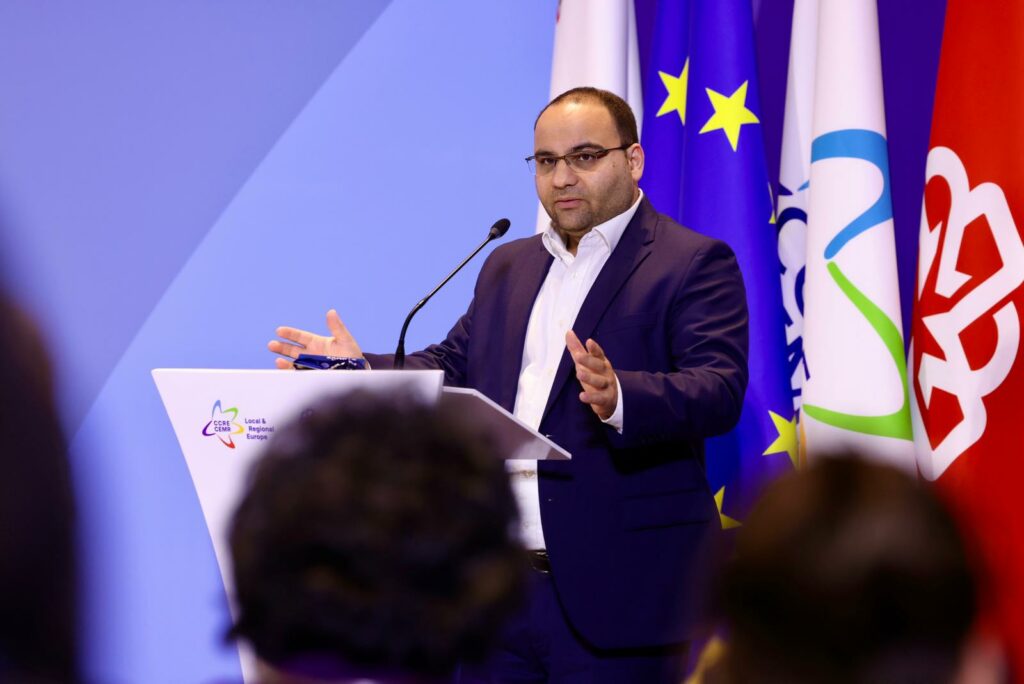
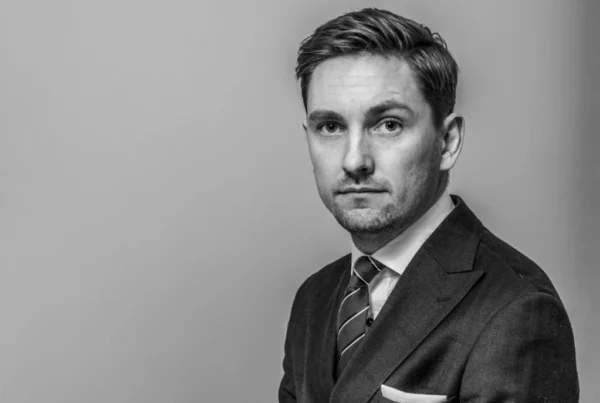
* Maltese Financial Minister Clyde Caruana – Leaders’ Summit 2025 Malta
The Summit’s political debates highlighted the profound impact of demographic transitions across Europe. In her opening intervention, Maltese Financial Minister Clyde Caruana stressed the realities his country faces as an island deeply shaped by mobility and rapid population change.
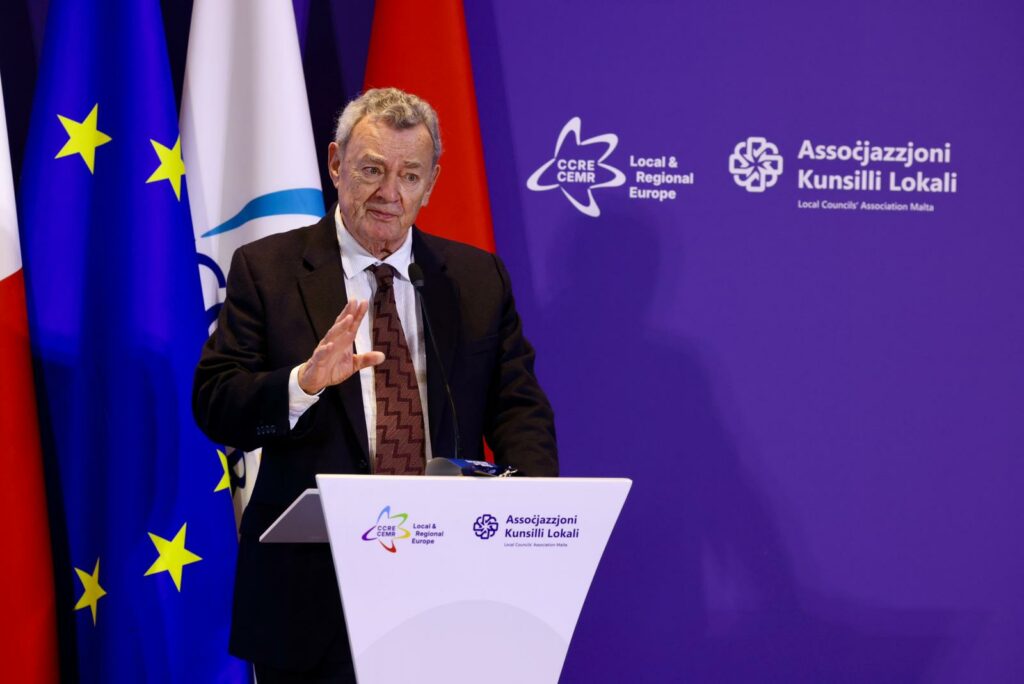
* Journalist and founder of Friends of Europe, Giles Merritt – Leaders’ Summit 2025 Malta
Giles Merritt, journalist and founder of Friends of Europe, warned that “ageing, rural depopulation and housing pressures are converging into a structural challenge for Europe’s future prosperity”.
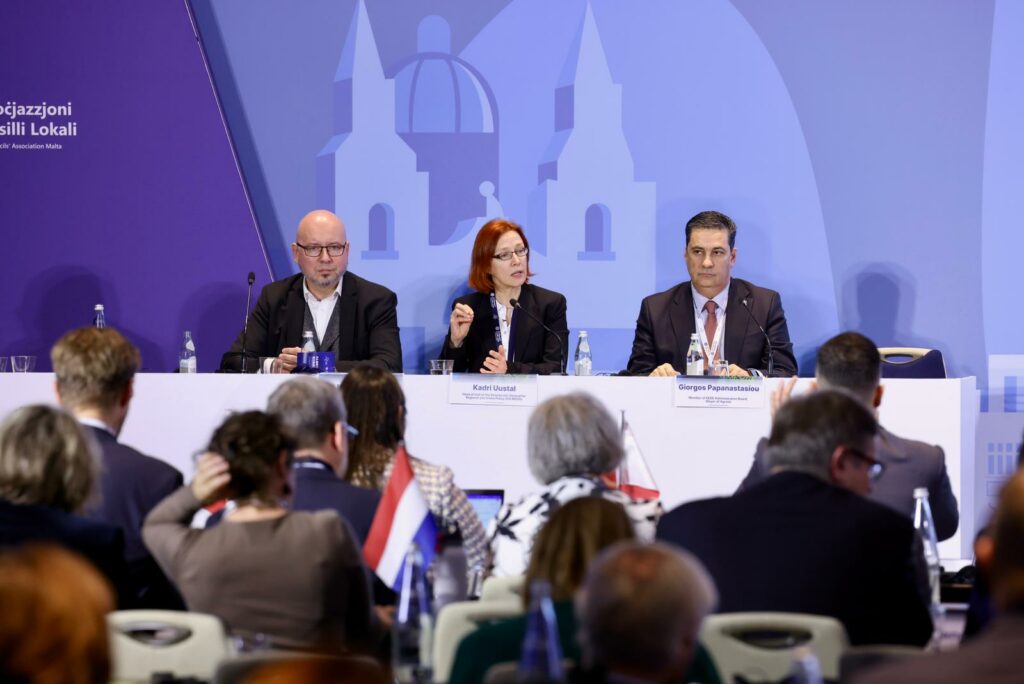
* Head of Unit at DG REGIO, Kadri Uustal; Municipal Councillor of Elva (Estonia) and representative of AECM, Juhani Jaeger, and member of KEDE and mayor of Agrinio in Greece, Giorgos Papanastasiou – Leaders’ Summit 2025 Malta
A high-level panel featuring Kadri Uustal, Head of Unit at the Directorate-General for Regional and Urban Policy (DG REGIO); Alison Zerafa Civelli, Parliamentary Secretary for Local Government within Malta’s Ministry for National Heritage, the Arts and Local Government; Giorgos Papanastasiou, Member of KEDE and Mayor of Agrinio (Greece); and Juhani Jaeger, Municipal Councillor of Elva (Estonia) and representative of AECM, explored how demographic pressures—declining birth rates, shrinking cities, labour shortages and uneven territorial development—require strong multilevel governance and durable policy consistency.
Their message was clear: local and regional governments are on the frontline of Europe’s demographic shift, and their leadership is essential to reverse decline, foster resilience and rebuild attractiveness in Europe’s territories.
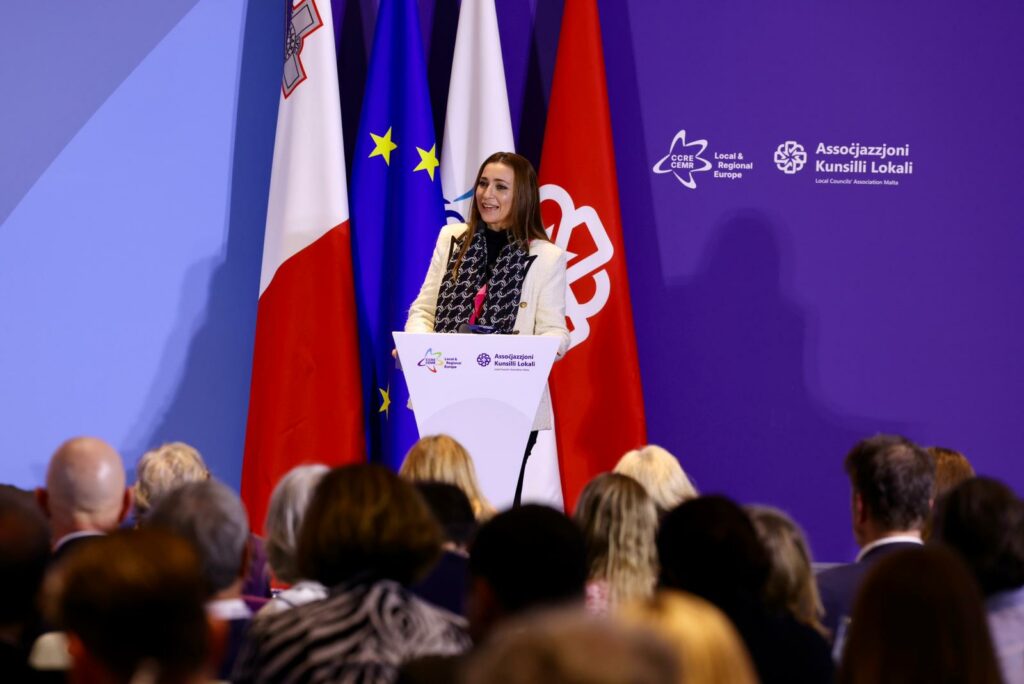
* Parliamentary Secretary for Local Government in the Ministry of the National Heritage, Arts and Local Government of Malta, Alison Zerafa Civelli – Leaders’ Summit 2025 Malta
Local governments call for a central role in shaping the next EU Budget
On the second day of the CEMR Leaders’ Summit, attention shifted to the next Multiannual Financial Framework (2028–2034). Contributions from Zsolt Darvas, Senior Fellow at Bruegel, John Mallia, President of the Malta Cooperative Federation, Jan Olbrycht, former MEP and Co-Rapporteur of the 2021–2027 EU Budget, Sigrid Sengers, Mayor of Druten (Netherlands), and Carlo Borghetti, Councillor of the Lombardy Region (Italy), reaffirmed a shared objective: ensuring that Europe’s budgetary priorities truly reflect the needs of its territories.
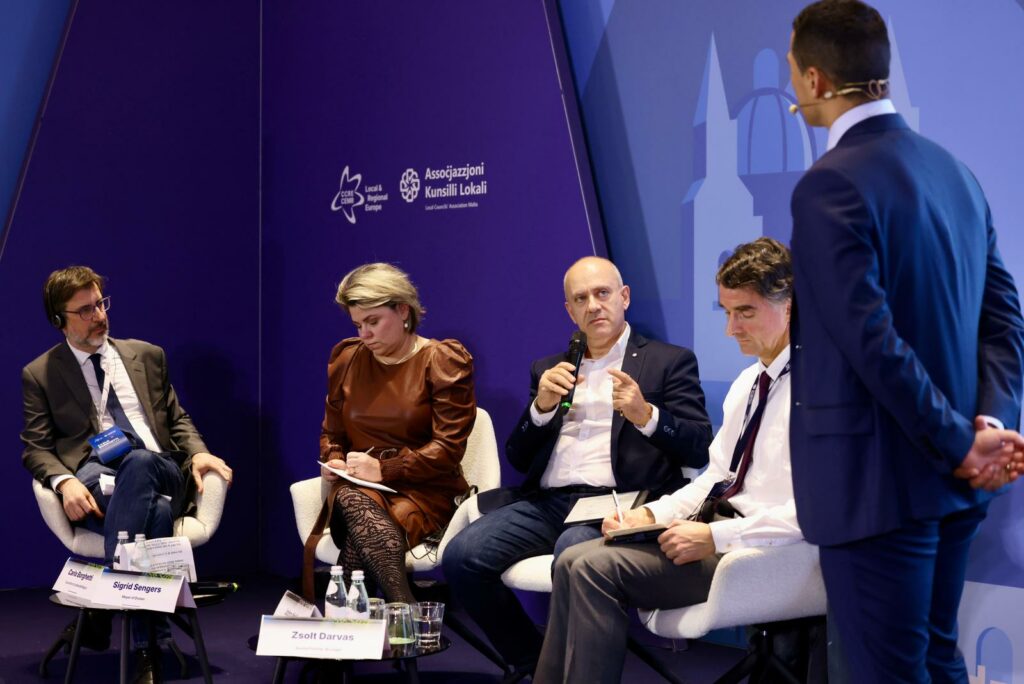
* Senior Fellow at Bruegel, Zsolt Darvas; President of the Malta Cooperative Federation, John Mallia; former MEP and Co-Rapporteur of the 2021–2027 EU Budget, Jan Olbrycht; Mayor of Druten (Netherlands), Sigrid Sengers; and Councillor of the Lombardy Region (Italy), Carlo Borghetti – Leaders’ Summit 2025 Malta
Speakers emphasised that cohesion and competitiveness must go hand in hand, and that the EU Budget must recognise the operational reality of local and regional governments, who implement over 70% of EU legislation and manage more than half of public investment.
Building Europe from the ground up
In his closing message, Fabrizio Rossi, CEMR Secretary General, underlined that the Summit had reinforced a shared political commitment across Europe’s territories. He stressed that CEMR will continue to champion stronger multilevel governance, advocate for EU investments that reflect the realities of every territory, confront demographic and social disparities, and defend democratic values where they matter most: at the local and regional levels. Rossi concluded by affirming that Europe’s future can only be built by empowering the communities that form its foundation.
The Summit was opened by Mario Fava, President of the Maltese Association, who stressed that “demographic pressures, territorial fractures and shifting EU priorities show that Europe’s future begins locally. As the 2028–2034 MFF is shaped, cities and regions must be co-authors — not afterthoughts”, and also counted with an opening introduction by Olaf McKay, Mayor of Valletta, who underlined “today’s transitions demand the same instinct that built our city. We are facing demographic change, and as Europe shapes its next EU budget, cities must be co-authors of Europe’s agenda. That is the spirit of this Summit”.
For more information, contact:
Head of Communications