Bonn’s path toward gender equality

Bonn - European Charter for Equality signatory

Inside Bonn’s 40-year effort to advance gender equality


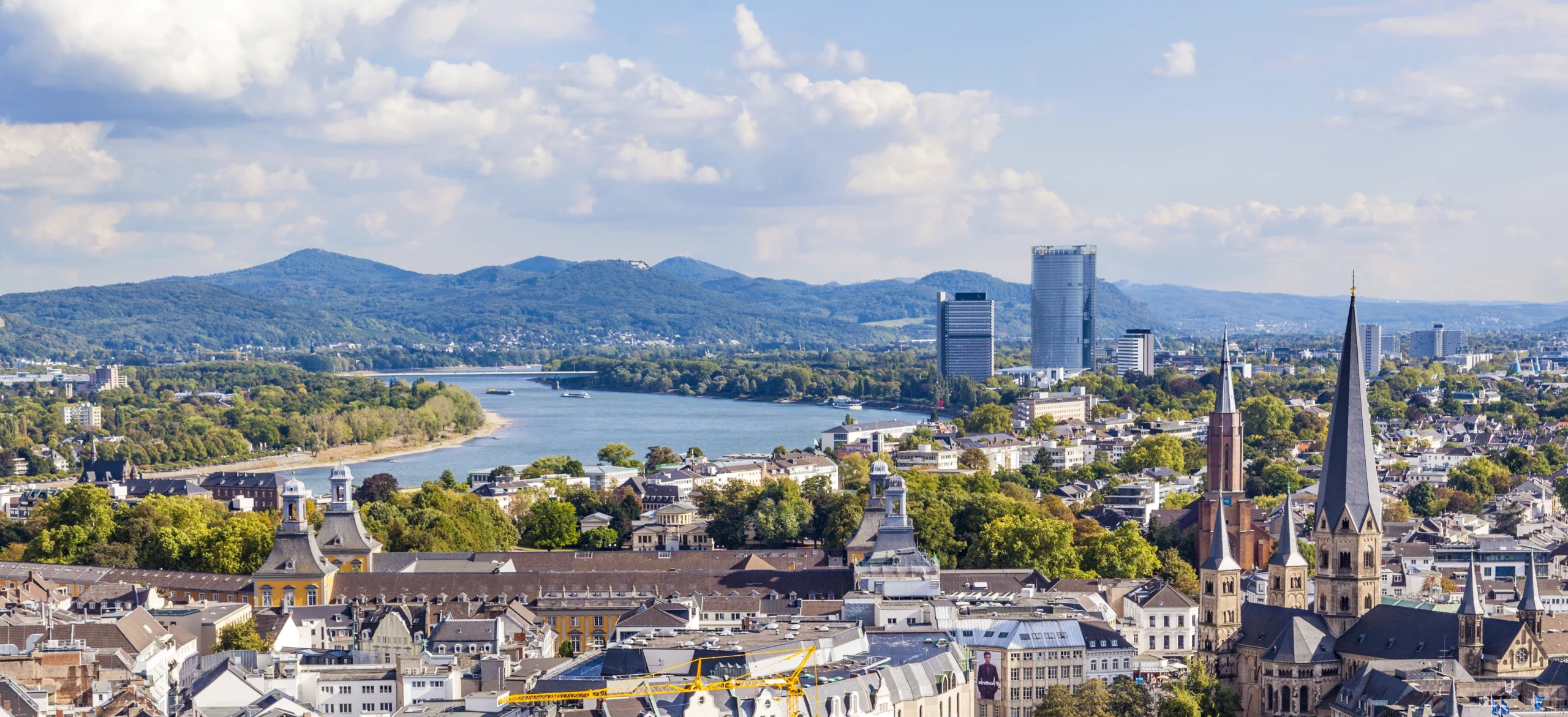
The city of Bonn (Germany) signed the European Charter for Equality of Women and Men in Local Life nineteen years ago. Yet Bonn’s story promoting gender equality does not begin there. It stretches back more than forty years, to a time when gender equality was little more than an ambition, and when the structures needed to drive real change barely existed. 

In 1984, Bonn established a dedicated Office for Equal Opportunitiesa bold move for its time, signalling that equality was not an abstract value but a governance priority. By 1991, the city had introduced its first bylaws on equal opportunities. A decade later, in 2001, Bonn adopted its first comprehensive Equal Opportunities Plan, laying the foundations for long‑term, structural change in work, care, safety and representation. 

Bonn’s commitment has remained unwavering. Today, the city hall maintains a near-equal gender balance in senior management, while women in middle management are empowered to assume leadership responsibilities through structured mentoring programmes

Deputy Mayor of Bonn, Ursula Sautter, explains that the local administration “advocates and promotes equal care solutions” due to the “still unequal division of work and care”.  

Sautter also highlights that the city actively combats all forms of violence and stands firmly with victims. This effort is reinforced by the new German Violence Assistance Act of 2025, which strengthens support frameworks across the country. 

Bonn has been a signatory of CEMR’s European Charter for Equality since 2007, demonstrating its commitment to turning principles into action. As Sautter mentions, “the European Charter for Equality is a beacon of empowerment for us, uniting us with a multitude of diverse cities in this important endeavour”. 

Ursula Sautter, Deputy Mayor of Bonn

20 years of the European Charter for Equality 

This year, we mark the 20th anniversary of the European Charter for Equality, a milestone that invites reflection, celebration and renewed ambition. 

Since its creation, the Charter has become one of Europe’s strongest frameworks for driving equality at the local and regional levels. Today, more than 2,053 signatories from 36 countries are part of this growing movement of cities, towns, and regions committed to turning equality principles into reality. 

Developed by CEMR together with its national associations and project partners, the Charter brings together diverse European visions of equality. Hundreds of local and regional representatives contributed to shaping a shared framework that considers the diverse competences and contexts across Europe. Signing the Charter is a public and formal commitment, a pledge to advance gender equality through policies, programmes, and concrete actions implemented in cooperation with local partners and civil society. 

While the Charter is not legally binding, it is intentionally ambitious. CEMR recognises that achieving these objectives requires time, dialogue, and structural change. That is why signatories are encouraged to adopt a progressive approach, identifying priority areas for action while steadily expanding their efforts. 

To support signatories, CEMR established the European Observatory on the Charter, dedicated to helping local and regional authorities develop and implement strong equality policies. 

The Observatory’s mission is threefold: 

  • Support the development of Local Action Plans for gender equality 
  • Monitor implementation and progress on the ground 
  • Evaluate impact and share knowledge across Europe 

By connecting municipalities, facilitating exchanges, and making progress visible, the Observatory ensures that the Charter remains a living, evolving tool, anchored in real practice. 

— 

Discover the story of Aubagne (France), which signed the European Charter for Equality in November 2025. 

Bonn is a member of CEMR’s association Deutscher Städtetag. 

For more information, please contact:

European charter for equality  

Gender Equality News

Europe’s towns and regions commit to building fairer societies through the European Charter for Equality 


Equality between women and men is a fundamental right and a cornerstone of democracy. Yet, despite legal recognition, disparities remain in pay, representation, and everyday opportunities across Europe. Recognising the pivotal role of local and regional governments in tackling these inequalities, the Council of European Municipalities and Regions (CEMR) developed the European Charter for Equality of Women and Men in Local Life in 2006. 

By signing the Charter, municipalities and regions make a public commitment to promoting equality across their policies, services and institutions, and to developing Equality Action Plans that transform principles into practice. 

The Charter was drafted with the support of the European Commission and has since become a reference tool for towns and regions seeking to mainstream gender equality. It encourages signatories to act not only within their own administrations but also with local institutions, organisations and citizens. 

Over the years, supporting tools have strengthened their implementation: 

  • An online Observatory launched in 2011 provides resources and examples of good practice. 
  • A toolkit of indicators, developed in 2014, helps monitor and evaluate progress. 
  • A 2022 update, funded by the EU, introduced amendments to strengthen the Charter, clarifying language and emphasising intersectionality under the guiding principle: “always gender, never gender alone.” 

New provisions were also added, including the need to apply a gender lens in crisis management and to address gender perspectives in digitalisation and online life. From 2023 onwards, all new signatories commit automatically to both the original Charter and the 2022 amendments. 

The European Charter for Equality demonstrates how local and regional democracy is crucial for advancing fairness in daily life, whether through housing, transport, health, or political participation. By embedding gender equality into decision-making and governance, towns and regions can both safeguard rights and unlock economic and social potential. 

More than a symbolic document, the Charter is a practical instrument for change, mobilising local authorities across Europe to ensure that equality between women and men is not only a principle on paper but a reality in every community

Read the charter here 

For more information, contact: 

Bringing Equality Closer to Home 

UCLG people banner

2021 Report – CEMR Charter15 Reflection Process 


The European Charter for Equality of Women and Men in Local Life, developed by CEMR, is both a political commitment and a practical tool enabling local and regional governments to integrate gender equality into all aspects of policy and administration. Since its launch in 2006, nearly 2,000 signatories across 36 countries have joined the initiative. 

Marking 15 years in 2021, CEMR initiated a reflection process to ensure the Charter remains relevant, inclusive and fit for the future. The process culminated in a set of recommendations to revitalise and adapt the Charter, supported by the EU’s CERV programme

Key Activities and Participation 

  • 6 online workshops (June–November 2021) 
  • 5 interviews with national gender focal points 
  • 75 participants from 21 countries, including local authorities, associations, and civil society. 

Workshop Themes & Findings 

1. Employment & Economic Development (September 2021) 

Gender gaps persist in pay, part-time work, and parental leave. The Charter update should reinforce equality in employment practices, particularly relevant to local governments as employers. 

2. Climate, Urban Space & Sustainable Development (October 2021) 

There is a demand to strengthen Article 25 on urban planning by including monitoring and evaluation tools, and to align with SDG 5 through the Charter’s indicators. 

3. Violence Against Women and Girls (November 2021) 

Updates should better address violence prevention, include children (especially girls) as victims, and consider the complex issue of honour-based violence

4. Communication, Stereotypes & International Cooperation (June 2021) 

The Charter must adopt an intersectional perspective without weakening its gender focus and show how gender equality benefits men and boys as well. 

5. Multiple Discrimination & Intersectionality (September 2021) 

A call to inclusively reflect diverse experiences of discrimination, guided by approaches like Sweden’s: “always gender, but never gender alone.” 

6. Public Services & Administration (September 2021) 

The Charter should be made more actionable at the local level. COVID-19 showed the need for gender-sensitive crisis planning to avoid backsliding on equality. 

Next Steps 

Based on the rich input from this process, an updated version of the Charter will be developed in 2022. This will ensure that it continues to serve as a dynamic tool for gender equality, adaptable to modern challenges, while respecting the commitments of existing signatories. 

Read the study here 

For more information, contact: 

Revitalising the Equality Charter 

Gender Charter - News

CEMR’s 15-year reflection process sets the stage for a renewed push to advance gender equality in Europe’s local and regional life 


2021 marked the 15th anniversary of the European Charter for Equality of Women and Men in Local Life, a milestone moment to celebrate achievements, reflect on lessons learned, and chart a course for the future. Initiated by CEMR in 2006, the Charter has grown into a powerful instrument for advancing gender equality at the local level, now embraced by nearly 2,000 signatories in 36 countries. 

The anniversary served not only to honour progress but also to examine how the Charter can evolve to remain relevant and impactful for today’s and tomorrow’s local governments. 

To mark the occasion, CEMR launched a wide-ranging reflection process. A series of six online workshops was held between June and November 2021, involving Charter signatories, national associations, gender focal points and other stakeholders. Five in-depth interviews complemented these to deepen the analysis. 

The process revolved around four key areas: 

  • Recognising achievements: Highlighting the tangible improvements in local equality made possible by the Charter; 
  • Reflecting on relevance: Considering how to modernise the Charter and connect it with broader policy frameworks; 
  • Celebrating commitment: Acknowledging the people and organisations driving real change on the ground; 
  • Revitalising tools: Gathering practical insights and suggestions to strengthen the Charter’s implementation. 

Participants emphasised that while the Charter remains a strong and valuable framework, its language, accessibility, and visibility could be improved. There was broad support for clearer, more inclusive, and action-oriented language. Concerns about legal implications for current signatories were addressed with a proposed solution: allowing signatories to either reconfirm or upgrade their commitment, while still validating earlier engagements. 

The 15-year review reaffirms the Charter’s relevance and potential as a living document. CEMR has now put forward a set of concrete recommendations to enhance its clarity, inclusivity and usability, ensuring it remains a cornerstone for gender equality at the local and regional level: 

  • Simplify the language and prioritise clarity and accessibility; 
  • Use assertive, action-driven phrasing to emphasise commitments; 
  • Improve translation quality in coordination with national associations; 
  • Adapt language to gender-inclusive norms, particularly in gendered languages. 

As the Chair of the Standing Committee for Equality put it: 

“Beyond chapters and clauses lies a common goal: bringing equality closer to home.”

Read the study here 

For more information, contact: 

Local leadership for equality

Gender equality Declaration - News

European local and regional leaders reaffirm support for Polish municipalities committed to the Charter for Equality of Women and Men in Local Life


Europe is at a turning point. To reach climate neutrality by 2050, the EU must drastically expand renewable energy and electricity grids. This challenge is also an opportunity: renewables are cheaper than fossil fuels, can reduce biodiversity risks, and bring local economic benefits. Yet progress remains too slow, hampered by lengthy permits, weak community dialogue, and a lack of perceived value for citizens. 

To overcome these barriers, European stakeholders have united behind a set of baseline principles for fast and fair deployment of renewables and grids. These principles underline that projects must be shaped with communities, not imposed on them. Early engagement with mayors and citizens, transparent communication, and mechanisms for feedback are central to building trust. 

Equally important is ensuring that local communities share in the value of new projects. This means creating jobs, offering benefit-sharing schemes such as funds or co-ownership, and guaranteeing that revenues are used transparently for local improvements, from transport to housing. The principles also commit to nature-positive deployment, applying strategies to avoid or minimise harm and, where possible, enhance biodiversity. 

Finally, the consensus highlights the need to empower community-led initiatives, giving citizens and municipalities fair access to the energy market and the grid. By creating space for local ownership, Europe can ensure that the energy transition is not only fast but also fair. 

Together, these principles form a European consensus: a shared roadmap to accelerate the transition while protecting ecosystems and ensuring citizens see real, tangible benefits. 

Read the declaration: English | French | Polish

For more information, contact: