European Partnership Hub: EU-Ukraine ‘one-stop-shop’

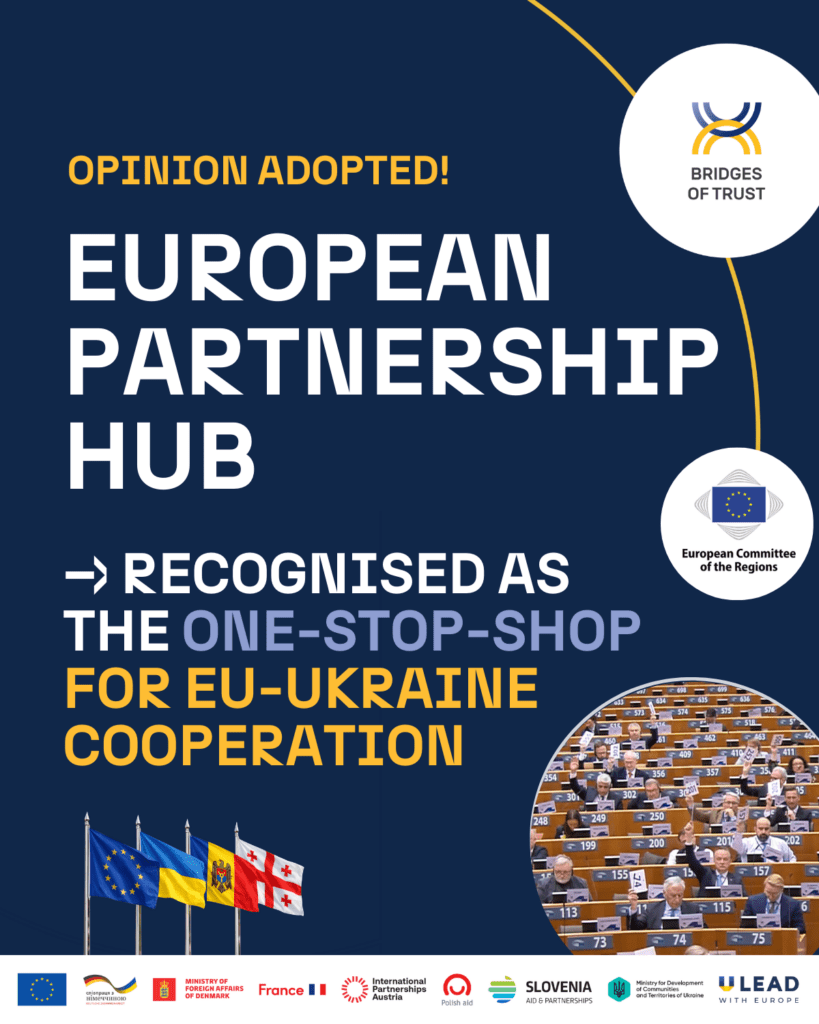
Last week, the European Committee of the Regions (CoR) adopted in Plenary the ‘Enlargement package 2025 – Ukraine, Moldova & Georgia’


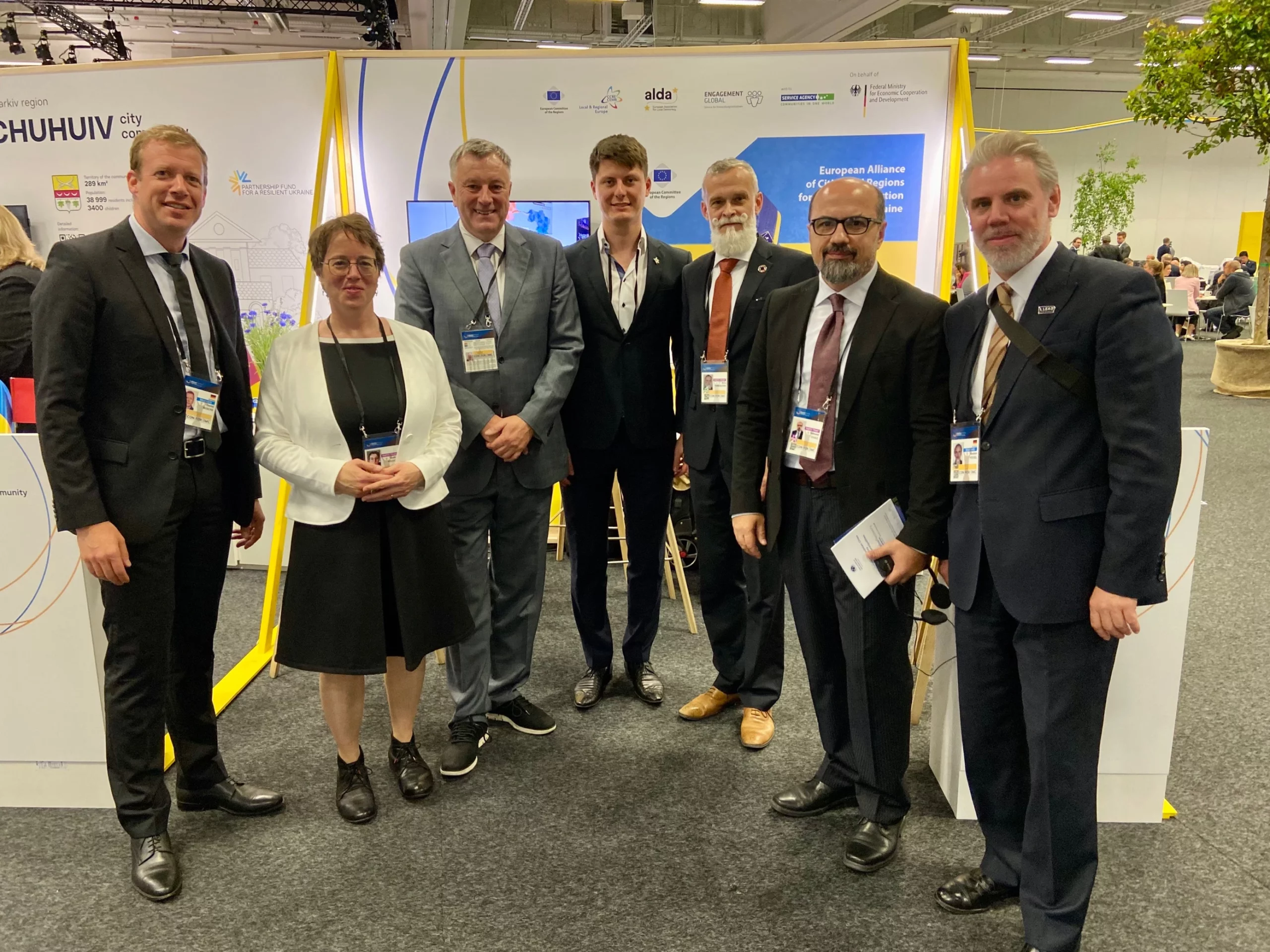
The European Committee of the Regions (CoR) has adopted an amendment explicitly recognising the European Partnership Hub (EPH) as the “one-stop-shop” for cooperation between local and regional governments in Ukraine and the EU. The Hub was launched at the 2025 Ukraine Recovery Conference, following the Joint Statement of the European Alliance of Cities and Regions for the Reconstruction of Ukraine.

Hosted by CEMR, which already drives EU–Ukraine municipal partnerships through Bridges of Trust, the Matchmaking Platform, and SUN4Ukraine, the Hub coordinates and connects initiatives within the Bridges of Trust Community. It facilitates exchanges, provides information, and organises joint meetings to align efforts, build synergies, and support municipalities with the skills needed for recovery, cooperation, and EU accession.

Six other amendments reinforcing the role of local and regional governements in the EU enlargement

The final text of the CoR also includes six amendments tabled by CoR members Māris Zusts and Gints Kaminskis and suggested by the Latvian Association of Local and Regional Governments (LALRG), in close cooperation with PLATFORMA.

The amendments aim to reinforce a central political message: EU enlargement will only succeed if it is rooted in local and regional levels, resilient to hybrid threats, and democratically endorsed by citizens. In this opinion, decentralisation, multilevel governance, gender equality, and combating foreign information manipulation are framed as essential components of sustainable enlargement.

Cooperation with local governments 

The adopted amendments further stress the need for public support through cooperation with local governments, especially in Ukraine’s post-war context, advocating for awareness campaigns and media engagement to foster acceptance of candidate countries. Democratic resilience and integrity are further prioritised, particularly through strengthened anti-corruption measures at all government levels. Transparency in public procurement is highlighted, especially regarding reconstruction efforts.

Concerning Moldova, the amendments commend reform progress but express concerns over foreign interference (FIMI) during the 2025 elections, advocating for resilience measures and support for independent media.

The amendments also support local governments in Georgia amidst democratic backsliding, emphasising ongoing cooperation to maintain dialogue and democratic governance as the country navigates its EU accession path.

Looking ahead

These amendments place local and regional governments at the heart of EU enlargement, recognising that lasting impact, resilient democracies, and strong communities depend on their active role. 

The next step is for the European Parliament, Council, and Commission to take these recommendations into account for their respective work on enlargement.
CEMR together with PLATFORMA and their partners will continue to advocate, coordinate initiatives, and foster exchanges, to strenghten the role of local and regional governments.  

The European Partnership Hub is supported by the European Union and its member states through U-LEAD with Europe.

For more information, contact:

Declaration on four years of war in Ukraine

Mayors in Ukraine - News 2023

CEMR issues declaration marking four years of war and reaffirming unwavering support for Ukraine


Four years after Russia’s full-scale invasion of Ukraine, local and regional elected representatives from the Council of European Municipalities and Regions (CEMR) once again reaffirm their unwavering support for Ukraine and its people.

On this fourth anniversary of Russia’s aggression, CEMR has issued a formal declaration strongly condemning the war, which continues to claim countless victims, and reiterating the commitment of European local and regional governments to stand alongside Ukraine in its struggle for freedom, reconstruction and European integration.

Call against attacks on Ukrainian mayors

Local and regional elected representatives remain on the frontlines of the war, ensuring the continuity of essential services under extraordinary and often dangerous conditions. Yet they continue to be directly targeted.

CEMR denounces the abduction of Ukrainian mayors and supports the call of the Association of Ukrainian Cities demanding the immediate release of those still detained:

  • Oleksandr Babych – Hola Prystan City Mayor
  • Ihor Kolykhaiev – Kherson City Mayor
  • Anatolii Siryi – Starosta of Novi Borovychi Starosta District, Snovsk City Municipality

CEMR also condemns the arbitrary imprisonment, torture and murder of Ukrainian people in Russian captivity, including:

  • Yevhenii Matvieiev – Mayor of Dniprorudne
  • Oleksii Vynnychenko – Starosta of the Hrebenykivka Starosta District of Boromlia Village Municipality

Commitment to peace, reconstruction and EU integration

CEMR calls for the immediate end to the war, and for decisive actions to enable the establishment of a just and lasting peace in Europe and the reconstruction of Ukraine. Achieving this requires full engagement of the European Union and its Member States at every stage of the process. European local and regional governments stand ready to contribute actively to recovery, democratic resilience, and long-term stability.

In its declaration, CEMR reaffirms its dedication to:

  • Supporting Ukraine’s reconstruction through partnerships, exchanges and decentralised cooperation between towns, cities and regions.
  • Accompanying Ukraine on its path to full EU membership, strengthening democratic governance and multilevel cooperation across Europe.
  • Sustaining and expanding cooperation through key initiatives, including:
    • Bridges of Trust Community, bringing together local and regional representatives engaged in cooperation to foster trust, resilience, sustainable development and democratic governance.

A call for sustained European engagement

As the war enters its fifth year, sustained political, financial and institutional support remains essential. The reconstruction of Ukraine and the achievement of a just and lasting peace demand continued solidarity, coordinated action and long-term commitment.

CEMR stands firm in defending European values of democracy, peace and the rule of law. European local and regional governments remain committed to accompanying Ukraine to full EU membership, contributing to a stronger, more resilient and more secure Europe.

Read the full CEMR declaration:

CEMR’s recommendations: five essential conditions for the fair and effective integration of Ukraine into the EU

For more information, contact:

Call for EU-Ukraine municipal partnerships

Ukraine Declaration - News 2025

Call for Proposals: The European Partnership Hub – Towards the Bridges of Trust Community


Since March 2021, CEMR, in cooperation with the Association of Ukrainian Cities (AUC) and with the support of the U-LEAD with Europe Programme with its donors, has been implementing the Bridges of Trust initiative to strengthen municipal cooperation between Ukraine and the EU. What began as a project to build partnerships has now grown into a dynamic community of collaboration and exchange
 
The current phase, Bridges of Trust 3.0 – “Towards the Bridges of Trust Community”, seeks to consolidate and expand these partnerships, enhance capacities, and foster sustainable, long-term cooperation. 

To support this ambition, CEMR is launching a call for proposals to engage National Associations of Local and Regional Governments (LRGAs) or similar organisations from EU Member States as Implementers. Selected service providers will provide expertise and deliver activities in their territories to further develop EU–Ukraine municipal cooperation. 

Objectives of this phase 
The goal is to accelerate the recovery of Ukrainian municipalities and support their integration into the European Union by: 

  • Increasing the involvement of local and regional government associations and their members in international municipal cooperation. 
  • Supporting capacity-building efforts. 
  • Promoting and expanding the Bridges of Trust Community. 

Tasks and activities for participating associations 

  • Organise Online Solidarity Forums
  • Identify and engage new partner municipalities. 
  • Support the Internship Programme TIPS4UA
  • Actively participate in Bridges of Trust events. 
  • Contribute to the development of the Bridges of Trust Community

All tasks and deliverables are to be completed by 31 May 2026 (with possible extension).  
The total fee for delivery of these services shall be up to 14 000 EUR.  

Eligibility criteria 

  • Be a Local and Regional Associations, similar organisation, or expert(s); 
  • Be established in a Member State of the EU (Norway included); 

How to participate 
Interested associations/organisations/experts are invited to submit their application by providing the following information: 

  1. Organisation overview: Provide a brief description of your organisation. Describe your current relationships and engagement with local and regional authorities.
  1. Concept Note
  1. Financial offer

Please submit your application to CEMR’s application email: application@ccre-cemr.org 

Deadline: 6 October 

Evaluation   

The selection of interested associations will be carried out by CEMR, in cooperation with the Association of Ukrainian Cities and the U-LEAD with Europe Programme, based on the eligibility and selection criteria outlined in the Terms of Reference. A total of 15 associations or similar organisations will be selected. Priority will be given to associations from the nine EU countries already involved in Phase 2*, while applications from other eligible countries will also be considered. 

The evaluation will take into account: 

  • Geographical balance across participating countries
  • Prior experiences in working with local governments and municipal cooperation in Ukraine 
  • The potential to develop sustainable international municipal cooperation with Ukraine (based on concept note)

We expect the selected associations/organisations/experts to begin their activities in early November 2025. Applicants will be informed of the selection results by 31 October 2025

*Czechia, France, Hungary, Italy, Latvia, Poland, Slovenia, Spain, Sweden.

Other Links:
Annexe 1 – Concept Note
Annexe 2 – Financial Offer

For more information, contact:

Partnerships for Ukraine’s recovery

Strengthening Partnerships for Ukraine’s Recovery: CEMR’s Actions on Solidarity, Municipal Cooperation, and EU Integration


24th February 2025, marks three years since Russia launched its full-scale invasion of Ukraine—a reminder of the resilience and determination of the Ukrainian people as they continue to defend their freedom and democracy. For CEMR, it reaffirms a long-standing commitment to supporting Ukraine’s recovery and EU integration, through tangible, grassroots cooperation between local governments. 

In recent months, this commitment has translated into new concrete actions, from public declarations of solidarity to community building and launching innovative digital tools that strengthen municipal partnerships. Across Europe, local and regional governments are not just expressing support but actively contributing to Ukraine’s reconstruction and future within the EU. 

A Declaration of Solidarity and Action 

Three years after the invasion, CEMR issued a declaration reaffirming its unwavering support for Ukraine. The statement highlighted the indispensable role of local leaders in sustaining communities under siege — from ensuring basic services to preserving democratic governance. 

Yet these leaders are not just bearing the weight of war; they are targets. The abduction, imprisonment, and murder of Ukrainian mayors are stark reminders of the risks they face. CEMR, standing alongside the Association of Ukrainian Cities, called for the immediate release of detained local leaders and condemned the Russian attacks on local democracy.
More information: https://ccre-cemr.org/press/declaration-on-three-years-of-war-in-ukraine 

Strengthening Networks: Joining the Coalition of Sustainable Municipalities
This year, CEMR reinforced its commitment by joining the Coalition of Sustainable Municipalities, an initiative launched by Ukraine, Germany, and international partners at the Ukraine Recovery Conference (URC) 2024. During the conference in Berlin, CEMR’s Secretary-General announced the launch of the Matchmaking Platform—an innovative digital tool designed to help municipalities across Europe connect and collaborate with their Ukrainian counterparts. 

On 12th February, as part of the Coalition, CEMR participated in an Open Exchange on Best Practices for Ukraine’s Recovery, organised by the German Federal Ministry for Economic Cooperation and Development (BMZ) and U-LEAD. Among other key topics, the event showcased insights into the fully operational Matchmaking Platform, which is already facilitating municipal partnerships. CEMR remains a dedicated partner, upholding the core principles of the Coalition. 

Empowering Local Leaders: The Matchmaking Platform 

One of CEMR’s most impactful recent initiatives in strengthening international municipal cooperation is the Matchmaking Platform, officially launched during the CEMR Leaders’ Summit in December. This innovative tool is transforming how municipalities establish partnerships. 

Building on CEMR’s seven decades of town twinning expertise, the platform enables local governments to connect and collaborate on projects in a few clicks. In just two months, it has attracted hundreds of verified users across Europe, fostering direct engagement between municipalities. Ukrainian local leaders have shown strong interest in harnessing its potential, with over 400 participants attending two dedicated info sessions organised by U-LEAD on 29th January and 12th February, where CEMR provided a comprehensive overview of the platform and addressed participants’ questions. 

To further extend its reach, a broader communication campaign will enhance visibility, while future developments will introduce new functionalities—potentially including funding opportunities, capacity-building programmes, and partnerships with key stakeholders of the Bridges of Trust Community.  

More information: https://partnerships.ccre-cemr.org/  

Expanding the Bridges of Trust Community 

Since 2021, CEMR has been actively implementing the Bridges of Trust project in collaboration with national associations and U-LEAD to strengthen municipal partnerships between the EU and Ukraine. Following two successful phases, the initiative reached a major milestone with the launch of the Bridges of Trust Community, announced at the CEMR Leaders’ Summit last December. 

This growing community serves as a central hub for municipalities looking to establish and sustain partnerships at a crucial moment in Ukraine’s transformation. The third phase of the project will further enhance the community’s benefits, advocacy efforts, and stakeholder engagement—expanding from bilateral cooperation to a more structured and comprehensive framework. 

New possible cooperations have been explored through the participation of potential members of the Bridges of Trust Community such as the German Marshall Fund (GMF) and many more, to explore their involvement in Ukraine’s recovery and EU integration efforts. 

For those interested in learning more, the revamped Bridges of Trust page on CEMR’s website offers key resources, funding opportunities, and success stories that highlight impactful municipal partnerships. 

The Matchmaking Platform is fully integrated into the community, providing a dynamic tool to not only establish new partnerships but also sustain and expand them over time. CEMR invites all interested stakeholders to join the Bridges of Trust Community, which is set to become a key hub for municipal collaboration across Europe. 

More information: https://ccre-cemr.org/bridges-of-trust  

Looking Ahead: A united effort for recovery 

With Ukraine’s path to EU integration in focus, local and regional governments must play a key role in shaping decentralisation, governance, and resilience. As we prepare for the Ukraine Recovery Conference 2025 in Rome, CEMR is actively contributing to the Working Group for the Local and Regional Component and the European Alliance of Cities and Regions for the Reconstruction of Ukraine. Our commitment remains steadfast in amplifying local voices and strengthening municipal partnerships to support Ukraine’s recovery and EU integration. 

Through community building supporting international municipal partnerships, advocacy for EU integration, decentralised cooperation, and innovative digital tools, CEMR reaffirms its dedication to supporting Ukraine. We remain open to further engagement and collaboration, ensuring a beneficiary-centred approach prioritising European municipalities. 

For more information, contact: 

Latvia-Ukraine Cooperation

Latvia - Ukraine Cooperation - News 2025

Latvia-Ukraine Municipal Cooperation: A Model for Reconstruction and Resilience 


In the face of war and destruction, rebuilding Ukraine requires more than just resources. It demands strong partnerships, knowledge exchange, and unwavering solidarity. The cooperation between Latvian and Ukrainian municipalities is a powerful example of how local governments can play a vital role in this process. 

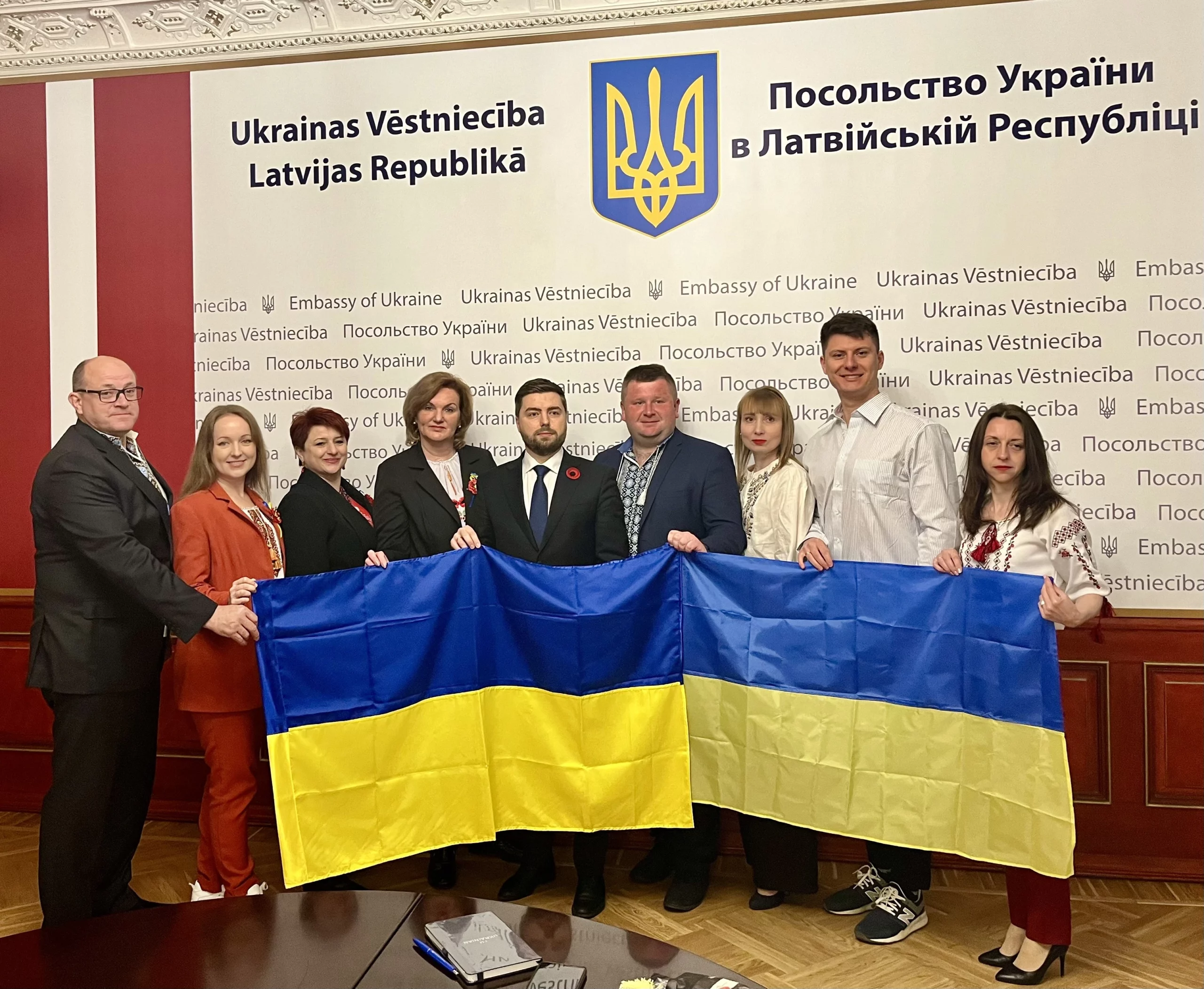
Municipalities in Kuldīga, Ķekava, and Gulbene have established lasting ties with their Ukrainian counterparts, Chuhuyiv, Novyi Bilous, and Korop, transforming initial online meetings into concrete collaboration. Despite the challenges of war, these partnerships have led to knowledge sharing in social services, digital transformation, and local governance. Memorandums of Understanding have formalised their cooperation, while study visits to Latvia have further deepened their exchanges. These initiatives’ success has also been facilitated and supported by the Embassy of Ukraine in Latvia and the Association of Ukrainian Cities, demonstrating how national and local actors can work together for long-term recovery. 

This cooperation is part of a broader effort under the Bridges of Trust project, implemented by CEMR in collaboration with the Association of Ukrainian Cities and supported by the U-LEAD with Europe Programme. Since its launch, Bridges of Trust has helped forge partnerships between more than 30 Ukrainian and 30 EU municipalities, facilitating joint projects in infrastructure, waste management, and energy solutions. Through training and capacity-building, local governments are strengthening their role in Ukraine’s reconstruction, ensuring that recovery efforts are sustainable and aligned with European standards. 

The partnership between Latvia and Ukraine is a testament to the power of municipal cooperation. By working together, local governments are not only rebuilding what was lost but also laying the foundation for a stronger, more resilient Ukraine and Europe in general.  

Learn more about Bridges of Trust:

For more information, contact:

Declaration on three years of war in Ukraine

Ukraine Declaration - News 2025

CEMR issues a declaration reaffirming support and urging international action 


After three years of Ukraine’s resistance to Russia’s full-scale invasion, local and regional elected representatives from the Council of European Municipalities and Regions (CEMR) reaffirm their unwavering support for Ukraine and its people.  

CEMR has issued a formal declaration condemning the war launched by Russia and calling for decisive international action. 

Call against attacks on Ukrainian mayors 

Local and regional elected representatives are on the frontlines of this war, ensuring that essential services continue despite difficult conditions. Yet, they have also become targets of aggression.  

CEMR denounces the abduction of Ukrainian mayors and supports the call of the Association of Ukrainian Cities demanding the immediate release of those still detained: 

  • Oleksandr Babych – Mayor of Hola Prystan (Kherson region) 
  • Ihor Kolykhaiev – Mayor of Kherson 
  • Anatolii Siryi – Starosta of Novi Borovychi (Chernihiv region) 

CEMR also condemns arbitrary imprisonment, torture and murder of Ukrainian people in Russian captivity including: 

  • Yevhenii Matvieiev – Mayor of Dniprorudne (Zaporizhzhia region) 
  • Oleksii Vynnychenko – Starosta of Hrebenykivka (Sumy region) 

Call for Ukraine’s full EU membership 

A victory for Ukraine and a just peace that will allow its reconstruction requires the full engagement of the European Union and its member states.  

CEMR is committed to fostering resilience, recovery, and democratic governance in Ukraine. In its declaration, CEMR reaffirms its dedication to: 

  • Supporting the reconstruction of Ukraine’s municipalities and regions through partnerships and exchanges. 
  • Advocating for Ukraine’s full integration into the European Union to ensure long-term stability and prosperity. 
  • Sustaining cooperation between European and Ukrainian local and regional governments through key initiatives, including: 
  • The Bridges of Trust Community, Strengthening democratic governance, fostering partnerships, advancing recovery, and supporting Ukraine’s EU integration.   

A call for action 

As the war continues, it is time for European institutions, national governments, and local and regional authorities to intensify their support for and to Ukraine. The path to peace and reconstruction requires decisive action, sustained cooperation, and a commitment to justice. 

CEMR urges the international community to stand firm in defending democracy, peace, and the rule of law. We call for Ukraine’s victory and a just peace that will allow its cities, regions, and people to rebuild their brighter future. 

Read the full CEMR declaration: 

For more information, contact: 

Bridges of Trust Community

Bridges of Trust Community - News 2024

Towards Building the Bridges of Trust Community 


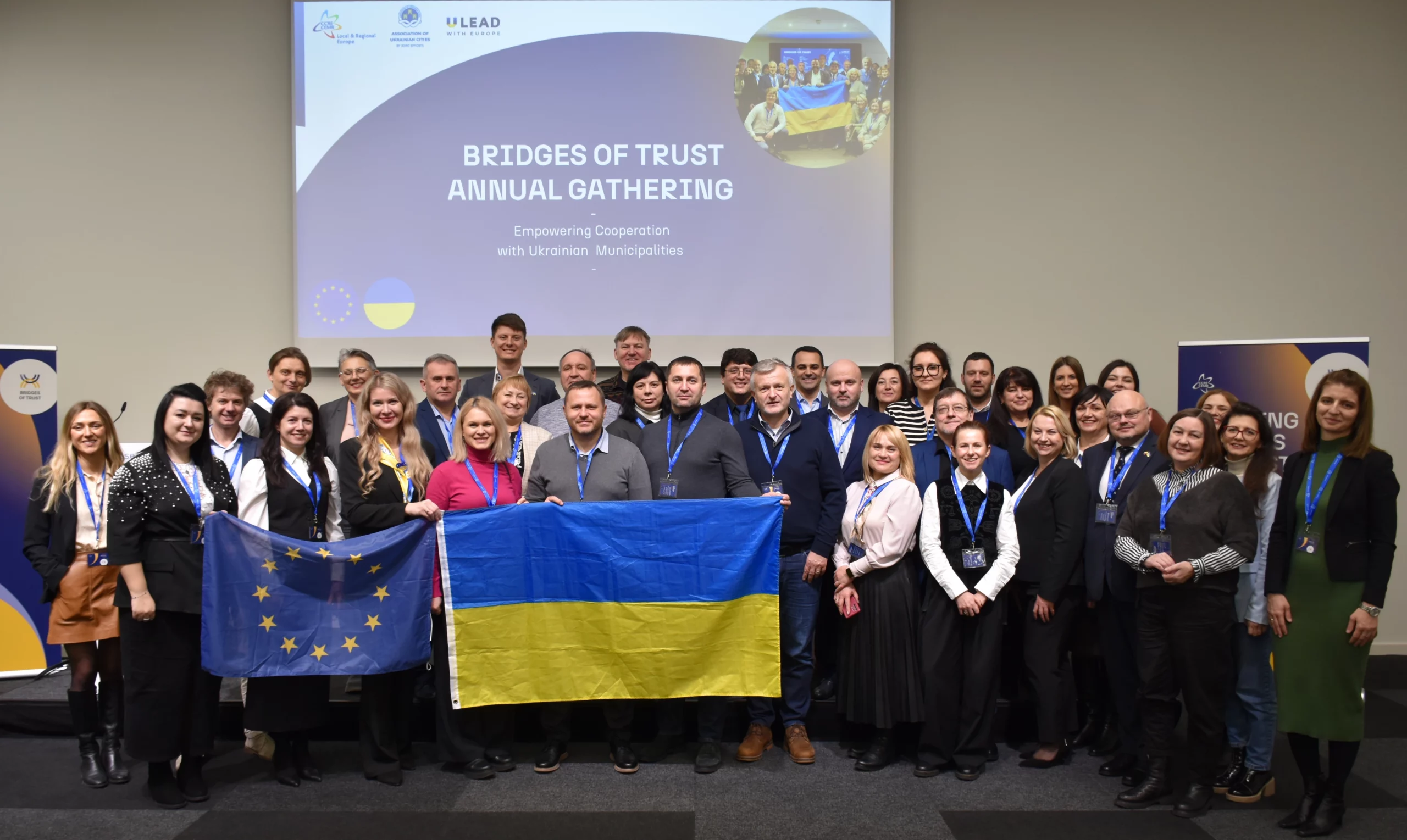
At the recent Bridges of Trust Annual Gathering*, held alongside the CEMR Leaders’ Summit, a significant step forward was announced with the launch of the Bridges of Trust Community. This new phase marks a transition from bilateral partnerships between EU and Ukrainian municipalities to a cohesive, long-term framework for collaboration. The goal is to deepen existing connections, mobilise continued support in creating new partnerships, and build a lasting network of cooperation to support Ukraine’s recovery and its path toward EU integration. As part of this effort, CEMR is committed to strengthening the spirit of cooperation and ensuring that every Ukrainian municipality is paired with an EU partner, in line with the objectives of the Ukraine Recovery Conference 2024 in Berlin. The creation of these partnerships will be facilitated by the newly launched Matchmaking Platform
 
In the framework of the Bridges of Trust project, a survey was recently carried out to assess the effectiveness of the partnerships and identify areas for further development. In fact, the survey was conducted with participating municipalities across 8 European countries: Poland, Latvia, Hungary, Spain, Slovenia, the Czech Republic, France, and Sweden revealing a promising picture of these evolving partnerships. With 80% of the partnerships demonstrating moderate to high levels of interaction, and 67% having formal agreements in place, these collaborations are already making a significant contribution to a resilient, united Europe. This data underscores the potential of the Bridges of Trust Community as a dynamic, long-term platform for cooperation, one that will grow and adapt to the needs of both Ukraine and the EU local governments in the years ahead.  

Focus Areas of Cooperation:  

  1. The majority of municipalities are engaged in Youth, Cultural and Educational initiatives. Municipalities such as Kuldīga (Latvia), Bourges (France), Mińsk Mazowiecki (Poland), Tyresö (Sweden), and Budakeszi (Hungary) are emphasising the importance of cultural diplomacy, youth policy, and educational initiatives. 
  1. More than half of the municipalities are actively involved in energy efficiency and modernisation efforts. Municipalities such as Česká Třebová (Czech Republic), Budakeszi (Hungary), Puconci (Slovenia) and La Rochelle (France) have prioritised climate action, collaborating on green energy projects, energy efficiency improvements, and sustainable urban development. 
  1. A significant number of municipalities are also focused on emergency and humanitarian support. Bourges (France) and Sieradz (Poland) have led efforts in providing emergency aid, while others like Mińsk Mazowiecki (Poland) and Budakeszi (Hungary) have contributed to relief efforts for displaced populations and emergency infrastructure repairs. This includes essential supplies, housing for displaced persons, and rapid infrastructure repairs to ensure the basic functioning of Ukrainian municipalities during the crisis.  
  1. Almost half of the municipalities are engaged in governance and capacity-building activities. Such as Radzymin (Poland), Kuldīga Municipality (Latvia), Gulbene (Latvia), Puconci (Slovenia), are committed to strengthening local governance systems. This includes capacity-building efforts focused on crisis management, rebuilding governance structures, and ensuring municipalities can effectively manage their recovery processes. 
  1. Over a third of municipalities are active in the economic and business sectors. San Sebastián (Spain), Sieradz (Poland), Puconci (Slovenia), Gulbene (Latvia), and Kuldīga (Latvia), along with other municipalities, have focused on fostering economic ties, supporting local businesses, and creating collaborative opportunities for cross-border trade and entrepreneurship. 

Achievements:  

  • Formal Agreement: Half of the municipalities have formalised their partnerships with Ukrainian counterparts through Memorandums of Understanding or cooperation agreements, while another 40% are in the process of doing so. Beyond the survey results, a new cooperation agreement was signed at the Bridges of Trust Annual Gathering by Mayor Saulius Margis of Pakruojis (Lithuania) and Mayor Alla Myronova of Inhulka (Ukraine).  
  • Crisis Response: Several municipalities, such as Bourges and Korosten, provided emergency assistance during the early stages of the war. 
  • Knowledge Sharing: Peer-to-peer learning and exchange of best practices were cited as significant successes by more than half of the participants. 

 
While the difficulties in accessing funds and the ongoing Russian war against Ukraine were identified as significant challenges – an encouraging trend emerges: nearly 80% of partner municipalities have already planned or are in the process of planning activities for the next six months. This demonstrates a strong commitment to maintaining and expanding their cooperation despite the obstacles, highlighting the resilience and determination of local governments to foster meaningful partnerships and drive impactful initiatives even in complex contexts. 

The survey results reflect a shared commitment to facing both immediate challenges and long-term goals. In the months and years ahead, the Bridges of Trust Community will be essential in fostering the ongoing exchange of knowledge, support, and innovation between EU and Ukrainian municipalities, reinforcing the collective effort to support Ukraine’s recovery on the path to EU membership. 

*Since 2021, the Council of European Municipalities and Regions (CEMR), in partnership with the Association of Ukrainian Cities (AUC) and EU national associations, has been implementing the Bridges of Trust project. Supported by U-LEAD with Europe, this fosters connections between EU and Ukrainian municipalities to tackle pressing challenges, including reconstruction, recovery, and institutional modernisation.  

Funding opportunities for Ukraine 

Ukraine's recovery - News

EU and Member State programmes supporting municipalities in Ukraine’s recovery and cooperation with European partners 


In the face of Russia’s invasion and its devastating social and economic consequences, European Union and Member State funding programmes have become lifelines for Ukrainian municipalities. These mechanisms provide not only financial support but also technical expertise and institutional backing, helping local authorities address urgent needs, rebuild services, and strengthen community resilience. 

This guide was developed by the Council of European Municipalities and Regions (CEMR), in cooperation with the U-LEAD with Europe Programme and CEMR’s National Associations, under the Bridges of Trust initiative. It brings together key funding opportunities available to both Ukrainian and European municipalities, offering a practical starting point for collaboration and joint recovery projects. 

The initiatives highlighted stem from training sessions organised with Ukrainian and European partners. These covered project design and development, EU funding instruments, and the implications of Ukraine’s EU accession process. By leveraging existing EU programmes, municipalities can reinforce partnerships, promote local growth, and deliver tangible benefits for their citizens. 

Recognising Ukraine’s strategic path towards EU membership, the European Commission has committed to extending funding mechanisms to Ukrainian municipalities, ensuring they can access resources alongside their European peers. In addition, the Ukraine Facility Programme (2024–2027) is being developed as a central financing instrument for recovery and development. 

To support applicants, the guide provides practical resources: 

  • CEMR’s Guide on 2021–2027 EU Funding, explaining how to use the Funding and Tender Portal and submit strong project proposals. 
  • The PLATFORMA Handbook for local leaders and civil servants, offering step-by-step guidance on preparing applications, managing partnerships, and implementing EU-funded projects. 

As a living document, this guide will continue to be updated with new funding streams and opportunities. It seeks not only to provide access to financial resources but also to strengthen trust and cooperation between Ukrainian and European municipalities, laying the foundations for a shared European future. 

Read the study here 

For more information, contact: 

EU-Ukrainian Cooperation

Ukraine flag - News section

CEMR project on European-Union & Ukrainian municipal cooperation – Building bridges and creating trust


Cooperation between EU member states and Ukrainian municipalities has always been of crucial importance to promote growth, understanding and cultural exchange. Since the outbreak of full-scale Russian aggression in Ukraine, cooperation has taken on a new urgency and intensity.

Russia’s military pressure is enormous. The energy infrastructure has been deliberately destroyed; people lack electricity and heating. Autumn and winter are approaching. The Council of European Municipalities and Regions (CEMR) is, therefore, significantly strengthening the efforts of European municipalities and regions to support Ukrainian partners. CEMR is working with its national associations, including the Association of Ukrainian Cities, with the support of the U-LEAD with Europe programme.

The “Bridges of Trust” (BoT) project connects small and medium-sized Ukrainian municipalities with municipalities in the EU, making it easier for them to gain experience in international cooperation.

This creates bilateral exchanges between mayors and experts. New partnerships are formed and existing ones gain resilience. Since then, study visits have taken place, and the municipalities are now jointly developing projects to address the immediate needs of Ukrainian municipalities and share knowledge about good practices for current challenges.

Shared expertise – not only in crisis management

This exchange of experience is a win-win situation for both sides. For example, the European partners gain expertise in disaster prevention, crisis management, and social cohesion. Their Ukrainian partners have become very good at finding quick solutions to life-threatening situations, and they offer their colleagues the opportunity to learn from their ability to adapt quickly.

Since November 2022, as part of “Bridges of Trust”, 30 municipalities from ten regions of Ukraine have established partnerships with 30 municipalities from the European Union, including France, Italy, Latvia, Poland, Sweden, Slovenia, Spain, the Czech Republic and Hungary. These partnerships have developed 48 project proposals addressing key issues such as water supply, wastewater treatment, reconstruction of hospitals and cultural facilities, waste management, alternative energy sources, construction of shelters and the integration of internally displaced persons. Here are a few examples:

Bácsalmás (Hungary) and Byshiv: Water for life

The Hungarian municipality of Bácsalmás has joined forces with Byshiv (Kyiv region), where only eleven per cent of households have a centralised water supply and wastewater disposal system. The Russian war of aggression has made this situation even worse. As six waterworks were damaged, there is no clean water in schools, kindergartens, cultural centres, health and educational facilities.

The project jointly developed by Byshiv and Bácsalmás is therefore dedicated to the construction of a new water supply and wastewater management infrastructure to provide the entire population with clean drinking water and discharge their wastewater. This collaboration addresses basic human needs and also gives the population a sense of hope in the midst of the current destruction. The municipality of Bácsalmás is also benefiting: it is gaining valuable experience in crisis management under previously unknown conditions.

Kekava (Latvia) and Novyi Bilous: Reconstruction of education

Novyi Bilous and Kekava developed the project idea “NB 2.0: Education Renovation” as a result of study visits and exchange within the framework of “Bridges of Trust”. The aim is to create safe and appropriate school conditions and thus improve the learning environment for children, young people and teachers. This includes the renovation of damaged buildings, the construction of shelters and the training of teachers in psychological counselling.

In this way, the partners ensure that school lessons can continue despite the chaotic war conditions, that children and young people regain a sense of normality and security and are allowed to develop well – as human capital for the country.

Sundbyberg (Sweden) and Vasylkiv: Support for internally displaced young people

The Swedish municipality of Sundbyberg and Vasylkiv in the Kyiv region is dedicated to meeting the needs of over 7,000 internally displaced persons, including almost 2,000 young people. They aim to stabilise the mental health of these young people through social rehabilitation, psychological support and art therapy.

The young people also learn about the social infrastructure and historical sights of the community so that they can integrate more easily into society and develop a sense of belonging. This initiative aims to alleviate the effects of war trauma and enable young people to build a future for themselves despite the ongoing war.

San Sebastian (Spain) and Kremenchuk: Warmth in winter

San Sebastian has teamed up with Kremenchuk in the Poltava region to tackle a key problem: Heating. Russian missile attacks have destroyed the city’s main heating supply, affecting 180,000 people. The cooperation focuses on building a diversified heat generation and supply system so that the city can be supplied with heat even in the harsh Ukrainian winters.

In addition, “heat centres” are to be set up and equipped with individual heating systems, thus creating a lifeline for the population.

Financial challenges

These partnerships are confronted with various challenges. Many war-related obstacles stand in the way of efficient cooperation. However, they are also a catalyst for joining forces and a space where priorities for reconstruction are set. One current priority is the restoration of vital critical infrastructure.

As a fundamental part of the “Bridges of Trust” project, the municipalities are therefore looking for co-financing opportunities, leveraging EU funding and building capacities for the implementation of projects. However, despite the support from European partners, there is a lack of funding for direct local reconstruction. It is still difficult to secure funding for important and quickly realisable projects for the local population.

However, the security risks posed by daily shelling and missile attacks by Russia are deterring investors. The local and regional authorities in Ukraine and the EU are therefore placing great expectations in the joint national efforts to ensure a just peace in Ukraine and enable the realisation of the planned projects.

Looking ahead

The partnerships already in place are a sign of hope and resilience and show that solidarity, trust and mutual support can point the way to the future and contribute to a stronger Europe, even in the most difficult times. At the recent Ukraine Recovery Conference in June 2024, key areas for future cooperation were highlighted, including sustainable recovery practices, crisis management training and the integration of digital technologies to improve municipal services. The European and Ukrainian partner municipalities are determined to continue working together in these areas.

In order to make progress here, European municipalities and regions that have not yet been active in Ukraine are encouraged to register on CEMR’s Matchmaking Platform (https://partnerships.ccre-cemr.org/) to develop new partnerships with Ukrainian municipalities in particular, as well as with municipalities from other European countries. This call is also aimed at municipalities wishing to expand their networks. With common efforts, Ukraine can rebuilt back better, and Europe can be better equipped and prepared for current geopolitical turbulences.

Info

  • CEMR: Bridges of Trust

https://ccre.org/activites/view/45

  • U-LEAD with Europe

https://u-lead.org.ua/en

  • Matchmaking platform landing page of the CEMR

https://partnerships.ccre-cemr.org

Bridges of Trust Platform

Bridges of Trust Matchmaking - News 2024

Bridges of Trust: CEMR launched a Matchmaking Platform at the Ukrainian Recovery Conference in Berlin


On June 11 and 12, CEMR and PLATFORMA participated in the Ukrainian Recovery Conference (URC) in Berlin. The two-day event, featuring the participation of the European Commission President Ursula von der Leyen, German Chancellor Olaf Scholz, and Ukrainian President Volodymyr Zelenskyy, brought together representatives from local authorities, associations, and mayors from Ukraine, Europe, and beyond. It provided a unique platform for knowledge sharing and dialogue among EU Institutions, civil society and local leaders cooperating for Ukraine’s recovery.

CEMR presented its contributions to the URC recommendations. Since 2021, CEMR and PLATFORMA have leveraged their network and expertise to support Ukraine by creating partnerships with EU member states municipalities through the Bridges of Trust initiative. In 2022, CEMR has become a core member of the European Alliance of Cities and Regions for the Reconstruction of Ukraine and, most recently, an implementing partner of the SUN4Ukraine project. Just before the event, CEMR and PLATFORMA were received by the German Federal Ministry for Economic Cooperation and Development to present how decentralised cooperation and multi-level dialogue are supporting European development policy in Ukraine. CEMR presented its contributions to the URC recommendations.

The highlight of CEMR’s participation in the 2024 URC has been the presentation of our latest project in partnership with BMW and GIZ, which aims to be a game changer for partnership building with Ukraine. The announcement came from CEMR’s Secretary General, Fabrizio Rossi, who unveiled the launch of the Platform “This is not merely a technological innovation but a political instrument that enables European municipalities to forge alliances with their Ukrainian counterparts, thereby expanding the scope of diplomatic engagement and strengthening bonds of friendship across borders,” stated Fabrizio Rossi. 

The platform is a digital matchmaking tool for Local and Regional Governments that want to be involved in decentralised international cooperation.  Featuring a partnership swipe feature, it allows local and regional governments to match with peers to create collaborative projects and build capacity for a stronger democratic future.

The project will officially be launched in the coming months, but it is already open for registration.

Register here to stay informed about the next steps of the initiatives