Women in Ukraine

Women in Ukraine - News 2022

Courage and resilience have no gender, says Chernihiv city councillor


On the occasion of a workshop “Amplifying the voices of Ukrainian Women in post-war recovery” organised by Cities Alliance, CEMR was represented by Nataliia Kholchenkova, a member of the Chernihiv city council – a city besieged by Russia for 39 days in the spring of 2022. On this occasion, an interview was conducted by Cities Alliance with Nataliia Kholchenkova to discuss the city’s efforts to recover from war and the role women are playing in this recovery.

Chernihiv was besieged by Russia for 39 days in the spring of 2022. Since then, a recovery and reconstruction process has started. Could you please share the city’s experiences during and after the siege? How has the city tried to address the recovery issues, including the trauma and the loss that people have experienced?

Chernihiv is a city in the north of Ukraine. It is circa 100 km from the border with Russia and Belarus. From the very beginning of the war, the city was under attack. Chernihiv acted like a shield against Russian forces on the way to Kyiv. It was due to the resistance of our citizens that the enemy could not proceed. The city was not occupied, but it was blockaded from all sides and under heavy shelling for almost 40 days.

Due to this, Chernihiv was heavily ruined and damaged. Our only bridge that connected the city with Kyiv and the rest of Ukraine was destroyed. This meant we could not receive any humanitarian support and brought the city close to a humanitarian crisis. The city was without power, gas, and water for circa two weeks, and it was a really hard time for us.

The most terrible thing is that many residents were killed. Almost every day we received news that our neighbours, our friends, our relatives were killed due to the war. One of the main problems was how to bury people. Under constant shelling, we had no possibility to bury the bodies. There were no medicines available for some time, and we received information that some residents died because they could not get treatment for their chronic diseases.

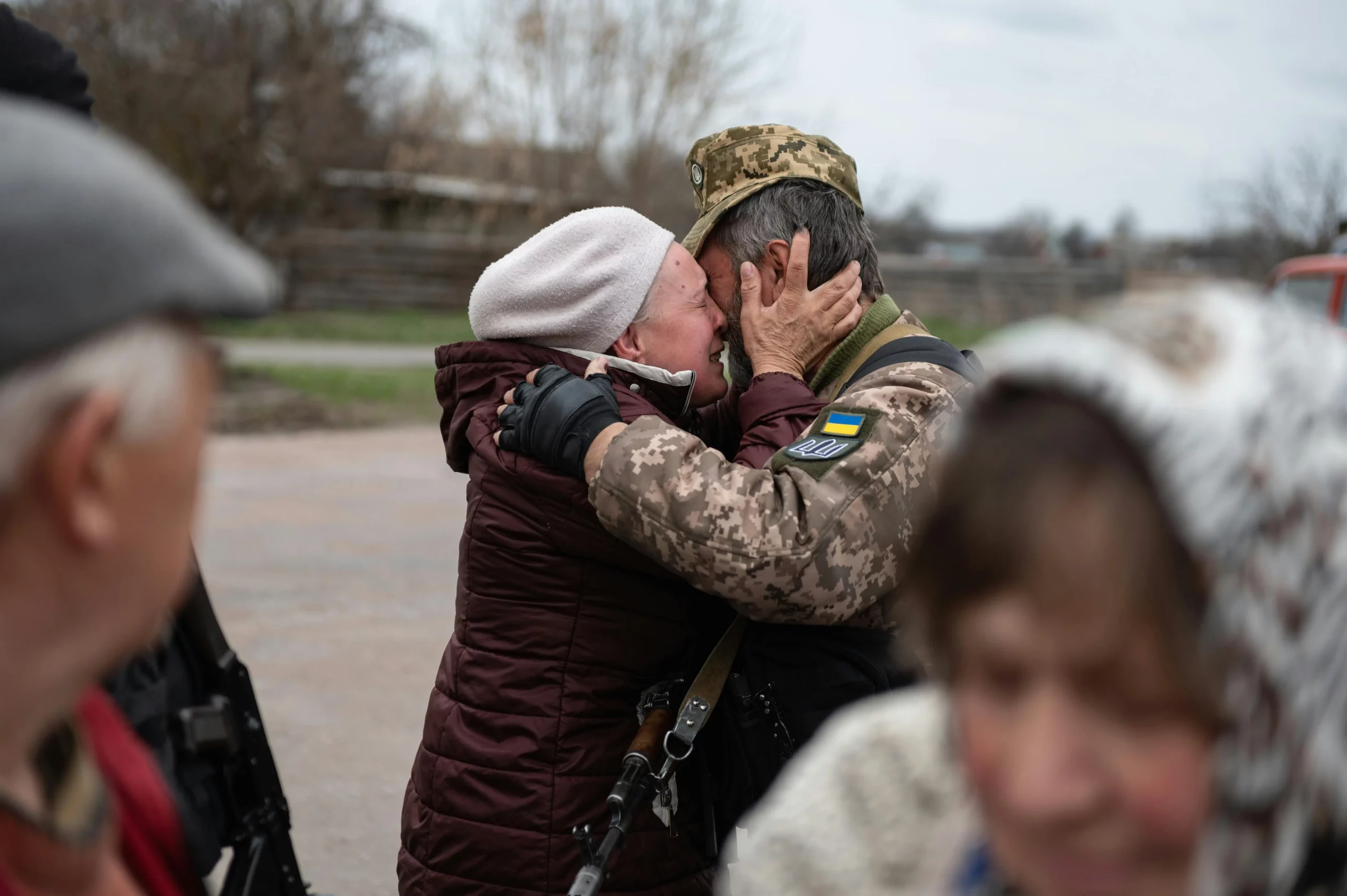
I would like to emphasise the unity, bravery and resilience of all residents who supported each other and shared any available products and medicines. There was no hesitation on how to act: Men got the ammunition and weapons and went to join the armed forces or the local territorial defence units, and women did everything possible to support them with supplies, food, medicines, clothes, and so on.

What infrastructure and services were destroyed and most affected? How did the city adapt to the lack of them?

Because of the Russian invasion, social and critical infrastructure and residential housing were heavily damaged. Circa 850 multi-story buildings were partially damaged, while 150 multi-story buildings were heavily damaged due to direct hits from shelling. Five buildings were destroyed. About 2,000 private houses were damaged, and of those, 600 were totally destroyed.

People shared everything with each other, including housing, but the worst part was that there were no shelters. We were not prepared for the war. When the war started, we used simple basements in buildings or spaces underground to shelter. These were the places where we had to live, because we were under constant shelling, and we had no opportunity to even go find food. It was really dangerous.

As for critical infrastructure, we had to live for circa two weeks with no water. The city has a central water supply system that was damaged. Of a total of five pumping stations, two were totally destroyed and two were damaged. The whole city with almost 300,000 residents could not get water and the sewage system did not work. The heating system also did not work. The weather was cold with temperatures below zero degrees [Celsius] and some peaks of minus seven degrees. Also, there was no power and no possibility to use any electrical equipment. We could not call or get the news from the TV or the internet, so we were disconnected in the shelter just with the company of people. But we had to survive somehow.

How did people start living again? How did the recovery efforts start?

During the siege, a lot of residents tried to leave the city. It was a great risk and there were many cases of civilians killed while trying to leave because there was no humanitarian corridor or organised conditions to leave the city. There were cases of cars with signs indicating children and families on board that were shelled by the enemy. It was very dangerous, but people had to leave because it was also dangerous to stay in the city.

Before the war, we had circa 284,000 residents, and in the middle of March, there were circa 70,000 left. After the enemy left, during summer, people started returning to the city. In September we had about 220,000 residents back in the city. Of course, it was up to the local government to ensure the provision of all kinds of recovery measures and services. This also incentivised citizens to come back.

How was the process of livelihood recovery carried out when residents started coming back? With the majority of men going to combat, did women take up new or different roles?

I would like to emphasise the role of local authorities in the recovery process. We had to make quick decisions. The first priority was to repair multi-story buildings and housing for people to have a roof over their heads, and to repair the water supply and heating systems to be ready for autumn and winter. It was a great multitasking effort to provide all services at the same time, and it is still an ongoing process. After these interventions, we also started building shelters because we had to ensure the safety of our citizens. We equipped educational institutions and multi-story buildings with real shelters including ventilation and bio toilets.

One other very important action was the reopening of schools and the provision of offline education. We understood that parents wanted their children to get an education in schools, and this was the factor that motivated people to return. Now we have combined both offline and online education. We also worked to reopen kindergartens. All kindergartens were equipped with shelters so that when the alarm started, the children could be safe. Restoring education facilities was also a main condition for people to continue to work. If kindergartens do not work, we mothers and parents must be with the children at home.

As for livelihoods and jobs, it is still a big issue for us, because our industries and enterprises were located in the suburbs, which were the most heavily shelled areas. Many businesses relocated to more secure regions in the west of Ukraine, and the number of people without jobs unfortunately increased.

A lot of men went to the front line, while a lot of women had to take care of children. It is very difficult to combine work with childcare at home. This is still a problem, although there has been some progress at the community level. We have some women’s organisations that provide support; however, it is still very hard to get new jobs due to the many enterprises that closed or relocated. As we are on the border and with the war still ongoing, it is hard to persuade investors or businesses to start new activities in the region. So yes, it is a problem for all residents, but it is even more complicated for women.

Our task as local authorities are to provide economic support and to create the conditions for businesses to return and invest again in our city. We are now trying to cooperate with international partners to attract investors for future projects. These international partnerships are a good signal for our residents. It shows that they will have a future.

What has been the role of civil society and local organisations in the last months of reconstruction? Did women take up new roles in these organisations?

I would like to emphasise the role of volunteer organisations, many composed of women. These women provided a huge support to suffering people by delivering humanitarian aid, gathering supplies and food for our armed forces, and helping with childcare and education.

The role of education is very important. It is a great psychological support and aid for our children who have to endure this terrible war. The war has not only caused physical injuries but also psychological trauma to all residents, especially women. For women, it has been more complicated because they have a lot of pressure to keep their children safe and healthy while also having a job. In the case of war, this responsibility and pressure has doubled or tripled. So, the role of women has been incredible.

One more thing that I can say for sure is that bravery and resilience have no gender, and that women are acting as leaders on all front lines and battlefields: educational, cultural, and health.

You mentioned psychological trauma. Are there mental health programmes that have been started by the city or local organisations to support the healing process for the city and its residents?

Yes, we have municipal programmes under the Department of Social Politics and a service for people who remain alone. We also have ongoing partnerships with international organisations that are part of the UN. At the same time, with the war still ongoing and with the constant threat of new shelling, women feel like they do not yet have time for psychological aid and to take care of their health. It is our task as local governments to ensure that they are not only healthy physically, but also psychologically. We still have to persuade them that we should also pay attention to ourselves and our mental condition and that we should be healthy for our children, colleagues, men, and the city.

How is the situation now in Chernihiv? What does the city need the most at the moment?

We have managed to advance the recovery and the restoration of some services. There are less and less power outages. We have provided schools and all critical infrastructure with generators to prevent power outages, and we have helped businesses also get generators. We are organising activities for children. More has to be done. Street lighting, for instance, is still not working due to power saving, and around 5 pm it is dark already in the streets.

What the city needs the most right now is financial support to cover larger-scale reconstruction. With the municipal budget, we have repaired the small and medium-sized damage to buildings, but we cannot cover the repair of heavy damages. For instance, the next project we would like to implement is the reconstruction of two water pumping stations, but we cannot cover that with the local government budget. This is also an issue with the damaged public transport system. We would like to incorporate new European technological solutions and innovations to create a better future for our residents and to improve their quality of life.

I can definitely say that women’s participation in all kinds of activities and decision-making processes in our country is stronger now than it was before due to cooperation with, and examples of, international and women’s organisations. It is a part of our European integration process and it is very important for us to continue with such cooperation processes. It gives us strength and spirit to unite as women following the example of the European Union, where there are many strong women in politics, economy and business. We should continue in this direction.

Nataliia Kholchenkova is the Head of the International Relations and Investments Department of Chernihiv City Council. Since 2020, she has also been Head of the Permanent Deputy Commission on Regulations, Legality, Corruption, Freedoms and Rights of Citizens and Prevention of Corruption and Head of the Deputy Association “For Equal Rights and Opportunities” of Chernihiv. She holds a PhD in the speciality of Secondary Education from T.H. Shevchenko National University “Chernihiv Collegium”, where she was also an Associate Professor. She is a member of the board of the Chernihiv Women’s Union and a member of the Association of Ukrainian Cities (AUC) and the Council of European Municipalities and Regions. She is the PLATFORMA spokesperson for AUC.

Training Local Police

Training Police - News 2023

Training local police forces on conflict-related sexual violence in Ukraine


Sexual violence has been used as a weapon of war in conflicts since time immemorial. Tragically, there is no exception with Russian armed forces invading Ukraine. Not only are women, men and children getting sexually assaulted, but they carry with them the stigma and trauma long after.

As part of its mission, the EU Advisory Mission to Ukraine (EUAM) has been advising and supporting the civilian security sector to ensure “effective and accountable law enforcement agencies”, “a trusted judiciary”, and “prevention of secondary stigmatisation of survivors” of conflict-related sexual violence (CRSV). In addition to providing advice, the EUAM has been providing training to the police, courts and prosecutors.

In July of 2022, a Ministry of Internal Affairs academy event was organised with 50 cadets from Lviv and Donetsk Police academies to raise their awareness about gender stereotypes. The EUAM has also organised community safety dialogues in Chernivtsi, Lviv and other Western Ukrainian territories which are “aimed at enhancing trust between civil society, authorities and law enforcement through a frank exchange of views and cooperation.” Priorities identified in the dialogues include “community safety, support for internally displaced people, fighting gender-based violence and disinformation.”

More than a year after the beginning of this violent conflict, many women and girls have suffered from sexual violence whether they stayed or fled their homes. With awareness and adequate initiatives, local and regional governments can better support victims of conflict-related sexual violence.

Additional resources

2023 International Women’s Rights Day series: “Five new Charter articles illustrated through local actions”

This article is part of a series published by CEMR to celebrate 2023 International Women’s Rights Day. This series informs on impactful initiatives carried out by local and regional governments to promote gender justice.

These projects embody the updated European Charter for Equality of Women and Men in Local Life as they show how five of its nine new articles can be put into practice. Together, they represent an inspiring step towards a more gender-equal Europe.

The updated Charter is available currently in EnglishFrench and easy-to-read English versions.

Any questions regarding the update or the actions highlighted in this series can be directed to contact@ccre-cemr.org or the relevant national coordinator for the Charter in your country.

Women’s Health

Women's Health - News 2023

The City of Liverpool fosters women’s health


While it may not seem obvious at first thought, some of Europe’s local and regional governments have competencies which allow them to make impactful policies and programming around sexual and reproductive health. A case in point is the City Council of Liverpool, which has put in place an effective collaboration with the National Health Service (NHS).

In the UK, women experience poor sexual and reproductive health in a higher proportion than their male counterparts. The situation is even more dire in lower socioeconomic or deprived areas. To improve women’s access to health services in Liverpool, a network of women’s health hubs was set up “across the city’s 10 primary care networks”. This was made possible through a joint commissioning group set up between the council and local NHS.

The hubs offer a range of services from long-acting reversible contraceptives (LARCs), such as coils (IUD), contraceptive implants and injections, to cervical screening, psychosexual services and treatment for menopause and heavy periods.

As data available in 2019 illustrated, the women’s health hubs have a positive impact: the rate of LARC prescribing locally increased from 13.1 per 1,000 women to 15.2 per 1,000. Additionally, wait times have been shortened and the City estimates that the increase in LARC distribution has prevented 415 unintended pregnancies.

If this model of specific health hubs expands beyond the city’s and the country’s borders, thousands of women could be positively impacted in their health, daily life and autonomy.

Additional resources

Contraception Policy Atlas Europe 2023


2023 International Women’s Rights Day series: “Five new Charter articles illustrated through local actions”

This article is part of a series published by CEMR to celebrate 2023 International Women’s Rights Day. This series informs on impactful initiatives carried out by local and regional governments to promote gender justice.

 These projects embody the updated European Charter for Equality of Women and Men in Local Life as they show how five of its nine new articles can be put into practice. Together, they represent an inspiring step towards a more gender-equal Europe.

The updated Charter is available currently in EnglishFrench and easy-to-read English versions.

Any questions regarding the update or the actions highlighted in this series can be directed to contact@ccre-cemr.org or the relevant national coordinator for the Charter in your country.

Guide on intersectionality

Intersectionality - News 2023

From toddlers to adults: municipalities embrace intersectionality at all ages


Intersectionality and diversity are at the heart of gender equality. As identities and lived experiences of people are not merely additive but intersecting and complex, it is necessary to include these dimensions in public policies to build a more equal society. In France and Italy, two municipalities are already working on it. From a multi-format help desk to representative toys, they show us that intersectionality is a concrete and transversal matter.

Creating an anti-discrimination help desk in Bologna

The municipality of Bologna is committed and active in its pursuit of equality and justice for all, both within its own administration as well as in service of its residents.

The city created a multi-annual positive action plan to implement its equal opportunities objectives and to address inequalities linked to gender, disability, age and sexual orientation. The plan includes measures to ensure accessible documents and websites, to provide training courses, and to organise exchanges of experience.
Since 2021, Bologna has been part of a campaign promoted by Period Think Tank – Data to Count —  to allow open and public access to data measuring the impact of public policies on gender dimensions.

Bologna, in cooperation with the Regional network against discrimination in the Emilia Romagna Region, offers residents an anti-discrimination help desk service. Its purpose is to welcome, listen, guide and support victims, direct and indirect witnesses of discrimination on a racial, ethnic, or religious basis.

The help desk offers three formats to make reports and obtain advice: a permanent office is open in the Intercultural Centre Zonarelli; a telephone number is serviced during weekdays and a WhatsApp number is available to leave vocal messages at any time; finally, an online form can be filled out to make reports.

Promoting understanding and acceptance through play in Saint-Médard-en-Jalles

As part of their commitment to the European Charter for Equality, the French municipality of Saint-Médard-en-Jalles has drafted a 2022-2024 Equality action plan. The plan includes an objective to raise awareness among staff working with children, youth, and adults about non-stereotyped education.

In addition to providing trainings to staff and encouraging them to reflect on inequalities within the municipal structure itself, they take action to present models of girls, boys, women, and men that go outside the stereotyped roles children are so frequently presented with.

For example, in the structures welcoming young children, the municipality is rethinking the types of toys that are purchased to include dolls with varying skin tones, characters with disabilities, and games representing people from all walks of life.

Additional resources

2023 International Women’s Rights Day series: “Five new Charter articles illustrated through local actions”

This article is part of a series published by CEMR to celebrate 2023 International Women’s Rights Day. This series informs on impactful initiatives carried out by local and regional governments to promote gender justice.

These projects embody the updated European Charter for Equality of Women and Men in Local Life as they show how five of its nine new articles can be put into practice. Together, they represent an inspiring step towards a more gender-equal Europe.

The updated Charter is currently available in EnglishFrench and easy-to-read English versions.
Any questions regarding the update or the actions highlighted in this series can be directed to contact@ccre-cemr.org or the relevant national coordinator for the Charter in your country.


Read the study here

For more information, contact:

Gender Violence

Gender Violence - News 2023

Tackling gendered violence against elected women and staff


The issue of increasing incivility, harassment abuse and violence directed at elected representatives is not a new one. However, it is a threat that continues to grow along with the disenchantment and mistrust many citizens feel towards government and institutions.

While quite a few studies and surveys examine the issue faced by public figures, the gendered dimension of the harassment and violence that elected women face at all levels, including the local and regional, must not be ignored.

Along with the increase in women’s participation in political life, comes increasing exposure to a continuum of abuse, violence, and sexist attitudes. Some studies suggest that while women may not encounter more abuse online, the abuse that women receive is gendered in its content.

A 2020 report for the Congress of Local and Regional Authorities on Fighting Sexist Violence against women in politics at local and regional levels takes stock of the increase of incivility, insults and attacks from both peers and citizens against women who become visible in the political arena. It also gives hints as to how local and regional governments should tackle this disturbing phenomenon. If nothing is done, it may be driving women out of public life and undermining the roots of the democratic process and equal participation and representation.

Recommended actions include:
• “Raising awareness among elected representatives, council staff and citizens on violence against women in politics and its negative impact on the exercise of democratic rights;”
• “Introduc[ing]or revis[ing] codes of conduct in national assemblies, governmental bodies and institutions, explicitly prohibiting sexist speech and sexual harassment, introducing effective complaint and sanctions mechanisms and assist local and regional governments with the implementation of measures regarding sexist violence against women in politics;”
• “Conduct [ing] periodical surveys and studies and establish official statistics, at all levels of government, on the issue of violence against women in politics, including attacks perpetrated in the private sphere;”

Other tools and resources are available to women politicians to help them engage safely with social media. The UK-based non-partisan organisation Elect Her works to motivate, support and equip women in all their diversity to stand for political office in Britain. As part of their mission, they partnered up with Glitch, a charity seeking to end online abuse. Together they offer an online learning course to equip women in public office with the skills to be safer, more resilient and more confident in online spaces.

Finally, a useful guide to security on Facebook and Instagram for women in politics was produced by Meta in collaboration with the Elues Locales network. It provides practical tips on prevention and protection (passwords, pirated accounts, etc.) as well as how to moderate content and report abuse.

Additional resources

2023 International Women’s Rights Day series: “Five new Charter articles illustrated through local actions”

This article is part of a series published by CEMR to celebrate 2023 International Women’s Rights Day. This series informs on impactful initiatives carried out by local and regional governments to promote gender justice.
These projects embody the updated European Charter for Equality of Women and Men in Local Life as they show how five of its nine new articles can be put into practice. Together, they represent an inspiring step towards a more gender-equal Europe.

The updated Charter is available currently in EnglishFrench and easy-to-read English versions.

Any questions regarding the update or the actions highlighted in this series can be directed to contact@ccre-cemr.org or the relevant national coordinator for the Charter in your country.

Digital Violence

Digital violence - News 2023

The City of Munich takes on digital violence


In an effort to proactively tackle online forms of violence, the City of Munich has set out specific actions in its 2020-2024 Equality Action Plan.

The high incidence of gender-based violence that girls and women encounter in face-to-face interactions translates increasingly into the digital realm. According to EU-wide surveys carried out by the EU’s Fundamental Rights Agency 33 % of women have suffered physical and/or sexual violence since the age of 15 years; and 1 in 10 women have already experienced a form of online violence from the age of 15 onwards (EIGE 2017)

Munich has been quick to recognise that as digital media and digital communication are naturally integrated into everyday life, particularly among younger people, the distinctions between digital and physical violence is becoming less pertinent.

As part of its project on digital violence, Munich is organising a series of events bringing together experts from different fields and with various approaches to the subject in order to take stock of and understand the existing forms of digital violence. The target audience includes professionals from specialised institutions in Munich, including social services, women’s shelters, schools, police and hospitals.

The experts are invited to exchange on different topics, among which an analysis of gender and violence in the digital space, legal aspects of digital violence, prevention and intervention possibilities in terms of technical aspects and in police work.

These events, which are attended by 20 to 30 professionals, offer space to explore possibilities for prevention and intervention and to identify areas for action. It also contributes to spreading knowledge and awareness of the phenomenon which is still relatively poorly understood and not adequately measured. This is what Munich is hoping to change for the better with their actions.

The next steps following the events will be to develop strategies for preventing and addressing digital violence. One possibility to be explored is the creation of a special counselling centre at the municipality. As Munich shows the way, other municipalities will hopefully soon follow and help make the digital world safer for everyone.


Additional resources


2023 International Women’s Rights Day series: “Five new Charter articles illustrated through local actions”

This article is part of a series published by CEMR to celebrate 2023 International Women’s Rights Day. This series informs on impactful initiatives carried out by local and regional governments to promote gender justice. These projects embody the updated European Charter for Equality of Women and Men in Local Life as they show how five of its nine new articles can be put into practice. Together, they represent an inspiring step towards a more gender-equal Europe.

The updated Charter is available currently in EnglishFrench and easy-to-read English versions.

Any questions regarding the update or the actions highlighted in this series can be directed to contact@ccre-cemr.org or the relevant national coordinator for the Charter in your country.

International Women’s Rights Day

International Women’s Rights Day - News 2023

International Women’s Rights Day 2023: Five new Charter articles illustrated through local actions


To celebrate 2023 International Women’s Rights Day, CEMR is publishing a series of impactful initiatives carried out by local and regional governments to promote gender justice. These projects embody the updated European Charter for Equality of Women and Men in Local Life as they show how five of its nine new articles can be put into practice. Together, they represent an inspiring step towards a more gender-equal Europe.

The updated Charter is a result of several years of reflection and collaboration which started in 2021 on the occasion of its 15th anniversary. The nine new articles cover and expand on the following topics: sustainable development, cyber violence, violence against elected representatives, intersectionality, flexible working, digital inclusion, sexual and reproductive health rights, climate change and gender-responsive civil preparedness and disaster response.

The over 2,000 commitments to the Charter made by territories in 36 European countries prior to 2023 remain valid. The existing signatories are, however, invited to renew their commitment to the Charter by adopting the new articles and integrating them into their future equality action plans as relevant. Any new commitments to the Charter will be to the updated text, from January 2023 and in function of the availability of the text in local languages.

While the updated Charter has been translated into 28 languages, the transcriptions are still undergoing a quality check with the national coordinators of the Charter in CEMR’s network. They will be posted to the online Observatory and CEMR’s website once they are approved.

The updated Charter is available currently in EnglishFrench and easy-to-read English versions.

Any questions regarding the update or the actions highlighted in this series can be directed to contact@ccre-cemr.org or the relevant national coordinator for the Charter in your country