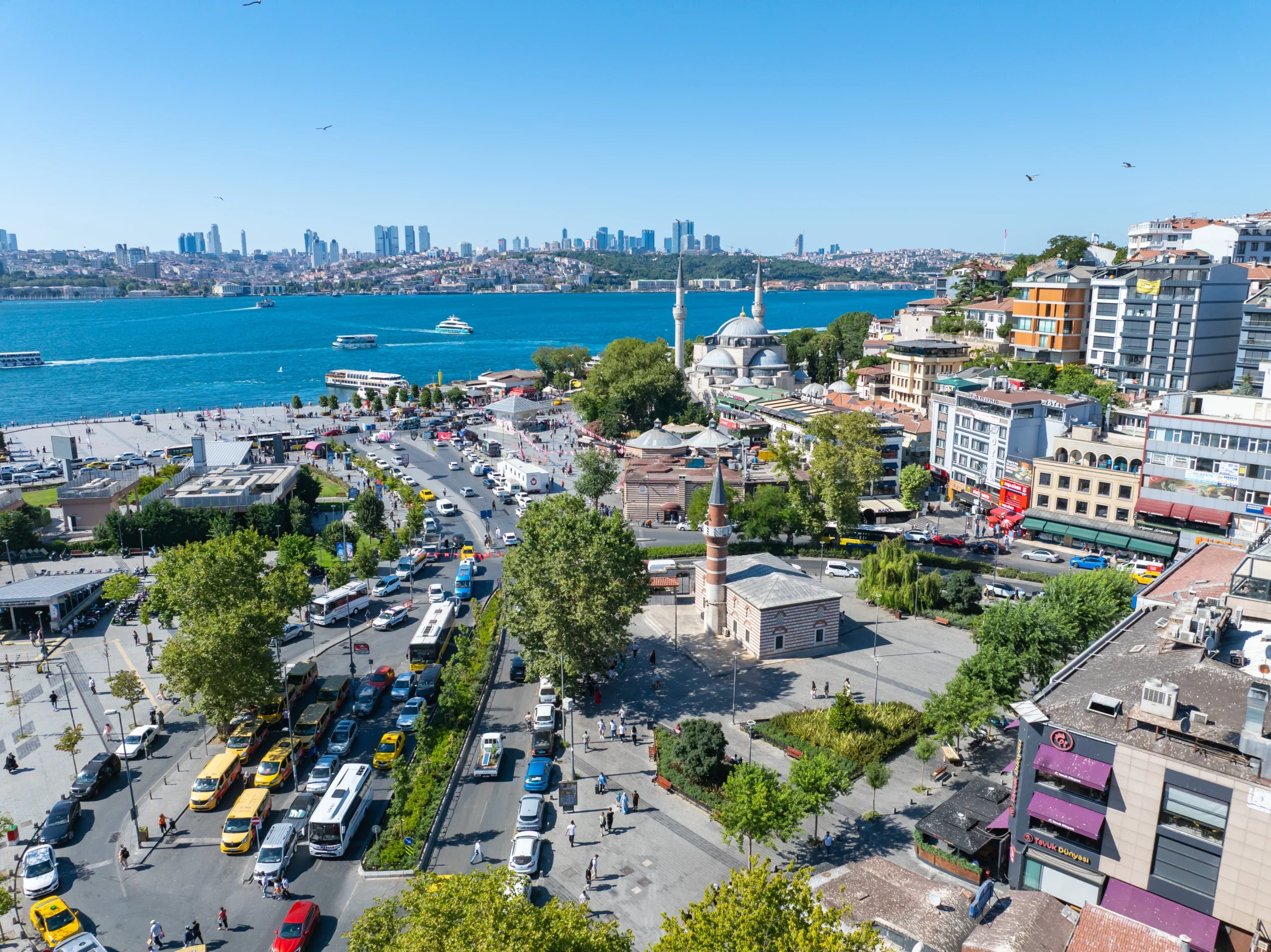
The Council of European Municipalities and Regions (CEMR) is deeply concerned about the arrest of Vahap Seçer on 6 October 2026, Mayor of Mersin Metropolitan Municipality, President of the Union of Municipalities of Türkiye (UMT), and CEMR Vice-President.
Mayor Seçer is the third President of UMT, CEMR’s member association in Türkiye, to be deprived of his liberty since the 2024 Turkish local elections. His arrest follows those of Ekrem İmamoğlu, Mayor of Istanbul Metropolitan Municipality, on 19 March 2025, and Zeydan Karalar, Mayor of Adana Metropolitan Municipality, on 8 July 2025.
These developments are part of a broader and deeply concerning trend. Since the 2024 local elections, more than 80 municipalities in Türkiye have had their mayors replaced, and over 30 mayors have been arrested. Among them is Sinem Dedetaş, Mayor of Üsküdar and a member of the CEMR Policy Committee, who was arrested in July 2026. Taken together, these events point to a continued erosion of local democracy in Türkiye, a trend CEMR has repeatedly raised concerns about.
CEMR reiterates that local elected representatives must be able to carry out their duties freely and without undue interference and calls on the Turkish authorities to:
Respect the democratic mandates entrusted to local elected representatives by citizens and uphold the principles of the European Charter of Local Self-Government;
Release arrested elected representatives and allow them to resume their mandates;
Ensure that UMT can operate freely and continue to be led by the representatives chosen by its members.
CEMR also calls on European institutions and the wider international community to stand in solidarity with democratically elected local representatives in Türkiye and to raise these cases in their dialogue with the Turkish authorities.
At a time when democracy is facing increasing pressure across Europe, protecting local self-government is more important than ever. CEMR will continue to follow developments closely and stands firmly alongside UMT and its members and partners in Türkiye.
While DDC Report #1 presented a general overview of reported decentralised development cooperation (DDC), this second report digs deeper into the opportunities and challenges shaping decentralised cooperation and looks at the results that DDC partnerships aim to achieve. It also showcases a selection of DDC projects, offering illustrative examples of what effective partnerships and activities look like in practice.
Where does Europe stand when it comes to DDC?
The second DDC Report highlights:
Funding drives engagement, but limited capacities hold it back. Available funding and linguistic, cultural or historical ties (both 56.75%) are the top drivers of involvement in DDC. Yet, limited capacities (78.37%) and limited or inconsistent funding opportunities (54. 05%) appear as the biggest challenge for scaling up.
Similar goals in focus. Respondents most frequently selected the following three results that their DDC partnerships aim to achieve in both partner and home territories: empowering local leaders and stakeholders, improving local public services, and strengthening local governance. Which one takes priority, though, differs depending on the territory in focus.
A lasting commitment. The majority of respondents (78.38%) plan to continue cooperating with their DDC partners, pointing out that decentralised cooperation is seen as a long-term investment rather than a one-off exercise.
This report is part of a wider series of Mindcraft publications on decentralised development cooperation, including Country Profiles on DDC frameworks. You can find the rest of Mindcraft’s publications here.
CEMR encourages European and national authorities to strengthen the role of LRGs in development policy, not only as implementers, but also as strategic partners helping shape a more resilient, inclusive, and effective development agenda. This report is produced within the Bridging and Mapping Knowledge Gaps in Decentralised Cooperation (Mindcraft), funded by the German Federal Ministry for Economic Cooperation and Development (BMZ) and supported by the Deutsche Gesellschaft für Internationale Zusammenarbeit (GIZ).
Europe urgently needs more affordable, sustainable, and inclusive housing. Yet cities, towns and regions working to deliver new homes increasingly face overlapping rules, lengthy procedures, legal uncertainty and limited investment capacity.
The Council of European Municipalities and Regions (CEMR) provided feedback on existing EU law impacting housing policies, especially at local level. In its response to the European Commission’s call for evidence on housing simplification, CEMR sets out how the European Union can remove unnecessary barriers while protecting essential social, environmental and democratic objectives.
Local and regional governments play a decisive role in housing through spatial planning, permitting, local services, infrastructure, and territorial development. They must therefore be fully involved in the design, implementation, and evaluation of any future European housing simplification measures. EU action should support locally adapted solutions, respect subsidiarity and strengthen the capacity of towns, cities and regions to act, not replace local decision-making with new layers of European requirements.
Simplification, not deregulation
Many EU rules affecting housing pursue legitimate public-interest objectives. Problems arise when requirements from different policy areas overlap, follow incompatible timelines, or impose disproportionate administrative burdens.
Housing projects can be affected simultaneously by procurement, state aid, fiscal, energy, environmental, and construction rules. Their combined effect can increase costs, delay investment, and require local governments to seek expensive external legal or technical expertise.
CEMR is therefore calling for a more coherent regulatory framework, with better-aligned definitions, datasets, deadlines, and digital systems. Simplification should focus on removing duplication and resolving conflicts between rules, while maintaining environmental protection, building quality, social safeguards, and meaningful public participation.
Unlock local investment in affordable housing
Towns, cities and regions cannot respond to housing shortages if public investment continues to be constrained by fiscal and state aid rules that do not adequately recognise the long-term value of affordable housing.
CEMR calls for affordable and energy-efficient housing expenditure to be treated as long-term public investment rather than ordinary current spending. The state aid framework should also provide greater legal certainty and flexibility for municipal and public-interest housing projects.
In particular, procedures related to entrustment, overcompensation controls, and earmarking obligations should be made clearer and more proportionate. Local governments, including smaller towns, should be able to implement housing measures without routinely depending on costly external expertise.
Make public procurement faster and more proportionate
Public procurement rules are another significant source of delay and administrative cost. As construction prices rise, more housing projects fall within complex EU-wide procurement procedures, even where there is little realistic cross-border interest.
CEMR proposes higher procurement thresholds that better reflect current construction and service costs. Its response also calls for greater flexibility to negotiate directly with a contractor following an unsuccessful procedure and to modify contracts when circumstances change after an award.
A simpler and more flexible framework would reduce delays, lower compliance costs, and help local governments bring affordable housing projects forward more quickly.
Align energy, environmental and housing objectives
EU energy rules should better enable local energy sharing, the use of nearby renewable energy and residual heat, and more flexible allocation of grid capacity for projects serving a clear public interest.
Closely connected legislation, including rules on energy efficiency, renewable energy and building performance, should operate as a coherent whole. Rather than prescribing detailed administrative procedures, the EU should promote open standards, interoperable data, and digital permitting systems that can be adapted to national and local administrative structures.
Greater legal certainty is also needed in applying the Birds and Habitats Directives and the Nature Restoration Regulation. CEMR calls for clearer assessment of thresholds, proportionate procedures for low-risk projects, and more flexible approaches to environmental compensation. These changes should improve planning certainty without weakening biodiversity objectives.
Build the capacity to deliver and renovate
Regulatory reform alone will not solve Europe’s housing shortage. Higher productivity in construction and renovation is equally important.
CEMR calls for investment in skills, training, innovation and local administrative capacity, particularly in small and medium-sized municipalities. Better labour mobility and recognition of qualifications could help address workforce shortages, while greater harmonisation of construction standards could reduce fragmentation and support innovative, circular and climate-resilient building methods.
Europe must also look beyond new construction. Renovation, retrofitting and the adaptive reuse of vacant buildings can increase supply, revitalise neighbourhoods and reduce environmental impacts. Making these projects easier to finance, permit and implement should be a core part of the simplification agenda.
Put local and regional governments at the centre
Housing pressures differ sharply from one territory to another. They may be driven by tourism, demographic change, land scarcity, infrastructure gaps, construction costs, depopulation, or shortages of affordable and social housing. Aligned with CEMR’s reaction to the Affordable Housing Act, the definition and related rules for areas under housing stress should be revised.
There can therefore be no single regulatory shortcut that works everywhere. The EU should provide enabling conditions through investment, legal clarity, interoperable systems and smart simplification, while leaving local and regional governments the flexibility to develop solutions suited to their communities.
Cities, towns and regions call for investment, smart simplification and local autonomy as Europe steps up its response to the housing crisis
791 words
3–5 minutes
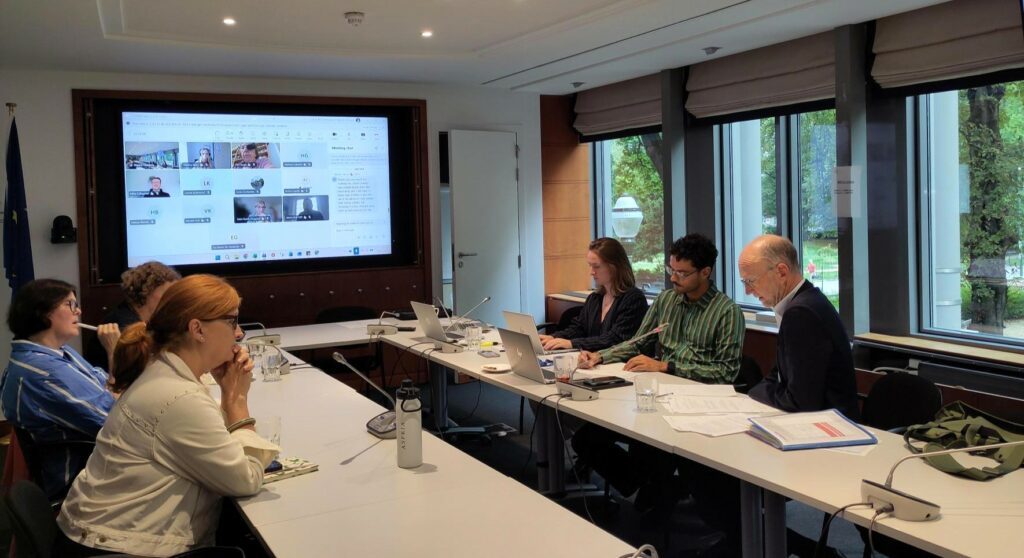
Europe’s housing initiatives will only succeed if they reflect the realities faced by cities, towns, and regions. This was the central message from the latest meeting on 3 September of the CEMR Housing Task Force, which brought together participants from 12 national associations of local and regional governments, alongside representatives of the Irish government and the European Commission.
During the meeting, CEMR Task Force members exchanged experiences from across Europe and discussed two major initiatives expected to shape the EU housing agenda: the forthcoming Affordable Housing Act and the Housing Simplification Package. The discussion enabled CEMR members to provide early feedback directly to EU policymakers and help prepare CEMR’s contribution to the European Commission’s ongoing call for evidence on housing simplification.
Housing: high on the European agenda
The meeting opened with an exchange on the housing priorities of the Irish Presidency of the EU. Ireland plans to build on the political momentum generated by previous presidencies, with housing supply, affordability and homelessness among the priorities under discussion. Participants also heard about plans for stronger European cooperation, including a pan-European housing investment platform and the recently established European Housing Alliance, which aims to promote networking and the exchange of good practices.
CEMR members stressed that local and regional governments must have a meaningful place in this emerging European architecture, including in ministerial discussions and stakeholder events. They also expressed strong interest in financial solutions capable of supporting long-term public and affordable housing investment, such as revolving funds.
Simplify delivery is not deregulation
The European Commission’s forthcoming Housing Simplification Package, expected in the second quarter of 2027, offers an opportunity to remove unnecessary costs, delays, and inconsistencies affecting housing delivery. EU rules on procurement, State aid, environmental assessment, energy performance, taxation, and construction standards can all influence what local and regional governments are able to deliver.
CEMR Task Force members nevertheless cautioned that simplification must not become deregulation. Environmental protection, building quality, and citizen participation remain essential. The objective should be to resolve conflicts and duplication between policies while preserving their public interest goals.
Above all, participants called for respect for municipal autonomy over zoning, local taxation, permitting, and development plans. Definitions of affordability, housing stress, and priority groups must reflect local conditions rather than rely exclusively on uniform indicators or datasets that may not capture realities on the ground.
Direct dialogue on the Affordable Housing Act
In an exchange with Matthew Baldwin, Deputy Director-General at the European Commission and Head of its Housing Task Force, members discussed how the forthcoming Affordable Housing Act could provide greater legal clarity for public authorities in areas experiencing severe housing pressure. Members welcomed efforts to reduce legal uncertainty but stressed that Member States must allow the competent local and regional authorities to play a decisive role in assessing housing pressure and choosing the appropriate response.
Short-term rentals are not the sole cause of Europe’s housing crisis. Nevertheless, in some territories, the combined effects of tourism, vacant homes, and insufficient supply can intensify local pressures. Cities need clear and workable legal tools to act where necessary, without new administrative burdens or EU interference in local decisions.
Different housing markets, shared barriers
The meeting also featured a national roundtable, which showed the diversity of housing markets and challenges across Europe. Members reported ambitious construction targets, rising development costs, high mortgage rates, shortages of public funding, and difficulties financing renovation in lower-value areas. Severe pressure on municipal budgets is also limiting the ability of local governments to build and maintain public and social housing.
Despite these differences, common priorities emerged: stable and accessible finance, stronger construction capacity, support for renovation, and policy frameworks that allow local authorities to respond to their own housing markets.
Participants also highlighted the social dimensions of the crisis. Housing policies should better address homelessness and the needs of people at particular risk, including women experiencing domestic violence. Tackling skills shortages in construction, while opening the sector to a more diverse workforce, was identified as another important area for future work.
Turning local expertise into European influence
The meeting’s conclusions will feed directly into CEMR’s response to the European Commission’s call for evidence on the Housing Simplification Package. By bringing together evidence from its members and maintaining a direct dialogue with the European Commission and Council presidencies, CEMR is ensuring that local and regional experience informs European decisions from their earliest stages.
As the EU develops its housing agenda, CEMR will continue to advocate for a simple principle: local and regional governments must be trusted, financed, and fully involved if Europe wants to turn housing ambitions into affordable, sustainable, and inclusive homes.
Organised by the European Commission’s Directorate-General for Regional and Urban Policy and the European Committee of the Regions, the European Week of Regions and Cities is the biggest annual Brussels-based event during which cities and regions showcase their capacity to create growth and jobs, implement European Union Cohesion policy, and prove the importance of the local and regional level for good European governance.
If you are a CEMR member and plan to be in Brussels this week, please let us know by completing this form so we can contact you regarding visibility opportunities.
CEMR events taking place during the European Week of Regions and Cities (outside the official programme)
CEMR will organise, co-organise, or take part in several events during the Week, taking advantage of the presence of numerous local leaders in Brussels.
Strengthening the territorial dimension in the future EU Cohesion Policy
Date and time: 12 October 2026, 17:00 – 20:30 CEST
Venue: CEMR, Square de Meeûs 1, Brussels
Organisers: CEMR and the German Association for Housing, Urban and Spatial Development (DV), with the financial support of the German Federal Ministry for Housing, Urban Development and Building
This high-level Brussels event will bring together EU, national and local leaders to discuss the future of Cohesion Policy and its territorial dimension. It will focus on upcoming decisions on the EU budget and investment framework, while promoting balanced, place-based development across urban and rural areas and strengthening cooperation between key European stakeholders.
Making the freedom to stay a reality: The role of services of general interest in strengthening territorial cohesion
Date and time: 14 October 2026, 16:00 – 17:30 CEST
Venue: SQUARE Brussels Convention Centre (Mont des Arts), Brussels
Coorganised with SGI Europe and the Community of European Railway and Infrastructure Companies, this policy debate will explore how people can be supported to live and work in the places they call home. It will focus on the role of essential services such as housing, transport, energy and care in making regions more attractive and resilient.
The following speaker will contribute to the session:
Ethem Pekin – Head of Unit, Community of European Railway and Infrastructure Companies
Bouke Arends – Chair of the Netherlands delegation in the European Committee of the Regions and Mayor of Westland (NL)
Nicola De Michelis – Director, European Commission DG REGIO
Maria Elena Nevado Del Campo – MEP, REGI Committee
Local authorities and their associations are invited to join the Coalition for the Freedom to Stay Coalition for the Freedom to Stay to support the SGI Network’s effort to make the freedom to stay a core European objective.
Cohesion Alliance event
Date and time: 14 October 2026, 16:30 CEST
Venue: SQUARE Brussels Convention Centre (Mont des Arts), Brussels
The conference National and Regional Partnership Plans (NRP plans) with local and regional authorities at the centre: myth or reality? will be held on Wednesday 14 October 2026, from 16:00 to 17:30 at the European Committee of the Regions (Room JDE 52)
The Cohesion Alliance event will focus on the preparation phase of the NRP plans and discuss the extent to which local and regional authorities are being considered in the plans under development.
This event will be divided into 2 sessions:
First session: presentation of studies on the involvement of LRAs in NRP plans
Introduced by moderator (Martin Guillermo Ramírez, Secretary General of the European Association of European Border Regions)
Second session – Cohesion policy 2028-2034: debate with Cohesion Alliance partners
Building on the evidence presented on the planned involvement of local and regional authorities within the NRP plans for the 2028-2034 period – and bearing in mind the ongoing interinstitutional debate on the post-2027 multiannual financial framework and the National and Regional Partnership Plans Fund Regulation (NRPP) – this session will involve a political discussion among Cohesion Alliance partners and contributors from the floor.
The event meeting will be opened by the Committee of the Regions President, Kata Tutto, with the participation of:
Christoph SCHNAUDIGEL, President of the Council of European Municipalities and Regions (CEMR)
Joris BENGEVOORD, President of the Association of European Border Regions (AEBR)
Lilijana MADJAR, Vice-President of the Assembly of European Regions (AER)
Eugenio GIANI, Vice-President in charge of Cohesion Policy and the EU Budget, Conference of Peripheral Maritime Regions (CPMR)
The final words will be by Emil Boc and Vasco Alves Cordeiro, CoR NRPP co-rapporteur(s) (TBC)
The meeting is public and will be web streamed in EN/FR/IT/PL.
Bridges of Trust Annual Gathering
Date and time: 14 October 2026, 13:30 – 17:30 CEST
The fourth edition of the Bridges of Trust Annual Gathering will bring together partners from Local and Regional Government Associations, networks, partner organisations and EU institutions to exchange experiences, strengthen cooperation, and shape joint initiatives on international municipal cooperation between European and Ukrainian towns, cities and regions.
Bridges of Trust Award Ceremony
Date and time: 14 October 2026, 18:00 – 22:30 CEST
Venue: Les Ateliers des Tanneurs, Rue des Tanneurs 60A, Brussels
By invitation only
The Bridges of Trust Partnerships Award Ceremony will recognise five leading EU–Ukraine municipal partnerships as “Bridges of Trust Ambassadors” to celebrate their contribution to recovery, resilience, and EU integration at the local level.
EU Covenant of Mayors Ceremony
Date and time: 15 October 2026, 9:00 – 15:30 CEST
Venue: Charlemagne Building, Rue de la Loi 170, Brussels
Organiser: Covenant of Mayors for Climate and Energy Europe
From high-level political dialogue to practical workshops and peer exchanges, the Ceremony will bring together hundreds of local and regional leaders from across Europe alongside high-level representatives of the European Commission and other key stakeholders to discuss how local action is central to achieving European objectives.
Day 1 – From climate ambition to green competitiveness, what does the evolving EU agenda mean for local and regional governments?
Thursday 15 October | 16:00-17:45 CEST | Open event – In person at CEMR office
Panel discussion with CEMR spokespersons and external speakers, audience exchange and short “Territorial Spotlights” from members showcasing concrete local and regional practices of connecting competitiveness to territorial green policies, including climate adaptation, energy, circular economy, decarbonisation and clean mobility.
Day 2 – Defining CEMR green priorities for 2027
Friday 16 October | 10:00–13:00 CEST | CEMR members only meeting – In person at CEMR office & online
The second day will focus on CEMR’s internal work and priorities for the year ahead. Spokespersons and Expert Group Chairs will provide brief updates on key policy developments, ongoing CEMR activities, and expected priorities for 2027.
Are you organising an event during the European Week of Regions and Cities 2026?
CEMR members and partner associations are invited to share details of their own events taking place during the Week by completing this form, so we can help promote them and coordinate the wider CEMR agenda for the Week.
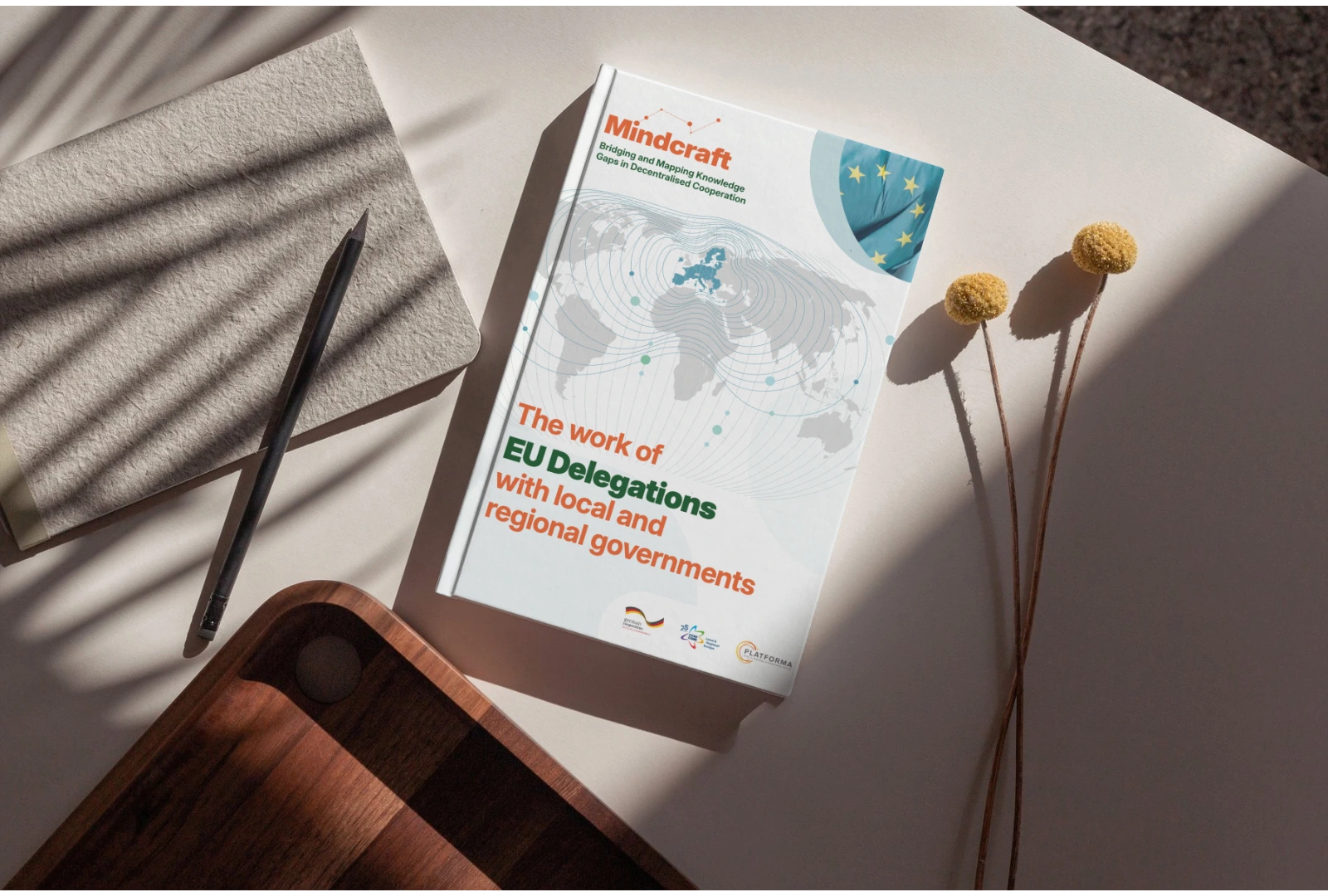
“The Work of EU Delegations with Local and Regional Governments” is a new Mindcraft publication, following on from the report published by PLATFORMA in 2021. Since 2021, the EU’s external action framework has undergone significant change. Under the Neighbourhood, Development and International Cooperation Instrument (NDICI) Global Europe and the Global Gateway strategy, EU international cooperation has moved towards a more geographic, investment-driven approach, with growing emphasis on the localisation of development cooperation.
This new study examines to what extent and how EU Delegations (EUDs) engage with Local and Regional Governments (LRGs) and their associations (LRGAs) in the partner countries. It is based on a 2025 survey of 40 EUDs worldwide and, interviews with five of them in Chad, Guatemala, Madagascar, Nepal and Zambia, as well as additional exchanges with EU Member States development cooperation agencies.
Key findings:
Enabling environment is key for LRG engagement. 62.5% of surveyed EUDs assessed the decentralisation in the partner country as favourable, and 57.5% support decentralisation efforts. Examples across partner countries show that support to local governance and public finance management helps LRGs engage in territorial development and EU-funded initiatives, though access to finance and the preparation of bankable projects remain persistent challenges.
LRG engagement in EU international cooperation remains uneven and rather limited. 57.5% of surveyed EUDs stated they engage with LRGs and LRGAs under the NDICI-Global Europe, while 20% stated they engage with them under the Global Gateway strategy. EUDs point to the lack of a right framework for structured cooperation as an obstacle. 69.2% consider that a specific budget line for LRGs would help.
LRG engagement can be valuable in fragile contexts. Among EUDs working in fragile settings, 76.4% consider that engaging with LRG would facilitate their work.
Decentralised cooperation remains generally underused. Illustrative examples of partnerships between European and partner-country LRGs, along with cooperation through LRGAs and their international cooperation structures, show real potential to strengthen local governance and support the localisation of EU initiatives but require greater visibility and emphasis.
There is an ongoing need to strengthen EUDs capacities to work with LRGs. Only 30% of surveyed EUDs reported having received specialised training or support for engaging with LRGs, which were assessed useful for understanding territorial approaches to local development.
These findings come at a timely moment, as negotiations on the 2028–2034 Multiannual Financial Framework, including its proposed Global Europe Instrument, are underway. CEMR-PLATFORMA calls for a clear engagement framework, dedicated funding mechanisms for LRGs, and stronger support for decentralised cooperation as a route to shared development goals.
The Council of European Municipalities and Regions (CEMR), together with President Christoph Schnaudigel, voices full solidarity with Mayor Sinem Dedetaş, member of the CEMR Policy Committee, following her detention, and calls on Turkish authorities and European institutions to defend local self-government and the rule of law.
CEMR has issued a statement expressing its deep concern over the detention today of Sinem Dedetaş, Mayor of Üsküdar and member of the CEMR Policy Committee, along with several members of her team.
CEMR stresses that this is not an isolated case, but the latest in a sustained series of actions targeting democratically elected local representatives in Türkiye. Since the 2024 local elections, more than 80 municipalities in the country have seen their elected mayors replaced through trustee appointments, dismissals or arrests, while over 30 mayors have been detained, many remaining in prolonged pre-trial detention.
“As President of CEMR, I wish to express full solidarity with Mayor Sinem Dedetaş and with all local elected representatives affected by these developments“, writes Christoph Schnaudigel, CEMR President and President of the County of Karlsruhe (Germany).
It should be noted that when mayors and local leaders are deprived of their liberty and unable to exercise the mandates entrusted to them by citizens, the consequences extend far beyond those directly concerned: each case leaves a community without the representatives it elected. Taken together, these developments point to a steady erosion of local democracy and a lack of respect for the will of voters in Türkiye.
CEMR recalls the importance of the principles enshrined in the European Charter of Local Self-Government, including respect for democratic mandates and the autonomy of local governments; principles CEMR considers essential to maintaining citizens’ trust in democratic institutions at all levels.
CEMR calls on the Turkish authorities to ensure full respect for fundamental democratic standards and the rule of law, and to guarantee that elected representatives can carry out their responsibilities freely and without undue interference. It also calls on European institutions and the international community to stand in solidarity with democratically elected local representatives in Türkiye, and to continue advocating for the protection of local self-government, democratic institutions and the rule of law.
CEMR will continue to monitor developments closely and stand alongside its members and partners in Türkiye in their commitment to democratic local governance.
The EU Pact on Migration and Asylum entered its application phase this year. The Council of European Municipalities and Regions (CEMR) puts a question at the centre of that transition: are the local and regional governments who will actually deliver the Pact being treated as partners in shaping it?
Drawing on a questionnaire circulated among CEMR member associations, direct exchanges with local and regional leaders, and complementary desk research, the report maps how prepared towns, cities and regions are for the Pact’s application, how involved they have been in designing it, and what they say they need to make it work.
Already central, not always recognised
The findings confirm what many mayors and regional leaders already know from experience: local and regional governments are not new to migration governance; they are already at its centre. Long before the Pact, towns, cities and regions were carrying the bulk of integration, housing, education, health and social support for migrants and asylum seekers. Regional authorities reported responsibilities in this field in 87.5% of cases, and municipal authorities in 62.5%.
A governance gap
Half of respondents said local and regional governments were not consulted at all during the Pact’s negotiation and drafting. Where consultation did happen, it was often informal, ad hoc, or limited to written contributions requested by national authorities. No country reported involving local and regional governments (LRGs) as genuine co-designers of national implementation plans, CEMR calls this a “missing link” in multi-level governance: the level expected to deliver the Pact on the ground is rarely in the room when the rules are set.
A capacity gap
Responsibility without resources is a recurring theme. Only Austria considered its LRGs “mostly prepared” for the Pact; several other countries reported no additional resources at all since 2024. Where support existed, it was sporadic: extra IT tools here, an operational manual there, rarely the stable, dedicated funding implementation requires.
A coordination gap
Information about the Pact often reached local authorities through fragmented channels — circulars, ministry emails, informal networks, even the press; and clarity about who is responsible for what varied sharply from one country to the next. This uncertainty was not a side effect; it actively hampered planning, budgeting, and staffing decisions on the ground.
Was the deadline ever realistic?
For most respondents, the June 2026 application deadline of the Pact looked difficult or uncertain, well before it arrived, held back by staff shortages, unclear national guidance, and delayed preparations. Yet the report also points to a genuine reserve of capability: local authorities’ rapid, resourceful response to the displacement of people fleeing Ukraine shows what towns, cities and regions can do under pressure — provided that effort does not have to rely on improvisation every time.
What comes next
The analysis closes with three recommendations:
Formally recognise LRGs within the Pact’s governance architecture;
Strengthen synergies between AMIF, ESF+ and other EU funds around a more place-based approach;
Ensure the Pact’s monitoring mechanisms track local and regional implementation, not only national transposition.
CEMR will continue to bring this evidence into the EU debate as the Pact moves further into its implementation phase.
With less than four years remaining to achieve the 2030 Agenda, a new CEMR–PLATFORMA report highlights a clear message from local and regional governments across Europe: sustainable development will only succeed if cities, towns and regions are placed at the centre of decision-making, financing and implementation.
Published by the Council of European Municipalities and Regions (CEMR) and PLATFORMA at the occasion of the High-Level Political Forum on Sustainable Development (HLPF), the 2026 edition of the report European territories localise the SDGs: Cities at the core of the implementation examines how local and regional governments are contributing to the Sustainable Development Goals (SDGs) and what is needed to accelerate progress during the final stretch to 2030.
The study is based on a survey of 23 respondents from 17 countries, including associations of local and regional governments from 15 EU Member States and two non-EU countries.
Local action is essential for global goals
The report comes at a pivotal moment. As both the UN New Urban Agenda and the Urban Agenda for the EU reach their tenth anniversary, local and regional governments are reaffirming their indispensable role in translating global ambitions into concrete results on the ground.
From mobility and housing to climate resilience and social inclusion, towns, cities and regions are responsible for many of the policies that directly affect residents’ daily lives. According to the report, SDG implementation is not primarily a technical matter but a political one, requiring trust, resources and authority to be devolved to the territorial level.
The publication places particular emphasis on SDG 11 – Sustainable Cities and Communities, one of the goals under review at the 2026 HLPF. It argues that sustainable urban development cannot be achieved without strong local democracy, effective multi-level governance and meaningful involvement of subnational authorities in national and international decision-making processes.
Six recommendations to accelerate SDG implementation
Drawing on the experience of local and regional governments, the report puts forward six recommendations addressed to the United Nations, the European Union and national governments.
Among its key messages, the study calls for:
Reinforcing multi-level governance as a political priority for the 2026–2030 period.
Placing the subnational level at the centre of SDG implementation, including stronger participation of local and regional governments in global review processes and improved access to development finance.
Reaffirming the importance of the UN New Urban Agenda as the main global framework for sustainable urbanisation.
Ensuring that cities and towns remain central to Europe’s sustainable development agenda through stronger alignment between EU and UN urban policy frameworks.
Recognising the role of territories in the upcoming EU Multiannual Financial Framework 2028–2034, with more accessible and place-based funding for municipalities and regions.
Accelerating the localisation of the SDGs by fully involving local and regional governments in the design and implementation of sustainable development policies.
A contribution to the global SDG debate
Beyond policy recommendations, the report showcases good practices from across Europe and explores how local and regional governments are advancing the goals under review in 2026 (SDG 6 – Clean Water and Sanitation, SDG 7 – Affordable and Clean Energy), SDG 9 – Industry, Innovation, and Infrastructure, and SDG 17 – Partnerships for the Goals). It also includes a dedicated focus on housing and the outcomes of discussions linked to the World Urban Forum, reflecting growing concerns about affordability, inclusion and sustainable urban growth.
As the international community approaches the final years of the 2030 Agenda, the report sends a strong and consistent message: the SDGs will be achieved — or missed — at the local level. Empowering towns, cities and regions with the necessary political mandate, resources and partnerships is therefore not optional, but essential.
In a new position paper, the Local Alliance – a coalition of CEMR, ACR+, Climate Alliance, Energy Cities, Eurocities, FEDARENE, ICLEI Europe, and POLIS – calls on the EU to seize the revision of the Governance Regulation to make National Energy and Climate Plans (NECP) truly implementable, investable, and grounded in local realities.
Cities, towns and regions across Europe are already acting — renovating buildings, deploying renewables, transforming mobility systems. Yet the EU’s climate planning framework has not caught up. National Energy and Climate Plans (NECPs) continue to be drafted largely without the involvement of the local and regional governments that will ultimately deliver them.
The revision of the Governance Regulation, expected from the European Commission in the last quarter of 2026, is therefore a critical opportunity — one the Local Alliance is determined not to miss.
A structural disconnect
A wealth of local data, investment pipelines and climate plans already exists across Europe — from Sustainable Energy and Climate Action Plans to Climate City Contracts and local heating strategies. Yet this territorial knowledge rarely feeds into NECPs, creating duplication, fragmentation and missed investment opportunities.
Meanwhile, the multi-level dialogues already required under Article 11 of the current Regulation have largely remained disconnected from real implementation decisions or remained tick-the-box level only.
The result is a dangerous two-speed dynamic: high ambition at European and national levels, too little attention to what happens on the ground.
The Local Alliance’s answer: connect what already exists
The position paper calls for the revised Regulation to be built around four mutually reinforcing elements:
a permanent multi-level dialogue platform in each Member State to align all levels of government around NECP preparation and monitoring, taking into account national governance structures and needs;
a territorial chapter in each NECP drawing on existing local plans to show where and how national objectives will be delivered;
territorially informed sectoral pathways linking national targets across buildings, transport, heating, renewable energy, and circular economy with the local realities that determine whether delivery is actually possible;
and investment strategies that take account of local investment and capacity needs.
This is not a call for more bureaucracy. It is a call to make what already exists work together — reducing consultation fatigue, cutting administrative duplication, and turning NECPs from reporting exercises into genuine frameworks for implementation and investment.