
Women in politics: European trends

Women - News Section

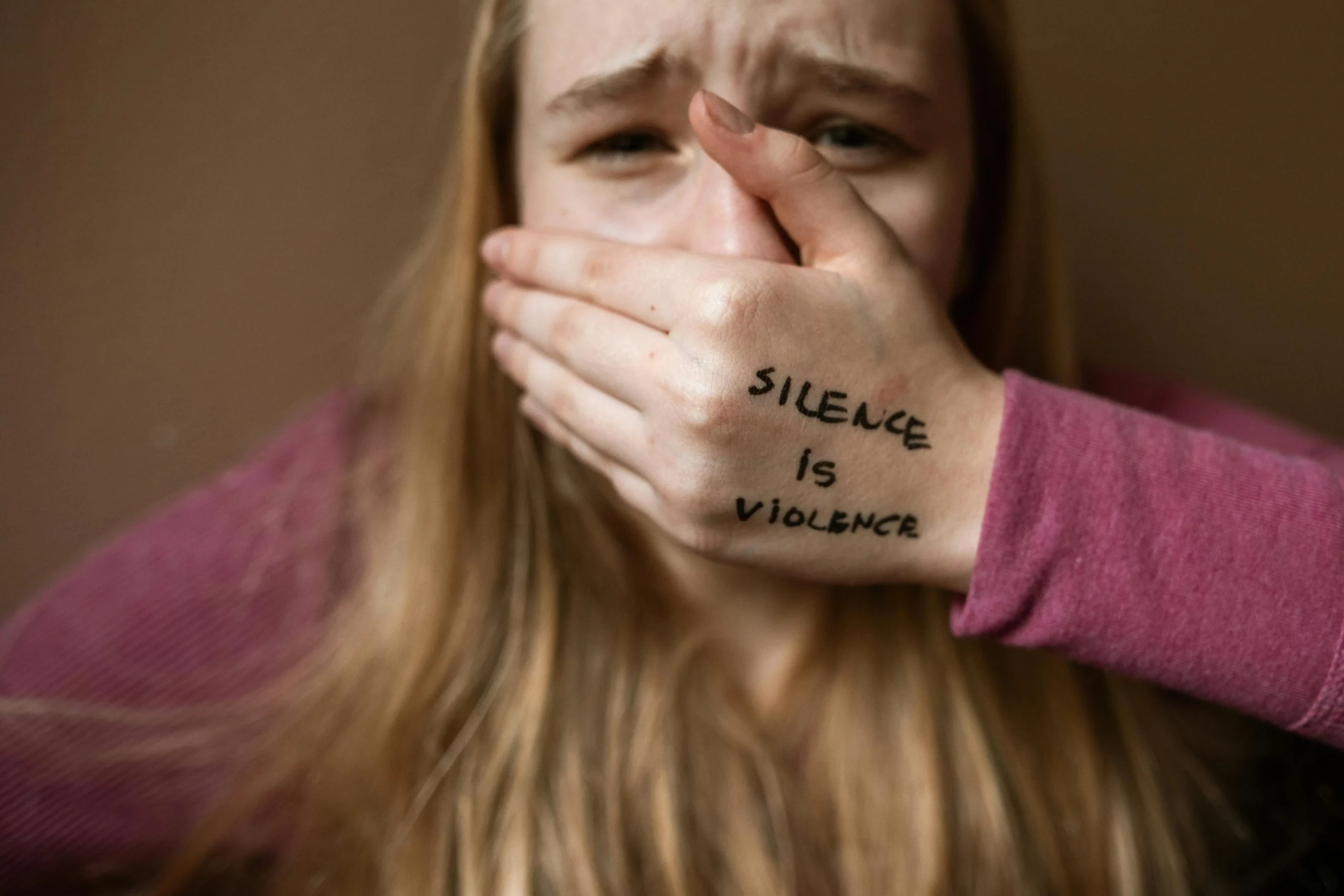
Launch of the women in politics study – Breaking the silence, ending the violence 


The Council of European Municipalities and Regions (CEMR) is proud to have launched its second groundbreaking study Women in Politics: Local and European Trends, which provides important data and insights into women’s representation in politics across Europe from 2019 to 2024. 

The study shines a light on both the progress and the persistent, systemic challenges, from underrepresentation in leadership to the rising issue of violence against women in politics – especially online abuse and cyberviolence. 

This study comes at a critical time. While representation in local councils has risen to above 40% in some European countries, leadership roles at all levels still show a troubling gender gap. At the national level, women’s representation in parliaments averages around 33%, with notable disparities among countries. In the European Parliament, women currently occupy 38.5% of the seats, which is the first decrease in the proportion of women Members of the European Parliament since 1979. 
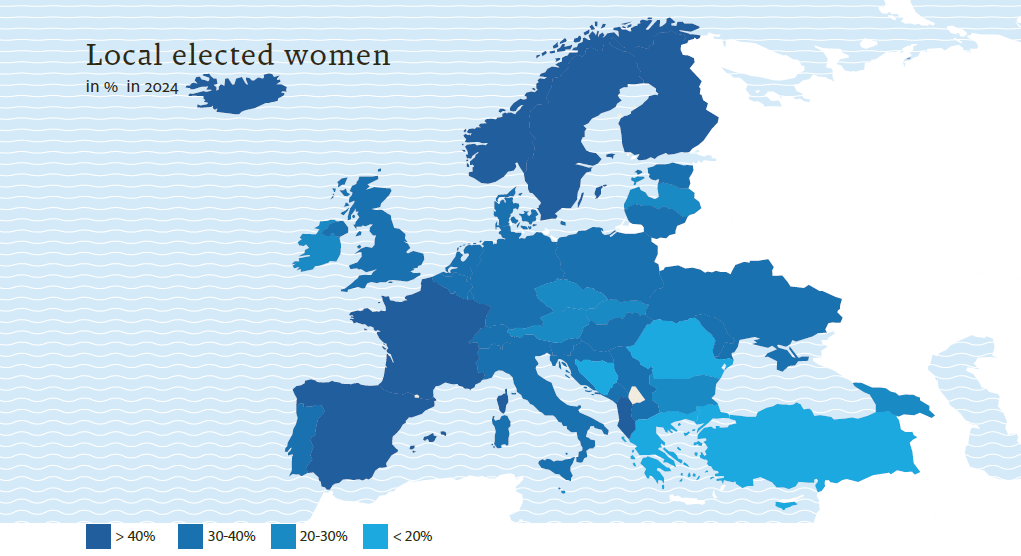
Source: Women in Politics – Local and European Trends, page 14

Violence against women in politics, both physical and digital, remains a major deterrent to women’s political participation. The data collected shows that 32% of respondents have experienced violence during their political career, and of those that suffered some type of violence 29% experienced cyberviolence. As highlighted by one of the speakers, Dr Marta Mazurek, Councillor from Poznan, on “recognising the serious consequences of cyberviolence” signalling that the responsibility to combat online harassment lies not only with national bodies but also with local authorities dedicated to fostering inclusive governance. 

Only 29% of those affected by violence had reported experiencing different types of violences, which may not only undermine their personal well-being but also their potential participation in politics. Angela Lowe, Senior Advisor at Women Political Leaders (WPL) emphasized that “the path towards a safe environment for women requires a collaborative effort,” underscoring the importance of working together across sectors to protect women in politics. 
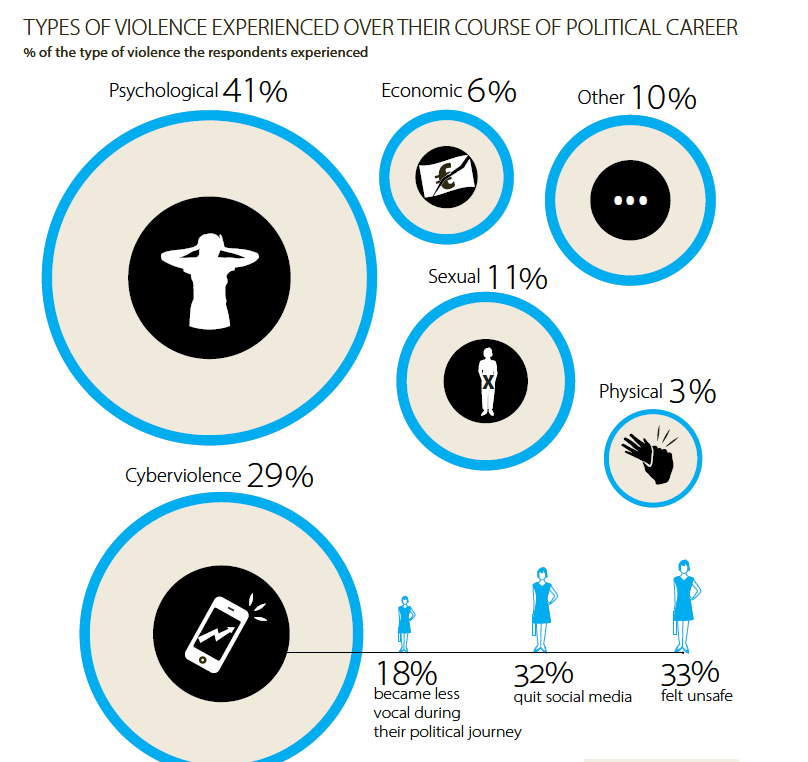
Source: Women in Politics – Local and European Trends, page 87

The Women in Politics study collected data from across Europe, presenting the importance and need for reliable data on women’s political representation and experience to ensure informed policies and targeted actions. Robin Devroe, a researcher at the Vrije Universiteit Brussel (VUB), pointed to the broader impact of these challenges, noting that “these issues of gender-based violence contribute to a more global cycle of underrepresentation,” which weakens democratic structures and the inclusiveness of policymaking. Additionally, women from disadvantaged backgrounds—such as women of colour and LGBTQI+ women—are particularly vulnerable, facing unique and compounded challenges that further hinder their political participation. 

The study also underscored that lasting change will require widespread engagement from everyone within society and the need to shift our mindset of the current social and cultural norms and attitudes towards more inclusive equality, with Sari Rautio from Hämeenlinna City Council in Finland stressing that “all genders, all girls and boys should be interested in working on gender balance”. 

Read the Full Report 

For a deeper understanding of these findings and practical recommendations, the Women in Politics: Local and European Trends report is now available on the CEMR website. This study serves as a call to action for governments, communities, and advocates to work together in building a political landscape that champions gender equality and safeguards women’s participation across all levels of governance. 

For more information, contact:

Guide on intersectionality

Intersectionality - News 2023

From toddlers to adults: municipalities embrace intersectionality at all ages


Intersectionality and diversity are at the heart of gender equality. As identities and lived experiences of people are not merely additive but intersecting and complex, it is necessary to include these dimensions in public policies to build a more equal society. In France and Italy, two municipalities are already working on it. From a multi-format help desk to representative toys, they show us that intersectionality is a concrete and transversal matter.

Creating an anti-discrimination help desk in Bologna

The municipality of Bologna is committed and active in its pursuit of equality and justice for all, both within its own administration as well as in service of its residents.

The city created a multi-annual positive action plan to implement its equal opportunities objectives and to address inequalities linked to gender, disability, age and sexual orientation. The plan includes measures to ensure accessible documents and websites, to provide training courses, and to organise exchanges of experience.
Since 2021, Bologna has been part of a campaign promoted by Period Think Tank – Data to Count —  to allow open and public access to data measuring the impact of public policies on gender dimensions.

Bologna, in cooperation with the Regional network against discrimination in the Emilia Romagna Region, offers residents an anti-discrimination help desk service. Its purpose is to welcome, listen, guide and support victims, direct and indirect witnesses of discrimination on a racial, ethnic, or religious basis.

The help desk offers three formats to make reports and obtain advice: a permanent office is open in the Intercultural Centre Zonarelli; a telephone number is serviced during weekdays and a WhatsApp number is available to leave vocal messages at any time; finally, an online form can be filled out to make reports.

Promoting understanding and acceptance through play in Saint-Médard-en-Jalles

As part of their commitment to the European Charter for Equality, the French municipality of Saint-Médard-en-Jalles has drafted a 2022-2024 Equality action plan. The plan includes an objective to raise awareness among staff working with children, youth, and adults about non-stereotyped education.

In addition to providing trainings to staff and encouraging them to reflect on inequalities within the municipal structure itself, they take action to present models of girls, boys, women, and men that go outside the stereotyped roles children are so frequently presented with.

For example, in the structures welcoming young children, the municipality is rethinking the types of toys that are purchased to include dolls with varying skin tones, characters with disabilities, and games representing people from all walks of life.

Additional resources

2023 International Women’s Rights Day series: “Five new Charter articles illustrated through local actions”

This article is part of a series published by CEMR to celebrate 2023 International Women’s Rights Day. This series informs on impactful initiatives carried out by local and regional governments to promote gender justice.

These projects embody the updated European Charter for Equality of Women and Men in Local Life as they show how five of its nine new articles can be put into practice. Together, they represent an inspiring step towards a more gender-equal Europe.

The updated Charter is currently available in EnglishFrench and easy-to-read English versions.
Any questions regarding the update or the actions highlighted in this series can be directed to contact@ccre-cemr.org or the relevant national coordinator for the Charter in your country.


Read the study here

For more information, contact:

EU directive on gender and domestic violence 

Gender Violence - News 2023

CEMR urges multi-level coordination, victim support, and recognition of women politicians’ safety 


Violence against women and domestic violence remain among the most widespread violations of fundamental rights in Europe. In response to the European Commission’s proposed Directive on combating violence against women and domestic violence, the Council of European Municipalities and Regions (CEMR) has published a position paper calling for a unified and multi-level approach to ensure effective implementation across the EU. 

CEMR welcomes key elements of the Directive, including provisions on safeguarding victims, training professionals, tackling harmful gender stereotypes, and addressing sexual harassment at work. However, the organisation stresses that the Directive must go further to recognise the central role of local and regional governments (LRGs), who are on the frontline of prevention, victim support, and access to justice. 

Among its recommendations, CEMR calls for: 

  • Formal consultation with LRGs in policy design and coordination, ensuring that Article 39 on multi-level response explicitly requires their involvement. 
  • Targeted EU funding for local authorities through programmes such as CERV, ERDF and ESF+, to strengthen prevention, awareness-raising and victim services. 
  • Better data collection, disaggregated by sex, age and region (NUTS 2, NUTS 3, and local level), to tailor policies effectively. 
  • Improved victim support systems, combining both “one-stop” online access and physical centres, with minimum geographic coverage standards. 

The paper also highlights violence against women in politics, noting that harassment and threats against elected representatives undermine democracy itself. CEMR urges the addition of a specific clause under Article 13 on aggravating circumstances for violence against women in public office. 

Finally, CEMR emphasises the importance of prevention, beginning with early education to challenge gender stereotypes, and extending to workplaces where women in public-facing professions are disproportionately exposed to third-party violence. The organisation recommends a dedicated article on cooperation between LRGs and social partners to strengthen workplace protections. 

By adopting a truly coordinated, multi-level approach, the Directive could transform Europe’s fragmented response into a coherent framework that empowers governments at every level to protect women’s rights and safety. 

Read the policy paper here 

For more information, contact: 

European charter for equality  

Gender Equality News

Europe’s towns and regions commit to building fairer societies through the European Charter for Equality 


Equality between women and men is a fundamental right and a cornerstone of democracy. Yet, despite legal recognition, disparities remain in pay, representation, and everyday opportunities across Europe. Recognising the pivotal role of local and regional governments in tackling these inequalities, the Council of European Municipalities and Regions (CEMR) developed the European Charter for Equality of Women and Men in Local Life in 2006. 

By signing the Charter, municipalities and regions make a public commitment to promoting equality across their policies, services and institutions, and to developing Equality Action Plans that transform principles into practice. 

The Charter was drafted with the support of the European Commission and has since become a reference tool for towns and regions seeking to mainstream gender equality. It encourages signatories to act not only within their own administrations but also with local institutions, organisations and citizens. 

Over the years, supporting tools have strengthened their implementation: 

  • An online Observatory launched in 2011 provides resources and examples of good practice. 
  • A toolkit of indicators, developed in 2014, helps monitor and evaluate progress. 
  • A 2022 update, funded by the EU, introduced amendments to strengthen the Charter, clarifying language and emphasising intersectionality under the guiding principle: “always gender, never gender alone.” 

New provisions were also added, including the need to apply a gender lens in crisis management and to address gender perspectives in digitalisation and online life. From 2023 onwards, all new signatories commit automatically to both the original Charter and the 2022 amendments. 

The European Charter for Equality demonstrates how local and regional democracy is crucial for advancing fairness in daily life, whether through housing, transport, health, or political participation. By embedding gender equality into decision-making and governance, towns and regions can both safeguard rights and unlock economic and social potential. 

More than a symbolic document, the Charter is a practical instrument for change, mobilising local authorities across Europe to ensure that equality between women and men is not only a principle on paper but a reality in every community

Read the charter here 

For more information, contact: 

Bringing Equality Closer to Home 

UCLG people banner

2021 Report – CEMR Charter15 Reflection Process 


The European Charter for Equality of Women and Men in Local Life, developed by CEMR, is both a political commitment and a practical tool enabling local and regional governments to integrate gender equality into all aspects of policy and administration. Since its launch in 2006, nearly 2,000 signatories across 36 countries have joined the initiative. 

Marking 15 years in 2021, CEMR initiated a reflection process to ensure the Charter remains relevant, inclusive and fit for the future. The process culminated in a set of recommendations to revitalise and adapt the Charter, supported by the EU’s CERV programme

Key Activities and Participation 

  • 6 online workshops (June–November 2021) 
  • 5 interviews with national gender focal points 
  • 75 participants from 21 countries, including local authorities, associations, and civil society. 

Workshop Themes & Findings 

1. Employment & Economic Development (September 2021) 

Gender gaps persist in pay, part-time work, and parental leave. The Charter update should reinforce equality in employment practices, particularly relevant to local governments as employers. 

2. Climate, Urban Space & Sustainable Development (October 2021) 

There is a demand to strengthen Article 25 on urban planning by including monitoring and evaluation tools, and to align with SDG 5 through the Charter’s indicators. 

3. Violence Against Women and Girls (November 2021) 

Updates should better address violence prevention, include children (especially girls) as victims, and consider the complex issue of honour-based violence

4. Communication, Stereotypes & International Cooperation (June 2021) 

The Charter must adopt an intersectional perspective without weakening its gender focus and show how gender equality benefits men and boys as well. 

5. Multiple Discrimination & Intersectionality (September 2021) 

A call to inclusively reflect diverse experiences of discrimination, guided by approaches like Sweden’s: “always gender, but never gender alone.” 

6. Public Services & Administration (September 2021) 

The Charter should be made more actionable at the local level. COVID-19 showed the need for gender-sensitive crisis planning to avoid backsliding on equality. 

Next Steps 

Based on the rich input from this process, an updated version of the Charter will be developed in 2022. This will ensure that it continues to serve as a dynamic tool for gender equality, adaptable to modern challenges, while respecting the commitments of existing signatories. 

Read the study here 

For more information, contact: 

Revitalising the Equality Charter 

Gender Charter - News

CEMR’s 15-year reflection process sets the stage for a renewed push to advance gender equality in Europe’s local and regional life 


2021 marked the 15th anniversary of the European Charter for Equality of Women and Men in Local Life, a milestone moment to celebrate achievements, reflect on lessons learned, and chart a course for the future. Initiated by CEMR in 2006, the Charter has grown into a powerful instrument for advancing gender equality at the local level, now embraced by nearly 2,000 signatories in 36 countries. 

The anniversary served not only to honour progress but also to examine how the Charter can evolve to remain relevant and impactful for today’s and tomorrow’s local governments. 

To mark the occasion, CEMR launched a wide-ranging reflection process. A series of six online workshops was held between June and November 2021, involving Charter signatories, national associations, gender focal points and other stakeholders. Five in-depth interviews complemented these to deepen the analysis. 

The process revolved around four key areas: 

  • Recognising achievements: Highlighting the tangible improvements in local equality made possible by the Charter; 
  • Reflecting on relevance: Considering how to modernise the Charter and connect it with broader policy frameworks; 
  • Celebrating commitment: Acknowledging the people and organisations driving real change on the ground; 
  • Revitalising tools: Gathering practical insights and suggestions to strengthen the Charter’s implementation. 

Participants emphasised that while the Charter remains a strong and valuable framework, its language, accessibility, and visibility could be improved. There was broad support for clearer, more inclusive, and action-oriented language. Concerns about legal implications for current signatories were addressed with a proposed solution: allowing signatories to either reconfirm or upgrade their commitment, while still validating earlier engagements. 

The 15-year review reaffirms the Charter’s relevance and potential as a living document. CEMR has now put forward a set of concrete recommendations to enhance its clarity, inclusivity and usability, ensuring it remains a cornerstone for gender equality at the local and regional level: 

  • Simplify the language and prioritise clarity and accessibility; 
  • Use assertive, action-driven phrasing to emphasise commitments; 
  • Improve translation quality in coordination with national associations; 
  • Adapt language to gender-inclusive norms, particularly in gendered languages. 

As the Chair of the Standing Committee for Equality put it: 

“Beyond chapters and clauses lies a common goal: bringing equality closer to home.”

Read the study here 

For more information, contact: 

Local leadership for equality

Gender equality Declaration - News

European local and regional leaders reaffirm support for Polish municipalities committed to the Charter for Equality of Women and Men in Local Life


Europe is at a turning point. To reach climate neutrality by 2050, the EU must drastically expand renewable energy and electricity grids. This challenge is also an opportunity: renewables are cheaper than fossil fuels, can reduce biodiversity risks, and bring local economic benefits. Yet progress remains too slow, hampered by lengthy permits, weak community dialogue, and a lack of perceived value for citizens. 

To overcome these barriers, European stakeholders have united behind a set of baseline principles for fast and fair deployment of renewables and grids. These principles underline that projects must be shaped with communities, not imposed on them. Early engagement with mayors and citizens, transparent communication, and mechanisms for feedback are central to building trust. 

Equally important is ensuring that local communities share in the value of new projects. This means creating jobs, offering benefit-sharing schemes such as funds or co-ownership, and guaranteeing that revenues are used transparently for local improvements, from transport to housing. The principles also commit to nature-positive deployment, applying strategies to avoid or minimise harm and, where possible, enhance biodiversity. 

Finally, the consensus highlights the need to empower community-led initiatives, giving citizens and municipalities fair access to the energy market and the grid. By creating space for local ownership, Europe can ensure that the energy transition is not only fast but also fair. 

Together, these principles form a European consensus: a shared roadmap to accelerate the transition while protecting ecosystems and ensuring citizens see real, tangible benefits. 

Read the declaration: English | French | Polish

For more information, contact: 

Rights of persons with disabilities 

Disabled people - News

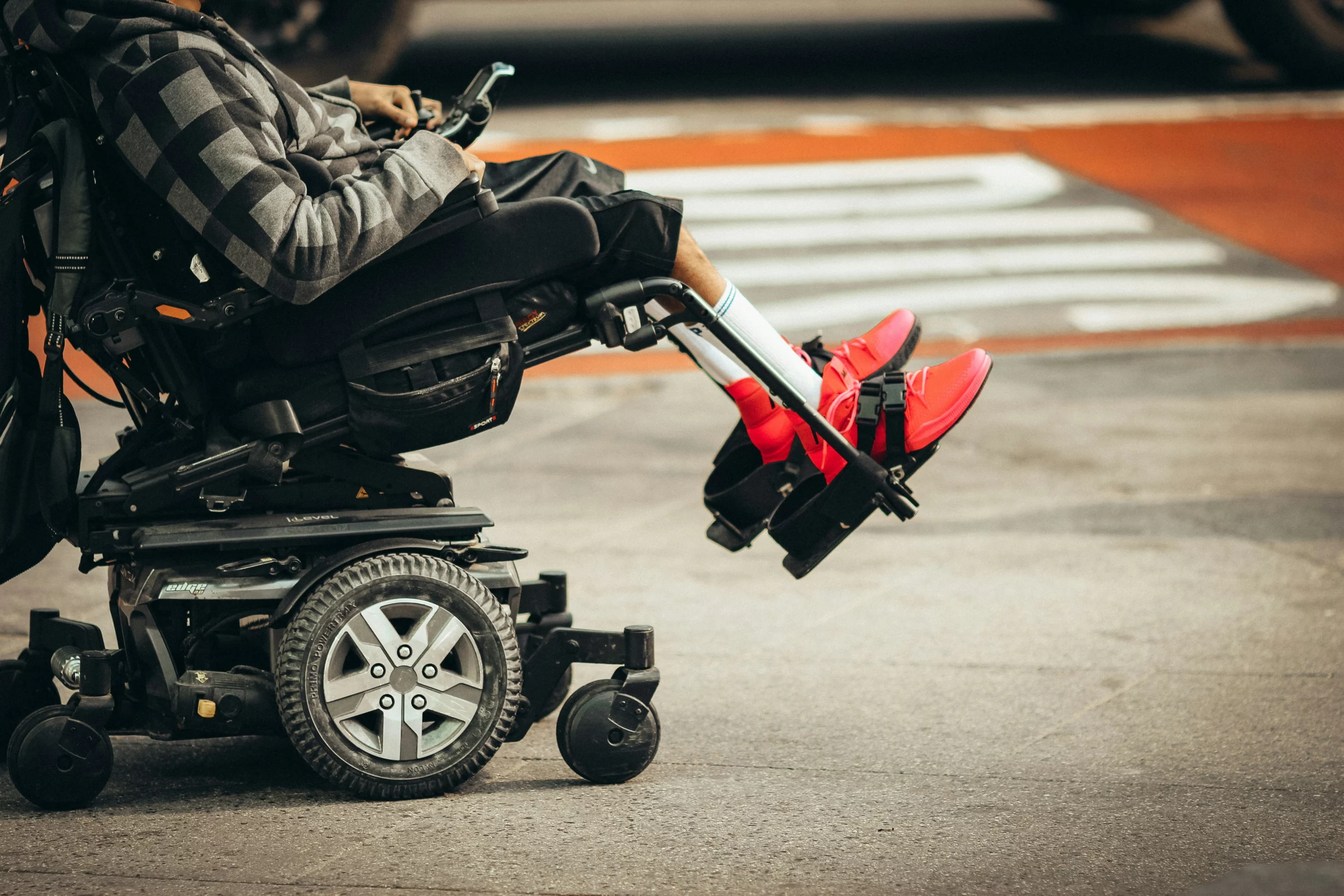
Empowering local and regional governments to uphold the UN Convention on the Rights of Persons with Disabilities (UN CRPD)  


In 2021, amid the launch of the new EU Strategy for the Rights of Persons with Disabilities (2021–2030), the Council of European Municipalities and Regions (CEMR) conducted a survey to assess local and regional governments’ awareness, involvement, and needs regarding the UN Convention on the Rights of Persons with Disabilities (UN CRPD). The initiative comes ten years after the EU’s ratification of the Convention, recognising that local and regional governments (LRGs) are essential actors in making its rights a lived reality. 

The survey, circulated in late 2020, aimed to gauge both knowledge and engagement with the UN CRPD across Europe’s municipalities and regions. It also sought to understand how the EU and its Disability Strategy could better support local efforts. A total of 34 responses were received from 10 countries including Iceland, Romania, Scotland, the Netherlands, and Ukraine. 

Key findings reveal that most respondents were aware of the Convention and had participated in its implementation, often via national dialogues, local projects, or action plans. However, they reported significant challenges, including: 

  • Lack of funding and staffing to develop targeted services 
  • Insufficient guidance on mainstreaming disability rights 
  • Inadequate infrastructure and facilities 
  • Complex bureaucratic barriers 

Critically, 76% of respondents expressed the need for specific EU-level support, requesting good practice guides and capacity-building tools covering accessible housing, education, transport, health, ICT, and public life, especially for under-resourced rural and urban areas. 

Even more tellingly, 91% expressed interest in peer exchange and capacity-building programmes, emphasising the value of learning from other municipalities’ experiences to improve implementation, strengthen legal frameworks, and empower disability-inclusive governance. 

Good Practices Highlighted 

  • Scotland’s Local Government Delivery Plan for the UN CRPD, developed by COSLA, aims to enable independent, dignified living through local co-production with disabled people. 
  • Romania’s City of Sibiu collaborates with NGOs and ministries to deliver inclusive services, including a multi-purpose centre for people with disabilities, offering therapy, socialisation, and housing support. 
  • Iceland’s Local Authorities Association leads awareness-raising initiatives as part of a national disability strategy aligned with UN CRPD goals. 
  • The “We Are Able!” Programme, developed by VNG International, supports inclusive governance across six African countries, linking European and Global South municipalities to promote the Local Inclusion Agenda through joint learning and capacity building. 

The CEMR survey confirms that local and regional governments are vital enablers of the rights enshrined in the UN CRPD. Yet, many of them face systemic barriers that prevent meaningful implementation. To succeed, they need EU-level support, more financial resources, and access to shared knowledge and good practices

As the EU Disability Strategy 2021–2030 progresses, it must ensure that municipalities and regions are not left behind. Supporting them is not only a policy necessity but a moral obligation to build more inclusive, accessible, and equitable communities. 

Empowering local leadership is key to transforming international commitments into everyday rights for all persons with disabilities, close to home. 

Read the study here 

For more information, contact: 

Social rights, local action 

Social Rights Labour - News

What are the priorities for implementing the European Pillar of Social Rights with a strong local and regional involvement? 


The Council of European Municipalities and Regions (CEMR) welcomes the European Pillar of Social Rights as a step toward strengthening fairness and equality in Europe. While supporting its ambition, CEMR stresses that the measures linked to the Pillar’s 20 principles should remain non-binding, respecting the diversity of national, regional and local competences. For local and regional governments, the Pillar should serve as a reference framework to inspire reforms, rather than impose uniform rules. 

CEMR identifies key challenges where Europe must act: rising inequality, persistent poverty, gender gaps, and labour market transitions accelerated by digitalisation and COVID-19. Municipalities and regions, as major providers of education, housing, health, social inclusion and employment services, are at the heart of delivering social rights. 

CEMR’s policy priorities include: 

  • Skills and education: investment in training, apprenticeships and digital access to avoid a “lost generation” of young people. 
  • Demographic change: integrating women, older workers, migrants, and disadvantaged groups into the labour market. 
  • Gender equality: boosting women’s participation and addressing work-life balance challenges, especially in the pandemic’s aftermath. 

At the same time, CEMR warns against excessive bureaucracy or additional reporting obligations for local authorities, calling instead for best practice exchange, benchmarks, and adequate funding. 

For the European Pillar of Social Rights to succeed, it must respect subsidiarity, strengthen social dialogue, and involve local and regional governments as essential actors. Municipalities, cities, and regions are indispensable in turning principles into concrete progress, provided they are given the flexibility, resources and recognition needed to deliver. 

Read the position paper here 

For more information, contact: 

Gender equality: A local matter

Gender Equality - News

Exploring the EU Gender Equality Strategy 2020–2025 and what it means for Europe’s local and regional governments 


In a significant move for gender equality in Europe, the European Commission has adopted a new Gender Equality Strategy for 2020–2025. As the first high-level communication of its kind in years, this strategy sets out a clear ambition to achieve a Europe free from gender-based violence, stereotypes, and structural inequalities. 

The Council of European Municipalities and Regions (CEMR) has conducted an in-depth analysis of the strategy, identifying its opportunities, shortcomings, and implications for local and regional governments. 

Key developments and opportunities 

The Commission’s strategy adopts a dual approach, combining targeted actions with systematic gender mainstreaming, and for the first time, takes an intersectional perspective. The strategy touches on six key areas, from violence prevention to women’s representation and gender equality in the workplace. 

Local and regional governments stand to benefit from new funding and networking opportunities, particularly in the areas of gender-based violence prevention, childcare provision, care infrastructure, and women’s entrepreneurship. The establishment of an EU network for preventing domestic violence, EU-wide awareness campaigns, and future updates to childcare targets all offer a space for local actors to lead and share practices. 

New investment and support opportunities through the European Social Fund Plus, Horizon Europe, and Common Agricultural Policy also provide avenues for local authorities to implement gender-sensitive services and policies. 

Gaps and concerns 

Despite these strengths, CEMR highlights areas where the strategy could go further. The role of local and regional governments is not sufficiently acknowledged, and the Commission misses the opportunity to reference the European Charter for Equality of Women and Men in Local Life, which has nearly 1,800 signatories across 36 countries. 

Furthermore, while the strategy rightly focuses on gender balance in the private sector, political representation at the local and regional levels is underdeveloped. There is also no mention of violence against elected women, a critical issue that undermines women’s participation in democratic life. 

CEMR’s key messages 

CEMR puts forward several recommendations to strengthen the strategy and better support local authorities: 

  • Recognise local and regional governments as strategic partners in implementing, monitoring, and reporting on the strategy. 
  • Include the European Charter for Equality in the EU Platform for Diversity Charters. 
  • Address the underrepresentation of women in politics and promote initiatives supporting female political leadership at all levels. 
  • Strengthen protections for women in public life, particularly against gender-based violence and harassment. 
  • Improve data collection on women’s representation and leadership and fund new studies across all European countries. 
  • Support local gender equality initiatives through EU funding programmes, including the Charter and work on men and masculinities. 

A call for greater collaboration 

Local and regional governments are not only essential for implementing EU policy, but they are also drivers of innovation in equality. As the level of government closest to citizens, they play a unique role in translating ambition into action. 

CEMR urges the European Commission to fully recognise and support this role in the implementation of the Gender Equality Strategy, ensuring local authorities have the tools and resources to build a truly inclusive Europe. 

Read the position paper here 

For more information, contact: