

“Right to Stay” strategy

Right to Stay strategy news

CEMR calls for a place-based “Right to Stay” strategy

468 words
2–3 minutes

In its contribution to the European Commission’s call for evidence on the upcoming “Right to Stay” strategy, the Council of European Municipalities and Regions (CEMR) calls for a politically ambitious, place-based framework that puts local and regional governments at the centre of Europe’s response to territorial, social, economic and demographic imbalances.

For CEMR, the right to stay means that people must be able to live, work and thrive in the place of their choice: whether in a city, a town or a rural area, without being forced away by lack of public services, economic opportunity, poor connectivity or rising living costs.

This is not just a matter of territorial cohesion. It is also a question of fairness, democracy and trust in the European project. If the EU wants to respond to growing territorial inequalities, it must start by investing in the places people call home and by recognising the governments closest to citizens as strategic partners.

In its response, CEMR underlines that there can be no right to stay without access to services, housing and opportunity. Across Europe, too many territories still face shortages in healthcare, education, mobility, childcare, energy and digital infrastructure. At the same time, rising housing costs are pushing people out of cities, while many rural and shrinking areas continue to suffer from depopulation and underinvestment.

CEMR therefore calls on the EU to strengthen support for services of general interest, affordable housing and integrated territorial development. It also stresses the need to create enabling conditions for local economic opportunities in every territory, including through better transport and digital connectivity, support for entrepreneurship, and action to tackle labour shortages in key local public services.

CEMR also highlights the growing importance of climate resilience, sustainable mobility and local energy production for territorial attractiveness and energy security. Investments in adaptation, renewable energy and accessible transport must therefore be part of any credible Right to Stay agenda.

For CEMR, Cohesion Policy must be the main delivery tool of the future strategy. In the next EU budget, the Right to Stay should be recognised as a clear strategic objective, backed by strong funding, integrated territorial instruments and genuine partnership with local and regional governments in the design of national and regional plans.

CEMR also calls for the Right to Stay to be embedded in EU governance, including through the European Semester and stronger territorial impact assessments. Europe cannot continue to shape policies for territories without systematically involving the authorities responsible for delivering them.

The message is clear: the right to stay will only be real if the EU gives territories the means to remain attractive, affordable, connected and resilient. That requires political ambition, long-term investment and a genuine multilevel partnership with local and regional governments.

For more information, contact:

Statement on public procurement

Public procurement services news

Call on European institutions to safeguard public-public cooperation and in-house provision in the Revision of the Public Procurement Directives 

313 words
1–2 minutes

Public-public cooperation and in-house provision are essential tools enabling local and regional governments to organise, deliver, and manage public services directly — whether through cooperation with other public authorities or through entities under their control — without resorting to external operators.  

The Council of European Municipalities and Regions (CEMR) released a statement in which it expresses its strong opposition to calls and proposals that further restrict public-public cooperation and in-house provision in view of the upcoming Revision of the EU Public Procurement Directives.  

In this new statement, CEMR argues that public-public cooperation and in-house provision are firmly grounded in the EU Treaties, the Public Procurement Directives, and the case law of the Court of Justice of the European Union. Local and regional governments must retain the freedom to choose the delivery model that best serves their communities — including direct provision and cooperation with other public authorities.  

CEMR also takes aim at the notion that public-public cooperation or in-house provision harms competition. There is no evidence to support that claim; if anything, these models can improve efficiency, support investment, and strengthen essential public services for citizens.  

Additionally, at a time of growing geopolitical uncertainty, cybersecurity risks, and growing pressure on public services, local authorities cannot afford to lose the flexibility to organise critical services in-house or through trusted public partnerships.  

CEMR calls to the European institutions for greater legal certainty — not further restriction — in the revision of Article 12 of the Public Procurement Directive, while safeguarding the right of local and regional governments to organise public services according to local needs and democratic choices.  

To complement this information, you can also read here CEMR’s position paper setting out what local and regional governments need from the revision of the 2014 Public Procurement Directives. 

For more information, contact:

Reaction to the EU procurement rules

Public Procurement news

CEMR calls for a simpler, fairer revision of the EU public procurement directives, putting local realities at the centre of the reform

517 words
2–3 minutes

Local and regional governments (LRGs) are Europe’s largest public investors, spending more than €3 trillion a year through procurement. From care services to construction, from digital tools to energy infrastructure, every euro spent through public contracts has a direct impact on citizens’ daily lives. Yet the rules governing how LRGs buy are growing increasingly fragmented, complex, and out of sync with local realities.

As the European Commission prepares to revise the 2014 Public Procurement Directives, CEMR has adopted a position paper setting out what LRGs need from the reform. The message is clear: the revision must prioritise simplicity, flexibility, and subsidiarity instead of adding new layers of mandatory obligations to already overstretched towns, cities and regions.

A flexible framework that works for all

Most LRGs in Europe are small, operating with limited legal, technical, and administrative capacity. The current framework, scattered across more than 60 EU sectoral legislative acts, was not designed with them in mind. CEMR calls for a directive-based approach that preserves flexibility, and for EU-level clauses on environmental, social, and innovation considerations to remain voluntary. A comprehensive review mechanism should consolidate procurement obligations across sectoral legislation to eliminate contradictions and reduce the burden on contracting authorities.

Higher thresholds, fewer unnecessary procedures

EU procurement thresholds have not been changed in over a decade, despite significant inflation and rising costs. As a result, an ever-growing number of public purchases are now subject to full EU-level procedures, despite no real cross-border interest. Indeed, direct cross-border procurement accounts for just around 2% of all contract awards. CEMR calls for a substantial increase in thresholds, in line with cumulative inflation since 2014, alongside an automatic indexation mechanism to prevent the same problem from recurring.

Made-in-Europe and strategic goals must not come at local cost

CEMR supports the Commission’s broader ambitions on European competitiveness and strategic autonomy, goals that matter equally to LRGs who depend on resilient supply chains. However, a “Made in Europe” approach will significantly increase costs for contracting authorities if applied broadly. LRGs must not be penalised when EU supply is unavailable and must not be responsible for verifying complex supply chain origin documentation. That responsibility should lie with economic operators, supported by EU-level certification.

Protecting public-public cooperation and in-house provisions

LRGs regularly collaborate across boundaries to pool resources and deliver services more efficiently, especially in rural or low-capacity areas. Yet, Article 12 of the current directive remains too restrictive and unclear, creating legal uncertainty for many legitimate forms of public-public cooperation and in-house arrangements. CEMR therefore calls for a broader and clearer exemption for genuine cooperation between public authorities, and for in-house procurement to be protected from market-oriented interpretations, allowing LRGs to retain the democratic discretion to organise and deliver public services in the way that best serves their communities.

CEMR will continue to engage actively with the European institutions throughout the revision process to ensure that the voices of local and regional governments shape the outcome of this crucial reform.

For more information, contact:

When local leaders are attacked

European Observatory for the Defence of Democracy at the Local Level

Why protecting local elected representatives is essential to safeguarding trust, stability and democratic resilience across Europe


Across Europe, local elected representatives are facing growing pressure, harassment and disinformation at a time when communities need trusted leadership more than ever. In a new article published in Burgemeester (pages 158, 159 and 160), the magazine of the Dutch Association of Mayors, dedicated to local governance, democratic resilience and public leadership. In the article, CEMR presents the work of the Observatory for the Defence of Local Democracy at the Local Level (ODELL), a European initiative created to monitor threats against local democracy, support mayors and councillors, and strengthen public trust through clearer communication, evidence-based advocacy and practical tools for municipalities.

Webinar Defending Local Democracy Together

On 21 May 2026, from 14h to 15h15, the Council of European Municipalities and Regions (CEMR) and partners of the Observatory for the Defence of Local Democracy in Europe will host an online webinar exploring the growing threats faced by local and regional elected representatives across Europe.

The discussion will bring together local leaders, experts and European partners to explore the growing challenges facing democracy at the local level, from harassment and intimidation to disinformation and declining public trust, while sharing practical solutions and experiences from across Europe.

Register and learn more here: Defending Local Democracy Together webinar

For more information, please contact:

Country profile – #4 Belgium 

Brussels city image

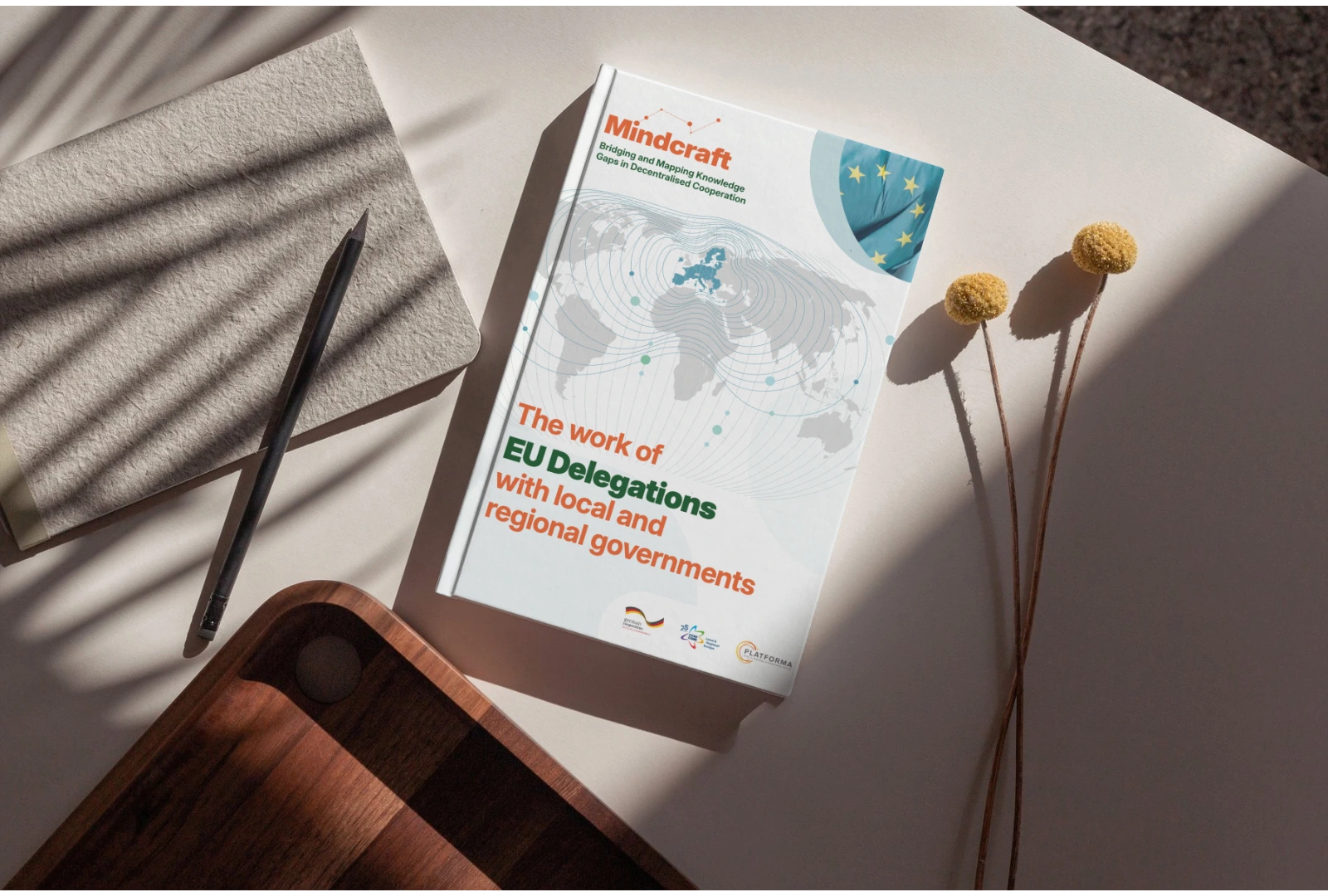
Country Profile on decentralised development cooperation: the case of Belgium


The country profiles offer a short overview of national models of (decentralised) development cooperation frameworks in selected EU Member States. The aim is to provide insights into specific mechanisms and modalities of analysed national frameworks and identify enabling factors as well as challenges related to practical implementation, focusing on the role and opportunities for local and regional governments and their associations. 

Based on the study, the Belgian framework for Decentralised Development Cooperation (DDC) is characterised by:

1) Municipal associations are central to DDC in Belgium. Brulocalis, Association of Flemish Cities and Municipalities (VVSG), and the Union of Cities and Municipalities of Wallonia (UVCW) act as key intermediaries in coordinating funded programmes and serving as the primary source of support and guidance for municipalities.

2) Focus on long-term cooperation with selected partners. Sustained partnerships help to ensure the effectiveness and added value of cooperation. There is a prioritisation of the least developed countries and fragile contexts.

3) Awareness-raising of Belgian citizens about international solidarity. Belgian actors, in partnership with NGOs, actively contribute to informing citizens about development cooperation-related topics through awareness-raising and education activities at home.

This article is part of a series of 7 Country Profiles examining DDC frameworks across Europe. The fifth edition, focusing on France, will be published in July. Stay tuned!

Read the Country Profile of Belgium, available in four languages:

You can find the rest of Mindcraft’s publications here.

CEMR encourages Belgian authorities to strengthen the role of Local and Regional Governments in development policy, not only as implementers, but also as strategic partners helping shape a more resilient, inclusive and effective development agenda.

This publication is produced within the Bridging and Mapping Knowledge Gaps in Decentralised Cooperation (Mindcraft), funded by the German Federal Ministry for Economic Cooperation and Development (BMZ) and supported by the Deutsche Gesellschaft für Internationale Zusammenarbeit (GIZ).

For more information, contact:

European Partnership Hub: EU-Ukraine ‘one-stop-shop’

Last week, the European Committee of the Regions (CoR) adopted in Plenary the ‘Enlargement package 2025 – Ukraine, Moldova & Georgia’


The European Committee of the Regions (CoR) has adopted an amendment explicitly recognising the European Partnership Hub (EPH) as the “one-stop-shop” for cooperation between local and regional governments in Ukraine and the EU. The Hub was launched at the 2025 Ukraine Recovery Conference, following the Joint Statement of the European Alliance of Cities and Regions for the Reconstruction of Ukraine.

Hosted by CEMR, which already drives EU–Ukraine municipal partnerships through Bridges of Trust, the Matchmaking Platform, and SUN4Ukraine, the Hub coordinates and connects initiatives within the Bridges of Trust Community. It facilitates exchanges, provides information, and organises joint meetings to align efforts, build synergies, and support municipalities with the skills needed for recovery, cooperation, and EU accession.

Six other amendments reinforcing the role of local and regional governements in the EU enlargement

The final text of the CoR also includes six amendments tabled by CoR members Māris Zusts and Gints Kaminskis and suggested by the Latvian Association of Local and Regional Governments (LALRG), in close cooperation with PLATFORMA.

The amendments aim to reinforce a central political message: EU enlargement will only succeed if it is rooted in local and regional levels, resilient to hybrid threats, and democratically endorsed by citizens. In this opinion, decentralisation, multilevel governance, gender equality, and combating foreign information manipulation are framed as essential components of sustainable enlargement.

Cooperation with local governments 

The adopted amendments further stress the need for public support through cooperation with local governments, especially in Ukraine’s post-war context, advocating for awareness campaigns and media engagement to foster acceptance of candidate countries. Democratic resilience and integrity are further prioritised, particularly through strengthened anti-corruption measures at all government levels. Transparency in public procurement is highlighted, especially regarding reconstruction efforts.

Concerning Moldova, the amendments commend reform progress but express concerns over foreign interference (FIMI) during the 2025 elections, advocating for resilience measures and support for independent media.

The amendments also support local governments in Georgia amidst democratic backsliding, emphasising ongoing cooperation to maintain dialogue and democratic governance as the country navigates its EU accession path.

Looking ahead

These amendments place local and regional governments at the heart of EU enlargement, recognising that lasting impact, resilient democracies, and strong communities depend on their active role. 

The next step is for the European Parliament, Council, and Commission to take these recommendations into account for their respective work on enlargement.
CEMR together with PLATFORMA and their partners will continue to advocate, coordinate initiatives, and foster exchanges, to strenghten the role of local and regional governments.  

The European Partnership Hub is supported by the European Union and its member states through U-LEAD with Europe.

For more information, contact:

Global Europe 2028–2034

Global Europe - position paper

Local and regional governments at the heart of “Global Europe 2028–2034”: our Policy position


As the European Union prepares its next Multiannual Financial Framework (MFF) for 2028–2034, the Global Europe instrument will define the EU’s external action for the years ahead — encompassing development cooperation, humanitarian aid, enlargement support and Global Gateway. Discover PLATFORMA detailed policy position outlining how this strategic instrument should be shaped to foster sustainable global partnerships and advance inclusive governance.

At a time marked by intersecting global crises — from climate breakdown and shrinking development funds to geopolitical instability — the role of local and regional governments (LRGs) is more critical than ever. PLATFORMA’s paper is thus anchored in the belief that effective global action starts from the ground up.

Local and regional governments as co-decision-makers, implementers and partners

PLATFORMA’s position starts from a stark reality: despite their proximity to citizens and deep knowledge of local contexts, LRGs remain under-recognised in EU external action frameworks. The coalition calls for the Global Europe instrument to move beyond symbolic references to “local authorities” and embed mechanisms that genuinely empower LRGs as co-decision-makers, implementers and partners in EU external policies.

Key recommendations

The Policy Paper makes 9 key recommendations to EU decision makers:

  1. Strengthen multilevel governance in Global Europe and place local and regional governments in the driving seat of territorial development
  2. Pair flexibility and simplification with ambitious official development assistance targets, and enhance accountability and transparency mechanisms
  3. Unlock Global Gateway’s potential through the involvement of local and regional governments
  4. Foster EU delegations’ engagement with local and regional governments
  5. Recognise and empower local and regional governments as unique and effective development partners in fragile contexts
  6. Advance the localisation of the Sustainable Development Goals to achieve decarbonised societies and climate justice
  7. Involve citizens through Global Citizenship Education as a key component of decentralised development cooperation
  8. Foster inclusive and participatory local governance: empower youth, women, and disadvantaged and underrepresented groups
  9. Strengthen local governance through the EU Eastern neighbourhood and enlargement strategy

Through these recommendations, PLATFORMA aims to improve the current proposal for the Global Europe instrument, so that it fully recognises, acknowledges, and supports the contribution of local and regional governments to EU external action, notably through decentralised cooperation as a development aid modality.

PLATFORMA also calls on the European Commission to issue an updated Communication on the structured involvement of local and regional governments and their associations in the new (geo)strategic approach to EU external action.

Read the full Policy position

For more information, contact:

Meet Eider Inuntziaga (Bilbao)

Meet the Local Hero: Eider Inuntziaga, building trust from the streets of Bilbao


When Eider Inuntziaga talks about local government, one word comes up again and again: closeness. 

Since 2023, she has served as a city councillor in Bilbao, after years of political engagement within the Basque Nationalist Party. It is her first public mandate, and the experience has changed how she sees political life. 

Before, she observed politics from the inside. Now, she experiences it daily — in the street, in neighbourhood conversations, and in the direct reactions of citizens to local decisions. The distance between elected representatives and residents is minimal, which makes local politics both uniquely meaningful and uniquely exposed. She also brings this experience to the European level as one of the Council of European Municipalities and Regions’ spokespersons on Local Democracy. 

Across Europe, these challenges are increasingly visible. To better understand and address them, CEMR and its partners, including the City of Bilbao, have launched the European Observatory for the Defence of Democracy at the Local Level — an initiative that collects data, documents threats and harassment against local elected representatives, and helps develop practical tools and responses to better protect those serving their communities. 

As she puts it, “local governments are the closest level of administration; we are the face of democracy.” 

That proximity builds trust, but it also concentrates frustration. When people are unhappy, local leaders are often the first — and easiest — target. 

Social media: useful, but risky 

That visibility now extends far beyond the street. 

Inuntziaga describes her relationship with social media as “conflicted.” While it can help connect people and share information, she also sees clear downsides. 

Social media can connect people and stories, and it can be useful—up to a point. But it also creates noise, polarisation, and sometimes hate. It can be dangerous.” 

For local politicians, the effects are concrete. 
“It affects integrity, it affects how we speak, and it can silence people. It can make people leave the work they’re doing—or become afraid of what’s happening.” 

She keeps her presence limited, using Facebook and LinkedIn, and mixing personal and political communication carefully. 

Participation beyond election day 

Despite these challenges, Inuntziaga remains firmly optimistic about the role local governments can play in strengthening democracy. 

Her approach is simple: stay close, listen carefully and involve citizens as much as possible. For her, elections are only the starting point. Day-to-day participation matters just as much. In Bilbao, this philosophy has taken concrete form through participatory initiatives that invite residents to help shape the city’s direction.

One example is “Bilbao City of Values,” a process through which citizens collectively identified a shared set of principles to guide public life. The idea is to create a common framework that strengthens belonging and counters misinformation. The goal, she explains, is not only better policies, but stronger relationships between institutions and the people they serve. 

Learning from Bilbao’s past 

Bilbao’s history has also shaped how she thinks about governance. 

The city has experienced profound transformation over the past decades — from industrial decline and unemployment to renewal driven by long-term planning and cooperation between public institutions, private actors and civil society. For Inuntziaga, this experience shows that change does not happen overnight and that stability requires patience. 

She often points to three elements behind Bilbao’s recovery: cooperation, shared values and long-term vision. Quick fixes rarely work. Instead, consistent decisions taken with the future in mind gradually rebuild trust. 

“Decisions must be made with the long term in mind,” she says, describing democracy and stability as mutually reinforcing. 

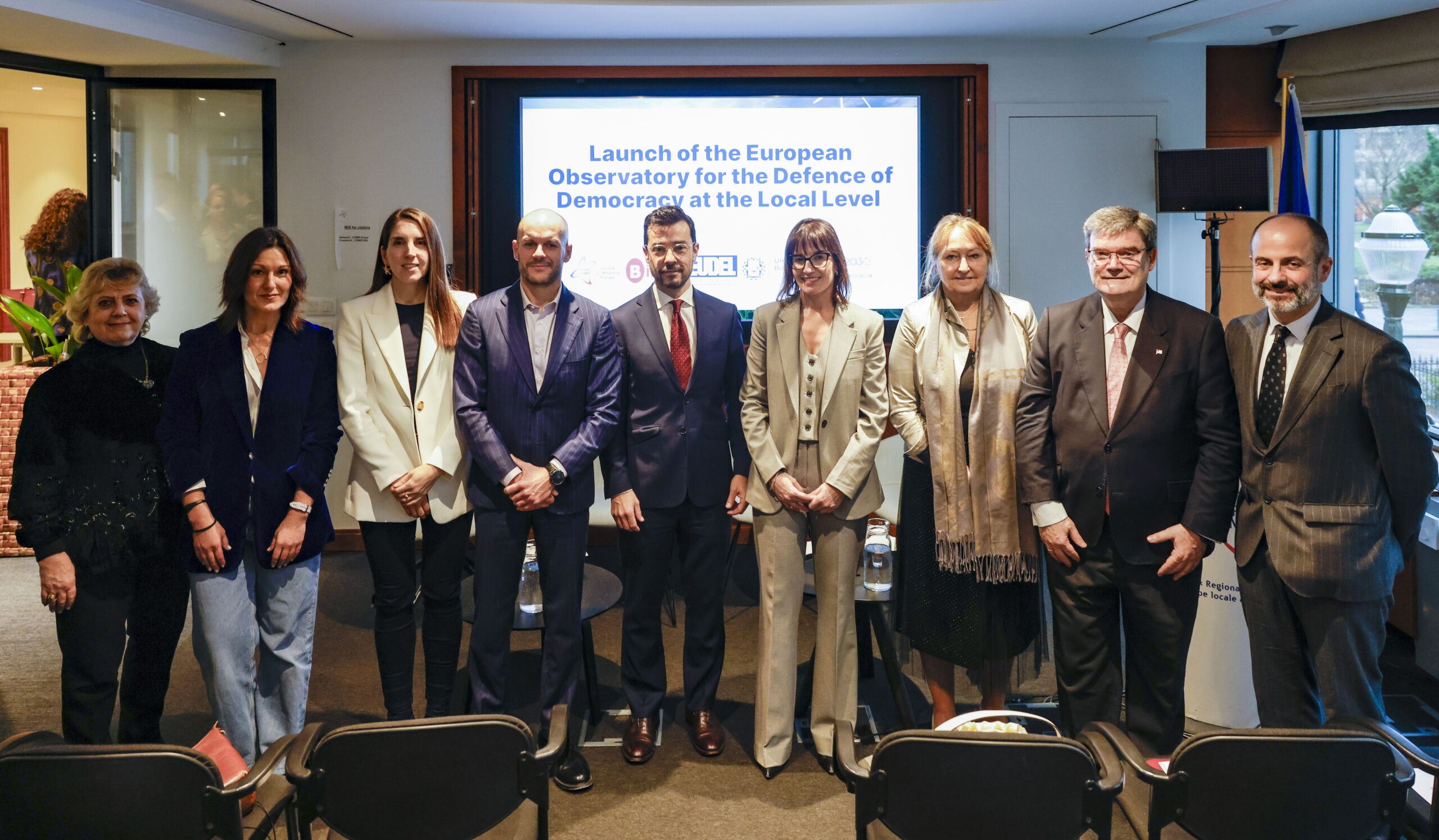
Eider Inuntziaga during the launch of the European Observatory for the Defence of Democracy at the Local Level.

Rooted locally, thinking European 

Although her work is grounded in municipal politics, Inuntziaga keeps a strong European outlook. She follows debates beyond Spain closely and draws inspiration from leaders such as Kaja Kallas, whom she admires for her perspective on Europe’s role in a changing world. 

Still, her focus remains firmly local. For her, cities are where democracy is tested every day — where policies meet real life, and where trust is either built or lost through everyday interactions. 

It is not the most visible level of politics — but, in many ways, it is the one where democracy is felt most directly. 


To hear more from Eider Inuntziaga, you can listen to the full episode of Call Simone, also with Gianmarco Daniele of Bocconi University, . They discuss how growing harassment and disinformation are affecting local leaders across Europe, and how the launch of the European Observatory for the Defence of Democracy at the Local Level can better track threats and protect local democracy. 

For more information, contact:

MFF 2028-2034 position paper

EU Budget - News 2025

A stronger Europe is built locally: CEMR publishes its position paper on the EU Budget 2028–2034


As the EU prepares its next long-term budget, the Multiannual Financial Framework (MFF) 2028–2034, CEMR calls for a clear message to EU institutions and Member States: Europe’s future strength depends on empowering its towns, cities and regions.

CEMR’s new position paper, A stronger Europe is built locally, sets out how the next EU budget can effectively support territorial cohesion, competitiveness, democracy, and resilience. In the paper, CEMR warns that while the Commission’s proposal slightly increases overall resources, it reorients priorities toward defence, security, and industrial competitiveness—often at the expense of cohesion and local development, the very pillars that bring the EU closest to its citizens.

Multilevel governance must be non-negotiable

The paper highlights a major risk of recentralisation: by granting Member States and the European Commission broader discretion in defining funding priorities, the proposal could marginalise local governments, particularly in countries with weaker multilevel governance structures.

CEMR urges the EU to reinforce partnership mechanisms across all programmes—especially within the National and Regional Partnership Plans (NRPP), the European Semester, the European Competitiveness Fund (ECF) and the Global Gateway. Stable, well-resourced local and regional governments platforms are essential to tailor EU investments to realities on the ground.

Cohesion at the heart of Europe’s transformation

CEMR stresses that cohesion is a treaty-based objective and must remain central. The paper calls for:

  • Mandatory regional and territorial chapters in all Partnership Plans
  • Increased budget allocation for the single integrated funding instrument proposed by the EU Commission, “The Fund”
  • A mandatory 30% earmark for sustainable territorial development, including 15% for urban development
  • A safeguarding mechanism to protect local governments’ access to funds when national governments fail to meet conditionalities
  • Strengthening ESF+ (European Social Fund) for cohesion, youth and inclusion

Without these guarantees, Europe’s green, digital, and social transitions risk leaving entire territories behind.

Competitiveness and connectivity must acknowledge territorial reality

While competitiveness is a top EU priority, CEMR notes that the Commission’s budget proposal overlooks the territorial dimension. Cohesion and competitiveness are two sides of the same coin, and local and regional governments’ role in driving local and regional economic development should be recognised.

CEMR paper also calls for biodiversity and nature restoration to become explicit priorities in the European Competitiveness Fund (ECF) and urges simpler access to ECF, Horizon Europe, and the Connecting Europe Facility (CEF)—especially for smaller municipalities. It also stresses the need to include urban mobility as a strategic CEF priority.

Democracy and enlargement: supporting the foundations of Europe

With rising polarisation, disinformation, and harassment of local politicians, the position paper urges the EU to strengthen local democracy, support civic participation, and fund democratic resilience—including Global Citizenship Education and support for local media.

On enlargement, CEMR calls for local and regional governments to play a central role in the accession process of candidate countries, backed by stronger capacity-building and dedicated resources.

Read the full position paper here

For more information, contact:

Digital local and regional governments

Digital transition - News 2022

How Europe’s municipalities and regions can drive an inclusive, secure and people-centred digital transformation


Local and regional governments are at the heart of Europe’s digital transformation. As the public authorities closest to citizens, they deliver services such as healthcare, education, transport, social support and broadband deployment, all increasingly shaped by EU digital legislation. Their role is essential to ensure that digitalisation remains inclusive, sustainable and accessible to everyone. Yet many local and regional governments still face major obstacles: unequal access to digital infrastructure, insufficient financial and human resources, cybersecurity risks, and widening gaps in digital skills.

Across Europe, disparities in connectivity and digital access disproportionately affect rural and remote areas, low-income households and vulnerable groups. These inequalities threaten territorial cohesion and limit citizens’ ability to participate fully in digital society. To make digital public services truly accessible, digital solutions must follow inclusive design principles and remain complemented by in-person service options for those who cannot or prefer not to use digital channels.

Cybersecurity has become an increasing concern as local authorities manage sensitive public data and critical infrastructure, often without sufficient expertise or funding to meet growing EU requirements such as those under the NIS2 Directive. Smaller municipalities, in particular, lack the resources to implement robust cybersecurity measures, respond to incidents or comply with complex regulatory frameworks. Reinforced cooperation, simplification of rules and sustainable financial support are essential to strengthen local resilience.

Skills development remains another pressing challenge. To implement new EU digital policies, including those related to artificial intelligence, interoperability and data governance, local administrations need staff trained to oversee digital systems, maintain human oversight, and ensure ethical, transparent and fair use of technologies. At the same time, strengthening digital literacy among citizens through lifelong learning and community-based initiatives helps build trust, inclusion and participation. Cooperation between municipalities and across regions also accelerates innovation and avoids fragmentation by enabling the exchange of best practices and common solutions.

A Call for Stronger EU Support

To ensure a fair, secure and inclusive digital transition, CEMR calls on European institutions to reinforce investment in digital infrastructure, especially in underserved regions; provide technical and financial support for accessible digital public services; maintain non-digital access to essential services during the transition; facilitate public-private partnerships to expand connectivity; and offer tailored guidance, capacity-building and long-term funding to help local and regional governments strengthen their cybersecurity and digital skills. Europe’s digital future depends on empowering the actors closest to citizens: its municipalities, cities and regions!

Read the position paper here

For more information, contact: