Women in politics – first edition 

CEMR study reveals persistent underrepresentation of women in politics and calls for stronger action at local and European levels 


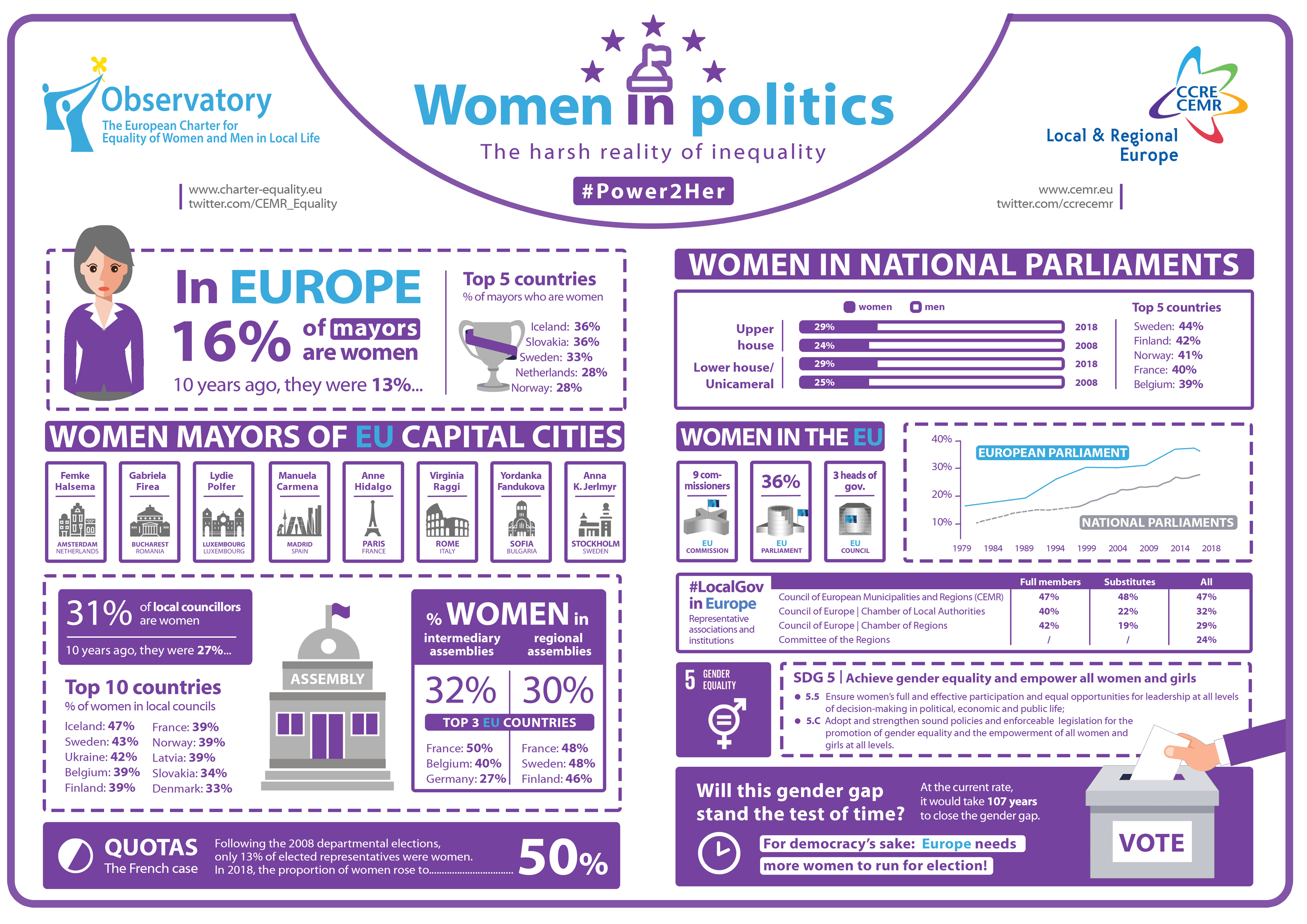
Gender equality is a cornerstone of democracy, yet women remain significantly underrepresented in politics across Europe. According to CEMR’s study Women in Politics: Local and European Trends, women account for only 34.1% of political decision-makers, despite representing half of the population. 

At the local level, the situation is particularly concerning: only 15.4% of mayors are women, while women councillors make up just under 30% of local councils. Although there has been gradual progress over the last decade, the pace is slow, and parity remains a distant goal. 

The report highlights important regional variations. Nordic countries lead the way, thanks to decades of policies fostering a genuine culture of equality. In Central and Eastern Europe, positive trends are visible, especially in the Balkans, where reforms and EU accession processes have strengthened gender mainstreaming. Yet, in much of Europe, women still face structural, cultural, and financial barriers to political participation. 

CEMR stresses that achieving gender equality requires more than political rhetoric. Quotas and legal measures have proven effective in boosting women’s representation, but they must be accompanied by mentoring, training, and dedicated funding to empower women candidates and dismantle persistent stereotypes. 

As the level of government closest to citizens, municipalities and regions are pivotal in fostering inclusive leadership. Local office often serves as the first step towards regional, national, or even European roles. Supporting women at this level is therefore essential for building stronger, more representative democracies. 

CEMR, through its European Charter for Equality of Women and Men in Local Life and the Equality Observatory, continues to mobilise local and regional governments, promote good practices, and push for equality to remain at the heart of the EU’s political agenda. 

The study’s message is clear: while progress has been made, gender parity in politics is far from achieved. Europe must act now, through quotas, support structures, and political will, to ensure that women and men share power equally at every level of governance. 

Read the study here 

Check the infographics

For more information, contact: 

Guidelines for gender equality  

UCLG people banner

Updated CEMR-EPSU framework supports inclusive employment and service delivery 


The Council of European Municipalities and Regions (CEMR) and the European Public Service Union (EPSU) have adopted revised guidelines to help local and regional governments strengthen gender equality in the workplace. These updated guidelines replace the original 2007 version, reflecting new social challenges and priorities, such as the effects of austerity policies and demographic change. 

Recognising the central role that municipalities and regions play as employers and service providers, the guidelines provide a practical framework for developing Gender Equality Action Plans (GEAPs). These plans aim to improve working conditions, promote equal career opportunities for women and men, and support a better work-life balance for all staff. 

“Gender equality is essential to create fair and resilient communities. Local governments can lead by example,” state the social partners. 

The revised guidelines: 

  • Encourage positive action and gender mainstreaming in HR and service provision; 
  • Offer templates and checklists to support the creation of tailored local plans; 
  • Promote cooperation between employers, employees, and trade unions; 
  • Align with existing EU legislation and the ILO’s Decent Work Agenda. 

The document also outlines the importance of political backing, training, and long-term commitment to ensure successful implementation. CEMR and EPSU plan to assess the impact of these updated guidelines through the Social Dialogue Committee in 2019. 

For municipalities, county councils, and regions, this tool is an opportunity to foster more inclusive, equitable workplaces while meeting broader European goals on gender equality. 

Read the position paper here 

For more information, contact: 

Strengthening work-life balance 

Work Life - News

Improving equality, labour participation, and social cohesion through better policies on leave, childcare, and flexible work 


Work-life balance remains one of the most pressing challenges in Europe, with direct implications for gender equality, labour market participation, and social cohesion. Despite progress in recent decades, women remain underrepresented in employment, face higher risks of poverty, and continue to carry a disproportionate share of care responsibilities. Addressing these issues is not only a matter of fairness but also an economic necessity, as women’s employment is a key driver of growth. 

Policies that support better reconciliation of work and family life are crucial to close the gender employment gap. Several measures stand out: ensuring high-quality and affordable childcare, promoting equal sharing of parental leave, developing flexible working arrangements, and adopting gender-sensitive budgeting practices. 

Childcare plays a central role in enabling equal participation in the labour market. Meeting the “Barcelona objectives”, with at least 90% of children between the ages of three and school age having access to childcare, is essential. Investment in childcare infrastructure reduces the burden of informal care, often borne by women, and creates conditions for greater economic independence. 

Equally important are leave provisions. While maternity leave remains a cornerstone, extending its duration may sometimes hinder women’s reintegration into the workforce. Alternatives such as affordable childcare, telework options, or flexible work schemes can provide more balanced solutions. Paternity leave, especially when non-transferable, is vital for promoting equal responsibility between parents, while parental leave policies must go further in encouraging fathers’ participation. Carers’ leave also deserves attention, particularly as ageing populations increase the demand for informal care. 

Flexible working arrangements, including telework, temporary reductions in working hours, and adaptable schedules, can further support families. Properly implemented, they improve retention, motivation, and productivity, while helping both women and men manage family responsibilities. 

Finally, transparency in pay structures and the regular monitoring of gender equality measures at all levels can help reduce persistent wage gaps and ensure progress is visible. Sharing good practices and setting benchmarks allows countries and regions to learn from one another and target actions where they are most needed. 

Work-life balance is not just a matter of private concern but a cornerstone of social and economic development. By strengthening childcare, modernising leave policies, and encouraging flexible and equal working arrangements, societies can ensure greater gender equality, reduce poverty risks, and boost long-term growth. Achieving these goals requires commitment across all levels of governance, with local and regional authorities playing a decisive role in turning principles into everyday realities. 

Read the position paper here 

For more information, contact: