Call for tenders – Social Dialogue

Call for Tender: Research Expertise on Social Dialogue Systems in Eastern Europe, Southern Islands, and EU Candidate Countries


The Council of European Municipalities and Regions (CEMR), in partnership with the European Federation of Public Service Unions (EPSU), is pleased to announce a call for tender for subcontracting external expertise to conduct research on social dialogue systems and practices within local and regional governments across a wide range of countries in Eastern and Southeastern Europe, Southern European islands, and EU candidate countries.

This call is part of the “LRG-SD Capacity Building” (Project LAB) initiative, co-funded by the European Commission, which aims to address the current underrepresentation and limited engagement of social partners in national and EU-level social dialogue in the local and regional government sector.

The selected contractor will:

  • Produce a desk research report offering a comprehensive overview of social dialogue systems in the target countries.
  • Document and synthesise the findings from three international workshops and three twinning activities.
  • Draft concise and informative reports (2–15 pages) in English, summarising the discussions, conclusions, and best practices exchanged during all project events.
  • Attend and report on project activities (online and in-person), providing valuable insights and comparative analysis.

Target countries include:
Eastern Europe (e.g. Poland, Hungary, Slovenia), Southeastern Europe (e.g. Romania, Bulgaria), EU candidate countries (e.g. Albania, Ukraine, Türkiye), and Southern European islands (Malta and Cyprus).

Expertise Required

Applicants must demonstrate:

  • Strong academic background in EU labour and social policy.
  • Proven experience with trade unions and employer organisations at the local, national, or European level.
  • Ability to work in multilingual and multicultural settings.
  • Skilled in conducting desk research and reporting on multi-stakeholder events.
  • Capacity to manage tight deadlines and coordinate with multiple project partners.
  • Availability for occasional travel to project events.

Budget and Timeline

  • Maximum budget: €28,925 (excluding VAT)
  • Contract duration: From June 2025 (upon appointment)
  • Deadline for submission: 30 May 2025, 12:00 (noon)
  • Submission email: application@ccre-cemr.org
    Please include the subject line: “Application – Project LAB”

For more information, contact:

Public procurement to local realities

European Union - News

CEMR Releases New Position Paper on Public Procurement: A Call for More Flexibility and Less Bureaucracy


CEMR has officially released its position paper on public procurement, outlining key changes needed to ensure a procurement system that truly works for local and regional governments.

As the largest public investors and contracting authorities in the EU, local and regional governments (LRGs) play a crucial role in delivering essential public services. However, the current public procurement framework remains too complex, rigid, and burdensome, limiting their ability to act efficiently and effectively.

CEMR’s position paper highlights three key areas for reform:

  • Greater flexibility to adapt procurement to local needs
  • Simplified rules to reduce administrative burdens
  • Stronger support for SMEs to foster local economic growth

The document serves as a clear call to action for EU policymakers, urging them to shape a procurement framework that respects the autonomy of local governments while ensuring efficient public service delivery.

For more information, contact:

Public Procurement directive

Schengen Space - News

Empowering Local and Regional Governments: A Call for a Public Procurement Directive that Reflects their Realities


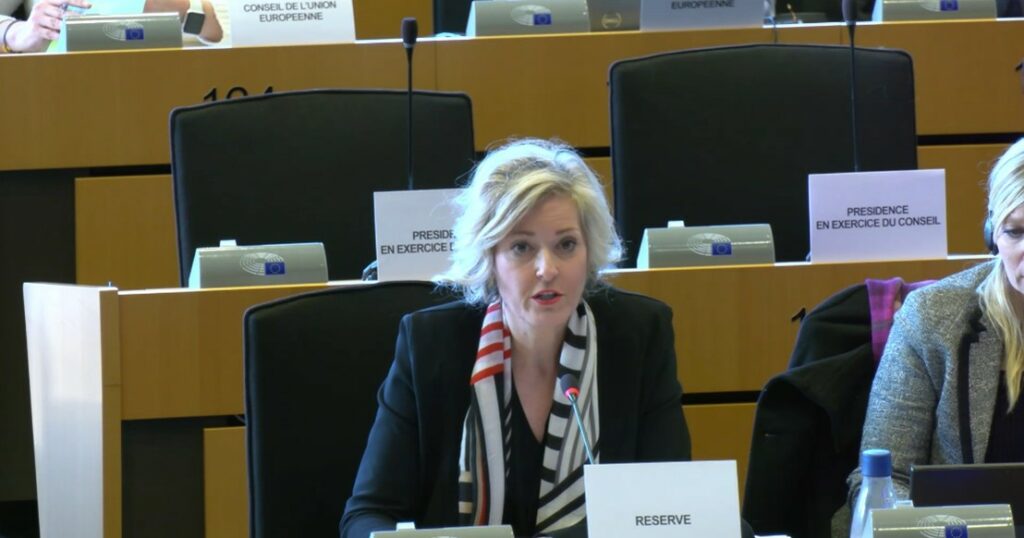
On Monday 27 January, Tanja Struve, Chair of CEMR’s Expert Group on Public Services, participated in the IMCO Committee’s exchange of views on public procurement. This session was organised as part of the European Parliament’s own initiative report on public procurement and brought together experts and policymakers to address key challenges and opportunities in this policy field. 

During her intervention, Ms. Struve presented the CEMR Expert Group’s positions, stressing the urgent need for a public procurement directive that better reflects the realities of local and regional governments (LRGs). She highlighted the significant role LRGs play as the largest public investors and contracting authorities in the European Union and the challenges they face under the current directives. 

Tanja Struve, Chair of CEMR’s Expert Group on Public Services

Why Public Procurement Matters 

Public procurement is a cornerstone of the European economy, accounting for around 14% of the EU’s GDP. It is a critical tool for governments to deliver public services, promote innovation, and drive sustainability. The existing EU Public Procurement Directives, adopted in 2014, aim to modernise procurement practices by fostering transparency, competition, and efficiency. 

While the EU’s procurement framework has brought some improvements, there is a growing consensus among local governments that reforms are needed to better align the directives with the realities on the ground. Indeed LRGs—the largest contracting authorities in the EU—face significant challenges in navigating the current framework because of the overly complex procedures, rigid rules, and heavy administrative burdens that limit flexibility and make it difficult for local authorities to adapt procurement practices to their specific needs. 

Public procurement is vital, and LRGs are the largest public investors and contracting authorities in the EU,” Ms. Struve stated. “However, they face several challenges with the current public procurement directives. They need simplification, flexibility, and the ability to adapt procurement practices to local needs without overloading procedures.” said Tanja Struve, Chair of CEMR’s Expert Group on Public Services.

Ms. Struve emphasised three critical areas for reform: 

  • Greater flexibility to adapt procurement practices to local circumstances. 
  • Simplified rules to streamline processes and improve procedures. 
  • Reduced administrative burdens to ensure more efficient and effective procurement practices. 

These changes, she explained, are essential to empower local governments to deliver high-quality public services while safeguarding their right to self-governance. 

Next Steps for the Expert Group 

CEMR’s Expert Group on Public Services is finalising its position paper on public procurement. The document, which consolidates the group’s recommendations and insights, is currently under review by the Secretary Generals of CEMR. It is set to be adopted and published in the coming days. 

This position paper will serve as a cornerstone for CEMR’s advocacy efforts, providing clear and actionable guidance to EU policymakers on creating a public procurement framework that truly supports local and regional governments. 

For more information, contact:

Local, social, digital – digitalisation impact

Digital transition - News 2022

A joint CEMR–EPSU project explores how digitalisation is transforming local and regional governments across Europe and its impact on workers, services and governance 


Digital transformation is reshaping local public services across Europe, from how services are delivered to how public employees work and engage with citizens. To understand these changes and support effective responses, the Council of European Municipalities and Regions (CEMR) and the European Public Service Union (EPSU) launched a joint project: “Local, Social, Digital”, co-funded by the European Commission and implemented between 2023 and 2024. 

This initiative explored the challenges, opportunities and impact of digitalisation in local and regional governments (LRGs), with a particular focus on working conditions, skills development, social dialogue, and inclusive governance. 

At the heart of the project is a comprehensive research report prepared by an independent expert, based on desk research, interviews with national CEMR and EPSU affiliates, and key insights from international conferences and webinars held in Cagliari, Tallinn and online. 

The research revealed a wide range of digital practices and challenges across European LRGs. Digital tools are enhancing flexibility, accessibility and efficiency, but also raising important questions around workers’ rights, surveillance, data privacy, and fair access to training and upskilling. The study also found growing awareness around the gendered impact of digitalisation, particularly following the COVID-19 pandemic. 

Key themes included: 

  • Telework and hybrid work: The shift to remote working has been widely adopted, but requires clearer frameworks on rights, disconnection, and workplace safety. 
  • Digital skills and employment: There is a pressing need to train and support public employees in using digital tools, with strong involvement from both trade unions and employers. 
  • Ethics and AI: The use of Artificial Intelligence in local governance raises new ethical challenges and calls for stronger social partner dialogue. 
  • Smart cities and services: Digitalisation of public services must remain people-centred, focusing on inclusiveness, accessibility, and transparency. 

Many national and local social partners have already launched strategies, tools and agreements to manage this transformation, including practical guidelines, awareness-raising events and training programmes. 

As Europe enters its Digital Decade, local and regional governments stand at the forefront of this transformation. The “Local, Social, Digital” project reinforces the crucial role of social dialogue in managing digital change, ensuring fair working conditions, and promoting inclusive public services. 

CEMR and EPSU call for continued EU support and structured collaboration among employers, trade unions and institutions to empower local administrations in navigating digital change, sustainably, socially, and with dignity. 

Read the study here

For more information, contact: 

Modernising working time rules

Labour - News Section

Balancing worker protection with flexibility and legal clarity in local public service delivery under the Working Time Directive


The Council of European Municipalities and Regions (CEMR) has responded to the European Commission’s public consultation on the review of the Working Time Directive (WTD), urging the EU to prioritise legal certainty and respect for local autonomy in any future reform. 

Unchanged since 2003, the current Directive no longer fully reflects today’s labour realities, especially for local and regional governments as major public employers. While modernisation is welcome, CEMR warns against overreach: the Directive should focus strictly on health and safety, without encroaching on broader employment issues that fall outside the EU’s remit, such as wages, work-life balance, or new working patterns. 

In its response, CEMR reaffirms key positions first set out in its 2011 position paper, which remain relevant today. It calls for: 

  • Flexibility for social dialogue: Local social partners are best placed to find tailored solutions through bargaining and agreements that balance worker protection with service continuity. 
  • Clear limits to scope: The Directive must not expand into areas that are either outside EU competence or not directly related to health and safety. 
  • Legal certainty: Any revision should result in simpler, clearer rules that avoid legal ambiguity and reduce the administrative burden on local authorities. 

CEMR further stresses that the review must take full account of the impact on local and regional governments’ ability to provide uninterrupted public services, especially in sectors like emergency care and civil protection, where flexible working patterns are essential. 

CEMR concludes that no legislative initiative should proceed before the publication of detailed impact assessments and a full analysis of the public consultation. In the meantime, it stands ready to engage in open and constructive dialogue with EU institutions to ensure a balanced approach that works for all levels of governance. 

Read the position paper here 

For more information, contact: 

Social dialogue

Social Dialogue - News 2021

How can local and regional governments combat third-party violence and harassment at work ?


In the European Union, 41% of the employees work in direct contact with clients*, among them 42%, especially women, suffer from physical violence, verbal aggression, or the threat of physical violence  which is not at the hands of a co-worker (e.g., a municipal employee targeted by cyber-bullying or teacher attacked by a pupil). The so-called third-party violence, has an impact on workers’ health and safety and on their ability to provide quality services.  

Throughout the past years, this type of abuse has greatly increased. Featuring new forms of work combined with the eruption of social media, the context of Covid-19 pandemic has indeed propelled third-party violence to high levels. 

A European response is needed to fight against these abuses. That is why in 2010 European social partners agreed on multi-sectorial guidelines. But these need to be adapted to the new challenges of the pandemic, especially for essential and front-line workers : for instance health workers have witnessed an increase of threats and attacks against vaccination centres in France and Poland this summer.

For this reason, social partners, members of CEMR and the European Federation of Public Service Unions (EPSU) gathered on 16 September during the workshop “Third-Party Violence at the workplace: French Social Partners policies and agreements”**. The webinar focused on the French situation, where despite a very elaborated legislative framework, many employers and workers are not aware of specific responsibilities or mechanisms at their disposal. 

What are the solutions to end third-party violence and harassment? 

Representatives from waste and cleaning services, front desk workers and emergency services underlined the value of awareness raising and training of public workers as well as the importance of preventive action through ‘user charters’. They also agreed on the need for effective complaints and support mechanisms such as psychological support units and experts.

Mads Samsing, EPSU Chair, insisted on consultation among partners and local workers to find solutions and good practices: 

“The dialogue between workers, employees and citizens is important to consider the process on the way to some kind of decision for the public authorities. We need a good number of trained employees”.

Nevertheless, public services need stronger means to face challenges raised by new technologies in this matter.

What are the next steps ? The role of local and regional governments in the renewal of the guidelines 

As regards the situation in France, the Mayor of Sceaux and AFCCRE President Philippe Laurent highlighted the lack of protection for public agents compared to the private sector. He stressed the importance of sharing experiences and the need to improve social negotiation: 

“This awareness must continue. In this regard, good practices on the ground that can be brought and shared by CEMR and EPSU are interesting and enriching.”

Councillor Gail MacGregor, CEMR and COSLA Spokesperson, expressed her concerns about the pressure on budget in local governments : 

“The financial impacts of COVID-19 have been severe and have placed extreme pressure on already strained budgets and on our workforce. While we remain fully committed to the health and physical and mental wellbeing of our workforce, national governments must also recognise this extreme pressure and the need to invest in local government to fully play our part.”

Mads Samsing, while siding with Gail MacGregor on the budget issue, added that a renewal of the guidelines should consider digital harassment and new instruments of protection.

A new meeting on gender-based violence took place on 24th September, to discuss the update of the multi-sectorial guidelines considering recent political and legislative developments such as the ILO convention 190 on Violence and Harassment.

*Eurofund 2020
**This event took place as part of CEMR-EPSU joint project “EU dialogue, local solutions”

Social rights, local action 

Social Rights Labour - News

What are the priorities for implementing the European Pillar of Social Rights with a strong local and regional involvement? 


The Council of European Municipalities and Regions (CEMR) welcomes the European Pillar of Social Rights as a step toward strengthening fairness and equality in Europe. While supporting its ambition, CEMR stresses that the measures linked to the Pillar’s 20 principles should remain non-binding, respecting the diversity of national, regional and local competences. For local and regional governments, the Pillar should serve as a reference framework to inspire reforms, rather than impose uniform rules. 

CEMR identifies key challenges where Europe must act: rising inequality, persistent poverty, gender gaps, and labour market transitions accelerated by digitalisation and COVID-19. Municipalities and regions, as major providers of education, housing, health, social inclusion and employment services, are at the heart of delivering social rights. 

CEMR’s policy priorities include: 

  • Skills and education: investment in training, apprenticeships and digital access to avoid a “lost generation” of young people. 
  • Demographic change: integrating women, older workers, migrants, and disadvantaged groups into the labour market. 
  • Gender equality: boosting women’s participation and addressing work-life balance challenges, especially in the pandemic’s aftermath. 

At the same time, CEMR warns against excessive bureaucracy or additional reporting obligations for local authorities, calling instead for best practice exchange, benchmarks, and adequate funding. 

For the European Pillar of Social Rights to succeed, it must respect subsidiarity, strengthen social dialogue, and involve local and regional governments as essential actors. Municipalities, cities, and regions are indispensable in turning principles into concrete progress, provided they are given the flexibility, resources and recognition needed to deliver. 

Read the position paper here 

For more information, contact: 

The future of public services 

People Europe - News

Simpler EU rules needed to empower local service delivery 


Local and regional governments are central to ensuring quality public services across Europe, from transport to childcare and broadband. Yet complex EU rules on competition and procurement are increasingly challenging their ability to deliver these services effectively. 

That’s the core message of the Council of European Municipalities and Regions (CEMR)’s position paper, Strong Public Services through Local Governments

As Europe reflects on its future, CEMR urges policymakers to recognise local governments not as a problem, but as part of the solution. From climate action to social cohesion, local services are key to implementing EU goals on the ground. However, this contribution risks being undermined by overregulation and limited local autonomy. 

“European rules should enable, not obstruct, local governments in meeting community needs,” the paper argues. 

CEMR highlights the need to: 

  • Respect subsidiarity and local self-government; 
  • Simplify procurement and state aid procedures; 
  • Allow local authorities to support their economies through ‘buy local’ criteria; 
  • Improve legal clarity for public-public cooperation; 
  • Reform litigation-heavy procurement processes. 

Despite burdensome procedures, cross-border procurement remains rare, pointing to a mismatch between regulatory effort and actual impact. A more flexible, proportionate system would support innovation and help local governments better serve their communities. 

Read the position paper here 

For more information, contact: 

Regional actors in economic governance 

EU Semester - News 2024

CEMR–EPSU report maps current involvement of local and regional actors in EU economic governance


The European Semester, created in 2010 in response to the financial crisis, is the EU’s annual cycle for coordinating Member States’ economic, social, employment, and budgetary policies. Its aim is to align national reforms with shared EU objectives, including stability, sustainable growth, and the Europe 2020 strategy. 

While central governments and EU institutions remain the main players, the process increasingly affects local and regional governments (LRGs) and their social partners. From public finance and taxation to health, social care and employment, many Semester reforms directly touch the responsibilities of municipalities and regions, as well as the working conditions of the sector’s employees. 

The joint CEMR–EPSU project “Localising the European Semester” (2018–2020) set out to better understand and strengthen this involvement. The first deliverable, a background report published in February 2018, provided an overview of the Semester’s development, evidence of how LRGs and social partners are engaged, and identified important gaps in knowledge. 

Key findings from the report include: 

  • Limited evidence of structured involvement: While LRGs are often consulted through existing dialogue structures, their influence remains inconsistent across Member States. For social partners, involvement is even less systematic, with sectoral trade unions and employers’ organisations often sidelined in favour of peak-level organisations. 
  • Impact remains unclear: Academic studies assess when countries follow Semester recommendations, for example, during election cycles, under market pressure, or when backed by EU enforcement. However, little research exists on whether reforms are more likely to succeed when LRGs and social partners contribute. 
  • Need for deeper analysis: The extent to which local governments and sectoral social partners shape National Reform Programmes (NRPs) is largely undocumented. Equally, it remains uncertain whether peak organisations fully represent the concerns of the local government sector in national consultations. 
  • Opportunities for good practice: Where involvement does occur, it is often tied to long-standing structures for social dialogue or intergovernmental coordination. The challenge is to turn sporadic consultation into regular, structured dialogue with clear impact. 

The report concludes that strengthening the role of LRGs and their social partners in the Semester is both necessary and possible. By documenting experiences, identifying good practices, and pressing for meaningful engagement, the CEMR–EPSU project aims to ensure that the voices of local governments, employers and workers are better reflected in one of the EU’s most powerful policy coordination tools. 

Read the position paper here 

For more information, contact: 

Making the EU semester inclusive

EU Semester - News

Final declaration of the CEMR–EPSU project calls for stronger involvement of local governments and social partners in the European Semester


The European Semester, once primarily a tool for economic coordination, has evolved into a wide-ranging policy process that shapes social legislation, EU funding priorities, and the implementation of the European Pillar of Social Rights and the Sustainable Development Goals. Yet, its democratic legitimacy remains limited, with insufficient involvement of local and regional governments (LRGs) and their social partners. 

From 2018 to 2020, CEMR and EPSU ran the joint project Localising the European Semester with the support of the European Commission. The initiative explored ways to better involve sectoral social partners of local and regional governments in the Semester cycle. Its findings confirm that around 80% of Country Specific Recommendations have a territorial impact, making the engagement of municipalities, cities and regions essential for their effective implementation. 

The project demonstrated a growing interest from social partner organisations in contributing to the Semester. However, practices across Member States remain inconsistent, and consultation processes are often too formal to be effective. CEMR and EPSU therefore call for clearer standards and stronger mechanisms to ensure meaningful participation. 

Key recommendations include: 

  • Guaranteeing that the views of local and regional social partners are fully taken into account. 
  • Setting EU-wide quality standards for inclusive consultation processes. 
  • Providing dedicated fora and visibility for sectoral social partners in the Semester cycle. 
  • Establishing an ad-hoc grant to support information and consultation at the national level. 
  • Ensuring the Semester becomes an inclusive framework for achieving the SDGs. 

CEMR and EPSU underline that municipalities, cities and regions are vital socio-economic actors, delivering investments, growth and high-quality services. To strengthen the legitimacy and impact of the European Semester, EU institutions and national governments must involve them, and their social partners, much more closely. Only by doing so can the Semester live up to its promise of supporting sustainable and inclusive development across Europe. 

Read the declaration here 

For more information, contact: