Statement on public procurement

Public procurement services news

Call on European institutions to safeguard public-public cooperation and in-house provision in the Revision of the Public Procurement Directives 

313 words
1–2 minutes

Public-public cooperation and in-house provision are essential tools enabling local and regional governments to organise, deliver, and manage public services directly — whether through cooperation with other public authorities or through entities under their control — without resorting to external operators.  

The Council of European Municipalities and Regions (CEMR) released a statement in which it expresses its strong opposition to calls and proposals that further restrict public-public cooperation and in-house provision in view of the upcoming Revision of the EU Public Procurement Directives.  

In this new statement, CEMR argues that public-public cooperation and in-house provision are firmly grounded in the EU Treaties, the Public Procurement Directives, and the case law of the Court of Justice of the European Union. Local and regional governments must retain the freedom to choose the delivery model that best serves their communities — including direct provision and cooperation with other public authorities.  

CEMR also takes aim at the notion that public-public cooperation or in-house provision harms competition. There is no evidence to support that claim; if anything, these models can improve efficiency, support investment, and strengthen essential public services for citizens.  

Additionally, at a time of growing geopolitical uncertainty, cybersecurity risks, and growing pressure on public services, local authorities cannot afford to lose the flexibility to organise critical services in-house or through trusted public partnerships.  

CEMR calls to the European institutions for greater legal certainty — not further restriction — in the revision of Article 12 of the Public Procurement Directive, while safeguarding the right of local and regional governments to organise public services according to local needs and democratic choices.  

To complement this information, you can also read here CEMR’s position paper setting out what local and regional governments need from the revision of the 2014 Public Procurement Directives. 
For more information, contact:

Reaction to the EU procurement rules

Public Procurement news

CEMR calls for a simpler, fairer revision of the EU public procurement directives, putting local realities at the centre of the reform

527 words
2–3 minutes

Local and regional governments (LRGs) are Europe’s largest public investors, spending more than €3 trillion a year through procurement. From care services to construction, from digital tools to energy infrastructure, every euro spent through public contracts has a direct impact on citizens’ daily lives. Yet the rules governing how LRGs buy are growing increasingly fragmented, complex, and out of sync with local realities.

As the European Commission prepares to revise the 2014 Public Procurement Directives, CEMR has adopted a position paper setting out what LRGs need from the reform. The message is clear: the revision must prioritise simplicity, flexibility, and subsidiarity instead of adding new layers of mandatory obligations to already overstretched towns, cities and regions.

A flexible framework that works for all

Most LRGs in Europe are small, operating with limited legal, technical, and administrative capacity. The current framework, scattered across more than 60 EU sectoral legislative acts, was not designed with them in mind. CEMR calls for a directive-based approach that preserves flexibility, and for EU-level clauses on environmental, social, and innovation considerations to remain voluntary. A comprehensive review mechanism should consolidate procurement obligations across sectoral legislation to eliminate contradictions and reduce the burden on contracting authorities.

Higher thresholds, fewer unnecessary procedures

EU procurement thresholds have not been changed in over a decade, despite significant inflation and rising costs. As a result, an ever-growing number of public purchases are now subject to full EU-level procedures, despite no real cross-border interest. Indeed, direct cross-border procurement accounts for just around 2% of all contract awards. CEMR calls for a substantial increase in thresholds, in line with cumulative inflation since 2014, alongside an automatic indexation mechanism to prevent the same problem from recurring.

Made-in-Europe and strategic goals must not come at local cost

CEMR supports the Commission’s broader ambitions on European competitiveness and strategic autonomy, goals that matter equally to LRGs who depend on resilient supply chains. However, a “Made in Europe” approach will significantly increase costs for contracting authorities if applied broadly. LRGs must not be penalised when EU supply is unavailable and must not be responsible for verifying complex supply chain origin documentation. That responsibility should lie with economic operators, supported by EU-level certification.

Protecting public-public cooperation and in-house provisions

LRGs regularly collaborate across boundaries to pool resources and deliver services more efficiently, especially in rural or low-capacity areas. Yet, Article 12 of the current directive remains too restrictive and unclear, creating legal uncertainty for many legitimate forms of public-public cooperation and in-house arrangements. CEMR therefore calls for a broader and clearer exemption for genuine cooperation between public authorities, and for in-house procurement to be protected from market-oriented interpretations, allowing LRGs to retain the democratic discretion to organise and deliver public services in the way that best serves their communities.

CEMR will continue to engage actively with the European institutions throughout the revision process to ensure that the voices of local and regional governments shape the outcome of this crucial reform.

Read our latest statement on our position paper here

For more information, contact:

Artificial Intelligence and local governments

AI training article 2026

CEMR partners with 28Digital to provide AI training for local and regional governments


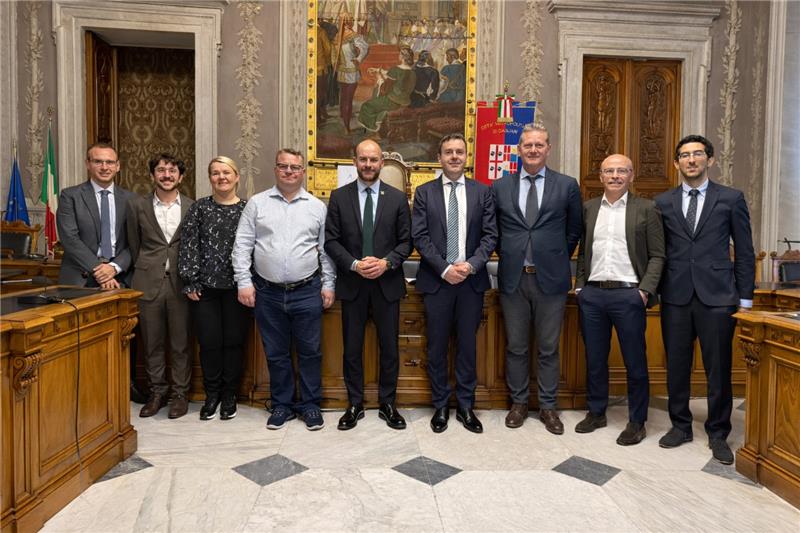
Local and regional leaders gathered in Cagliari to discuss the growing political impact of artificial intelligence (AI) at the roundtable “Opportunities and Challenges of Artificial Intelligence for Local and Regional Governments”, hosted at Palazzo Regio.

Organised by the Council of European Municipalities and Regions (CEMR) together with AICCRE, PLATFORMA and 28DIGITAL, the event focused on how AI is reshaping public services, democratic participation and multilevel governance.

Speakers stressed that while AI offers significant opportunities for innovation, it also raises key political issues such as transparency, accountability, and fairness.

AI training article 2026

During the gathering, participants also learnt about concrete initiatives supporting local leaders in the digital transition, including the project “Empowering Local Leaders through AI”, as well as 28DIGITAL’s work on education, skills and capacity-building for public administrations, presented by experts from Gofore, 28DIGITAL and Politecnico di Milano.

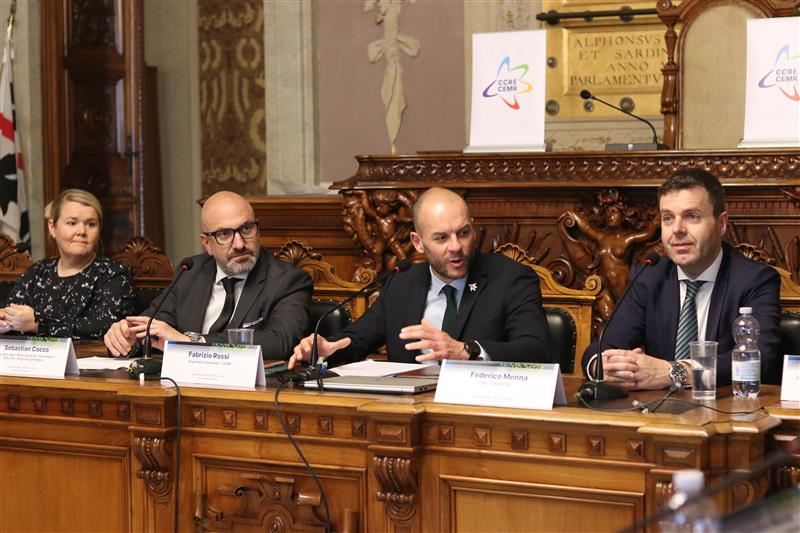
The roundtable that followed was moderated by Fabrizio Rossi, Secretary General of CEMR, and included contributions from Piero Comandini, President of the Regional Council of Sardinia; Massimo Zedda, Mayor of the Metropolitan City of Cagliari; and Federico Menna, CEO of 28DIGITAL.

AI training article 2026

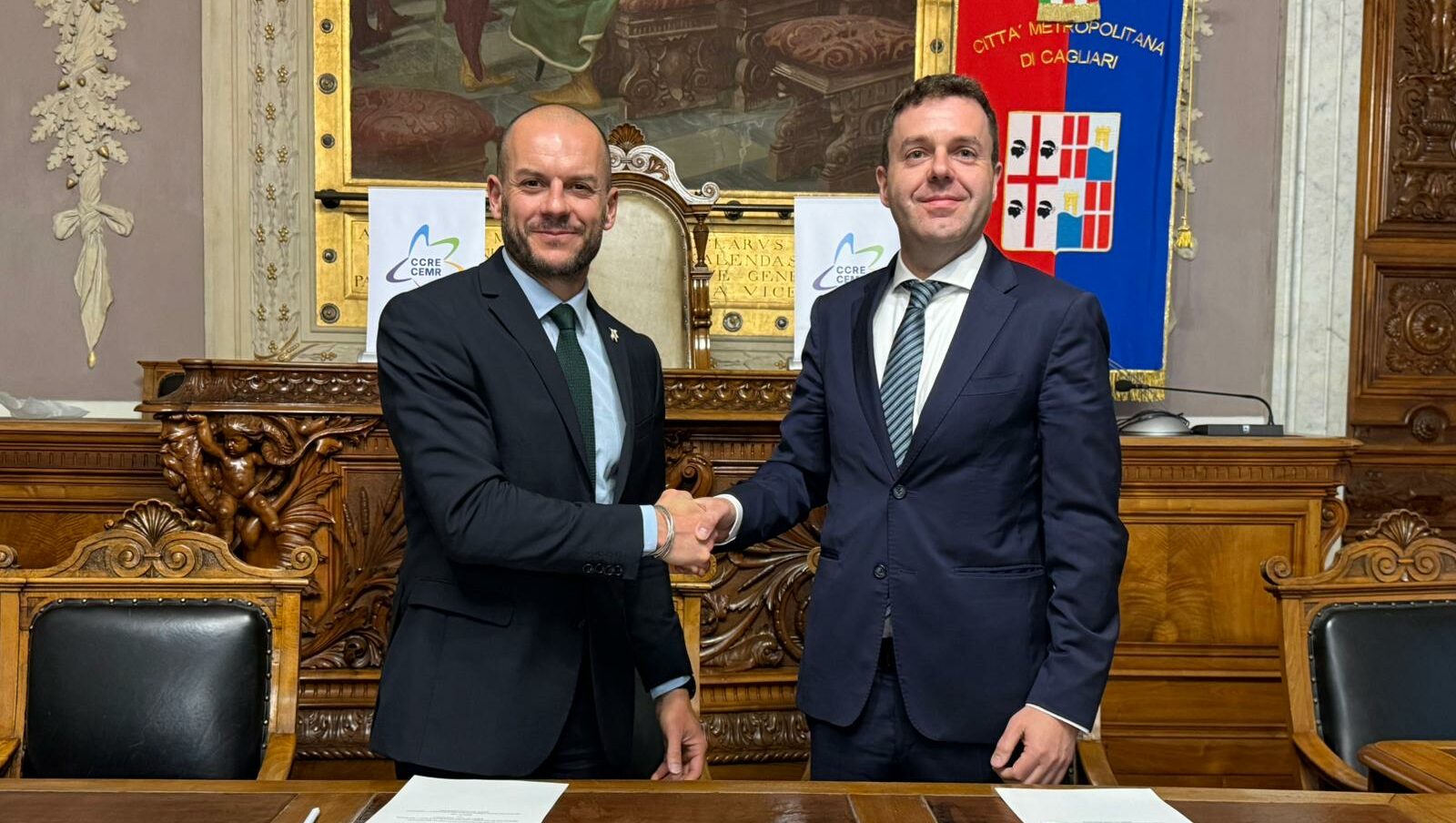
A central outcome of the event was the signing of a Memorandum of Understanding between CEMR and 28DIGITAL, launching a new training programme on AI for local elected representatives. The initiative aims to strengthen political competence and informed decision-making on AI at a territorial level.

Commenting on the agreement, Jork Cardeneo, CEMR spokesperson on digitalisation, underlined the importance of political leadership:

“If local leaders are expected to govern AI responsibly, they must first understand it. This memorandum marks a decisive step towards empowering elected representatives to lead the digital transition, rather than merely react to it.”

The Cagliari meeting confirmed the role of cities and regions as key political actors in ensuring that AI supports more democratic, inclusive, and innovative governance.

For more information, contact:

Digital local and regional governments

Digital transition - News 2022

How Europe’s municipalities and regions can drive an inclusive, secure and people-centred digital transformation


Local and regional governments are at the heart of Europe’s digital transformation. As the public authorities closest to citizens, they deliver services such as healthcare, education, transport, social support and broadband deployment, all increasingly shaped by EU digital legislation. Their role is essential to ensure that digitalisation remains inclusive, sustainable and accessible to everyone. Yet many local and regional governments still face major obstacles: unequal access to digital infrastructure, insufficient financial and human resources, cybersecurity risks, and widening gaps in digital skills.

Across Europe, disparities in connectivity and digital access disproportionately affect rural and remote areas, low-income households and vulnerable groups. These inequalities threaten territorial cohesion and limit citizens’ ability to participate fully in digital society. To make digital public services truly accessible, digital solutions must follow inclusive design principles and remain complemented by in-person service options for those who cannot or prefer not to use digital channels.

Cybersecurity has become an increasing concern as local authorities manage sensitive public data and critical infrastructure, often without sufficient expertise or funding to meet growing EU requirements such as those under the NIS2 Directive. Smaller municipalities, in particular, lack the resources to implement robust cybersecurity measures, respond to incidents or comply with complex regulatory frameworks. Reinforced cooperation, simplification of rules and sustainable financial support are essential to strengthen local resilience.

Skills development remains another pressing challenge. To implement new EU digital policies, including those related to artificial intelligence, interoperability and data governance, local administrations need staff trained to oversee digital systems, maintain human oversight, and ensure ethical, transparent and fair use of technologies. At the same time, strengthening digital literacy among citizens through lifelong learning and community-based initiatives helps build trust, inclusion and participation. Cooperation between municipalities and across regions also accelerates innovation and avoids fragmentation by enabling the exchange of best practices and common solutions.

A Call for Stronger EU Support

To ensure a fair, secure and inclusive digital transition, CEMR calls on European institutions to reinforce investment in digital infrastructure, especially in underserved regions; provide technical and financial support for accessible digital public services; maintain non-digital access to essential services during the transition; facilitate public-private partnerships to expand connectivity; and offer tailored guidance, capacity-building and long-term funding to help local and regional governments strengthen their cybersecurity and digital skills. Europe’s digital future depends on empowering the actors closest to citizens: its municipalities, cities and regions!

Read the position paper here

For more information, contact:

Call for tenders – Social Dialogue

Call for Tender: Research Expertise on Social Dialogue Systems in Eastern Europe, Southern Islands, and EU Candidate Countries


The Council of European Municipalities and Regions (CEMR), in partnership with the European Federation of Public Service Unions (EPSU), is pleased to announce a call for tender for subcontracting external expertise to conduct research on social dialogue systems and practices within local and regional governments across a wide range of countries in Eastern and Southeastern Europe, Southern European islands, and EU candidate countries.

This call is part of the “LRG-SD Capacity Building” (Project LAB) initiative, co-funded by the European Commission, which aims to address the current underrepresentation and limited engagement of social partners in national and EU-level social dialogue in the local and regional government sector.

The selected contractor will:

  • Produce a desk research report offering a comprehensive overview of social dialogue systems in the target countries.
  • Document and synthesise the findings from three international workshops and three twinning activities.
  • Draft concise and informative reports (2–15 pages) in English, summarising the discussions, conclusions, and best practices exchanged during all project events.
  • Attend and report on project activities (online and in-person), providing valuable insights and comparative analysis.

Target countries include:
Eastern Europe (e.g. Poland, Hungary, Slovenia), Southeastern Europe (e.g. Romania, Bulgaria), EU candidate countries (e.g. Albania, Ukraine, Türkiye), and Southern European islands (Malta and Cyprus).

Expertise Required

Applicants must demonstrate:

  • Strong academic background in EU labour and social policy.
  • Proven experience with trade unions and employer organisations at the local, national, or European level.
  • Ability to work in multilingual and multicultural settings.
  • Skilled in conducting desk research and reporting on multi-stakeholder events.
  • Capacity to manage tight deadlines and coordinate with multiple project partners.
  • Availability for occasional travel to project events.

Budget and Timeline

  • Maximum budget: €28,925 (excluding VAT)
  • Contract duration: From June 2025 (upon appointment)
  • Deadline for submission: 30 May 2025, 12:00 (noon)
  • Submission email: application@ccre-cemr.org
    Please include the subject line: “Application – Project LAB”

For more information, contact:

Guidelines signed for work safety

TPVH News - 2025

Guidelines to Prevent and Tackle Third-Party Violence and Harassment Related to Work (TPVH)


The Council of European Municipalities and Regions (CEMR), along with 8 European sectoral social partners representing Local and Regional Governments, hospitals and healthcare, education, hotels, restaurants and cafés (hospitality), and Central Governments, have adopted and updated the European Multi-sectoral Guidelines to Prevent and Tackle Third-Party Violence and Harassment Related to Work (TPVH).

CEMR led the employers’ delegation in the six-month round of negotiations held in 2024, which resulted in these guidelines. The European Commission financially supported these negotiations.

The revised draws upon the ILO Violence and Harassment Convention (No.190), existing policies, and collective agreements at the national level to address pressing challenges, considering the increase of third-party violence and harassment at work following the COVID-19 pandemic and a change in the workplace.  

They offer to the trade unions and employers:

  • Key elements for a TPVH policy devised by management and workers’ representatives and trade unions, anchored in social dialogue, occupational safety and health, gender equality and non-discrimination with an intersectional approach.
  • Practical tools and measures for health risk assessments, for example, psychosocial risks and staffing levels, prevention, and responses, such as social dialogue, awareness raising, training and clear reporting and complaint procedures.
  • Definitions and principles on fostering a culture of respect and zero tolerance to violence and harassment, including by learning from previous incidents and cooperating with relevant public authorities.
  • Remedies to support victims and hold perpetrators accountable, including support and transparent investigations.

On behalf of the employers’ delegation, Fabrizio Rossi, our Secretary General, has stated:

By concluding these updated guidelines, employers reaffirm their commitment to fostering workplaces where safety and respect are at the core, ensuring that both workers and the services delivered to citizens are protected”.

CEMR would like to thank the other signatories, namely its counterparts EPSU, HOSPEEM, HOTREC, EFEE, EUPAE, CESI, ETUCE, and EFFAT, for their collaboration over the past year leading to this adoption.

Read more about the European Multi-sectoral Guidelines to Prevent and Tackle Third-Party Violence and Harassment Related to Work here.

For more information, contact:

Public procurement to local realities

European Union - News

CEMR Releases New Position Paper on Public Procurement: A Call for More Flexibility and Less Bureaucracy


CEMR has officially released its position paper on public procurement, outlining key changes needed to ensure a procurement system that truly works for local and regional governments.

As the largest public investors and contracting authorities in the EU, local and regional governments (LRGs) play a crucial role in delivering essential public services. However, the current public procurement framework remains too complex, rigid, and burdensome, limiting their ability to act efficiently and effectively.

CEMR’s position paper highlights three key areas for reform:

  • Greater flexibility to adapt procurement to local needs
  • Simplified rules to reduce administrative burdens
  • Stronger support for SMEs to foster local economic growth

The document serves as a clear call to action for EU policymakers, urging them to shape a procurement framework that respects the autonomy of local governments while ensuring efficient public service delivery.

For more information, contact:

Public Procurement directive

Schengen Space - News

Empowering Local and Regional Governments: A Call for a Public Procurement Directive that Reflects their Realities


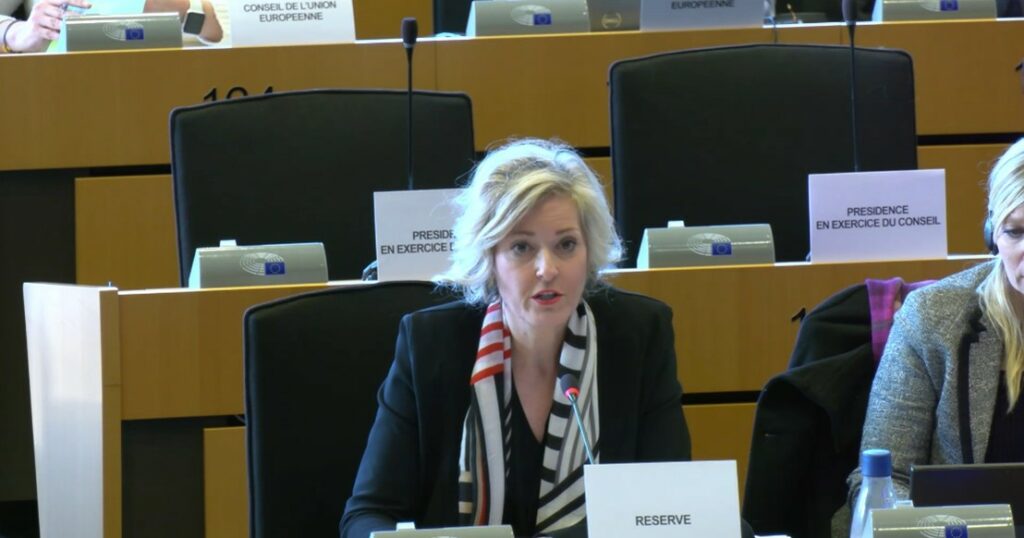
On Monday 27 January, Tanja Struve, Chair of CEMR’s Expert Group on Public Services, participated in the IMCO Committee’s exchange of views on public procurement. This session was organised as part of the European Parliament’s own initiative report on public procurement and brought together experts and policymakers to address key challenges and opportunities in this policy field. 

During her intervention, Ms. Struve presented the CEMR Expert Group’s positions, stressing the urgent need for a public procurement directive that better reflects the realities of local and regional governments (LRGs). She highlighted the significant role LRGs play as the largest public investors and contracting authorities in the European Union and the challenges they face under the current directives. 

Tanja Struve, Chair of CEMR’s Expert Group on Public Services

Why Public Procurement Matters 

Public procurement is a cornerstone of the European economy, accounting for around 14% of the EU’s GDP. It is a critical tool for governments to deliver public services, promote innovation, and drive sustainability. The existing EU Public Procurement Directives, adopted in 2014, aim to modernise procurement practices by fostering transparency, competition, and efficiency. 

While the EU’s procurement framework has brought some improvements, there is a growing consensus among local governments that reforms are needed to better align the directives with the realities on the ground. Indeed LRGs—the largest contracting authorities in the EU—face significant challenges in navigating the current framework because of the overly complex procedures, rigid rules, and heavy administrative burdens that limit flexibility and make it difficult for local authorities to adapt procurement practices to their specific needs. 

Public procurement is vital, and LRGs are the largest public investors and contracting authorities in the EU,” Ms. Struve stated. “However, they face several challenges with the current public procurement directives. They need simplification, flexibility, and the ability to adapt procurement practices to local needs without overloading procedures.” said Tanja Struve, Chair of CEMR’s Expert Group on Public Services.

Ms. Struve emphasised three critical areas for reform: 

  • Greater flexibility to adapt procurement practices to local circumstances. 
  • Simplified rules to streamline processes and improve procedures. 
  • Reduced administrative burdens to ensure more efficient and effective procurement practices. 

These changes, she explained, are essential to empower local governments to deliver high-quality public services while safeguarding their right to self-governance. 

Next Steps for the Expert Group 

CEMR’s Expert Group on Public Services is finalising its position paper on public procurement. The document, which consolidates the group’s recommendations and insights, is currently under review by the Secretary Generals of CEMR. It is set to be adopted and published in the coming days. 

This position paper will serve as a cornerstone for CEMR’s advocacy efforts, providing clear and actionable guidance to EU policymakers on creating a public procurement framework that truly supports local and regional governments. 

For more information, contact:

Digital Inclusive Future

EPSU CEMR - News

CEMR and EPSU Release New Report on Digital Transformation in Local Governments 


The Council of European Municipalities and Regions (CEMR) and the European Public Services Union (EPSU) are pleased to announce the release of “Local, Social, Digital” – a report examining the impact, opportunities, and challenges of digital transformation across Europe’s Local and Regional governments. Co-financed by the European Commission, the report gathers insights from extensive research and contributions by CEMR and EPSU members across Europe. 

Digitalisation is reshaping public service delivery, enhancing accessibility, efficiency, and adaptability. However, it also presents challenges, from ensuring supportive working conditions and safeguarding privacy to addressing skills gaps. This report highlights both the opportunities and the complexities digitalisation brings, presenting key findings from research, social partner agreements, and project discussions. 

Key areas include: 

  • Teleworking and Remote Work: Outlines best practices to ensure fair working conditions, health, safety, and the right to disconnect. 
  • Digital Skills and Employment: Details agreements that support lifelong learning, equipping municipalities to meet digital demands. 
  • Privacy, Surveillance, and AI: Proposes policies that respect human dignity and privacy as AI becomes more integrated. 
  • Gender Equality: Examines the gendered impact of digitalisation, supporting inclusive strategies for a diverse workforce. 

CEMR Secretary General Fabrizio Rossi stated: “These findings underscore the importance of a balanced approach to digitalisation that safeguards workers’ rights while advancing technology. Our members are committed to using digital tools to improve public services, ensuring this transformation aligns with the values and well-being of all employees and citizens.” 

The Local, Social, Digital report is now available for download. The report supports ongoing policy initiatives, fostering collaboration between local governments and public service unions to create a digitally inclusive and socially responsible future. 

Local, social, digital – digitalisation impact

Digital transition - News 2022

A joint CEMR–EPSU project explores how digitalisation is transforming local and regional governments across Europe and its impact on workers, services and governance 


Digital transformation is reshaping local public services across Europe, from how services are delivered to how public employees work and engage with citizens. To understand these changes and support effective responses, the Council of European Municipalities and Regions (CEMR) and the European Public Service Union (EPSU) launched a joint project: “Local, Social, Digital”, co-funded by the European Commission and implemented between 2023 and 2024. 

This initiative explored the challenges, opportunities and impact of digitalisation in local and regional governments (LRGs), with a particular focus on working conditions, skills development, social dialogue, and inclusive governance. 

At the heart of the project is a comprehensive research report prepared by an independent expert, based on desk research, interviews with national CEMR and EPSU affiliates, and key insights from international conferences and webinars held in Cagliari, Tallinn and online. 

The research revealed a wide range of digital practices and challenges across European LRGs. Digital tools are enhancing flexibility, accessibility and efficiency, but also raising important questions around workers’ rights, surveillance, data privacy, and fair access to training and upskilling. The study also found growing awareness around the gendered impact of digitalisation, particularly following the COVID-19 pandemic. 

Key themes included: 

  • Telework and hybrid work: The shift to remote working has been widely adopted, but requires clearer frameworks on rights, disconnection, and workplace safety. 
  • Digital skills and employment: There is a pressing need to train and support public employees in using digital tools, with strong involvement from both trade unions and employers. 
  • Ethics and AI: The use of Artificial Intelligence in local governance raises new ethical challenges and calls for stronger social partner dialogue. 
  • Smart cities and services: Digitalisation of public services must remain people-centred, focusing on inclusiveness, accessibility, and transparency. 

Many national and local social partners have already launched strategies, tools and agreements to manage this transformation, including practical guidelines, awareness-raising events and training programmes. 

As Europe enters its Digital Decade, local and regional governments stand at the forefront of this transformation. The “Local, Social, Digital” project reinforces the crucial role of social dialogue in managing digital change, ensuring fair working conditions, and promoting inclusive public services. 

CEMR and EPSU call for continued EU support and structured collaboration among employers, trade unions and institutions to empower local administrations in navigating digital change, sustainably, socially, and with dignity. 

Read the study here

For more information, contact: