Cohesion policy at risk 

Cohesion Policy Alliance - News 2021

CEMR outlines 10 key messages on the future of cohesion policy and calls for stronger territorial and partnership approaches 


The Council of European Municipalities and Regions (CEMR) has set out ten key messages on the European Commission’s proposals for the future of cohesion policy. While welcoming steps towards simplification, CEMR warns against funding cuts, weakened territorial approaches and the exclusion of rural development from cohesion policy. 

Protecting territorial and partnership principles 

CEMR stresses that the Partnership Principle must be enforced across all regulations, ensuring that local and regional governments have a meaningful role in designing and implementing programmes. Equally, the territorial approach should not be sidelined but mainstreamed across all policy objectives of cohesion policy, including ESF+ and CAP rural development. 

Ensuring flexibility and capacity 

The proposals must safeguard the possibility of multi-fund approaches such as Community Led Local Development (CLLD) and Integrated Territorial Investments (ITI). Local and regional governments also need more flexibility to set investment priorities according to local needs, backed by sufficient resources for capacity building and technical assistance. 

Avoiding harmful reductions 

CEMR warns that cohesion policy risks losing its integrated character if funding is fragmented or reduced. Particular concern is raised over cuts to European Territorial Cooperation (INTERREG), which plays a vital role in fostering cross-border, transnational and interregional cooperation. 

Conclusion 

CEMR calls on EU institutions to ensure that the next Multiannual Financial Framework preserves cohesion policy as a strong, place-based instrument, rooted in partnership and territorial development, capable of addressing Europe’s diverse challenges. 

Read the position paper here 

For more information, contact: 

Towns leading global change  

Sustainable Development Goals - News

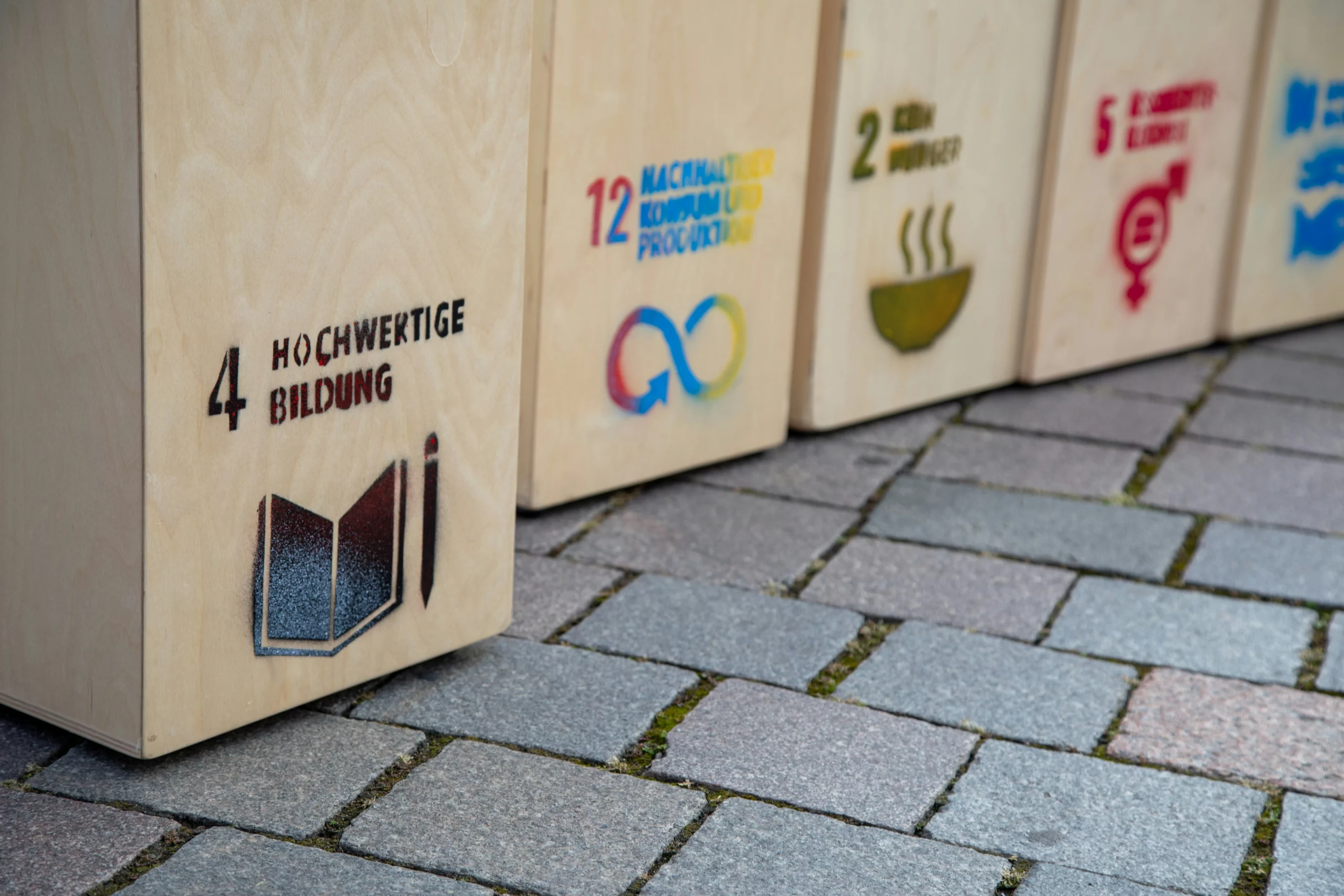
How Europe’s towns and regions are turning global sustainability goals into everyday reality 


Since the adoption of the 2030 Agenda for Sustainable Development, it has become increasingly clear that towns and regions are at the forefront of making the global goals a reality. Local and regional governments are responsible for many of the services that directly affect citizens’ lives, education, housing, transport, waste management, and health. Their actions, often taken without reference to international frameworks, already contribute to creating more sustainable communities. 

The Council of European Municipalities and Regions (CEMR) and PLATFORMA highlight the central role of local governments not just as service providers but also as policy shapers, awareness raisers, and partnership builders. By engaging citizens and other stakeholders, municipalities are uniquely placed to embed sustainability principles in everyday governance. 

To support and strengthen this work, four clear recommendations emerge: 

  1. Increase participation – raise awareness among citizens and encourage greater involvement in sustainability initiatives. 
  1. Ensure coherence – integrate local governments into national strategies to avoid fragmented approaches. 
  1. Build capacity – provide technical tools and knowledge so municipalities can implement goals effectively. 
  1. Support partnerships – back international cooperation and exchange between towns and regions to reinforce solidarity. 

Progress is visible, but challenges remain: insufficient resources, difficulties in collecting local data, and the need for stronger national frameworks. Despite these obstacles, municipalities are proving to be powerful drivers of sustainable change. From inclusive policies to decentralised cooperation, they are demonstrating that building a sustainable future must begin at the local level. 

The global goals are not about imposing new tasks on towns and regions, but about offering a common framework and shared language. Europe’s municipalities are showing that sustainability is not abstract: it is local, practical, and essential for the well-being of communities today and tomorrow. 

Read the study here 

For more information, contact: