Climate Academy for local leaders

Energy Behaviour Forum - image 1

Local leaders’ climate academy: co‑creating justice‑centred climate action 


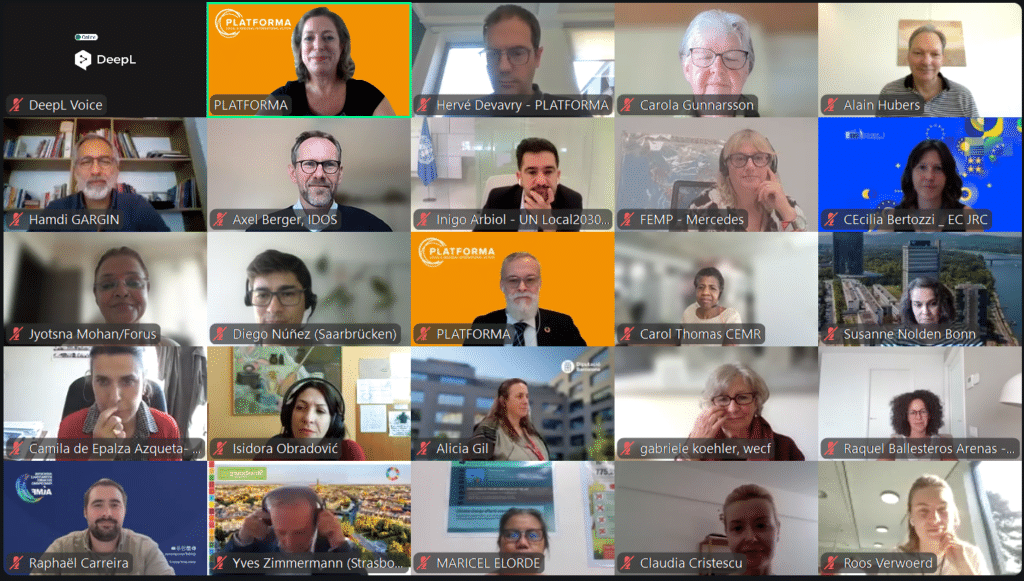
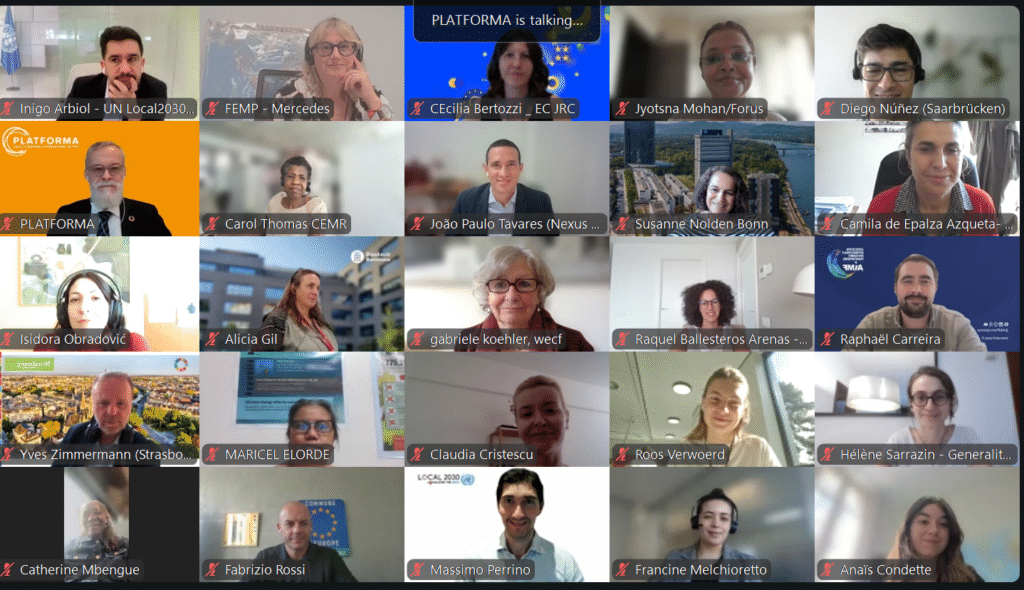
On 25 and 26 March, CEMR, together with UCLG and PLATFORMA, hosted the Local Leaders’ Climate Academy, an online training and exchange space for local and regional leaders committed to advancing climate action rooted in justice, equality, and participation. 

Held under the title “Co‑Creating Climate Action: Justice‑Centred Leadership for Local and Regional Governments”, the Academy brought together elected officials, practitioners, youth representatives, and experts to explore how local governments can translate climate commitments into inclusive, locally grounded action. 

Putting justice at the centre of climate leadership 

Opening the Academy, Fabrizio Rossi, Secretary General of CEMR, underlined the need for local leaders to move beyond fragmented climate responses and instead co‑create solutions that address climate change alongside social and gender inequalities. 

On the second day, Pablo Fernández, Assistant Secretary‑General for Partnerships at UCLG, presented UCLG’s global learning strategy, emphasising city diplomacy and co‑creation as key tools for implementation. He stressed that inclusive capacity‑building — particularly involving youth and women — is central to accelerating progress on the Sustainable Development Goals, including the ongoing review of SDG 11. 

Learning from local practice 

Throughout the two days, the Academy showcased concrete examples of justice‑centred climate action led by cities and territories: 

  • In Catalonia, municipalities are collaborating on collective renewable energy purchasing to reduce emissions and costs. 
  • Dublin shared its work on systemic climate finance approaches to address organisational barriers to investment. 
  • Athens presented the co‑creation of its Climate Contract, including a Youth Climate Assembly and support for 30 youth‑led projects. 
  • International partnerships were highlighted, such as the long‑standing cooperation between Cologne (Germany) and Indigenous communities in Yarinacocha (Peru), and the Bio Plateau project promoting community‑based water management in the Guyana Shield. 

Youth voices and global perspectives 

The Academy was shaped by keynote interventions from Marcele Oliveira, Youth Climate Champion for COP30, and Mark M. Akrofi, Research Fellow at AISESA. Their contributions stressed the importance of engaging vulnerable communities, addressing environmental racism, and integrating intergenerational justice into local climate planning. 

Their reflections echo broader debates on climate justice, including those shared in the PLATFORMA interview “Climate justice starts where people live”, which explores why locally rooted approaches are essential to fair and effective climate action. 

Climate adaptation and multi-level cooperation: the Climate Chance session 

On 26 March 2026, a dedicated session organised by Climate Chance brought climate adaptation to the centre of the discussions, highlighting the growing impact of floods, droughts, heatwaves and wildfires across European territories, and the need to act now. 

Opening the session, Ronan Dantec, President of Climate Chance and CEMR spokesperson on climate, stressed that tackling climate risks requires collective effort: “Climate change affects Europe with floods, droughts, heatwaves, and wildfires impacting communities and economies. Building resilience requires collaboration between governments, businesses, insurers, investors, and civil society.” 

The exchange focused on the challenges ahead for climate adaptation and on how multi‑level governancecross‑sector cooperation, and improved financing and risk‑sharing mechanisms can strengthen resilience. The session also contributed reflections to the forthcoming EU Integrated Framework on Climate Adaptation, expected in late 2026, and featured expert input from Dr. Christiana Photiadou of the European Environment Agency. 

Want to know more? 

Do you want to know more about our Local Leaders’ Climate Academy? 

🎥 Watch the recordings: 

Read the cross-interview of Climate leader Marcele Oliveira and sustainability scientist Mark M. Akrofi.

For more information, please contact:

Town Hall COP webinar

TOWN HALL COP - News

Town Hall COP: Faster climate action and multilevel governance to tackle climate change


Strengthened local action and multilevel governance to meet climate targets is one of the key messages defended by CEMR and PLATFORMA. On 19 November 2025, both networks organised their first Town Hall COP, a community-led climate dialogue aimed at reinforcing partnerships across levels of government. Participants insisted on linking climate efforts with broader global agendas such as the Sustainable Development Goals (SDGs). The event took place online while COP30 negotiations are expected to conclude by the end of the week in Belém (Brazil).

COP30 negotiations update and progress made since COP21

Intervening from Belém, the Director for Intergovernmental Support and Collective Progress at UNFCCC Cecilia Kinuthia-Nienga provided an update on the COP 30 negotiations, highlighting the presidency’s focus on multilateralism, building trust, and moving “from commitments to implementation.”

She discussed the importance of clear governance structures, investment pipelines, and support for developing countries to ensure credible Nationally Determined Contributions (NDCs) implementation.

Just back from COP30, Bridgette Burken-Holder, Director of International Program at the European Climate Foundation, emphasised the evolution of the 2015 Paris Agreement as a “living instrument” and the progress made in reducing emissions in cities, but also the growing recognition of subnational governments in climate policy. She noted that 80% of submitted NDCs now include cities and regions as key partners.

Paraphrasing a COP30 participant, she said: “As local governments, we don’t need just a seat at the COP table, we need to rebuild the table to make sure that we can fit everyone we need.”

CEMR Spokesperson on environment and Senator for Loire-Atlantique (France) Ronan Dantec, also discussed the evolution of local governments’ role in climate governance over the past 20 years, emphasising the importance of their involvement for reaching climate targets.

Thysia Tchekouteff, Policy Assistant at the European Commission Directorate-General for Climate Action, reminded the European Union’s climate goals: to become the first climate-neutral continent by 2050, with a 55% reduction in greenhouse gas emissions by 2030 and a 90% reduction by 2040.

She emphasised the importance of multi-level cooperation, highlighting the EU’s endorsement of the Coalition of High Ambition Multi-Level Partnerships (CHAMP) and its commitment to working with subnational governments.

Climate action: political, financial, and citizen engagement

“Climate change does not wait for the next election,” stressed Emil Brogn, Mayor of Cluj-Napoca (Romanian Municipalities Association), who called for reinforced political support, blending financial resources, and making green choices easy for citizens. The mayor named “three key elephants in the room”: political support, finance, and citizen engagement.

He stressed the importance of communicating climate change actions in a way that resonates with citizens. A comment shared by Siri de Vrijer, Policy advisor on environment to MEP Gerben-Jan Gerbrandy (Renew Europe – Netherlands), who said: “we must show citizens what’s in it for them.” She discussed the need for a narrative that aligns with citizens’ perspectives and policy makers’ responsibilities.

This was also supported by Nadia Pellefigue who presented the Committee of the Regions’ opinion on COP30. “Without multi-level governance, ambitions remain theoretical. With it, ambitions become reality,” stated the Vice-President of the Occitanie Region (France). She called for a formal multi-level governance dialogue within the UNFCCC.

National perspectives from Moldova and Croatia

Marina Lungu, Head of Climate Change section at the Ministry of Environment of Moldova presented her country’s newly submitted NDC, which emphasises multi-level governance and includes institutional mechanisms for climate policy coordination across all levels of government.

Miljenko Sedlar, Head of climate in the Northwest Croatia Regional Energy and Climate Agency, presented Croatia’s approach to climate action. He also mentioned a new EU27 project called National Adaptation Hubs, which aims to shift from reactive to systemic adaptation and resilience across EU member states.

Local climate action initiatives

“80% of what can be done is under the influence of local governments,” said CEMR spokesperson for climate Marianne Overton, who discussed the challenges of climate change and the importance of local government in addressing it. The Councillor of North Kesteven and Lincolnshire (UK) highlighted the need “to make green choices easier for residents” and shared examples of successful initiatives, such as solar installations on council housing and energy-efficient building designs.

Overton emphasised the role of local municipalities in achieving climate targets and mentioned a motion passed by over 200 councils aiming for net zero by 2030.

Ola Nord, Head of the City of Malmö (Sweden) EU Office presented his city’s Town Hall COP initiative, which engaged 40 citizens to identify key climate action areas, resulting in 26 proposals focused on city planning, transport, democracy, just transition, lifestyle, and energy. “Change is happening, there’s a lot of positive developments, but it needs to be sped up and made stronger,” he said.

Looking towards 2027

Risto Veivo, Climate director at Central Administration of the City of Turku (Finland) provided an update on the IPCC Special Report on Cities to be presented at COP27. The report, involving approximately 100 lead authors will focus on various aspects of urban climate change, including solutions by city types and regions globally.

The results of CEMR-PLATFORMA Town Hall COP will now be shared with the large community of the Local Governments and Municipal Authorities (LGMA) Constituency of the United Nations, of which CEMR is a member. Ahead of COP30, CEMR endorsed the LGMA Joint Position, a joint call for COP30 leaders to empower cities and regions as key drivers of global climate implementation.


More information

For more information, contact:

Local leaders bring their voice to the UN

HLPF 2025 - News

No SDGs without local action: European cities and regions step up at the United Nations (UN) HLPF 


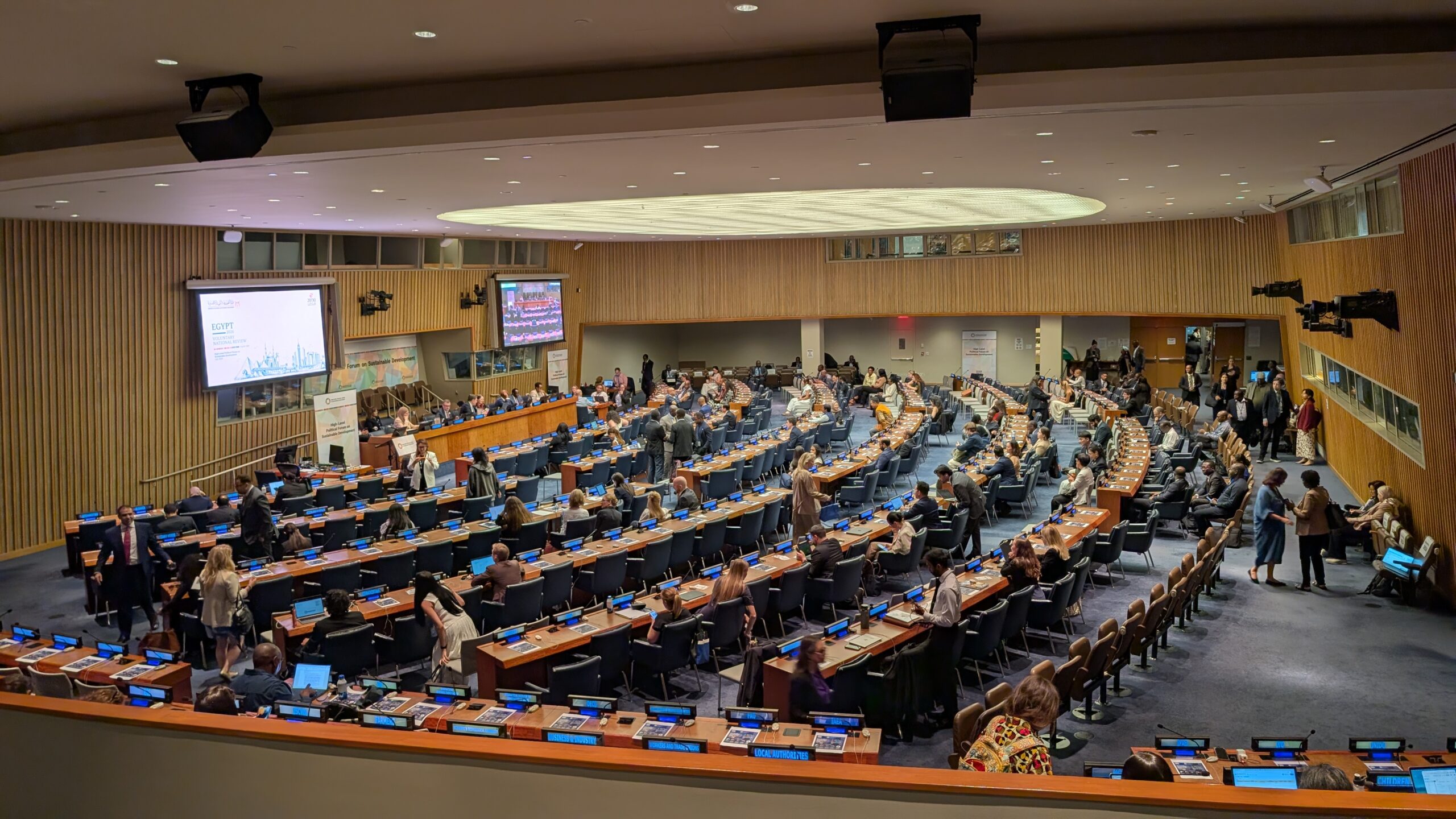
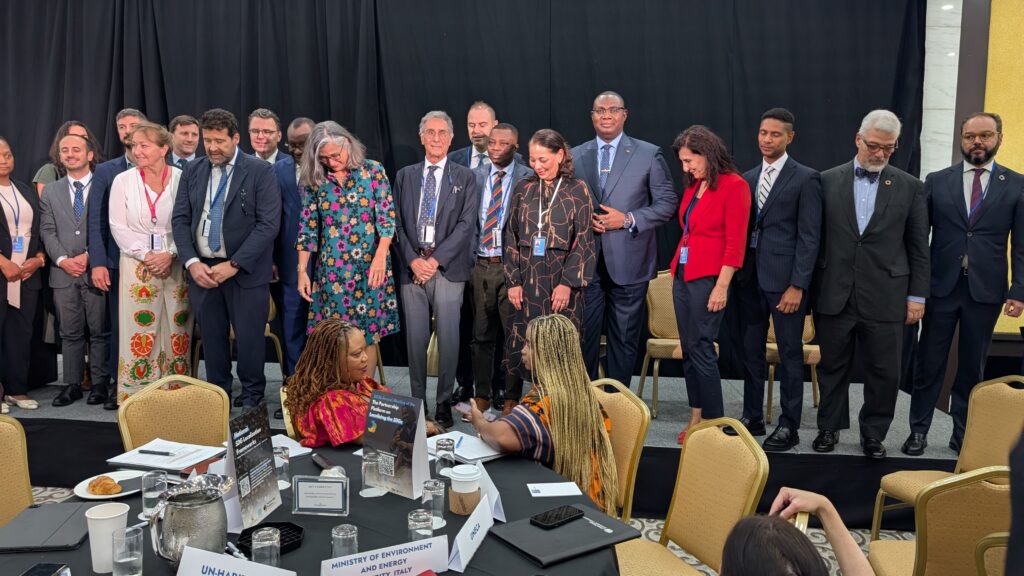
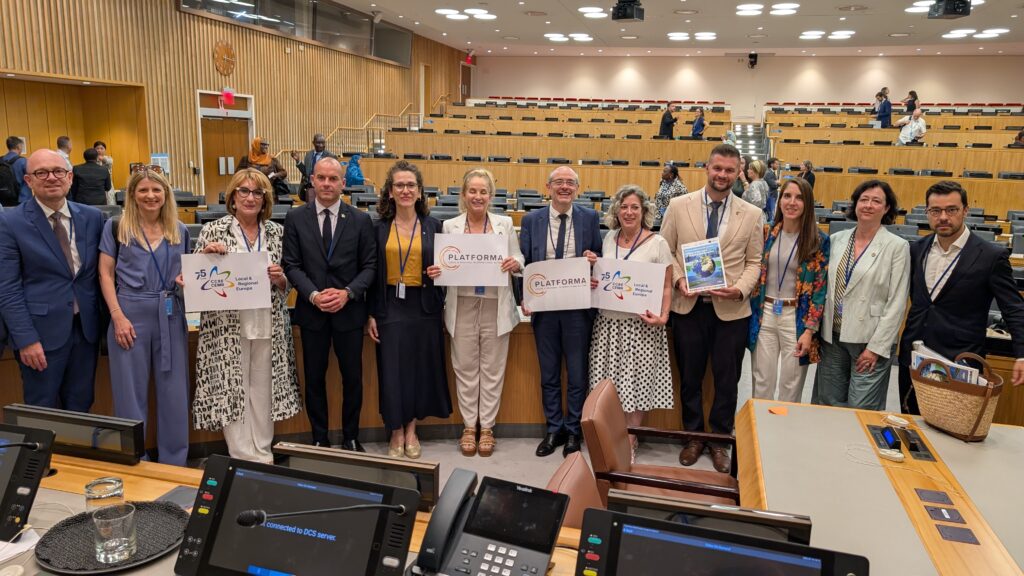
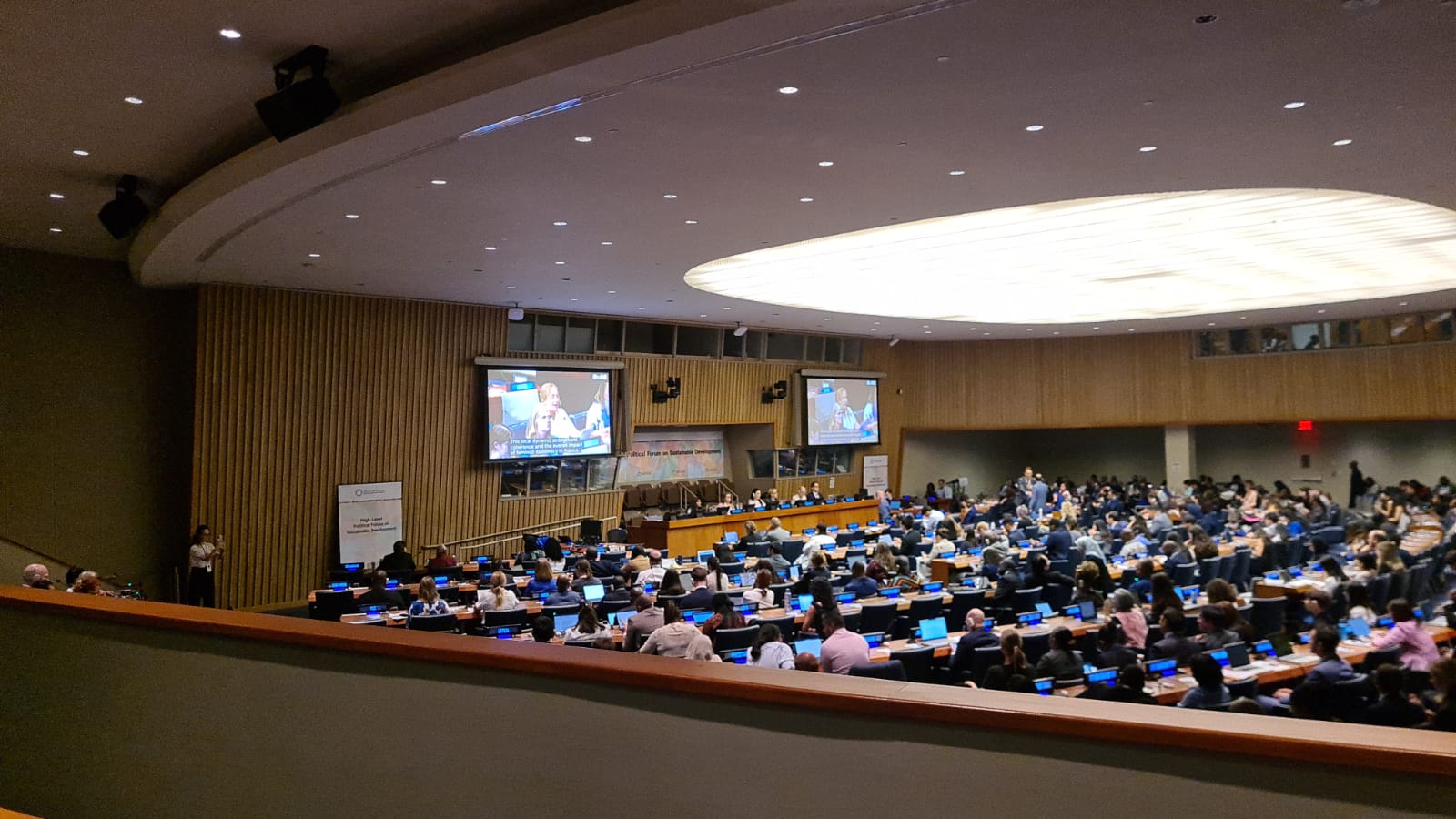
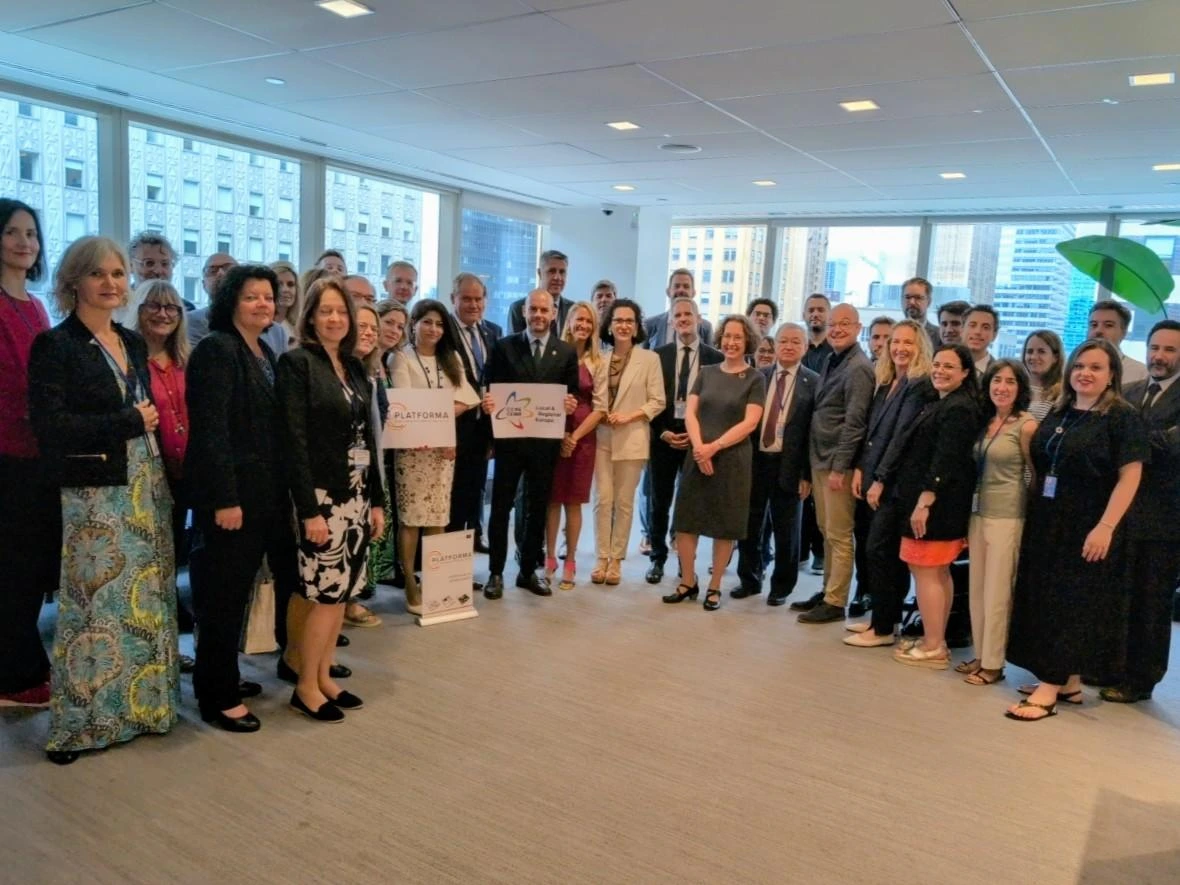
From 14 to 23 July, the Council of European Municipalities and Regions (CEMR) and PLATFORMA took part in the 2025 UN High-Level Political Forum (HLPF) in New York, where more than 40 local and regional leaders from across Europe joined the global conversation on advancing the 2030 Agenda. Their mission: make the voice of local and regional governments (LRGs) heard at the heart of global decision-making. 

As part of the Global Taskforce of Local and Regional Governments led by UCLG, CEMR and PLATFORMA contributed to key HLPF sessions, brought fresh evidence from the field, and called for stronger partnerships to accelerate SDG implementation.  

This year’s Forum was also the first since the adoption of the 2024 Pact for the Future —a milestone that calls for more inclusive, effective multilateralism. “The Pact for the Future clearly calls for local and regional voices to be part of global decision-making” said Fabrizio Rossi, Secretary General of CEMR. “That’s why our presence in New York this year was more relevant than ever—we’re here to make sure those voices are heard”. 

Bringing local realities to the global stage: launching the European territories SDG report 

At this year’s HLPF, CEMR and PLATFORMA officially launched their latest flagship study European Territories Localise the SDGs: Getting Local SDG Actions onto the Fast Track. Based on a survey conducted with UCLG and contributions from 31 national associations, the report highlights how local and regional governments across Europe are advancing the 2030 Agenda—often with limited means, but high ambition. 

With over 150 concrete examples collected, the study provides a detailed snapshot of how local SDG action is evolving in real time. It looks at policy priorities, bottlenecks, and the extent to which national governments involve municipalities and regions in their Voluntary National Reviews (VNRs). Special focus was placed on the five SDGs under review this year—SDG 3 (health), SDG 5 (gender equality), SDG 8 (decent work), SDG 14 (life below water), and SDG 17 (partnerships). 

The report is part of an ongoing effort by CEMR and PLATFORMA to track progress, share innovations, and ensure local voices shape global decisions. Since 2016, these annual studies have become a key contribution to the HLPF process, reinforcing the call for stronger multilevel governance in sustainable development. 

Local voices in National Reviews: making VNRs truly inclusive 

This year, six countries with active CEMR members—Malta, Finland, Germany, Czech Republic, Bulgaria, and Israel—presented their Voluntary National Reviews (VNRs). CEMR and PLATFORMA were present not only as observers, but as co-creators of the process. 

Their messages were clear: national governments must engage LRGs from the start—not just during reporting phases. “The example of Finland proves that good cooperation between local and national governments deliver results for citizens. And CEMR and PLATFORMA are very useful partners when it comes to bring these results at the global stage said Eveliina Kiema-Majanen from Kuntalitto (Finland). Their interventions underscored that successful national strategies depend on strong, empowered local actors.  

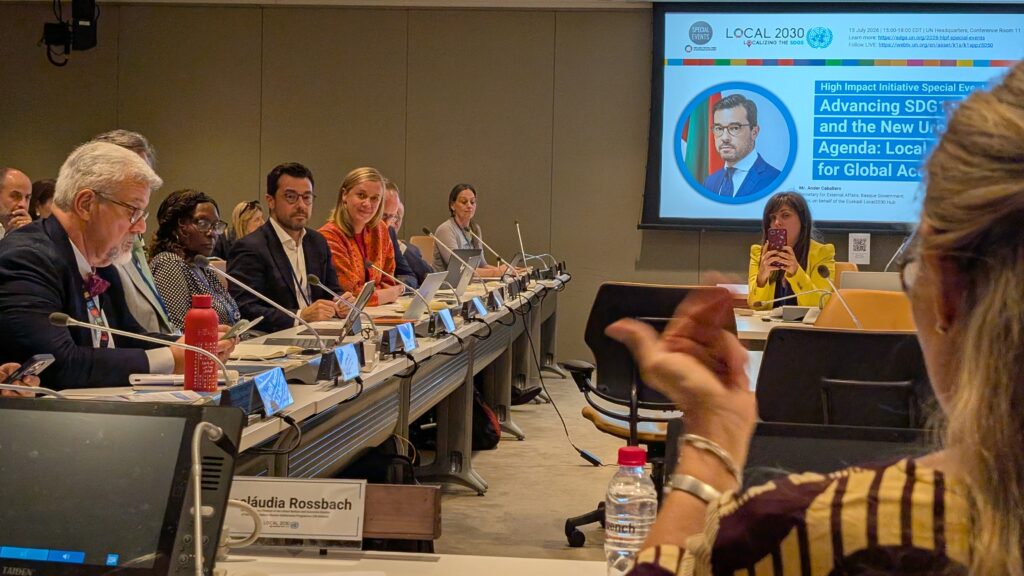
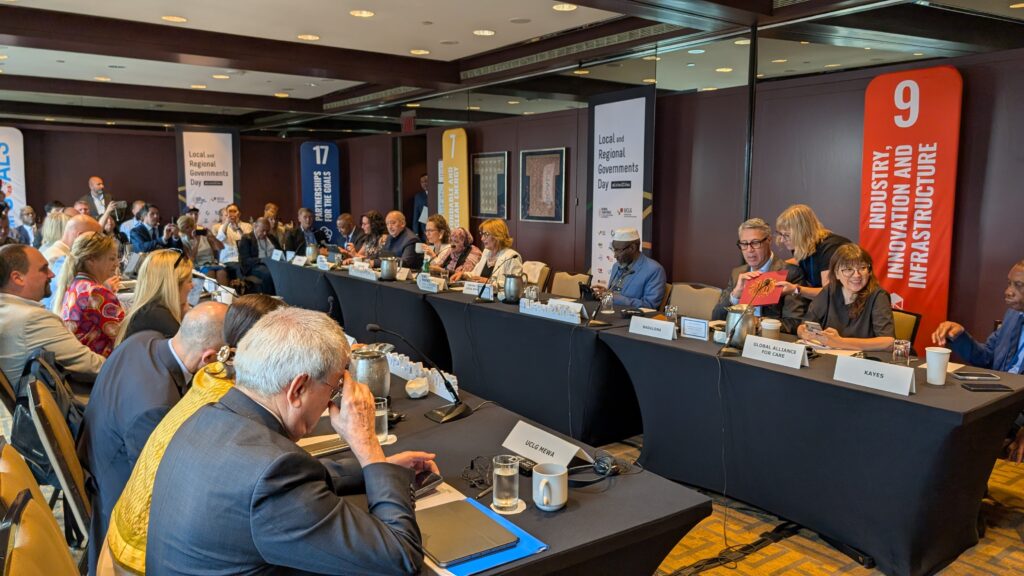
CEMR and PLATFORMA members took the floor at all key events for local and regional governments during the Forum. These included the High-Impact Initiative on SDG Localization by the Local2030 Coalition, the launch of the Global Taskforce’s 9th report, the 8th Local and Regional Governments Forum, and the official UN session “Transformation from the ground up: Acting at local level”. They also joined the second annual meeting of the “Partnership Platform on Localizing the SDGs,” reinforcing the call for systemic change through multilevel governance and stronger local action. 

“Local leaders are best placed to deliver on the SDGs—because we are closest to people’s lives and everyday needs”, said Clifford Galea, member of CEMR-PLATFORMA Young Elected Officials Committee, President of the Tramuntana Region and High Commissioner of Malta to Namibia. 

Bettina Bunk, from the City of Stuttgart, underlined the power of collaboration beyond borders: “International cooperation between local governments and the exchange of best practices is key to advancing the 2030 Agenda”. 

Their messages sent a clear signal: meaningful, institutionalised involvement of local governments is not optional—it is essential for delivering on global goals. 

A seat at the table: meeting with the EU Delegation on the future of EU funding 

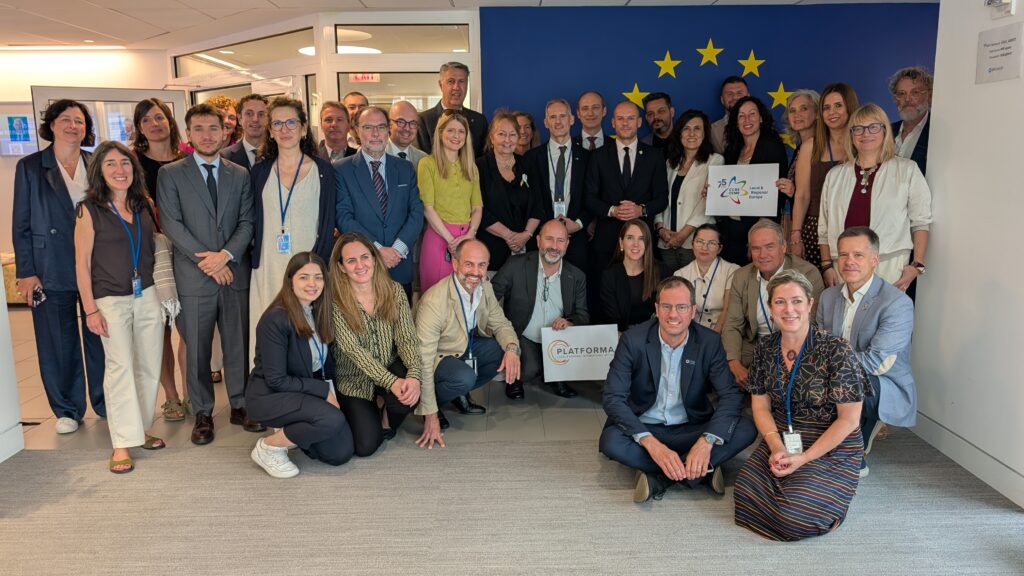
On the sidelines of the HLPF, CEMR and PLATFORMA hosted a high-level breakfast meeting with the EU Delegation to the United Nations—just days after the European Commission unveiled its proposal for the post-2027 Multiannual Financial Framework (MFF). With over 45 participants, the exchange focused on how the next EU budget can better reflect local and regional priorities in the delivery of the SDGs. 

CEMR Secretary General Fabrizio Rossi made a clear call: “The next EU budget must reflect the needs and contributions of local and regional governments in delivering the SDGs. From climate neutrality to youth employment, any fair transition starts locally. We need robust, accessible funding and stronger partnerships to deliver on the SDGs”. 

The meeting also served as a platform to discuss the risk of re-centralisation in EU governance. CEMR and PLATFORMA welcomed the EU Ambassador’s Renaud Savignat invitation to deepen collaboration with local government networks ahead of the EU’s next SDG implementation assessment. The message was clear: no sustainable future without strong local roots. 

At the heart of the forum: localising the SDGs one goal at a time  

While much of the week focused on advocacy, knowledge-sharing, and political dialogue, CEMR and PLATFORMA also used their platform to showcase concrete results from European cities and regions: 

SDG 3 – Health and well-being 
From digital elderly care in North Macedonia to “caring neighbourhoods” in Belgium, local initiatives are closing health gaps—despite growing inequalities between urban and rural areas. Greater investment and localised strategies are urgently needed. 

SDG 8 – Decent work and economic growth 
Municipalities are leading in youth employment, digital skills, and local job creation. But tight budgets and evolving labour markets demand new tools. Initiatives like the EU’s Union of Skills offer a path forward. 

SDG 5 – Gender equality 
Achieving gender equality requires action where inequality is most visible: locally. From safe public spaces to inclusive service delivery, local authorities are transforming values into policy. 

CEMR at COP29

Local Governments Driving Climate Solutions on the Global Stage


At the 29th UN Climate Change Conference (COP29) in Baku CEMR showcased the indispensable role of Local and Regional Governments (LRGs) in global climate action. Through advocacy, strategic dialogue, and direct engagement with Ministers, Governors, Parliamentarians, Multilateral Development Banks, and UN agencies, CEMR cemented its position as a key player in advancing sustainable urban development and combating climate change.

Local and Regional Governments: A Cornerstone of Climate Action

Local and regional governments are uniquely positioned to address climate challenges. Managing 68% of public climate investments, they are on the frontlines of adaptation and mitigation efforts. Yet, these governments often remain excluded from key international decision-making processes. At COP29, CEMR sought to change this by advocating for LRGs to be fully integrated as strategic partners in shaping climate policies.

CEMR also underscored the importance of multilevel governance. This approach, combining local, regional, and national collaboration, ensures that climate strategies are both inclusive and effective. By engaging in over 170 events, CEMR and the LGMA Constituency showcased how cities and regions lead innovative climate solutions, including sustainable infrastructure, green financing, and community resilience initiatives.

CEMR Delegation in Action

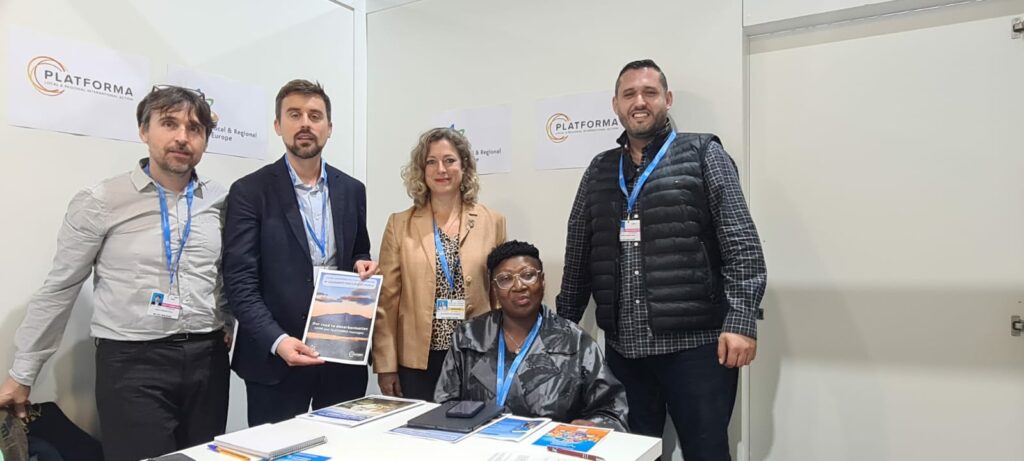
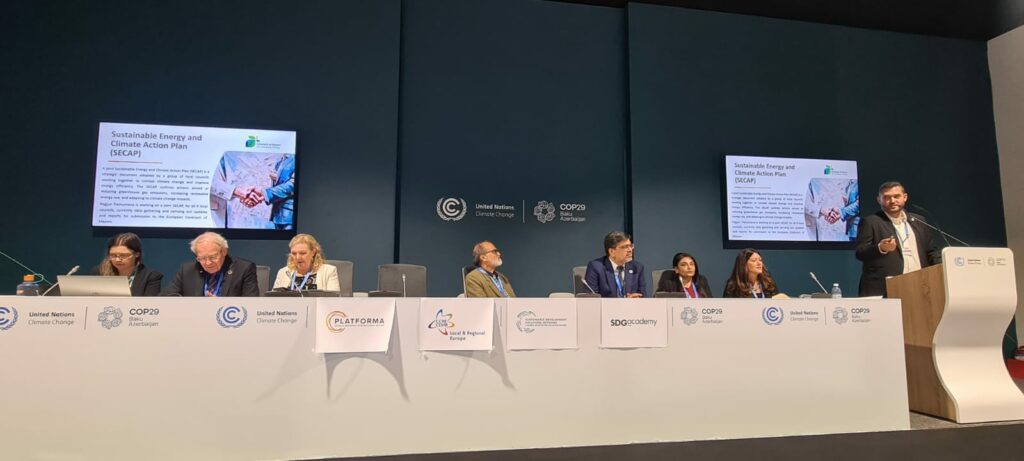
CEMR’s political leadership took centre stage during COP29. Marianne Overton, Vice President of CEMR, and Clifford Galea, a member of our Young Elected Officials Committee member, participated in high-profile sessions, emphasising local governments’ role in climate justice and finance. Key moments included:

  • Panel on Multilevel and Multistakeholder Climate Solutions: Clifford Galea highlighted the urgency of channelling direct funds to local governments, stating, “Efficient climate action starts with empowering those closest to the communities impacted.”
  • Roundtable on Financing Urban Climate Action: Marianne Overton called for innovative financial mechanisms to ensure accessible funding for sustainable urban projects and ecosystem restoration

Efficient climate action starts with empowering those closest to the communities impacted.”

 Advocating for Loss and Damage Response

One of the summit’s most critical topics was the establishment of an effective framework for addressing Loss and Damage. CEMR, together with the LGMA Constituency, endorsed the Call to Action on Loss and Damage, initiated by United Cities and Local Governments (UCLG). This initiative demands equitable resource distribution, North-South collaboration, and the inclusion of subnational governments in funding mechanisms. Notably, the call prioritizes the needs of marginalized communities and the integration of local knowledge into global climate strategies.

CEMR’s endorsement reflects its commitment to securing direct access to the Loss and Damage Fund for local governments, particularly in vulnerable regions. This advocacy reinforces the message that addressing climate crises requires collaboration at all levels of governance.

 Why Local and Regional Governments Matter

The urgency of including LRGs in climate governance cannot be overstated. As the level of government closest to communities, they have the knowledge and capacity to implement tailored solutions that address local realities. This perspective aligns with the broader recognition at COP29 that achieving the Paris Agreement’s goals requires the active involvement of all governance levels.

 Looking Ahead: COP of Cities

The outcomes of COP29 mark a significant step forward with greater recognition for the work of cities in the COP process, but the journey toward equitable climate governance is far from over. While COP29 is about to end, hope is there for cities to play a central role next year in Belem (Brazil). All traffic lights are green: “COP30 has to be the COP of the cities, because climate is central in connecting people”, said Ambassador Antonio Da Costa e Silva, chief international adviser at the Brazilian Ministry of Cities.

Let’s hope national leaders received the message.

Local Governments at COP 29

COP 29 - Baku 2024

CEMR and PLATFORMA at COP29: Advocating for Local and Regional Government Involvement


As COP29 unfolds in Baku, Azerbaijan, the Council of European Municipalities and Regions (CEMR) and PLATFORMA have taken a significant stand to amplify the voices of local and regional governments (LRGs). Building on years of commitment to sustainable urban development and climate action, these organizations are once again underlining the indispensable role LRGs play in addressing climate change and achieving the 2030 Sustainable Development Goals (SDGs).

Local and regional governments have sent more than 100+ political leaders and mobilized more than 500 delegates to advance city and regional climate goals at COP29. The delegation of the LGMA Constituency will be one of the largest at COP29. Delegates will participate in more than 170 events across the negotiations space, plenary sessions, Pavilions and Green Zone.

On Monday 18 November 15-16:30 local time CEMR and PLATFORMA will gather local leaders for a political meeting where they will think about the most urgent steps following September’s Summit of the Future.

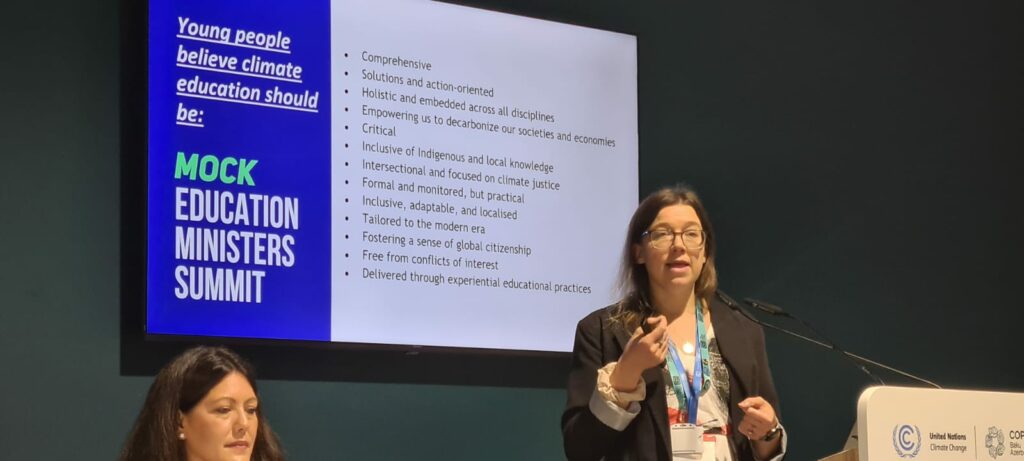
On Tuesday 19 CEMR spokesperson on climate Marianne Overton and Young Elected Official Committee member Clifford Galea will take the floor during an official side event co-organised with PLATFORMA, the UN Sustainable Development Solutions Network (SDSN) and the SDG Academy on “Combating climate change across generations: reinforcing global to local policy action for education”.

On Wednesday 20 Clifford Galea will take part in the Roundtable on Nature, Health and Agriculture in Cities, while Marianne Overton will attend the roundtable on Financing Urban Climate Action.

Why Local and Regional Governments Matter

LRGs are at the forefront of climate action, managing approximately 68% of public investments related to climate and energy. Their unique positioning allows them to efficiently respond to local needs, implement innovative climate strategies, and foster community resilience. Despite this, CEMR and PLATFORMA note that these governments often remain excluded from critical international climate discussions and decision-making processes.

CEMR and PLATFORMA stress the importance of multi-level governance that integrates LRGs into global frameworks. Their participation at COP29 aims to shift the perception of LRGs from mere implementers to strategic partners capable of co-designing and executing climate and sustainability policies.

Key Messages for COP29

  1. Enhanced Multi-Level Governance: Effective climate action requires structured dialogue, diplomacy, and accountability mechanisms involving LRGs. Without their inclusion, policies risk being disconnected from the realities on the ground.
  2. Resource Allocation and Support: CEMR and PLATFORMA advocate for an enabling fiscal framework that recognizes the diversity of LRGs and supports tailored solutions for decarbonization. This is vital to unlock the full potential of local governments in climate adaptation and mitigation.
  3. Capacity Building and Cooperation: To foster impactful climate action, LRGs must have access to capacity-building programs, technology transfer, and collaborative opportunities. Platforms like the Covenant of Mayors and EU Development Education programs are essential for promoting vertical and horizontal partnerships.
  4. SDG Localisation: The localisation of SDGs is integral to reaching climate objectives. With only 17% of SDGs on track globally, CEMR and PLATFORMA emphasize that local-level engagement and tailored public policies are critical for accelerating progress.

Looking Ahead

CEMR and PLATFORMA’s advocacy at COP29 aims to pave the way for more robust, inclusive, and effective climate policies that recognize LRGs as pivotal partners. Through strategic dialogue and collaboration, these bodies are committed to ensuring that local and regional perspectives are not just heard but actively integrated into climate and sustainable development strategies.

Are you in Baku and want to meet CEMR and PLATFORMA members?

Get in touch with Eva Banos de Guisaola

Europe engagement in localising SDGs

Localising SDGs study - News

European Mayors strengthening their engagement at UN High-Level Political Forum


A delegation of European Mayors and councillors is heading to New York to defend the key role of local and regional governments in United Nations intergovernmental bodies during the upcoming High-Level Political Forum (HLPF) (8-17 July).

This year, HLPF will focus on “Reinforcing the 2030 Agenda and eradicating poverty in times of multiple crises” and is held under the auspices of the Economic and Social Council.

Once again, European Mayors and councillors will make they voice heard and present how the local level can deliver sustainable, resilient and innovative solutions.

Among them are:

  • Véronique Bertholle, Vice Mayor on European and International Relations, City of Strasbourg (France), PLATFORMA spokesperson
  • Francine Farrugia, Local Councillor in the locality of Siggiewi (Malta), member of CEMR-PLATFORMA Young Elected Officials Committee
  • Clare Hart, Vice-President Montpellier Métropole, President of Crisis and Rehabilitation Group, Cités Unies France
  • Gail Macgregor, Leader of Dumfries and Galloway Council, Scotland, UK (COSLA), Spokesperson for Environment and Economy, CEMR Spokesperson on SDGs
  • Nicole Unterseh, Mayor City of Bonn (Germany), Deutscher Städtetag

Mayors and councillors will actively participate in several meetings, including the Local2030 Coalition Special Event “Unlocking transformative change through the localisation of the six SDG transitions” on 10 June, during which Francine Farrugia will officially present the CEMR-PLATFORMA 2024 annual study on SDGs.

This year, the study European Territories Localise the SDGs – The time for impact is running out gathers 46 responses from associations of local and regional governments, representing 31 European countries.

In the Foreword, Tengiz Mtvarelishvili, Chair of Telavi City Council in Georgia, and PLATFORMA Spokesperson, warns about delays in implementing the 17 Sustainable Development Goals (SDGs). “But there’s hope: local and regional governments are on the front lines, closest to citizens, and uniquely positioned to find tailored solutions”, he says.

Eva Baños de Guisasola, PLATFORMA Advisor on SDGs, Global Agendas and Climate, and Federica Bordelot, CEMR Director of Policy and Impact, will moderate several sessions.

To strengthen the voice of local and regional governments, PLATFORMA and CEMR are joining forces with the Global Task Force of Local and Regional Governments (GTF) led by UCLG.

This year, HLPF will be followed by the UN Summit of the Future, also in New York on 22-23 September, where local and regional governments will gather during an Action weekend ahead of the meeting.

Discover the study:

Check the agenda of the Global Task Force of Local and Regional Governments (GTF)

For more information, contact:

SDG Implementation 

SDG Implementation - News 2023

Enhancing SDG Implementation: Joint Event with URBAN Intergroup


The European Parliament URBAN intergroup and the Council of European Municipalities and Regions (CEMR) met to discuss how to “Foster multilevel Dialogue for SDG Implementation.”

The event gathered various stakeholders to discuss the challenges and opportunities local and regional governments face in their journey towards successfully achieving the Sustainable Development Goals (SDGs) by 2030. The agenda also included a closer look at different European Union (EU) initiatives and tools that support cities in their path to realizing the SDGs.

The timing of this event is particularly significant, as 2023 marks the midway point in the timeline set by the United Nations General Assembly for achieving the 17 Sustainable Development Goals outlined in the 2030 Agenda. To mark this milestone, the European Parliament has produced two important reports on the Implementation of SDGs in Europe, while the European Commission, for the first time, is presenting a Voluntary Review that assesses how the European Union as a whole is integrating SDGs into its policies and projects.

The event’s program featured a line-up of distinguished speakers, each bringing valuable insights and experiences to the discussions. CEMR had the opportunity to showcase their work on SDGs, with Eva Banos presenting our report on the implementation of SDGs at the local and regional levels.

UNGA 2023

UNGA 2023 - News 2023

CEMR and PLATFORMA to Showcase Local and Regional Commitment at the 2023 UN SDG Summit


The Council of European Municipalities and Regions (CEMR) is participating in the upcoming United Nations Sustainable Development Goals (SDG) Summit, scheduled for 18-19 September. This high-profile event will bring together leaders from across the globe to discuss crucial sustainability issues and progress toward achieving the SDGs.
CEMR and PLATFORMA will be leading a distinguished delegation, including CEMR Secretariat Eva Baños de Guisasola, Senior Adviser on Global Agendas, SDGs and Climate; Basque Government, Spain; CUF, Cités Unies France; DIBA – Diputació de Barcelona, Spain; ELVL, Estonia; FEMP; Association of German Cities; VNG, The Netherlands; SALAR, Sweden; UCLG.
CEMR’s main objectives at the conference are to advocate for a decentralised, bottom-up, territorial approach to SDG implementation and to emphasise the indispensable role of local and regional governments in achieving these global goals.


Key highlights of CEMR’s participation include:

  1. EU Voluntary Review: CEMR calls for clear recognition of the contributions made by different levels of governance and civil society organisations in achieving the SDGs in Europe.
  2. Localising SDGs: National governments and the EU are urged to accelerate the localisation and territorialisation of the SDGs, ensuring that local and regional governments have the necessary autonomy, means, and resources to drive change at the community level.
  3. Citizen Engagement: CEMR promotes the production of Voluntary Local Reviews (VLRs) and Voluntary Subnational Reviews (VSRs) as tools to engage citizens and enhance awareness of global challenges.
  4. Data Inclusion: CEMR advocates for including relevant disaggregated data and information at the subnational level in Voluntary National Reviews (VNRs). Emphasising the importance of local governments in monitoring and reporting SDG progress.
  5. Political Engagement: CEMR urges EU institutions and European States to engage with local and regional governments through regular dialogue and the inclusion of local elected representatives in high-level meetings.
  6. International Cooperation: CEMR seeks more support for international cooperation at the local and regional levels, emphasising peer-to-peer learning and innovative partnerships as key drivers of SDG achievement.
  7. Inclusivity: CEMR underscores the vital role of youth, women, and vulnerable groups in decision-making and activities contributing to SDG attainment.

CEMR is committed to making a significant impact at the 2023 UN SDG Summit by promoting the pivotal role of local and regional governments in driving sustainable development. We look forward to engaging with global leaders and partners to advance our shared vision for a more sustainable and equitable world. To learn more about CEMR/PLATFORMA’s SDG strategy, you can find our latest study online at this link https://local-sdgs.eu/.

Territorial leaders in action at the COP 27

Climate - News Section

10 key points to prevent the inexorable march toward utter climate disaster


It’s now or never. We must gear up for climate action and advance the Sustainable Development Goals on the ground. This is the core message that PLAFTORMA and CEMR will bring to the COP27 taking place in Sharm El-Sheikh, Egypt.

In a joint position, PLATFORMA and CEMR put forward 10 key points for delegates and representatives from the UN, the EU and national governments who will sit around the COP27 negotiation table. Among the important points raised in the position are the need for a supportive regulatory and governance framework to implement subnational climate action, and the need for sustainable subnational financing.

Read the position paper

For more information, contact:

Paris agreement at the local level

Renewable Energy - News

Glasgow Climate Pact calls for “multilevel and cooperative action”


“Disappointment” was a word on the lips of many at the closing on the COP26 UN climate conference in Glasgow in Saturday (13 November). The outcomes leave open many questions regarding national governments’ commitments. Local and regional governments were able however to effectively mobilise during the conference. Thanks to their advocacy efforts, the importance of municipalities, regions and “multilevel and cooperative action” is recognised in the new Glasgow Climate Pact.

“We, local and regional governments, should be proud that the Glasgow final agreement includes the multilevel cooperative model as a way forward to achieve the Paris Agreement objectives”, said CEMR Secretary General Frédéric Vallier, who was present at the COP. “This is a real achievement for municipalities and regions, regardless of the conference’smixed overall results.

The final text has been signed off by 197 countries (from the big emitters such as China and the United States to the small island nations). It aims to keep global temperatures at 1.5 °C above pre-industrial levels by the end of the century, the aspiration of the Paris Agreement, but fails to be more ambitious.

Room for improvement

Reacting on social mediaLéonore Moncondhuy, Mayor of Poitiers (France), spokesperson of PLATFORMA and representative of Cités Unies France said: “The Glasgow Pact does not at all measure up to the climate emergency. While it was supposed to ‘save the 1.5 ° C target’, it is once again mortgaging our future by subjecting it to states’ diluted and disingenuous commitments. Without immediate action, soon + 2.7 °C.”

Earlier last week, Moncond’huy met with UN Secretary General Antonio Guterres and UN Executive Director Maimunah Sharif in Glasgow, expressing the need to support local governments as frontline workers on climate challenges. Her arguments were later echoed in plenary by Sadiq Khan, the Mayor of London: “The involvement of cities now is like day and night … nothing compared with the past.”

Local and regional governments and their associations were widely mobilised. CEMR, PLATFORMA and the Global Task Force led by UCLG were well represented at COP26 and co-organised numerous side events and bilateral meetings.

Enabling local climate action

The Glasgow Climate Pact recognises “the urgent need for multilevel and cooperative action” as well as the important role of local and regional governments in realising the Paris Agreement. As highlighted by Steven Heddle, Member of Orkney Islands Council (COSLA) and CEMR spokesperson on territorial development, this will require facilitating local governments’ access to climate finance.

Local governments need revenue, resources and long-term loans. With these tools, we can contribute more to the objective of reducing emissions before 2050”, said Ronan Dantec, CEMR spokesperson on climate, French senator and president of Climate Chance, during one of the sessions.

The Pact includes many other provisions, such as developed countries agreeing to double funding for climate adaptation and a first global commitment to cut methane emissions by 2030.

What’s next

The next COP will take place in Sharm El-Sheikh, Egypt. Africa being the world’s youngest and most rapidly-urbanising continent, COP27 will focus on booming demography, sustainable urbanisation and financing green plans for sustainable low carbon development. The United Arab Emirates (UAE) was selected to host the COP28 in 2023.

More:

For more information, contact: