New project launched for local democracy

LORAI – the Local Observatory on Reform Agendas Implementation

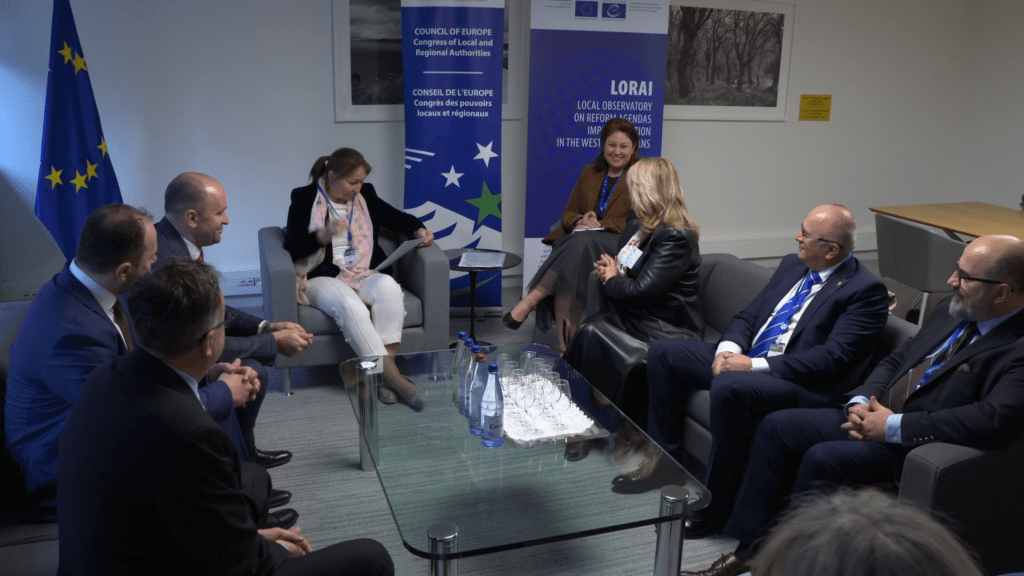
A new chapter for local democracy in the Western Balkans: launch of the LORAI programme


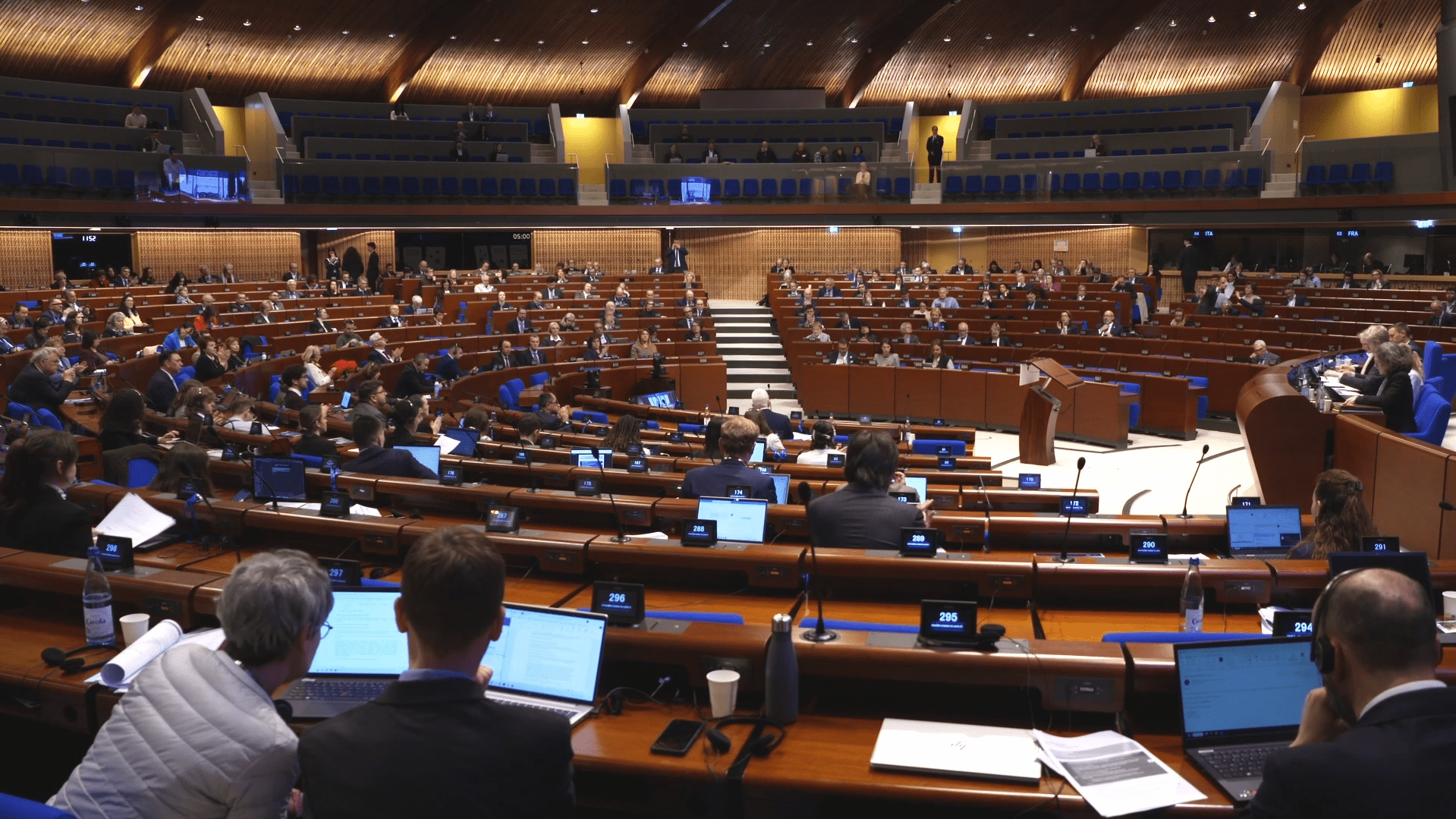
April 1st marked an important milestone for local democracy and European integration in the Western Balkans, as CEMR joined the Congress of Local and Regional Authorities, the European Commission, NALAS, and local government associations from across the region to officially launch LORAI – the Local Observatory on Reform Agendas Implementation

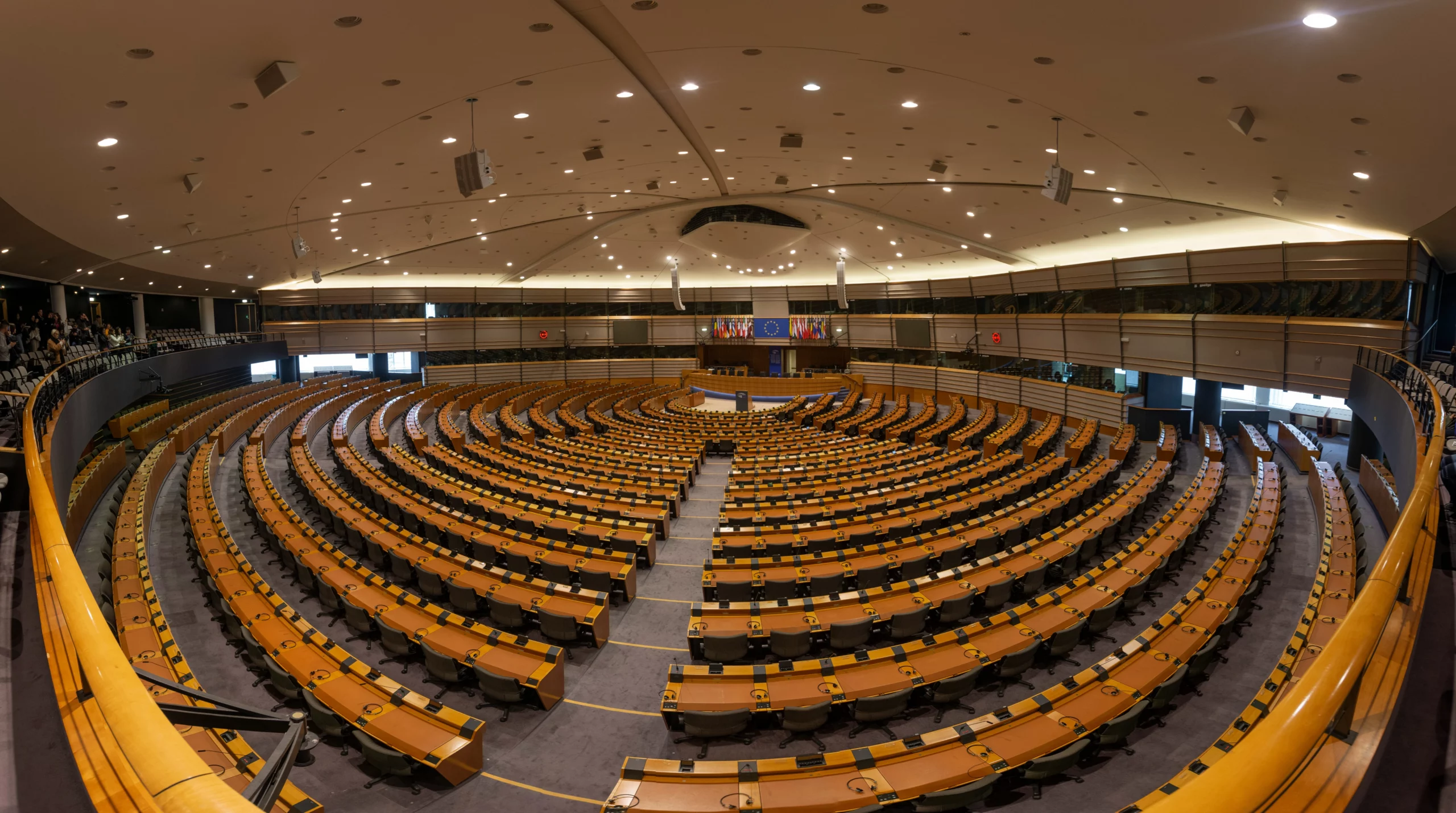
The high‑level ceremony took place on the margins of the Congress’s 50th Session, bringing together European institutions, municipal leaders, experts and national associations to celebrate the beginning of a partnership designed to strengthen the role of local authorities in one of the most decisive phases of the region’s EU accession process. 

A new observatory with a clear mission 

LORAI is not just a new project. It is a new architecture of collaboration

The programme, jointly established by the European Union and the Council of Europe, will support local authorities in Albania, Bosnia and Herzegovina, Kosovo*, Montenegro, North Macedonia and Serbia to take a more active role in shaping, implementing, and monitoring their countries’ Reform Agendas under the EU’s Reform and Growth Facility

For years, local and regional governments (LRGs) have been responsible for delivering essential services, infrastructure, and community support – yet they have been only marginally involved in monitoring the reforms that directly affect them. LORAI is designed to close that gap. 

It aims to: 

  • Empower municipalities to take part in designing, monitoring and evaluating reforms 
  • Strengthen policy dialogue between all levels of government 
  • Build local capacity to identify investment priorities for the next EU Multiannual Financial Framework 2028-2034 
  • Increase transparency and accountability through an open‑access dashboard tracking reform progress on the ground 
  • Boost peer learning through regional exchanges, workshops, and reviews 

These collective efforts will enable reforms to become not only national commitments, but tangible improvements in citizens’ daily lives

A strong partnership to drive real results 

LORAI will be implemented by the Congress of Local and Regional Authorities, in partnership with: 

  • NALAS – Network of Associations of Local Authorities of South-East Europe 
  • CEMR – Council of European Municipalities and Regions 
  • Local government associations from each beneficiary country 

This partnership brings unparalleled reach, expertise and legitimacy. Each organisation plays a vital role in ensuring reforms are not abstract commitments but concrete transformations at the local level

Opening the launch event, Congress President Gunn Marit Helgesen highlighted the stakes: 
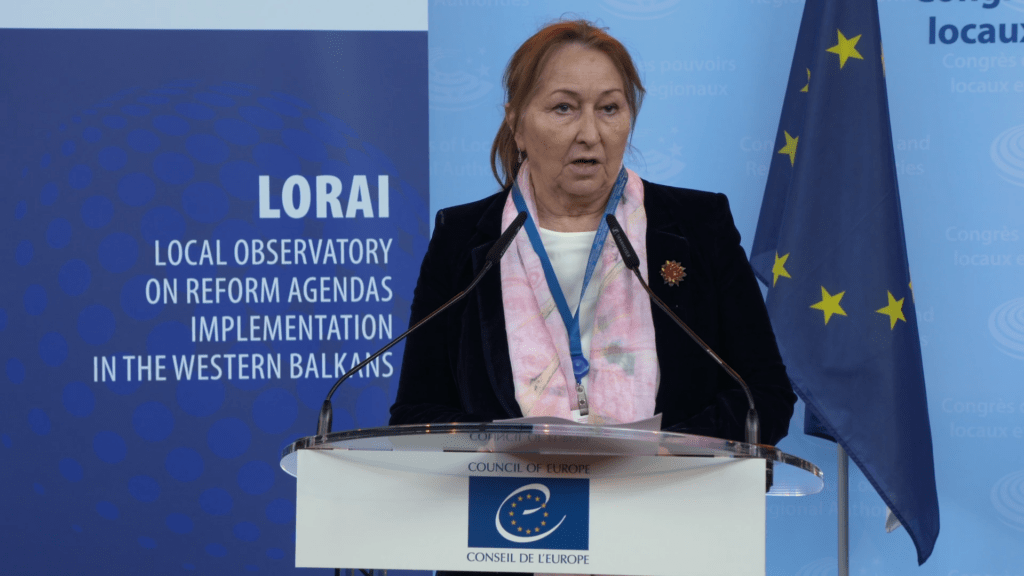
“With its unparalleled convening power among local and regional authorities, this partnership will deliver real benefits for the citizens of the Western Balkans. Real change happens when local governments are active shapers of reform; we must enable their meaningful participation in the reform process.” 

Representing the European Commission, Valentina Superti, Director for the Western Balkans at DG ENEST, added: 

“For citizens, progress must be visible and tangible. LORAI plays a key role in empowering local authorities to turn reform commitments into concrete results. Today marks the beginning of a fruitful collaboration.” 

CEMR Vice‑President Mélanie Lepoultier emphasised the importance of linking reforms to investment readiness: 
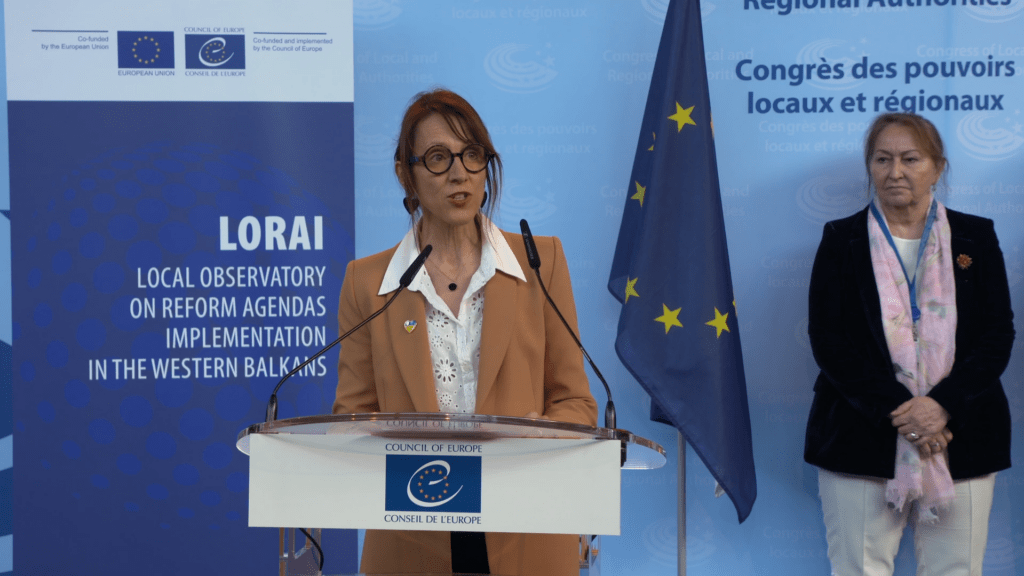
“Our mission at CEMR is to transform local experiences into actionable policy. Through LORAI, we will support local officials to convert reforms into investment roadmaps aligned with the next Multiannual Financial Framework and foster meaningful peer‑to‑peer exchanges.” 

NALAS President Dubravko Bilić stressed the Observatory’s long‑term value: 

“Sustainable progress requires tracking implementation where it matters most—at the local level. LORAI will ensure reforms deliver measurable and lasting results for citizens.” 

Why LORAI matters 

Reform Agendas represent some of the most strategic commitments Western Balkan governments have made on their path towards EU accession. Yet reforms can only succeed when local governments, those closest to the citizens, are active contributors, not bystanders. 

LORAI is important because it brings: 

1. Accountability, where reforms are felt the most 

The open-access dashboard will provide communities, governments, and partners with transparent data on how reforms are progressing locally. 

2. Stronger multilevel governance 

The programme strengthens collaboration between national and local authorities, ensuring reforms are implemented realistically and sustainably. 

3. Investment-ready local priorities 

LRGs will be better equipped to shape priorities for future EU funding, especially in the next MFF (2028–2034)

4. A regional ecosystem of learning 

Peer exchanges, workshops, and reviews will allow governments from Western Balkan countries to learn from each other, share solutions, and amplify impact. 

For CEMR, this programme is fully aligned with our mission:  

To ensure that Europe’s local and regional governments are empowered, heard, and equipped to shape the future of their communities. 

Looking ahead 

With a dedicated budget of €2,222,222 for its first two years and a duration running from March 2026 to February 2028 (with the possibility of extension), LORAI is set to become a cornerstone for stronger governance, better reforms, and deeper European integration in the Western Balkans countries.  

For more information contact: 

Sakharov Prize 2025 winners

Sakharov Prize 2025

Sakharov Prize 2025: standing with those who defend freedom of thought


The Sakharov Prize for Freedom of Thought is the European Parliament’s most prestigious award for human rights. Established in 1988, it honours individuals and organisations who demonstrate extraordinary courage in defending democracy, freedom of expression and fundamental freedoms, often under severe repression. 

Awarded annually, the Prize is both a recognition and a call to action: a reminder that freedom of thought is not guaranteed and must be actively defended. 

The 2025 Laureates 

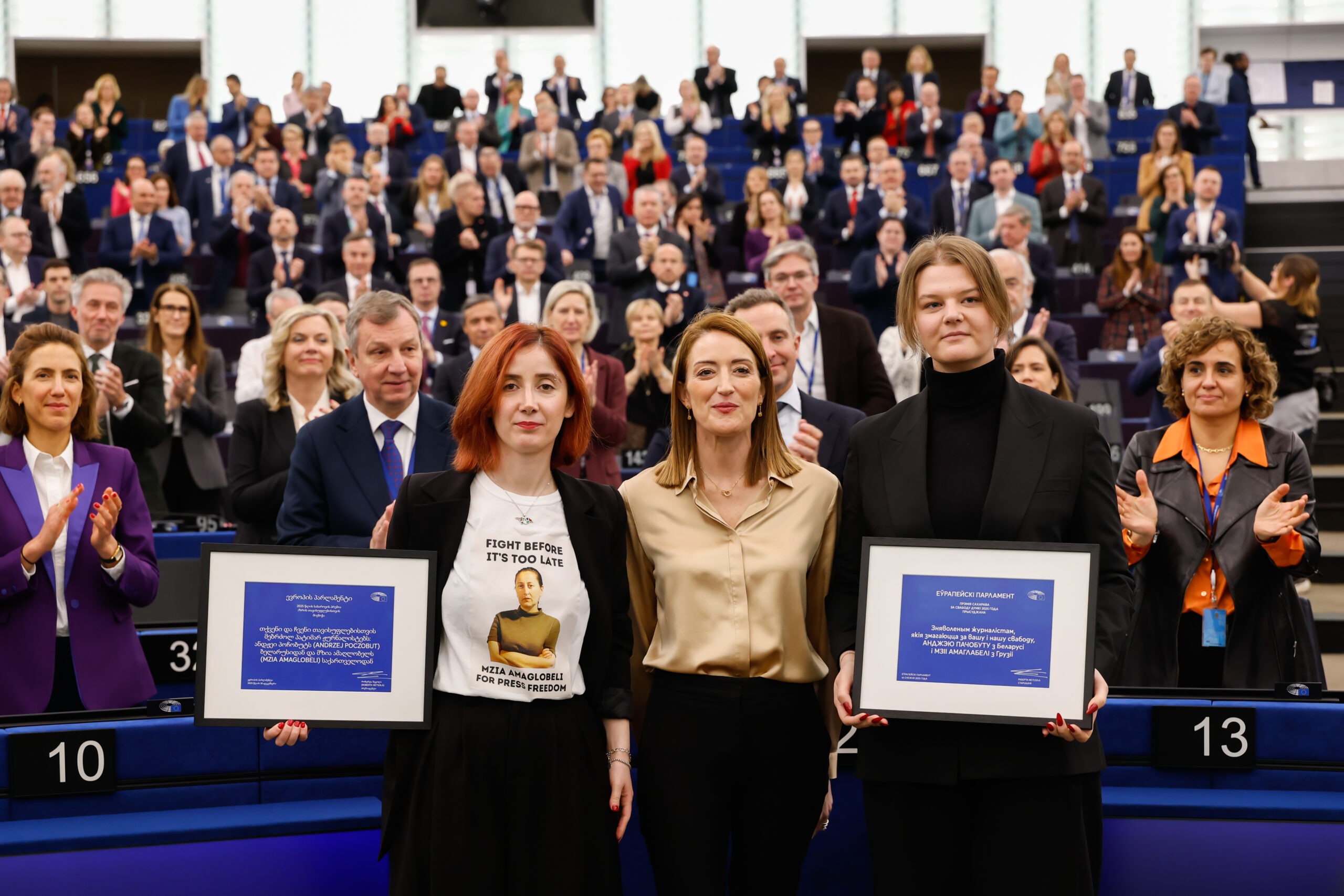
On December 16 2025, the European Parliament awarded the Sakharov Prize to Mzia Amaglobeli of Georgia and Andrzej Poczobut of Belarus, two journalists imprisoned for their commitment to truth, democracy and human rights. 

Andrzej Poczobut, a journalist, essayist and activist from the Polish minority in Belarus, has long criticised the Lukashenka regime. Detained since 2021, he was sentenced to eight years in a penal colony on politically motivated charges. His health has deteriorated, his family is denied access, and yet he remains a symbol of resistance against authoritarian repression. 

Mzia Amaglobeli, a Georgian journalist and director of the independent media outlets Batumelebi and Netgazeti, was arrested in January 2025 after joining pro-democracy protests. Sentenced to two years in prison, she became Georgia’s first female political prisoner since independence and a powerful symbol of the country’s democratic aspirations

Announcing the laureates, European Parliament President Roberta Metsola stated that “both have paid a heavy price for speaking truth to power, becoming symbols of the struggle for freedom and democracy. The Parliament stands with them, and with all those who continue to demand freedom.” 

Democracy, EU values and enlargement 

The Sakharov Prize reflects the European Union’s commitment to defending democracy beyond its borders. In both Belarus and Georgia, democratic backsliding, repression of independent media and attacks on civil society threaten not only national freedoms but also the countries’ European paths. 

The European Parliament has repeatedly called for the immediate and unconditional release of both journalists and has adopted resolutions condemning repression, political imprisonment and the erosion of democratic institutions. 

Defending democracy from the ground up 

At CEMR and PLATFORMA, defending democratic values is central to our work, and we have a specific focus in the context of EU enlargement and the Eastern Partnership. Through cooperation with local and regional governments, national associations of local governments (such as NALAG in the case of Georgia), and civil society, we support democratic governance, freedom of expression and institutional resilience. 

Local democracy is often the first target of authoritarian pressure and the first line of defence. By empowering local and regional actors, supporting peer exchange and promoting EU values, CEMR and PLATFORMA contribute to a democratic Europe that is inclusive, resilient and anchored in fundamental rights. 

The Sakharov Prize is a reminder that democracy depends on courage but also on solidarity. 

For more information, contact:

EU enlargement from a local perspective

European Union - EU Enlargement News

EU enlargement is not sustainable without local ownership: 8 takeaways from CEMR webinar 


Empowering local and regional governments will ensure that EU integration is felt, understood, and embraced by citizens, making enlargement not only a policy success but a democratic one. This is the main lesson learned from the CEMR webinar on Empowering Local Governments on the Road to EU Enlargement, organised in collaboration with PLATFORMA on 1st July. 

Local leaders, EU officials, and representatives from candidate and EU member countries reaffirmed the essential role of local and regional governments in the EU enlargement process. They also discussed the capacity needs involved in this journey. 

Here are the 8 key findings based on the webinar discussions, which witnessed that enlargement is not sustainable without local ownership.

1. Set local and regional governments as strategic actors in the EU accession process 

  • Involve local governments early and systematically in national accession plans, screenings, and cluster evaluations. 
  • Ensure local leaders are recognised not just as implementers, but as policy co-creators, especially in areas aligned with the EU acquis. 

2. Strengthen multilevel governance structural dialogue 

  • Establish permanent coordination mechanisms between LRGs, national governments, and EU institutions. 
  • Move from consultation to co-creation platforms—especially during roadmap design, monitoring, and policy review phases. 

3. Guarantee local access to EU funding mechanisms 

  • Ensure that a minimum percentage of EU financial assistance is directly allocated to local governments (e.g., in Ukraine, it is already 20%) 
  • Simplify procedures for municipalities to access EU funds and develop capacity-building programs to support their management. 

4. Invest in capacity building and institutional continuity 

  • Develop sustained training for local officials, including in public procurement, project management and all locally implementing EU standards.  
  • Address gaps in institutional memory due to political turnover by investing in civil service professionalisation and knowledge transfer. 

5. Support peer-to-peer learning and twinning initiatives 

  • Promote city-to-city cooperation between EU member states and candidate countries (decentralised cooperation) 
  • Expand twinning programs across thematic areas such as education, green transition, disaster resilience, and digital governance (if you need tools to find partners, use existing ones such as the CEMR Matchmaking Platform). 

6. Promote inclusive participation and gender equity 

  • Encourage the participation of women leaders and marginalised communities in enlargement dialogues. 
  • Ensure that decentralisation and integration efforts incorporate diverse perspectives and address local inequalities.

7. Strengthen civic trust and communication

  • Support local and regional governments in leading public communication campaigns that explain EU values and the benefits of enlargement. 
  • Equip municipalities to become trusted messengers of the EU to citizens, countering misinformation and building democratic resilience. 

8. Leverage local and regional governments for reconstruction and sustainability goals 

  • In countries affected by war (e.g., Ukraine), prioritise local-led reconstruction and sustainable recovery as a path to integration. 
  • Align local development strategies with the Green Deal, digital transition, and social cohesion policies. 

Context: 

Nine countries are officially on a path to join the European Union in the coming years: five in the Western Balkans (Albania, Bosnia and Herzegovina, Montenegro, North Macedonia and Serbia), three in the Eastern neighbourhood (Georgia, Moldova and Ukraine), and Turkey. 

For more information, contact:

Enlargement Day – Local Action

EU Enlargement Article - News

Enlargement Day: Local Action Driving European Integration


Today marks the start of Enlargement Day, the European Committee of the Regions’ flagship event on EU enlargement and local best practices. On this occasion, CEMR showcases how Local and Regional Governments actively contribute to the enlargement process through partnerships, peer learning, and sustained policy dialogue.

Since 1951, CEMR has worked across Europe, including with associations from all EU candidate countries: Albania, Bosnia and Herzegovina, Georgia, Kosovo*, Moldova, North Macedonia, Serbia, Türkiye, and Ukraine.

Through political declarations, partnerships, hands-on tools, and regular dialogue with EU institutions, we strengthen local governance, reinforce reform efforts, and support the enlargement process from the local level.

Explore our brochure to discover:

 🔹 CEMR’s engagement with EU candidate countries
 🔹 Key projects, tools, and local partnerships
 🔹 Latest policy recommendations and advocacy
 🔹 Recent and upcoming enlargement-related events

Save the date:

1 July 2025 – CEMR Webinar | Local Governments’ Dialogue on the Road to EU Enlargement


*This designation is without prejudice to positions on status, and is in line with UNSC 1244 and the ICJ Opinion on the Kosovo declaration of independence

Gender Equality for all

Gender Charter - News

Municipalities Can Lead by Example: The European Charter for Equality of Women and Men in Local Life


Today, at the World Forum for Democracy in Strasbourg, France, CEMR’s Bella Tskhelishvili shared insights into a powerful instrument for local change: the European Charter for Equality of Women and Men in Local Life. “Gender equality is more than an ambition—it’s a necessary foundation for democratic and inclusive communities,” Bella affirmed.

Since its launch in 2006, the Charter has empowered over 2,035 local and regional governments in 36 countries to commit to gender equality. With updates in 2022 that tackle issues like cyber violence, workplace flexibility, and climate change, the Charter has adapted to modern challenges, making it a living document that continues to evolve.

Empowering Local Governments

Local governments are uniquely positioned to lead in promoting gender equality. Initiatives inspired by the Charter, such as gender-responsive budgeting in Ixelles and stereotype prevention in Sienna, exemplify how local measures can drive tangible results. The Observatory of the European Charter for Equality supports municipalities with tools and frameworks to develop and track action plans, ensuring impactful progress.

A Call for Continued Action

Despite challenges such as resource constraints and opposition from anti-gender movements, the drive for gender equality persists. As Bella highlighted, “Our journey to equality requires resilience, collaboration, and unwavering commitment.”

Disseminating the Charter throughout Europe and beyond is crucial. By expanding the reach of the European Charter for Equality and forging international connections, CEMR demonstrates that this mission is global. The Euro-Mediterranean Charter for Equality and the Local Authorities Charter for Gender Equality in Africa underscore this commitment, promoting shared values and actionable strategies across diverse regions. These efforts reflect CEMR’s vision to inspire a world where every local government embraces and advances gender equality

For more on the Charter, visit the European Charter for Equality.

Learn more about global initiatives at the Euro-Mediterranean Charter for Equality and the Local Authorities Charter for Gender Equality in Africa.

Moldova’s path to Europe

Moldova - News 2024

How Local Governments and International Networks Strengthen Moldova’s European Path and why this matters even more after the Referendum 


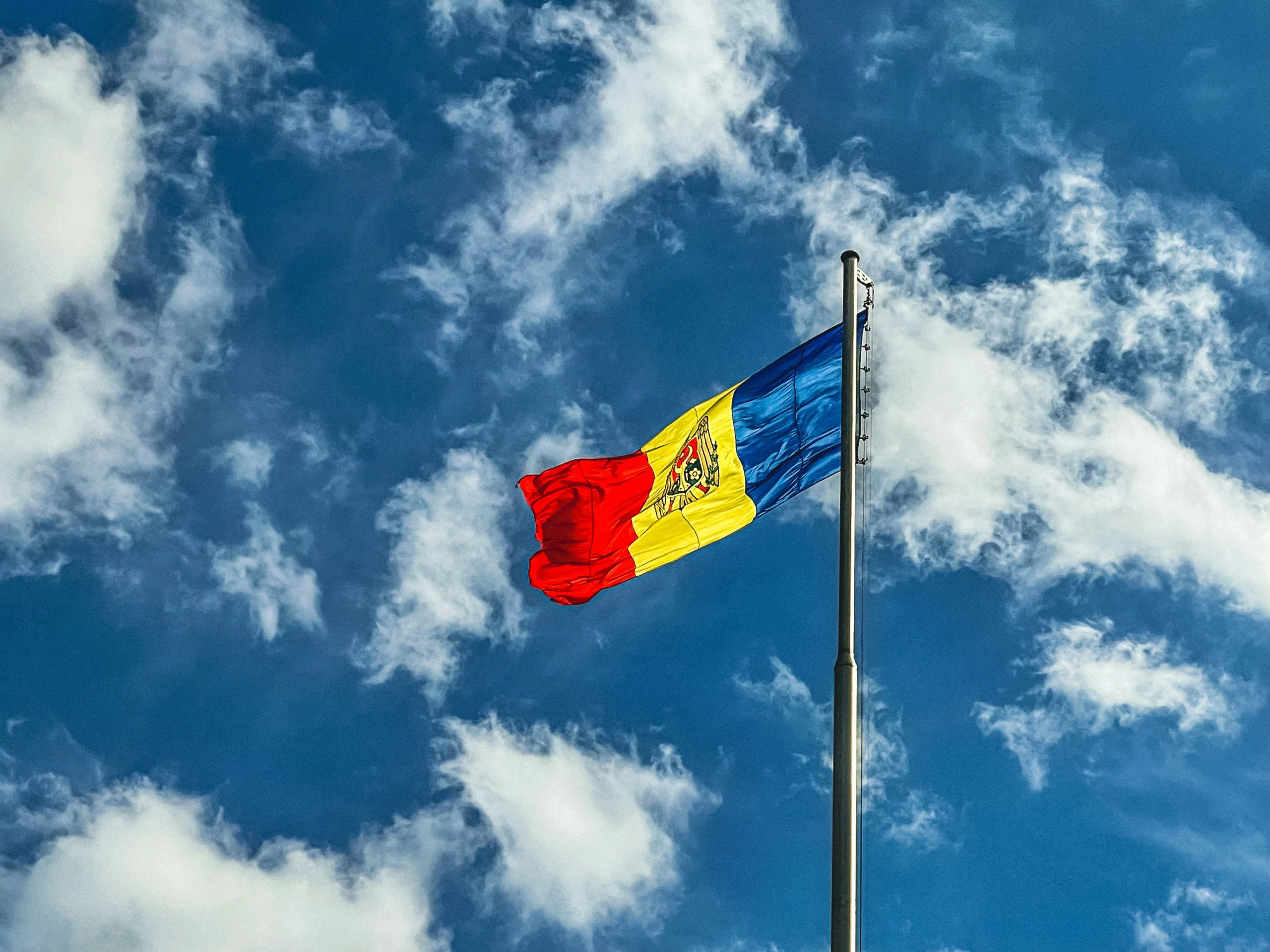
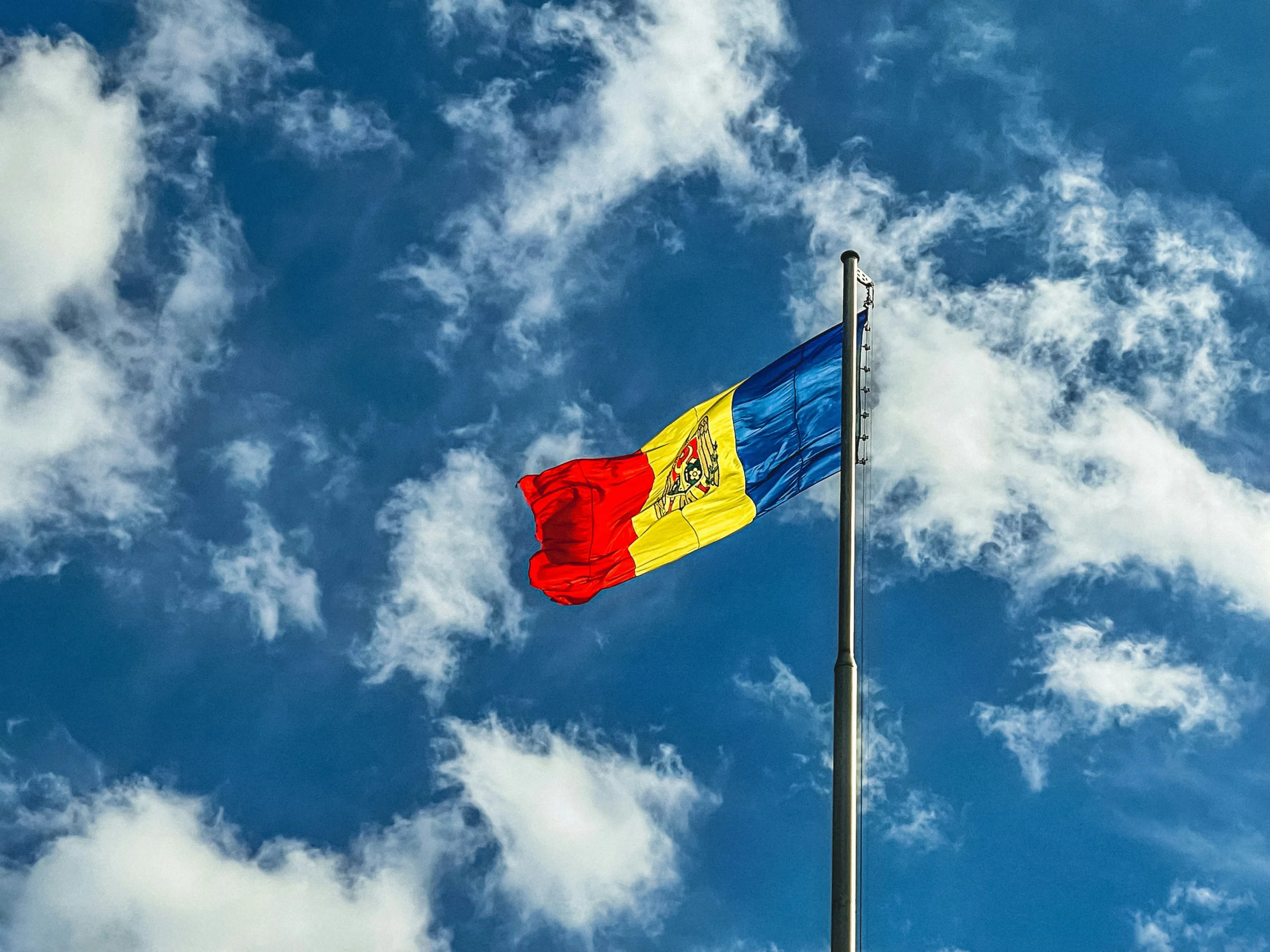
CEMR Secretary General Fabrizio Rossi offered heartfelt congratulations to Moldova following the results of last week’s referendum on EU accession. Moldovan citizens narrowly approved constitutional changes reflecting a commitment to joining the EU, with 50.46% voting “Yes” and 49.54% voting “No.”   

“We understand how significant this is for you and your daily efforts. Please know that we at CEMR have been standing by your side and advocating for it from the beginning, and we share in your joy. “- stated Mr.Rossi.  

In response to Russia’s invasion of Ukraine and Moldova’s accelerated reform efforts, the EU granted Moldova candidate status in June 2022. By December 2023, the European Council decided to open accession negotiations, and the first intergovernmental conference in June 2024 officially commenced the process, signifying Moldova’s significant progress toward EU membership. 

CEMR engagement with Moldovan Local Government and the Association CALM: 

Local and Regional cooperation has played an important role in this process. Indeed, since 2015, the Congress of Local Authorities from Moldova (CALM) has partnered with PLATFORMA to strengthen Moldova’s role in the European landscape and build local resilience through sustainable governance. CALM has become a trusted and engaged ally, representing Moldova’s local governments in development discussions and promoting international collaboration within the Neighbourhood East cluster.  

“The role of local authorities in this context is essential, and the membership support processes must guarantee them the means to ensure with responsibility, integrity, and autonomy the provision of local public services to their citizens” – continues CEMR Secretary General Fabrizio Rossi.  

In this perspective, technical cooperation, and exchanges of experience between communities in the EU and candidate countries, or among the candidate countries, constitute an essential tool to enable adapted and pragmatic implementation of the regulatory framework and local public services in compliance with EU standards.  

CEMR and PLATFORMA, since 2015, have delved into critical themes for Europe’s future exploring issues of democracy, sustainable development, and the EU enlargement process. For instance, under the Eastern Partnership programme, our members have longstanding decentralised cooperation activities with Moldovan counterparts.  

PLATFORMA and CALM partnership:  

In August, Lithuania’s association ALAL organised a local-to-local seminar in Moldova promoting youth participation in governance, aiming to build leadership capacity through international cooperation. Similarly, in September, leaders from France and Moldova gathered in Grenoble for the first forum on decentralised Franco-Moldovan cooperation. Organised by the French Association of the Council of European Municipalities and Regions (AFCCRE) under the PLATFORMA Eastern Neighbourhood programme, the event, “Choosing Europe: Decentralisation as a Driving Force Behind the Franco-Moldovan Partnership,” brought together around forty elected officials, reinforcing the links between both nations and highlighting decentralisation’s role in Moldova’s EU accession process. 

On 28 November, local leaders from Georgia, Moldova, and Ukraine will join the EU-Eastern Neighbourhood Local Leaders Seminar in Brussels. This event, organised with SALAR International (part of the Swedish Association of Local Authorities and Regions) and PLATFORMA, will offer a critical opportunity for dialogue with the European Commission and other leaders on the challenges facing local governments across Europe. You can register for the seminar here. 

Local and regional governments, supported by associations such as CALM, play a vital role in Moldova’s EU journey. Their commitment to decentralised cooperation and alignment with EU standards strengthens Moldova’s democratic institutions and helps meet citizens’ aspirations for a European future. 

Why does this matter?  

On 3 November, Moldovan citizens will return to the polls for the second round of the presidential election. Pro-European candidate Maia Sandu led the first round with 41% of the vote, while her opponent, Aleksandr Stoianoglo—backed by the pro-Russian Socialist Party—surprised many with 26%. Sandu now faces a challenging runoff as opposition forces may rally around Stoianoglo. This election could overturn the results of the 20 October referendum, committing local leaders even more crucial to safeguard the hard-won progress achieved so far to bring Moldova closer to the EU.  

Interested in CEMR and PLATFORMA’s work in the Eastern Neighbourhood countries?  

You may want to check the PLATFORMA SGA4 2023-2026 Eastern Partnership Cluster, a hub of collaborative action and regional growth and see how you can get involved! 

Our activities include: 

  • Thematic Cluster Meetings: Regular sessions to set strategies, share updates, and align priorities for Eastern Partnership policies and initiatives. 
  • Advocacy and Policy Work with EU Institutions: Engaging with EU bodies to shape policies, advocate for local government interests, and support integration efforts. 
  • Country Coordination Meetings: National meetings to align activities, share best practices, and strengthen cooperation among local authorities. 
  • Study Visits: Exchange programs where local leaders can learn from peers, enhancing skills and building capacity for effective policy implementation. 
  • Seminars: Workshops to deepen knowledge, foster partnerships, and tackle challenges in local governance. 

Get in touch to learn more about how you can be part of this initiative!

EU accession

European Union - News

How can we support Ukraine, Moldova and Georgia’s joining the European Union?


It was a few days after the outbreak of war by Russia: Ukraine, Moldova and Georgia each submitted an official application to join the EU. Since then, Ukraine and Moldova have been granted official candidate status to join the Union, while for Georgia, EU leaders recognised its “European perspective,” a sort of prelude to formal candidacy.

But how can these countries that are betting on a European future prepare themselves? CEMR’s members adopt a declaration on the subject at their Policy Committee meeting, on 5 July 2022.

While it is undeniable that the enlargements of 2004, 2007 and 2013 have mechanically led the EU to play a greater role in Ukrainian, Georgian and Moldovan politics, the road to membership for these countries is still long and perilous.

In this context, local and regional governments and their representative associations can contribute to bringing them closer to the EU. As affirmed in the declaration, CEMR “commits to defending a Trio holistic approach and is ready to accompany the EU accession process of Ukraine, Moldova and Georgia from a local perspective.”

For almost 25 years, CEMR, later supported by PLATFORMA, has been providing unstinting support to local governments in the EU’s eastern neighbours. As the declaration explains, CEMR’s network works continuously “to strengthen local autonomy and institutional capacity and foster multi-level governance reforms.”

In order to accompany the necessary institutional reforms and to ensure a sustainable integration process, CEMR’s members recommend “decentralised cooperation (…) to ensure a sustainable integration process.” And they specify that “peer exchanges, municipal partnerships, mentorship, study visits, twinning, seminars and training” are all levers to bring these three countries closer to the European Union.

While CEMR is ready to “continue to underpin its member associations in Georgia, Moldova and Ukraine in their contribution to the EU accession process”, let’s hope that the European institutions and the relevant authorities fully involve local and regional governments in this process in due time.

As the European Commission points out, “the reform of public administration and the decentralisation process in these three countries are essential components of the EU accession criteria.” Europe is not built from the top down. In order to create a common base, it is necessary to start from the bottom.

National Distinction in Moldova

Moldova - News Section

NALAS President receives the highest national distinction – Order of the Republic of Moldova


Tatiana Badan, Mayor of Selemet (Moldova), President of the Congress of Local Authorities from Moldova (CALM) and President of the Network of Associations of Local Authorities of South-East Europe (NALAS), was awarded with the highest distinction of Moldova, the Order of the Republic, on 15 October 2021.

This distinction was presented by Moldovan President Maia Sandu “as a sign of high appreciation of special merits to the state, for substantial contribution to asserting interests and promoting the image of the Republic of Moldova in the world, for outstanding professional success, for civic initiative and active participation in advancing reforms”. 

This Prize was handed to Ms Badan on the occasion of the 30th anniversary since the proclamation of the independence of the Republic of Moldova. She has over 28 years of experience in local public administration, serves as a mayor for more than 18 years, in 5 mandates

NALAS is a network of associations of local authorities of South East Europe. The Network brings together 14 associations which represent roughly 9000 local authorities, directly elected by more than 80 million citizens of this region. CALM promotes the interests and rights of local authorities in Moldova. It was established in 2010 and is a member of the CEMR since 2013. 

Local role in the EU enlargement 

EU Enlargement - News

Decentralisation and strong local governance are key for Ukraine, Moldova and Georgia’s EU accession path 


The decision of the European Council to grant candidate status to Ukraine and Moldova and to recognise Georgia’s perspective once further reforms are met marks a historic step in the enlargement of the European Union. Beyond the geopolitical dimension, the process will require profound reforms at the local level, particularly in decentralisation, public administration, and democratic governance. 

The European Commission’s opinions emphasise decentralisation as a cornerstone of EU membership criteria. Strengthening local autonomy, building institutional capacity, and fostering multilevel governance are essential for sustainable reforms in Ukraine, Moldova, and Georgia. Empowering municipalities and regions will not only improve service delivery but also ensure that EU values and standards are implemented where citizens feel them most directly: at the local level. 

Decentralised cooperation plays a decisive role in this transformation. Peer exchanges, partnerships, mentorship programmes, and twinning initiatives provide practical support for reforms while reinforcing democratic practices. These mechanisms are particularly vital in contexts of crisis and recovery, such as the post-pandemic and post-war reconstruction efforts. 

Granting candidate status also strengthens local governments’ ability to modernise, adopt new technologies, and access tools that improve governance and resilience. This process will accelerate reforms in public administration, boost citizen participation, and ensure a closer alignment with the EU’s Green Deal and Sustainable Development Goals. 

The path toward EU membership for Ukraine, Moldova, and Georgia must include a strong local dimension. By prioritising decentralisation and local autonomy, the accession process can deliver long-term sustainable development, stronger democracies, and better services for citizens. Supporting municipalities and regions is therefore not just complementary, but essential for a successful enlargement process. 

Read the declaration here 

For more information, contact: