Session on Ukraine’s path to the EU

Bridges of Trust - event 2025

Transforming emergency aid into equal cooperation between EU and Ukrainian towns, cities and regions


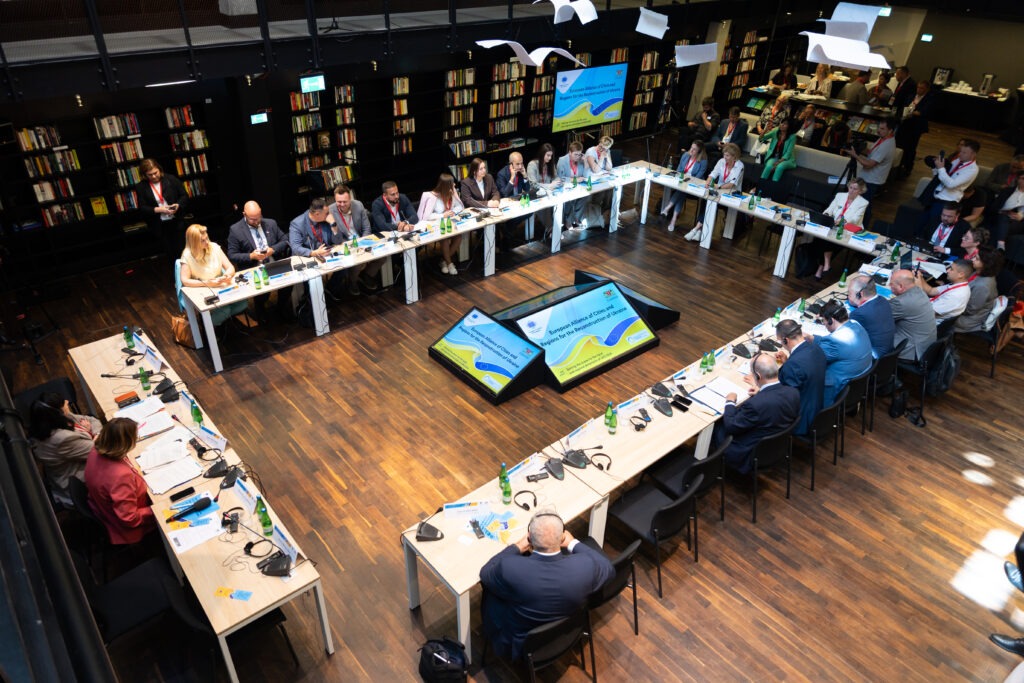
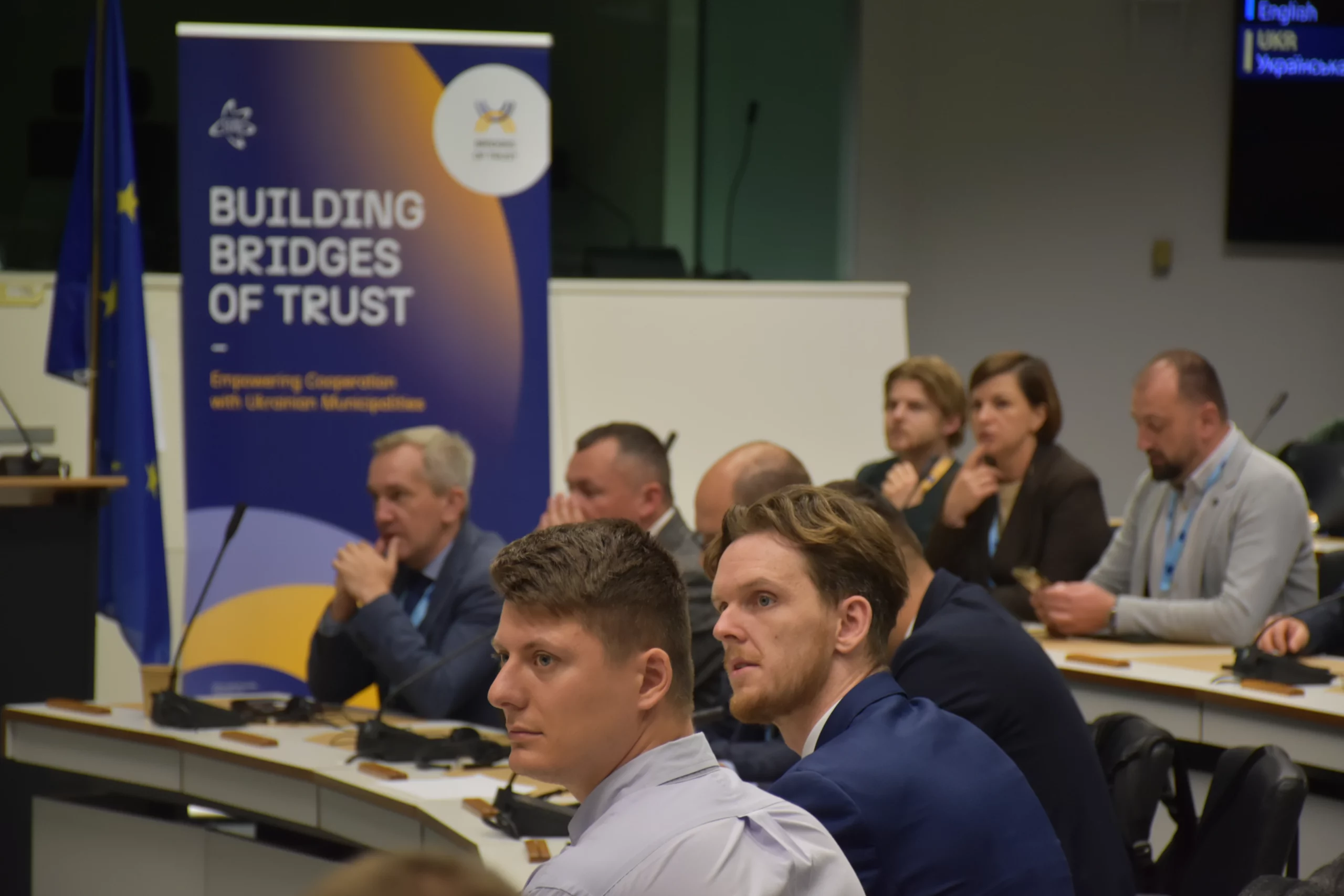
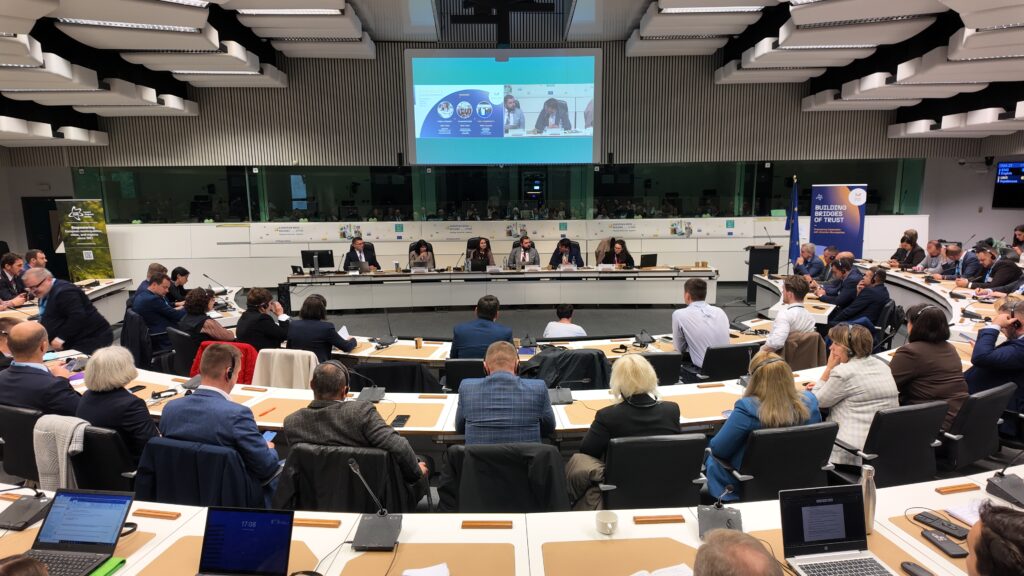
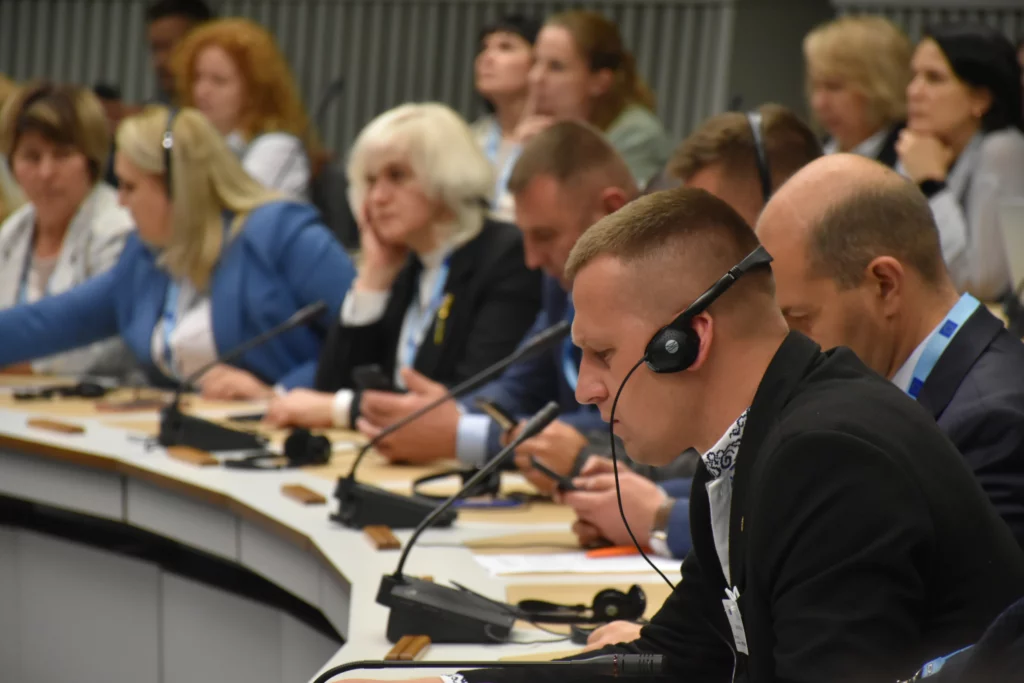
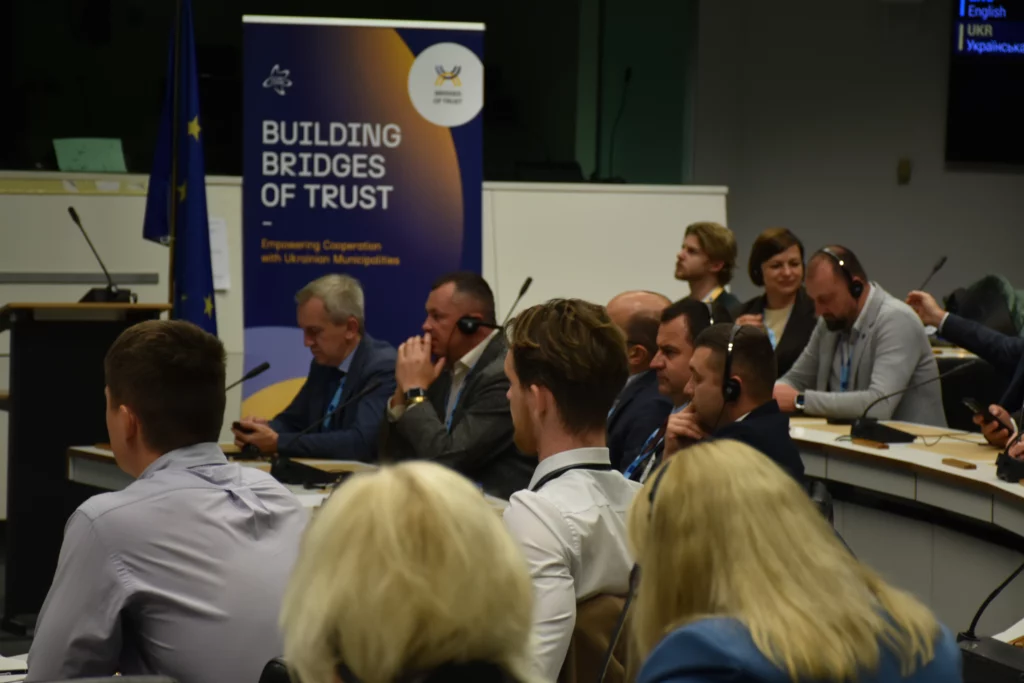
Amid war-time disruption, Ukraine’s local governments have stepped as frontline problemsolvers and drivers of EU integration. During the European Week of Regions and Cities in Brussels, on October 15th a CEMR-led conversation under the Bridges of Trust (BoT) brought together local leaders, policy experts, and civil society to examine how municipal partnerships can anchor accession and cohesion.  

The takeaway was clear: lasting progress depends on shifting from emergency solidarity to structured cooperation that empowers municipalities to deliver reforms, attract investment, and close regional gaps. 

Why local governments matter 

Ukraine’s municipalities have kept essential services running, coordinated aid, and advanced reforms under extreme pressure. Through BoT and the European Partnership Hub, they are building ties with European peers on projects in education, culture, economic development, and reconstruction. As CEMR’s Director for Projects and Programmes, Durmish Guri explained, success now hinges on moving “from emergency solidarity to mutually beneficial collaboration”. 

Matchmaking for impact 

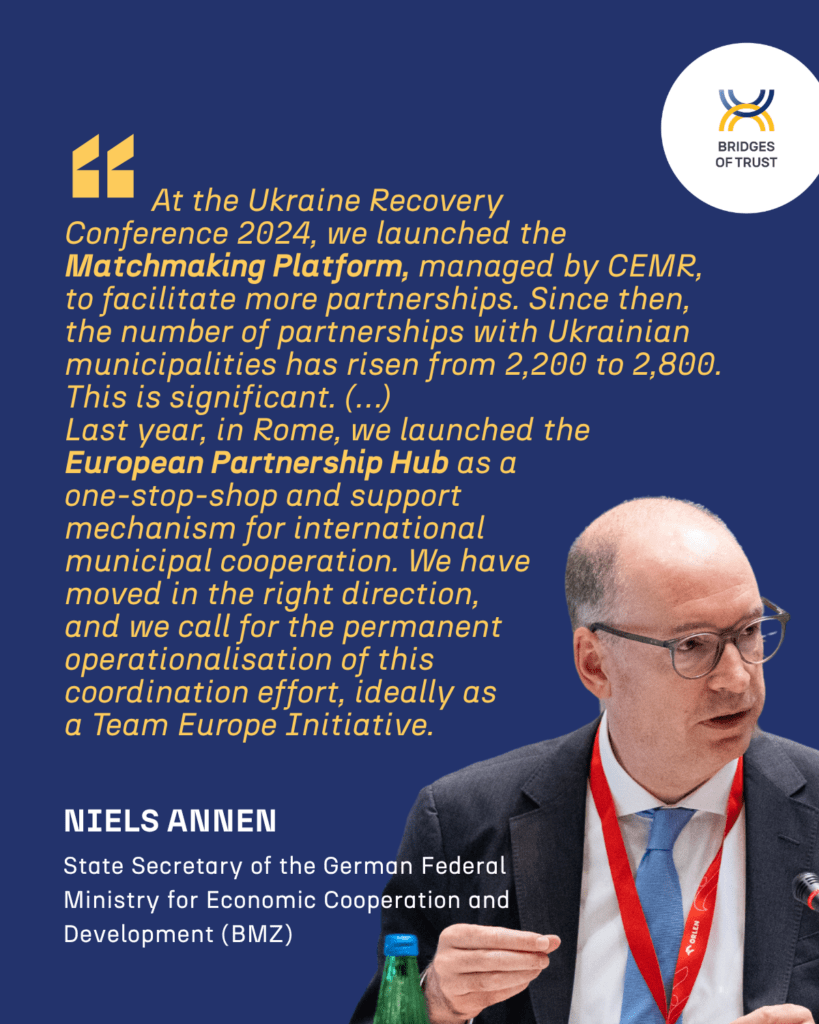
To turn policy into practice, BoT has launched a Matchmaking Platform that connects every Ukrainian municipality with a European counterpart, enabling concrete joint projects and capacity-building. The platform is designed to reduce fragmentation, align needs with resources, and accelerate cooperation across borders.  

From reform to implementation 

Dmytro Lyvch of Easy Business underscored a dual challenge: advancing structural reforms while financing recovery. Real progress happens locally through municipalities, civil society, and development agencies. Ukraine has adapted to EU Chapter 22 requirements, but gaps persist in horizontal and vertical cohesion, and in institutional and financial frameworks. With regional disparities higher than in many Central and Eastern European countries, targeted interventions are needed to build resilience and competitiveness. 

Lessons from peers 

Ambre Maucorps of the Vienna Institute for International Economic Studies highlighted takeaways from Lithuania and North Macedonia. Lithuania used cohesion policy to tackle disparities with a clear governance model and strong stakeholder input. North Macedonia, after municipal mergers similar to Ukraine’s, benefited from pre-accession funds but still struggles with absorption. The throughline: coordination and flexibility are essential for effective cohesion policy. 

Building capacity, scaling partnerships 

Iryna Mykulych of the NGO Agency for Recovery and Development stressed that durable cooperation often starts with “soft” cultural and educational exchanges that build trust, then evolves into “hard” reconstruction projects. Scaling from municipal partnerships to business and academia can unlock investment, know-how, and long-term outcomes. 

The bottom line 

The event’s conclusion was unambiguous: international municipal cooperation is one of the most effective and sustainable ways to localise EU accession.  

As Durmish Guri noted, “international municipal cooperation is the most effective, sustainable, and the efficient form of collaboration”. Local governments, he added, play a critical role not only in implementing reforms but also in shaping national and European-level policy, underlining the importance of “localizing accession” to ensure Ukraine’s municipalities are fully engaged in the EU integration process.   

Empowering local governments to deliver reforms and shape policy—together with European partners—moves Ukraine from a recipient of solidarity to a co-creator of Europe’s cohesion and growth. That is the promise of BoT’s community-driven approach. 

For more information, contact:

EU enlargement from a local perspective

European Union - EU Enlargement News

EU enlargement is not sustainable without local ownership: 8 takeaways from CEMR webinar 


Empowering local and regional governments will ensure that EU integration is felt, understood, and embraced by citizens, making enlargement not only a policy success but a democratic one. This is the main lesson learned from the CEMR webinar on Empowering Local Governments on the Road to EU Enlargement, organised in collaboration with PLATFORMA on 1st July. 

Local leaders, EU officials, and representatives from candidate and EU member countries reaffirmed the essential role of local and regional governments in the EU enlargement process. They also discussed the capacity needs involved in this journey. 

Here are the 8 key findings based on the webinar discussions, which witnessed that enlargement is not sustainable without local ownership.

1. Set local and regional governments as strategic actors in the EU accession process 

  • Involve local governments early and systematically in national accession plans, screenings, and cluster evaluations. 
  • Ensure local leaders are recognised not just as implementers, but as policy co-creators, especially in areas aligned with the EU acquis. 

2. Strengthen multilevel governance structural dialogue 

  • Establish permanent coordination mechanisms between LRGs, national governments, and EU institutions. 
  • Move from consultation to co-creation platforms—especially during roadmap design, monitoring, and policy review phases. 

3. Guarantee local access to EU funding mechanisms 

  • Ensure that a minimum percentage of EU financial assistance is directly allocated to local governments (e.g., in Ukraine, it is already 20%) 
  • Simplify procedures for municipalities to access EU funds and develop capacity-building programs to support their management. 

4. Invest in capacity building and institutional continuity 

  • Develop sustained training for local officials, including in public procurement, project management and all locally implementing EU standards.  
  • Address gaps in institutional memory due to political turnover by investing in civil service professionalisation and knowledge transfer. 

5. Support peer-to-peer learning and twinning initiatives 

  • Promote city-to-city cooperation between EU member states and candidate countries (decentralised cooperation) 
  • Expand twinning programs across thematic areas such as education, green transition, disaster resilience, and digital governance (if you need tools to find partners, use existing ones such as the CEMR Matchmaking Platform). 

6. Promote inclusive participation and gender equity 

  • Encourage the participation of women leaders and marginalised communities in enlargement dialogues. 
  • Ensure that decentralisation and integration efforts incorporate diverse perspectives and address local inequalities.

7. Strengthen civic trust and communication

  • Support local and regional governments in leading public communication campaigns that explain EU values and the benefits of enlargement. 
  • Equip municipalities to become trusted messengers of the EU to citizens, countering misinformation and building democratic resilience. 

8. Leverage local and regional governments for reconstruction and sustainability goals 

  • In countries affected by war (e.g., Ukraine), prioritise local-led reconstruction and sustainable recovery as a path to integration. 
  • Align local development strategies with the Green Deal, digital transition, and social cohesion policies. 

Context: 

Nine countries are officially on a path to join the European Union in the coming years: five in the Western Balkans (Albania, Bosnia and Herzegovina, Montenegro, North Macedonia and Serbia), three in the Eastern neighbourhood (Georgia, Moldova and Ukraine), and Turkey. 

For more information, contact:

EU accession

European Union - News

How can we support Ukraine, Moldova and Georgia’s joining the European Union?


It was a few days after the outbreak of war by Russia: Ukraine, Moldova and Georgia each submitted an official application to join the EU. Since then, Ukraine and Moldova have been granted official candidate status to join the Union, while for Georgia, EU leaders recognised its “European perspective,” a sort of prelude to formal candidacy.

But how can these countries that are betting on a European future prepare themselves? CEMR’s members adopt a declaration on the subject at their Policy Committee meeting, on 5 July 2022.

While it is undeniable that the enlargements of 2004, 2007 and 2013 have mechanically led the EU to play a greater role in Ukrainian, Georgian and Moldovan politics, the road to membership for these countries is still long and perilous.

In this context, local and regional governments and their representative associations can contribute to bringing them closer to the EU. As affirmed in the declaration, CEMR “commits to defending a Trio holistic approach and is ready to accompany the EU accession process of Ukraine, Moldova and Georgia from a local perspective.”

For almost 25 years, CEMR, later supported by PLATFORMA, has been providing unstinting support to local governments in the EU’s eastern neighbours. As the declaration explains, CEMR’s network works continuously “to strengthen local autonomy and institutional capacity and foster multi-level governance reforms.”

In order to accompany the necessary institutional reforms and to ensure a sustainable integration process, CEMR’s members recommend “decentralised cooperation (…) to ensure a sustainable integration process.” And they specify that “peer exchanges, municipal partnerships, mentorship, study visits, twinning, seminars and training” are all levers to bring these three countries closer to the European Union.

While CEMR is ready to “continue to underpin its member associations in Georgia, Moldova and Ukraine in their contribution to the EU accession process”, let’s hope that the European institutions and the relevant authorities fully involve local and regional governments in this process in due time.

As the European Commission points out, “the reform of public administration and the decentralisation process in these three countries are essential components of the EU accession criteria.” Europe is not built from the top down. In order to create a common base, it is necessary to start from the bottom.

Secretaries General

CEMR’s Secretaries General and Directors met to discuss Ukraine and their priorities for the next months


Secretaries General and Directors of CEMR’s member associations took part in an executive meeting to develop a common position on priority issues on the local and international agenda. They exchanged on the war in Ukraine, discussed a base document proposing joint measures on climate neutrality and decarbonisation of towns and cities and presented the actions of the Young Elected Committee. They also discussed statutory, general and internal affairs. This first face-to-face meeting after the pandemic took place from 5 to 6 April in Vitoria-Gasteiz, Spain at the invitation of the Association of Basque Municipalities (EUDEL) and the city’s mayor Gorka Urtaran Agirre. It has been attended by twenty delegates (from Czech Republic, Turkey, Greece, United Kingdom, France, Norway, Spain, Cyprus, the Netherlands…) and the rest of the attendees have participated online.
 
Renewing solidarity and support with Ukraine
Participants, in particular, renewed their full solidarity and support with Ukraine. In this complex international context, they called for unity of local and multilevel action. Marlène Siméon, Operations Director of CEMR explained that “Since its creation in 1951, the CEMR and its members have worked to promote the construction of a united, peaceful and democratic Europe, based on local autonomy, respect for the principle of subsidiarity and the participation of citizens, but also on twinning and solidarity between municipalities on the continent and beyond. This is why the war in Ukraine immediately provoked a reaction from CEMR, with an appeal signed by more than 750 mayors and local or regional leaders from all over Europe, condemning the Russian invasion and pledging to support the municipalities and cities of Ukraine.” She emphasised that “in these times of pain and suffering, the European family of local and regional governments is united. Ukraine is part of Europe and we will continue to support it”.
 
40th Anniversary of EUDEL
The CEMR also participated in the ceremony celebrating the 40th anniversary of EUDEL. Chaired by Iñigo Urkullu, President of the Basque government, the celebration recalled the important milestones in the strengthening and transformation of the municipalities of the Basque country over the last 40 years. The association also paid tribute to the people who have presided EUDEL since its creation in 1982. For 40 years, EUDEL has energetically participated in many of CEMR fields of action. They are strongly involved in policy and advocacy work. For example, EUDEL has contributed greatly to CEMR’s work on local gender equality and, in particular, the revitalisation of the European Charter for Local Equality currently underway. Building on the Basque Country’s long tradition of promoting effective gender equality, EUDEL has been an active player in ensuring the Charter remains a useful and effective tool to mainstream gender equality in Europe’s territories. The whole CEMR is looking forward to many more years of collaboration with its Basque friends!

Building partnerships with Ukraine

Ukraine partnership - News

Key factors for successful and sustainable partnerships between Ukrainian and EU local governments 


Ukrainian municipalities have a long tradition of international cooperation, especially with their counterparts in European Union (EU) member states. Today, this cooperation is more relevant than ever. Municipalities seek to improve local services, modernise administration, attract investment, and promote tourism and culture by learning from and working with EU partners. 

At the same time, establishing meaningful partnerships is not straightforward. Many municipalities, particularly those with limited international experience and resources, face challenges in sustaining long-term cooperation. To respond to this need, the Bridges of Trust initiative was launched to support exchange, promote best practices, and help local governments in Ukraine and the EU build effective partnerships. 

Mapping cooperation 

Ukraine’s decentralisation reform, launched in 2014, created 1,469 consolidated territorial communities, strengthening local governance and budgets. This has enabled municipalities to take greater responsibility for international engagement. Reports by the European Commission and the European Parliament have recognised Ukraine’s decentralisation as a success story, while also stressing the need to safeguard its achievements through constitutional reform. 

Success factors in municipal cooperation 

Drawing on decades of European experience with twinning and decentralised cooperation, several factors emerge as critical to success

  • Careful partner selection, ensuring shared interests and commitment. 
  • Clear partnership strategies with defined objectives. 
  • Sustainable planning and dedicated support structures (e.g. steering committees). 
  • Joint financing and access to external funding. 
  • Active involvement of schools, youth, and citizens to broaden visibility. 
  • Political leadership and motivated staff, supported by international departments. 
  • A strong European dimension to reinforce unity and common identity. 

Challenges facing Ukrainian municipalities 

Despite progress, obstacles remain. Studies of cooperation with Polish and other EU municipalities highlight recurring issues: 

  • Partnerships that exist only on paper, with little or no joint activity. 
  • Limited staff capacity, foreign language barriers, and a lack of experience in managing international projects. 
  • Insufficient awareness among citizens of the benefits of cooperation. 
  • Irregular contacts and a lack of strategic alignment between partners. 
  • Funding shortages for travel, exchanges, and project implementation. 

The COVID-19 pandemic has created both challenges and opportunities. While some partnerships stalled due to travel restrictions, others adapted by embracing online platforms. Virtual exchanges, such as U-LEAD’s study visits and the Bridges of Trust online forums, demonstrated how digital tools can sustain and even intensify cooperation. 

Looking ahead 

Above all, motivation and leadership remain the decisive factors. As Ukrainian officials note, training and case studies are valuable, but without committed local leaders and engaged staff, partnerships cannot thrive. Conversely, municipalities with strong motivation but little experience can quickly grow if supported with targeted training, funding, and practical guidance. 

International municipal cooperation is not simply an instrument of solidarity: it is a strategic investment in Ukraine’s recovery, resilience, and European future. By learning from each other, municipalities in Ukraine and the EU can build sustainable partnerships that deliver tangible results for their communities and strengthen the foundations of a common European identity. 

Read the study here 

For more information, contact: 

Local role in the EU enlargement 

EU Enlargement - News

Decentralisation and strong local governance are key for Ukraine, Moldova and Georgia’s EU accession path 


The decision of the European Council to grant candidate status to Ukraine and Moldova and to recognise Georgia’s perspective once further reforms are met marks a historic step in the enlargement of the European Union. Beyond the geopolitical dimension, the process will require profound reforms at the local level, particularly in decentralisation, public administration, and democratic governance. 

The European Commission’s opinions emphasise decentralisation as a cornerstone of EU membership criteria. Strengthening local autonomy, building institutional capacity, and fostering multilevel governance are essential for sustainable reforms in Ukraine, Moldova, and Georgia. Empowering municipalities and regions will not only improve service delivery but also ensure that EU values and standards are implemented where citizens feel them most directly: at the local level. 

Decentralised cooperation plays a decisive role in this transformation. Peer exchanges, partnerships, mentorship programmes, and twinning initiatives provide practical support for reforms while reinforcing democratic practices. These mechanisms are particularly vital in contexts of crisis and recovery, such as the post-pandemic and post-war reconstruction efforts. 

Granting candidate status also strengthens local governments’ ability to modernise, adopt new technologies, and access tools that improve governance and resilience. This process will accelerate reforms in public administration, boost citizen participation, and ensure a closer alignment with the EU’s Green Deal and Sustainable Development Goals. 

The path toward EU membership for Ukraine, Moldova, and Georgia must include a strong local dimension. By prioritising decentralisation and local autonomy, the accession process can deliver long-term sustainable development, stronger democracies, and better services for citizens. Supporting municipalities and regions is therefore not just complementary, but essential for a successful enlargement process. 

Read the declaration here 

For more information, contact: