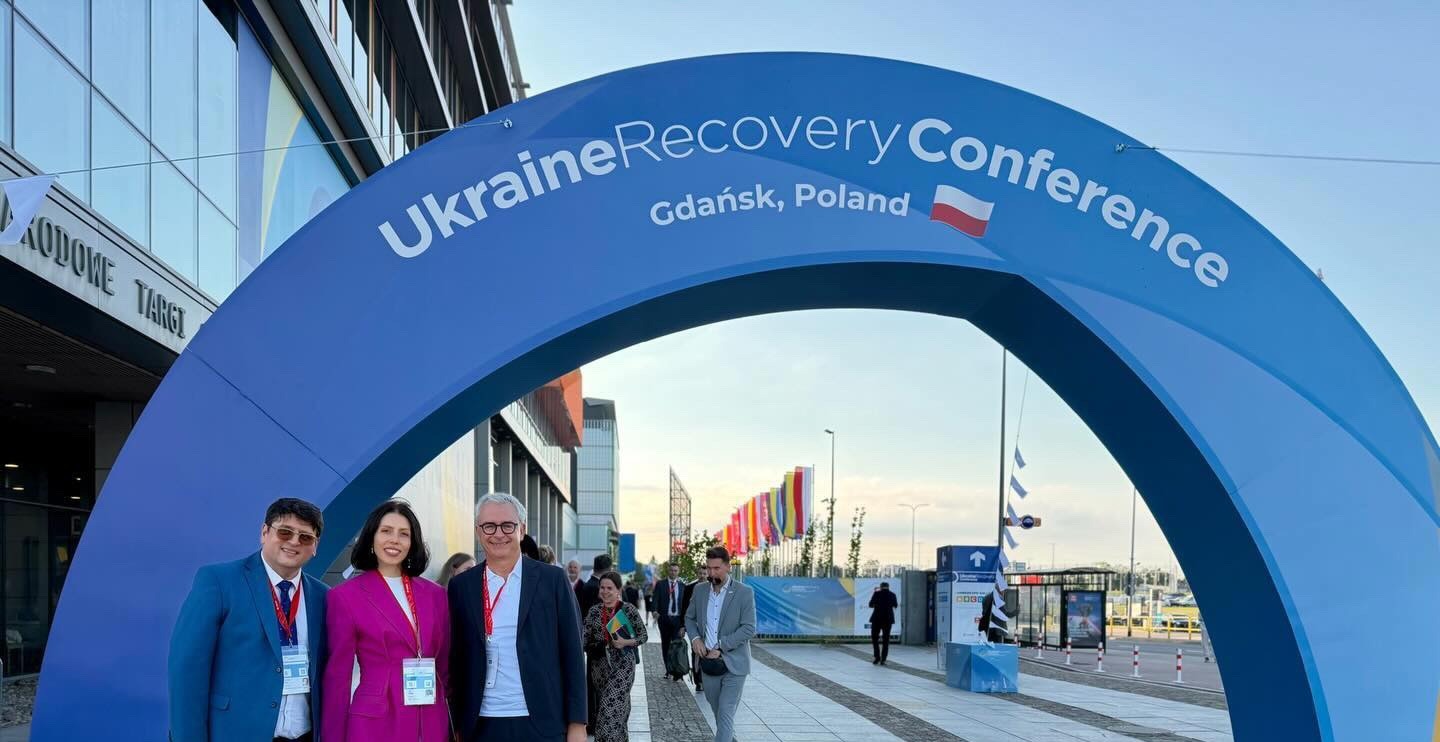
Ukraine Recovery Conference 2026

In Gdańsk, the Ukraine Recovery Conference confirmed the importance of local and regional governments in Ukraine’s recovery and EU accession

1,349 words
6–9 minutes

The Ukraine Recovery Conference (URC 2026), co-hosted by Poland and Ukraine, took place in Gdańsk on 25 and 26 June 2026. Being one of the largest international gatherings dedicated to bolstering international support for the country’s reconstruction, as well as catalysing investments for Ukrainian businesses and local governments, this edition brought together more than 5,000 participants.

Heads of state, ministers, donors, and international organisations converged in the Polish city to address the most relevant challenges to Ukraine’s future: energy, critical infrastructure, logistics, and, for the first time, security capabilities.

The Council of European Municipalities and Regions (CEMR) participated in the URC2026 representing the secretariat of the European Partnership Hub (EPH), which facilitates the Bridges of Trust (BoT) Community. Two years after the launch of the Matchmaking Platform at URC 2024, and one year after, the launch of the European Partnership Hub (EPH) – hosted by CEMR – at URC 2025 to facilitate the BoT Community actors active in international municipal cooperation with Ukraine, CEMR was present at URC 2026 with a dedicated booth showcasing the collective efforts of the BoT Community and best practices in international municipal cooperation with Ukraine.

CEMR contributed to the local and regional dimension of the conference and thus carried a specific voice, that of local and regional governments. CEMR President Christoph Schnaudigel represented the organisation throughout the two days conference together with Olha Pikula, CEMR Spokesperson on Enlargement and Deputy Mayor of Mariupol City Council, and Oleksandr Vasylenko, Head of the Cherkasy District Council and First Vice-President of the Ukrainian Association of Rayon and Oblast Councils (UAROR).

A joint statement and a call for coordination

On the eve of the conference, the European Alliance of Cities and Regions for the Reconstruction of Ukraine gathered its 100 members to endorse a joint statement setting out concrete priorities for donor action and Ukraine’s EU integration. As a founding member of the Alliance, CEMR contributed directly to this collective effort. Oleksandr Vasylenko, represented CEMR during the political-level Alliance meeting.
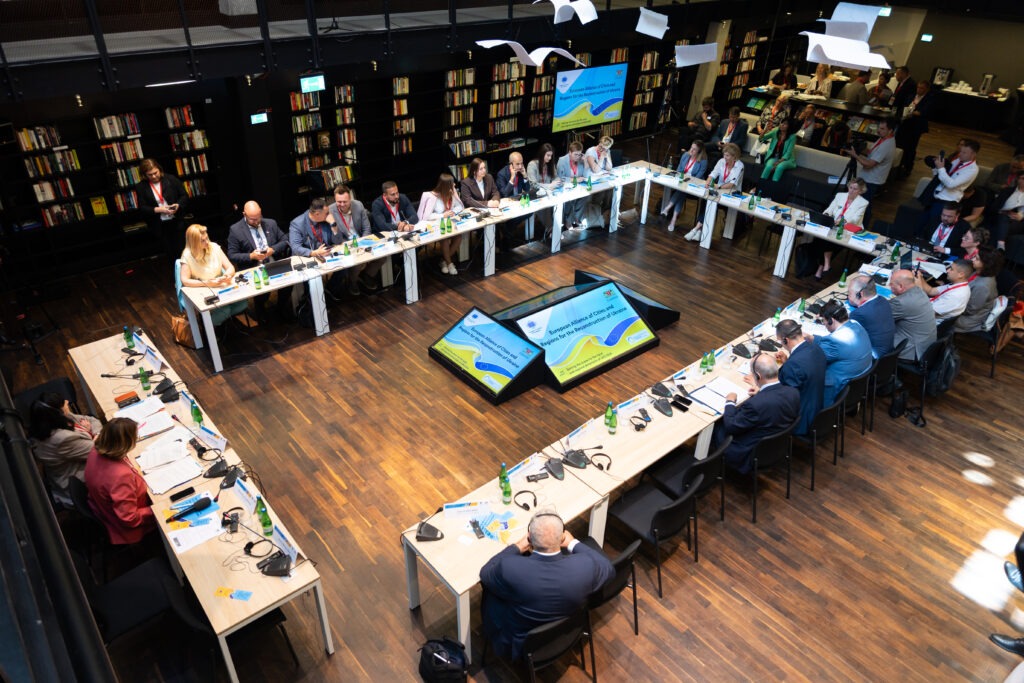
24 June 2026, European Alliance of Cities and Regions for the Reconstruction of Ukraine – political level meeting. Gdańsk – Poland – June 2026 © European Union / Giedrė Daugėlaitė

In his statement, he emphasised: “The Bridges of Trust Community, facilitated by the European Partnership Hub and supported by U-LEAD with Europe, is a successful example of practical cooperation and joint efforts of various actors across Europe. All of these actors deliver tangible results in partnership building and capacity development demonstrating the diversity and potential of municipal cooperation.

The statement recognises that Ukrainian towns, cities and regions have been at the core of the country’s resilience since the start of the full-scale invasion, providing emergency response, maintaining infrastructure, and acting as operational hubs for humanitarian assistance, all whilst preparing for a sustainable future. It calls on institutional partners to treat local and regional governments as strategic partners and integral decision-makers in reconstruction governance, and urges donors to allocate ring-fenced, transparent funding for local and regional development, including direct access to finance and dedicated technical assistance.

Critically for CEMR and the EPH, the statement underlines the potential of municipal cooperation with Ukraine and calls for a reinforcement of existing coordination structures, including the Alliance itself and the BoT Community facilitated by the EPH, and to foster links between local needs, funding opportunities, and the tools already established to support peer-to-peer partnerships such as the Matchmaking Platform.
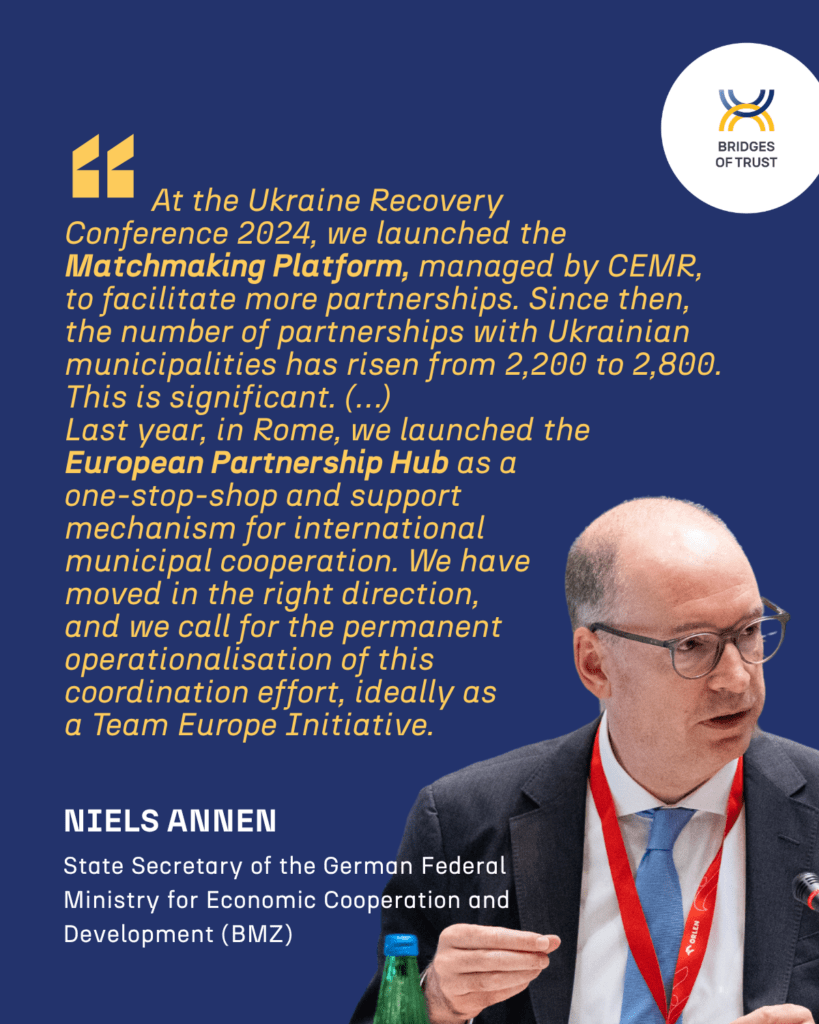
Niels Annen, State Secretary in the German Federal Ministry for Economic Cooperation and Development, recognised in his intervention the significant increase of international partnerships with Ukrainian municipalities in the last years: “We have moved in the right direction, and we call for the permanent operationalisation of this coordinated effort.

Together with Muriel Lacoue-Labarthe, Special Envoy of the President of the French Republic for Ukraine’s Recovery and Reconstruction, he announced the launch of a new funding line for multi-partner cooperation involving municipalities from Germany, France, Poland and Ukraine.

Meetings and exchanges at the European Partnership Hub booth

The EPH booth was more than a presence at the conference. Positioned alongside partners from the Committee of the Regions, Eurocities and the Polish Association of Cities, it became a point of convergence for Ukrainian and European partners, hosting a series of exchanges that moved between the political and the technical, the bilateral and the collective.

CEMR President Christophe Schnaudigel met with Aleksandra Dulkiewicz, Mayor of Gdańsk, for a focused conversation on the next Multiannual Financial Framework and the persistent need to ensure that local and regional governments have a genuine seat at the European table. The discussion touched on the importance of coordinated messaging across CEMR, the Committee of the Regions, and city networks, with Ukraine’s recovery and the potential of municipal partnerships running as a thread throughout.

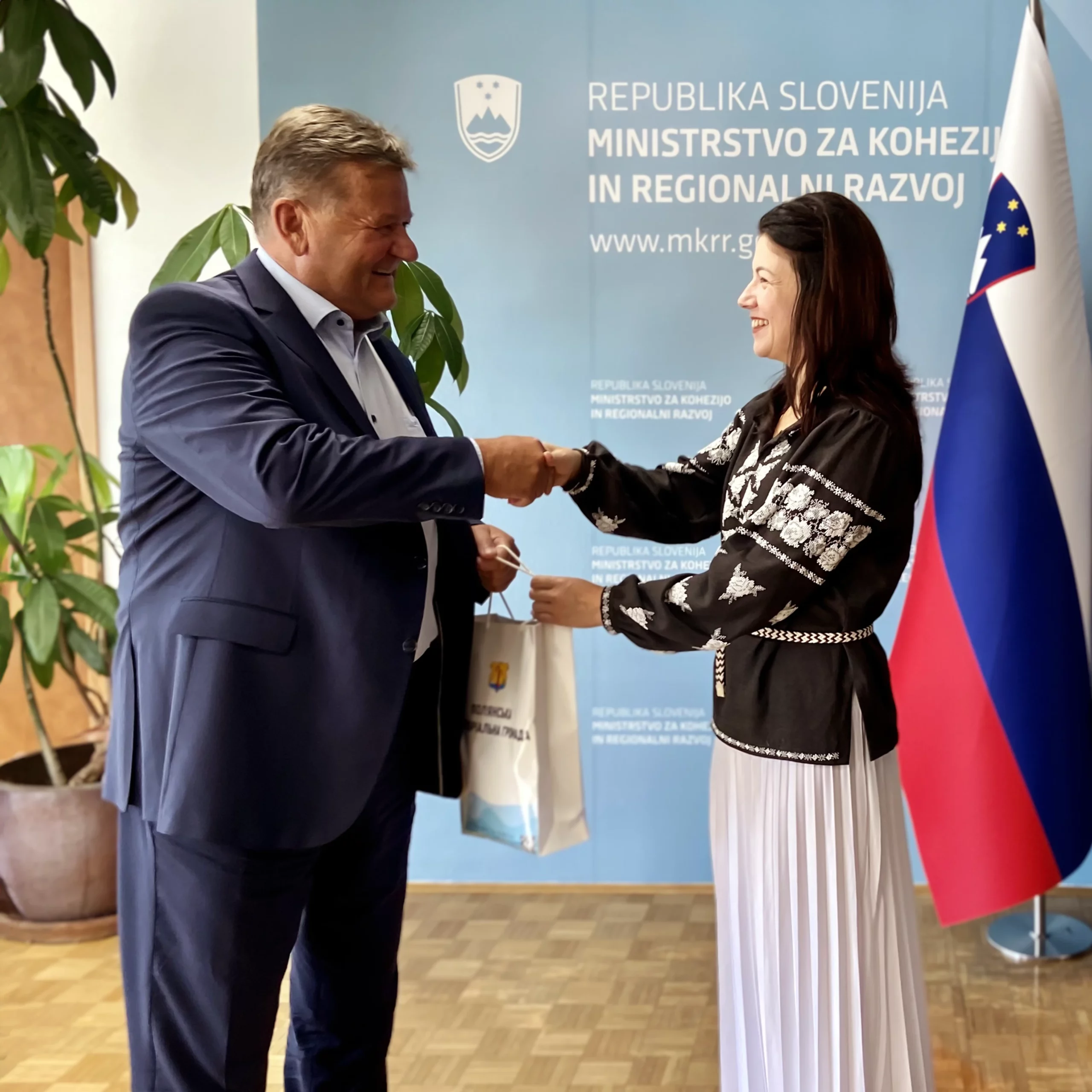
A particularly significant exchange took place between CEMR President Christoph Schnaudigel and Oleksandr Vasylenko, Head of the Cherkasy District Council and First Vice-President of the Ukrainian Association of Rayon and Oblast Councils (UAROR). The two sides explored future prospects of cooperation, covering institutional ties, peer-to-peer exchanges, and support for local self-government. The conversation also engaged with a structural question that matters enormously for Ukraine’s governance: the clarity of competences assigned to rayons and oblasts as the country pursues rebuilding and decentralisation.

CEMR President Christoph Schnaudigel also met with Vitali Klitschko, Mayor of Kyiv, Ukrainian Deputy Minister Oleksii Riabykyn, and Olha Pikula, CEMR Spokesperson on Enlargement and Deputy Mayor of Mariupol City Council, alongside representatives of the BoT Community and partner organisations.
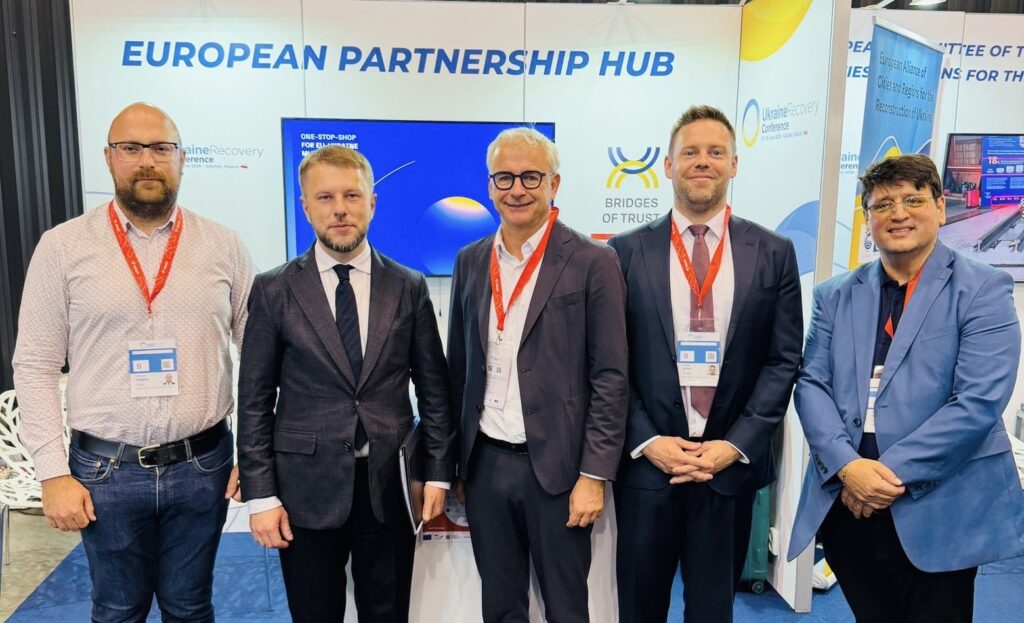
The Director General of Expertise France, one of the key actors within the BoT Community, also visited the EPH stand. The exchange focused on the value of mapping and evaluating existing partnerships, and on the EPH’s role as a coordination structure that helps avoid duplication and fragmentation among international actors. Within the framework of the Global Gateway, the EPH was put forward as a model for building coherent, multi-stakeholder engagement in partner countries.

On the technical side, CEMR’s Director of Projects and Programmes Durmish Guri met with Astrid Kohl, newly appointed Programme Director of U-LEAD with Europe. The meeting was an opportunity to reflect on the results of this partnership: what began as a project has grown into a genuine community of actors committed to Ukraine’s recovery, decentralisation, and EU accession. That trajectory owes much to the sustained support and long-standing cooperation of U-LEAD with Europe, without which the BoT Community and the EPH would not be what they are today.

URC 2026 has shown a strong commitment to the local and regional dimension in the reconstruction of Ukraine, by the organising City of Gdansk as well as by the various associations and networks represented. Side events and exchanges at the EPH booth provided insights into the practical work of municipal partnerships, their opportunities and challenges. CEMR will use this feedback to improve the services of the EPH even further and to shape the future of municipal cooperation with Ukraine with partners from the BoT Community.

CEMR will continue working with its members and partners to ensure that local and regional governments remain central actors in shaping Ukraine’s future, as the institutions closest to the people that reconstruction is ultimately for.

About the next Ukraine Recovery Conference 2027

At the end of URC 2026 in Gdańsk, Estonia announced it will take over as host of the next Ukraine Recovery Conference, to be held in Tallinn in 2027, succeeding Poland’s role as organiser. The Prime Minister of the Republic of Estonia, Kristen Michal, confirmed the news, framing support for Ukraine’s reconstruction as directly tied to European security, and said Estonia intends to build on the momentum generated in Gdańsk. The Estonian Minister of Foreign Affairs, Margus Tsahkna, described Ukraine’s rebuilding as Europe’s largest economic project of the coming decade, spanning infrastructure, democratic institution-building, and EU integration. Estonia also plans to draw on the Nordic-Baltic Eight (NB8) cooperation format to pool regional expertise and resources in organising the 2027 conference.

For CEMR and the EPH, this transition sets the horizon for the next phase of municipal cooperation with Ukraine, building on the commitments and coordination structures reinforced in Gdańsk.

For more information, contact:

Policy recommendations on AgoraEU

EU financing opportunities - News

Committee of the Regions adopts AgoraEU opinion with CEMR’s key policy recommendations at its core

742 words
3–5 minutes

The European Committee of the Regions (CoR) adopted its opinion on the proposed AgoraEU programme at its 171st plenary session. Drafted by rapporteur Csaba Borboly (RO/EPP), Vice-President of Harghita (Romania) County Council, the opinion sends a clear message to EU institutions: local and regional governments are essential implementing partners in Europe’s cultural, media and democratic future.

AgoraEU is the Commission’s proposal to merge Creative Europe and the Citizens, Equality, Rights and Values (CERV) programme into a single framework for the EU budget 2028–2034, covering three strands: culture, media, and democracy. While the ambition to create coherence is welcome, CEMR and the CoR have both underlined that this merger must not dilute the specific objectives and funding of each stream.

Ahead of the CoR’s deliberations, CEMR submitted several policy recommendations to the European Committee of the Regions, which have been reflected across four critical areas.

Town twinning: from omission to recognition

The most important alignment concerns town twinning and networks of towns. CEMR called for twinning to be recognised as a strategic democratic instrument with a clearly earmarked budget line — a cost-effective vehicle for civic participation, intercultural dialogue and European identity-building, especially in the context of geopolitical instability and enlargement process.

The CoR echoes this directly, calling for twinning networks and cross-border municipal partnerships with dedicated multi-annual funding. It also formally regrets that the Commission’s proposal dropped the twinning actions provided for under CERV and calls for their reinstatement. Town twinning reaches hundreds of thousands of citizens each year, including in small towns and rural areas rarely served by complex EU funding instruments. A CEMR Analysis of Twinning in Europe in 2023 showed that local and regional government associations (LRGAs) play an important role in twinning. More than 80% of respondents stated that they have been active in this field in the last two years and 75% declared interest to continue and to develop activities even further including cultural exchange, peer learning and joint project implementation.

National Contact Points and simplified access

National local and regional government associations and city networks have a proven track record in channelling EU funding to grassroots actors. CEMR argued that well-resourced National Contact Points, hosted by national associations of local and regional governments, are essential to reach smaller municipalities, rural areas and first-time applicants, and that national associations and municipal networks should be formally recognised as strategic bridge actors empowered to manage Financial Support to Third Parties (FSTP) mechanisms.

The CoR moves in the same direction, though with its own framing. It stresses that proportionality must be assessed not only in policy scope but in accessibility and inclusivity, and endorses simplified grant formats, capacity-building support and two-step application and cascade grant processes that have proven their value in previous programmes. It also calls for AgoraEU contact points to be established at least at national level, and where appropriate at regional level. Critically, it proposes that own contribution requirements for small-scale and grassroots initiatives be capped at 10% of total eligible costs, coverable through national, regional or local co-financing — a practical measure that directly addresses one of the most persistent barriers to bottom-up participation.

Embedding local governments within the programme’s governance framework

The CoR holds that AgoraEU must fully align with active subsidiarity and multilevel governance, calling for the role of LRAs to be formally recognised in the regulation, for territorial participation indicators to be introduced, and for evaluation criteria to be explicitly linked to territorial cohesion and citizen engagement.

What comes next

The CoR opinion is a strong institutional signal. The challenge now is to carry this territorial voice into the EU budget negotiations between the European Parliament and the Council.

CEMR will continue to advocate for the four pillars essential to making AgoraEU work for local and regional governments: a protected budget line for twinning actions; well-resourced National Contact Points with a genuine territorial mandate; formal recognition of intermediary organisations to facilitate the access to small subgrants; and meaningful participation of LRGs representatives in programme governance from the outset.

Culture, media and democracy are lived every day in town squares, local theatres and municipal councils across Europe. AgoraEU has the potential to reinforce that. The CoR has made clear what it takes — now it is up to the European Parliament and the Council to move towards this direction.

Read the Committee of the Regions’ adopted opinion [here]

Discover CEMR’s EU budget campaign

For more information, contact:

Call for tenders: EU-Ukraine partnerships

Call for Proposals - News 2023

Establishing municipal partnerships between Ukraine and a European partner country in the context of the project “Towards a Bridges of Trust (BoT) Community


The Council of European Municipalities and Regions (CEMR) wishes to establish new partnerships between municipalities in Ukraine and municipalities in different European countries.

CEMR is looking for a service provider as an implementer to perform certain activities under this phase and provide dedicated expertise and support in the respective country. The service provider will work closely with CEMR, the Association of Ukrainian Cities (AUC) and if required, with other partners of the Bridges of Trust Community.

The call is divided into the following lots:

  • Lot 1: Belgium
  • Lot 2: Cyprus
  • Lot 3: Finland
  • Lot 4: France
  • Lot 5: Italy
  • Lot 6: Latvia
  • Lot 7: Malta
  • Lot 8: Netherlands
  • Lot 9: Norway
  • Lot 10: Portugal
  • Lot 11: Spain

Applicants can apply for one or several lots. All documents need to be submitted for each lot separately. The terms of reference describe the services per lot.

  • Deadline for submissions: 3 February 2026, 2 pm (CET)
  • Contract period: February 2026 – June 2026 
  • Budget:  Financial offer for the services up to 14.000 Euro without VAT.
    The costs of activities (e.g. interpretation costs for events, travel costs related to internship and events) will be covered directly by the BoT project.

Interested organisations or experts are invited to submit their application by email to application@ccre-cemr.org with the subject line: 
Establishing Municipal Partnerships between Ukraine and Name European Country”. Please specify the lot(s) you are applying for.

Questions may be sent to twinning@ccre-cemr.org by 30 January 2026.

For more information, read the Terms of Reference here.

Other Links:

Annexe 1 – Concept Note

Annexe 2 – Financial Offer

For more information, contact:

Session on Ukraine’s path to the EU

Bridges of Trust - event 2025

Transforming emergency aid into equal cooperation between EU and Ukrainian towns, cities and regions


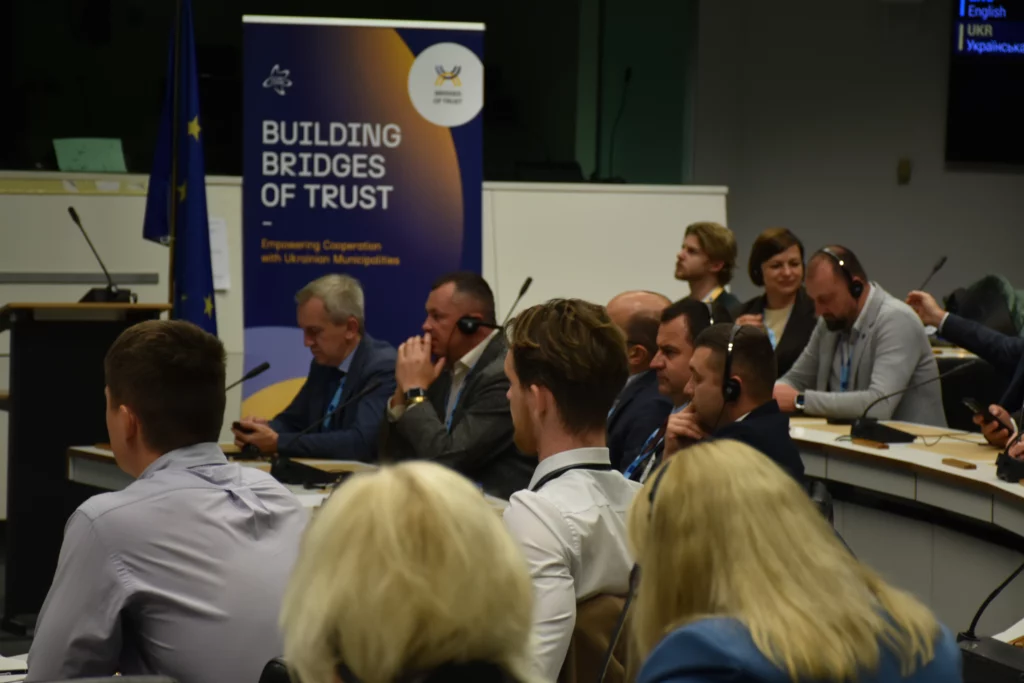
Amid war-time disruption, Ukraine’s local governments have stepped as frontline problemsolvers and drivers of EU integration. During the European Week of Regions and Cities in Brussels, on October 15th a CEMR-led conversation under the Bridges of Trust (BoT) brought together local leaders, policy experts, and civil society to examine how municipal partnerships can anchor accession and cohesion.  

The takeaway was clear: lasting progress depends on shifting from emergency solidarity to structured cooperation that empowers municipalities to deliver reforms, attract investment, and close regional gaps. 

Why local governments matter 

Ukraine’s municipalities have kept essential services running, coordinated aid, and advanced reforms under extreme pressure. Through BoT and the European Partnership Hub, they are building ties with European peers on projects in education, culture, economic development, and reconstruction. As CEMR’s Director for Projects and Programmes, Durmish Guri explained, success now hinges on moving “from emergency solidarity to mutually beneficial collaboration”. 

Matchmaking for impact 

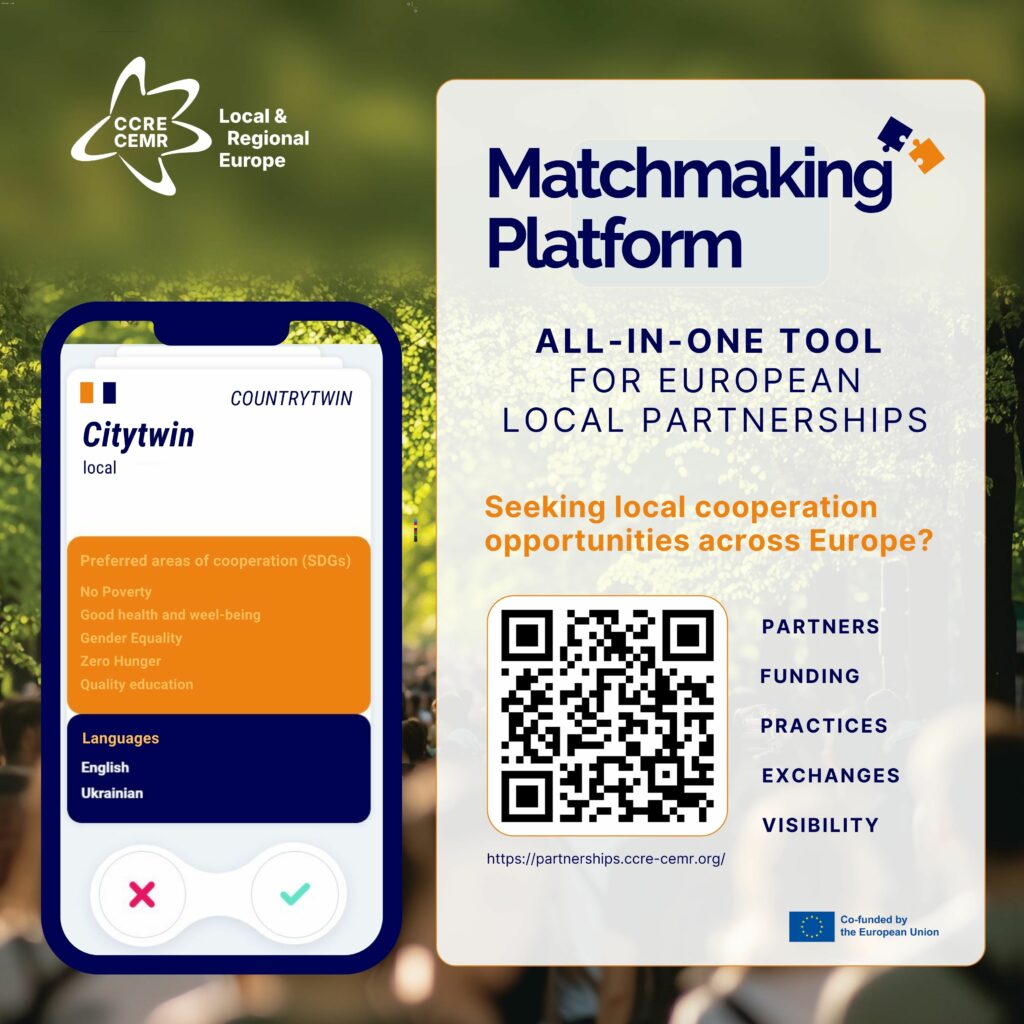
To turn policy into practice, BoT has launched a Matchmaking Platform that connects every Ukrainian municipality with a European counterpart, enabling concrete joint projects and capacity-building. The platform is designed to reduce fragmentation, align needs with resources, and accelerate cooperation across borders.  

From reform to implementation 

Dmytro Lyvch of Easy Business underscored a dual challenge: advancing structural reforms while financing recovery. Real progress happens locally through municipalities, civil society, and development agencies. Ukraine has adapted to EU Chapter 22 requirements, but gaps persist in horizontal and vertical cohesion, and in institutional and financial frameworks. With regional disparities higher than in many Central and Eastern European countries, targeted interventions are needed to build resilience and competitiveness. 

Lessons from peers 

Ambre Maucorps of the Vienna Institute for International Economic Studies highlighted takeaways from Lithuania and North Macedonia. Lithuania used cohesion policy to tackle disparities with a clear governance model and strong stakeholder input. North Macedonia, after municipal mergers similar to Ukraine’s, benefited from pre-accession funds but still struggles with absorption. The throughline: coordination and flexibility are essential for effective cohesion policy. 

Building capacity, scaling partnerships 

Iryna Mykulych of the NGO Agency for Recovery and Development stressed that durable cooperation often starts with “soft” cultural and educational exchanges that build trust, then evolves into “hard” reconstruction projects. Scaling from municipal partnerships to business and academia can unlock investment, know-how, and long-term outcomes. 

The bottom line 

The event’s conclusion was unambiguous: international municipal cooperation is one of the most effective and sustainable ways to localise EU accession.  

As Durmish Guri noted, “international municipal cooperation is the most effective, sustainable, and the efficient form of collaboration”. Local governments, he added, play a critical role not only in implementing reforms but also in shaping national and European-level policy, underlining the importance of “localizing accession” to ensure Ukraine’s municipalities are fully engaged in the EU integration process.   

Empowering local governments to deliver reforms and shape policy—together with European partners—moves Ukraine from a recipient of solidarity to a co-creator of Europe’s cohesion and growth. That is the promise of BoT’s community-driven approach. 

For more information, contact:

Call for applications – Twinning

EPSU CEMR - News

Call for Applications: Research and Data Analysis Consultancy


The Council of European Municipalities and Regions (CEMR) is seeking a consultant to support the migration of data from the current Twinning website to the new Matchmaking Platform.

The consultant will verify, clean, and standardise data from around 2,500 cities, ensuring accuracy and alignment with the Sustainable Development Goals (SDGs). The assignment will take place over a two-month period in late 2025, with a maximum budget of EUR 13.000.

Applications must be submitted by 27 October 2025 at 12:00 (noon) to application@ccre-cemr.org, with “Data Analyst Expert” as the subject line. Questions may be sent to twinning@ccre-cemr.org by 24 October 2025.

Further details: Twinning | Matchmaking Platform

For more information, read the Terms of Reference here

The future of town twinning

Town twinning - Village of Pyrenees in Spain

Town twinning in Europe: unlocking opportunities with AgoraEU


Since 1951, CEMR has championed town twinning as a driver of peace, democracy, and European identity. With the European Commission’s new AgoraEU programme proposed in the long-term budget, CEMR reflects on its legacy and introduces tools to further strengthen twinning, ensuring it continues to connect citizens across Europe.

Over seven decades later, town twinning remains one of Europe’s most powerful instruments for European integration and local governments diplomacy. In its long-term EU budget proposal presented last July, the European Commission (EC) included the AgoraEU programme, a promising opportunity to support and revitalise town twinning efforts. Yet, if twinning is to remain a vital bridge between Europe and its citizens, further steps must be taken to reinforce its role in today’s evolving political and social landscape.

Where does town twinning come from? Why does it still matter today? And how can the AgoraEU programme help strengthen its role in the Europe of today and tomorrow?

A legacy of connection and peace

In the mid-1990s, in cooperation with the EC, CEMR played a central role in coordinating the town twinning programme. Working closely with national associations of local and regional governments, CEMR promoted twinning, inspired thousands of initiatives and co-managed the “Star of Europe awards” with the EC to recognise outstanding partnerships. These efforts empowered thousands of small and medium-sized municipalities—particularly in rural and border regions—to build lasting bonds across borders, turning twinning into a grassroots driver of European integration. The 2002 Antwerp Congress further reinforced twinning as a vital tool for peace, democracy, and sustainable development.

A means to foster a shared European identity

Twinning has been evolving to better respond to the needs of cities, towns and municipalities facing multiple challenges in their territories. While cultural exchange and mutual understanding remain at its heart, today’s partnerships also address issues such as climate action, migration, social inclusion, digitalisation, and youth engagement. According to CEMR’s 2023 Twinning Report, municipalities of all sizes continue to value twinning highly, but smaller towns in particular face barriers in accessing funding and navigating sometimes complex EU procedures.

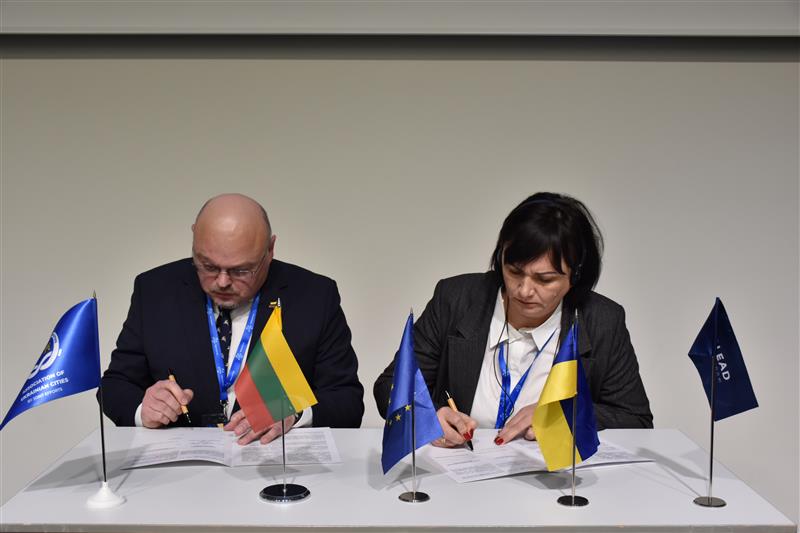
Pakruojis and Inhulka Municipalities signing Memorandum of Understanding during the Bridges of Trust Annual Gathering 2024  

Far from being outdated, twinning continues to play a vital role alongside other Europe’s mobility programmes, fostering connections that celebrate both cultural diversity and the continent’s shared heritage. For many citizens, especially teenagers, senior citizens, and residents of deprived or rural areas, town twinning remains one of the few ways to directly experience Europe. It offers a deep entry point into European construction and debates, helping to reduce the growing distance between citizens and the European Union (EU), while fostering a shared European identity and a spirit of living together.

The Matchmaking Platform: an innovative tool to tackle today’s challenges

Many towns, cities, and regions face challenges in twinning, including finding suitable partners, limited opportunities for joint projects, difficulties accessing funding, and gaps in knowledge or capacity. Visibility and recognition of local initiatives can also be limited. To bridge these gaps, CEMR has launched a digital Matchmaking Platform, enabling subnational governments to:

  • Find peers and partners across Europe
  • Start joint projects with international visibility
  • Access funding and support opportunities more easily

This tool represents a modern continuation of CEMR’s long-standing role as a facilitator of exchange and cooperation between subnational governments in Europe and beyond.

A roadmap for 2028–2035

Looking ahead, CEMR calls for the revitalisation of twinning, especially for small and medium-sized municipalities by:

  • Simplifying access to EU twinning by cutting barriers and targeting support to underserved areas.
  • Strengthening national associations as local champions—reviving CEMR’s model of national correspondents to inspire and guide projects.
  • Creating a small-grants facility for new or renewed twinning between small towns, rural areas, and cross-border or enlargement partners.
  • Relaunching the “Star of Europe Awards” to celebrate excellence and raise the profile of high-impact twinning.
  •  Promoting twinning as a strategic tool to deliver EU priorities locally: democratic trust, youth participation, gender equality, climate, energy, and migrant inclusion.

AgoraEU: a timely opportunity

The European Commission’s €3.6 billion AgoraEU programme (2028–2034) shows a renewed commitment to citizen engagement. CEMR urges at least a doubling of EU support for town twinning and calls for simplified access to funding and streamlined administrative procedures, including application processes and reporting.

This support is urgently needed. Town twinning projects face growing financial pressures at the local level. Municipalities continue to invest heavily in keeping partnerships alive, yet many risk being unable to sustain them without stronger European backing. Twinning is not just a tradition, it is a living, evolving practice that connects citizens, strengthens democracy, and builds resilience across Europe.

The European Parliament and the Council will now examine the proposal. CEMR calls on both institutions to ensure that town twinning receives the recognition and resources it deserves, as one of the EU’s most effective tools to bring Europe closer to its citizens.

For more information, contact:

EU enlargement from a local perspective

European Union - EU Enlargement News

EU enlargement is not sustainable without local ownership: 8 takeaways from CEMR webinar 


Empowering local and regional governments will ensure that EU integration is felt, understood, and embraced by citizens, making enlargement not only a policy success but a democratic one. This is the main lesson learned from the CEMR webinar on Empowering Local Governments on the Road to EU Enlargement, organised in collaboration with PLATFORMA on 1st July. 

Local leaders, EU officials, and representatives from candidate and EU member countries reaffirmed the essential role of local and regional governments in the EU enlargement process. They also discussed the capacity needs involved in this journey. 

Here are the 8 key findings based on the webinar discussions, which witnessed that enlargement is not sustainable without local ownership.

1. Set local and regional governments as strategic actors in the EU accession process 

  • Involve local governments early and systematically in national accession plans, screenings, and cluster evaluations. 
  • Ensure local leaders are recognised not just as implementers, but as policy co-creators, especially in areas aligned with the EU acquis. 

2. Strengthen multilevel governance structural dialogue 

  • Establish permanent coordination mechanisms between LRGs, national governments, and EU institutions. 
  • Move from consultation to co-creation platforms—especially during roadmap design, monitoring, and policy review phases. 

3. Guarantee local access to EU funding mechanisms 

  • Ensure that a minimum percentage of EU financial assistance is directly allocated to local governments (e.g., in Ukraine, it is already 20%) 
  • Simplify procedures for municipalities to access EU funds and develop capacity-building programs to support their management. 

4. Invest in capacity building and institutional continuity 

  • Develop sustained training for local officials, including in public procurement, project management and all locally implementing EU standards.  
  • Address gaps in institutional memory due to political turnover by investing in civil service professionalisation and knowledge transfer. 

5. Support peer-to-peer learning and twinning initiatives 

  • Promote city-to-city cooperation between EU member states and candidate countries (decentralised cooperation) 
  • Expand twinning programs across thematic areas such as education, green transition, disaster resilience, and digital governance (if you need tools to find partners, use existing ones such as the CEMR Matchmaking Platform). 

6. Promote inclusive participation and gender equity 

  • Encourage the participation of women leaders and marginalised communities in enlargement dialogues. 
  • Ensure that decentralisation and integration efforts incorporate diverse perspectives and address local inequalities.

7. Strengthen civic trust and communication

  • Support local and regional governments in leading public communication campaigns that explain EU values and the benefits of enlargement. 
  • Equip municipalities to become trusted messengers of the EU to citizens, countering misinformation and building democratic resilience. 

8. Leverage local and regional governments for reconstruction and sustainability goals 

  • In countries affected by war (e.g., Ukraine), prioritise local-led reconstruction and sustainable recovery as a path to integration. 
  • Align local development strategies with the Green Deal, digital transition, and social cohesion policies. 

Context: 

Nine countries are officially on a path to join the European Union in the coming years: five in the Western Balkans (Albania, Bosnia and Herzegovina, Montenegro, North Macedonia and Serbia), three in the Eastern neighbourhood (Georgia, Moldova and Ukraine), and Turkey. 

For more information, contact:

Results of SPICE Twinning Programme

Twinning - News

CEMR announces grant recipients for SPICE 2025 Twinning Programme 


Twinning plays a vital role in connecting municipalities and regions, encouraging them to tackle shared challenges — from climate action and digital transition to social cohesion and public service innovation. Beyond these policy priorities, Twinning also nurtures mutual understanding and a sense of European belonging among citizens and communities.  

Since 1951, CEMR has championed Twinning as a powerful tool for peacebuilding, dialogue, and long-term collaboration. Today, these partnerships go beyond symbolic exchanges to become strategic platforms for co-creating solutions to the pressing challenges facing Europe’s towns and regions.  

The Council of European Municipalities and Regions (CEMR) is pleased to unveil the selected recipients of the SPICE 2025 sub-granting scheme, part of the broader project “SPICE – Empowering Local and Regional Governments for Sustainable Policy Implementation and Civic Engagement in Europe”. 

Funded by the European Commission under the Citizens, Equality, Rights and Values (CERV) programme, this grant scheme builds on the success of the 2024 pilot phase. It aims to support national associations of local and regional governments in strengthening Twinning initiatives and related activities across Europe. 

The selected proposals reflect a strong commitment to EU values, civic participation, gender equality, social inclusion, and democratic governance. Each winning association will receive a sub-grant of up to € 30 000 to implement projects that bring together municipalities across borders in shared learning and joint action.  

CEMR is proud to support the following local and regional government associations as recipients of the SPICE 2025 grant programme: 

  1. TÖOSZ – Települesi Önkormanyzatok Orszagos Szövetsege (Hungarian National Association of Local Authorities) 
  1. KEDE – Κεντρική Ένωση Δήμων Ελλάδας (ΚΕΔΕ) (Central Union of Municipalities of Greece) 
  1. LALRGA – Latvijas Pašvaldíbu Savieníba (Latvian Association of Local and Regional Governments) 
  1. AFCCRE – Association Française du CCRE (French Association of CEMR) 
     

CEMR warmly thanks all member associations who submitted proposals under the 2025 call and contributed to its success. Stay tuned as we share updates on these promising initiatives and their impact across Europe. 

For more information, contact

Partnerships for Ukraine’s recovery

Strengthening Partnerships for Ukraine’s Recovery: CEMR’s Actions on Solidarity, Municipal Cooperation, and EU Integration


24th February 2025, marks three years since Russia launched its full-scale invasion of Ukraine—a reminder of the resilience and determination of the Ukrainian people as they continue to defend their freedom and democracy. For CEMR, it reaffirms a long-standing commitment to supporting Ukraine’s recovery and EU integration, through tangible, grassroots cooperation between local governments. 

In recent months, this commitment has translated into new concrete actions, from public declarations of solidarity to community building and launching innovative digital tools that strengthen municipal partnerships. Across Europe, local and regional governments are not just expressing support but actively contributing to Ukraine’s reconstruction and future within the EU. 

A Declaration of Solidarity and Action 

Three years after the invasion, CEMR issued a declaration reaffirming its unwavering support for Ukraine. The statement highlighted the indispensable role of local leaders in sustaining communities under siege — from ensuring basic services to preserving democratic governance. 

Yet these leaders are not just bearing the weight of war; they are targets. The abduction, imprisonment, and murder of Ukrainian mayors are stark reminders of the risks they face. CEMR, standing alongside the Association of Ukrainian Cities, called for the immediate release of detained local leaders and condemned the Russian attacks on local democracy.
More information: https://ccre-cemr.org/press/declaration-on-three-years-of-war-in-ukraine 

Strengthening Networks: Joining the Coalition of Sustainable Municipalities
This year, CEMR reinforced its commitment by joining the Coalition of Sustainable Municipalities, an initiative launched by Ukraine, Germany, and international partners at the Ukraine Recovery Conference (URC) 2024. During the conference in Berlin, CEMR’s Secretary-General announced the launch of the Matchmaking Platform—an innovative digital tool designed to help municipalities across Europe connect and collaborate with their Ukrainian counterparts. 

On 12th February, as part of the Coalition, CEMR participated in an Open Exchange on Best Practices for Ukraine’s Recovery, organised by the German Federal Ministry for Economic Cooperation and Development (BMZ) and U-LEAD. Among other key topics, the event showcased insights into the fully operational Matchmaking Platform, which is already facilitating municipal partnerships. CEMR remains a dedicated partner, upholding the core principles of the Coalition. 

Empowering Local Leaders: The Matchmaking Platform 

One of CEMR’s most impactful recent initiatives in strengthening international municipal cooperation is the Matchmaking Platform, officially launched during the CEMR Leaders’ Summit in December. This innovative tool is transforming how municipalities establish partnerships. 

Building on CEMR’s seven decades of town twinning expertise, the platform enables local governments to connect and collaborate on projects in a few clicks. In just two months, it has attracted hundreds of verified users across Europe, fostering direct engagement between municipalities. Ukrainian local leaders have shown strong interest in harnessing its potential, with over 400 participants attending two dedicated info sessions organised by U-LEAD on 29th January and 12th February, where CEMR provided a comprehensive overview of the platform and addressed participants’ questions. 

To further extend its reach, a broader communication campaign will enhance visibility, while future developments will introduce new functionalities—potentially including funding opportunities, capacity-building programmes, and partnerships with key stakeholders of the Bridges of Trust Community.  

More information: https://partnerships.ccre-cemr.org/  

Expanding the Bridges of Trust Community 

Since 2021, CEMR has been actively implementing the Bridges of Trust project in collaboration with national associations and U-LEAD to strengthen municipal partnerships between the EU and Ukraine. Following two successful phases, the initiative reached a major milestone with the launch of the Bridges of Trust Community, announced at the CEMR Leaders’ Summit last December. 

This growing community serves as a central hub for municipalities looking to establish and sustain partnerships at a crucial moment in Ukraine’s transformation. The third phase of the project will further enhance the community’s benefits, advocacy efforts, and stakeholder engagement—expanding from bilateral cooperation to a more structured and comprehensive framework. 

New possible cooperations have been explored through the participation of potential members of the Bridges of Trust Community such as the German Marshall Fund (GMF) and many more, to explore their involvement in Ukraine’s recovery and EU integration efforts. 

For those interested in learning more, the revamped Bridges of Trust page on CEMR’s website offers key resources, funding opportunities, and success stories that highlight impactful municipal partnerships. 

The Matchmaking Platform is fully integrated into the community, providing a dynamic tool to not only establish new partnerships but also sustain and expand them over time. CEMR invites all interested stakeholders to join the Bridges of Trust Community, which is set to become a key hub for municipal collaboration across Europe. 

More information: https://ccre-cemr.org/bridges-of-trust  

Looking Ahead: A united effort for recovery 

With Ukraine’s path to EU integration in focus, local and regional governments must play a key role in shaping decentralisation, governance, and resilience. As we prepare for the Ukraine Recovery Conference 2025 in Rome, CEMR is actively contributing to the Working Group for the Local and Regional Component and the European Alliance of Cities and Regions for the Reconstruction of Ukraine. Our commitment remains steadfast in amplifying local voices and strengthening municipal partnerships to support Ukraine’s recovery and EU integration. 

Through community building supporting international municipal partnerships, advocacy for EU integration, decentralised cooperation, and innovative digital tools, CEMR reaffirms its dedication to supporting Ukraine. We remain open to further engagement and collaboration, ensuring a beneficiary-centred approach prioritising European municipalities. 

For more information, contact: 

Twinning call for proposals

Twinning - Call for Proposals

Call for proposals for the sub-granting 2025 – extended deadline until Tuesday, May 20


Building on the success of the 2024 pilot phase, CEMR is excited to announce the launch of the second sub-granting scheme, as part of the SPICE project —Empowering Local and Regional Governments for Sustainable Policy Implementation and Civic Engagement in Europe.

The initiative is funded by the European Commission, under the Citizens, Equality, Rights and Values (CERV) programme.

This call for project proposals is open to CEMR’s member associations and aims to strengthen further Twinning exchanges and activities between EU Local and Regional Governments. The focus is on promoting EU values and tackling key challenges such as democracy, citizens participation, gender equality, and inclusion.

Interested members are encouraged to participate in this call and contribute to fostering collaboration across the EU. For more details, and to submit your proposal, please read the full guidelines and complete the forms below.’

For more information, contact: