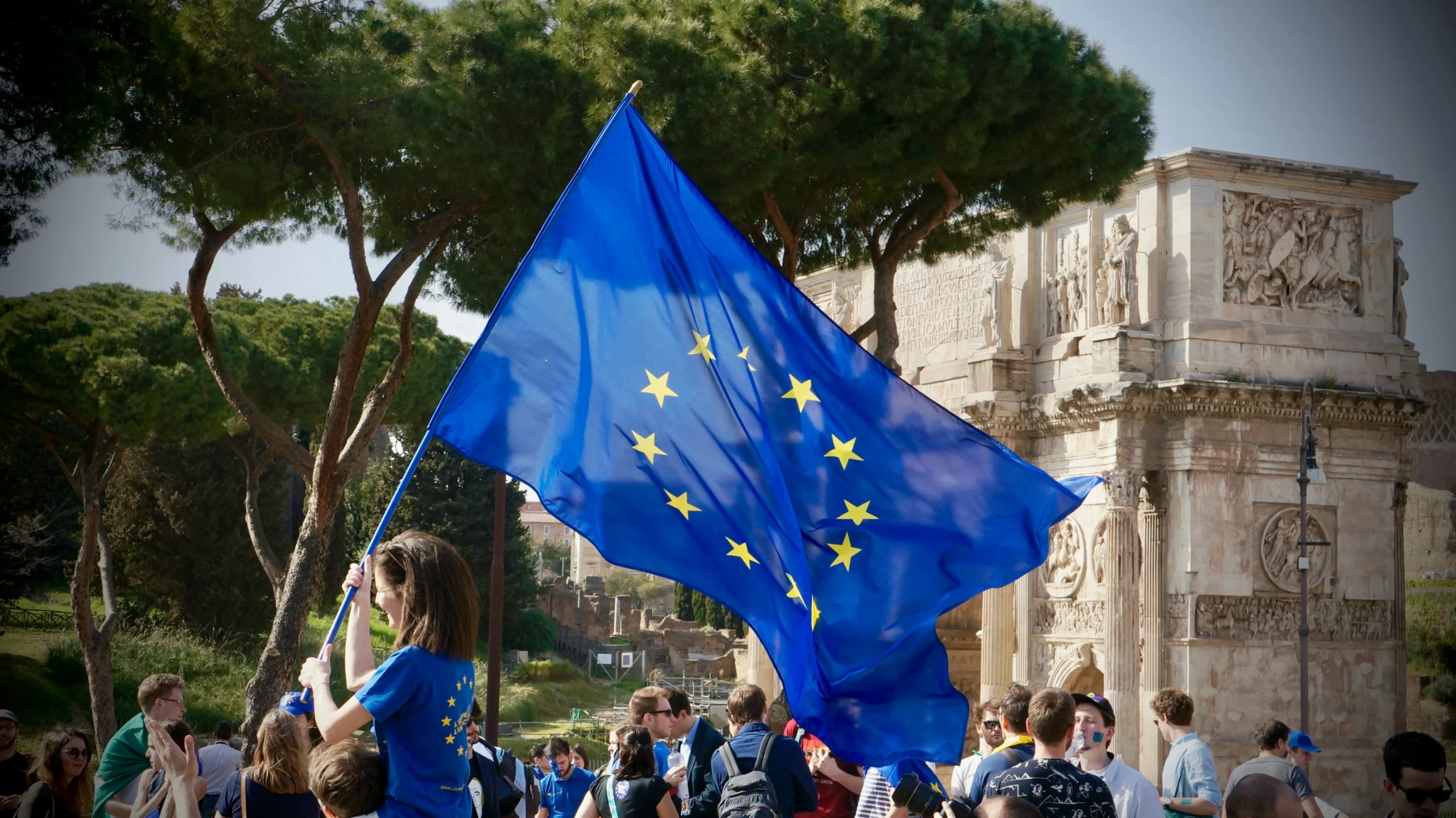
European Enlargement

European Union - News section

How do we support Ukraine, Moldova and Georgia on their path to joining the European Union?


In the wake of Russia’s war of aggression, the people of Ukraine, Moldova and Georgia are more determined than ever to join the European Union. But how can this “Associated Trio” of countries, and in particular their local governments, be supported in implementing the sometimes difficult reforms necessary to become full members of the bloc?

Local leaders from across Europe gathered on Monday (26 September) during CEMR’s annual retreat to discuss the Trio’s challenges and prospects on the path to EU membership.

Fighting for freedom and Europe

In 2014 the EU signed bilateral association agreements with Ukraine, Georgia and Moldova. These agreements set the foundation for their political association and economic integration with the EU and aim to foster democracy, the rule of law, human rights, good governance and economic development.

There is no questioning these nations’ determination to live the European dream. In Ukraine in particular, this has become a matter of life and death. “EU candidate status is very important for all of us”, said Nataliya Lazarenko, international cooperation manager of the Association of Ukrainian Cities (AUC). “People are dying for the sake of European values.”

While these reforms must mostly be undertaken by the national government, the AUC is also pushing for reforms to ensure strong local democracy, in line with the European Charter of Local Self-Government.
Ms Lazarenko stressed that learning from EU countries’ success stories and mistakes during their European integration would be of great value to Ukrainian local governments.

Helping local governments make the most of the EU

Back in July, CEMR endorsed in formal Declaration a “Trio holistic approach” to Ukraine, Moldova and Georgia’s accessions. Concretely, European local governments will continue to support their peers in these countries through peer exchanges, study visits and training to help them develop the skills and knowledge to make the reforms needed to harmonise with EU legislation and make the most of European funds.

Magda Kostava, member of Kutaisi City Council in Georgia, welcomed the opportunities for sharing guidance and good practices from European partners. “We know we have to work a lot to be the candidates and we are ready for that,” she said. “We see our bright future here in Europe. CEMR is one of the big opportunities and platforms to help us to do the necessary work.”

Alexandru Osadci, coordinator of international relations at the Congress of Local Authorities of Moldova (CALM), stressed that the pace of reforms in candidate countries had slowed down as a result of having to react to constant crises and reduced external funding. “We need to do much more than emergency ‘firefighting’ in response to these crises,” he said. “We need to adjust to the acquis communautaire, we need to implement the EU policies. The necessary reforms are the key issue in Moldova.”

While local governments in Moldova have been steadfast in their support for European integration, the national government has often changed its composition and orientation. As a result, the political will to reform administration, justice and anti-corruption offices has been lacking. Furthermore, external funding is needed to undertake the costly reforms required by EU membership.

Dusica Perisic, executive director of the North-Macedonian Local Government Association (ZELS), highlighted the fact that EU candidate status had facilitated cross-border cooperation with municipalities in neighbouring countries. While expressing the hope that North Macedonia would eventually join the EU, she warned that this would be a difficult winter with a loss of both funds and energy.

Annika Vaikla, councillor for Viimsi Municipality in Estonia, said that leaving the Soviet Union had enabled her country to embrace local democracy and fight corruption. Even the leaders of small villages now participate in municipal work and reducing corruption means local administrations are genuinely serving their citizens.

Vaikla also emphasised that Estonian municipalities are ready to share their experiences and good practices on how to prepare for EU membership. “We are so glad to help you and support you so can be among us”, she said.

Officials from the European Parliamentary Research Service (EPRS) presented their study on Ukraine, Georgia and Moldova’s prospects for joining the EU. The main takeaway from the session’s exchanges? Even though each of these countries will follow a different path towards the EU, local and regional governments’ efforts will will go very much in the same direction.

Paweł Adamowicz Award

European Town - News

Nominations open for Mayor Paweł Adamowicz Award


Nominate your candidate for the 2022 Mayor Paweł Adamowicz Award honouring the work of persons or organisations who advanced human rights, solidarity, cooperation and trust among citizens. To nominate the next winner of the award, please fill this online nomination form by 31 October 2022. 

MENTOR Programme

MENTOR Programme - News 2022

How the Marmara Municipalities Union is boosting local expertise by partnering up with towns


From pandemic management to sustainable development, local governments need to share expertise if they are to successfully tackle the challenges of today.

That’s why the Marmara Municipalities Union (MMU) in Turkey created the MENTOR Programme in July 2020. The initiative enables inter-municipal cooperation and the development of municipalities’ capacities and municipal employees’ competencies. 

The MENTOR Programme provides municipalities with an opportunity to learn from the experiences of others within their own limits in terms of financial and human resources. Municipal staff who need expertise in a particular topic are matched with staff from another municipality that is already experienced in that area.

Municipalities seeking and offering indicate their interest by filling out online forms. The MMU then matches municipalities and sets up online or face-to-face meetings between municipal staff.

Following the first meetings, municipalities can either keep up the communication on their own or ask MMU to maintain its coordinating role. The municipalities can also request staff exchange with their counterparts if useful.

The MENTOR programme gathers and shares expertise in all thematic areas relevant to municipalities, including planning, transportation, disaster management, financial affairs, migration, environmental management, localisation of the UN Sustainable Development Goals (SDGs), institutional procedures, human resources and so on.

As part of this, MMU is thus building a pool of experts who can be consulted whenever needed.

Having started among MMU member municipalities, the programme has expanded to enable international cooperation. Members of MMU can now be matched with their peers in Turkey or foreign countries.

As of August 2022, 24 meetings have been held as part of the MENTOR Programme. These meetings have increased municipal staff’s knowledge on different subjects, contributed to capacity building and fostered inter-municipal relationships.

The programme has also resulted in concrete outcomes. For instance, two mentee municipalities, who sought expertise on Voluntary Local Reviews (VLRs) on the localisation of the SDGs, have since begun preparing their VLRs.

The programme contributes primarily to SDG 11 “Sustainable Cities and Communities” by empowering the local governments to build more sustainable cities by increasing the capacities of their staff and SDG 17 “Partnerships for the Goals” by encouraging the exchange of knowledge and experience as well as cooperation between local governments. 

Elderly Support Line

Elderly Support Line - News 2022

Turkey’s Serdivan municipality develops comprehensive system for seniors’ emergency and daily care


Like many territories across Europe, the city of Serdivan in northwest Turkey is facing the challenges of caring for an aging population.
 
That is why the municipality has developed the Elderly Support Line. Seniors can apply to have the device and emergency support system installed in their home.
 
Once set up, the senior can call municipal assistance 24/7 by pressing an emergency button worn on a necklace. Thus, elderly people can call for help whether because of falling, heart attack, blood pressure, diabetese or any other problem.
 
The button can also be used on the move as the wireless device enjoys a certain range. The municipality’s call centre can be reached without even the hassle of dialing a phone.
 
With the aid alarm, the municipality’s response team takes action quickly and reaches the needy, if necessary transporting the patient to the hospital by patient transport or ambulance.
 
If the person cannot reach the municipal call centre for any reason, the call is automatically transferred to the 112 Emergency Call Centre.
 
Caring for seniors
 
Serdivan municipality also provides other services to the elderly, such as house cleaning once a month, food according to demand, personal care, bathing once a week and changing the clothes of bedridden people.
 
The municipal support team also makes doctor’s appointments for seniors and takes them to the hospital for examination or routine controls.
 
The project especially supports seniors who may lack nearby relatives. It aims not only to meet seniors’ urgent health and household tasks, but also to accompany them and show them they are not alone.
 
Thanks to the Elderly Support Line, Serdivan’s seniors can live longer, happier lives as valued members of the community.

Spatial development

Spatial Development - Turkey News

Multi-level cooperation in practice: How Marmara Region, Türkiye, pioneered a participatory approach


The Marmara Region in Türkiye is home to astonishing cultural treasures and diverse landscapes. But it is also a territory of great risks in terms of earthquakes, droughts, flooding and other natural disasters. As a result, disaster planning and resilience are essential to people’s safety. Cities in the region must find more interactive, comprehensive, responsive and innovative solutions to these challenges.

To meet these challenges and broader development goals, the Marmara Municipalities Union (MMU) partnered with Istanbul Technical University and initiated the Marmara Region Spatial Development Strategic Framework Research Project in June 2020. The project, funded by the MMU, aimed to identify problems with the participation of all stakeholders at the provincial and regional levels and to find solutions in harmony with the projects and activities of the various organisations in the region.

Specific objectives included:

  • Strengthening the integration of sub-regional plans, which have been prepared by sub-regional development agencies and which have not been adequately integrated so far
  • Creating a dialogue platform and a road map for local governments and other relevant stakeholders
  • Minimising the side effects and externalities of big infrastructure projects such as airports, bridges, etc
  • Creating a regional approach to maximise the common interests of all cities
  • Raising awareness of inter-city and interregional planning
  • Contributing to regional development in line with the New Urban Agenda and SDGs

Staff collected data from governorships, provincial special institutions, local governments, trade associations and NGOs located in the 14 cities covered by the project. This enabled the identification of the cities’ and region’s problems. A series of workshops with the participation of relevant stakeholders were also held to get their recommendations and ideas on the earliest results of the analysis.

The project identified themes requiring cooperation between cities in the region and prepared sectoral programmes, short-term action plans and spatial development schemes.

The conclusions were outlighted in a three-volume Marmara Region Spatial Development Strategic Framework presented in October 2021. This action-oriented, flexible and participatory strategic document seeks to reduce territorial disparities, increase global competitiveness and local cooperation, and respect climate and ecological sensitivities in line with the UN Sustainable Development Goals (SDGs).

With this future-oriented strategic framework and the creation of an effective platform for exchange, all the players in the Marmara Region are now working together for a prosperous, sustainable and safe territory.

Local Best Practices

Twinning - News 2

LGA’s case studies database: a wealth of local best practices from climate to COVID


Local and regional governments are genuine laboratories for democratic politics and policymaking. Decentralisation enables each locality to experiment with different approaches, enabling the discovery of what works best.

The Local Government Association, our English and Welsh member, has a dedicated database of case studies which showcases the many innovative actions its local councils are taking. The database includes over 2000 entries searchable by date and topic, including youth, health, safety, culture, data and much more. LGA also maintains a dedicated page on COVID-19 best practices and case studies.

English and Welsh councils’ actions are striking because of their sheer diversity and the range of topics covered. For example, Devon County Council’s Apricot Centre is training local farmers to transition to regenerative farming. In contrast to the overuse of pesticides and monocultures, methods such as growing hedgerows and diversifying produce can restore local biodiversity and increase resilience to climate change.

Meanwhile, the Manchester Council has developed a programme to reduce overweight among South Asian women, a group at particular risk of obesity. The city has created Bollyfit Active, a simple scheme for South Asian women to come together to exercise and bond. The scheme responds to the isolation experienced by many during the COVID crisis and to the fact South Asian women may be less likely to use mixed-gender gyms.

These are just a taster of the wide variety of case studies undertaken by local councils in England and Wales. Have a look to discover for yourself and find inspiration for local action!

Buddy projects

Citizenship - News

Everyone needs a buddy: fostering migrant integration in Mechelen, Belgium, through mentoring


Buddy programmes are an excellent way to integrate immigrants into a new society. A buddy is someone from the host community who spends a few hours a month with a newcomer in the city. 

There are many possibilities: a buddy can help a refugee learn a language, finish school, find a job or accommodation, or you can just hang out with them. A buddy programme is an opportunity to discover other cultures, contribute to an inclusive society and even develop lasting friendships. 

Belgian cities have many excellent examples of buddy programmes, that serve as best practices for the integration and inclusion of newcomers. In particular, the IncluCities partner city Mechelen has been running several different buddy mentoring projects. 

Mechelen started the buddy project Samen Inburgeren (Dutch for “Integrate Together”) in 2012. A native of Mechelen becomes a buddy of a newcomer in the city. They are matched on the basis of common interests and, during the pandemic, communicate via WhatsApp, Skype, Zoom or Google chat. During a six-month period, the buddies meet regularly. Together they practise Dutch, discover the city and learn about each other’s cultures.

Buddy projects can also be designed with specific activities and needs in mind. Mechelen also runs a jogging buddy project called ‘Samen Lopen’ and a school buddies project for migrant and refugee children.

Different localities can pioneer best practices that can be shared elsewhere, especially within the IncluCities network. As such, Mechelen’s buddy programme approach is replicated in Capaci, a town in Sicily, under the name “Tutti Capaci”.

Anti-rumours Project 

Diversity - News Section

Fuenlabrada, Spain, is promoting inclusion by discrediting false rumours


We tend to make up stories about people we don’t know well. An animated story, ‘It all started accidentally’ (“Todo empezó sin querer”), sets a mirror to people who spread assumptions about other people without checking the facts first. Such rumours can spread like wildfire and thus contribute to exclusion and discrimination.

This animated video has been made for children and adults alike as part of the Anti-rumours Project in Fuenlabrada, Spain. It aims to raise awareness about the negative impact of rumours. 

The Spanish city has experienced rapid population growth due to migration over the past 40 years. “Antirumours” is one of many projects in the city boosting social cohesion. The project has been running since 2013 as part of the Council of Europe’s Intercultural Cities initiative and brings together 25 cities across Spain.

The project aims to tackle discrimination and harness the potential of diversity by triggering a change in perceptions and behaviours. The objective is to identify significant rumours by collecting objective data and emotional arguments to dismantle false rumours.

It is also creating an anti-rumour network of local actors from civil society, empowering anti-rumour agents and designing a campaign to raise awareness about the damage rumours can inflict.

Recovery plan

Pandemic - News Section

What happened to subsidiarity? Local governments have little say in post-COVID recovery plans


The Committee of the Regions and CEMR have teamed up again to explore the involvement of local and regional governments in the implementation of the European Union’s 724-billion-euro post-COVID recovery plan, the Recover and Resilience Facility (RRF).

The results of the survey, based predominantly on the responses of CEMR members, give important insights to the extent of local and regional governments’ ability to influence and contribute to the national recovery plans.

One year after the earlier CoR-CEMR study, the results remain largely discouraging: too often national recovery plans have been implemented as top-down processes with little input from municipalities and regions.

While respondents were broadly positive about the recovery plans’ ability to support the green and digital transitions, they were more ambivalent regarding other policy objectives, such as territorial cohesion.

The study will be a valuable tool as CEMR continues its advocacy work on the RRF, especially in view of the European Parliament’s upcoming vote on its position on the plan’s implementation.

Europe Day 2022

European Parliament - News

Conference on the future of Europe: What direction should Europe take?


Every 9 May, Europeans celebrate Europe Day. But this year, the celebrations take on a new meaning. Today, one year after it officially began, the Conference on the Future of Europe (CoFoE) comes to a close with 49 proposals being delivered to the presidents of the European Parliament, the Council and the Commission.

This a good time for the Council of European Municipalities and Regions (CEMR) to provide an update on this exercise in participatory democracy and to highlight certain proposals which should define the European Union’s agenda in the coming years.

“People need to take ownership of Europe”, said Manuela Bora, regional councillor for Marche (Italy) and a member of the CoFoE plenary, on 5 May at a meeting organised by our French Association (AFCCRE) and the Strasbourg Eurométropole.

“The most sensible choice, in my opinion, is to make the Conference on the Future of Europe a permanent body within which it is possible to continue to share ideas, especially the most controversial ones”, Ms Bora said. “A participatory debate between local authorities, citizens and the European institutions is the best guarantee for concrete and far-sighted results. And this is why CEMR has developed its six proposals to bring Europe closer to citizens.”

Among these, CEMR called for holding every year on 9 May “a debate on the European project, its benefits and challenges, such as how to build a decarbonised society, in every school and in every municipality and region in Europe.”

Twinning is also a powerful way to bring Europe closer to its citizens. In line with the CoFoE’s proposal of “reinforcing existing EU exchange programme”, CEMR argues for setting up a genuine Erasmus programme for local civil servants through exchanges between municipalities and regions, twinned if possible.

Another proposal promoted by CEMR: the development of European universities beyond the two Colleges of Europe and the teaching of languages such that by 2050 every European speaks at least English and two other European languages, in addition to his own mother tongue.

While ideas are not lacking, these still need to be formalised and consultation with civil society organisations and local governments needs to be made systematic. As Manuela Bora stressed: “If so much has been done in just a year, imagine what could be done in a permanent structured system! And that’s exactly the direction we need to go in.”

On the event

This event, entitled “The Future of Europe: The Vision of Local Governments”,  gathered representatives of local governments and civil society, among which were Antoine Chabal, President of the French section of the European Federalists, Philippe Laurent, the Mayor of Sceaux and the President of AFCCRE, and Jeanne Barseghian, the Mayor of Strasbourg.