

Public procurement to local realities

European Union - News

CEMR Releases New Position Paper on Public Procurement: A Call for More Flexibility and Less Bureaucracy


CEMR has officially released its position paper on public procurement, outlining key changes needed to ensure a procurement system that truly works for local and regional governments.

As the largest public investors and contracting authorities in the EU, local and regional governments (LRGs) play a crucial role in delivering essential public services. However, the current public procurement framework remains too complex, rigid, and burdensome, limiting their ability to act efficiently and effectively.

CEMR’s position paper highlights three key areas for reform:

  • Greater flexibility to adapt procurement to local needs
  • Simplified rules to reduce administrative burdens
  • Stronger support for SMEs to foster local economic growth

The document serves as a clear call to action for EU policymakers, urging them to shape a procurement framework that respects the autonomy of local governments while ensuring efficient public service delivery.

For more information, contact:

Public Procurement directive

Schengen Space - News

Empowering Local and Regional Governments: A Call for a Public Procurement Directive that Reflects their Realities


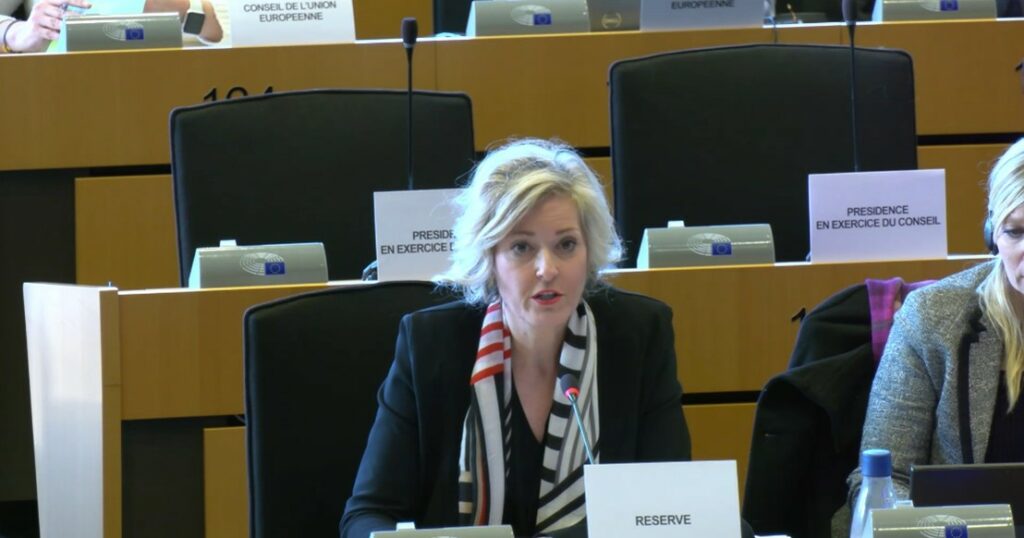
On Monday 27 January, Tanja Struve, Chair of CEMR’s Expert Group on Public Services, participated in the IMCO Committee’s exchange of views on public procurement. This session was organised as part of the European Parliament’s own initiative report on public procurement and brought together experts and policymakers to address key challenges and opportunities in this policy field. 

During her intervention, Ms. Struve presented the CEMR Expert Group’s positions, stressing the urgent need for a public procurement directive that better reflects the realities of local and regional governments (LRGs). She highlighted the significant role LRGs play as the largest public investors and contracting authorities in the European Union and the challenges they face under the current directives. 

Tanja Struve, Chair of CEMR’s Expert Group on Public Services

Why Public Procurement Matters 

Public procurement is a cornerstone of the European economy, accounting for around 14% of the EU’s GDP. It is a critical tool for governments to deliver public services, promote innovation, and drive sustainability. The existing EU Public Procurement Directives, adopted in 2014, aim to modernise procurement practices by fostering transparency, competition, and efficiency. 

While the EU’s procurement framework has brought some improvements, there is a growing consensus among local governments that reforms are needed to better align the directives with the realities on the ground. Indeed LRGs—the largest contracting authorities in the EU—face significant challenges in navigating the current framework because of the overly complex procedures, rigid rules, and heavy administrative burdens that limit flexibility and make it difficult for local authorities to adapt procurement practices to their specific needs. 

Public procurement is vital, and LRGs are the largest public investors and contracting authorities in the EU,” Ms. Struve stated. “However, they face several challenges with the current public procurement directives. They need simplification, flexibility, and the ability to adapt procurement practices to local needs without overloading procedures.” said Tanja Struve, Chair of CEMR’s Expert Group on Public Services.

Ms. Struve emphasised three critical areas for reform: 

  • Greater flexibility to adapt procurement practices to local circumstances. 
  • Simplified rules to streamline processes and improve procedures. 
  • Reduced administrative burdens to ensure more efficient and effective procurement practices. 

These changes, she explained, are essential to empower local governments to deliver high-quality public services while safeguarding their right to self-governance. 

Next Steps for the Expert Group 

CEMR’s Expert Group on Public Services is finalising its position paper on public procurement. The document, which consolidates the group’s recommendations and insights, is currently under review by the Secretary Generals of CEMR. It is set to be adopted and published in the coming days. 

This position paper will serve as a cornerstone for CEMR’s advocacy efforts, providing clear and actionable guidance to EU policymakers on creating a public procurement framework that truly supports local and regional governments. 

For more information, contact:

Local, social, digital – digitalisation impact

Digital transition - News 2022

A joint CEMR–EPSU project explores how digitalisation is transforming local and regional governments across Europe and its impact on workers, services and governance 


Digital transformation is reshaping local public services across Europe, from how services are delivered to how public employees work and engage with citizens. To understand these changes and support effective responses, the Council of European Municipalities and Regions (CEMR) and the European Public Service Union (EPSU) launched a joint project: “Local, Social, Digital”, co-funded by the European Commission and implemented between 2023 and 2024. 

This initiative explored the challenges, opportunities and impact of digitalisation in local and regional governments (LRGs), with a particular focus on working conditions, skills development, social dialogue, and inclusive governance. 

At the heart of the project is a comprehensive research report prepared by an independent expert, based on desk research, interviews with national CEMR and EPSU affiliates, and key insights from international conferences and webinars held in Cagliari, Tallinn and online. 

The research revealed a wide range of digital practices and challenges across European LRGs. Digital tools are enhancing flexibility, accessibility and efficiency, but also raising important questions around workers’ rights, surveillance, data privacy, and fair access to training and upskilling. The study also found growing awareness around the gendered impact of digitalisation, particularly following the COVID-19 pandemic. 

Key themes included: 

  • Telework and hybrid work: The shift to remote working has been widely adopted, but requires clearer frameworks on rights, disconnection, and workplace safety. 
  • Digital skills and employment: There is a pressing need to train and support public employees in using digital tools, with strong involvement from both trade unions and employers. 
  • Ethics and AI: The use of Artificial Intelligence in local governance raises new ethical challenges and calls for stronger social partner dialogue. 
  • Smart cities and services: Digitalisation of public services must remain people-centred, focusing on inclusiveness, accessibility, and transparency. 

Many national and local social partners have already launched strategies, tools and agreements to manage this transformation, including practical guidelines, awareness-raising events and training programmes. 

As Europe enters its Digital Decade, local and regional governments stand at the forefront of this transformation. The “Local, Social, Digital” project reinforces the crucial role of social dialogue in managing digital change, ensuring fair working conditions, and promoting inclusive public services. 

CEMR and EPSU call for continued EU support and structured collaboration among employers, trade unions and institutions to empower local administrations in navigating digital change, sustainably, socially, and with dignity. 

Read the study here

For more information, contact: 

Funding local services first

Funding and investment in Local Regional Governments must be protected


Europe’s sectoral social dialogue partners for local and regional government unions are concerned about the review of the EU’s economic governance rules.

The Council of European Municipalities and Regions (CEMR) and the European Federation of Public Service Trade Unions (EPSU) are concerned that the proposed reduction in public spending will negatively impact the essential services provided by local and regional governments.

The EU institutions are currently reforming the EU economic governance frameworkBruegel Institute calculations indicate that several member states will have to reduce public spending in 2025 and in the coming years, often in the billions of euros, under this mandate.  

This would not be the first time the EU sets indications to member states to reduce public spending. The effects of such measures have strongly impacted funding for local and regional governments and, therefore, their ability to provide quality services to citizens. Local governments are first responders to the immediate needs of citizens – they deliver services that allow all our communities to thrive. From public administration to housing and social services, from firefighters to waste collection: underfunding means jeopardising the delivery and quality of services to citizens.

Insufficient funding for local and regional governments exacerbates inequalities and disparities across regions and municipalities, as well as between rural and urban areas. Without adequate resources, local and regional authorities struggle to address pressing issues such as unemployment, labour and skills shortages, working conditions, social inclusion, and the digital and green transition.

Moreover, reductions in public spending hit women harder. Underfunding contributes to the persistence of the gender pay gap in the EU, given that the majority of workers in the sector are women often low pay. In addition, women are more reliant on local public services.

Furthermore, local and regional governments ensure democracy and equal access for all citizens. With just two months until European elections, it is important to recall that underfunding local governments means underfunding our democracies.

We urge European policymakers to carefully assess the implications the economic governance framework reform will have on local and regional governments in the EU. The impact of these rules cannot hinder the ability of local and regional governments to fulfil their mandates and provide essential services to citizens. As sectoral social partners in local and regional governments, we are committed to continue supporting the implementation of the European Pillar of Social Rights towards a social Europe for all. This economic reform must not constrain this European ambition.

We expect economic governance rules that protect the funding and investment that Local and Regional Governments require to serve their communities with the services which Europe’s citizens deserve.

Read the statement here

For more information, contact:

Elderly Support Line

Elderly Support Line - News 2022

Turkey’s Serdivan municipality develops comprehensive system for seniors’ emergency and daily care


Like many territories across Europe, the city of Serdivan in northwest Turkey is facing the challenges of caring for an aging population.
 
That is why the municipality has developed the Elderly Support Line. Seniors can apply to have the device and emergency support system installed in their home.
 
Once set up, the senior can call municipal assistance 24/7 by pressing an emergency button worn on a necklace. Thus, elderly people can call for help whether because of falling, heart attack, blood pressure, diabetese or any other problem.
 
The button can also be used on the move as the wireless device enjoys a certain range. The municipality’s call centre can be reached without even the hassle of dialing a phone.
 
With the aid alarm, the municipality’s response team takes action quickly and reaches the needy, if necessary transporting the patient to the hospital by patient transport or ambulance.
 
If the person cannot reach the municipal call centre for any reason, the call is automatically transferred to the 112 Emergency Call Centre.
 
Caring for seniors
 
Serdivan municipality also provides other services to the elderly, such as house cleaning once a month, food according to demand, personal care, bathing once a week and changing the clothes of bedridden people.
 
The municipal support team also makes doctor’s appointments for seniors and takes them to the hospital for examination or routine controls.
 
The project especially supports seniors who may lack nearby relatives. It aims not only to meet seniors’ urgent health and household tasks, but also to accompany them and show them they are not alone.
 
Thanks to the Elderly Support Line, Serdivan’s seniors can live longer, happier lives as valued members of the community.

Employment Report

Labour - News Section

Report: EU Dialogue, Local Solutions


Do you want to know more about the work of municipalities and local trade unions? Here is the final report of the EPSU-CEMR joint project “EU Dialogue, Local Solutions” that concluded with a final online event on 25 March. The project focused on the share of good practice examples among members regarding the implementation of three sets on EU guidelines agreed over the years by CEMR and EPSU: on gender equalitythird-party violence and harassmentmigration and anti-discrimination.


This project showed there exists a variety of initiatives implemented by local and national affiliates, and the joint action of local and regional governments together with trade unions is crucial to implement far-reaching actions on many different policy areas, while ensuring better working conditions for the LRGs workforce. Find the project’s final report here.

EU dialogue, local solutions

Labour - News

EPSU – CEMR Project “EU dialogue, local solutions” 3rd national workshop


Social partners, members of CEMR and the European Federation of Public Service Unions (EPSU) gathered on 25 February during the workshop “Migration and inclusion guidelines: Spanish and Italian actions”. This third webinar focused on strategies from both countries, underlining the importance of providing key public services to migrants but also promoting inclusion. In the moments we are experiencing, it is important to hold up to the values we stand for.

Malin Looberger concluded by highlighting that it was a privilege to share experiences and knowledge to be able to work on long term solutions that take into consideration the needs of both migrants and LRGs workers.

Social rights, local action 

Social Rights Labour - News

What are the priorities for implementing the European Pillar of Social Rights with a strong local and regional involvement? 


The Council of European Municipalities and Regions (CEMR) welcomes the European Pillar of Social Rights as a step toward strengthening fairness and equality in Europe. While supporting its ambition, CEMR stresses that the measures linked to the Pillar’s 20 principles should remain non-binding, respecting the diversity of national, regional and local competences. For local and regional governments, the Pillar should serve as a reference framework to inspire reforms, rather than impose uniform rules. 

CEMR identifies key challenges where Europe must act: rising inequality, persistent poverty, gender gaps, and labour market transitions accelerated by digitalisation and COVID-19. Municipalities and regions, as major providers of education, housing, health, social inclusion and employment services, are at the heart of delivering social rights. 

CEMR’s policy priorities include: 

  • Skills and education: investment in training, apprenticeships and digital access to avoid a “lost generation” of young people. 
  • Demographic change: integrating women, older workers, migrants, and disadvantaged groups into the labour market. 
  • Gender equality: boosting women’s participation and addressing work-life balance challenges, especially in the pandemic’s aftermath. 

At the same time, CEMR warns against excessive bureaucracy or additional reporting obligations for local authorities, calling instead for best practice exchange, benchmarks, and adequate funding. 

For the European Pillar of Social Rights to succeed, it must respect subsidiarity, strengthen social dialogue, and involve local and regional governments as essential actors. Municipalities, cities, and regions are indispensable in turning principles into concrete progress, provided they are given the flexibility, resources and recognition needed to deliver. 

Read the position paper here 

For more information, contact: 

Strengthening Europe’s social dimension 

Workplace - News

The European Pillar of Social Rights should focus on quality, investment, and upward convergence across Member States 


The European Pillar of Social Rights is intended to reinforce the EU’s social dimension and rebalance economic and social priorities. Public services and services of general interest (SGIs) are at the heart of this process, as they underpin citizens’ quality of life and provide the infrastructure for sustainable growth. 

Rather than producing new legislation, the priority should be to ensure that existing EU social rules remain fit for purpose. The current Social Acquis already includes around 70 directives that protect workers and guarantee rights. What is needed now is stronger enforcement and, where necessary, modernisation, for example, revisiting the Working Time Directive to provide clarity for employers and employees alike. 

The Pillar also offers an opportunity to introduce benchmarks that compare and measure social policy developments across Europe, within the framework of the European Semester. Such benchmarking could improve transparency, highlight gaps, and support upward convergence while respecting the diversity of national systems. Importantly, this approach should apply to all EU Member States, not just the euro area. 

A stronger social dimension requires reliable and predictable investment in both physical and social infrastructure, from transport and energy to education, healthcare, and social services. To make this possible, fiscal rules may need to be reviewed so that key public investments can be prioritised without undermining sustainable growth. 

The success of the European Pillar of Social Rights will depend on respecting subsidiarity and recognising national differences, while at the same time providing common principles to guide reform. By focusing on quality, enforcement, and strategic investment, the Pillar can help Europe reduce inequalities, strengthen essential services, and support sustainable growth across all territories. 

Read the declaration here 

For more information, contact: