Better regulation position paper

CEMR calls for stronger governance, placing local and regional governments at the heart of Europe’s competitiveness


Europe cannot deliver competitiveness with legislation alone. It will only succeed if policies work on the ground.

And that depends on local and regional governments.

Across the European Union, towns, cities and regions implement more than 70% of EU legislation. They finance public investment, deliver essential services, and turn European priorities — from the Green Deal to digital transformation — into concrete results for citizens and businesses.

Yet too often, local and regional governments are brought into the process too late, faced with fragmented rules, overlapping obligations and growing administrative burdens — clear signs of the limits of the current system. Complex legislative packages, inconsistent timelines and layers of guidance have made implementation harder, slower and more expensive, forcing authorities to spend valuable time navigating procedures instead of delivering solutions. At a moment when Europe is striving to boost productivity, resilience and strategic autonomy, this is a luxury the EU cannot afford.

In this position paper, the Council of European Municipalities and Regions (CEMR) calls for a fundamental shift in how EU policies are designed and implemented: from top-down regulation to genuine multilevel governance.

To make this shift a reality, CEMR calls for:

  • Systematic involvement of local and regional governments throughout the entire EU policy cycle — from design to implementation and evaluation.
  • Structured consultation mechanisms, ensuring meaningful and timely participation of subnational authorities.
  • Territorial and governance impact assessments to ensure policies are realistic and implementable across diverse local contexts.
  • Stronger political recognition of local and regional governments as equal partners in EU decision-making.
  • EU legislation and funding frameworks that reflect territorial realities, avoiding one-size-fits-all approaches.
  • A governance model that prioritises implementability, ensuring policies can be effectively delivered on the ground.

Competitiveness goes beyond regulatory simplification. It requires public policies that are relevant to businesses and communities that they serve and capable of being effectively implemented.

CEMR and its members stand ready to contribute their expertise, data and on-the-ground experience. The time has come to move beyond ad hoc consultation and embed local and regional governments where they belong: at the decision-making table.

Because Europe’s competitiveness will be won — or lost — locally.

Discover CEMR’s full recommendations for a stronger multilevel governance framework in the position paper.

For more information, contact:

Expansion of the Schengen Area

Schengen Space - News

Bulgaria and Romania Join the Schengen Area: A Landmark Achievement for European Unity 


The Council of European Municipalities and Regions (CEMR) congratulates Bulgaria and Romania on their historic accession to the Schengen Area, the world’s largest free-movement zone. This significant milestone, marked by border ceremonies at the Kulata crossing and the Friendship Bridge, represents years of dedicated effort and collaboration among European Union (EU) member states. 

Strengthening European Integration 

With this expansion, Schengen now encompasses 25 EU member states, facilitating the free movement of over 425 million people to travel, work, and reside without internal border controls. This milestone strengthens European unity, promotes economic growth, and fosters cultural exchange. 

Celebrating Progress 

At midnight on 1 January, Bulgarian and Romanian officials symbolically lifted border barriers, marking the end of land border checks between their countries and other Schengen countries. These celebrations were a testament to the hard work and commitment required to achieve full membership. 

The Role of Local and Regional Governments 

CEMR, representing Local and Regional Governments across Europe, recognises municipalities and regions’ vital role in fostering cross-border cooperation and facilitating integration. The expansion of Schengen will strengthen local partnerships, streamline mobility for citizens and businesses, and enhance regional development opportunities. 

A Stronger Europe 

Including Bulgaria and Romania in Schengen is more than a practical advancement; it is a symbolic reminder of the EU’s commitment to unity, collaboration, and shared prosperity. This milestone paves the way for continued progress in European integration and cooperation. 

CEMR stands ready to support local and regional governments as they adapt to the opportunities and challenges of a border-free Europe. 

Learn more about Schengen and its benefits: https://ec.europa.eu/  

New Mandate, Funding Crossroads

New EU Mandate: Navigating a Crossroads in European Funding and Governance


With the confirmation of the European Commissioner College, the second mandate of Ursula von der Leyen is ready to start. If you are wondering on the direction the EU will turn, especially when it comes to what is coming next for local governments, the hearings of Commissioners-designate provide valuable insight into the mindset, priorities and challenges of the next EU Executive. It is evident that addressing these challenges – boosting European competitiveness and improving citizens’ lives – will require more than ambition. Vision needs to be translated into action through effective policy implementation and ensuring funding meets the Europeans everywhere. It will also be crucial to avoid learning the wrong lessons from past experiences, especially when it comes to fund management and policy implementation.  

What did the interviews with College candidates at the European Parliament reveal? 

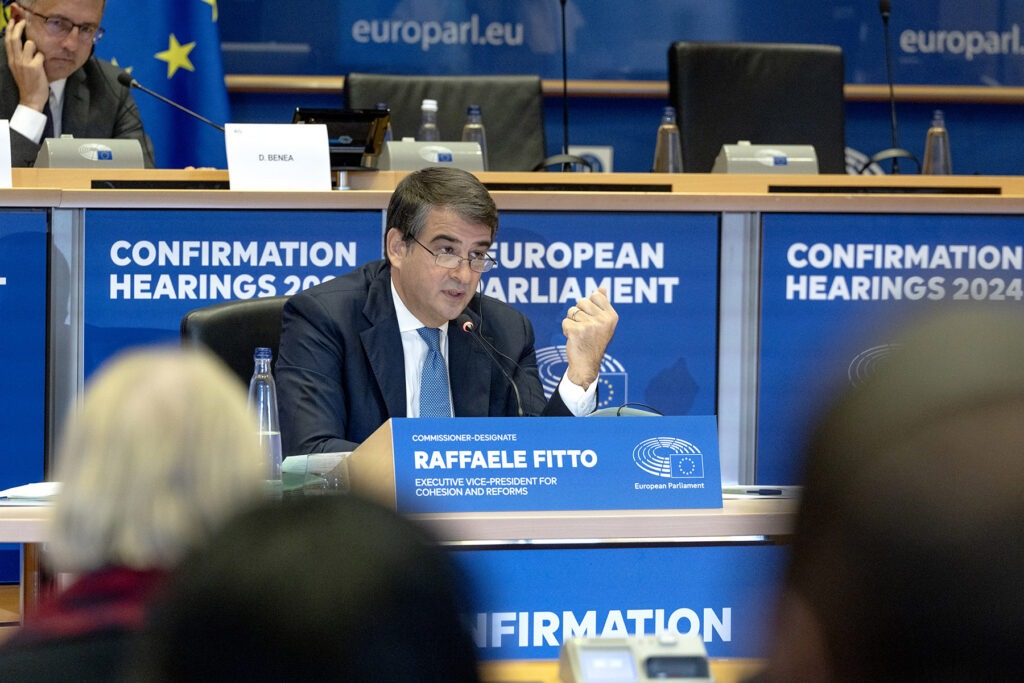
© European Union, 2024 – Source: EP – https://www.europarl.europa.eu/news/en/press-room/20241029IPR25049/hearing-of-executive-vice-president-designate-raffaele-fitto

Yet the hearings offered little reassurance for local governments. The centralisation intentions clearly outlined in Commission President Ursula von der Leyen’s political guidelines, which propose replacing the Recovery and Resilience Facility (RRF) with “fewer programmes and a plan for each country linking key reforms with investment”. The RRF, the centrepiece of the EU’s €800 billion NextGenerationEU recovery package, revealed the pitfalls of the performance-based, cash for reform approach. From the outset, CEMR, in partnership with the Committee of Regions (CoR), has closely monitored the RRF’s rollout, consulting with stakeholders to assess local and regional governments participation. The findings are clear: the exclusion of those closest to understanding local needs has hampered the RRF’s effectiveness. The lack of involvement of local governments has led to misaligned priorities, with some reforms and investments failing to address local needs or capitalise on the unique insights and expertise of regional authorities. With the risk of not only missing the RRF community targets but also displacing other essential funding streams, such as cohesion funds, further compromising the EU’s territorial cohesion goals. 

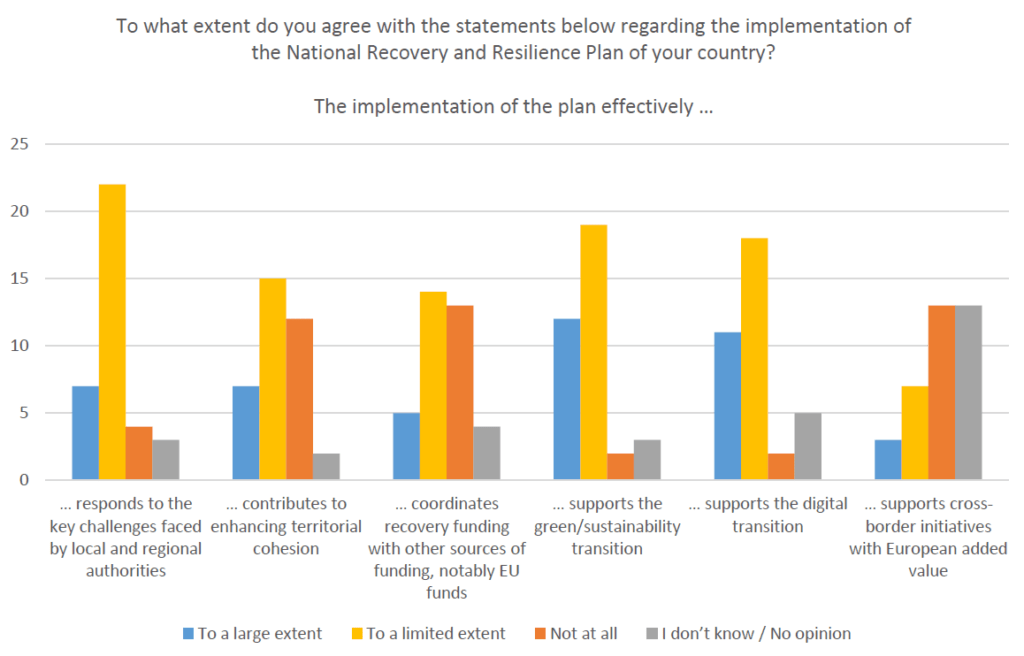
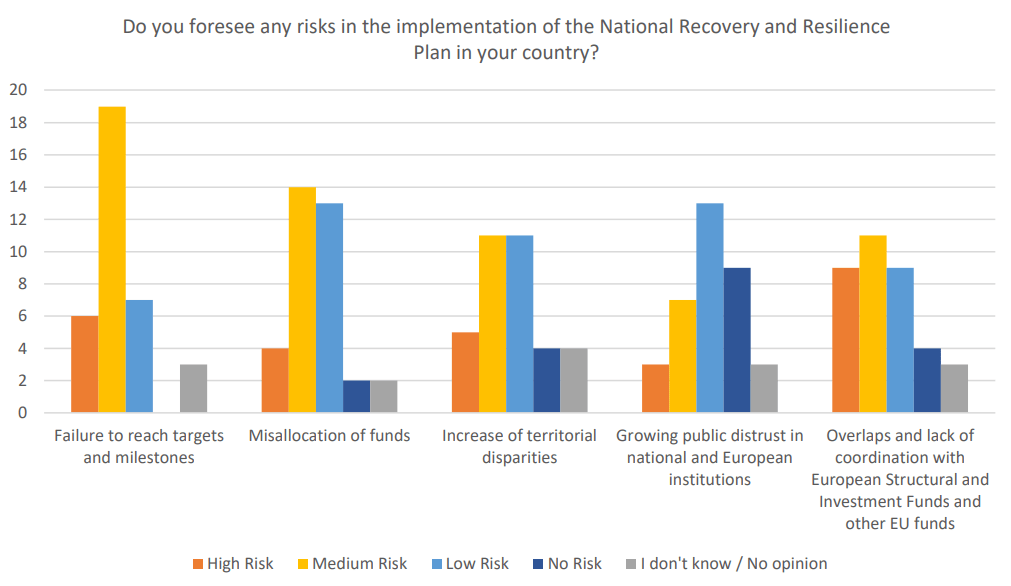
Data from CCRE-COR consultation on the RRF implementation.

The hearings of the Commissioner-designates echoed these concerns. Commissioner-designate Valdis Dombrovskis faced sharp criticism for the RRF’s shortcomings, with Members of the European Parliament (MEPs) expressing frustration over the performance of the RRF to date. Mr Dombrovskis conceded that stronger partnerships with local governments are essential for the RRF to have a transformative impact, and this needs to be addressed as we go forward. In his hearing Commissioner-designate for Budget Piotr Serafin backed the idea, expressed in von der Leyen political guidelines, of single national plans for investment and reforms but also emphasised the central role that regions should play in the elaboration of these plans. On the other hand, Vice-President and Commissioner-designate for Cohesion and Reforms Raffaele Fitto did not substantively address MEPs concerns regarding the risks of centralisation. However, he expressed that a single national plan would not be problematic, provided that local and regional governments are consulted – demonstrating at least a recognition of multi-level governance. 

We need to make room for learning complex lessons  

Designed to foster a greener, more resilient, and innovative Europe, the delays in implementing national recovery plans have worsened the governance conversation surrounding the RRF, casting doubt on its ability to meet its goals. However, the proposed cure risks misusing EU resources and undermining the critical green and digital transitions essential for towns, cities, and regions. 

CEMR is committed to promoting evidence-based evaluations of funding performance, ensuring that critical development policies are not subject to hasty adjustments. Local governments, which implement 70% of European legislation—including key policies for the green transition—cannot be excluded from these discussions. They are on the frontlines of delivering climate action, digital innovation, and social transformation. Their unique territorial knowledge ensures that EU funding aligns with real, localised needs rather than blanket national strategies that often overlook regional disparities. As we learnt from the RRF, neglecting this level of expertise risks inefficiencies, missed opportunities, and a failure to meet citizens’ expectations. Discussions on the next major EU funding package must acknowledge the lessons from the RRF’s shortcomings. Decentralising funding management will not only enhance transparency but also ensure resources are channelled where they can make the most significant long-term impact. 

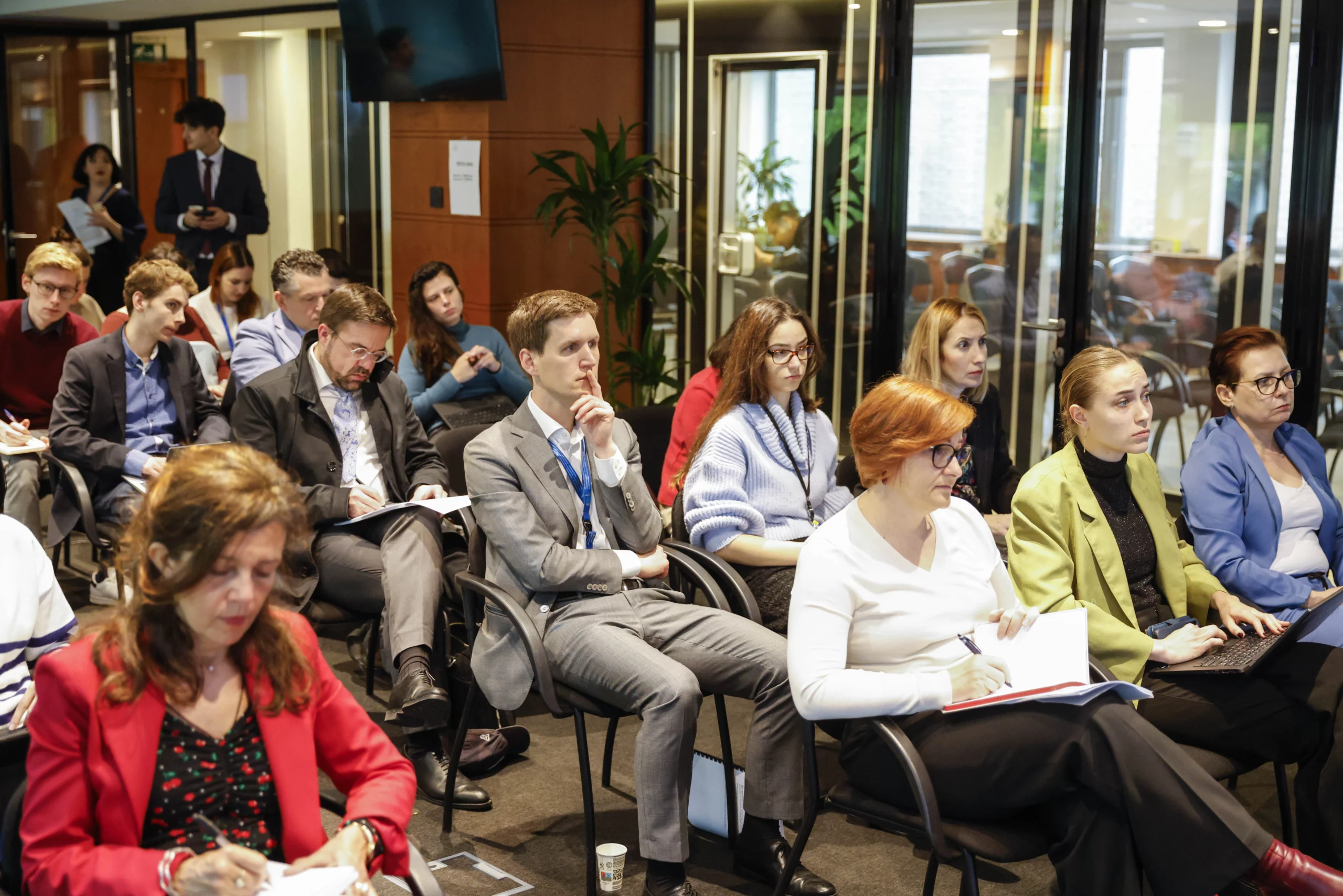
From the roundtable: Local and Regional Perspectives on the Recovery and Resilience Facility (RRF)

As the new Commission takes office, CEMR will continue pushing for transparent monitoring of the RRF’s performance, emphasising the need for territorial expertise to shape EU funding policies. Ensuring that those with the greatest knowledge of their localities have a say in how resources are allocated is not just a matter of fairness—it is the key to delivering sustainable, transformative outcomes across Europe.

Democracy on bike

Democracy on Bike

From Cologne to Brussels: A Cyclist-Led Initiative for Climate Action and Democracy


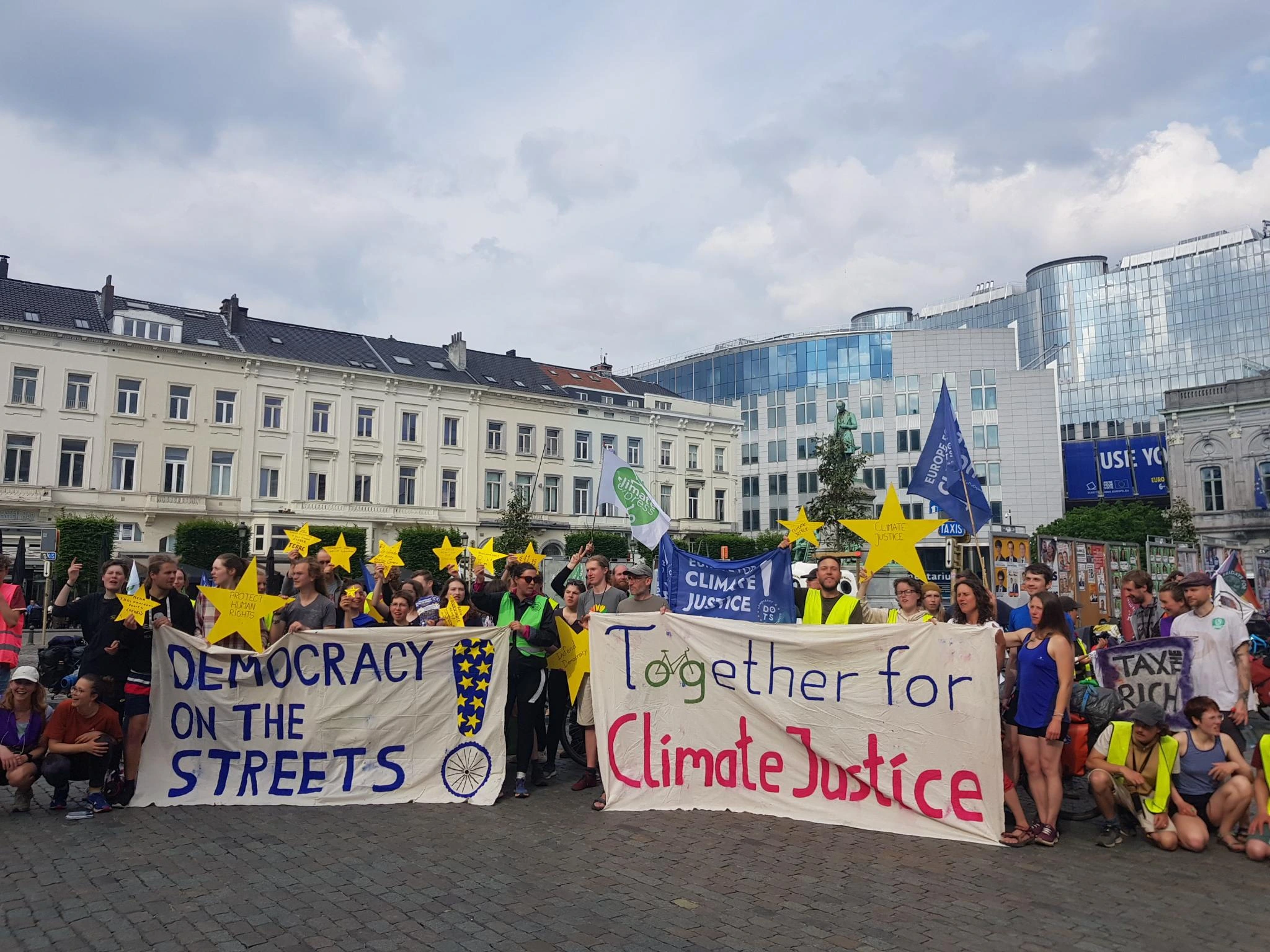
In response to growing far-right influence and environmental challenges, a group of activists from 127 cities across Europe cycled from Cologne to Brussels in a remarkable initiative called Democracy On The Streets (DOTS). This movement, which originated from the German campaign “Ohne Kerosin nach Berlin”, expanded into its first cross-border edition with a clear mission: to demand urgent climate action, protect democracy, and rally support ahead of the European elections.

From 20 to 26 May, cyclists travelled from Germany to Belgium, stopping in towns and cities along the way to raise awareness about pressing environmental issues. These activists, known as cyclo-activists, held peaceful yet visible protests throughout their journey, advocating for climate justice, human rights, and democracy. Along the route, they met with citizens and politicians to create spaces for discussion and debate on critical topics. Key moments included protests at controversial sites such as the Stop Alibaba movement in Liège, which opposes the expansion of the local airport, and a demonstration against a concrete development in the rural area of Anton, Andenne.

This initiative was notable for its grassroots, community-driven approach. Participants were hosted overnight by local residents, churches, schools, and associations, reinforcing the solidarity and communal spirit of the project. It embodied the belief that united individual actions can create meaningful change. While the peloton was loud to ensure it was seen and heard, it remained entirely pacifist, with a strong focus on delivering its message in time for the upcoming European elections.

This wasn’t just a protest; it was a powerful call to action to protect both the environment and democracy. The grand finale took place in Brussels, where even more activists joined in solidarity, amplifying the campaign’s message at the heart of European politics.

If you’d like to learn more or join the movement, visit: https://ohnekerosinnachberlin.com/inscription-bruxelles-2024-fr/

MEPs at the European Parliament

European Parliament - News

The Essential Role of Local and Regional Experience in the European Parliament


In the latest composition of the European Parliament, a significant 31.5% (227 out of 720) of the Members of the European Parliament (MEPs) have had a local or regional mandate. This highlights the vital connection between local governance and the broader European legislative process.

The European Parliament, composed of 720 MEPs elected from 27 EU Member States, serves as one of the key institutions in the European Union. Since 1979, MEPs have been elected through direct universal suffrage for a five-year term. Their decisions influence laws and policies that have a direct impact on the lives of over 447 million EU citizens.

Local and Regional governance experience equips MEPs with unique insights into the everyday challenges and opportunities faced by citizens. This background allows them to better understand the implications of EU legislation on local communities and ensures that the voices of municipalities and regions are heard at the European level.

Key Functions of the European Parliament:

  • Co-Legislation: The European Parliament shares legislative powers with the Council of the EU. Together, they adopt and amend legislative proposals, ensuring that laws reflect the diverse needs of EU citizens.
  • Budgeting: The Parliament plays a crucial role in deciding on the EU budget, and determining how resources are allocated across various sectors and initiatives.
  • Oversight: The Parliament supervises the work of the European Commission and other EU bodies, ensuring transparency and accountability.

Promoting Democracy Globally: Beyond its legislative functions, the European Parliament is a strong advocate for democratic values within Europe and globally. The Parliament actively supports the fight for democracy, freedom of speech, and fair elections worldwide.

The significant presence of MEPs with local and regional mandates in the European Parliament underscores the importance of local governance in shaping European policy. As the newly elected MEPs take on their roles, their decisions will continue to influence the European Union’s and its citizens’ future.

Learn More: To gain a deeper understanding of the European Parliament and its functions, visit the official website.

COR-CEMR Consultation 

A follow-up consultation from the CoR and CEMR on the RRF implementation


Since its launch, CEMR has monitored the European Union’s Recovery and Resilience Facility (RRF) to assess the experiences of local and regional governments in navigating this crucial funding instrument aimed at revitalizing the EU’s economy post-COVID-19. In collaboration with the Committee of the Regions (CoR), CEMR conducted a targeted consultation in 2021, engaging with associations of local and regional governments. The objective was to examine the involvement of these bodies in both the design and execution phases of the RRF. Initial findings revealed a very limited engagement of local and regional governments in the process.

This year, CoR and CEMR conducted a follow-up consultation to assess any changes in the situation. Despite the RRF being halfway through its implementation, local and regional governments express continued frustration at being sidelined from National Recovery and Resilience Plans (NRRPs). The results of the CoR-CEMR survey confirm a trend of highly centralised management of the RRF by Member States.

On April 16, CEMR hosted a high-level panel debate featuring representatives from EU institutions, where the key findings of the consultation were unveiled. The results of the CoR-CEMR consultation can be accessed here.

Unfair recovery fund distribution

Post-COVID Recovery Fund: centralisation and unfair distribution of resources risk harming cohesion in Europe


A new CoR-CEMR consultation shows that the territorial allocation of funds from the Recovery and Resilience Facility is widely perceived as unbalanced on the ground.

On the eve of a crucial meeting of European heads of state and government focused on competitiveness, the European Committee of the Regions (CoR) and the Council of European Municipalities and Regions (CEMR) unveil the results of their third joint survey on the implementation of the post-pandemic Recovery and Resilience Facility (RFF), which is worth €648 billion.

While the implementation of the RRF is at the halfway point, regions and cities still feel left aside from National Recovery and Resilience Plans (NRRPs). A new consultation conducted jointly by CoR and CCRE-CEMR confirms the highly centralised management of the RRF by the Member States.

Key findings

  • The territorial allocation of RRF funds is broadly perceived as unfair. Nearly half of respondents rate territorial fairness as “poor or very poor” while only a few see it as “good or very good”. And the degree of ownership at local and regional level is also unsatisfactory with significantly more respondents seeing it as “poor or very poor” than “good or very good”.
  • The green and digital transitions stand out as the two objectives supported effectively by the NRRPs, according to respondents in the consultation.
  • Conversely, fully one-third of respondents state that NRRPs do “not at all” effectively contribute to enhancing territorial cohesion, despite this being the legal basis and general objective of the RRF.
  • The involvement of local and regional authorities remains inadequately weak in the various phases of preparation, implementation or monitoring of NRRPs. The specific provisions of REPowerEU to improve the involvement of LRAs do not seem to have yielded concrete results.
  • Almost all respondents encounter barriers to their involvement in the NRRP. The main barrier identified is the national government providing an inappropriate framework for involvement.
  • The share of respondents who consider limited capacity or expertise within their region or city to be a barrier is significantly higher than in the previous consultation. This is likely linked to the higher-than-expected administrative burden of the RRF.
  • Potential overlaps and lack of coordination with cohesion funds remain the highest risk perceived by local and regional governments in the implementation of the RRF.
  • While the overall impact of projects funded by the RRF is rated positively by respondents, they are rather divided regarding its synergies with other funds, its additionality and flexibility.

Christophe Rouillon (FR/PES), Mayor of Coulaines and CoR’s rapporteur on the Mid-term evaluation of the Recovery and Resilience Facility said: “The results of the joint consultation underscore that the RRF is not the silver bullet it was claimed to be. The RRF was the appropriate response in a multi-crises context and will probably have had a positive macroeconomic impact. However, the centralisation it brought about as well as the deficiencies of the performance-based mechanism cannot be extrapolated to the future Cohesion Policy post-2027 if we do not want to put at risk that this policy remains the most efficient EU policy for delivering fair transitions throughout all EU regions.

Kamila Bláhová, Vice-president for European Affairs, Union of Towns and Municipalities of SMOCR (CZ), stated: “The RRF and the national recovery plans of the Czech Republic have a huge potential to support the efforts of local and regional governments aimed at revitalizing the local economy and green infrastructure investments at the local level. However, the issue of administrative capacity and poor synergies between the RRF and other EU funds present significant challenges. It’s crucial to optimize how subnational governments can maximise the use of this substantial funding source and that we address any shortcomings as the RRF moves forward.

Background

The consultation was conducted between January and March 2024, collating the views and experiences of 36 organisations representative of a variety of subnational government levels across 22 EU Member States. The respondents were from Austria, Belgium, Bulgaria, Croatia, Cyprus, Czechia, Estonia, Finland, France, Germany, Ireland, Italy, Latvia, Lithuania, Luxembourg, the Netherlands, Poland, Portugal, Romania, Slovakia, Spain, and Sweden. The geographical composition of the respondents was not identical to that of previous consultations.  Responses received from individual local and regional governments were also taken into account.

Results of the previous CoR-CEMR joint consultations (January 2021 and April 2022)

Read the study here

Contacts:
Matteo Miglietta – CoR
Tel. (+32) 470 895382
Matteo.miglietta@cor.europa.eu

RRF Event 

CEMR Hosts High-Level Panel Debate on “Pathways to Resilience: Local and Regional Perspectives on the Recovery and Resilience Facility”


A new CoR-CEMR consultation shows that the territorial allocation of funds from the Recovery and Resilience Facility is widely perceived as unbalanced on the ground.

The Council of European Municipalities and Regions (CEMR) is pleased to announce an upcoming in-person panel debate titled “Pathways to Resilience: Local and Regional Perspectives on the Recovery and Resilience Facility (RRF)”, scheduled for 16th April, from 9:30 AM to 12:15 PM. The event will be held at CEMR’s Secretariat in Square de Meeûs, Brussels.

In light of the upcoming Committee of the Regions Plenary on 17th and 18th April in Brussels, CEMR extends a warm welcome to elected members to register for the event.

The debate will allow to go beyond the narrative of the RRF’s milestones and targets and assess the impact of the programme at the local and regional levels. Lessons learned will be shared during the panel, as we discuss its potential to shape future EU investment programmes, particularly future Cohesion Policy initiatives.

Distinguished speakers confirmed for the event include:

  • Kamila Bláhová, Vice-President for European Affairs, SMOCR (CZ)
  • Maria Teresa Fernandez, Director at DG RECOVER of the European Commission
  • Monika Hohlmeier, Chair of the Budgetary Control Committee (CONT), European Parliament
  • Ivana Maletic, Croatian Member of the European Court of Auditors
  • Christophe Rouillon, CoR Member, rapporteur on the CoR’s draft opinion on the mid-term report on the RRF’s implementation

CEMR anticipates robust participation in this high-level event and encourages stakeholders to contribute actively.

EU Elections 2024

A call to action: Europe can only succeed together with municipalities


Christoph Schnaudigel, the Co-President of the German Association of Counties and CEMR (RGRE), Vice-President of the German Section of CEMR (RGRE), and President of the County of Karlsruhe, presents a compelling call to action for the upcoming tenth direct elections to the European Parliament scheduled for June 6 to 9, 2024. Highlighting the crucial role of Europe’s municipalities, Dr. Schnaudigel emphasises the need for collaboration between local authorities and European institutions to effectively address the complex challenges facing the European Union. Touching upon issues such as Russia’s aggression, energy and migration crises, and municipal finances, Dr. Schnaudigel l underscores the significance of local governments in implementing and influencing European policies. Dr. Schnaudigel also calls for a more streamlined and less burdensome regulatory environment, ensuring that European legislation aligns with the needs and capacities of local and regional authorities. Additionally, the editorial addresses the importance of a meaningful regional policy, highlighting the necessity for funds to be allocated based on local needs and emphasising the partnership principle.

A call to action: Europe only together with the municipalities

The tenth direct elections to the European Parliament, which will take place from June 6 to 9, 2024, will also be of great importance for Europe’s municipalities. The European Union (EU) and the world continue to face profound challenges to which national governments alone cannot respond adequately. The effects of Russia’s war of aggression against Ukraine, the energy and migration crises and the pressure on municipal finances are coming up against far-reaching economic and social transformations such as the Green Deal and digitalization.
In order to proactively address these challenges, the Council of European Municipalities and Regions (CEMR) adopted a “Call for Action” at its General Assembly in Prague in December 2023. This formulates demands for a successful municipal European policy, addressed to European institutions, candidates and new members of the European Parliament.
As the most comprehensive European association of local and regional authorities, CEMR has been bringing together one million democratically elected European politicians from 60 member associations in 40 countries since 1951. Its mission is to build a united, peaceful and democratic Europe, based on local self-government, the principle of subsidiarity and the appropriate participation of citizens.
More participation in European decision-making processes: Better regulation for and with local authorities
Local authorities are important public economic, societal and political actors, they are responsible for the development and maintenance of local infrastructure, healthcare, waste disposal and local public transport. In doing so, they directly apply the European regulations on public procurement and state aid law.
However, local authorities are not only responsible for providing important public services. They and their representative associations also build a bridge between Europe and its citizens. On the one hand, they help the inhabitants of counties, cities and municipalities to understand the importance of the EU for their daily lives, and on the other hand, they communicate and convey local interests and needs to the EU and other international decision-makers.

As a result of their responsibilities, local authorities are confronted with a large number of EU initiatives. This currently applies in particular to the European Green Deal. Climate, energy and the environment are areas in which the European legislator has been very active in recent years and still is. However, the successful implementation of a climate-neutral future depends to a large extent on the municipal level, which is closest to the citizens. Local authorities are already implementing around 70% of European legislation. Land use planning for renewable energy, the implementation of mandatory renovation rates for public buildings and the restoration of local ecosystems are just a few current examples of this. 

For this reason alone, districts, cities and municipalities must be involved in the decision-making process at the European level in good time. Local know-how and experience are indispensable for the European legislative process. The model of governance in partnership in Europe, which has already found expression in cohesion policy, is an important instrument for achieving inclusive results that at least attempt to take local needs into account appropriately. 
The next European Parliament and the Commission should therefore commit to a political agenda that fundamentally incorporates local conditions on the ground into their decisions. This includes, above all, strengthening the partnership principle in cohesion policy, as well as a strict review of the subsidiarity and proportionality of new directives and regulations concerning local and regional interests.
It must be taken into account that the local level is already confronted with an almost unmanageable level of overregulation and complexity of standards. This is further exacerbated by the existing shortage of staff and the poor financial resources of local authorities in many places. With a view to future new EU regulations, we must therefore refrain from greater regulation and an excessive density of rules. It will be essential to concentrate European legislation on major issues relevant to the internal market for which European regulations also offer genuine added value. In addition, existing European regulations must be simplified and streamlined and bureaucratic hurdles removed.

A European regional policy that generates real added value on the ground!

For a meaningful and generally recognised regional policy of the EU, it is also necessary that the funds are used according to need. This in turn presupposes that the municipalities, as the level closest to the citizens, are appropriately involved in the decisions on the funding objectives and measures following the so-called partnership principle. This principle already exists but is sometimes interpreted by the administrative authorities of the federal states in such a way that local authorities are only informed about decisions and are not involved in them. For this reason, the CEMR is committed to expanding and specifying the requirements of the principle.

The participation of local authorities of all types and sizes also brings benefits to the European level by making the diversity of the local level visible and highlighting existing strengths and needs. It enables the development of location-based strategies that are better suited to the concerns of the respective local authorities. Centralist approaches based on the motto “one size fits all” must be a thing of the past.

As CEMR, we therefore also demand that European decision-makers adhere to the principle of “do no harm to cohesion” when drafting new and existing legislation. This principle essentially states that European regulations must not adversely affect socio-economic development in areas, as otherwise the effect of the funding will be lost. For example, local authorities should not be obliged to carry out extensive renovations to existing buildings without being provided with the necessary funds.
Furthermore, we encourage the next European Commission to appoint a dedicated Commissioner for Territorial Development with a clear mandate to drive forward the EU’s strategic and long-term cohesion policy. Such a bundling of competencies could, in particular, help to create guidelines that can be implemented in both large cities and rural areas. The sometimes-incoherent support for urban and rural areas must be better coordinated with each other and with the local challenges. We call on the new MEPs to set up an intergroup on public services of general interest that focuses its work on improving local and regional public services.
Systemic approaches and innovative tools for better local cooperation
However, our vision goes beyond the current political debate; it also includes systemic approaches and innovative tools to promote fair, inclusive and sustainable local societies. The European Parliament must support the promotion of digital skills in local administrations. The EU framework must be developed in line with user-centred public services to improve their quality and accessibility for our citizens.
In an increasingly interconnected world, an open and responsible model of international cooperation is indispensable. More than ever, international developments have a concrete impact on the way we live together at the local level. European decision-makers must continue to support decentralized cooperation as a proven tool to promote inclusive international cooperation and democracy.

Municipal partnerships and twinning agreements also play an important role in this context. They promote shared values and contribute to openness and a better understanding between the citizens of Europe. Financing instruments for partnership work should continue to be made available to municipalities on a decentralized basis.
In summary, the 2024 European elections provide an important opportunity for the German Association of Counties and CEMR to advocate for a Europe that listens to its local voices. The implementation of our “Call to Action” can empower the European Parliament and the next European Commission to create a basis for a responsive and citizen-centred European Union that serves all citizens. With our common messages and recommendations, we want to shape Europe together.

State of the Union 2023

State of the Union - News 2023

The Missing Piece: Local governments in President Von der Leyen’s 2023 SOTEU


The Council of European Regions and Municipalities (CEMR) invited its member associations at the Secretariat in Square de Meeus, Brussels, to follow the State of the Union (SOTEU) address.
 
In her 2023 State of the Union speech, European Commission President, Madame Von der Leyen, highlighted the primary issues expected to influence the 2024 elections, opening her address with a call to the younger generations, implicitly encouraging them to defend the unique nature of European Democracy, particularly with a war ongoing on European soil. She placed a significant emphasis on the achievements of her mandate since 2019, such as the European Green Deal, competitiveness, AI, digital transition, enlargement, inflation, and gender equality. While we commend all the commitments and accomplishments so far, there was no mention of the strategic role that local and regional governments play in successfully implementing these initiatives.
 
Local and regional governments are instrumental in impacting the daily lives of European citizens. The President referenced the “Europe of the regions”, but European regions require more focus and investment, especially in education, minority integration, cohesion policy, and social security.
 
CEMR welcomed President von der Leyen’s commitment to revitalising the European Social Dialogue to respond to the deep-rooted shifts in technology, society and demography. However, cohesion policy needed to find a place in the address. We know that Cohesion policy is pivotal in promoting economic and social convergence across Europe while avoiding the surge of new inequalities. CEMR believes it should remain a central element of the EU’s agenda.
 
Nevertheless, CEMR remains committed to working hand in hand with the European Commission to shape a greener and fairer Europe. With its unparalleled ability to represent one million elected representatives spanning 40 countries, CEMR is a critical bridge between local governments and the European Commission. In the spirit of unity and cooperation, CEMR and its members look forward to actively participating in the ongoing dialogue to ensure that local governments’ voices are heard and considered in the EU’s future policies and initiatives.