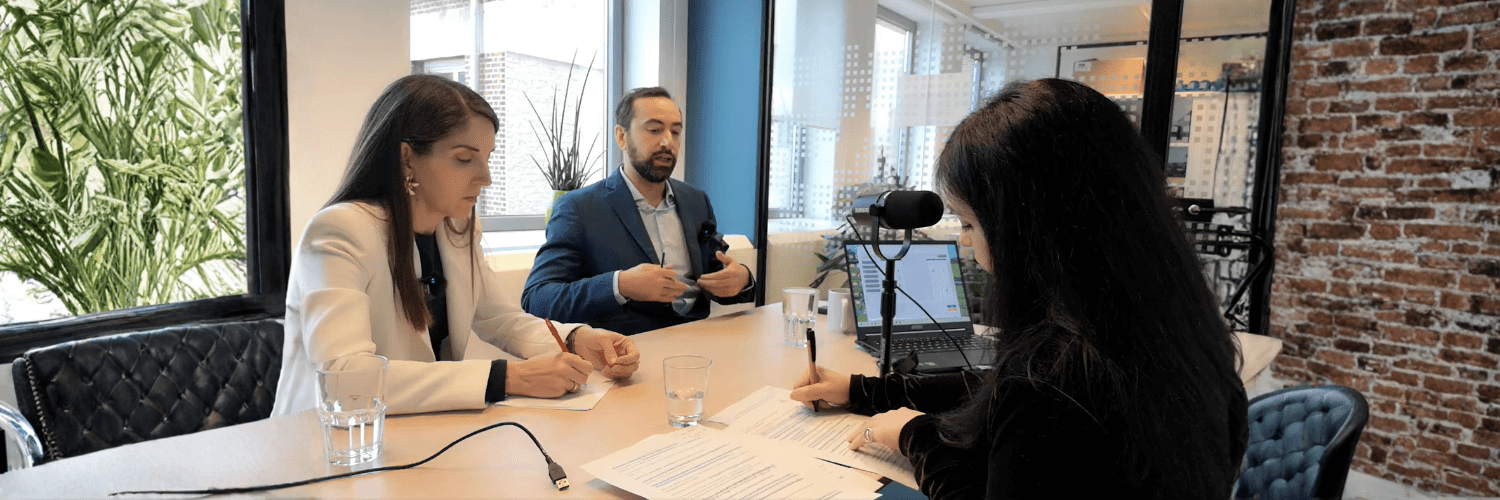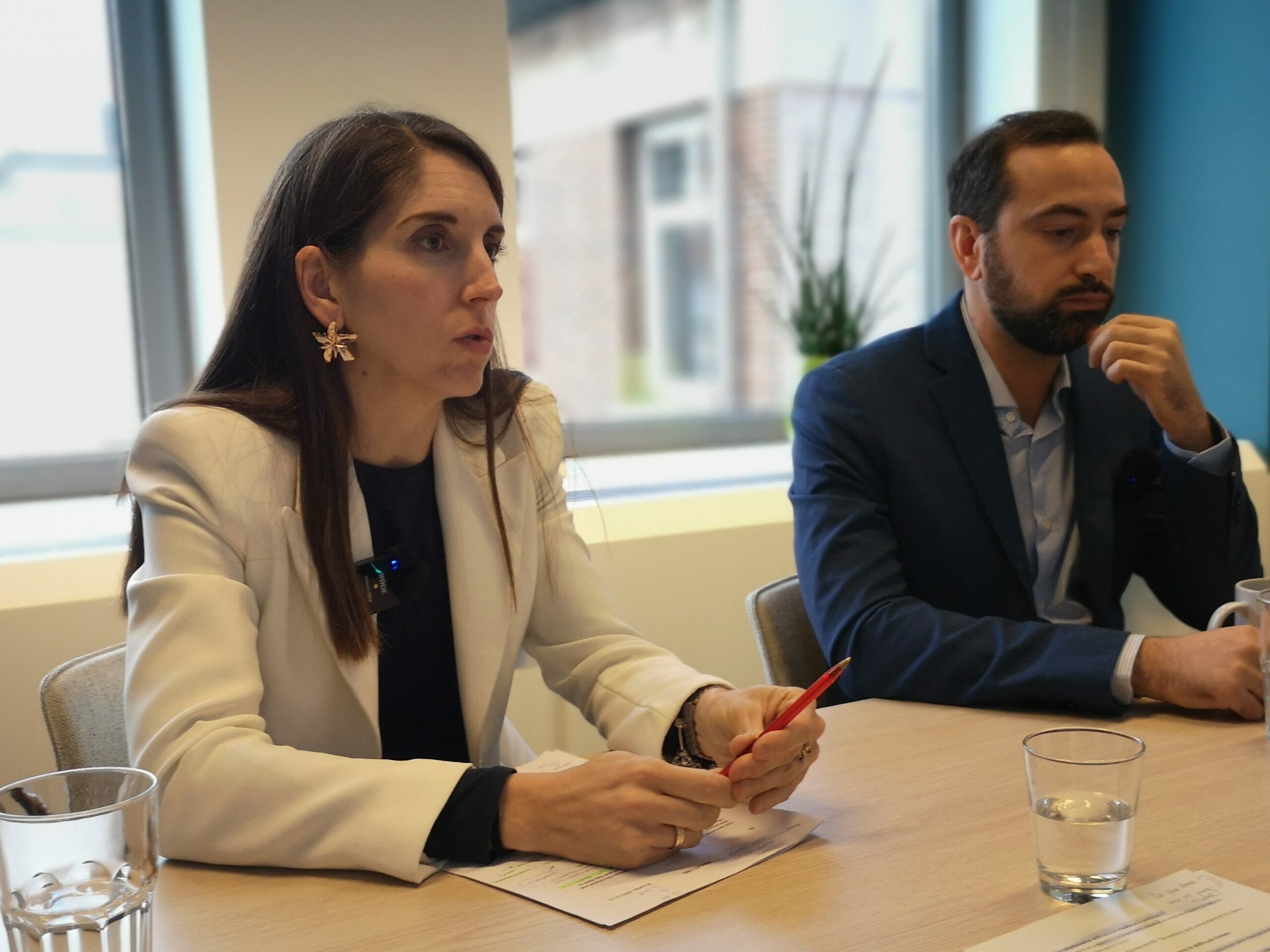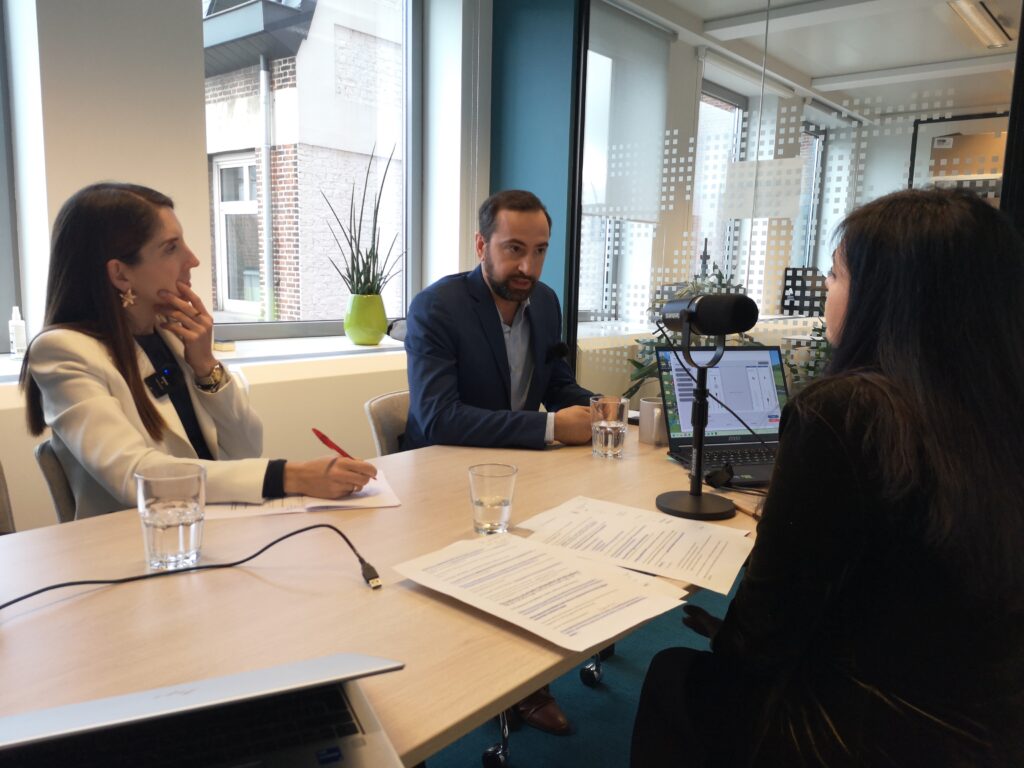
Call Simone EU budget episode

Who Decides Europe’s Future? The Battle Behind the EU’s Next Budget


Who decides Europe’s future—the Member States, the EU institutions, or the cities and regions that implement policies on the ground?

This is the question at the heart of the negotiations for the European Union’s next long-term budget (2028–2034), and the starting point of the latest Call Simone episode with Jan Olbrycht, former Member of the European Parliament and one of the most experienced figures in EU budget negotiations.

What may appear as a technical discussion about figures and funding lines is, in reality, a political struggle over power, priorities, and governance. And it comes at a moment when Europe must define what it wants to become: a more centralised political actor, or a union that remains fundamentally different from the United States—more negotiated, more decentralised, and ultimately dependent on consensus.

A budget under pressure

As Olbrycht explains, the next Multiannual Financial Framework (MFF) is being shaped by an unusually heavy context: war at Europe’s borders, growing global competition, the repayment of pandemic-era debt, and the prospect of enlargement.

The European Commission has proposed a significantly larger budget—potentially close to €2 trillion. But this ambition depends on new sources of revenue. Without them, the EU risks financing new priorities by cutting existing ones, turning the negotiation into a zero-sum game.

A shift in how Europe spends and governs

One of the central points raised in the discussion is that the most controversial change is not the size of the budget, but its structure.

Rather than organising spending around established policies like cohesion and agriculture, the proposal introduces broader categories and national plans that bundle different funding streams together. According to the Commission, this is meant to simplify the system and make it more flexible in times of crisis.

In practice, however, it redistributes power.

It strengthens the role of national governments while allowing the Commission to impose mandatory priorities—such as minimum spending on climate or support for less developed regions. As Fiorella Lavorgna, host of the podcast points out in the conversation, this creates a hybrid system that raises a key question: is this simplification, or a new form of centralisation?

The real fault line: who gets a say

This leads to one of the clearest political fault lines discussed in the episode: governance.

Will cities and regions be co-authors of these national plans, or merely consulted?

For organisations like CEMR—where Jan Olbrycht also served as of the vice presidents between 1995 and 2001—this is a red line. The experience of recent instruments, such as the Recovery and Resilience Facility, showed that consultation without real involvement risks weakening both effectiveness and accountability.

The European Parliament has taken a relatively strong position in favour of reinforcing the role of local and regional authorities. But within the Council positions remain divided, reflecting different national governance models.

Competitiveness vs cohesion

Another key tension highlighted in the discussion concerns the balance between competitiveness and cohesion.

The proposed competitiveness fund reflects a shift toward innovation, strategic industries, and investment attraction—an acknowledgement that Europe must strengthen its global economic position. This raises concerns about the future of cohesion policy, which has long been central to reducing regional disparities.

This is not simply a budgetary trade-off. It is a political one: a more competitive Europe that deepens internal inequalities risks undermining its own foundations.

Enlargement and the limits of unity

The conversation also touches on enlargement.

Integrating countries like Ukraine or Moldova is not only a financial challenge—it is a political one that requires unanimity among Member States. As Olbrycht stresses, enlargement ultimately depends as much on the willingness of current members as on the readiness of candidate countries.

This reinforces a central feature of the EU: its dependence on consensus.

Not a United States of Europe

When asked who one should “call” to speak to Europe in ten years’ time, Olbrycht’s answer is telling: not one leader, but several—reflecting a system where authority is shared rather than concentrated.

For him, the EU is not moving toward a single-leader model like the United States. Instead, it will maintain its own specificity: a political system built on balance between institutions and Member States, where decisions emerge from negotiation rather than hierarchy.

The next EU budget embodies this reality. It is not just a financial framework, but a test of how Europe functions: whether it can act strategically without becoming centralised, and whether it can remain cohesive without becoming fragmented.

Ultimately, what is at stake is not only how much Europe spends, but how it governs itself. And in that sense, the outcome of these negotiations will say as much about the EU’s political future as any treaty reform.

Learn more about our key asks on the EU budget 2028-2034

Download here the uncut episode transcript

For more information, please contact:

Meet Eider Inuntziaga (Bilbao)

Meet the Local Hero: Eider Inuntziaga, building trust from the streets of Bilbao


When Eider Inuntziaga talks about local government, one word comes up again and again: closeness. 

Since 2023, she has served as a city councillor in Bilbao, after years of political engagement within the Basque Nationalist Party. It is her first public mandate, and the experience has changed how she sees political life. 

Before, she observed politics from the inside. Now, she experiences it daily — in the street, in neighbourhood conversations, and in the direct reactions of citizens to local decisions. The distance between elected representatives and residents is minimal, which makes local politics both uniquely meaningful and uniquely exposed. She also brings this experience to the European level as one of the Council of European Municipalities and Regions’ spokespersons on Local Democracy. 

Across Europe, these challenges are increasingly visible. To better understand and address them, CEMR and its partners, including the City of Bilbao, have launched the European Observatory for the Defence of Democracy at the Local Level — an initiative that collects data, documents threats and harassment against local elected representatives, and helps develop practical tools and responses to better protect those serving their communities. 

As she puts it, “local governments are the closest level of administration; we are the face of democracy.” 

That proximity builds trust, but it also concentrates frustration. When people are unhappy, local leaders are often the first — and easiest — target. 

Social media: useful, but risky 

That visibility now extends far beyond the street. 

Inuntziaga describes her relationship with social media as “conflicted.” While it can help connect people and share information, she also sees clear downsides. 

Social media can connect people and stories, and it can be useful—up to a point. But it also creates noise, polarisation, and sometimes hate. It can be dangerous.” 

For local politicians, the effects are concrete. 
“It affects integrity, it affects how we speak, and it can silence people. It can make people leave the work they’re doing—or become afraid of what’s happening.” 

She keeps her presence limited, using Facebook and LinkedIn, and mixing personal and political communication carefully. 

Participation beyond election day 

Despite these challenges, Inuntziaga remains firmly optimistic about the role local governments can play in strengthening democracy. 

Her approach is simple: stay close, listen carefully and involve citizens as much as possible. For her, elections are only the starting point. Day-to-day participation matters just as much. In Bilbao, this philosophy has taken concrete form through participatory initiatives that invite residents to help shape the city’s direction.

One example is “Bilbao City of Values,” a process through which citizens collectively identified a shared set of principles to guide public life. The idea is to create a common framework that strengthens belonging and counters misinformation. The goal, she explains, is not only better policies, but stronger relationships between institutions and the people they serve. 

Learning from Bilbao’s past 

Bilbao’s history has also shaped how she thinks about governance. 

The city has experienced profound transformation over the past decades — from industrial decline and unemployment to renewal driven by long-term planning and cooperation between public institutions, private actors and civil society. For Inuntziaga, this experience shows that change does not happen overnight and that stability requires patience. 

She often points to three elements behind Bilbao’s recovery: cooperation, shared values and long-term vision. Quick fixes rarely work. Instead, consistent decisions taken with the future in mind gradually rebuild trust. 

“Decisions must be made with the long term in mind,” she says, describing democracy and stability as mutually reinforcing. 

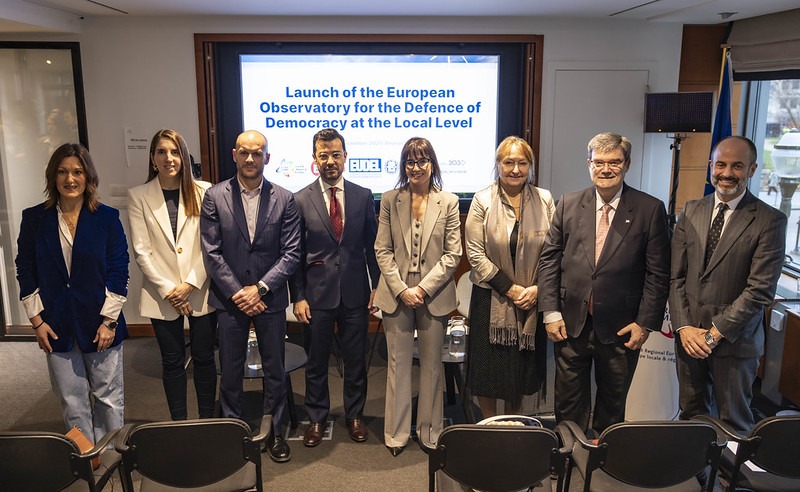
Eider Inuntziaga during the launch of the European Observatory for the Defence of Democracy at the Local Level.

Rooted locally, thinking European 

Although her work is grounded in municipal politics, Inuntziaga keeps a strong European outlook. She follows debates beyond Spain closely and draws inspiration from leaders such as Kaja Kallas, whom she admires for her perspective on Europe’s role in a changing world. 

Still, her focus remains firmly local. For her, cities are where democracy is tested every day — where policies meet real life, and where trust is either built or lost through everyday interactions. 

It is not the most visible level of politics — but, in many ways, it is the one where democracy is felt most directly. 


To hear more from Eider Inuntziaga, you can listen to the full episode of Call Simone, also with Gianmarco Daniele of Bocconi University, . They discuss how growing harassment and disinformation are affecting local leaders across Europe, and how the launch of the European Observatory for the Defence of Democracy at the Local Level can better track threats and protect local democracy. 

For more information, contact:

New episode of Call Simone

“If we are lucky, she will be a mayor”
Power, pressure, and local democracy in Europe


Local democracy is often described as the closest level of government to people’s everyday lives. But across Europe, that closeness is increasingly being tested.

In the latest episode of Call Simone, we explore how power and democratic pressure are playing out at the local level — where politics is most visible, most accessible, and, increasingly, most exposed. Harassment, intimidation, disinformation campaigns, and threats are becoming part of the reality for many local elected representatives. The consequences go well beyond individual cases: when intimidation shapes who speak, who run, and who stay, representation shrinks and democracy weakens.

This episode brings together two voices who connect political experience with rigorous research:

  • Eider Inunciaga, City Councillor in Bilbao, Spain
  • Gianmarco Daniele, Executive Director of the CLEAN Unit, Bocconi University, Italy

Together, they unpack what harassment looks like in practice, why it is rising, who is most affected, and what local leaders — and European institutions — can do to respond with policies grounded in evidence.

When intimidation becomes a political filter

Harassment against local elected representatives is not only “bad behaviour” online — and the way humans respond to these attacks has little to do with personal resilience. As the episode shows, intimidation can work as a political filter: it discourages participation, pushes people out, and narrows the diversity of voices in local councils.

For Eider Inunciaga, the change became more tangible when she entered a public mandate in 2023. Local politics means proximity: you can be approached in the street, at community events, at school gates — and anger is often directed at local representatives precisely because they are the most reachable. As she puts it: “Local governments are the face of democracy.” And that visibility comes with exposure.

“Local governments are the face of democracy — and that makes us the most exposed.” – Eider Inunciaga, City Councillor Bilbao, Spain.

Who pays the highest price?

One recurring theme in the conversation is that harassment does not hit everyone equally. Those seen as “different” — women, minority representatives, LGBTQIA+ politicians — are often targeted more aggressively, with the implicit message: you don’t belong here.

Gianmarco Daniele shares research findings from Italy that put numbers to what many already sense. Using a carefully matched dataset to compare women and men in similar contexts, his work finds women are three times more likely to be targeted — and that almost one-quarter of female mayors experience an attack during their mandate. Importantly, these are offline attacks: assaults, burned cars, arson against property, threatening letters — not simply online hostility.

The timing is also revealing: attacks concentrate in the first year after election, consistent with a backlash against women’s visibility in power — and not explained by performance differences in office. The democratic cost is direct: women who are attacked are less likely to run again, turning progress on representation into a revolving door.

As Daniele notes, we often focus on how to get more diverse candidates into politics — and too rarely on why people leave.

“Without data, we’re fighting blind. Europe needs comparable evidence to spot risks early and respond.” – Gianmarco Daniele, Executive Director Clean Unit, Bocconi University, Italy.

Bilbao’s lesson: rebuild trust through participation and shared values

The episode also looks at the other side of the equation: how local governments can maintain trust and stay close to citizens in a polarised environment.

For Eider Inunciaga, the starting point is closeness and participation: democracy is not only elections and voting day. In Bilbao, she highlights the “Bilbao City of Values” process, where citizens helped define a set of shared values to create a common framework for community life. In her view, shared values and participation are also part of the response to misinformation: they strengthen belonging and reduce the space in which false narratives thrive.

Bilbao’s longer history adds perspective. The city’s transformation — shaped by industrial crisis, social hardship, terrorism and the 1983 floods — was driven by cooperation across institutions, partnerships with society, and long-term vision. The lesson is simple and demanding: coexistence is not inherited; it is cultivated — and democratic stability requires sustained investment.

From stories to evidence — and from evidence to action

This episode connects directly to the launch of the European Observatory for the Defence of Democracy at the Local Level: a new partnership bringing together local and regional governments (including Bilbao and Basque municipalities represented by EUDEL) and the research community at Bocconi, with the support of the Basque Country and CEMR.

The Observatory’s goal is to help Europe move from scattered stories to coordinated action by connecting the dots between:

  • what local elected leaders experience on the ground
  • what research and data can show about patterns, drivers and impact
  • what public authorities and institutions can do to prevent, protect and respond more effectively

A central message from the conversation is the data gap.  Today, there is no comparable European-level dataset even on local politicians, let alone on attacks and threats. Without common data infrastructure, risks are harder to detect early and policy responses are harder to evaluate.

As Daniele explains, better data brings not only understanding — but visibility. In Italy, there is evidence of more than one attack per day on average, yet the issue often remains local news and rarely reaches broader political attention. Data can help turn a hidden pattern into a shared European priority.

About Call Simone

Call Simone is CEMR’s podcast on power and democracy in Europe — told through the lens of the local level. Each episode brings together local leaders, insiders and researchers to explore who gets to sit at the table, who is pushed out, and why it matters for Europe’s future.

Listen on Spotify

For more information, contact: