Session on Ukraine’s path to the EU

Bridges of Trust - event 2025

Transforming emergency aid into equal cooperation between EU and Ukrainian towns, cities and regions


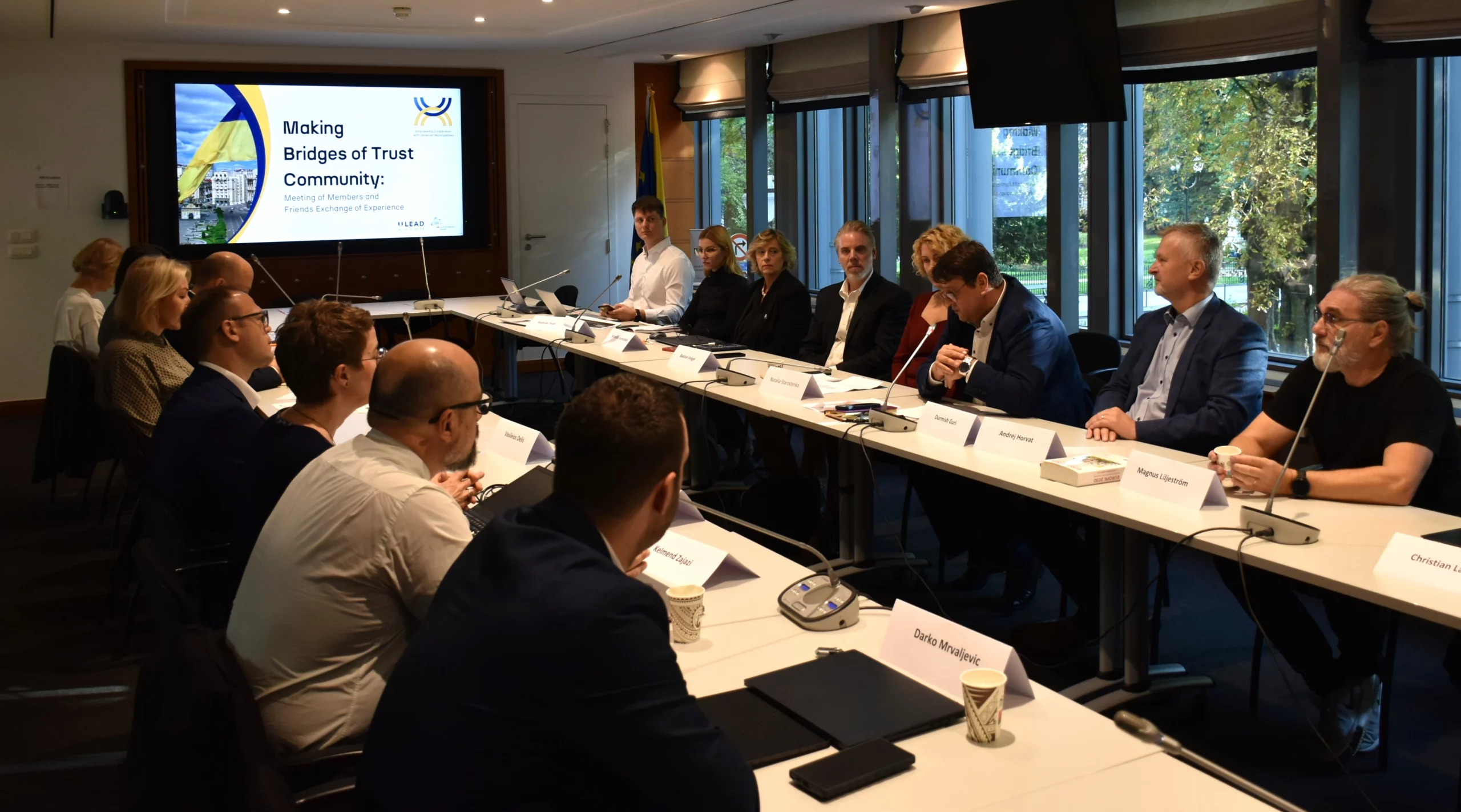
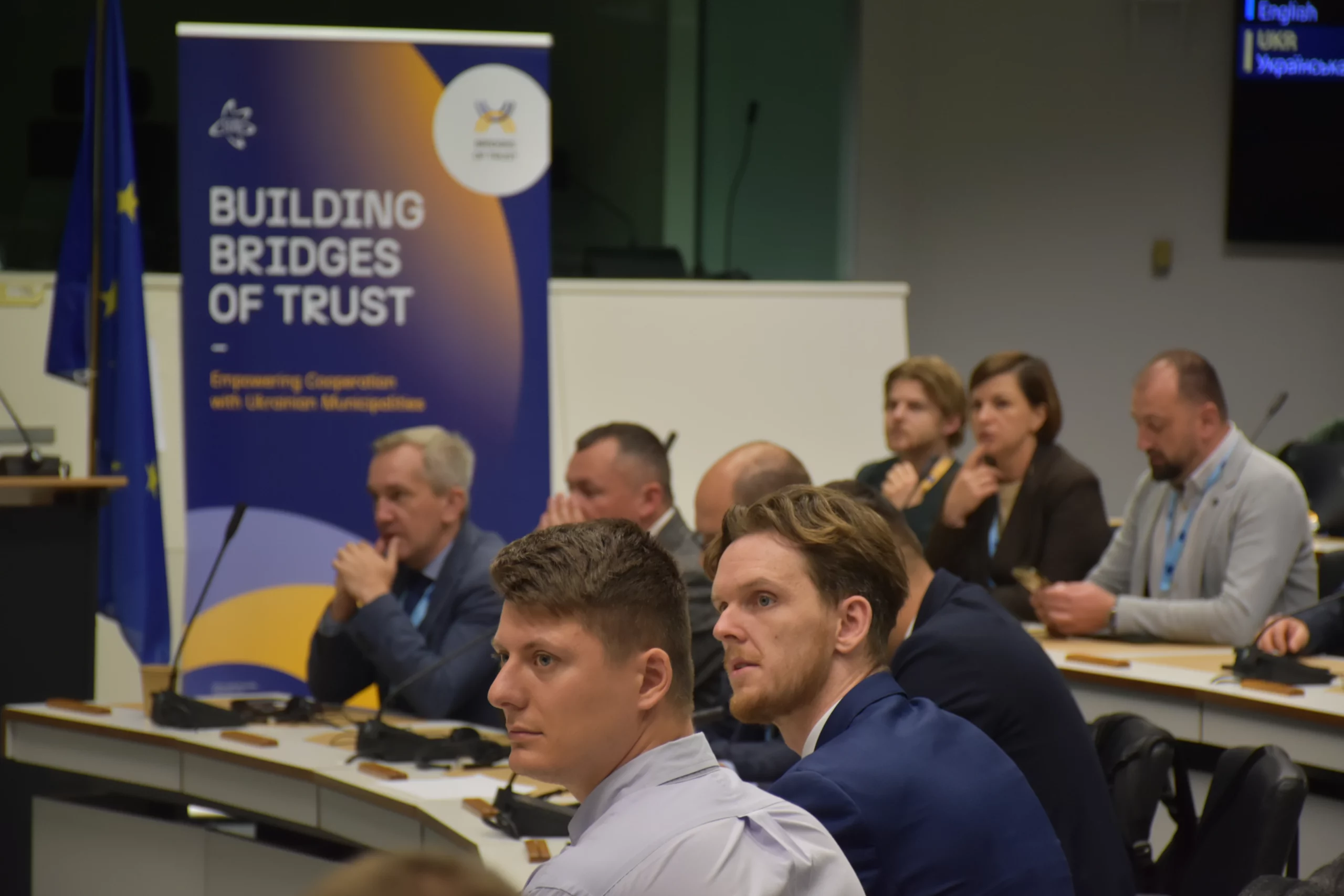
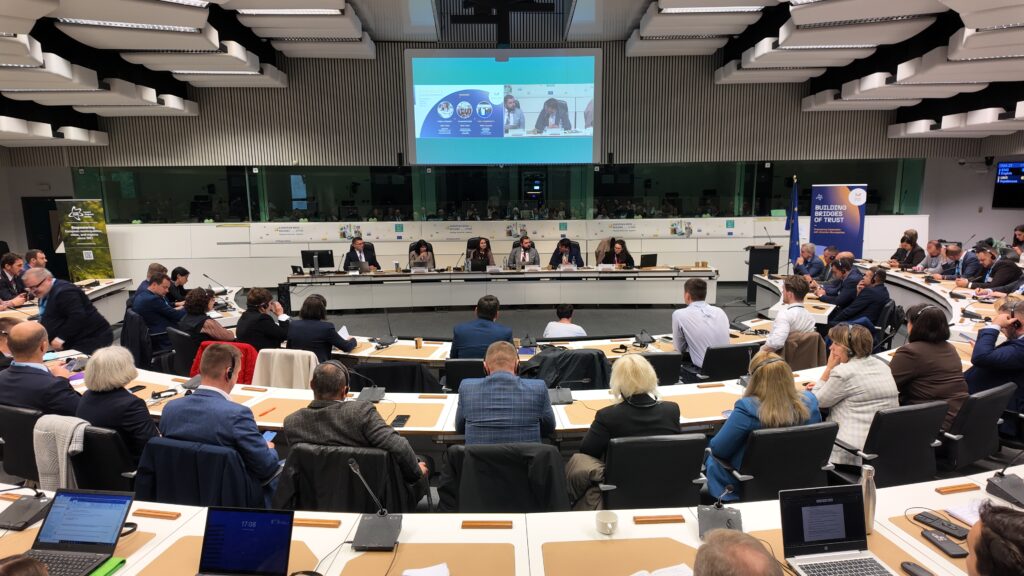
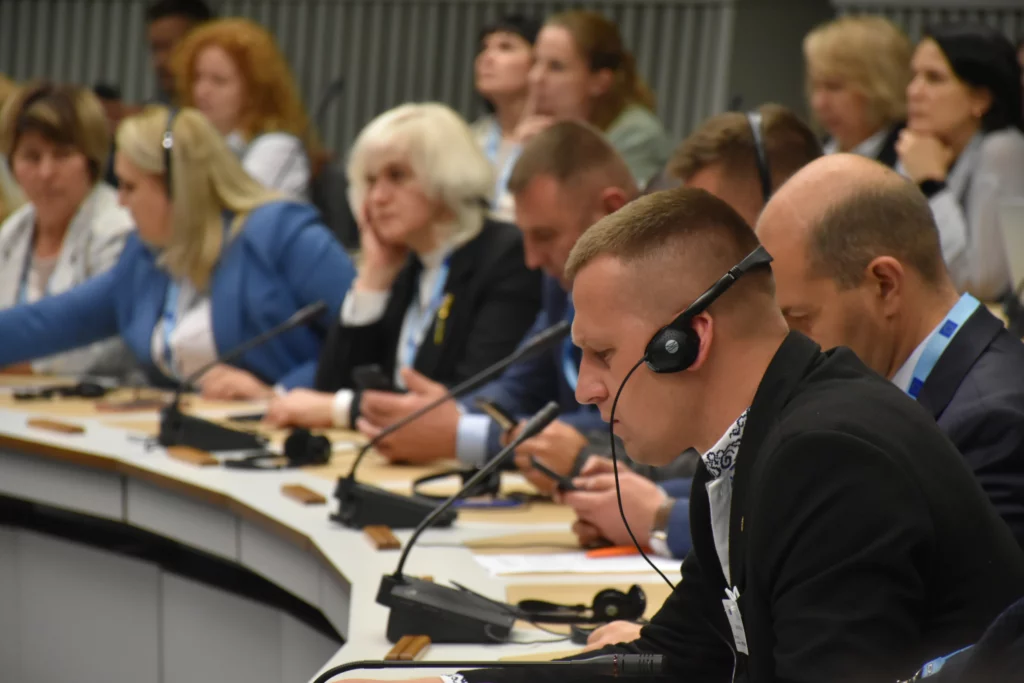
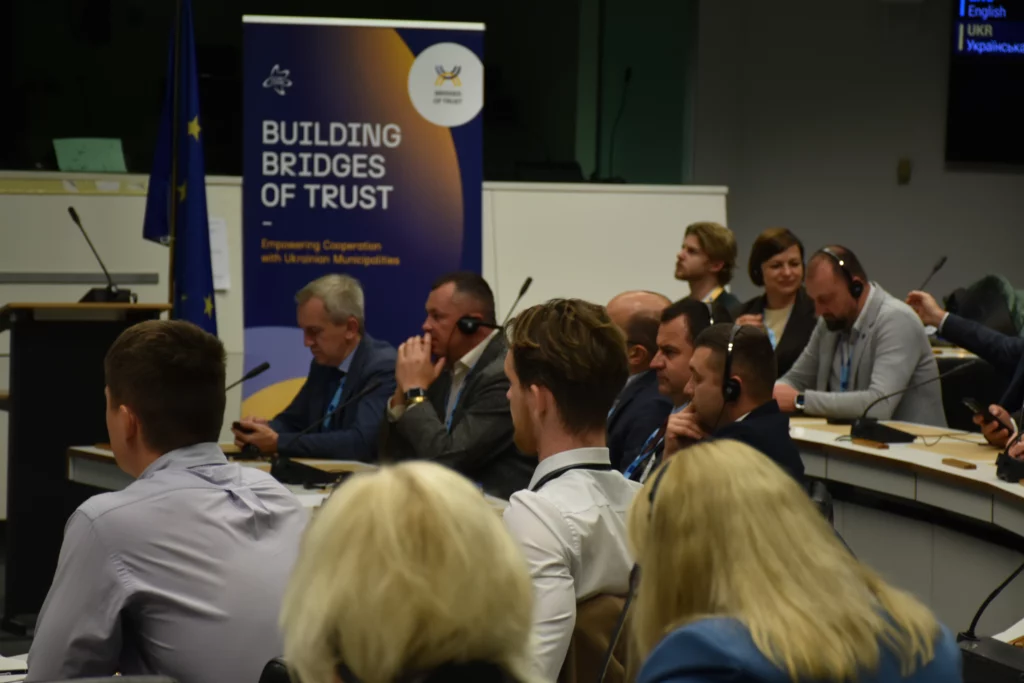
Amid war-time disruption, Ukraine’s local governments have stepped as frontline problemsolvers and drivers of EU integration. During the European Week of Regions and Cities in Brussels, on October 15th a CEMR-led conversation under the Bridges of Trust (BoT) brought together local leaders, policy experts, and civil society to examine how municipal partnerships can anchor accession and cohesion.  

The takeaway was clear: lasting progress depends on shifting from emergency solidarity to structured cooperation that empowers municipalities to deliver reforms, attract investment, and close regional gaps. 
Why local governments matter 

Ukraine’s municipalities have kept essential services running, coordinated aid, and advanced reforms under extreme pressure. Through BoT and the European Partnership Hub, they are building ties with European peers on projects in education, culture, economic development, and reconstruction. As CEMR’s Director for Projects and Programmes, Durmish Guri explained, success now hinges on moving “from emergency solidarity to mutually beneficial collaboration”. 

Matchmaking for impact 

To turn policy into practice, BoT has launched a Matchmaking Platform that connects every Ukrainian municipality with a European counterpart, enabling concrete joint projects and capacity-building. The platform is designed to reduce fragmentation, align needs with resources, and accelerate cooperation across borders.  
From reform to implementation 

Dmytro Lyvch of Easy Business underscored a dual challenge: advancing structural reforms while financing recovery. Real progress happens locally through municipalities, civil society, and development agencies. Ukraine has adapted to EU Chapter 22 requirements, but gaps persist in horizontal and vertical cohesion, and in institutional and financial frameworks. With regional disparities higher than in many Central and Eastern European countries, targeted interventions are needed to build resilience and competitiveness. 

Lessons from peers 

Ambre Maucorps of the Vienna Institute for International Economic Studies highlighted takeaways from Lithuania and North Macedonia. Lithuania used cohesion policy to tackle disparities with a clear governance model and strong stakeholder input. North Macedonia, after municipal mergers similar to Ukraine’s, benefited from pre-accession funds but still struggles with absorption. The throughline: coordination and flexibility are essential for effective cohesion policy. 

Building capacity, scaling partnerships 

Iryna Mykulych of the NGO Agency for Recovery and Development stressed that durable cooperation often starts with “soft” cultural and educational exchanges that build trust, then evolves into “hard” reconstruction projects. Scaling from municipal partnerships to business and academia can unlock investment, know-how, and long-term outcomes. 
The bottom line 

The event’s conclusion was unambiguous: international municipal cooperation is one of the most effective and sustainable ways to localise EU accession.  

As Durmish Guri noted, “international municipal cooperation is the most effective, sustainable, and the efficient form of collaboration”. Local governments, he added, play a critical role not only in implementing reforms but also in shaping national and European-level policy, underlining the importance of “localizing accession” to ensure Ukraine’s municipalities are fully engaged in the EU integration process.   

Empowering local governments to deliver reforms and shape policy—together with European partners—moves Ukraine from a recipient of solidarity to a co-creator of Europe’s cohesion and growth. That is the promise of BoT’s community-driven approach. 

For more information, contact:

EU–Ukraine Municipal Partnerships Forum

Bridges of Trust - Committee of Regions 2025

Local and Regional Leaders building bridges for Ukraine’s Recovery and EU Path


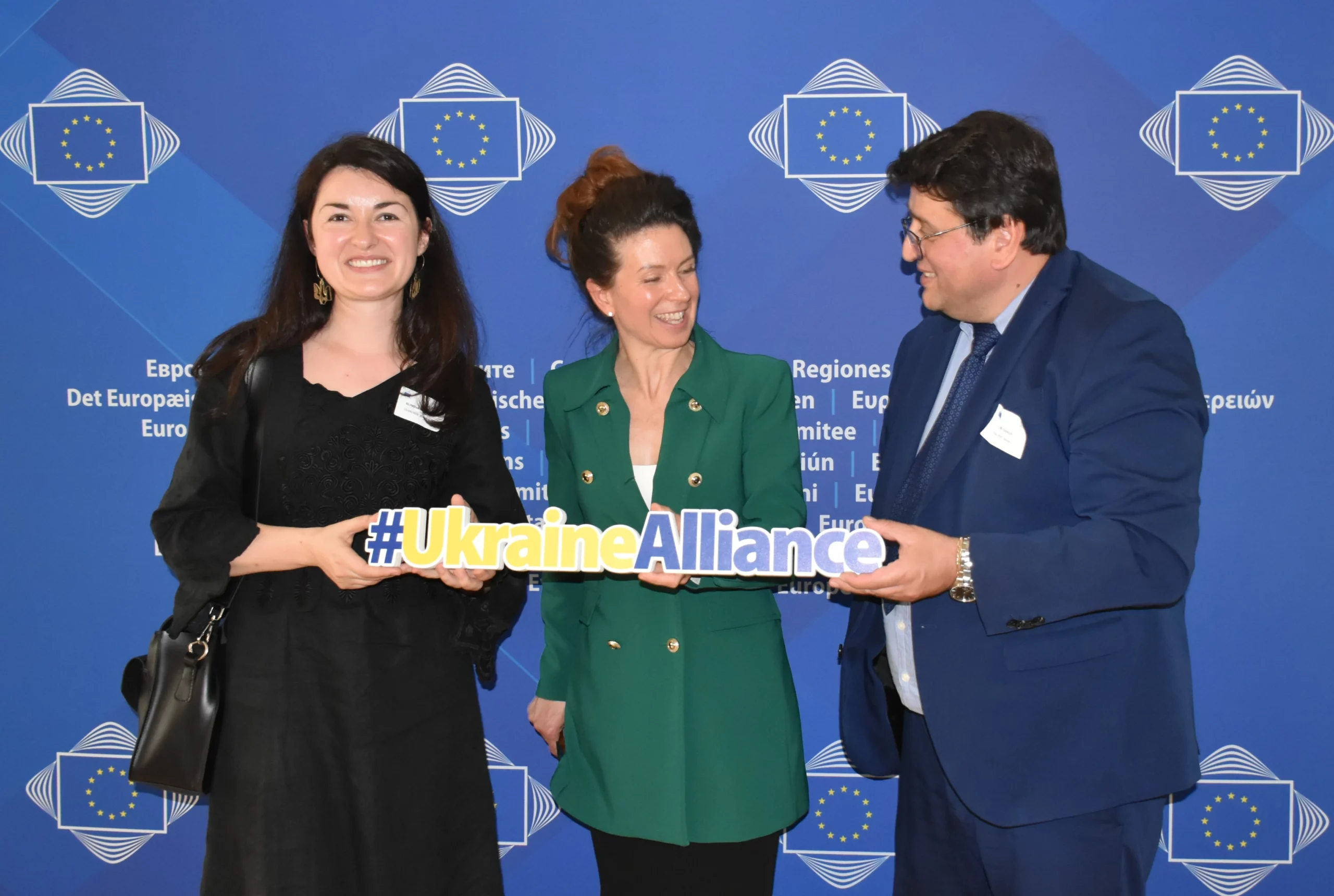
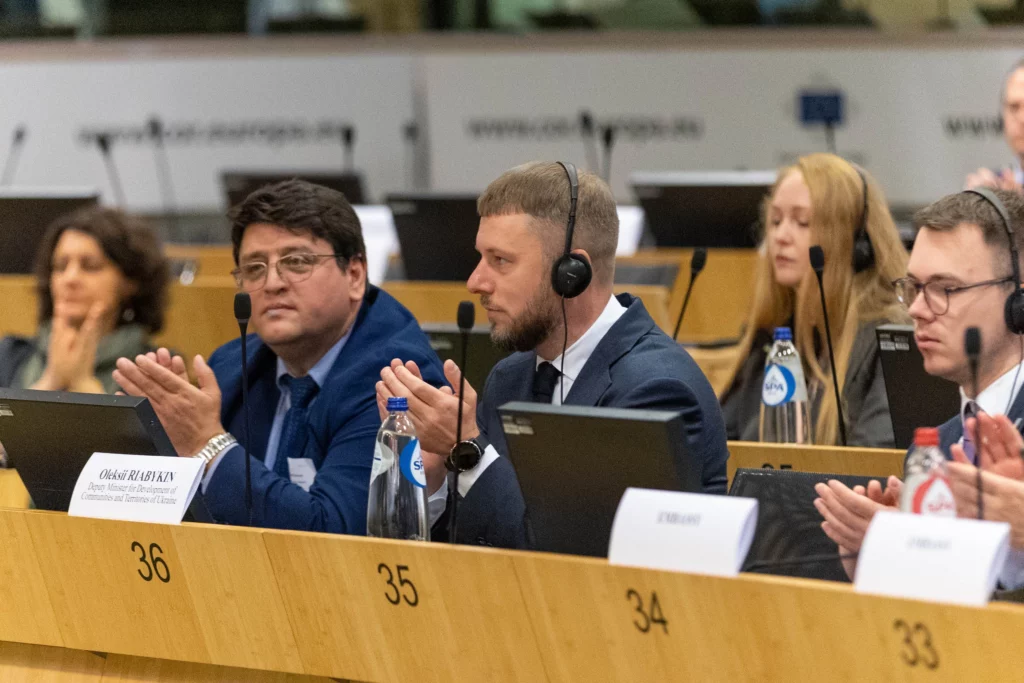
Brussels, 15 May 2025 – The European Alliance of Cities and Regions for the Reconstruction of Ukraine gathered its core members and Ukrainian and EU delegations at the European Committee of the Regions in Brussels to accelerate cooperation ahead of the Ukraine Recovery Conference (URC) in Rome this July. 

This high-level forum brought together municipalities from across Europe and Ukraine, alongside institutional partners, to exchange on Ukraine’s evolving territorial needs and to foster meaningful, lasting partnerships. At the heart of the discussions was a shared goal: empowering local governments to co-lead reconstruction, support reforms, and drive the local dimension of Ukraine’s EU accession process. 

CEMR’s Contributions: Tools for Lasting Cooperation 

Speaking at the forum, Durmish Guri, CEMR’s Director of Projects and Programmes, presented two key initiatives from CEMR designed to foster long-term collaboration between EU and Ukrainian municipalities: 

🔹 The Matchmaking Platform: This digital tool connects municipalities across Europe, helping them identify shared priorities, explore cooperation opportunities, and launch joint projects. With a special focus on Ukraine, the platform supports deeper partnerships with the rest of the continent, accelerating both recovery efforts and Ukraine’s EU integration process.  
Learn more → https://partnerships.ccre-cemr.org/  

🔹 The Bridges of Trust Community: Evolving from a project into a growing community, Bridges of Trust brings together local leaders from Ukraine and across the European Union, alongside national associations and institutional partners. This consolidated community is committed to strengthening local partnerships by supporting municipalities in co-designing practical solutions in areas of common interest. By reinforcing bonds from the ground up, it empowers municipalities, accelerates Ukraine’s EU integration, and contributes directly to its recovery. 
Learn more → https://ccre-cemr.org/bridges-of-trust  
 
Political Level meeting 
 
The core members of Alliance adopted the Joint Statement on Empowering Local and Regional Governments for the Reconstruction and Future EU Accession of Ukraine to which CEMR contributed. In particular, CEMR put forward two key recommendations: 

  • Establishing a one-stop shop to coordinate and scale up municipal partnerships; 
  • Ensuring stronger access for local governments to financial resources and decision-making processes, particularly within the Ukraine Donor Platform. 

These proposals aim to amplify the voice of local and regional governments, ensuring that municipalities remain central actors in Ukraine’s reconstruction and path to EU integration. 

Memorandum of Understanding  
 
A key highlight came with the signing of a new partnership between Kassel (Germany) and Zhytomyr (Ukraine)—a symbolic and practical demonstration of how municipal cooperation is directly shaping Ukraine’s recovery on the ground. 

A Shared Mission 

CEMR expresses deep appreciation to all co-organisers for hosting a timely and impactful dialogue. Special thanks go to the European Alliance of Cities and Regions for the Reconstruction of Ukraine for championing this process and uniting dedicated partners around a common cause.  

The presence of committed, action-driven leaders— including Magali Altounian, Aleksandra Dulkiewicz, Andrej Horvat, Svitlana Blinova, Vadim Boychenko, Oskar Chmiel, Antonella Valmorbida, Alberto Rini, Kata Tüttő, Oleksii Riabykin, Davide La Cecilia, Pekka Toveri, and many more  – demonstrated the collective energy powering this growing movement of cooperation. 

Local Governments in Ukraine’s Recovery

Bridges of Trust - News 2025

Local Governments at the Heart of Ukraine’s Resilience, Reconstruction, and European Integration 


As Ukraine continues its courageous and determined fight for freedom and democracy, local and regional governments stand at the forefront of the country’s resilience and recovery. Across Ukraine, municipalities are playing a pivotal role in responding to the challenges of wartime destruction, leading reconstruction efforts, and advancing Ukraine’s path toward European integration. 

Decentralisation as a Foundation for Resilience 

Ukraine’s decentralisation reform, initiated years before the full-scale Russian invasion, has become one of the country’s greatest strengths. Empowered local authorities have mobilised communities, safeguarded essential services, and led local reconstruction efforts, often in partnership with residents and civil society. Municipalities have ensured water, electricity, medical supplies, and shelter, even under occupation and communication blackouts. 

The example of Novobilouska hromada in Chernihiv region, where local authorities swiftly protected sensitive information and are now leading reconstruction efforts, highlights the importance of local self-governance in times of war. 

Bridges of Trust: Rebuilding Ukraine through partnership with the EU municipalities 

International cooperation has further enhanced local resilience. Projects such as Bridges of Trust, led by CEMR in cooperation with Association of Ukrainian Cities and with support of U-LEAD with Europe Programme, connect Ukrainian municipalities with European partners, fostering knowledge exchange and joint reconstruction projects. To date, over 30 Ukrainian municipalities have partnered with counterparts from across Europe, submitting more than 40 joint project proposals focused on recovery and sustainable development. 

These partnerships go beyond solidarity; they promote mutual learning, strengthen democratic governance, and contribute to Ukraine’s European integration by aligning local development practices with EU standards and values. 

Digital Tools for Transparency and Efficiency 

Innovative digital solutions also play a key role. Ukraine’s Prozorro e-procurement system and the DREAM (Digital Restoration Ecosystem for Accountable Management) platform ensure transparency and accountability in reconstruction projects. These tools not only increase public trust but also facilitate international donor engagement by offering real-time data on funded projects. 

The Big Recovery Portal empowers civil society and local communities to monitor reconstruction efforts, report issues, and uphold high standards of integrity and efficiency. Such digital initiatives are critical to ensuring effective use of resources and advancing Ukraine’s EU accession ambitions. 

  • CEMR has developed the Matchmaking Platform, a digital tool connecting towns, cities, and local authorities across Europe, with a special focus on Ukrainian communities. This online platform enables quick peer interactions, joint projects in key cooperation areas, access to funding opportunities, best practices, and enhances international visibility.  

The Way Forward 

Ukraine’s local and regional governments are driving recovery, resilience, and reform. Through international partnerships, digital innovation, and Community engagement through Bridges of Trust, they are shaping a democratic, European future for Ukraine. As CEMR and its members continue to stand with Ukraine, supporting municipalities in their efforts remains essential for a united and resilient Europe. 

Read more at the GMF article:  https://www.gmfus.org/news/defending-democracy-ukraines-resilient-reconstruction-1 

For more information, contact