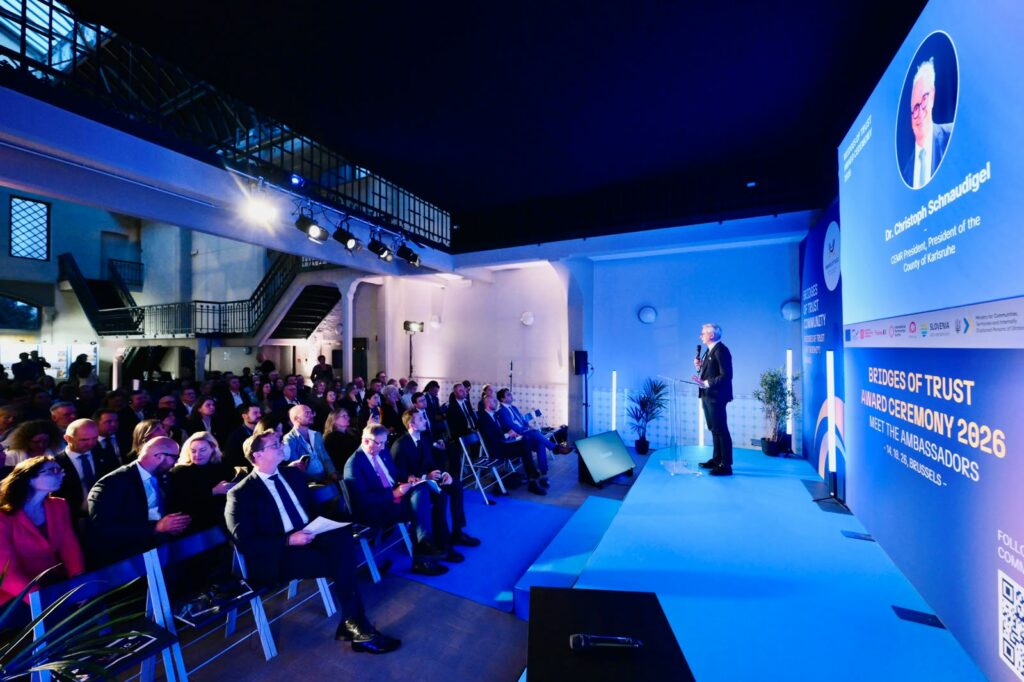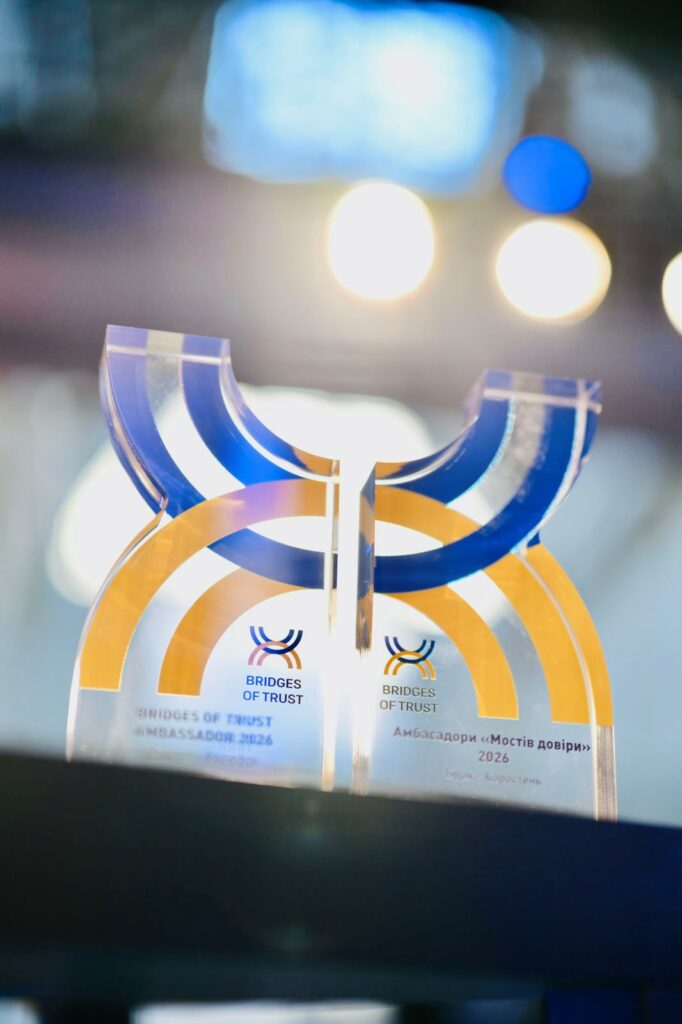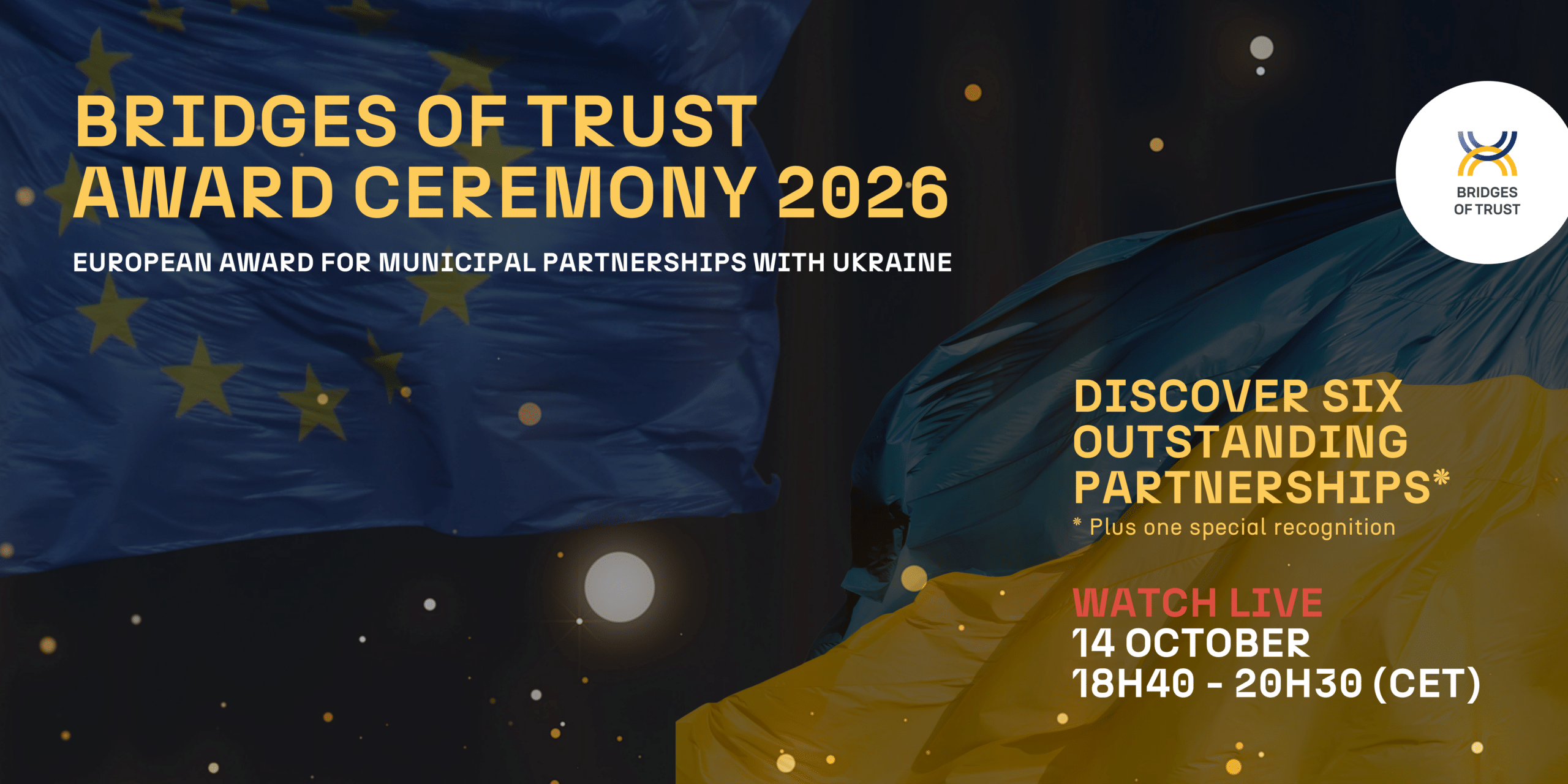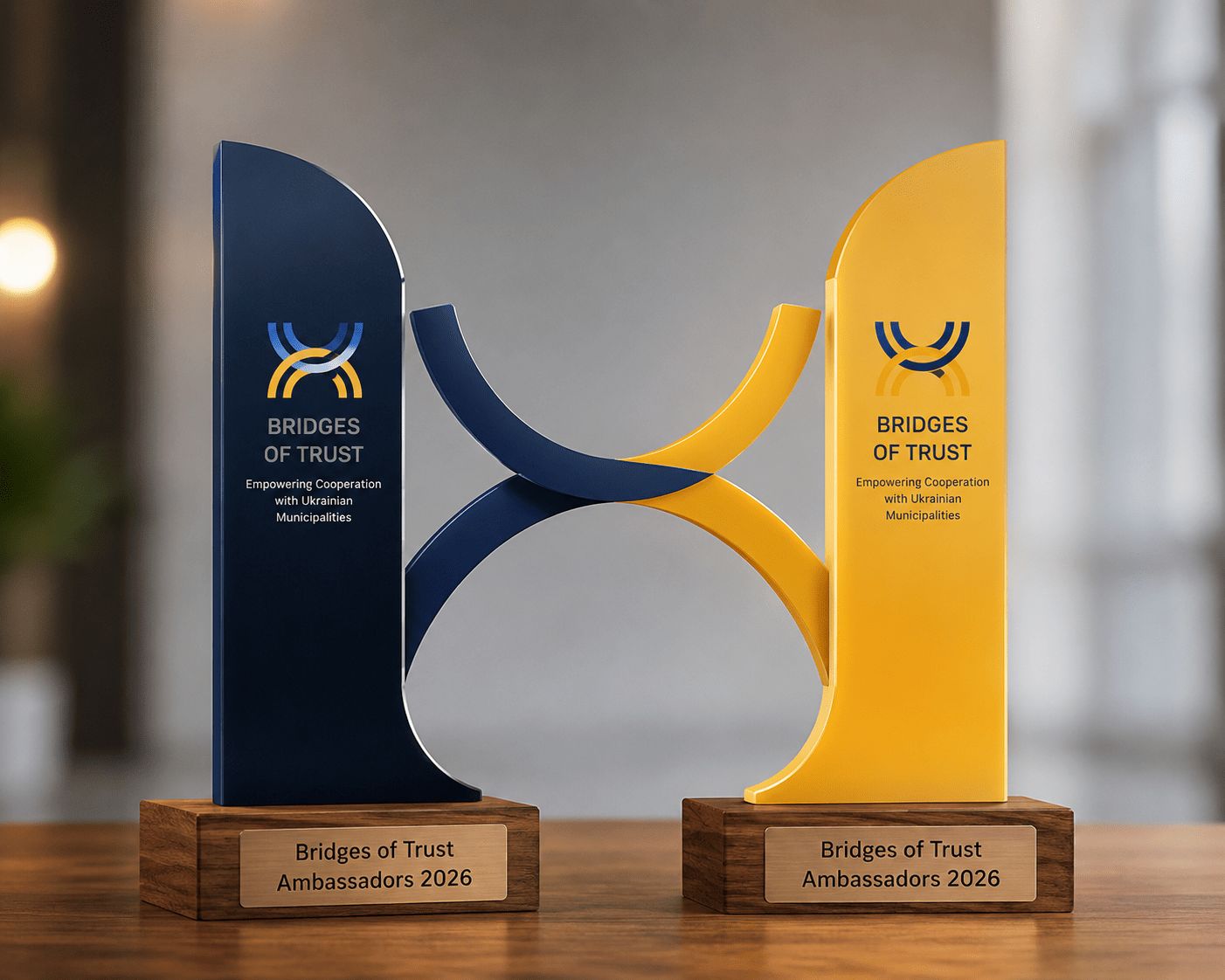
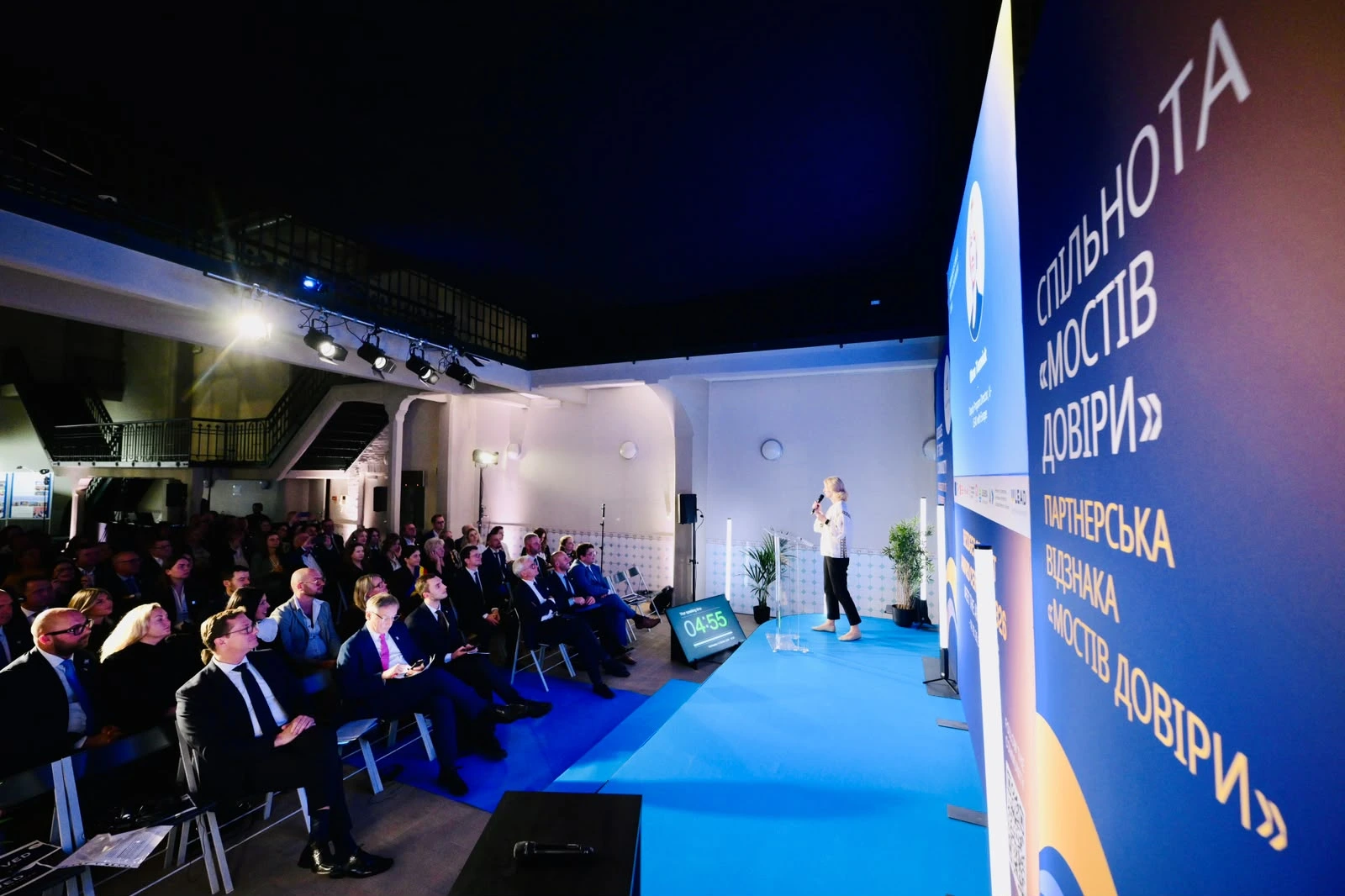
CEMR is launching a call for proposals for the design and production of the Bridges of Trust Partnerships Award 2026 trophies.
The Bridges of Trust community brings together Ukrainian towns and cities and their European counterparts, fostering cooperation, resilience, recovery, decentralisation and mutual learning. The Bridges of Trust Partnerships Award 2026 will recognise outstanding municipal partnerships and celebrate their contribution to Ukraine’s European integration journey.
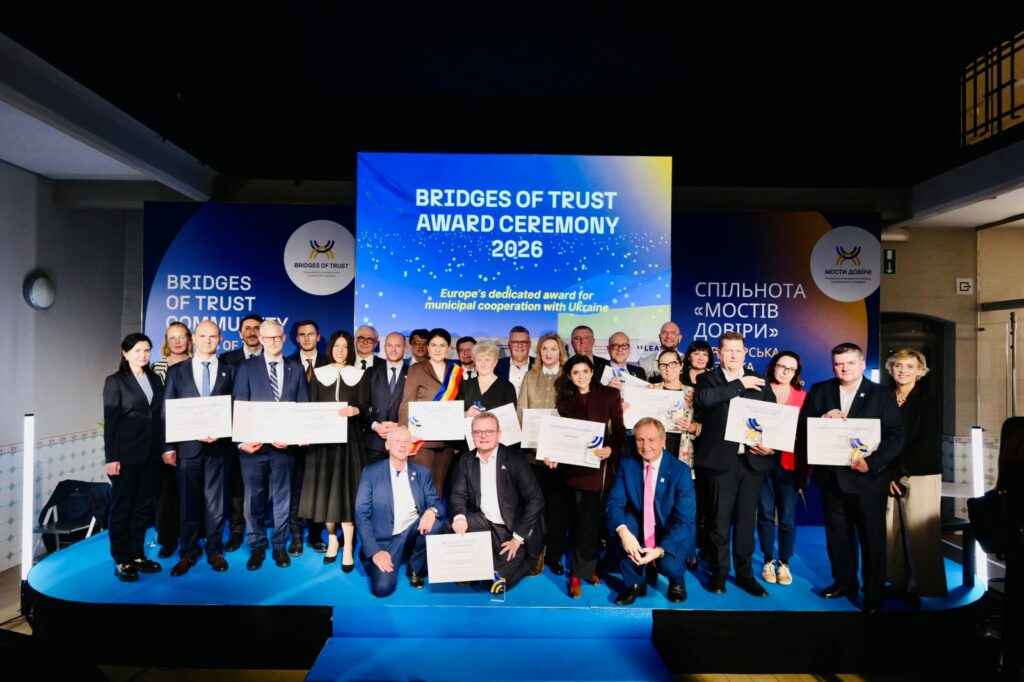
To mark these achievements, CEMR will award five municipal partnerships as Bridges of Trust Ambassadors 2026 and is looking for a creative professional or organisation to design and produce the trophies presented during the award ceremony.
What are we looking for?
Artists
Designers
Craftspeople
Studios
Creative agencies
Other qualified professionals
The selected contractor will design and produce ten trophies (two per awarded partnership), inspired by the Bridges of Trust identity and symbolising the connection between partner municipalities.
The trophies should visually reflect the values of Partnership, European Ukrainian cooperation, solidarity and trust, and resilience and reconstruction.
How to apply
Applicants should submit:
A portfolio showcasing relevant work and experience
A short concept proposal
Visual references, sketches or mock-ups
A proposed timeline for design, production and delivery
In Gdańsk, the Ukraine Recovery Conference confirmed the importance of local and regional governments in Ukraine’s recovery and EU accession
1,349 words
6–9 minutes
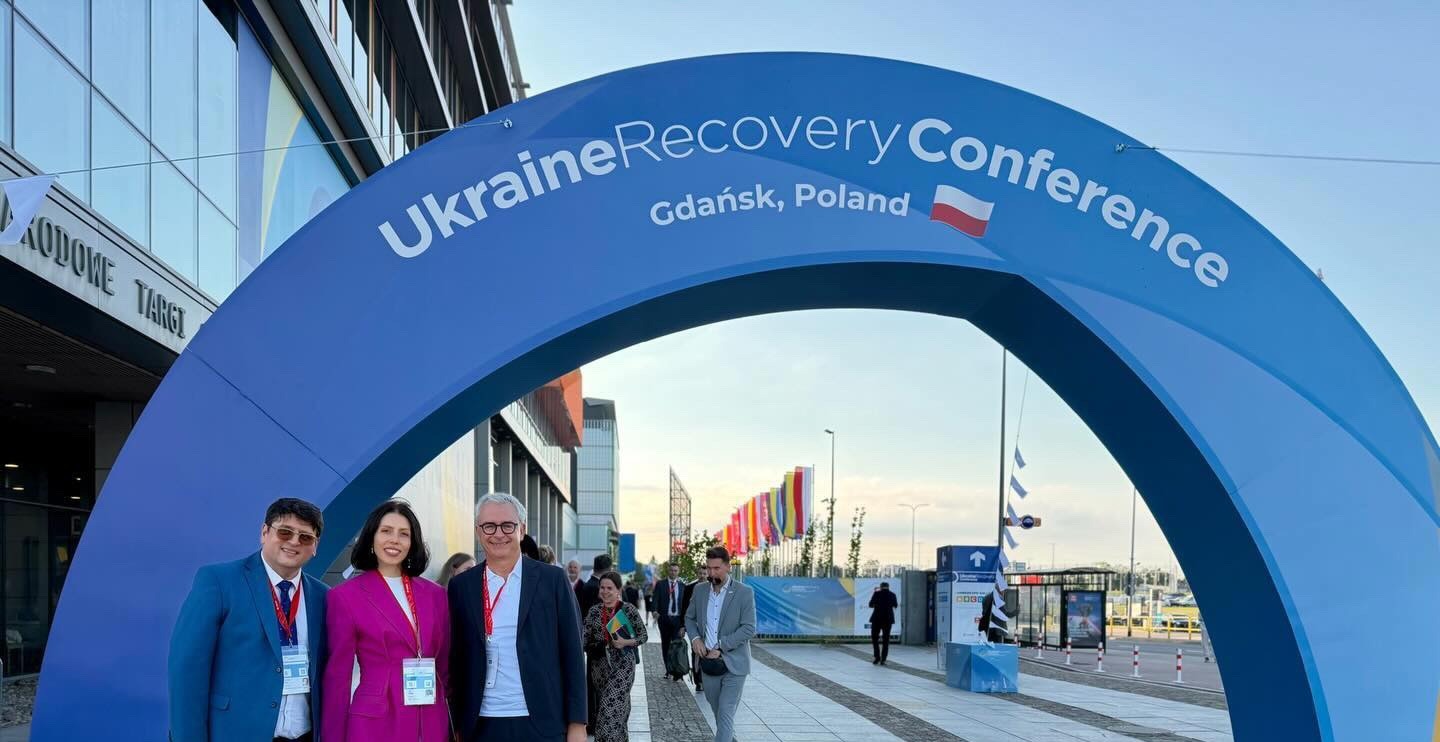
The Ukraine Recovery Conference (URC 2026), co-hosted by Poland and Ukraine, took place in Gdańsk on 25 and 26 June 2026. Being one of the largest international gatherings dedicated to bolstering international support for the country’s reconstruction, as well as catalysing investments for Ukrainian businesses and local governments, this edition brought together more than 5,000 participants.
Heads of state, ministers, donors, and international organisations converged in the Polish city to address the most relevant challenges to Ukraine’s future: energy, critical infrastructure, logistics, and, for the first time, security capabilities.
The Council of European Municipalities and Regions (CEMR) participated in the URC2026 representing the secretariat of the European Partnership Hub (EPH), which facilitates the Bridges of Trust (BoT) Community. Two years after the launch of the Matchmaking Platform at URC 2024, and one year after, the launch of the European Partnership Hub (EPH) – hosted by CEMR – at URC 2025 to facilitate the BoT Community actors active in international municipal cooperation with Ukraine, CEMR was present at URC 2026 with a dedicated booth showcasing the collective efforts of the BoT Community and best practices in international municipal cooperation with Ukraine.
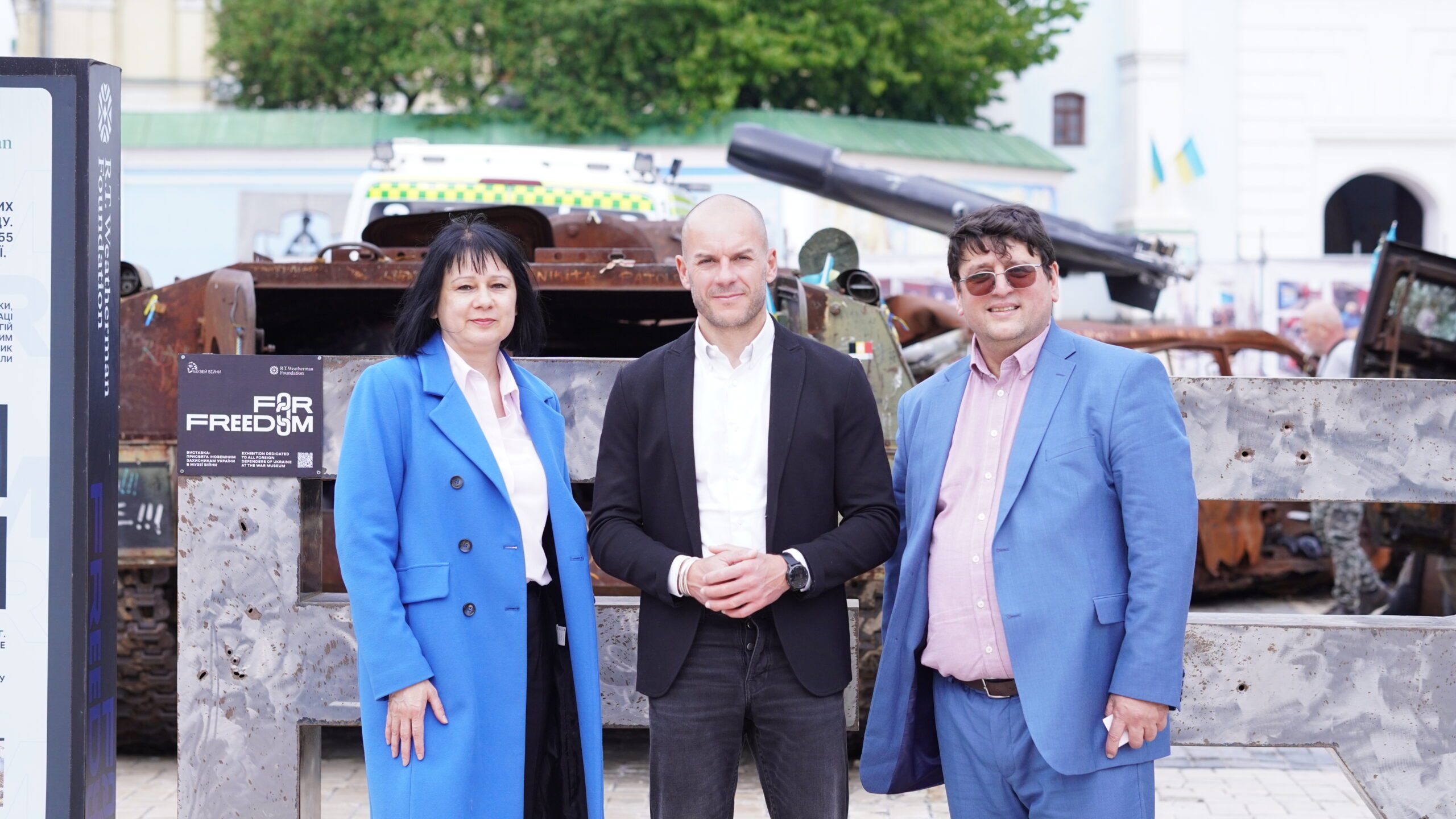
CEMR contributed to the local and regional dimension of the conference and thus carried a specific voice, that of local and regional governments. CEMR President Christoph Schnaudigel represented the organisation throughout the two days conference together with Olha Pikula, CEMR Spokesperson on Enlargement and Deputy Mayor of Mariupol City Council, and Oleksandr Vasylenko, Head of the Cherkasy District Council and First Vice-President of the Ukrainian Association of Rayon and Oblast Councils (UAROR).
A joint statement and a call for coordination
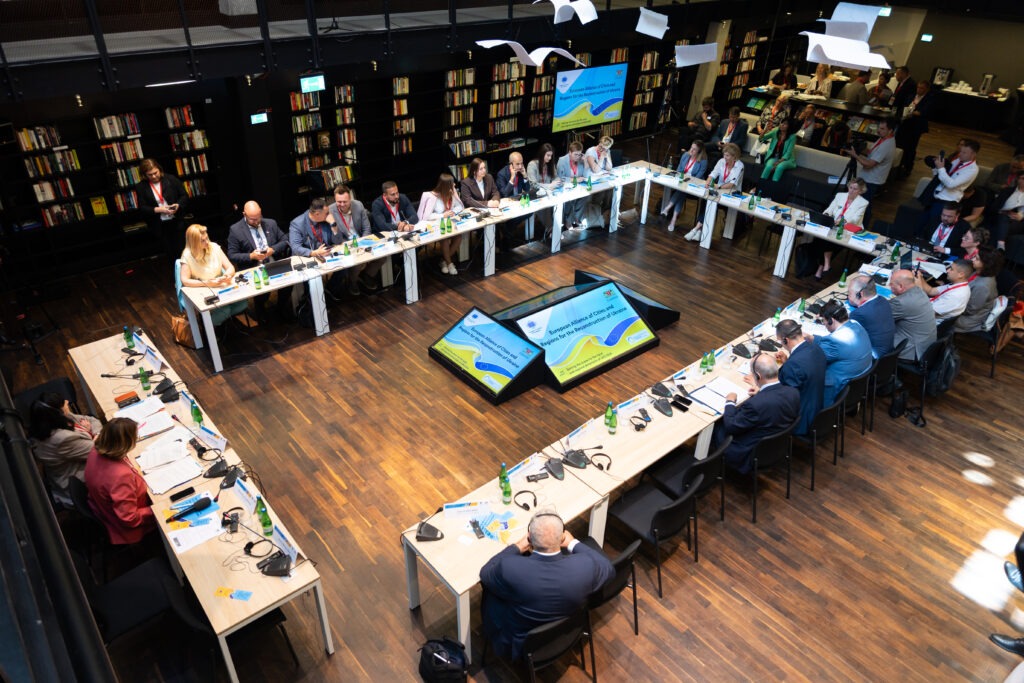
On the eve of the conference, the European Alliance of Cities and Regions for the Reconstruction of Ukraine gathered its 100 members to endorse a joint statement setting out concrete priorities for donor action and Ukraine’s EU integration. As a founding member of the Alliance, CEMR contributed directly to this collective effort. Oleksandr Vasylenko, represented CEMR during the political-level Alliance meeting.
In his statement, he emphasised: “The Bridges of Trust Community, facilitated by the European Partnership Hub and supported by U-LEAD with Europe, is a successful example of practical cooperation and joint efforts of various actors across Europe. All of these actors deliver tangible results in partnership building and capacity development demonstrating the diversity and potential of municipal cooperation.”
The statement recognises that Ukrainian towns, cities and regions have been at the core of the country’s resilience since the start of the full-scale invasion, providing emergency response, maintaining infrastructure, and acting as operational hubs for humanitarian assistance, all whilst preparing for a sustainable future. It calls on institutional partners to treat local and regional governments as strategic partners and integral decision-makers in reconstruction governance, and urges donors to allocate ring-fenced, transparent funding for local and regional development, including direct access to finance and dedicated technical assistance.
Critically for CEMR and the EPH, the statement underlines the potential of municipal cooperation with Ukraine and calls for a reinforcement of existing coordination structures, including the Alliance itself and the BoT Community facilitated by the EPH, and to foster links between local needs, funding opportunities, and the tools already established to support peer-to-peer partnerships such as the Matchmaking Platform.
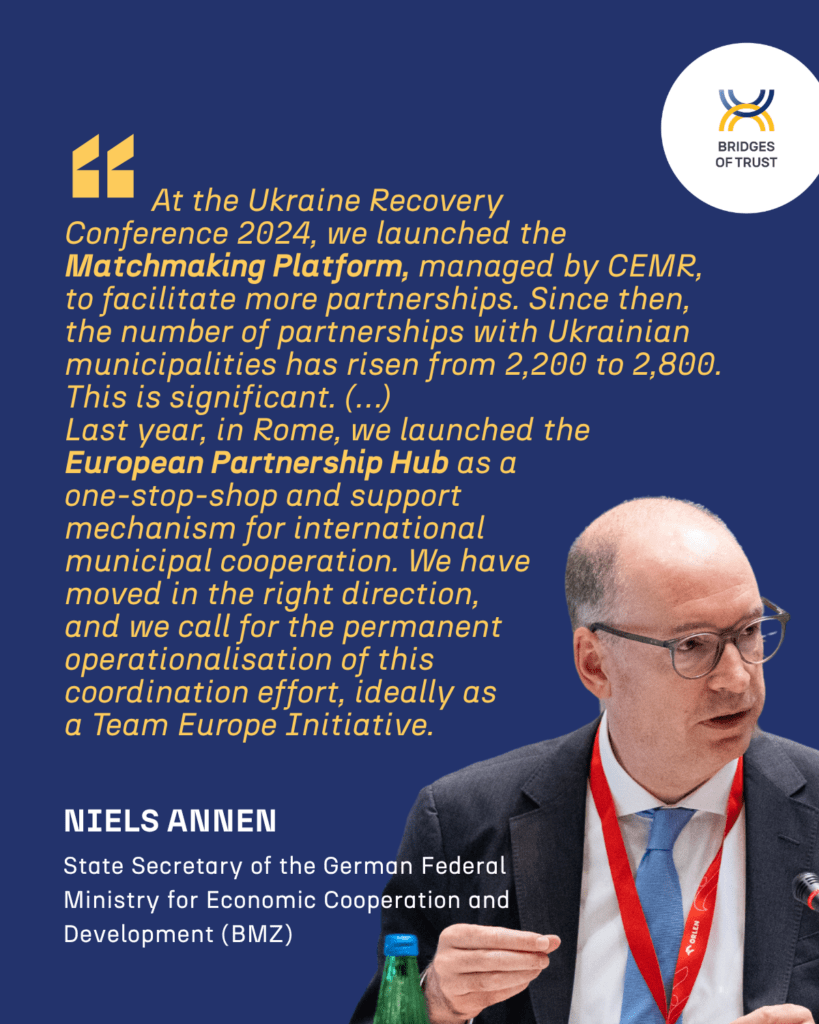
Niels Annen, State Secretary in the German Federal Ministry for Economic Cooperation and Development, recognised in his intervention the significant increase of international partnerships with Ukrainian municipalities in the last years: “We have moved in the right direction, and we call for the permanent operationalisation of this coordinated effort.”
Together with Muriel Lacoue-Labarthe, Special Envoy of the President of the French Republic for Ukraine’s Recovery and Reconstruction, he announced the launch of a new funding line for multi-partner cooperation involving municipalities from Germany, France, Poland and Ukraine.
Meetings and exchanges at the European Partnership Hub booth
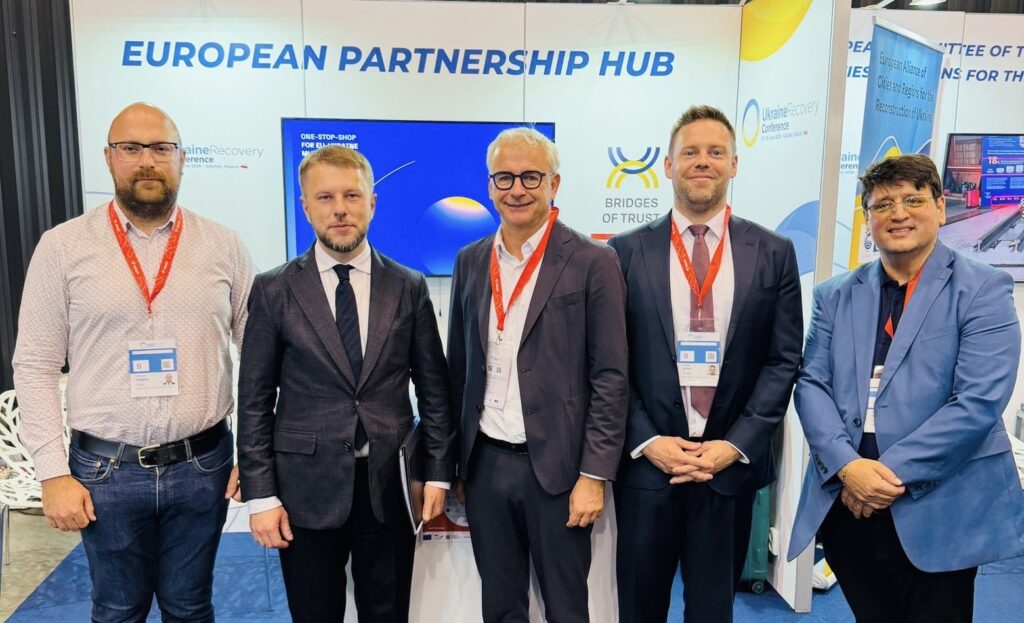
The EPH booth was more than a presence at the conference. Positioned alongside partners from the Committee of the Regions, Eurocities and the Polish Association of Cities, it became a point of convergence for Ukrainian and European partners, hosting a series of exchanges that moved between the political and the technical, the bilateral and the collective.
CEMR President Christophe Schnaudigel met with Aleksandra Dulkiewicz, Mayor of Gdańsk, for a focused conversation on the next Multiannual Financial Framework and the persistent need to ensure that local and regional governments have a genuine seat at the European table. The discussion touched on the importance of coordinated messaging across CEMR, the Committee of the Regions, and city networks, with Ukraine’s recovery and the potential of municipal partnerships running as a thread throughout.
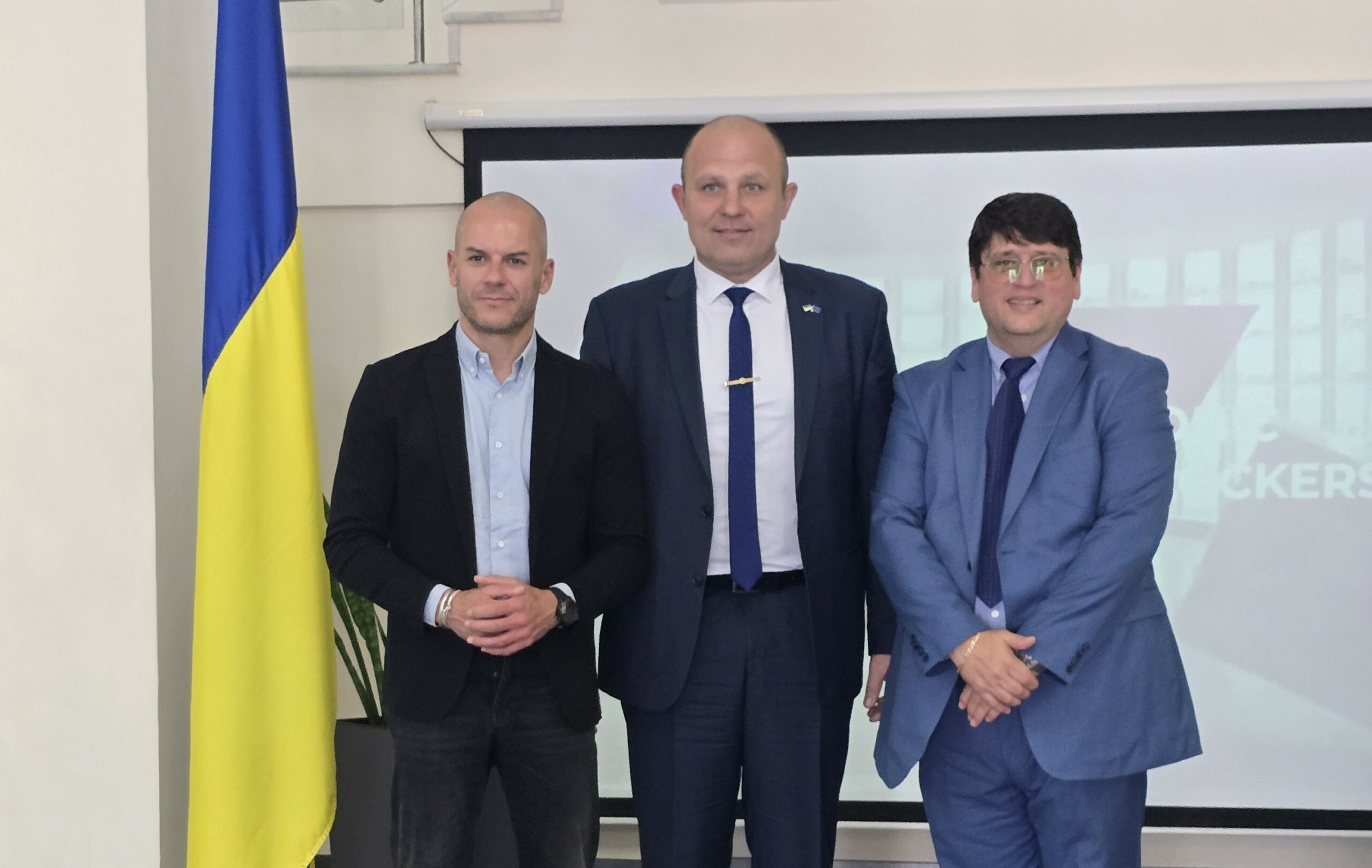
A particularly significant exchange took place between CEMR President Christoph Schnaudigel and Oleksandr Vasylenko, Head of the Cherkasy District Council and First Vice-President of the Ukrainian Association of Rayon and Oblast Councils (UAROR). The two sides explored future prospects of cooperation, covering institutional ties, peer-to-peer exchanges, and support for local self-government. The conversation also engaged with a structural question that matters enormously for Ukraine’s governance: the clarity of competences assigned to rayons and oblasts as the country pursues rebuilding and decentralisation.
CEMR President Christoph Schnaudigel also met with Vitali Klitschko, Mayor of Kyiv, Ukrainian Deputy Minister Oleksii Riabykyn, and Olha Pikula, CEMR Spokesperson on Enlargement and Deputy Mayor of Mariupol City Council, alongside representatives of the BoT Community and partner organisations.
The Director General of Expertise France, one of the key actors within the BoT Community, also visited the EPH stand. The exchange focused on the value of mapping and evaluating existing partnerships, and on the EPH’s role as a coordination structure that helps avoid duplication and fragmentation among international actors. Within the framework of the Global Gateway, the EPH was put forward as a model for building coherent, multi-stakeholder engagement in partner countries.
On the technical side, CEMR’s Director of Projects and Programmes Durmish Guri met with Astrid Kohl, newly appointed Programme Director of U-LEAD with Europe. The meeting was an opportunity to reflect on the results of this partnership: what began as a project has grown into a genuine community of actors committed to Ukraine’s recovery, decentralisation, and EU accession. That trajectory owes much to the sustained support and long-standing cooperation of U-LEAD with Europe, without which the BoT Community and the EPH would not be what they are today.
URC 2026 has shown a strong commitment to the local and regional dimension in the reconstruction of Ukraine, by the organising City of Gdansk as well as by the various associations and networks represented. Side events and exchanges at the EPH booth provided insights into the practical work of municipal partnerships, their opportunities and challenges. CEMR will use this feedback to improve the services of the EPH even further and to shape the future of municipal cooperation with Ukraine with partners from the BoT Community.
CEMR will continue working with its members and partners to ensure that local and regional governments remain central actors in shaping Ukraine’s future, as the institutions closest to the people that reconstruction is ultimately for.
About the next Ukraine Recovery Conference 2027
At the end of URC 2026 in Gdańsk, Estonia announced it will take over as host of the next Ukraine Recovery Conference, to be held in Tallinn in 2027, succeeding Poland’s role as organiser. The Prime Minister of the Republic of Estonia, Kristen Michal, confirmed the news, framing support for Ukraine’s reconstruction as directly tied to European security, and said Estonia intends to build on the momentum generated in Gdańsk. The Estonian Minister of Foreign Affairs, Margus Tsahkna, described Ukraine’s rebuilding as Europe’s largest economic project of the coming decade, spanning infrastructure, democratic institution-building, and EU integration. Estonia also plans to draw on the Nordic-Baltic Eight (NB8) cooperation format to pool regional expertise and resources in organising the 2027 conference.
For CEMR and the EPH, this transition sets the horizon for the next phase of municipal cooperation with Ukraine, building on the commitments and coordination structures reinforced in Gdańsk.
Committee of the Regions adopts AgoraEU opinion with CEMR’s key policy recommendations at its core
742 words
3–5 minutes
The European Committee of the Regions (CoR) adopted its opinion on the proposed AgoraEU programme at its 171st plenary session. Drafted by rapporteur Csaba Borboly (RO/EPP), Vice-President of Harghita (Romania) County Council, the opinion sends a clear message to EU institutions: local and regional governments are essential implementing partners in Europe’s cultural, media and democratic future.
AgoraEU is the Commission’s proposal to merge Creative Europe and the Citizens, Equality, Rights and Values (CERV) programme into a single framework for the EU budget 2028–2034, covering three strands: culture, media, and democracy. While the ambition to create coherence is welcome, CEMR and the CoR have both underlined that this merger must not dilute the specific objectives and funding of each stream.
Ahead of the CoR’s deliberations, CEMR submitted several policy recommendations to the European Committee of the Regions, which have been reflected across four critical areas.
Town twinning: from omission to recognition
The most important alignment concerns town twinning and networks of towns. CEMR called for twinning to be recognised as a strategic democratic instrument with a clearly earmarked budget line — a cost-effective vehicle for civic participation, intercultural dialogue and European identity-building, especially in the context of geopolitical instability and enlargement process.
The CoR echoes this directly, calling for twinning networks and cross-border municipal partnerships with dedicated multi-annual funding. It also formally regrets that the Commission’s proposal dropped the twinning actions provided for under CERV and calls for their reinstatement. Town twinning reaches hundreds of thousands of citizens each year, including in small towns and rural areas rarely served by complex EU funding instruments. A CEMR Analysis of Twinning in Europe in 2023 showed that local and regional government associations (LRGAs) play an important role in twinning. More than 80% of respondents stated that they have been active in this field in the last two years and 75% declared interest to continue and to develop activities even further including cultural exchange, peer learning and joint project implementation.
National Contact Points and simplified access
National local and regional government associations and city networks have a proven track record in channelling EU funding to grassroots actors. CEMR argued that well-resourced National Contact Points, hosted by national associations of local and regional governments, are essential to reach smaller municipalities, rural areas and first-time applicants, and that national associations and municipal networks should be formally recognised as strategic bridge actors empowered to manage Financial Support to Third Parties (FSTP) mechanisms.
The CoR moves in the same direction, though with its own framing. It stresses that proportionality must be assessed not only in policy scope but in accessibility and inclusivity, and endorses simplified grant formats, capacity-building support and two-step application and cascade grant processes that have proven their value in previous programmes. It also calls for AgoraEU contact points to be established at least at national level, and where appropriate at regional level. Critically, it proposes that own contribution requirements for small-scale and grassroots initiatives be capped at 10% of total eligible costs, coverable through national, regional or local co-financing — a practical measure that directly addresses one of the most persistent barriers to bottom-up participation.
Embedding local governments within the programme’s governance framework
The CoR holds that AgoraEU must fully align with active subsidiarity and multilevel governance, calling for the role of LRAs to be formally recognised in the regulation, for territorial participation indicators to be introduced, and for evaluation criteria to be explicitly linked to territorial cohesion and citizen engagement.
What comes next
The CoR opinion is a strong institutional signal. The challenge now is to carry this territorial voice into the EU budget negotiations between the European Parliament and the Council.
CEMR will continue to advocate for the four pillars essential to making AgoraEU work for local and regional governments: a protected budget line for twinning actions; well-resourced National Contact Points with a genuine territorial mandate; formal recognition of intermediary organisations to facilitate the access to small subgrants; and meaningful participation of LRGs representatives in programme governance from the outset.
Culture, media and democracy are lived every day in town squares, local theatres and municipal councils across Europe. AgoraEU has the potential to reinforce that. The CoR has made clear what it takes — now it is up to the European Parliament and the Council to move towards this direction.
Read the Committee of the Regions’ adopted opinion [here]
Municipal partnerships between Ukraine and other European local governments are key drivers of recovery and resilience, reform and EU integration, mutual learning and long-term cooperation.
Through the Bridges of Trust (BoT) Community, we share good examples and success stories of municipal partnerships with Ukraine. And we are keen to discover more!
That is why the European Partnership Hub Secretariat, together with the Bridges of Trust Community, and supported by the EU and its member states through U-LEAD with Europe, initiated the Bridges of Trust Partnerships Award.
The award aims to recognise the efforts and commitment of all stakeholders involved in municipal partnerships with Ukraine to make it more visible at the national and European levels. Five municipal partnerships will be rewarded as Bridges of Trust Ambassadors 2026! Showcasing the geographical outreach and diversity of municipal cooperation in terms of topics, approaches and stakeholders involved.
BoT Partnerships Award 2026 is open for municipal partnerships of Ukrainian municipalities and their partners in the following countries: Bulgaria, Croatia, France, Germany, Italy, Latvia, Montenegro, the Netherlands, North Macedonia, Poland, Romania, Slovenia, and Sweden.
Municipalities of all sizes can apply.
Municipal partners should apply jointly by downloading and filling in the application form below. Share your story with us!
How to apply? (Application documents below)
Fill in jointly the form to tell us about your municipal partnerships by responding to six questions.
Add the signed declaration of the two municipalities involved in the partnership.
Pre-selection by BoT Community Actors: Each partner will nominate up to three municipal partnerships based on the quality, visibility and innovation of their cooperation approaches.
CEMR reinforces its role as Europe’s Hub for Municipal Cooperation with Ukraine
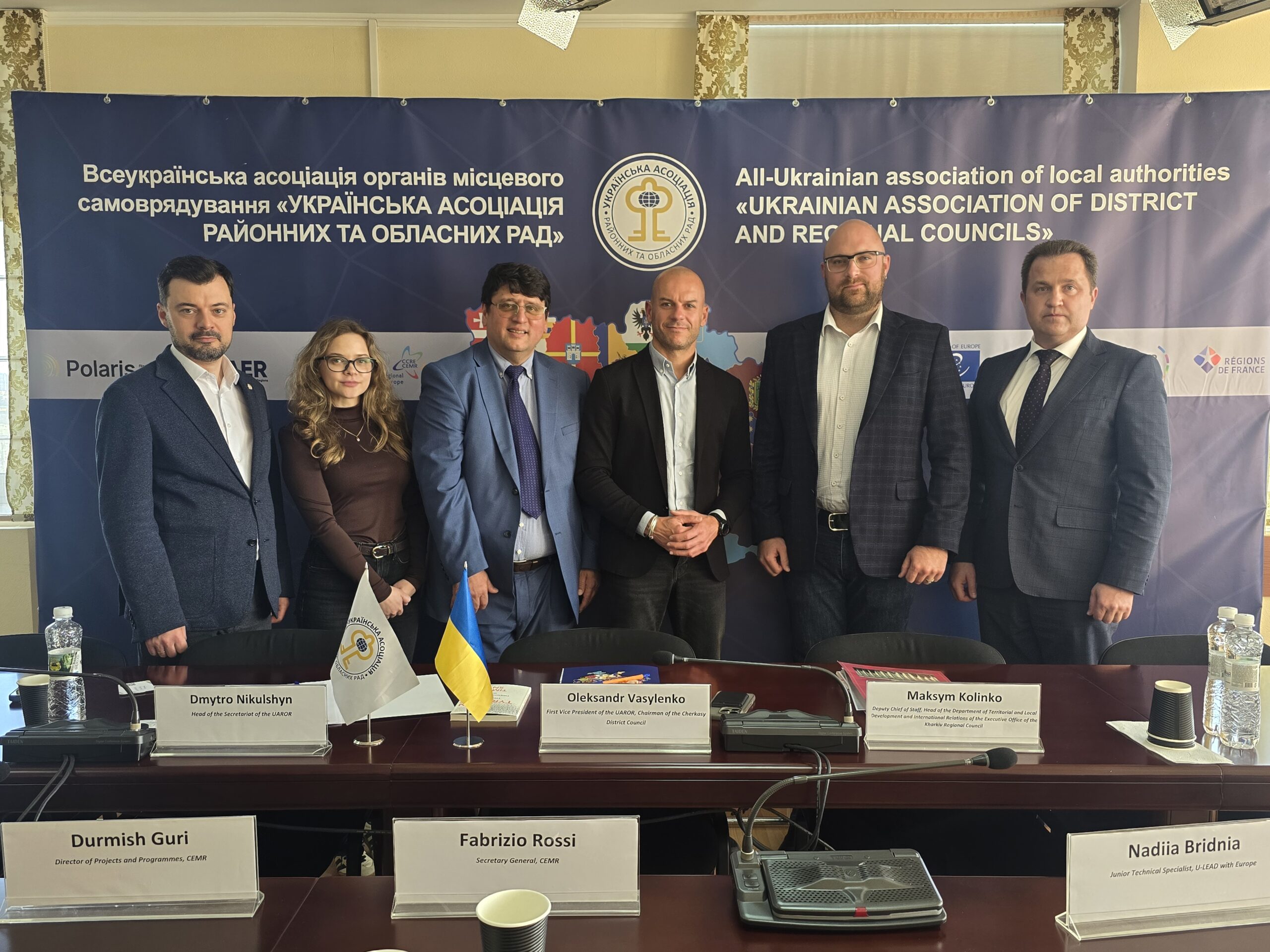
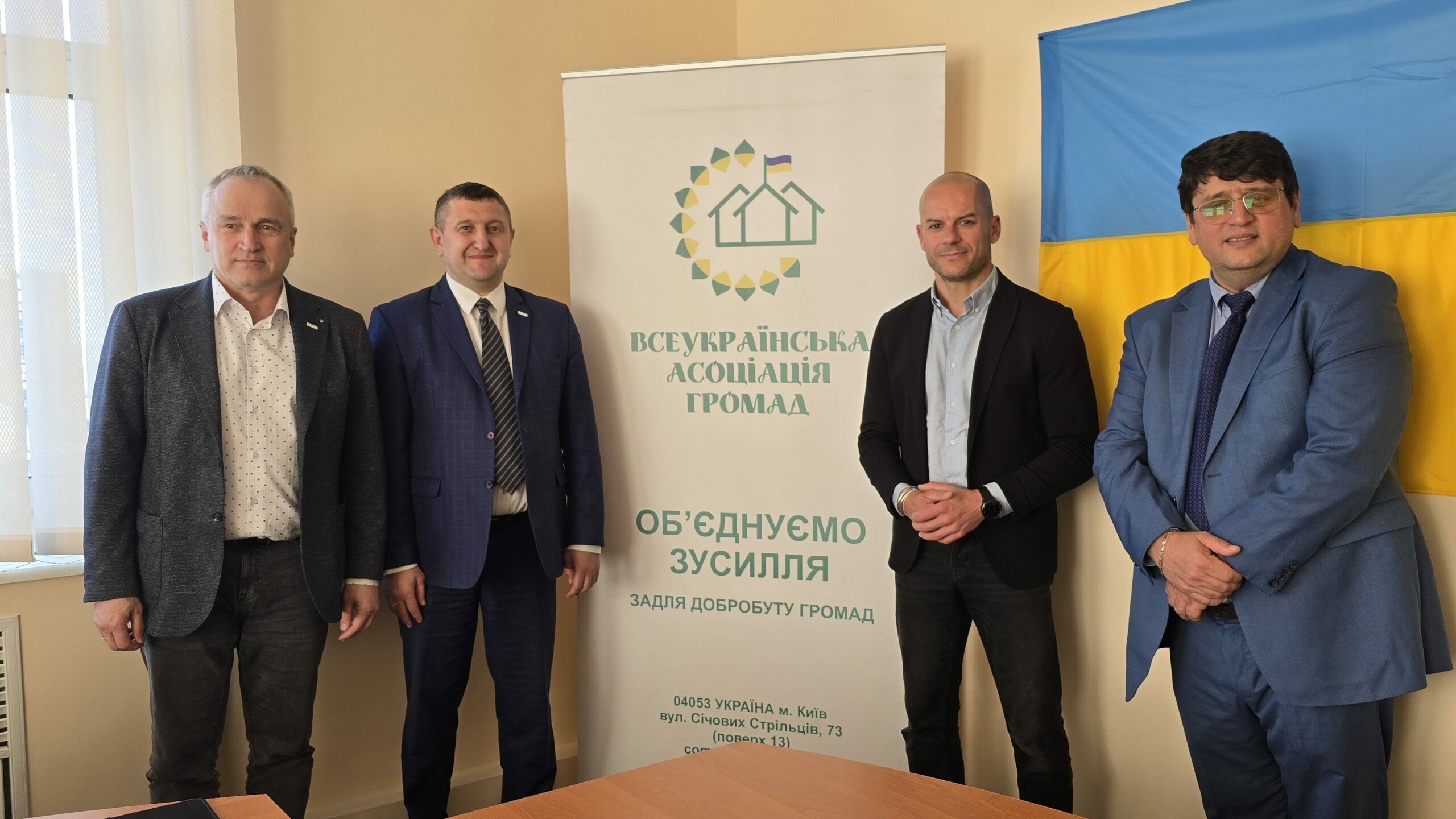
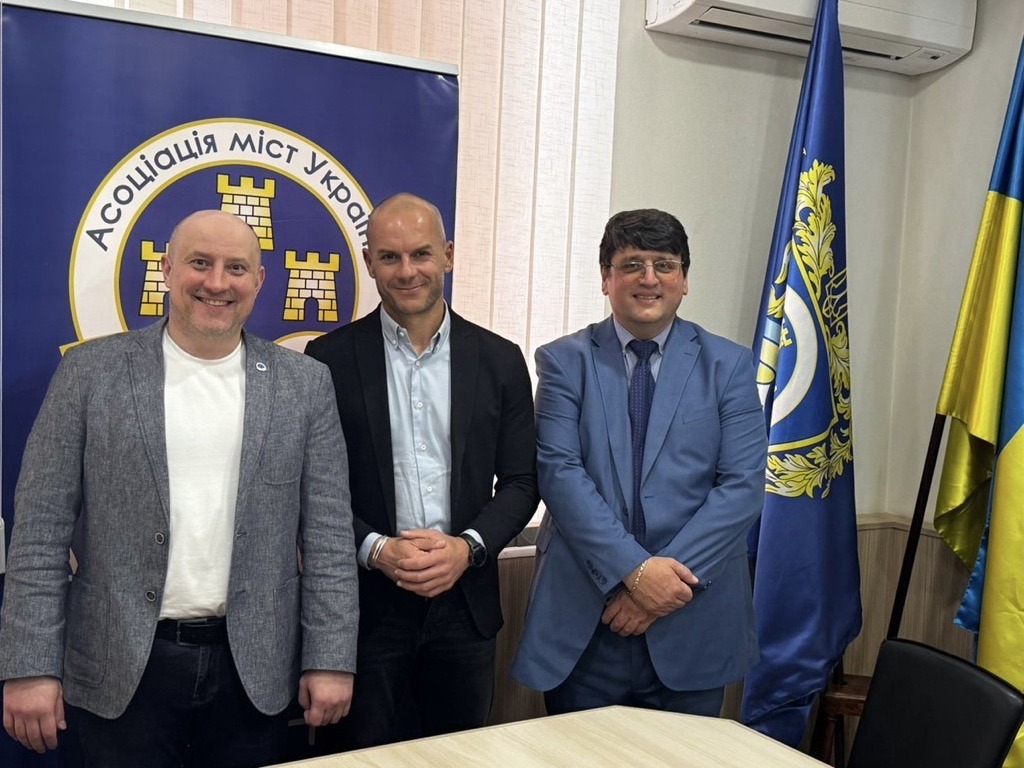
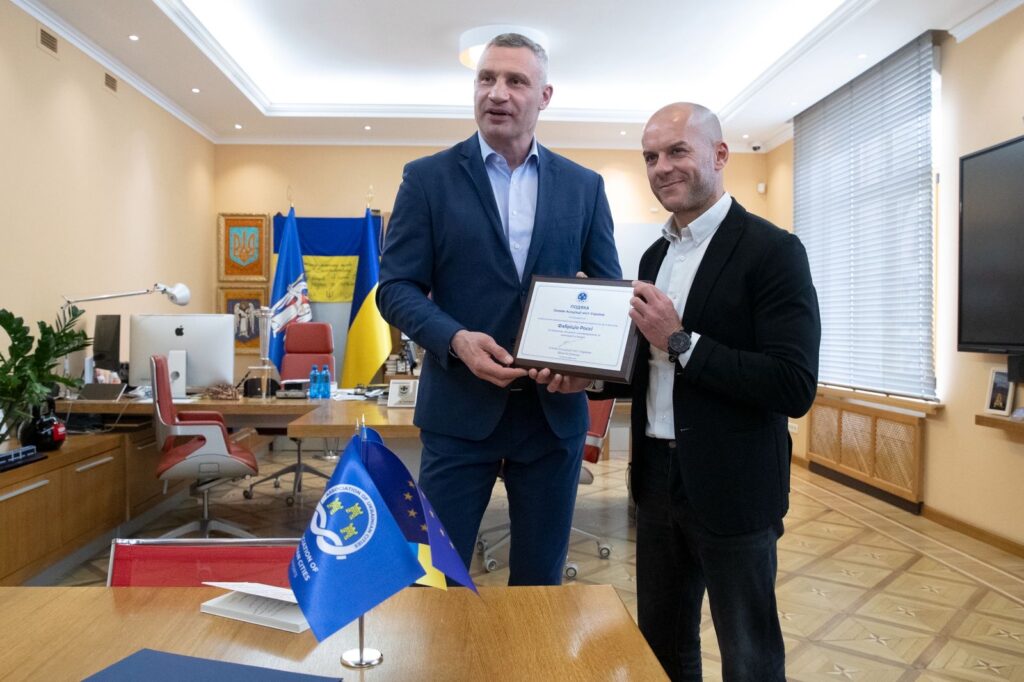
A week-long mission to Kyiv, carried out by CEMR Secretary General Fabrizio Rossi and Director of Projects and Programmes Durmish Guri, has reaffirmed CEMR as a facilitating structure of the European Partnership Hub (EPH), for international municipal cooperation in support of Ukraine’s recovery, resilience, and European integration.
Although CEMR’s engagement with Ukraine stands since 2002, this visit took place within a strategically significant framework, which is the European Partnership Hub (EPH), supported by the EU and its member states through U-LEAD with Europe programme. The EPH, developed jointly with the Bridges of Trust Community actors, is designed to scale up, structure, and coordinate international municipal partnerships between European and Ukrainian municipalities.
With hundreds of bilateral and multilateral cooperation initiatives already underway and demand for further support growing, the EPH Secretariat (EPHS) provides the coherent, European-level coordination needed to align actors and eliminate duplication. This approach better serves needs on the ground and directly answers the call to action from the Ukraine Recovery Conference in Berlin, which urged the creation of a dedicated one-stop shop.
Main takeaways from the visit to Ukraine
Federating the national associations of local and regional governments.
Exchanging with key local leaders: Klitschko, Mayor of Kyiv and Pikula, Deputy Mayor of MariupolCity Council
A meeting with the Mayor of Kyiv and Chair of the AUC, Vitaliy Klitschko, provided an opportunity to review more than twenty years of cooperation and to discuss the practical solidarity that Ukrainian cities need from their European counterparts. Mayor Klitschko expressed particular appreciation for CEMR’s annual declarations and its sustained international advocacy for mayors in captivity.
The meeting with the Deputy Mayor of Mariupol City Council, and also CEMR Spokesperson on EU Enlargement, Olha Pikula, covered the need for a clear CEMR position on Ukraine in the context of the next Multiannual Financial Framework, ensuring that Ukraine’s specific circumstances are fully reflected in both policy and funding approaches.
Dialoguing with Ukrainian ministries and the EU delegation in Ukraine
Meetings with the EU Delegation to Ukraine, including the Head of Cooperation at the EU Delegation to Ukraine, Stefan Schleuning and with the Deputy Minister for Development of Communities and Territories, Oleksii Riabykin, produced a consistent political signal: Ukraine’s recovery and accession will only succeed if local and regional governments are systematically involved. Particular attention was given to Chapter 22 on Cohesion Policy, where municipalities and regions are central delivery actors, and to the urgent need for clarity on how local governments can access the Pillar III of the Ukraine Facility.
Coordinating with the Bridges of Trust Community actors working in Ukraine
A meeting with Expertise France, a key actor within the Bridges of Trust Community, illustrated the breadth of the EPHS coordination role. Discussions focused on the preparation of the Ukraine Recovery Conference and the need for a more coordinated approach to international municipal cooperation within the EU framework. The mission was also an opportunity to work alongside the U-LEAD with Europe team in Ukraine, who co-organised and supported the visit throughout the week.
What is International Municipal Cooperation, and why does it matter now in Ukraine?
International municipal cooperation refers to structured partnerships between local and regional governments across borders, enabling peer learning, institutional strengthening, capacity building, and democratic resilience. In normal times, these partnerships help municipalities share expertise and improve public services.
In Ukraine’s current context, they carry an additional and urgent purpose: they are instruments of resilience, reconstruction, and EU integration, built from the ground up.
While Ukraine’s EU accession path is negotiated at the European and national level, it is mostly implemented and made credible at the local level. Municipalities and regions are responsible for delivering essential services under wartime conditions, for rebuilding infrastructure, for supporting internally displaced persons, and for implementing the administrative and governance reforms that EU membership requires. Their full involvement in the accession process is indispensable.
The need for a coordinated approach
The meetings confirmed that the European Partnership Hub is increasingly recognised as a strategic priority. The EU Delegation in Ukraine expressed strong support for developing the Hub further as a reference of expertise on international municipal cooperation with Ukraine, covering EU policy, decentralisation, local governance, and capacity building.
The political context makes this ambition both timely and necessary. Ukraine’s recovery will only be credible, effective, and sustainable if it is co-shaped with local governments and partners. CEMR, as host of the European Partnership Hub Secretariat, together with the Bridges of Trust Community actors, are positioned to ensure that it is.
Four years ago, uncertainty dominated every conversation. As Mayor Klitschko recalled, no one believed this war would last this long. Today, the war continues, but Ukrainians translate everyday fear and uncertainty into resilience, determination, and preparedness. I, as everyone, was amazed by how Local communities have adapted and stood firm, and to see the great value of international solidarity.
Establishing municipal partnerships between Ukraine and a European partner country in the context of the project “Towards a Bridges of Trust (BoT) Community”
The Council of European Municipalities and Regions (CEMR) wishes to establish new partnerships between municipalities in Ukraine and municipalities in different European countries.
CEMR is looking for a service provider as an implementer to perform certain activities under this phase andprovide dedicated expertise and support in the respective country. The service provider will work closely with CEMR, the Association of Ukrainian Cities (AUC) and if required, with other partners of the Bridges of Trust Community.
The call is divided into the following lots:
Lot 1: Belgium
Lot 2: Cyprus
Lot 3: Finland
Lot 4: France
Lot 5: Italy
Lot 6: Latvia
Lot 7: Malta
Lot 8: Netherlands
Lot 9: Norway
Lot 10: Portugal
Lot 11: Spain
Applicants can apply for one or several lots. All documents need to be submitted for each lot separately. The terms of reference describe the services per lot.
Deadline for submissions: 3 February 2026, 2 pm (CET)
Contract period: February 2026 – June 2026
Budget: Financial offer for the services up to 14.000 Euro without VAT. The costs of activities (e.g. interpretation costs for events, travel costs related to internship and events) will be covered directly by the BoT project.
Interested organisations or experts are invited to submit their application by email to application@ccre-cemr.org with the subject line: “Establishing Municipal Partnerships between Ukraine and Name European Country”. Please specify the lot(s) you are applying for.
From Istanbul to Kyiv, Belgrade, and Brussels, CEMR advanced cooperation with Ukrainian peers and the country’s path toward EU accession
October was a month of steady advocacy and engagement for the Council of European Municipalities and Regions (CEMR), underscoring the central contribution of cities and regions in supporting Ukraine.
Since the early 2000s, CEMR has worked closely with its national associations in Ukraine and has also been deepening ties through initiatives such as Bridges of Trust and SUN4Ukraine, and most recently by launching a digital Matchmaking Platform focused on connecting EU and Ukrainian municipalities.
Throughout October, CEMR intensified its outreach with local and regional governments, as well as European institutions. Working alongside partners, the organisation sought to consolidate efforts, amplify the impact of its support, and promote practical tools that directly benefit communities (see latest Call for Proposals). Discussions focused on topics such as Chapter 22 “Regional Policy and Coordination of Structural Instruments” in the EU enlargement process, successful municipal partnerships in wartime, Cohesion Policy to address disparities, and aligning Ukraine’s recovery with climate and energy goals through local action.
Together with its members and partners, CEMR co-organised a series of major events, each reaffirming the importance of local cooperation and resilience in times of war:
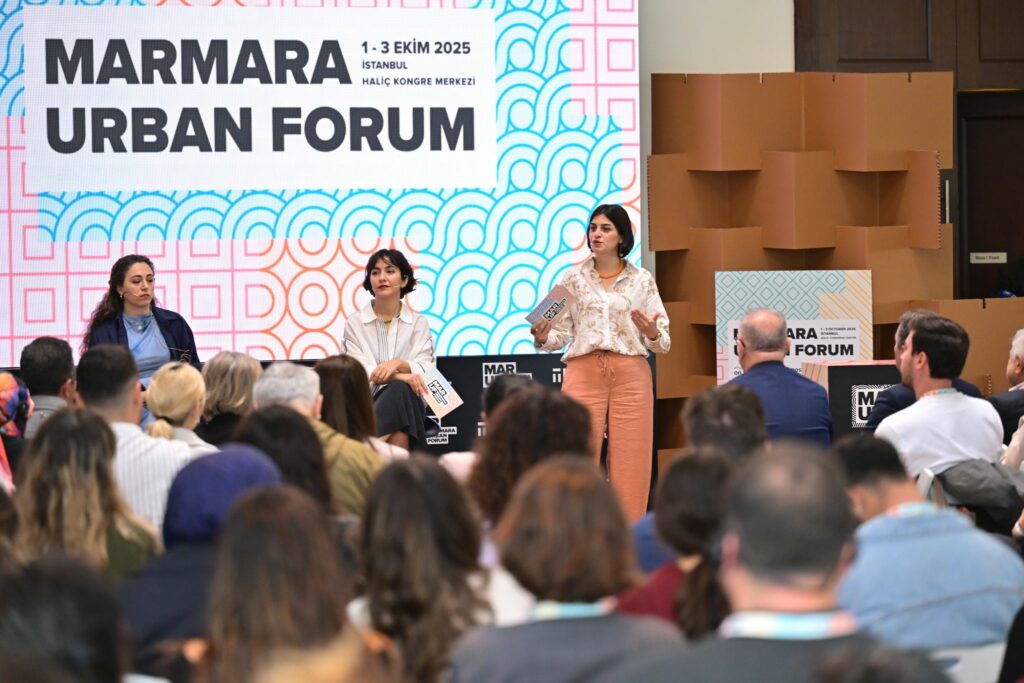
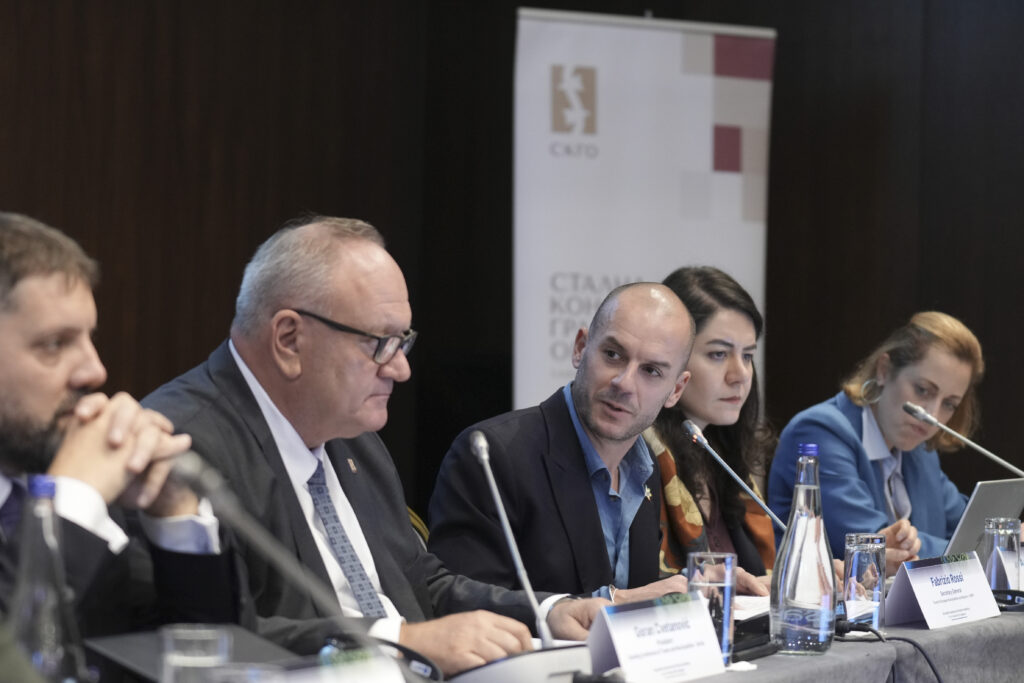
Session: “Resilient Local Governance in Wartime – Reform, Decentralisation, and Reconstruction in Ukraine.” Speakers highlighted how decentralisation, stronger local competencies, and international cooperation enable real progress even in wartime. Drawing on lessons from South-East Europe and city partnerships with Ukrainian municipalities, they showed how access to knowledge, tools, and advocacy channels empowers local leaders to influence national decisions and drive recovery as equal partners in rebuilding the country.
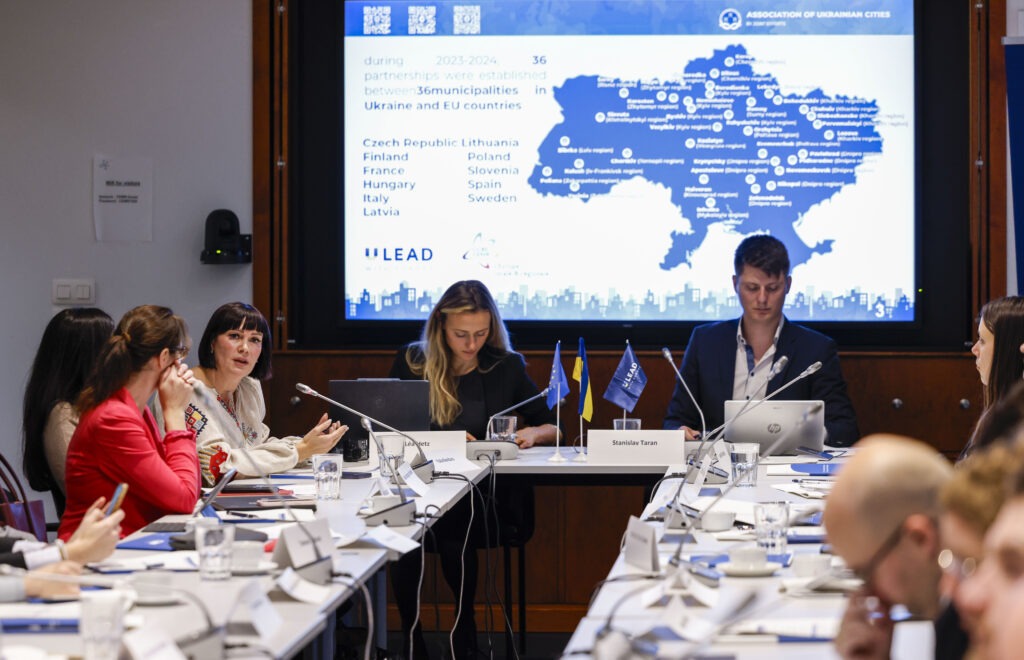
13 October: Meeting with Ukrainian Mayors Delegation. A delegation of 23 Ukrainian mayors visited CEMR in Brussels for the opening session. The roundtable gave each mayor the opportunity to share experiences from their municipalities and explore initiatives in international partnerships, climate, and smart cities, including PLATFORMA, SUN4Ukraine, the Bridges of Trust Community, and the Matchmaking Platform. The visit aimed to deepen their understanding of EU actors and processes, as well as to learn more about effective advocacy and lobbying.
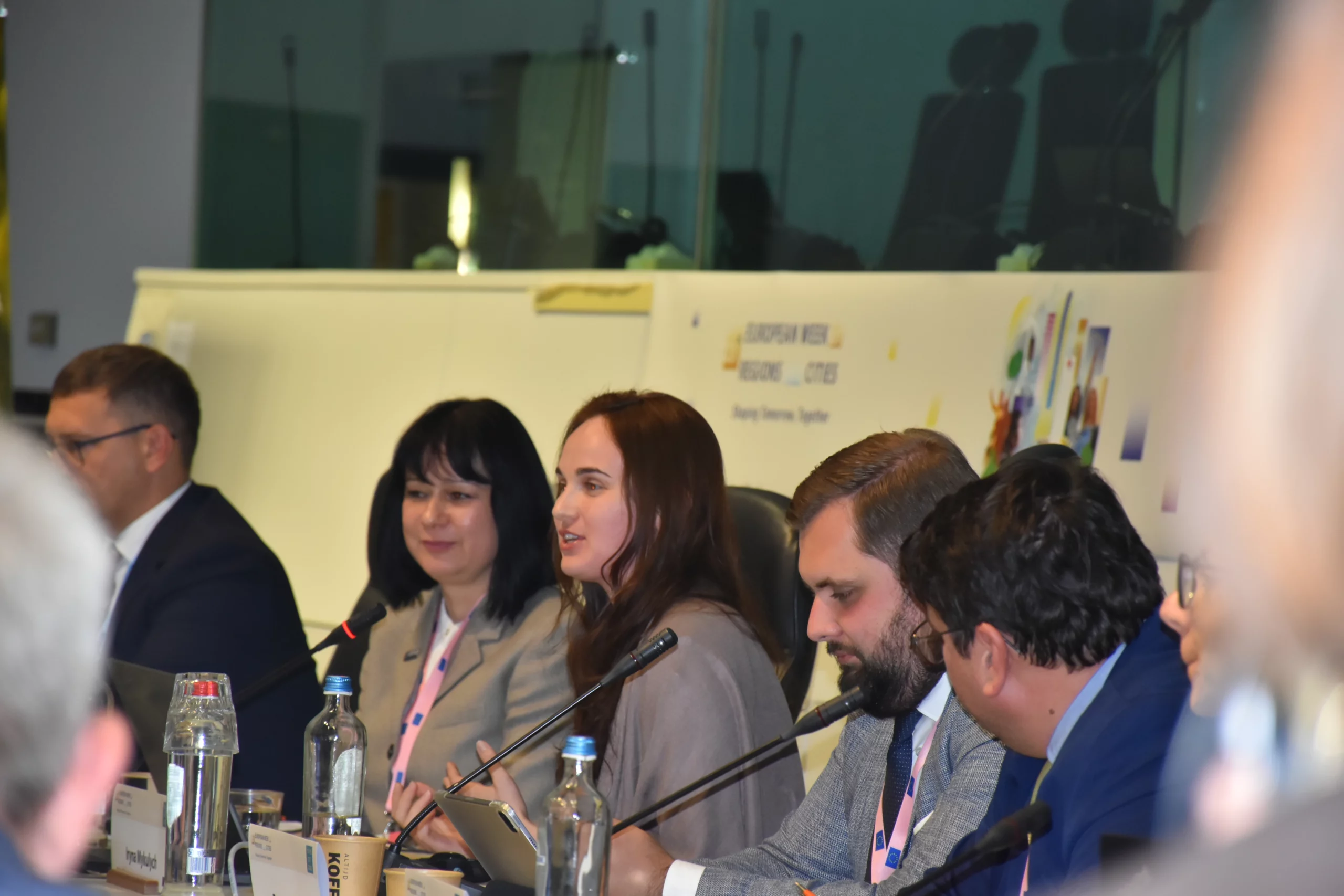
15 October: Political session — “Ukraine’s Path to the EU: Municipalities and Partnerships for Cohesion and Growth.” The room was full at the Committee of the Regions, where four representatives from organisations with diverse missions illustrated how Ukrainian municipalities are actively advancing EU integration, aligning with Chapter 22 requirements while deepening cooperation with their European counterparts. As emphasised during the discussion, local governments are driving reforms and influencing national and European policy, showing that localising accession is crucial for Ukraine’s municipalities to be fully engaged in the EU integration process.
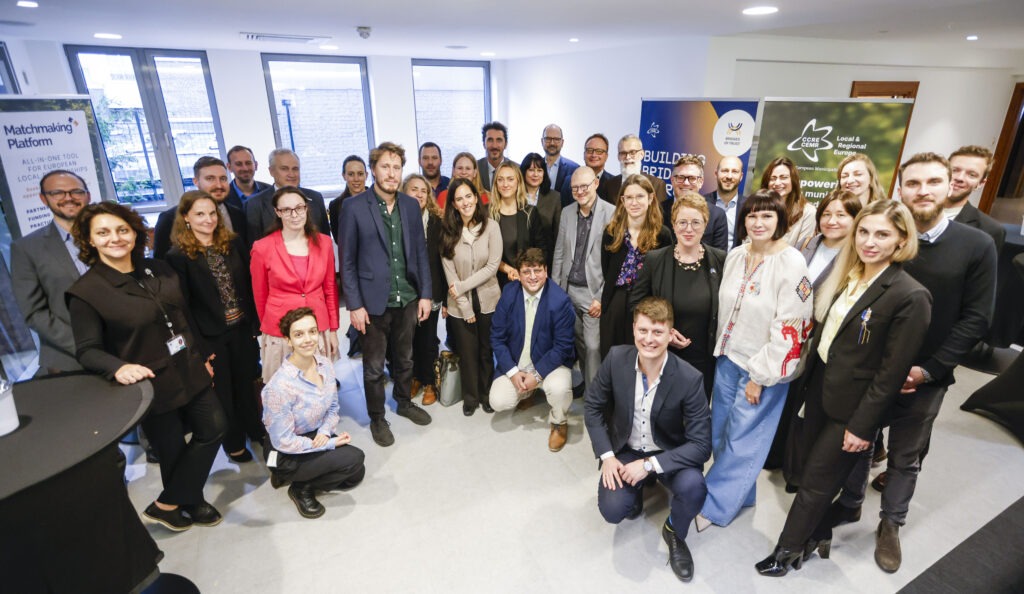
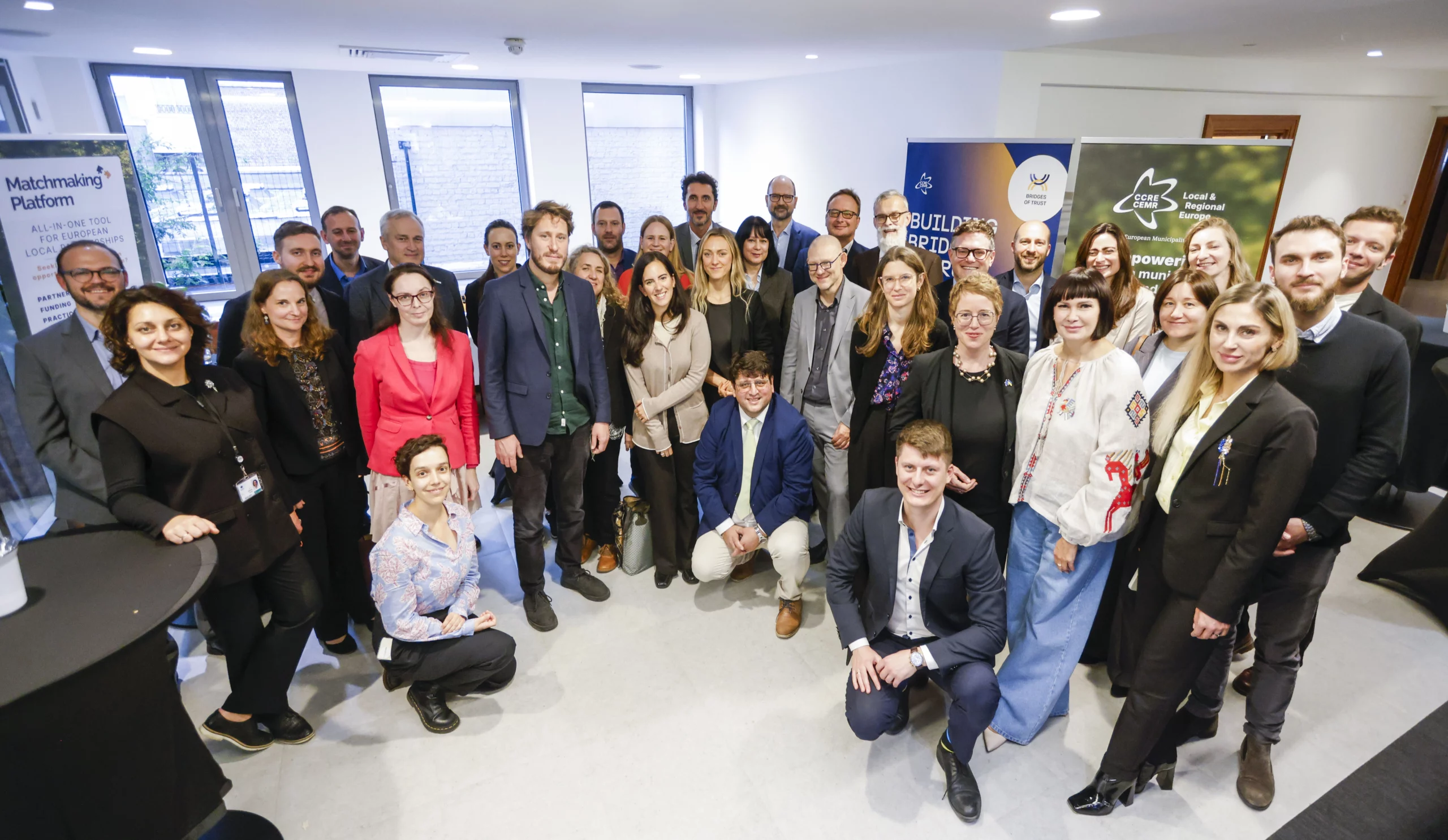
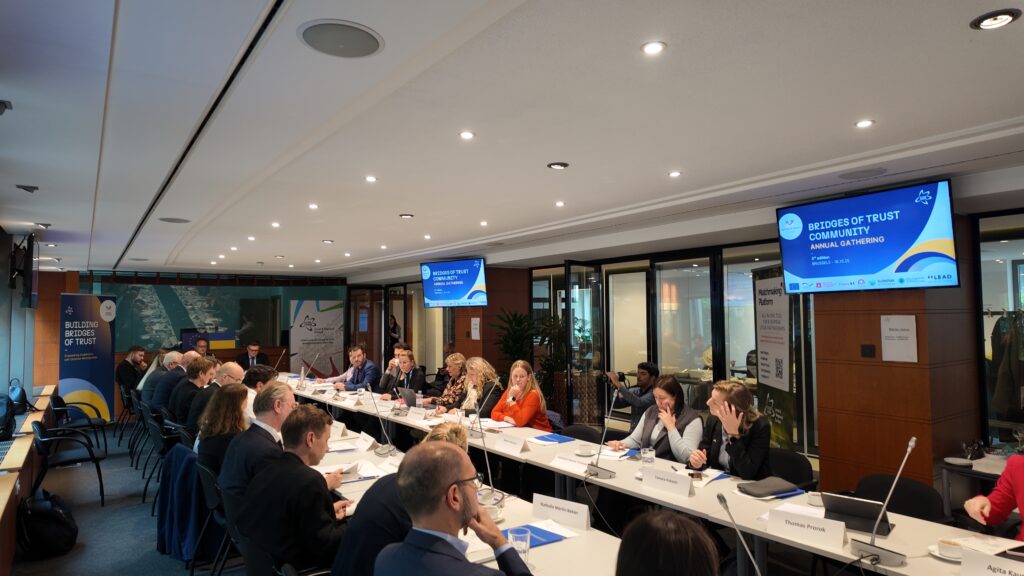
16 October: Bridges of Trust Community Annual Gathering. The European Partnership Hub convened for constructive exchanges aimed at uniting efforts and preventing fragmentation. Over thirty organisations from across Europe participated, all actively engaged in strengthening municipal cooperation between the EU and Ukraine. Notably, all four national associations of Ukrainian cities were represented.
15–16 October – Kyiv (Ukraine):SUN4Ukraine events
The Multilevel Policy Dialogue brought together Ukrainian and European partners to strengthen multilevel governance processes and align Ukraine’s recovery and EU accession with climate and energy goals. Cities including Rivne, Chernivtsi, Vinnytsia, Konotop, Kalush, Kyiv, and Sumy Region shared how they translate national ambitions into local action. Key national and international institutions actively participated in the discussions.
The Capacity Building sessions equipped 12 Flagship Municipalities to develop their Climate Neutrality Plans, reinforcing local governments’ role in driving a sustainable recovery.
A key highlight was the launch of the SUN4Ukraine Partnership Programme, connecting 12 Ukrainian cities with European Mission Cities under the EU’s “100 Climate-Neutral and Smart Cities” initiative, with Munich and Oslo serving as advisory partners.
23–24 October – Belgrade (Serbia):CEMR Secretaries General and Directors Meeting
Discussions and exchanges with members focused on opportunities for EU–Ukraine municipal partnerships under the Bridges of Trust call for proposals. Looking ahead, national associations and other partners selected under the Bridges of Trust Community will continue to advance EU–Ukraine municipal partnerships.
In November, CEMR will continue its advocacy and promotional efforts at the Smart City Expo (4-6 November) and the Salon des Maires Français (18–20 November), where sessions will spotlight international municipal partnerships in Europe and the Matchmaking Platform developed to support them. This all-in-one digital tool connects cities and regions across Europe and already counts over 500 registered Ukrainian municipalities. Under SUN4Ukraine, the 12 partnerships between Ukraine and EU cities will meet in Munich on 17-20 November to start their collaborative journey. The moment will also include the second step of the Capacity Building programme to further support the development of Climate Neutrality Plans.
All project partners, including CEMR, will continue facilitating constructive exchanges and supporting partnerships in deepening their cooperation, ensuring that local collaboration remains at the core of Ukraine’s recovery and EU accession efforts.
Third edition of the Bridges of Trust Community Annual Gathering
The third edition of the Bridges of Trust Community Annual Gathering has become a valued moment of collective reflection and strategic coordination for partners committed to supporting Ukraine’s recovery and EU accession. This yearly meeting, initiated in 2023, brings together the actors driving international municipal cooperation with Ukraine to align strategies, build synergies, and create a sustainable and impactful community.
Over 40 key actors from across Europe joined forces to exchange on how to strengthen cooperation, consolidate efforts, and explore how the European Partnership Hub can become a driving force for new and existing partnerships between the EU and Ukraine.
From local and regional government associations to EU institutions, NGOs, and international partners, stakeholders engaged in a rich roundtable discussion to present activities, align strategies, and avoid fragmentation. This collective approach aims to ensure that international municipal partnerships remain at the heart of Ukraine’s resilience, reconstruction, and EU accession.
This year’s gathering came just months after the launch of the European Partnership Hub at the Ukraine Recovery Conference 2025 in Rome — a milestone moment responding to the Berlin Call to Action.
The European Partnership Hub: from initiative to driving force
The European Partnership Hub (EPH) was created to address a critical challenge: despite the unprecedented wave of solidarity across Europe, efforts to support Ukraine remain fragmented, and municipalities often struggle to access the right information and partners at the right time.
Hosted by the Council of European Municipalities and Regions and supported by the U-LEAD with Europe programme, the EPH acts as a one-stop shop for international municipal cooperation, bringing together diverse actors to coordinate initiatives, share knowledge, and support Ukraine’s local governments on their path to EU integration.
Local partnerships at the heart of reconstruction
The gathering also showcased inspiring examples of international municipal cooperation, including the partnership between Venice and Odesa, which has formalised their collaboration through a Memorandum of Understanding. This type of partnership embodies the spirit of the Bridges of Trust initiative — demonstrating how municipalities can be powerful actors of solidarity and drivers of Ukraine’s recovery.
A heartfelt thank you to the Bridges of Trust Community
The Bridges of Trust Community is built on shared values of cooperation, inclusivity, and beneficiary-centred action. By bringing together implementers, supporters, and beneficiaries in a single, coordinated space, the Community seeks to ensure that efforts are streamlined, impactful, and responsive to the real needs of Ukrainian municipalities and citizens.
A heartfelt thank you to all BoT Community actors for making this gathering a meaningful space for dialogue, inspiration, and collaboration.
Key partners represented included: U-LEAD with Europe All-Ukrainian Association of Local Self-Governments “Association of Amalgamated Territorial Communities” Association of Ukrainian Cities (AUC) ALDA – European Association for Local Democracy Centre for European Perspective CoR – European Committee of the Regions DIBA European Commission, DG ENEST Energy Cities Engagement Global / SKEW Eurocities Euroservis GIZ – Deutsche Gesellschaft für Internationale Zusammenarbeit GMF – The German Marshall Fund of the United States ICLEI Europe KDZ – Centre for Public Administration Research (Austria) Komponent KS Latvian Association of Local and Regional Governments (LALRG) Municipality of Venice NALAS – Network of Associations of Local Authorities of South-East Europe PLATFORMA Swedish Association of Local Authorities and Regions (SALAR)
Transforming emergency aid into equal cooperation between EU and Ukrainian towns, cities and regions
Amid war-time disruption, Ukraine’s local governments have stepped as frontline problemsolvers and drivers of EU integration. During the European Week of Regions and Cities in Brussels, on October 15th a CEMR-led conversation under the Bridges of Trust (BoT) brought together local leaders, policy experts, and civil society to examine how municipal partnerships can anchor accession and cohesion.
The takeaway was clear: lasting progress depends on shifting from emergency solidarity to structured cooperation that empowers municipalities to deliver reforms, attract investment, and close regional gaps.
Why local governments matter
Ukraine’s municipalities have kept essential services running, coordinated aid, and advanced reforms under extreme pressure. Through BoT and the European Partnership Hub, they are building ties with European peers on projects in education, culture, economic development, and reconstruction. As CEMR’s Director for Projects and Programmes, Durmish Guri explained, success now hinges on moving “from emergency solidarity to mutually beneficial collaboration”.
Matchmaking for impact
To turn policy into practice, BoT has launched a Matchmaking Platform that connects every Ukrainian municipality with a European counterpart, enabling concrete joint projects and capacity-building. The platform is designed to reduce fragmentation, align needs with resources, and accelerate cooperation across borders.
From reform to implementation
Dmytro Lyvch of Easy Business underscored a dual challenge: advancing structural reforms while financing recovery. Real progress happens locally through municipalities, civil society, and development agencies. Ukraine has adapted to EU Chapter 22 requirements, but gaps persist in horizontal and vertical cohesion, and in institutional and financial frameworks. With regional disparities higher than in many Central and Eastern European countries, targeted interventions are needed to build resilience and competitiveness.
Lessons from peers
Ambre Maucorps of the Vienna Institute for International Economic Studies highlighted takeaways from Lithuania and North Macedonia. Lithuania used cohesion policy to tackle disparities with a clear governance model and strong stakeholder input. North Macedonia, after municipal mergers similar to Ukraine’s, benefited from pre-accession funds but still struggles with absorption. The throughline: coordination and flexibility are essential for effective cohesion policy.
Building capacity, scaling partnerships
Iryna Mykulych of the NGO Agency for Recovery and Development stressed that durable cooperation often starts with “soft” cultural and educational exchanges that build trust, then evolves into “hard” reconstruction projects. Scaling from municipal partnerships to business and academia can unlock investment, know-how, and long-term outcomes.
The bottom line
The event’s conclusion was unambiguous: international municipal cooperation is one of the most effective and sustainable ways to localise EU accession.
As Durmish Guri noted, “international municipal cooperation is the most effective, sustainable, and the efficient form of collaboration”. Local governments, he added, play a critical role not only in implementing reforms but also in shaping national and European-level policy, underlining the importance of “localizing accession” to ensure Ukraine’s municipalities are fully engaged in the EU integration process.
Empowering local governments to deliver reforms and shape policy—together with European partners—moves Ukraine from a recipient of solidarity to a co-creator of Europe’s cohesion and growth. That is the promise of BoT’s community-driven approach.
Local and Regional Leaders building bridges for Ukraine’s Recovery and EU Path
Brussels, 15 May 2025 – The European Alliance of Cities and Regions for the Reconstruction of Ukraine gathered its core members and Ukrainian and EU delegations at the European Committee of the Regions in Brussels to accelerate cooperation ahead of the Ukraine Recovery Conference (URC) in Rome this July.
This high-level forum brought together municipalities from across Europe and Ukraine, alongside institutional partners, to exchange on Ukraine’s evolving territorial needs and to foster meaningful, lasting partnerships. At the heart of the discussions was a shared goal: empowering local governments to co-lead reconstruction, support reforms, and drive the local dimension of Ukraine’s EU accession process.
CEMR’s Contributions: Tools for Lasting Cooperation
Speaking at the forum, Durmish Guri, CEMR’s Director of Projects and Programmes, presented two key initiatives from CEMR designed to foster long-term collaboration between EU and Ukrainian municipalities:
🔹 The Matchmaking Platform: This digital tool connects municipalities across Europe, helping them identify shared priorities, explore cooperation opportunities, and launch joint projects. With a special focus on Ukraine, the platform supports deeper partnerships with the rest of the continent, accelerating both recovery efforts and Ukraine’s EU integration process. Learn more → https://partnerships.ccre-cemr.org/
🔹 The Bridges of Trust Community: Evolving from a project into a growing community, Bridges of Trust brings together local leaders from Ukraine and across the European Union, alongside national associations and institutional partners. This consolidated community is committed to strengthening local partnerships by supporting municipalities in co-designing practical solutions in areas of common interest. By reinforcing bonds from the ground up, it empowers municipalities, accelerates Ukraine’s EU integration, and contributes directly to its recovery. Learn more → https://ccre-cemr.org/bridges-of-trust
Establishing a one-stop shop to coordinate and scale up municipal partnerships;
Ensuring stronger access for local governments to financial resources and decision-making processes, particularly within the Ukraine Donor Platform.
These proposals aim to amplify the voice of local and regional governments, ensuring that municipalities remain central actors in Ukraine’s reconstruction and path to EU integration.
Memorandum of Understanding
A key highlight came with the signing of a new partnership between Kassel (Germany) and Zhytomyr (Ukraine)—a symbolic and practical demonstration of how municipal cooperation is directly shaping Ukraine’s recovery on the ground.
A Shared Mission
CEMR expresses deep appreciation to all co-organisers for hosting a timely and impactful dialogue. Special thanks go to the European Alliance of Cities and Regions for the Reconstruction of Ukraine for championing this process and uniting dedicated partners around a common cause.
The presence of committed, action-driven leaders— including Magali Altounian, Aleksandra Dulkiewicz, Andrej Horvat, Svitlana Blinova, Vadim Boychenko, Oskar Chmiel, Antonella Valmorbida, Alberto Rini, Kata Tüttő, Oleksii Riabykin, Davide La Cecilia, Pekka Toveri, and many more – demonstrated the collective energy powering this growing movement of cooperation.