Session on Ukraine’s path to the EU

Bridges of Trust - event 2025

Transforming emergency aid into equal cooperation between EU and Ukrainian towns, cities and regions


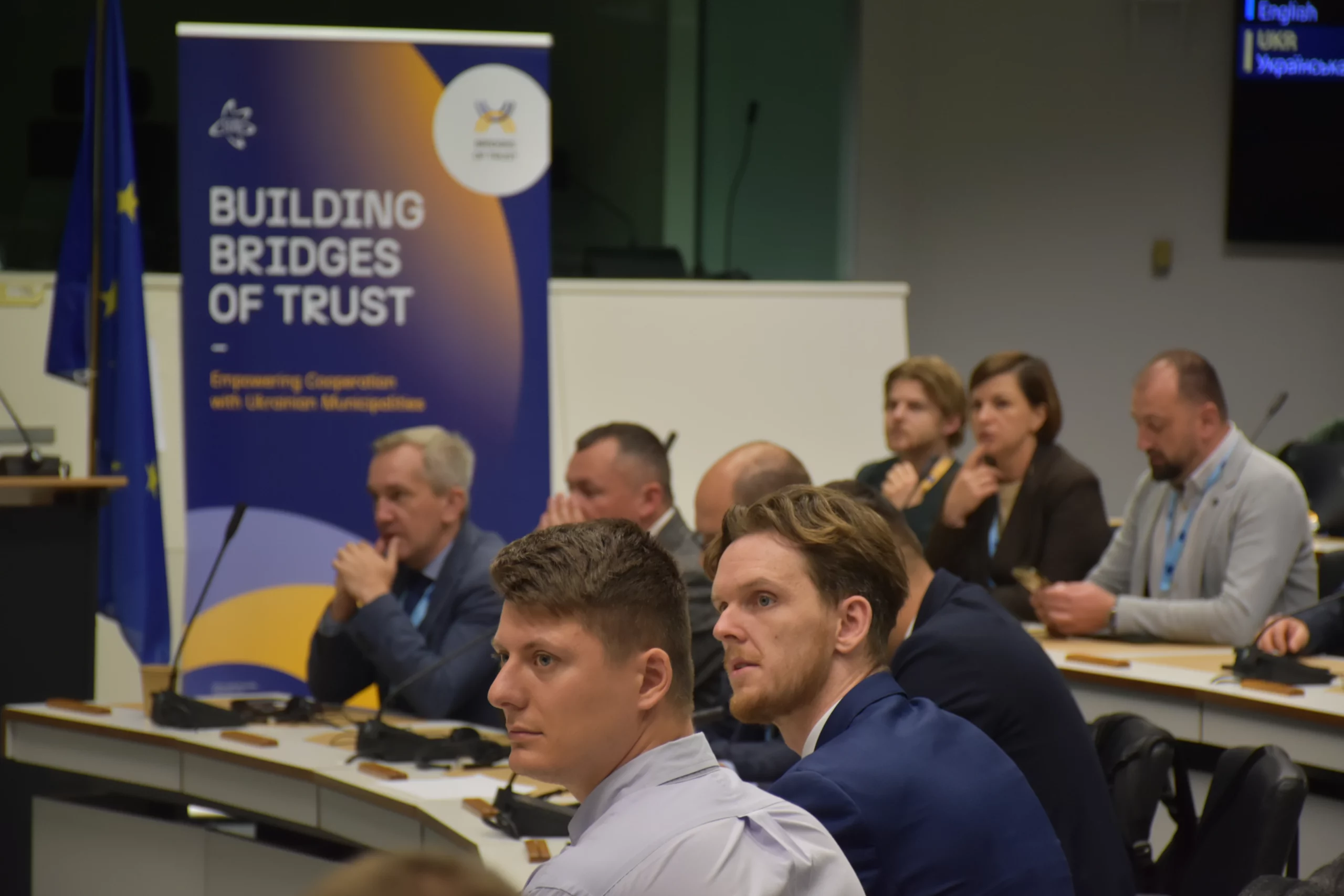
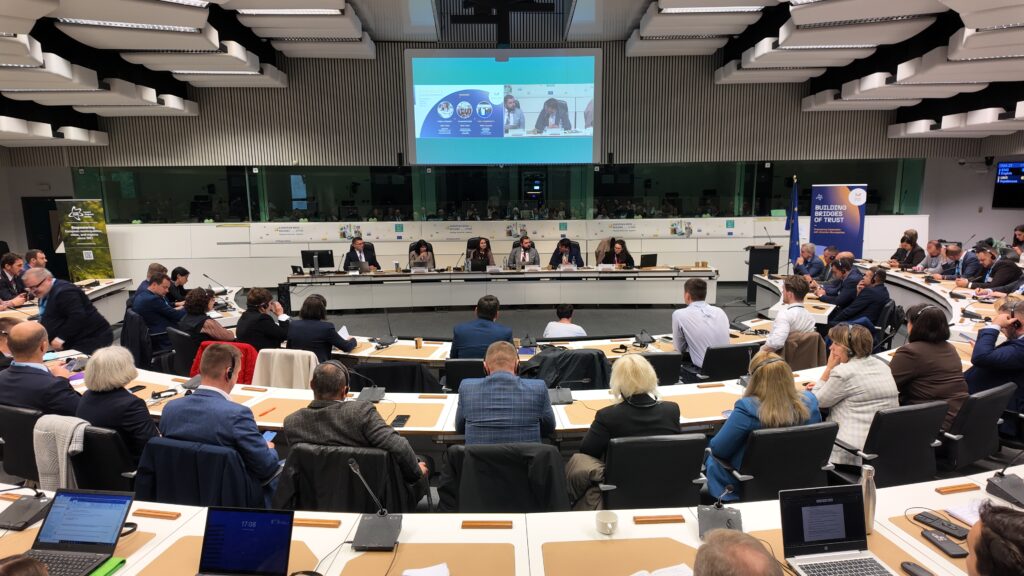
Amid war-time disruption, Ukraine’s local governments have stepped as frontline problemsolvers and drivers of EU integration. During the European Week of Regions and Cities in Brussels, on October 15th a CEMR-led conversation under the Bridges of Trust (BoT) brought together local leaders, policy experts, and civil society to examine how municipal partnerships can anchor accession and cohesion.  

The takeaway was clear: lasting progress depends on shifting from emergency solidarity to structured cooperation that empowers municipalities to deliver reforms, attract investment, and close regional gaps. 
Why local governments matter 

Ukraine’s municipalities have kept essential services running, coordinated aid, and advanced reforms under extreme pressure. Through BoT and the European Partnership Hub, they are building ties with European peers on projects in education, culture, economic development, and reconstruction. As CEMR’s Director for Projects and Programmes, Durmish Guri explained, success now hinges on moving “from emergency solidarity to mutually beneficial collaboration”. 

Matchmaking for impact 

To turn policy into practice, BoT has launched a Matchmaking Platform that connects every Ukrainian municipality with a European counterpart, enabling concrete joint projects and capacity-building. The platform is designed to reduce fragmentation, align needs with resources, and accelerate cooperation across borders.  
From reform to implementation 

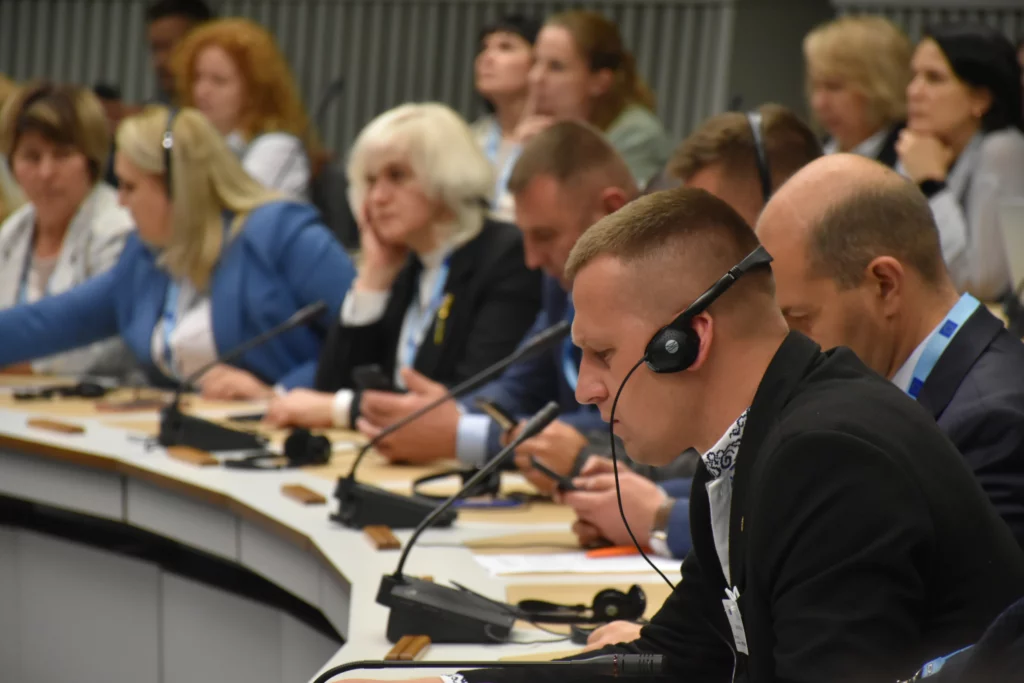
Dmytro Lyvch of Easy Business underscored a dual challenge: advancing structural reforms while financing recovery. Real progress happens locally through municipalities, civil society, and development agencies. Ukraine has adapted to EU Chapter 22 requirements, but gaps persist in horizontal and vertical cohesion, and in institutional and financial frameworks. With regional disparities higher than in many Central and Eastern European countries, targeted interventions are needed to build resilience and competitiveness. 

Lessons from peers 

Ambre Maucorps of the Vienna Institute for International Economic Studies highlighted takeaways from Lithuania and North Macedonia. Lithuania used cohesion policy to tackle disparities with a clear governance model and strong stakeholder input. North Macedonia, after municipal mergers similar to Ukraine’s, benefited from pre-accession funds but still struggles with absorption. The throughline: coordination and flexibility are essential for effective cohesion policy. 

Building capacity, scaling partnerships 

Iryna Mykulych of the NGO Agency for Recovery and Development stressed that durable cooperation often starts with “soft” cultural and educational exchanges that build trust, then evolves into “hard” reconstruction projects. Scaling from municipal partnerships to business and academia can unlock investment, know-how, and long-term outcomes. 
The bottom line 

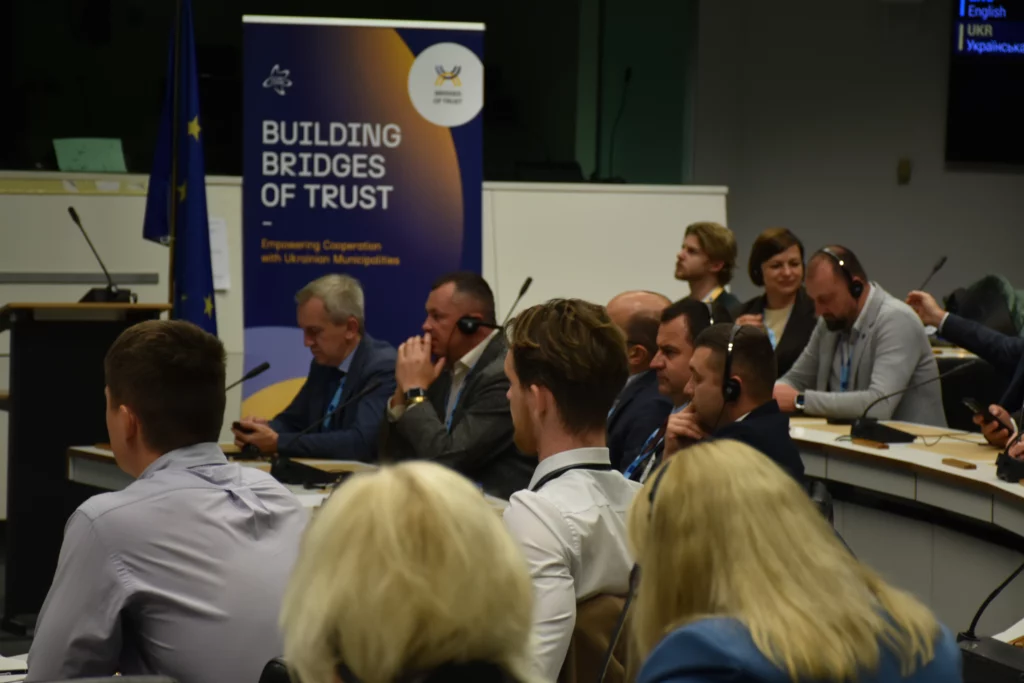
The event’s conclusion was unambiguous: international municipal cooperation is one of the most effective and sustainable ways to localise EU accession.  

As Durmish Guri noted, “international municipal cooperation is the most effective, sustainable, and the efficient form of collaboration”. Local governments, he added, play a critical role not only in implementing reforms but also in shaping national and European-level policy, underlining the importance of “localizing accession” to ensure Ukraine’s municipalities are fully engaged in the EU integration process.   

Empowering local governments to deliver reforms and shape policy—together with European partners—moves Ukraine from a recipient of solidarity to a co-creator of Europe’s cohesion and growth. That is the promise of BoT’s community-driven approach. 

For more information, contact:

Partnerships for Ukraine’s recovery

Strengthening Partnerships for Ukraine’s Recovery: CEMR’s Actions on Solidarity, Municipal Cooperation, and EU Integration


24th February 2025, marks three years since Russia launched its full-scale invasion of Ukraine—a reminder of the resilience and determination of the Ukrainian people as they continue to defend their freedom and democracy. For CEMR, it reaffirms a long-standing commitment to supporting Ukraine’s recovery and EU integration, through tangible, grassroots cooperation between local governments. 

In recent months, this commitment has translated into new concrete actions, from public declarations of solidarity to community building and launching innovative digital tools that strengthen municipal partnerships. Across Europe, local and regional governments are not just expressing support but actively contributing to Ukraine’s reconstruction and future within the EU. 

A Declaration of Solidarity and Action 

Three years after the invasion, CEMR issued a declaration reaffirming its unwavering support for Ukraine. The statement highlighted the indispensable role of local leaders in sustaining communities under siege — from ensuring basic services to preserving democratic governance. 

Yet these leaders are not just bearing the weight of war; they are targets. The abduction, imprisonment, and murder of Ukrainian mayors are stark reminders of the risks they face. CEMR, standing alongside the Association of Ukrainian Cities, called for the immediate release of detained local leaders and condemned the Russian attacks on local democracy.
More information: https://ccre-cemr.org/press/declaration-on-three-years-of-war-in-ukraine 

Strengthening Networks: Joining the Coalition of Sustainable Municipalities
This year, CEMR reinforced its commitment by joining the Coalition of Sustainable Municipalities, an initiative launched by Ukraine, Germany, and international partners at the Ukraine Recovery Conference (URC) 2024. During the conference in Berlin, CEMR’s Secretary-General announced the launch of the Matchmaking Platform—an innovative digital tool designed to help municipalities across Europe connect and collaborate with their Ukrainian counterparts. 

On 12th February, as part of the Coalition, CEMR participated in an Open Exchange on Best Practices for Ukraine’s Recovery, organised by the German Federal Ministry for Economic Cooperation and Development (BMZ) and U-LEAD. Among other key topics, the event showcased insights into the fully operational Matchmaking Platform, which is already facilitating municipal partnerships. CEMR remains a dedicated partner, upholding the core principles of the Coalition. 

Empowering Local Leaders: The Matchmaking Platform 

One of CEMR’s most impactful recent initiatives in strengthening international municipal cooperation is the Matchmaking Platform, officially launched during the CEMR Leaders’ Summit in December. This innovative tool is transforming how municipalities establish partnerships. 

Building on CEMR’s seven decades of town twinning expertise, the platform enables local governments to connect and collaborate on projects in a few clicks. In just two months, it has attracted hundreds of verified users across Europe, fostering direct engagement between municipalities. Ukrainian local leaders have shown strong interest in harnessing its potential, with over 400 participants attending two dedicated info sessions organised by U-LEAD on 29th January and 12th February, where CEMR provided a comprehensive overview of the platform and addressed participants’ questions. 

To further extend its reach, a broader communication campaign will enhance visibility, while future developments will introduce new functionalities—potentially including funding opportunities, capacity-building programmes, and partnerships with key stakeholders of the Bridges of Trust Community.  

More information: https://partnerships.ccre-cemr.org/  

Expanding the Bridges of Trust Community 

Since 2021, CEMR has been actively implementing the Bridges of Trust project in collaboration with national associations and U-LEAD to strengthen municipal partnerships between the EU and Ukraine. Following two successful phases, the initiative reached a major milestone with the launch of the Bridges of Trust Community, announced at the CEMR Leaders’ Summit last December. 

This growing community serves as a central hub for municipalities looking to establish and sustain partnerships at a crucial moment in Ukraine’s transformation. The third phase of the project will further enhance the community’s benefits, advocacy efforts, and stakeholder engagement—expanding from bilateral cooperation to a more structured and comprehensive framework. 

New possible cooperations have been explored through the participation of potential members of the Bridges of Trust Community such as the German Marshall Fund (GMF) and many more, to explore their involvement in Ukraine’s recovery and EU integration efforts. 

For those interested in learning more, the revamped Bridges of Trust page on CEMR’s website offers key resources, funding opportunities, and success stories that highlight impactful municipal partnerships. 

The Matchmaking Platform is fully integrated into the community, providing a dynamic tool to not only establish new partnerships but also sustain and expand them over time. CEMR invites all interested stakeholders to join the Bridges of Trust Community, which is set to become a key hub for municipal collaboration across Europe. 

More information: https://ccre-cemr.org/bridges-of-trust  

Looking Ahead: A united effort for recovery 

With Ukraine’s path to EU integration in focus, local and regional governments must play a key role in shaping decentralisation, governance, and resilience. As we prepare for the Ukraine Recovery Conference 2025 in Rome, CEMR is actively contributing to the Working Group for the Local and Regional Component and the European Alliance of Cities and Regions for the Reconstruction of Ukraine. Our commitment remains steadfast in amplifying local voices and strengthening municipal partnerships to support Ukraine’s recovery and EU integration. 

Through community building supporting international municipal partnerships, advocacy for EU integration, decentralised cooperation, and innovative digital tools, CEMR reaffirms its dedication to supporting Ukraine. We remain open to further engagement and collaboration, ensuring a beneficiary-centred approach prioritising European municipalities. 

For more information, contact: 

Ukranian recovery strategy

Bridges of Trust Visit - News 2023

Bridges of Trust initiative helped in the cooperation between Ukrainian and French municipalities for a reconstruction plan


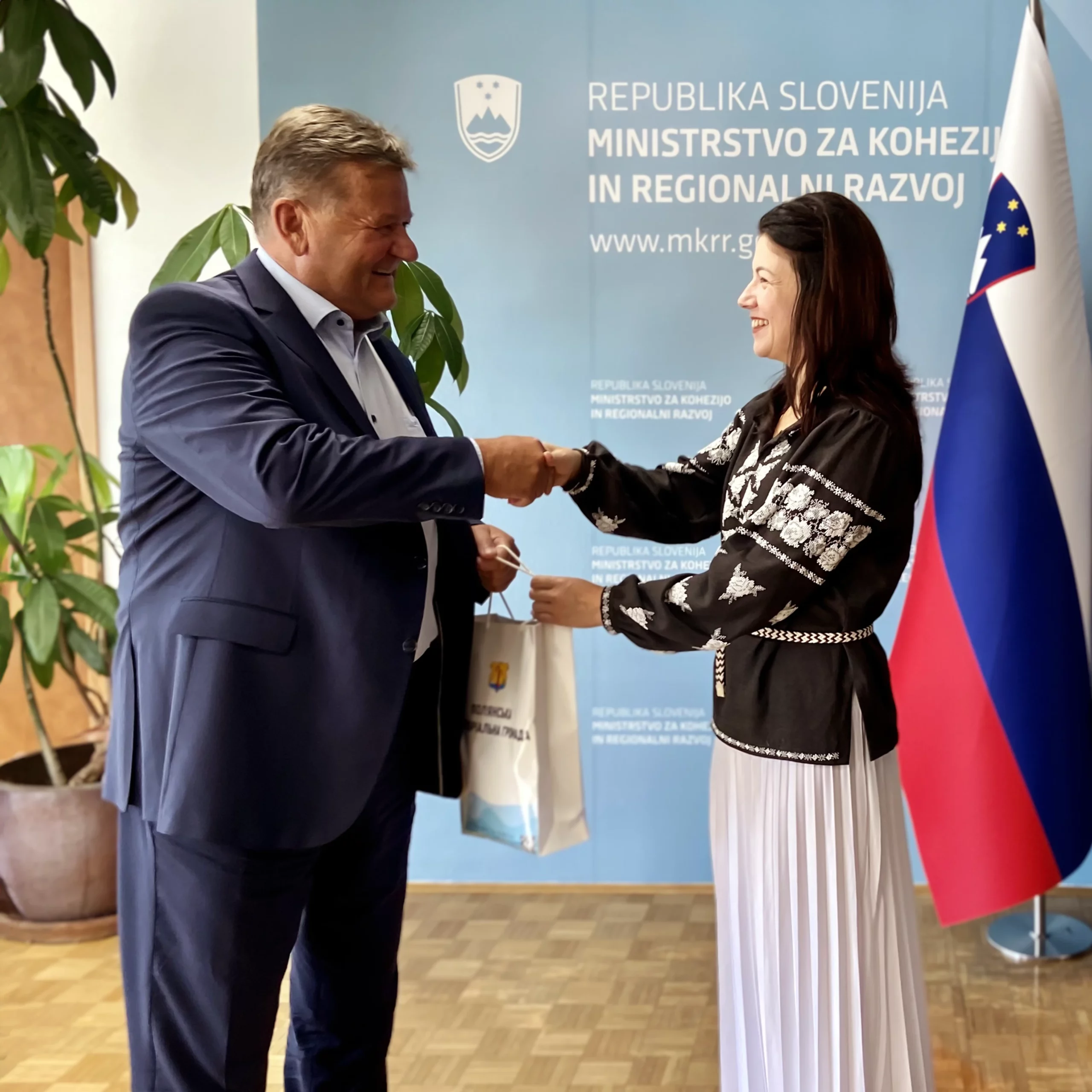
3 Ukrainian municipalities Apostolove, Zelenodolsk and Korosten began their study visit to partner municipalities in France with a Solidarity Forum in Issy-les-Moulineaux on 1 of July.
 
The cooperation between Ukrainian and French municipalities is being developed in the framework of the Bridges of Trust initiative implemented by the Council of European Municipalities and Regions (CEMR) together with the Association of Ukrainian Cities (AUC) and with the support of U-LEAD with Europe programme. 
 
The partnership of Bourges and Korosten is taking a new step since the first contact between the municipalities in March 2022. While Zelenodolsk and Apostolove are only at the initial stage of building partner relationships with Sceaux and La Rochelle.
 
The Ukrainian delegation was warmly welcomed during the Solidarity Forum held by AFCCRE in the framework of the National Forum on Europe, Twinning and Partnerships. The Ambassador of Ukraine to France, Vadym Omelchenko was among the speakers at the event and reiterated the important and substantial results of cooperation between France and Ukraine on different levels and in various sectors. He reminded the success of the Bilateral Conference for the resilience and reconstruction of Ukraine held by the French government in December 2022 where hundreds of French companies took part and confirmed their interest in engaging in Ukraine’s reconstruction process.
 
The representatives of 3 Ukrainian municipalities Korosten, Zelenodolsk and Apostolove had an opportunity to speak about the daily challenges they face because of the war provoked by Russia against Ukraine, their needs and the ideas of projects that can help the municipalities in the recovery process. Among the priority topics of cooperation were mentioned the exchange of knowledge and experience on water management and purification, inclusivity of municipalities towards disabled people, reconstruction of municipal infrastructure, mental health and rehabilitation. 
 
The representatives of Ukrainian local governments begin today their 3 day study visits to Sceau, Bourges and La Rochelle in order to work on joint projects of reconstruction and recovery and to strengthen partnership ties between municipalities of Ukraine and France. 

Bridges of Trust Cooperation

Bridges of Trust Branding - News 2024

Korosten mayor praises its Lithuanian twin city: “We have found true friends”


After the sudden Russian invasion of Ukraine in February of last year, the city of Korosten had to break its twinning relations with a few cities in Siberia and Belarus. “They became our enemies”, declares the Mayor of Korosten. However, that was not the case for its Lithuanian twin Urkmerge who became a close ally of the Ukrainian city. 

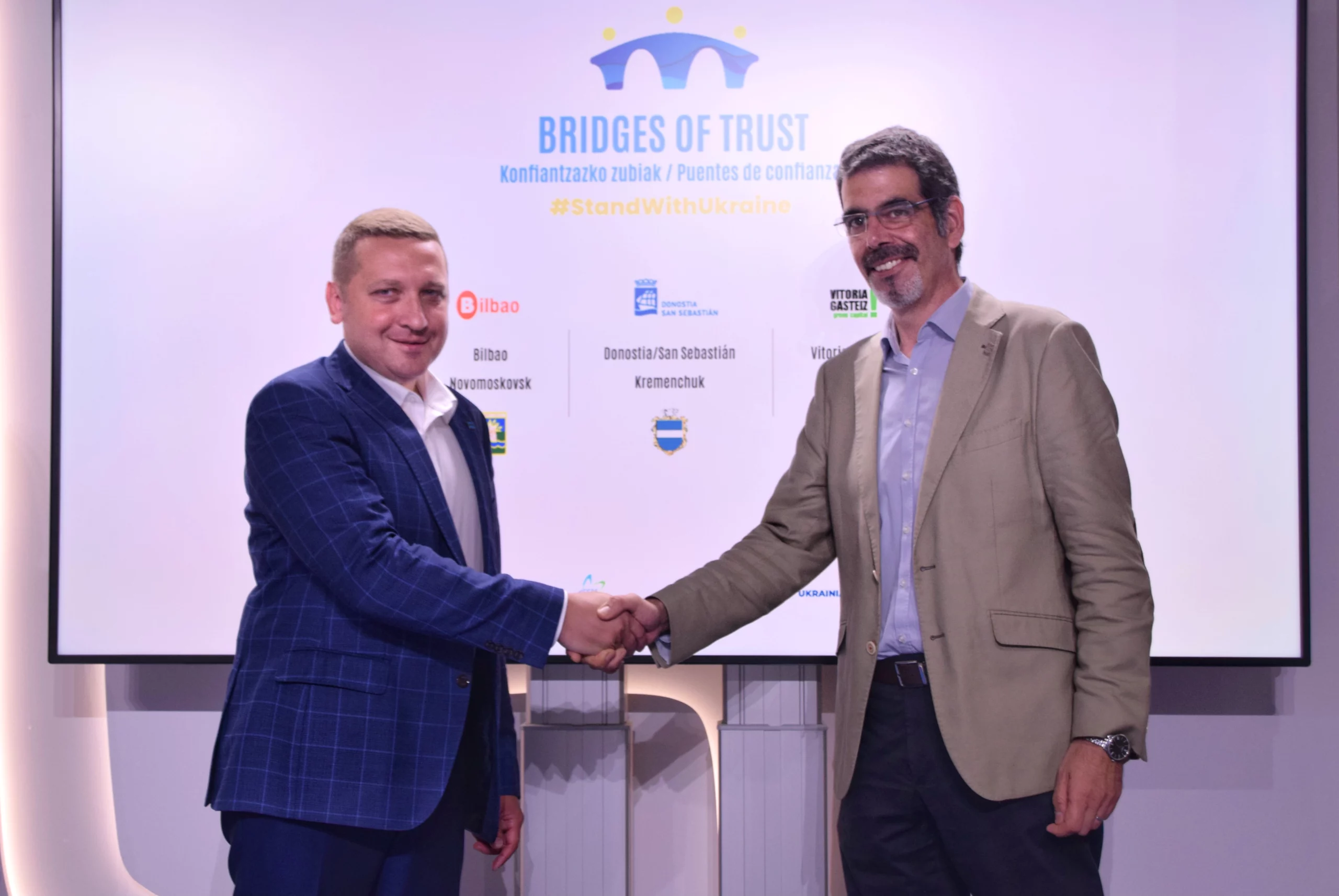
In the framework of the “Bridges of Trust” project, the Ukrainian city of Korosten signed a cooperation agreement with the Lithuanian city of Ukmerge. The municipalities have already exchanged visits of their delegations: “There were more Ukrainian flags than the Lithuanian ones,” recalls Volodymyr Moskalenko, Mayor of the city based in the Zhytomyr region in the northwest of Ukraine. In an interview with the U-LEAD, he describes how the cooperation has helped many Ukrainians so far.

“Initially we asked for medicines and long-term food packages,” he says. However, Urkmerge keeps offering this kind of help even after the initial support. In addition to medicine and food, the Ukrainian city has also received generators, a large bus, and trench candles for the military. 

As their Baltic counterpart is advanced in the use of alternative energy, Moskalenko wonders about utilising their experience to help bring this kind of energy to Ukraine. Russian attacks are often directed towards the energy infrastructure, which shows the importance of the capacity of a municipality to address these kinds of needs on its own according to the Mayor.

He mentions the positive attitude of the Lithuanians towards Ukraine and its citizens. “Each of our conversations comes down to the question ‘How can we help you?’. We are impressed,” Moskalenko says. He assures that the cities intend to further develop their cultural cooperation and exchange: “We have found true friends.”

However, that wasn’t the case in some of Korosten’s former twin cities in Russia and Belarus. On the day of the Russian invasion in February, the city council had a session and immediately broke the twinning relations with Mozyr from Belarus and two cities from Siberia in Russia: “What twinning relations can we have with them if they are our enemies?” ponders Moskalenko

However, he thinks that it is worth mentioning that the invasion was the catalyst for uniting national cultures in Ukraine, as Ukmerge isn’t the only city that has expressed the desire to become Korosten’s twin. “Bourges in France contacted us. They hosted 200 women and children from Korosten,” informs the Mayor while declaring that they are keeping in touch with them. They are also in contact with cities in Great Britain, China, and Japan. “But just contacts so far,” concludes Moskalenko

Source: U-LEAD

Solidarity with Ukraine

Solidarity with Ukraine - News 2022

Building partnerships to empower municipalities


From March 2021 to November 2022, the Council of European Municipalities and Regions and PLATFORMA have been implementing a project “Empowering Municipalities in Ukraine and the European Union through building municipal partnerships” within the framework of U-LEAD with Europe’s initiative “Bridges of Trust” and with the support of U-LEAD with Europe. 

Based on a careful matching process, which included analysis of the socio-economic factors and sectors of development of the EU municipalities, the Initiative matched 10 Ukrainian municipalities in 7 regions with municipalities in Estonia, Lithuania, Latvia, Poland and Slovakia. Online bilateral meetings between partners allow to launch the partnerships, identify common interests as well as plan joint activities such as study visits to exchange best practices.

After the start of the Russian war, some European municipalities, upon request of their Ukrainian partners, provided humanitarian and financial assistance. Such support from European partners is extremely valuable. For example, Šiauliai district municipality in Lithuania sent eleven tons of humanitarian aid to the Dolyna community in the Ivano-Frankivsk region. The total amount is approximately 100 thousand euros. The same partner organised a summer school for 36 children from Dolyna.

“Through such projects, we are trying to link those Ukrainian municipalities, especially small and medium size, that need support but might have no experience in international cooperation, with municipalities in the EU that are motivated and ready to help. We remember the important role peer-to-peer cooperation and twinning played in the post-WWII reconstruction of Europe. It should also help Ukraine recover, rebuild, renew, and become a member of the EU family. These are the real and long-term bridges that CEMR together with our Associations, and with the support of actors like the U-LEAD, are helping to build”, – says Fabrizio Rossi, Secretary General of the Council of European Municipalities and Regions. 

Following the Russian invasion of Ukraine, an important objective of the project became organization of the solidarity events, in close cooperation with the Associations of Local Government and the U-LEAD with Europe, in order to communicate about the wartime realities and the needs of Ukrainian municipalities and to motivate other EU municipalities to engage and establish new partnerships. 400 participants took part in the Poland-Ukraine, Slovakia-Ukraine and France-Ukraine Solidarity Forums. Ukrainian mayors presented the realities of both destroyed and formerly occupied municipalities as well as those that have accepted internally displaced people but have not suffered damages to the physical infrastructure. The EU municipalities have also presented concrete actions of support.

“For us at U-LEAD, the “Bridges of Trust” is not just another initiative, not just one of numerous projects we do every day. It is literally one of the main pillars of our work. We constantly wish to bring Ukrainian municipalities closer to their counterparts in the EU. The importance of the “Bridges of Trust” during the Russian invasion hasn’t decreased in the slightest, but, quite the opposite, it has become even more crucial. The forums that we’ve had over the last months have been more than an opportunity for international cooperation – they provided a perspective to Ukrainian municipalities and thus a bit of hope to their citizens. But in the long run the aftermath of our work will be even much more valuable, for the partnerships we have facilitated will turn from bridges to foundations – the foundations of the future European local self-government. There is so much work that is still ahead of us, but for getting this far I am sincerely grateful to all our partners who made the “Bridges of Trust” possible: the Council of European Municipalities and Regions, the European Coalition of cities and regions PLATFORMA, the Ministry for Communities and Territorial Development, and, of course, all the municipalities that participated”, – Bastian Veigel, GIZ Programme Director of U-LEAD with Europe

The project has also contributed to the understanding of key success and failure factors for the international municipal cooperation of Ukrainian municipalities. The publication prepared in the framework of the project provides an annotated mapping of existing partnerships between Ukrainian and EU municipalities; an analysis of key success and failure factors of international municipal cooperation with a special focus on cooperation between Ukrainian and EU municipalities and recommendations for future sustainable cooperation between Ukrainian and EU municipalities.

The Council of European Municipalities and Regions will continue its work in supporting cooperation between local governments in Ukraine and in the EU member states.

To see more stories of support consult this page

Escalation of war against Ukraine

Escalation of war against Ukraine Declaration

European local leaders condemn renewed Russian attacks and pledge solidarity with Ukrainian cities and communities


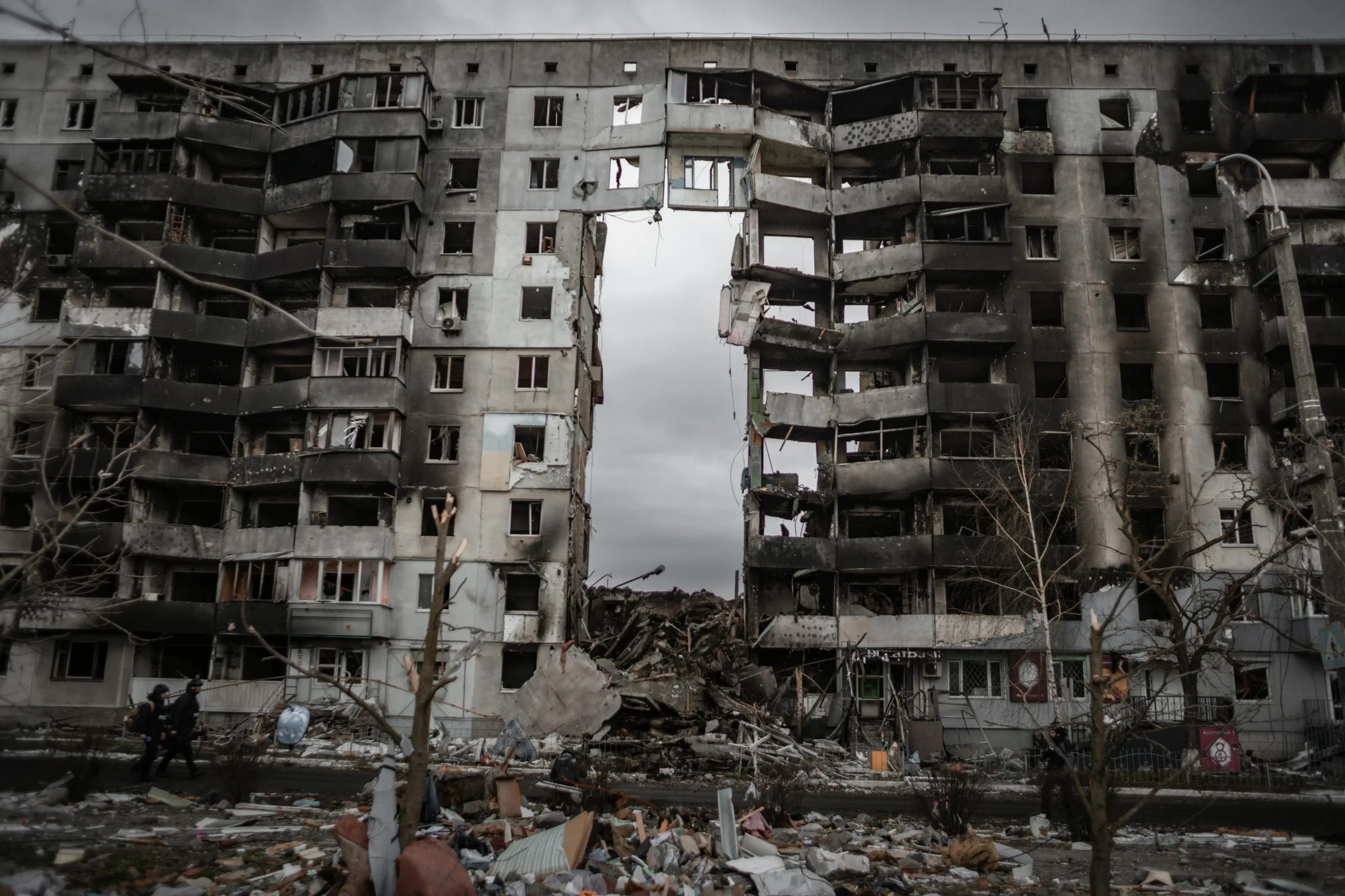
Meeting in Daejeon at the 7th UCLG World Congress and Summit of Local and Regional Leaders, European mayors and councillors expressed their deepest indignation at the recent escalation of Russia’s war against Ukraine. The renewed wave of violence continues to bring devastation to civilian populations and destruction to Ukrainian municipalities. 

Condemning Targeted Attacks 
The declaration strongly denounces deliberate strikes on civilians, including women and children, in violation of the Geneva Conventions. Equally condemned is the destruction of essential urban infrastructure, which deprives communities of the basic services needed to survive in wartime. 

Solidarity with Ukraine 
Local and regional leaders across Europe reaffirm their solidarity with Ukraine’s people, mayors, councillors, and associations of local governments who continue their work under extreme conditions. These partnerships are vital to ensuring communities can endure today’s challenges and prepare for tomorrow’s recovery. 

Shared Values 
The declaration recalls the core values upon which Europe is built—peace, democracy, justice, equality, inclusion, and dialogue. By standing with Ukraine, Europe also defends international law and human rights. 

A Call to Action 
European municipalities are invited to strengthen ties with Ukrainian peers through partnerships, twinning, and reconstruction efforts. The declaration also appeals directly to local leaders worldwide, and especially in Russia, to condemn the war and join the call for peace. 

Reconstruction will require joint efforts. The declaration highlights the need for European institutions to support rebuilding Ukrainian infrastructure through city-to-city cooperation, aligning with Ukraine’s Fast Recovery Plan. European local and regional leaders reaffirm their readiness to work hand-in-hand with Ukrainian communities, ensuring that from the ruins of war, democracy and peace prevail. 

Read the declaration here 

For more information, contact: 

​Support for Ukraine

Ukraine flag - News section

The Luxembourg association SYVICOL launches a platform to shed light on local initiatives


What actions are Luxembourg municipalities taking to support Ukraine and its population? How can they gear up their efforts and operate within their means? The association of Luxembourg cities and municipalities, SYVICOL, provides a first set of answers to these questions, while also casting light on initiatives developed locally and on the global stage. 

Entitled “Support for Ukraine“, SYVICOL’s new platform reveals, for example, why elected officials from the city of Esch-sur-Alzette agreed to set up a twinning partnership with Stryi, a Ukrainian city located near the Polish and Slovak borders. Scrolling through the website, you will come across Ukrainescht Haus Stroossen, an initiative led by the municipality of Strassen to give Ukrainians who fled their country, a place to exchange, to spend some time and, if they want, to participate in activities.

The platform also provides municipalities with information it has access to through its relations with various international players and networks, including the CEMR. SYVICOL also collaborates with the Association of Ukrainian Cities and can establish contact between the latter and the Luxembourg municipalities that wish to do so.

Finally, the platform relays official information released by the national government and brings together in one place the contact details of several supporting NGOs.

Available in English and French, the new platform will be regularly updated.

Did you know?

Many of CEMR’s member associations have set up sections of their websites dedicated to Ukraine where you can follow their latest activities. You will find a non-comprehensive list of these sections at the bottom of this page.

Secretaries General

CEMR’s Secretaries General and Directors met to discuss Ukraine and their priorities for the next months


Secretaries General and Directors of CEMR’s member associations took part in an executive meeting to develop a common position on priority issues on the local and international agenda. They exchanged on the war in Ukraine, discussed a base document proposing joint measures on climate neutrality and decarbonisation of towns and cities and presented the actions of the Young Elected Committee. They also discussed statutory, general and internal affairs. This first face-to-face meeting after the pandemic took place from 5 to 6 April in Vitoria-Gasteiz, Spain at the invitation of the Association of Basque Municipalities (EUDEL) and the city’s mayor Gorka Urtaran Agirre. It has been attended by twenty delegates (from Czech Republic, Turkey, Greece, United Kingdom, France, Norway, Spain, Cyprus, the Netherlands…) and the rest of the attendees have participated online.
 
Renewing solidarity and support with Ukraine
Participants, in particular, renewed their full solidarity and support with Ukraine. In this complex international context, they called for unity of local and multilevel action. Marlène Siméon, Operations Director of CEMR explained that “Since its creation in 1951, the CEMR and its members have worked to promote the construction of a united, peaceful and democratic Europe, based on local autonomy, respect for the principle of subsidiarity and the participation of citizens, but also on twinning and solidarity between municipalities on the continent and beyond. This is why the war in Ukraine immediately provoked a reaction from CEMR, with an appeal signed by more than 750 mayors and local or regional leaders from all over Europe, condemning the Russian invasion and pledging to support the municipalities and cities of Ukraine.” She emphasised that “in these times of pain and suffering, the European family of local and regional governments is united. Ukraine is part of Europe and we will continue to support it”.
 
40th Anniversary of EUDEL
The CEMR also participated in the ceremony celebrating the 40th anniversary of EUDEL. Chaired by Iñigo Urkullu, President of the Basque government, the celebration recalled the important milestones in the strengthening and transformation of the municipalities of the Basque country over the last 40 years. The association also paid tribute to the people who have presided EUDEL since its creation in 1982. For 40 years, EUDEL has energetically participated in many of CEMR fields of action. They are strongly involved in policy and advocacy work. For example, EUDEL has contributed greatly to CEMR’s work on local gender equality and, in particular, the revitalisation of the European Charter for Local Equality currently underway. Building on the Basque Country’s long tradition of promoting effective gender equality, EUDEL has been an active player in ensuring the Charter remains a useful and effective tool to mainstream gender equality in Europe’s territories. The whole CEMR is looking forward to many more years of collaboration with its Basque friends!

Building partnerships with Ukraine

Ukraine partnership - News

Key factors for successful and sustainable partnerships between Ukrainian and EU local governments 


Ukrainian municipalities have a long tradition of international cooperation, especially with their counterparts in European Union (EU) member states. Today, this cooperation is more relevant than ever. Municipalities seek to improve local services, modernise administration, attract investment, and promote tourism and culture by learning from and working with EU partners. 

At the same time, establishing meaningful partnerships is not straightforward. Many municipalities, particularly those with limited international experience and resources, face challenges in sustaining long-term cooperation. To respond to this need, the Bridges of Trust initiative was launched to support exchange, promote best practices, and help local governments in Ukraine and the EU build effective partnerships. 

Mapping cooperation 

Ukraine’s decentralisation reform, launched in 2014, created 1,469 consolidated territorial communities, strengthening local governance and budgets. This has enabled municipalities to take greater responsibility for international engagement. Reports by the European Commission and the European Parliament have recognised Ukraine’s decentralisation as a success story, while also stressing the need to safeguard its achievements through constitutional reform. 

Success factors in municipal cooperation 

Drawing on decades of European experience with twinning and decentralised cooperation, several factors emerge as critical to success

  • Careful partner selection, ensuring shared interests and commitment. 
  • Clear partnership strategies with defined objectives. 
  • Sustainable planning and dedicated support structures (e.g. steering committees). 
  • Joint financing and access to external funding. 
  • Active involvement of schools, youth, and citizens to broaden visibility. 
  • Political leadership and motivated staff, supported by international departments. 
  • A strong European dimension to reinforce unity and common identity. 

Challenges facing Ukrainian municipalities 

Despite progress, obstacles remain. Studies of cooperation with Polish and other EU municipalities highlight recurring issues: 

  • Partnerships that exist only on paper, with little or no joint activity. 
  • Limited staff capacity, foreign language barriers, and a lack of experience in managing international projects. 
  • Insufficient awareness among citizens of the benefits of cooperation. 
  • Irregular contacts and a lack of strategic alignment between partners. 
  • Funding shortages for travel, exchanges, and project implementation. 

The COVID-19 pandemic has created both challenges and opportunities. While some partnerships stalled due to travel restrictions, others adapted by embracing online platforms. Virtual exchanges, such as U-LEAD’s study visits and the Bridges of Trust online forums, demonstrated how digital tools can sustain and even intensify cooperation. 

Looking ahead 

Above all, motivation and leadership remain the decisive factors. As Ukrainian officials note, training and case studies are valuable, but without committed local leaders and engaged staff, partnerships cannot thrive. Conversely, municipalities with strong motivation but little experience can quickly grow if supported with targeted training, funding, and practical guidance. 

International municipal cooperation is not simply an instrument of solidarity: it is a strategic investment in Ukraine’s recovery, resilience, and European future. By learning from each other, municipalities in Ukraine and the EU can build sustainable partnerships that deliver tangible results for their communities and strengthen the foundations of a common European identity. 

Read the study here 

For more information, contact: 

CEMR – 70 years

Brussels - Image

Celebrating 70 years of local and regional Europe


500 mayors, regional and local leaders, and EU officials from 50 countries are gathering on 28 January 2021 to celebrate the 70th anniversary of the Council of European Municipalities and Regions (CEMR). 

The attendants – including the Mayors of Paris, Lisbon and Gdansk, the EU commissioner for environment, MEPs and many more – will also reflect on the role of local and regional governments in the transformative decades to come.

Today, the Council of European Municipalities and Regions looks back on a proud history representing and federating local and regional Europe”, said Stefano Bonaccini, President of CEMR and of the Emilia-Romagna Region. 

From the first steps promoting town twinning and local democracy to later work on territorial development and regional representation at EU level, CEMR and our member associations have time and again been trendsetters for Europe”, added President Bonaccini. “In our current context, marked by the pandemic, climate change and other major challenges, municipalities and regions are again playing a critical role.

We have steadily expanded in every respect over the years”, said CEMR Secretary General Frédéric Vallier. “CEMR has grown to embrace 60 associations covering 41 countries, making it by far Europe’s broadest local government organisation.

Vallier added: “So too we have increased our areas of action, to include issues such as rights, gender equality, territorial development, public services, international cooperation and climate change, thanks to our highly professional and devoted staff and members. That is why we can look to the future with confidence: local and regional Europe is ready for the great changes of this momentous century!

A few of CEMR’s achievements

• Defence of local democracy and self-governance: The adoption of the European Charter of Municipal Liberties in Versailles in October 1953 affirmed the conditions for municipalities’ genuine administrative and financial self-government. The text notably served as a basis for the European Charter of Local Self-Government, which has been ratified by all 47 states of the Council of Europe.

• The recognition of local and regional governments as an integral part of Europe’s model of governance, notably with the creation of EU Committee of the Regions and the Council of Europe’s Congress of Local and Regional Authorities.

• Launch of the European Charter for Equality of Women and Men in Local Life in 2006: this political document aims to secure firm commitments from towns and regions to take concrete measures to promote gender equality in their territories. Over 1,850 signatories have thus committed to taking action.

• Participating in the creation and operation of the Covenant of Mayors for Climate and Energy in 2008: the Covenant’s signatory territories commit to reducing CO2 emissions by at least 40% by 2030 and to increase the use of renewable energy.

• Creation of PLATFORMA, the network of 34 local and regional governments and their associations engaged in international development, working on further growing the practice of decentralised cooperation.