Local leaders at the World Urban Forum

WuF 2024 - News

World Urban Forum 12 in Cairo: Local governments driving sustainable urban transformation 


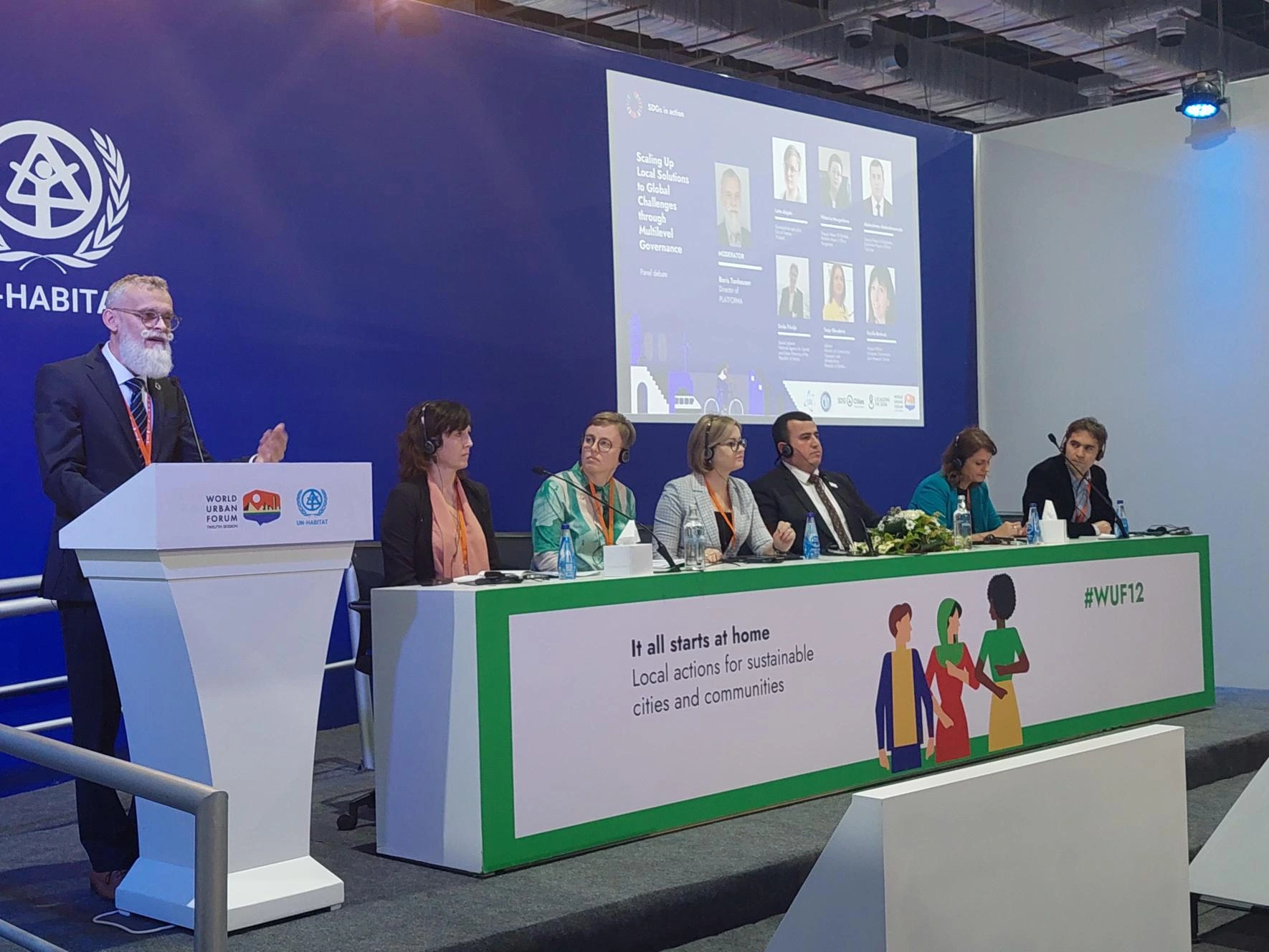
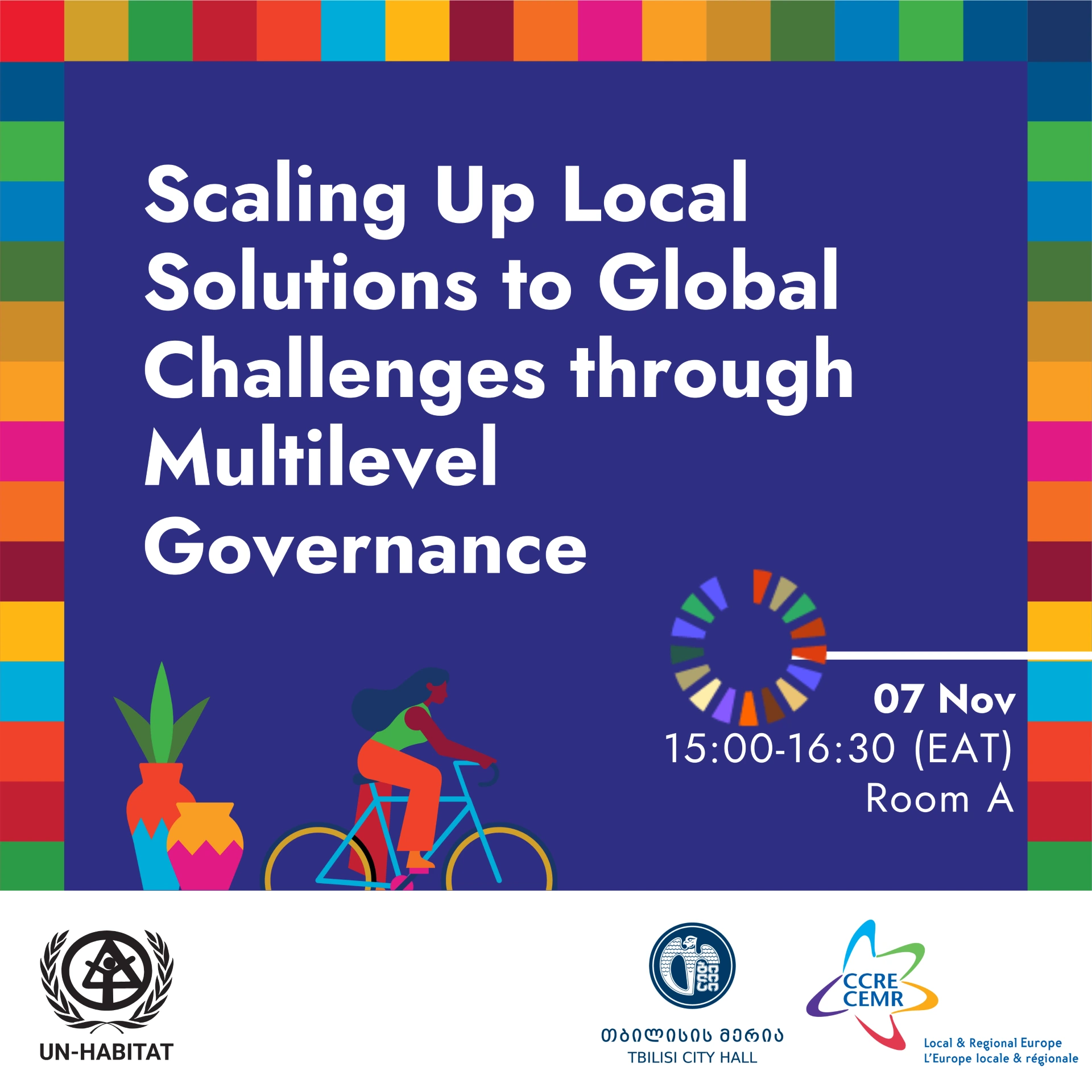
At the 12th World Urban Forum in Cairo, CEMR’s session brought together representatives from cities such as Tbilisi, Bishkek, Dushanbe, Niš and Vantaa, to share their experiences in advancing sustainable urban development through Voluntary Local Reviews (VLRs). These exchanges underscored the vital role of local governments in translating the Sustainable Development Goals (SDGs) into actionable strategies that deliver tangible results. 

Co-hosted with UN-Habitat, the city of Tbilisi, the Reference Framework for Sustainable Cities (RFSC), and the European Commission Joint Research Centre (JRC), the session showcased examples of the new generation of action oriented VLRs, innovative tools like the RFSC’s self-assessment platform and EC JRC’s analysis of VLRs published to date. These resources empower cities to align their urban strategies with the SDGs and measure progress with precision. 

Moderated by Boris Tonhauser, Director of PLATFORMA, the discussions explored how VLRs enable cities to address pressing challenges, including water management, air pollution, and data gaps while enhancing their strategies through citizen engagement and evidence-based decision-making. By leveraging these tools and processes, cities are not only refining their local plans but also contributing to broader global goals with concrete actions. 

The session highlighted the essential role of multilevel governance and cross-sector innovation in addressing sustainability challenges beyond 2030. Key recommendations included revisiting SDG goals with a bottom-up perspective, prioritising cultural and citizen participation, and strengthening partnerships and support for cities engaged in VLR processes. 

As the 2030 deadline for the SDGs approaches, the discussions reaffirmed the transformative power of local governments to lead global efforts. Through collaboration, peer learning, and the use of practical tools such as the RFSC, CEMR and its partners continue to support resilient, inclusive, and climate-neutral cities.  

WUF12: Over 25,000 participants from 182 countries.  

The 12th World Urban Forum in Cairo set new records, with over 25,000 participants from 182 countries gathering to exchange ideas and solutions under the theme “It All Starts at Home.” The event concluded with the unveiling of the Cairo Call to Action, a document capturing the Forum’s key messages and proposed strategies for addressing urban challenges. By emphasising multilevel governance, citizen engagement, and innovative tools, WUF12 reaffirmed the transformative power of local action in shaping inclusive, resilient, and sustainable cities. As the baton passes to Azerbaijan for WUF13, the momentum from Cairo serves as a powerful reminder of the critical role cities play in tackling global challenges. 

ANMP Anniversary

CEMR Joins ANMP’s 40th Anniversary Conference to Celebrate Local Democracy in Europe


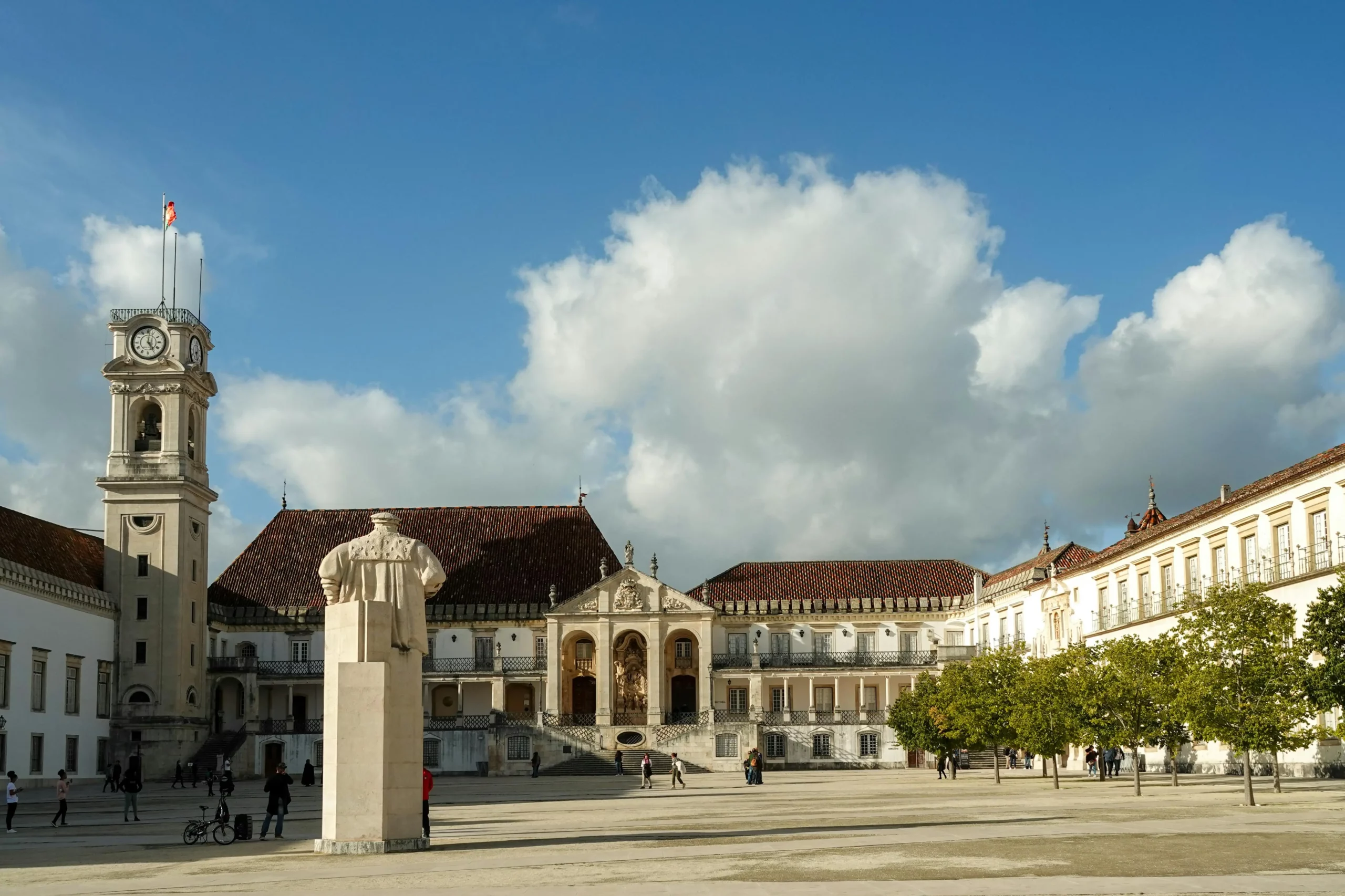
The Council of European Municipalities and Regions (CEMR) is proud to participate in the commemoration of the 40th anniversary of the National Association of Portuguese Municipalities (ANMP). We extend a warm invitation to our member associations to join the international conference “Municipal Associativism and European Challenges: The Role of Cooperation between Local Authorities,” slated for May 20th in Coimbra, Portugal.
 
Just three weeks before the upcoming EU Elections, this event presents a unique platform for CEMR members to convene and advocate for Europe’s future. Together, we will delve into pre- and post-vote initiatives outlined in the CEMR Call to Action.  
 
This conference is particularly significant as it aligns with Portugal’s 50th year of democracy. The ANMP anniversary is a significant moment for us to gather in Coimbra and reflect on this milestone while celebrating the resilience and impact of local democracy.
 
We strongly encourage all CEMR associations to take action by sharing this invitation with their respective members and registering for the event by May 6th through the provided link here
 
Let’s unite in Coimbra to honour the legacy of ANMP, champion the cause of local democracy, and shape the future of Europe through our collaborative efforts.

Meeting with the EU Commission on energy and climate

Covenant of Mayors - News 2023

Mayors shed light on cities’ essential role in the discussion with the EU Commission on the energy crisis and climate targets


Article from the Covenant of Mayors

The Covenant of Mayors Board met with both directors of the European Commission’s Directorate-General for Energy and Directorate-General for Climate Action on 29-30 March. Mayors took the opportunity of the pressing issue of the energy crisis to make their message clear: cities play a key role in simultaneously reducing Europe’s dependency on Russian gas and reaching the EU’s climate neutrality objectives. Thus, the EU institution’s continuous and ongoing support to cities is crucial.

The strength of the Covenant of Mayors is its political dimension, with a rotating political Board of 10 Mayors from frontrunner cities. They regularly convene and meet with high-level representatives of the European Commission to express cities’ most pressing needs. This gives cities an important outlet to constantly touch base with EU institutions on how they can further support local action in terms of climate and energy.

This year, the energy crisis was undeniably the pressing issue framing the conversation in Brussels on 29-30March 2023. Not only was it the topic of the Covenant of Mayors 2023 Conference, but it also set the tone for the Board’s meeting with Commission directors. The energy crisis has given Mayors the spotlight to show the European Commission how cities are essential for reaching EU objectives – and Mayors did not shy away from using that spotlight and making their messages clear.

Giving cities the means to tackle the energy and climate crises

“Our response to the energy crises is the response to the climate crisis. That is what the RePowerEU is for: to reduce our dependence on Russian energy and aligned with the European Green Deal.” – Ditte Juul Jørgensen, Director-General for Energy.

In her meeting with the mayors, Ditte Juul Jørgensen stressed the importance of cities in implementing REPowerEU and Green Deal objectives on the ground. She highlighted the importance of initiatives such as the Cities Energy Saving Sprint, as an excellent example of what can be done at the local level.

But going beyond last winter’s successes, she insisted on the need for structural changes to face the winters to come, mentioning the recent reform of the electricity market design, meant to empower consumers and local communities. For these structural changes, Ditte Juul Jørgensen recognises cities as fundamental allies.

Applauding the near-miracle that the Directorate-General for Energy accomplished last year to secure Europe’s energy supply, Mayors took this opportunity to underline that they were fundamental allies in this endeavour. And as fundamental allies, the EU should ensure that cities play a key role in a more long-term, integrated energy policy.

After the 2023 Conference on March 30, the Board then met with European Commission’s Director General for Climate Action, Kurt Vandenberghe. Here, the discussion around the energy crisis gave way to the broader concern and long-term goal of climate-neutrality in 2050 and the implementation of the EU Green Deal. Kurt Vandenberghe also recognized cities as key allies and was keen to hear their feedback on new programmes that involve direct involvement of cities, such as the EU Mission 100 climate-neutral and smart cities by 2030, the Social Climate Fund, the Policy Support Facility, and all the other myriad of initiatives that exist.

“Cities are the place of innovation. We can get so much feedback from you on the implementation of EU policy such as Fitfor55”. – Kurt Vandenberghe.

In both meetings, mayors expressed how the energy crisis has created an opportunity to accelerate the local energy transition, as energy policy has become the biggest question for Europe. But this also needs to translate into concrete support for local and regional implementation.

Mayors’ messages to both Director-Generals were concrete and clear.

 1.    Cities as the key to implementationThe main message was clear: without cities to implement policies on the ground, the EU will never reach its targets.
What really set the tone of the meeting was the sense of urgency: everyone agreed that “the time is now”. Implementation cannot wait. And cities are key to accelerating the transition on the ground. They are the place where change happens. In this phase, it will be crucial that the EU capitalises on this potential and increases its support to cities.

2.    Giving cities the means to implement the energy transition

This increased support should take several forms.

They suggested that the EU finance regional energy agencies to support the local energy transition. This sort of agency would greatly help border cities especially, by facilitating cross-border energy projects and production, currently extremely difficult. This would give more power to local and regional producers, and by extension, to citizens.

They called on the EU to consider more direct funding streams from the EU to local governments for concrete projects and action. They also highlighted that this funding should be more long-term and not only 2 or 3-year projects.

Beyond funding, another big concern from mayors is lack of capacity, expertise and skills that are available to them at local level to implement the transition. They called on the EU to support them find more #localstaff4climate: two big obstacles for implementation of renewables on territories.

3.    Pressuring National Governments to cooperate

National governments should be helping channel this funding and expertise. Unfortunately, instead of facilitating, they themselves usually become an obstacle – if not the greatest obstacle – for cities’ implementation. Not only do they not always engage and align with local level, but sometimes even, they withhold funding and block action for political reasons, as Mayor of Warsaw Rafal Trzasokowski underlined was happening more and more with the rise of populism in national governments across Europe.

Director-General for Energy Ditte Juul Jørgensen recognised the importance of the current updating of National Energy and Climate Plans, and Article 11 of the Governance Regulation of the Energy Union and Climate Action, which mandates Member States to involve the local level in this process by setting up Energy and Climate Dialogues.

Director-General for Climate Kurt Vandenberghe also referred to the Governance Regulation, pointing at its upcoming revision in the coming years as an opportunity to strengthen the role of cities in the EU policy making. He reminded that the European Commission also requested Member States to consult local governments for the implementation of the Social Climate Fund.

Mayors called upon the EU to make sure they enforce Article 11 and hold National Governments accountable for its implementation. They also asked the EU to show louder support for cities’ efforts in implementing EU targets and milestones, to help cities push ambitions and weaken opposition that may come from the national level.

Source of the article: Covenant of Mayors

Global Goals for Cities network for sustainability and development

RFSC - News 2022

It’s finished! The Global Goals for Cities pilot network is complete!


Across Europe, the 19 cities in the network visited each other, learned from each other and developed their integrated action plans together, to better implement the Sustainable Development Goals in their strategic urban planning.

To ensure the achievement of the 2030 Agenda and the 17 goals it sets, cities are key players. With more sustainable cities, we can ensure a better planet. This is why URBACT and CEMR supported the creation of the Global Goals for Cities pilot network, aiming to accelerate progress towards achieving the Sustainable Development Goals. In this network, 19 cities were selected and showed their commitment to localizing the SDGs.

Our 19 cities also organised or participated in national and international events to present and share their experience and results.

To better understand how cities contribute to the SDGs, cities used the Sustainable Cities Reference Framework among other URBACT tools, allowing them to analyse gaps and priorities in their local strategies, identify the best actions to progress on the selected objectives and thus help build their integrated action plans and integrate the SDGs into their long-term urban strategies.

Finally, the network has developed a learning toolkit on the Global Goals for Cities*, available online, so that cities can better locate and implement the SDGs in their local strategies.

Conference on local solutions for a global crisis

Covenant of Mayors Event - News 2023

“Cities on the frontline of the energy crisis”: A conference to bring local solutions to light


With the rising prices of energy, the majority of the world felt the consequences of the Russian aggression in Ukraine. The local authorities especially have been the first in line to deal with the crisis. To reflect on that matter, the Covenant of Mayors will organise a conference.

Cities on the frontline of the energy crisis” will be held in the heart of the European district in Brussels on the 30th of March. The goal of the event is to gather the cities and their representatives to discuss how their efforts in changing the energy infrastructure can help in the future. Investing more in green and local energy might be crucial, especially in the light of the climate change.

Local solutions to a global crisis
So far, it has been the households and small and medium businesses that have suffered the most from the energy crisis. The rising prices and inflation have significantly impacted their way of living. However, moving from overconsumption towards a more sustainable future not only battles the ecological problems but is also a way to show support to Ukraine. Getting rid of dependence on Russian gas has been the main target of many leaders in coordination with the REPowerEU Plan.

Because the mayors and their local governments are the closest to the citizens, the Conference of the Covenant of Mayors 2023 will give these authorities the opportunity to proudly display their responses to current events. At the same time, it will offer a chance to reflect on what the European institutions and national governments can do to help the people more. 

The future of European energy
Those participating in the event can expect to meet and chat with high-level representatives from European cities and their institutions. Among those who have confirmed their attendance is the Executive Vice-President of the European Commission Frans Timmermans and the EU Commissioner for Energy Kadri Simson. They will talk about how European institutions and state governments can assist local and regional attempts to reduce Russian gas dependency and energy consumption in the future.

Mayors and representatives of several European cities will join the moderated panel discussions on the agenda. The focus will be on the challenges the local authorities had to encounter, energy savings in the context of REPowerEU, and reflections on the first winter since the beginning of the energy crisis. The government representatives will also discuss their (immediate) reactions towards the crisis, the measures they have implemented, their impact on citizens and, most importantly: What can be done next.

Register for the conference before March 23rd here.

Residents service points to improve access to public services

Poland services - News 2022

In Rzeszow (Poland), resident service points as a tool for improving residents’ access to public services


In Poland, the city of Rzeszow set up four Residents Services Points (RSPs) in 2011. Easily attainable in shopping malls that have widespread parking capacities and are accessible to people with disabilities, RSPs intend to boost the approachability and provision of public services. In these RSPs, citizens can, for example, receive their ID cards and driving licenses, register their cars or inform themselves about local events.

The creation of RSPs was based on a participatory approach. In a survey, residents indicated their needs and expectations for such service. Once the first RSP was launched, satisfaction surveys were conducted to improve its functioning.

RSPs largely gained in popularity over the years. As such, in 2013, 20,000 cases were handled in the RSPs. In 2016, the number of administrated cases totalled 50,000. This can be explained by the high level of satisfaction of users due, among others, to the extended working time of the office, the greater availability of civil servants, the ability to handle many official topics in one dedicated place and the possibility to visit the RSPs on one’s way to everyday activities.

To learn more about this and other local best practices, check out the website of URBACT, the European territorial cooperation programme which aims to promote sustainable integrated urban development in cities all over Europe.

Since 2021, the RFSC tool is used by cities and partners of the “Global Goals for Cities” URBACT network, supporting the localisation of the SDGs across 19 European cities.

Smart city strategy in Heraklion to tackle urban challenges

Smart Cities - News Section

Heraklion in Greece is implementing smart city practices through interdisciplinary cooperation


The municipality of Heraklion in Greece elaborated a strategic plan among which one pillar is “Heraklion: Smart City”. This smart city strategy aims at fully achieving the potential of the city’s resources while consolidating domains in which the city has been lacking.

Heraklion’s Smart City Strategy was built using a durable and integrated approach in order to sustainably tackle urban challenges. As such, the city participates in the Covenant of Mayors for Climate and Energy. Heraklion also released its Sustainable Urban Development Plan. Approved by the city council and ratified by the Regional Government of Crete, this Plan is a project worth 14 million euros of European funding to provide for long-term sustainable urban design and development.

According to a study by the European Parliament “Mapping Smart Cities in the EU,” Heraklion performs well in three smart city axes: governance, economy and citizen participation. This contributed to a holistic approach with solutions positively affecting all stakeholders: individual citizens, businesses, communities and the whole city.

“Heraklion: Smart City” made a significant difference in the day-to-day organisation of Heraklion:

  • Broadband infrastructure has reached 100% coverage.
  • Citizens enjoy access to more than 160 e-services via the municipality’s portal.
  • Volunteer groups coordinate community outreach events to help the city.
  • The Dimoskopio, a multidisciplinary organisation whose goal is to promote entrepreneurship and innovation with the intention of improving the economic stability of Heraklion, was created.

To learn more about this and other local best practices, check out the website of URBACT, the European territorial cooperation programme which aims to promote sustainable integrated urban development in cities all over Europe.

Since 2021, the RFSC tool has been used by cities and partners of the “Global Goals for Cities” URBACT network, supporting the localisation of the SDGs across 19 European cities.

Africities Summit 2022

Africa - News Section

CoM SSA advocates for the financing of waste projects of African local authorities at the Africities Summit 9


The Covenant of Mayors for Sub-Saharan Africa (CoM SSA) and its implementing partner Expertise France highlighted the cross-cutting issues of climate, energy and waste management in African cities during two technical sessions at the Africities Summit. For more information, visit the project’s website here.

Cities Energy Savings Sprint initiative

Energy - News Section

Join the new EU initiative to reduce our cities’ dependence on Russian energy


The Cities Energy Saving Sprint is a joint initiative of the European Commission, the Covenant of Mayors – Europe, and the European Committee of the Regions to encourage cities to take measures that will immediately reduce their energy consumption. The “Sprint” will last for 4 months.

It is crucial to increase energy savings now to prepare for next winter. Every kilowatt/hour saved now will allow us to refill the storage tanks and be better prepared for next winter. Every gram of greenhouse gas we don’t emit in the coming months will be an important step, not only for the climate, but also as an act of solidarity with Ukraine.

In parallel with all the measures for profound changes, reduction of consumption and energy transition, there is an urgent need to take emergency energy saving measures today and to plan for energy consumption reductions during the coming winter. Municipalities have a crucial role to play here.

How can my city take part in the Cities Energy Savings Sprint?

Temporary Protection

Ukraine people - News

What is the local and regional governments’ role in welcoming Ukrainian refugees?


Many women, minors and elderly men are settling within the borders of the European Union. To date, over 5.5 million Ukrainians have been forced to leave their country. They seek refuge, especially in the EU’s border countries, such as Poland and Romania.

The EU’s activation of its Temporary Protection Directive (TPD) in early March 2022 demonstrated national governments’ unanimous willingness to welcome Ukrainian refugees. It guarantees immediate and temporary protection for people fleeing war in Ukraine for one year, automatically extendable by periods of six months for up to a maximum of three years.

But what are the responsibilities of local and regional governments, notably in areas such as health, housing and employment? Find out by reading the analysis of local governments’ role in the Temporary Protection Directive by IncluCities.