![Women in Ukraine - News 2022]()
Courage and resilience have no gender, says Chernihiv city councillor
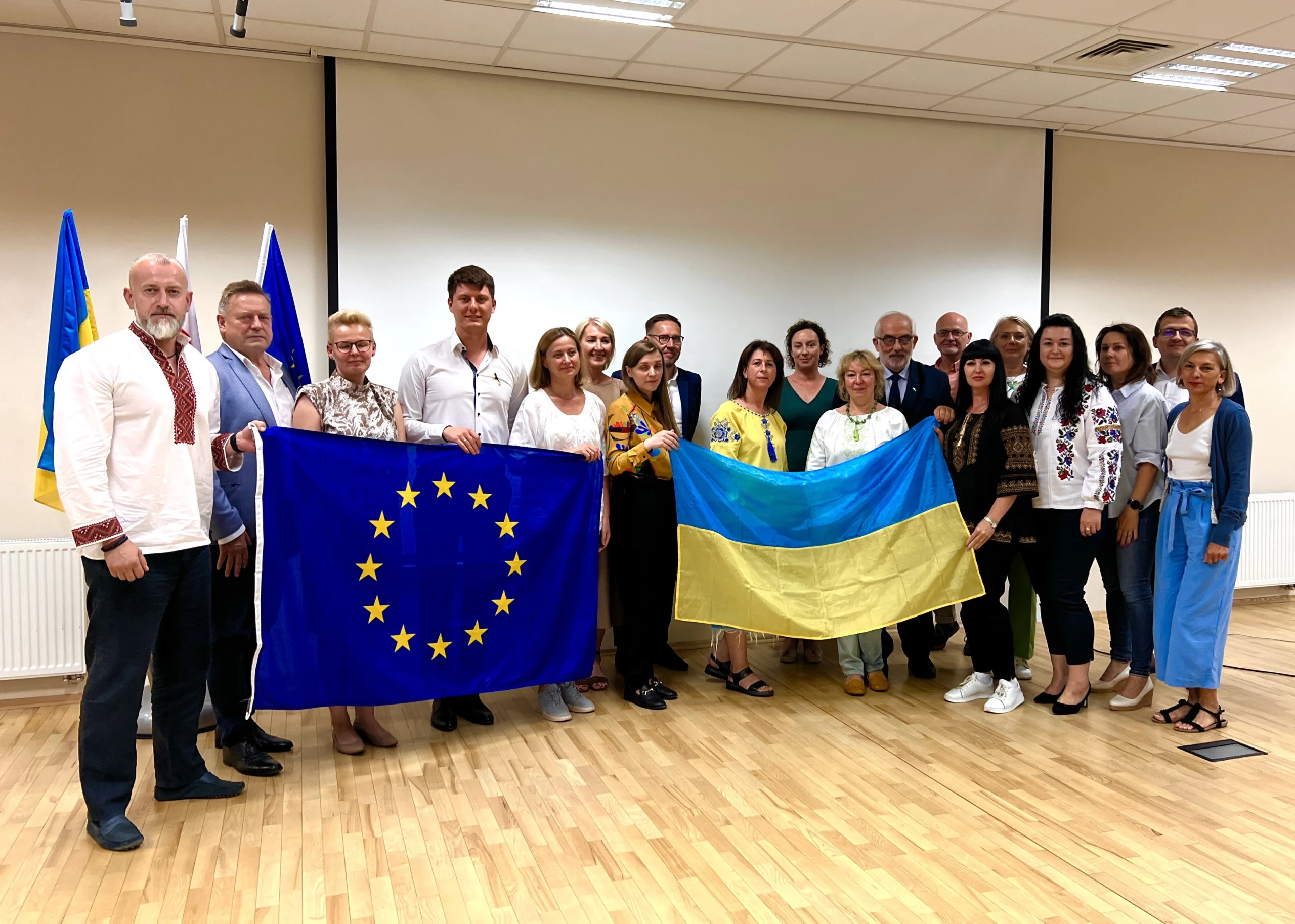
On the occasion of a workshop “Amplifying the voices of Ukrainian Women in post-war recovery” organised by Cities Alliance, CEMR was represented by Nataliia Kholchenkova, a member of the Chernihiv city council – a city besieged by Russia for 39 days in the spring of 2022. On this occasion, an interview was conducted by Cities Alliance with Nataliia Kholchenkova to discuss the city’s efforts to recover from war and the role women are playing in this recovery.
Chernihiv was besieged by Russia for 39 days in the spring of 2022. Since then, a recovery and reconstruction process has started. Could you please share the city’s experiences during and after the siege? How has the city tried to address the recovery issues, including the trauma and the loss that people have experienced?
Chernihiv is a city in the north of Ukraine. It is circa 100 km from the border with Russia and Belarus. From the very beginning of the war, the city was under attack. Chernihiv acted like a shield against Russian forces on the way to Kyiv. It was due to the resistance of our citizens that the enemy could not proceed. The city was not occupied, but it was blockaded from all sides and under heavy shelling for almost 40 days.
Due to this, Chernihiv was heavily ruined and damaged. Our only bridge that connected the city with Kyiv and the rest of Ukraine was destroyed. This meant we could not receive any humanitarian support and brought the city close to a humanitarian crisis. The city was without power, gas, and water for circa two weeks, and it was a really hard time for us.
The most terrible thing is that many residents were killed. Almost every day we received news that our neighbours, our friends, our relatives were killed due to the war. One of the main problems was how to bury people. Under constant shelling, we had no possibility to bury the bodies. There were no medicines available for some time, and we received information that some residents died because they could not get treatment for their chronic diseases.
I would like to emphasise the unity, bravery and resilience of all residents who supported each other and shared any available products and medicines. There was no hesitation on how to act: Men got the ammunition and weapons and went to join the armed forces or the local territorial defence units, and women did everything possible to support them with supplies, food, medicines, clothes, and so on.
What infrastructure and services were destroyed and most affected? How did the city adapt to the lack of them?
Because of the Russian invasion, social and critical infrastructure and residential housing were heavily damaged. Circa 850 multi-story buildings were partially damaged, while 150 multi-story buildings were heavily damaged due to direct hits from shelling. Five buildings were destroyed. About 2,000 private houses were damaged, and of those, 600 were totally destroyed.
People shared everything with each other, including housing, but the worst part was that there were no shelters. We were not prepared for the war. When the war started, we used simple basements in buildings or spaces underground to shelter. These were the places where we had to live, because we were under constant shelling, and we had no opportunity to even go find food. It was really dangerous.
As for critical infrastructure, we had to live for circa two weeks with no water. The city has a central water supply system that was damaged. Of a total of five pumping stations, two were totally destroyed and two were damaged. The whole city with almost 300,000 residents could not get water and the sewage system did not work. The heating system also did not work. The weather was cold with temperatures below zero degrees [Celsius] and some peaks of minus seven degrees. Also, there was no power and no possibility to use any electrical equipment. We could not call or get the news from the TV or the internet, so we were disconnected in the shelter just with the company of people. But we had to survive somehow.
How did people start living again? How did the recovery efforts start?
During the siege, a lot of residents tried to leave the city. It was a great risk and there were many cases of civilians killed while trying to leave because there was no humanitarian corridor or organised conditions to leave the city. There were cases of cars with signs indicating children and families on board that were shelled by the enemy. It was very dangerous, but people had to leave because it was also dangerous to stay in the city.
Before the war, we had circa 284,000 residents, and in the middle of March, there were circa 70,000 left. After the enemy left, during summer, people started returning to the city. In September we had about 220,000 residents back in the city. Of course, it was up to the local government to ensure the provision of all kinds of recovery measures and services. This also incentivised citizens to come back.
How was the process of livelihood recovery carried out when residents started coming back? With the majority of men going to combat, did women take up new or different roles?
I would like to emphasise the role of local authorities in the recovery process. We had to make quick decisions. The first priority was to repair multi-story buildings and housing for people to have a roof over their heads, and to repair the water supply and heating systems to be ready for autumn and winter. It was a great multitasking effort to provide all services at the same time, and it is still an ongoing process. After these interventions, we also started building shelters because we had to ensure the safety of our citizens. We equipped educational institutions and multi-story buildings with real shelters including ventilation and bio toilets.
One other very important action was the reopening of schools and the provision of offline education. We understood that parents wanted their children to get an education in schools, and this was the factor that motivated people to return. Now we have combined both offline and online education. We also worked to reopen kindergartens. All kindergartens were equipped with shelters so that when the alarm started, the children could be safe. Restoring education facilities was also a main condition for people to continue to work. If kindergartens do not work, we mothers and parents must be with the children at home.
As for livelihoods and jobs, it is still a big issue for us, because our industries and enterprises were located in the suburbs, which were the most heavily shelled areas. Many businesses relocated to more secure regions in the west of Ukraine, and the number of people without jobs unfortunately increased.
A lot of men went to the front line, while a lot of women had to take care of children. It is very difficult to combine work with childcare at home. This is still a problem, although there has been some progress at the community level. We have some women’s organisations that provide support; however, it is still very hard to get new jobs due to the many enterprises that closed or relocated. As we are on the border and with the war still ongoing, it is hard to persuade investors or businesses to start new activities in the region. So yes, it is a problem for all residents, but it is even more complicated for women.
Our task as local authorities are to provide economic support and to create the conditions for businesses to return and invest again in our city. We are now trying to cooperate with international partners to attract investors for future projects. These international partnerships are a good signal for our residents. It shows that they will have a future.
What has been the role of civil society and local organisations in the last months of reconstruction? Did women take up new roles in these organisations?
I would like to emphasise the role of volunteer organisations, many composed of women. These women provided a huge support to suffering people by delivering humanitarian aid, gathering supplies and food for our armed forces, and helping with childcare and education.
The role of education is very important. It is a great psychological support and aid for our children who have to endure this terrible war. The war has not only caused physical injuries but also psychological trauma to all residents, especially women. For women, it has been more complicated because they have a lot of pressure to keep their children safe and healthy while also having a job. In the case of war, this responsibility and pressure has doubled or tripled. So, the role of women has been incredible.
One more thing that I can say for sure is that bravery and resilience have no gender, and that women are acting as leaders on all front lines and battlefields: educational, cultural, and health.
You mentioned psychological trauma. Are there mental health programmes that have been started by the city or local organisations to support the healing process for the city and its residents?
Yes, we have municipal programmes under the Department of Social Politics and a service for people who remain alone. We also have ongoing partnerships with international organisations that are part of the UN. At the same time, with the war still ongoing and with the constant threat of new shelling, women feel like they do not yet have time for psychological aid and to take care of their health. It is our task as local governments to ensure that they are not only healthy physically, but also psychologically. We still have to persuade them that we should also pay attention to ourselves and our mental condition and that we should be healthy for our children, colleagues, men, and the city.
How is the situation now in Chernihiv? What does the city need the most at the moment?
We have managed to advance the recovery and the restoration of some services. There are less and less power outages. We have provided schools and all critical infrastructure with generators to prevent power outages, and we have helped businesses also get generators. We are organising activities for children. More has to be done. Street lighting, for instance, is still not working due to power saving, and around 5 pm it is dark already in the streets.
What the city needs the most right now is financial support to cover larger-scale reconstruction. With the municipal budget, we have repaired the small and medium-sized damage to buildings, but we cannot cover the repair of heavy damages. For instance, the next project we would like to implement is the reconstruction of two water pumping stations, but we cannot cover that with the local government budget. This is also an issue with the damaged public transport system. We would like to incorporate new European technological solutions and innovations to create a better future for our residents and to improve their quality of life.
I can definitely say that women’s participation in all kinds of activities and decision-making processes in our country is stronger now than it was before due to cooperation with, and examples of, international and women’s organisations. It is a part of our European integration process and it is very important for us to continue with such cooperation processes. It gives us strength and spirit to unite as women following the example of the European Union, where there are many strong women in politics, economy and business. We should continue in this direction.
Nataliia Kholchenkova is the Head of the International Relations and Investments Department of Chernihiv City Council. Since 2020, she has also been Head of the Permanent Deputy Commission on Regulations, Legality, Corruption, Freedoms and Rights of Citizens and Prevention of Corruption and Head of the Deputy Association “For Equal Rights and Opportunities” of Chernihiv. She holds a PhD in the speciality of Secondary Education from T.H. Shevchenko National University “Chernihiv Collegium”, where she was also an Associate Professor. She is a member of the board of the Chernihiv Women’s Union and a member of the Association of Ukrainian Cities (AUC) and the Council of European Municipalities and Regions. She is the PLATFORMA spokesperson for AUC.
Project Officer – International Partnerships (U-Lead)