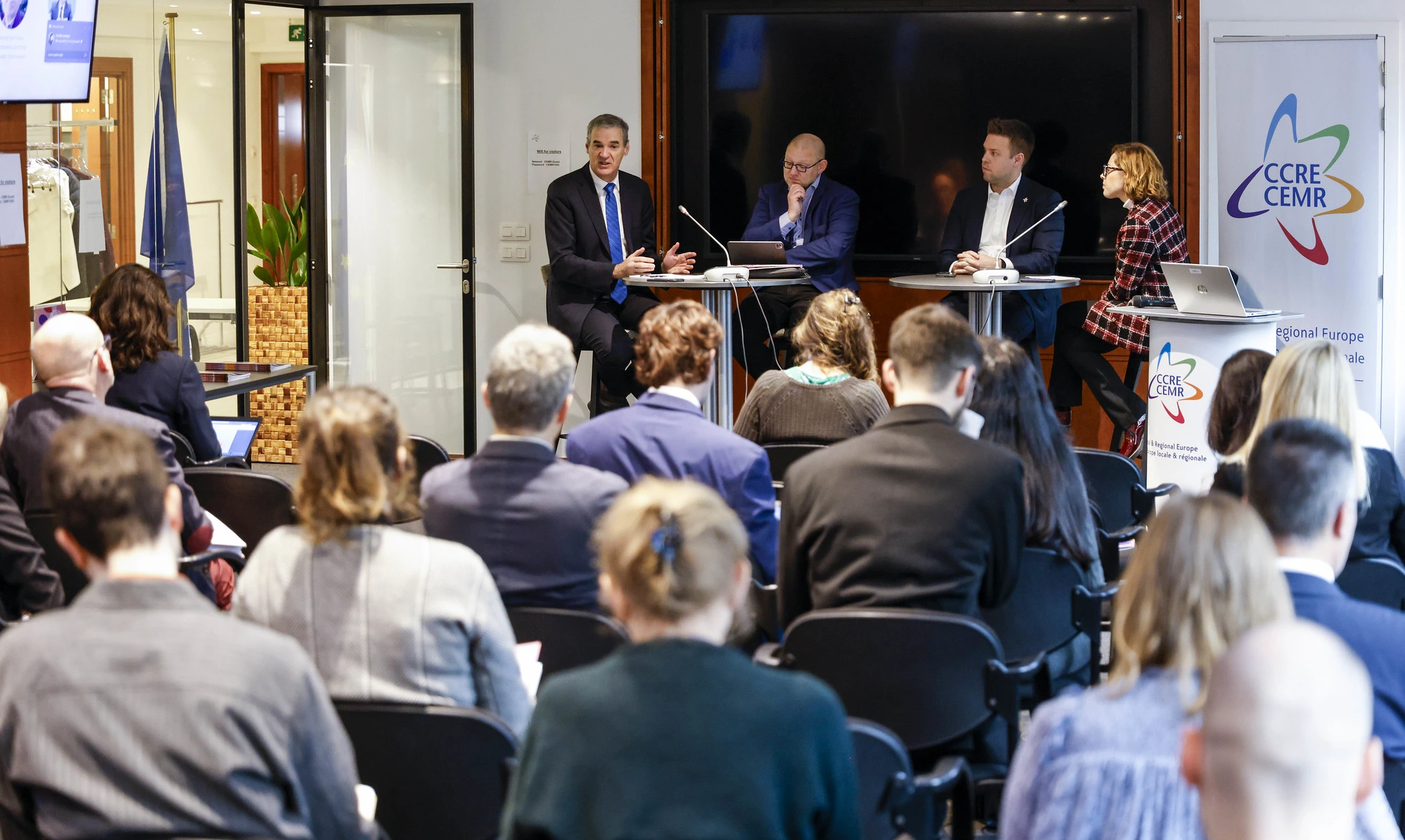
CEMR–EPSU report maps current involvement of local and regional actors in EU economic governance
The European Semester, created in 2010 in response to the financial crisis, is the EU’s annual cycle for coordinating Member States’ economic, social, employment, and budgetary policies. Its aim is to align national reforms with shared EU objectives, including stability, sustainable growth, and the Europe 2020 strategy.
While central governments and EU institutions remain the main players, the process increasingly affects local and regional governments (LRGs) and their social partners. From public finance and taxation to health, social care and employment, many Semester reforms directly touch the responsibilities of municipalities and regions, as well as the working conditions of the sector’s employees.
The joint CEMR–EPSU project “Localising the European Semester” (2018–2020) set out to better understand and strengthen this involvement. The first deliverable, a background report published in February 2018, provided an overview of the Semester’s development, evidence of how LRGs and social partners are engaged, and identified important gaps in knowledge.
Key findings from the report include:
- Limited evidence of structured involvement: While LRGs are often consulted through existing dialogue structures, their influence remains inconsistent across Member States. For social partners, involvement is even less systematic, with sectoral trade unions and employers’ organisations often sidelined in favour of peak-level organisations.
- Impact remains unclear: Academic studies assess when countries follow Semester recommendations, for example, during election cycles, under market pressure, or when backed by EU enforcement. However, little research exists on whether reforms are more likely to succeed when LRGs and social partners contribute.
- Need for deeper analysis: The extent to which local governments and sectoral social partners shape National Reform Programmes (NRPs) is largely undocumented. Equally, it remains uncertain whether peak organisations fully represent the concerns of the local government sector in national consultations.
- Opportunities for good practice: Where involvement does occur, it is often tied to long-standing structures for social dialogue or intergovernmental coordination. The challenge is to turn sporadic consultation into regular, structured dialogue with clear impact.
The report concludes that strengthening the role of LRGs and their social partners in the Semester is both necessary and possible. By documenting experiences, identifying good practices, and pressing for meaningful engagement, the CEMR–EPSU project aims to ensure that the voices of local governments, employers and workers are better reflected in one of the EU’s most powerful policy coordination tools.
For more information, contact:
Officer – Employment, Digitalisation and Public Services