Citizen’s Jury

EU - News Section

Join the citizen’s jury and select the very first European Capital of Democracy


It’s time: join the citizen’s jury and select the very first European Capital of Democracy at the end of 2023! To become a juror, you won’t need more than 5 minutes to complete your registration.

Starting in 2022, every year, a different city will be designated the European Capital of Democracy, chosen by a jury of 10,000 European citizens. In cooperation with civil society, the title-holding city will host a wide range of activities and events, all designed to improve and strengthen democracy. 

Selection of the Capital of Democracy

European Parliament - News section

Take part in the selection of the very first European Capital of Democracy!


Join a Europe-wide jury composed of 10,000 European citizens and take part in the selection of the very first European Capital of Democracy!

This Europe-wide initiative aims to innovate and strengthen democracy on the ground. From 2022, each year, one city will be selected in a five-stage process and granted this honorary title.

To become a European Capital of Democracy, cities must have a population of over 100,000 within the member states of the Council of Europe, and present a portfolio of their best democratic practices and new project ideas.

An experts’ jury will then evaluate the projects and decides on a shortlist of three to five Cities. Finally, a jury of 10,000 European citizens will get the final word on the selection of the City to carry the title European Capital of Democracy.

The winning city will host a one-year-long programme of exciting events, festivals and activities designed to improve and strengthen democracy, which puts citizens’ participation at the heart of it.

To become a citizens’ juror and play a crucial role in strengthening and securing Europe’s democratic future, just click here.

European Enlargement

European Union - News section

How do we support Ukraine, Moldova and Georgia on their path to joining the European Union?


In the wake of Russia’s war of aggression, the people of Ukraine, Moldova and Georgia are more determined than ever to join the European Union. But how can this “Associated Trio” of countries, and in particular their local governments, be supported in implementing the sometimes difficult reforms necessary to become full members of the bloc?

Local leaders from across Europe gathered on Monday (26 September) during CEMR’s annual retreat to discuss the Trio’s challenges and prospects on the path to EU membership.

Fighting for freedom and Europe

In 2014 the EU signed bilateral association agreements with Ukraine, Georgia and Moldova. These agreements set the foundation for their political association and economic integration with the EU and aim to foster democracy, the rule of law, human rights, good governance and economic development.

There is no questioning these nations’ determination to live the European dream. In Ukraine in particular, this has become a matter of life and death. “EU candidate status is very important for all of us”, said Nataliya Lazarenko, international cooperation manager of the Association of Ukrainian Cities (AUC). “People are dying for the sake of European values.”

While these reforms must mostly be undertaken by the national government, the AUC is also pushing for reforms to ensure strong local democracy, in line with the European Charter of Local Self-Government.
Ms Lazarenko stressed that learning from EU countries’ success stories and mistakes during their European integration would be of great value to Ukrainian local governments.

Helping local governments make the most of the EU

Back in July, CEMR endorsed in formal Declaration a “Trio holistic approach” to Ukraine, Moldova and Georgia’s accessions. Concretely, European local governments will continue to support their peers in these countries through peer exchanges, study visits and training to help them develop the skills and knowledge to make the reforms needed to harmonise with EU legislation and make the most of European funds.

Magda Kostava, member of Kutaisi City Council in Georgia, welcomed the opportunities for sharing guidance and good practices from European partners. “We know we have to work a lot to be the candidates and we are ready for that,” she said. “We see our bright future here in Europe. CEMR is one of the big opportunities and platforms to help us to do the necessary work.”

Alexandru Osadci, coordinator of international relations at the Congress of Local Authorities of Moldova (CALM), stressed that the pace of reforms in candidate countries had slowed down as a result of having to react to constant crises and reduced external funding. “We need to do much more than emergency ‘firefighting’ in response to these crises,” he said. “We need to adjust to the acquis communautaire, we need to implement the EU policies. The necessary reforms are the key issue in Moldova.”

While local governments in Moldova have been steadfast in their support for European integration, the national government has often changed its composition and orientation. As a result, the political will to reform administration, justice and anti-corruption offices has been lacking. Furthermore, external funding is needed to undertake the costly reforms required by EU membership.

Dusica Perisic, executive director of the North-Macedonian Local Government Association (ZELS), highlighted the fact that EU candidate status had facilitated cross-border cooperation with municipalities in neighbouring countries. While expressing the hope that North Macedonia would eventually join the EU, she warned that this would be a difficult winter with a loss of both funds and energy.

Annika Vaikla, councillor for Viimsi Municipality in Estonia, said that leaving the Soviet Union had enabled her country to embrace local democracy and fight corruption. Even the leaders of small villages now participate in municipal work and reducing corruption means local administrations are genuinely serving their citizens.

Vaikla also emphasised that Estonian municipalities are ready to share their experiences and good practices on how to prepare for EU membership. “We are so glad to help you and support you so can be among us”, she said.

Officials from the European Parliamentary Research Service (EPRS) presented their study on Ukraine, Georgia and Moldova’s prospects for joining the EU. The main takeaway from the session’s exchanges? Even though each of these countries will follow a different path towards the EU, local and regional governments’ efforts will will go very much in the same direction.

Urban mobility

Mobility - News Section

CEMR to take part in the European Commission Expert Group on Urban Mobility


Great news! the Council of European Municipalities and Regions is officially part of the European Commission Expert Group on Urban Mobility! CEMR will be represented by the Chair of its expert group on mobility, Caspar Sluiter from the Association of Netherlands Municipalities (VNG).

This new group will be responsible for several tasks, including assisting the Commission in executing the new EU urban mobility framework, facilitating exchanges of good practices in the field of sustainable urban mobility, and encouraging information exchanges on initiatives, projects, and partnerships on sustainable urban mobility.

Green Deal Handbook

Climate Change - News Section

New toolkit for cities and regions on how to adapt to climate change


The European Committee of the Regions (CoR) has published the first Green Deal Handbook with a focus on climate adaptation.

The Handbook is an interactive toolkit that provides information on financial aid and technical instruments to deploy climate adaptation measures based on different geographical areas and regional specificities.

The objective is to equip local and regional authorities with a set of tools and recommendations to better adapt to climate change, minimise vulnerabilities and build resilience to reduce disaster risks as well as loss and damages. A Handbook is available for every EU Member State.

​Designed in a creative and interactive way, the new Handbook on climate adaptation gives local and regional authorities guidance in implementing the Green Deal on a local and regional level. It provides assistance in finding the right measures to deal with the hazards of climate change.

It offers guidance regarding case studies, financial aid and technical assistance in the fields of climate adaptation. While this first edition focuses on adapting to global warming, upcoming handbooks will be focusing on the renovation wave and biodiversity.

The climate adaptation Handbook is a component of the Committee of the Regions’ Green Deal Going Local campaign, that aims at supporting the implementation of the Green Deal at the local and regional levels. As there is no ‘one-size-fits all recipe’ for a local and regional implementation of the Green Deal, this Handbook provides step-by-step guidance and is adapted to each local context (from urban to rural, mountain and coastal areas, among others).

Click here to access the Handbook’s webpage.

This article was first published by the European Committee of the Regions. 

Paweł Adamowicz Award

European Town - News

Nominations open for Mayor Paweł Adamowicz Award


Nominate your candidate for the 2022 Mayor Paweł Adamowicz Award honouring the work of persons or organisations who advanced human rights, solidarity, cooperation and trust among citizens. To nominate the next winner of the award, please fill this online nomination form by 31 October 2022. 

Future shocks

Citizenship - News Section

In a world of crises, local governments reflect on how to anticipate the next mega-shocks


The world, and Europe in particular, are being wracked by multiple crises. We have all been affected by the pandemic, climate change, and, now, a deepening energy crisis. As serious as these events are, we already know that more great transformations are on the way this century.

The sheer scale of transformations is daunting: extreme weather events, the energy transition, demographic change and artificial intelligence will all impact our societies in profound ways in the years to come.

Anticipating and responding to such changes requires both effective foresight and the contribution of all levels of government. That’s why, on the occasion of CEMR’s annual retreat, CEMR and the European Parliamentary Research Service (EPRS) held a joint event on Monday (26 September) drawing attention to future shocks and have signed an agreement to formalise and intensify their collaboration.

A century of crisis and transformation

Local, regional and European elected officials gathered in the European Parliament in Brussels to discuss how local and regional governments can anticipate and respond to future shocks. The EPRS presented their “Future Shocks 2022” study outlining the diverse set of risks Europe faces as well as possible policy responses.

The participants emphasised the multiplicity of current crises and upcoming changes: the pandemic, climate change, democratic alienation and populism, demographic changes, war and the resulting refugee waves and energy crisis.

These crises are heightening inequalities and poverty, and leading to a degree of uncertainty unheard of since the Second World War. “Uncertainty is impeding human development across the globe” said CEMR Secretary General Fabrizio Rossi. “For the first time ever, the Global Human Development Index has declined for two years in a row. This means people face falling standards of living and worse quality of life in many countries.”

Younous Omarjee, a French MEP and the chair of the Committee on Regional Development (REGI), emphasised that, in addition to today’s crises, tremendous transformational changes were already underway and would continue to be amplified this century.

These include the ongoing mass extinction event of the Anthropocene, a “demographic revolution” with Europe’s population stagnation and the growth of Africa to 4 billion people by 2100, worsening natural disasters, the rise of “emerged powers” like China and the ongoing technological revolution of digitalisation and AI.

Global crises, local impact

Local leaders from France, Georgia and Malta outlined what these crises mean in their communities. Karine Gloanec Maurin, regional councillor for Centre-Val de Loire in France, hailed the swift provision of European cohesion funds to help local governments tackle the COVID crisis. The EU had been much swifter to respond than in previous crises.

Francine Farrugia, local councillor for Siggiewi Municipality in Malta, stressed that these crises are already being experienced by ordinary people and cannot be solved without their participation. Maltese are already facing rising temperatures and are contributing to mitigating climate change by reducing car usage (promoted notably through car-free days) and diversifying the country’s energy mix.

Farrugia emphasised local governments’ crucial pedagogic role. “It is important to educate people on what the challenges are, what the issues are and how we can solve them on a day-to-day basis”, she said.

Magda Kostova, a member of Kutaisi City Council in Georgia, highlighted the challenges faced by her city, one of the oldest in the world, having been founded over 2500 years ago. These challenges include the threat of Russia – Georgia having only freed itself from Soviet occupation three decades ago – and a high level of emigration, especially of educated youth to the capital Tbilisi and the West. In tackling these diverse challenges, Kostova stressed that Georgia’s future lies in the European Union and its values.

Combining EU research and local knowledge

In anticipating and reacting to this century’s profound crises and transformations, it is crucial that policymakers be informed by accurate and relevant research. That is why CEMR and EPRS signed on Tuesday a Memorandum of Understanding to intensify their cooperation.

“I am very pleased with the good cooperation that has developed these past years between EPRS and CEMR, and which is now being formalised and strengthened for the years to come” said EPRS Acting Director General Étienne Bassot.

Our organisations will regularly exchange policy priorities and their ongoing work and events, as well as participate in events of mutual interest. In particular, CEMR will provide information, based on local governments’ knowledge and experience, for EPRS’ research and share relevant parliamentary studies with local and regional government associations.

Metropolis Conference

Migration - News Section

From Berlin to Beirut, “migration is not a problem to be solved but a reality to be managed”


Multiple global crises impacting migration and mobility require immediate and coordinated local responses. What are the main challenges and which solutions have already proven sustainable? CEMR and IncluCities explored these questions at the International Metropolis Conference in Berlin.

Berlin is known as multicultural city where every second child has a migration background. Migrants play an important role in the city and migration affects all levels of political and daily life. Indeed, Berlin was the German state to implement a specific Act on migrant integration, notably boosting their opportunities to work in the public sector.

Local authorities work hand in hand with NGOs and civil society to have a sound understanding of the situation on the ground. In crisis management, the local level is strategic, explained Katarina Niewiedzial, Commissioner of the Berlin Senate for Integration and Migration. “However, we are very slow and still do many things on paper“, she said. “There is still a lot we can learn on digital solutions on migration from other cities, like Warsaw.

Knowledge-sharing goes both ways

Conversely, the city of Warsaw has also learned from Berlin’s best practices and experience to build a more efficient and comprehensive response for migration flows. When 800,000 Ukrainian refugees arrived in Warsaw following the Russian invasion, less than 12 hours were needed for the city to set up a working plan for crisis management.

Despite having minimal or no resources and depending on support from various organisations, civil society and NGOs, they focused on integration and the labour market from the very beginning. “Over half of the adult refugees, mainly women, managed to find a job in the city within four months”, said Tomasz Pactwa, Director of Warsaw’s Projects and Social Affairs Department.

Public attitudes were another vital element they tackled to prevent negative propaganda around refugees. After conducting a survey, city authorities identified and addressed citizens’ fears, such as overcrowding and crime, through communication campaigns. This paid off as the narrative changed and solidarity prevailed.

Instrumentalised by populists

Not all cities have positive stories to tell. Lebanon is the country with the highest number of refugees per capita. They have been facing one of the worst economic and financial crises in decades if not more, with most residents falling under the poverty line and an inflation rate of over 150%.
Refugees in the country are not seen as a problem to be solved but rather a tool for political elites to gain influence through populist rhetoric and spreading misconceptions. “An alarming increase in discrimination, harassment, and violence against refugees is present”, explained Fatima A. Ibrahim, Executive Director of the Refugees=Partners project (Lebanon & Syria).

Changing perceptions of migration

Gaziantep, a big Turkish city near the Syrian border, hosts half a million refugees: one-fifth of the city’s population are newcomers. Since 2015, the local authorities have adapted their services to the situation by establishing local principles on refugee response that leave no one behind and include conflict-sensitive planning.

The city has opened a migration management department, a social research centre, health care units, community centres, art and vocational centres, a women’s solidarity and empowerment shelter and a rehabilitation centre, as well as distributing humanitarian aid. “In Gaziantep, we believe migration is not a problem to be solved, but a reality to be managed,” said Önder Yalçın, Director of the migration department for the city of Gaziantep.

Learning from each other

Inclusion happens at the local level and presents a huge challenge for local communities that lack capacity, knowledge and financial resources. “This is why we have started with the EU IncluCities project, to enable a vivid exchange of best practices among mentor and mentee cities to improve local inclusion”, said Maria Grazia Montella, CEMR migration officer.

The responses from stakeholders on the ground, cities, their support networks, and local and regional government associations are strikingly positive. In two years and a half, cities participating in the IncluCities project have already begun impressive processes of change.
The Belgian #BuddieswithRefugees project is being replicated in the Sicilian town Capaci. A migrant consulting body has been established in the Greek city of Levadia to co-create policies with the newcomers.

Meanwhile, in France, the town of Saint-Jean-de-la-Ruelle has created a women’s house to integrate refugees with a view to their particular needs. And with Russia’s war in Ukraine, Jelgava in Latvia went from having just a handful to over a thousand refugees. The municipality managed to set up from scratch an operational information and reception centre for newcomers.

Everywhere, we can see things happening and that’s the main goal of our project. Every city has different dynamics and structures, yet the fundamentals of addressing migration through a lens of inclusion and respect for human rights form the core of successful management at the local level. Through IncluCities and similar projects, the principles and practices that work in one locale can be replicated and adapted in other places.

Mobility Week

Mobility Week - News 2022

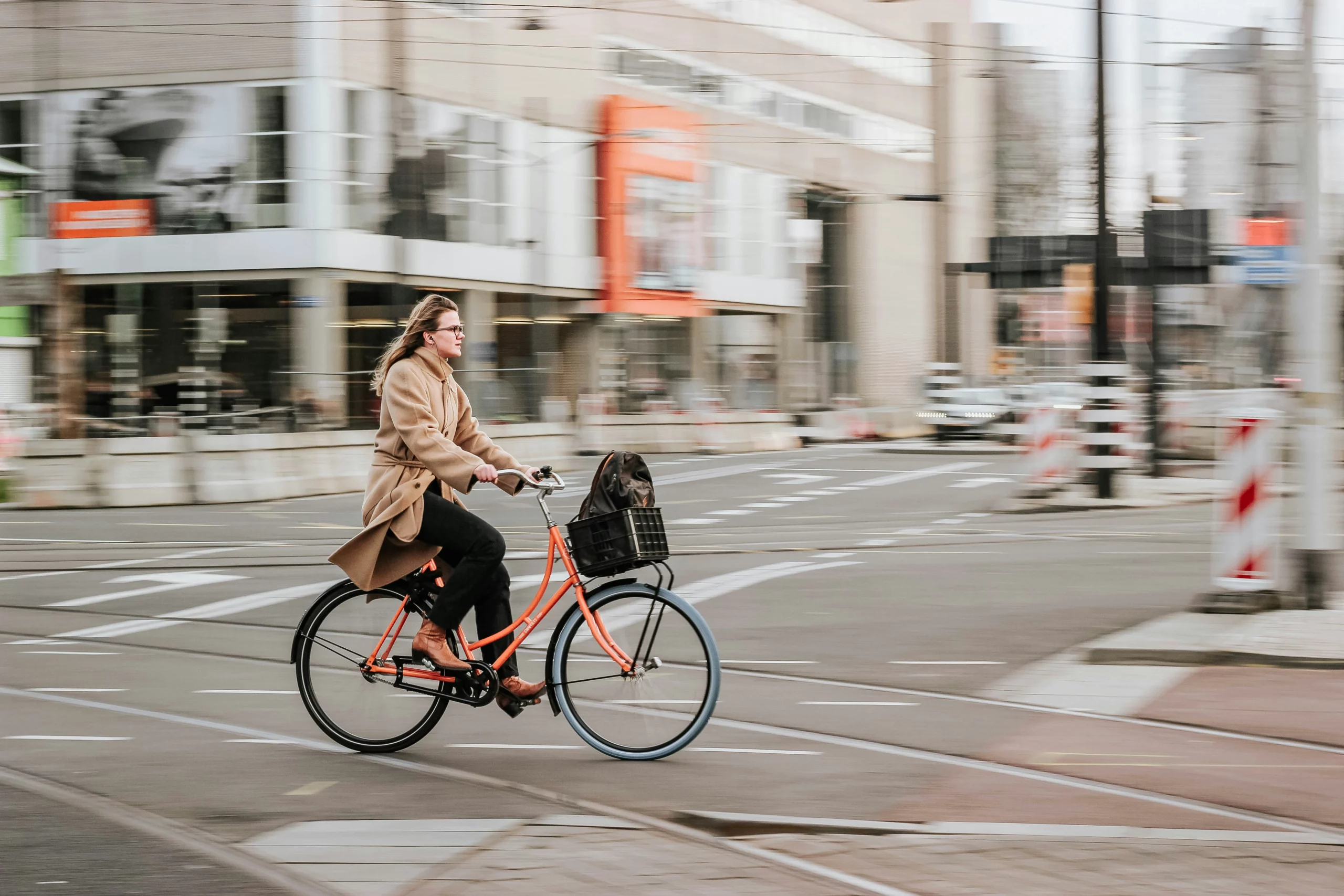
​How cities are turning their streets over to cyclists


Did you know? Each year, buses, trams and metros carry 50 billion passengers in cities, saving 100 million car trips every day.

But bicycles are also a convenient and environmentally friendly way to travel. Copenhagen, for example, is known for being a city of cyclists. Its residents ride because it’s safe, fast and easy to get around by bike. They also do it because Copenhagen is designed and built for cycling. By 2025, 50 per cent of all trips to work and education in the city are expected to be made by bike. 

So what is the recipe for turning cities around bicycles? Some say it all starts with the creation of segregated bike lanes and ‘slow streets’. Others claim making public transport compatible with cyclists is key. 

All around the world, cities are taking steps to drive sustainable mobility, including by widening pavements, closing streets to cars and setting up traffic light signalling that prioritises people travelling by foot or bike. 

But as the European Commission states, the worst enemies of the bicycle in urban areas are not cars, but longheld prejudices connected with the use of the bicycle as a regular mode of transport. For example, few car owners are really aware of what their car costs them and of the considerable savings to be made by cycling. Awareness-raising campaigns are therefore key to informing the population on the objective qualities and advantages of cycling.

On their own, all those local initiatives led by cities can make a difference, but together they can transform our urban future and make mobility less environmentally and socially harmful, more efficient and cleaner.

To find out more about how cities are tackling the challenge of mobility, visit the European Mobility Week website. Also, take a look at the infographic produced by the CEMR on this occasion.

International Partnership

International Partnership - News 2022

Local government leaders renew their partnerships with the EU to boost international development


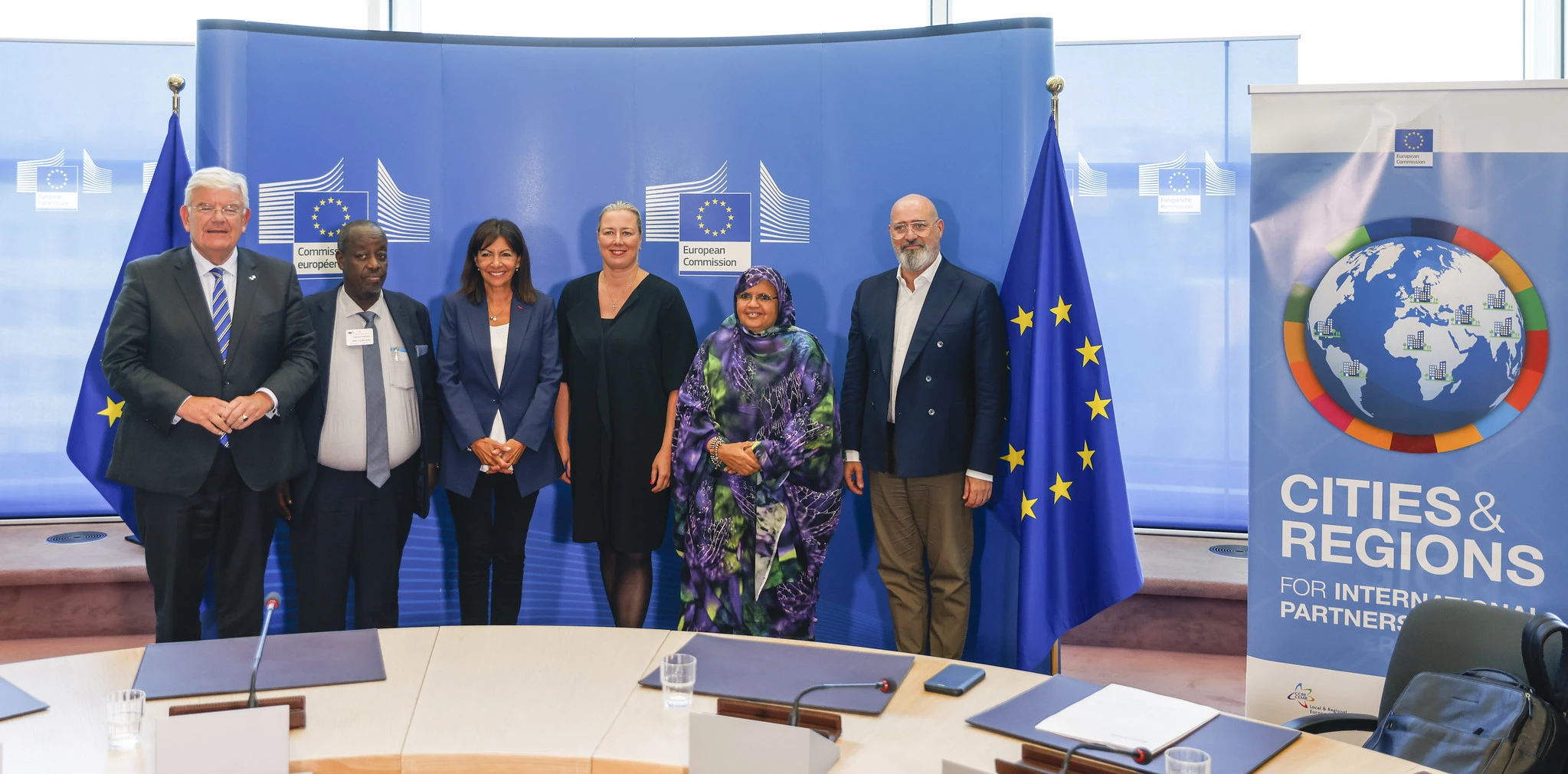
The presidents of the five largest associations of local and regional governments met yesterday (September 12, 2022) in Brussels with Jutta Urpilainen, European Commissioner for International Partnerships, to renew their partnership with the European Union on international development.

The five local government leaders present were:

  • Anne Hidalgo, Mayor of Paris (France), President of the International Association of Francophone Mayors (AIMF)
  • Stefano Bonaccini, President of the Emilia-Romagna Region (Italy) and President of the Council of European Municipalities and Regions (CEMR) & PLATFORMA
  • Innocent Uwimana, President of the Rwanda Association of Local Government Authorities (RALGA) and Board member of the Commonwealth Local Government Forum (CLGF)
  • Jan van Zanen, Mayor of The Hague (Netherlands), Chair of the Board of United Cities and Local Governments (UCLG)
  • Fatimetou Abdel Malick, President of the Regional Council of Nouakchott (Mauritania), President of United Cities and Local Governments – Africa (UCLG-A)

The five presidents signed new framework partnership agreements with the European Union for a period of four years. These agreements notably include financial support to local and regional government associations in designing policies aimed at promoting sustainable development at the international level, with a budget of €50 million under the NDICI-Global Europe financial program.

The agreements also strengthen the associations’ role in coordinating the voices of all development partners at the local level. Beyond aid to associations, development efforts by local governments will also be supported “on the ground” with €500 million, Commissioner Urpilainen said. These funds directly help cities and regions to tackle global challenges such as climate change, rising energy prices, gender equality, and democracy at the local level.

“We believe decentralised cooperation is essential to keep communication channels open and mutually enrich our practices,” said CEMR President Stefano Bonaccini. “The European Union can count on us to implement reforms that contribute to the democratisation of our territories and the revitalisation of our economies.”

The five associations “are committed to strengthening local governments in Europe and in third countries,” notably to implement the Sustainable Development Goals aimed at “making cities and human settlements inclusive, safe, resilient, and sustainable, and revitalising the global partnership for sustainable development.”

The first framework partnership agreements between these five associations and the European Union were signed seven years ago.

The presidents were accompanied by their associations’ respective secretaries-general and met other senior EU officials, including Koen Doens, Director-General of the European Commission’s Directorate-General for International Partnerships (DG INTPA).

See all the photos from the event
Watch the video recording of the ceremony
Watch the interview with the Presidents of the local government associations