Global Europe 2028–2034

Global Europe - position paper

Local and regional governments at the heart of “Global Europe 2028–2034”: our Policy position


As the European Union prepares its next Multiannual Financial Framework (MFF) for 2028–2034, the Global Europe instrument will define the EU’s external action for the years ahead — encompassing development cooperation, humanitarian aid, enlargement support and Global Gateway. Discover PLATFORMA detailed policy position outlining how this strategic instrument should be shaped to foster sustainable global partnerships and advance inclusive governance.

At a time marked by intersecting global crises — from climate breakdown and shrinking development funds to geopolitical instability — the role of local and regional governments (LRGs) is more critical than ever. PLATFORMA’s paper is thus anchored in the belief that effective global action starts from the ground up.

Local and regional governments as co-decision-makers, implementers and partners

PLATFORMA’s position starts from a stark reality: despite their proximity to citizens and deep knowledge of local contexts, LRGs remain under-recognised in EU external action frameworks. The coalition calls for the Global Europe instrument to move beyond symbolic references to “local authorities” and embed mechanisms that genuinely empower LRGs as co-decision-makers, implementers and partners in EU external policies.

Key recommendations

The Policy Paper makes 9 key recommendations to EU decision makers:

  1. Strengthen multilevel governance in Global Europe and place local and regional governments in the driving seat of territorial development
  2. Pair flexibility and simplification with ambitious official development assistance targets, and enhance accountability and transparency mechanisms
  3. Unlock Global Gateway’s potential through the involvement of local and regional governments
  4. Foster EU delegations’ engagement with local and regional governments
  5. Recognise and empower local and regional governments as unique and effective development partners in fragile contexts
  6. Advance the localisation of the Sustainable Development Goals to achieve decarbonised societies and climate justice
  7. Involve citizens through Global Citizenship Education as a key component of decentralised development cooperation
  8. Foster inclusive and participatory local governance: empower youth, women, and disadvantaged and underrepresented groups
  9. Strengthen local governance through the EU Eastern neighbourhood and enlargement strategy

Through these recommendations, PLATFORMA aims to improve the current proposal for the Global Europe instrument, so that it fully recognises, acknowledges, and supports the contribution of local and regional governments to EU external action, notably through decentralised cooperation as a development aid modality.

PLATFORMA also calls on the European Commission to issue an updated Communication on the structured involvement of local and regional governments and their associations in the new (geo)strategic approach to EU external action.

Read the full Policy position

For more information, contact:

Implementing the Global Gateway

Global Gateway - Event news

Towns, cities and regions call for a stronger partnership in advancing the Global Gateway


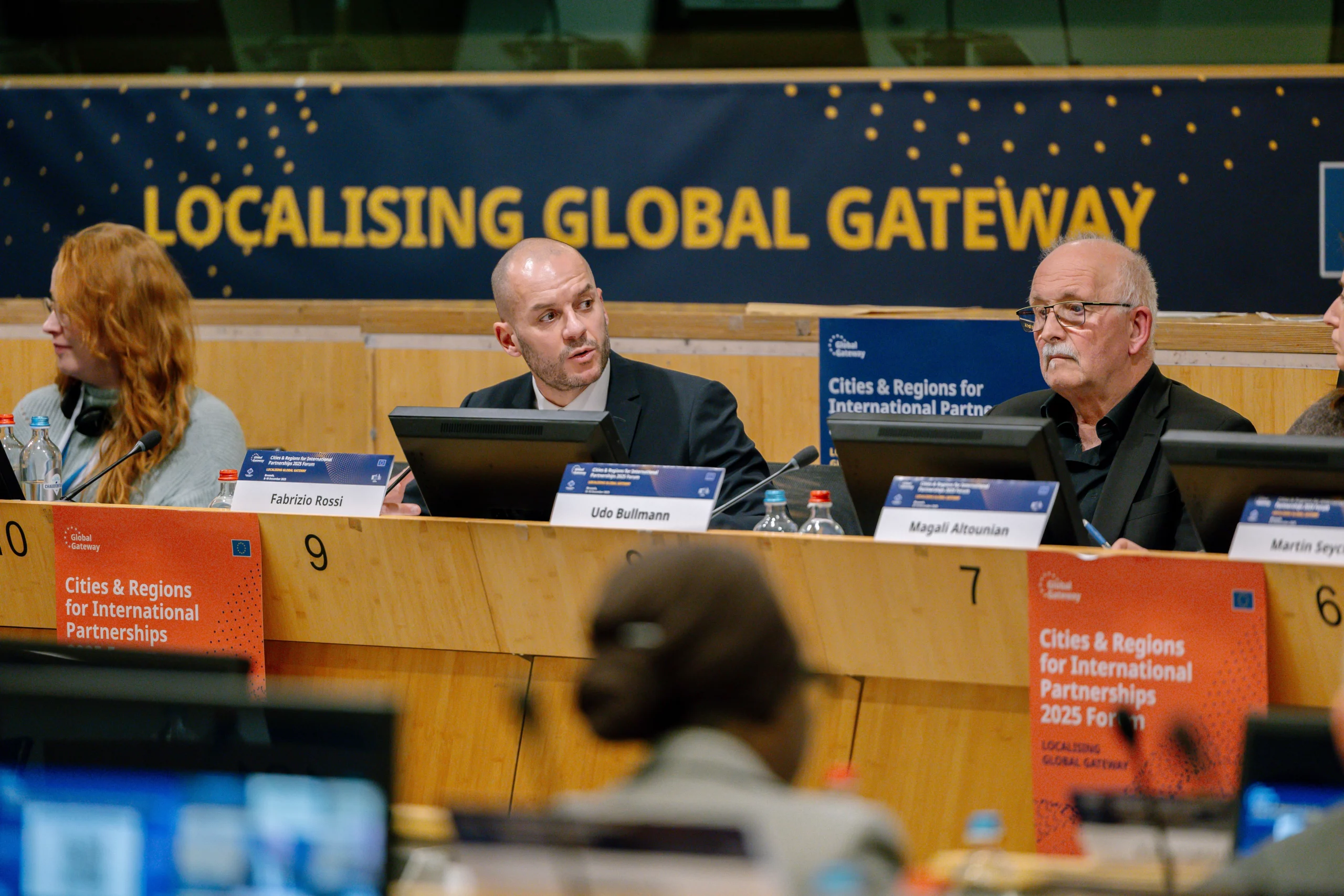
International networks of towns, cities and regions have issued a joint Declaration yesterday [10 December 2025] in Brussels, calling for a stronger and more structured involvement of local governments in the implementation of the European Union’s Global Gateway strategy. Representing thousands of towns, cities, regions, and local government associations worldwide, the signatories stress that partnering with local and regional governments (LRGs) is essential to ensure the legitimacy, sustainability, and long-term impact of Global Gateway investments.

This Declaration was handed over on behalf of the signatories by Joseph Bernard Wagner, Mayor of Belize City (Belize) and Chairperson of the Commonwealth Local Government Forum (CLGF), to Koen Doens, Director-General at the European Commission Directorate-General for International Partnerships (DG INTPA), during the Plenary Session of the Committee of the Regions, marking the end of the 3-day “Cities and Regions for International Partnerships” 2025 Forum.

Local and regional governments are recognised by the EU as distinct development actors and play a central role in shaping inclusive economic growth, delivering public services, and connecting communities to global opportunities. Their leaders warn that without systematic engagement of towns, cities and regions, Global Gateway projects risk missing their full development potential.

A joint call for a more inclusive Global Gateway

The declaration is signed by the leaders of four major global networks of local and regional governments:

  • Fabrizio Rossi, Secretary General, Council of European Municipalities and Regions (CEMR) – PLATFORMA
  • Lucy Slack, Secretary General, Commonwealth Local Government Forum (CLGF)
  • Emilia Saiz, Secretary General, United Cities and Local Governments (UCLG)
  • Frédéric Vallier, General Delegate, International Association of Francophone Mayors (AIMF)

Together, they call on EU institutions, partner countries, and development actors to recognise towns, cities and regions as co-creators of the enabling environment needed for sustainable, inclusive and democratic investment.

Quotes

It is critical that local governments are around the table in the context of investments being made through Global Gateway. After all, we are responsible for all development in our territories, and should be recognised as partners in planning and delivery,” Joseph Bernard Wagner, Mayor of Belize City (Belize) and Chairperson of the Commonwealth Local Government Forum (CLGF) stressed in his speech.

Local and regional governments should be involved in the designing phase of the Global Gateway. As CEMR and PLATFORMA, we see ourselves as the enabling institutions, and we are there to harvest learning and data, to monitor and evaluate the actions,” CEMR Secretary General Fabrizio Rossi earlier said during the Forum.

Decentralised cooperation is a real lever for solidarity and development that serves the interests of local communities. However, it can only be effective if decentralisation itself is effective and if our local authorities have secure financial and human resources. The Global Gateway is an important opportunity to support us in this regard,” Dieudonné Bantsimba, Mayor of Brazzaville, Vice-President of the AIMF.

The mobilisation of our members at the Forum of Cities and Regions shows the strong commitment of local and regional governments to cooperation and city diplomacy. Yet the localisation of the Global Gateway will only be possible if local governments are fully recognised as strategic partners,” Emilia Saiz, UCLG Secretary General

Towns, cities and regions are the link between investments and citizens. As first ports of call to citizens, they bring legitimacy, ownership and long-term sustainability to Global Gateway projects,” the signatories emphasise. 

Local and regional governments are indispensable partners for making the Global Gateway a strategy that truly works for people,” the signatories stress.

Towns and regions: Essential partners for sustainable impact

In their declaration, associations of local and regional governments highlight that LRGs hold wide-ranging mandates across Global Gateway priority sectors, including digitalisation, climate and energy, transport, health, education and research. By grounding investments in local realities, they ensure projects respond to the needs and priorities of communities, reinforce policy coherence, and foster inclusive economic ecosystems involving SMEs, investors, CSOs, academic institutions and citizens.

The declaration also underscores the decisive role of local governments in fragile and conflict-affected contexts, where they are often the only functioning public institutions capable of coordinating local stakeholders and delivering basic services.

Key recommendations to strengthen the Global Gateway

To unlock the full potential of local authorities as partners for sustainable investment, the signatories put forward three main recommendations:

  1. Engage directly with local governments and give them direct access to funding within Global Gateway investments.
    This includes dedicated calls for proposals, tailored evaluation criteria, specific funding streams similar to the former “Partnerships for Sustainable Cities” programme, and country-level mechanisms to ensure structured dialogue between EU Delegations, Teams Europe and LRGs.
  2. Ensure systematic involvement of governments in all phases of Global Gateway projects.
    Clear guidance should be provided to EU Delegations and Teams Europe to meaningfully include local authorities in planning, implementation, monitoring and evaluation processes.
  3. Support national associations and international networks of local governments.
    These organisations—signatories of Framework Partnership Agreements with the EU since 2015—are crucial in coordinating LRG participation, sharing knowledge, and scaling innovations across borders.

Read the full Declaration.

Read PLATFORMA note on Global Gateway.

Photo: © European Union 2025 / Emile Windal
Local voices at the UN for sustainable development

PLATFORMA - banner 2

Local and regional leaders at the United Nations: getting local SDG actions onto the fast track


More than 30 local and regional European leaders are heading to New York to advocate for their vital role in achieving the Sustainable Development Goals (SDGs) at the High-Level Political Forum on Sustainable Development (HLPF). Among them is Clifford Galea Vella Maslennikov, President of the Tramuntana Region (Malta) and a member of the CEMR-PLATFORMA Young Elected Officials Committee. He also signs the foreword of this year’s study on SDG localisation.

Galea Vella Maslennikov sends a strong and hopeful message:

“I firmly believe that localising the SDGs through inclusive processes that engage all levels of government, and all sectors of society […] is in fact the key to building a more inclusive, just, and sustainable future for all.”

This year’s report includes contributions from 31 associations of local and regional governments and puts forward nine key recommendations to the United Nations, the European Union, and EU Member States.

Local governments in dialogue with Member States

In recent years, the United Nations has increasingly acknowledged the essential role of local action in advancing global sustainability, including through various HLPF initiatives. However, the degree of involvement of local and regional governments – and their associations – in national SDG reporting processes still varies significantly from one country to another.

This year, Malta is one of 37 countries presenting a Voluntary National Review (VNR) at the HLPF. Three other countries with membership within CEMR – BulgariaFinland, and Germany – will also present their VNRs. Our latest study provides insights into how these four nations have involved local authorities in shaping their national SDG reports.

It also gives details about the progress made in achieving the five SDGs under review this year: SDG 3 (Good health and well-being), SDG 5 (Gender equality), SDG 8 (Decent work and economic growth), SDG 14 (Life below water), and DSG 17 (Partnerships for the Goals).  

Over 30 local and regional leaders representing Europe

Next week, PLATFORMA and CEMR, in collaboration with the Global Task Force of Local and Regional Governments (GTF), will represent European cities and regions at the HLPF, under the auspices of the UN.

Their participation aims to fast-track the localisation of the SDGs and ensure that local voices are not only heard, but also acted upon.

Here are some of the events they will attend:

  • 15 July, Local and Regional Governments’ Networking Hub, with the launch of the GTF Annual Report “Towards the Localization of the SDGs”, by the GTF and UCLG
  • 16 July, 8th Local and Regional Governments Forum on the 2030 Agenda, by UCLG, GTF, UN-DESA, the Executive Office of the UN Secretary-General, UN Habitat, UNDP, Local2030
  • 17 July, EU delegation – local leaders breakfast meeting, by CEMR and PLATFORMA
  • 17 July, HLPF Official Session on Localisation: “Transformation from the ground up: Acting at local level”, by UN
  • 18 July, VNR Lab on Local and Regional Governments engagement in VNR/VLR processes, by UN-DESA, UN-Habitat, and UCLG

For more information, contact:

Debate at the UN on localising SDGs

Localising SDGs - News 2025

Local and regional leaders at the HLPF: Getting local Sustainable Development Goals (SDGs) actions onto the fast track


More than 30 local and regional leaders are heading to New York to advocate for their vital role in achieving the Sustainable Development Goals (SDGs) at the High-Level Political Forum on Sustainable Development (HLPF). Among them is Clifford Galea Vella Maslennikov, President of the Tramuntana Region (Malta) and a member of the CEMR-PLATFORMA Young Elected Officials Committee. He also signs the foreword of this year’s study on SDG localisation.

Galea Vella Maslennikov sends a strong and hopeful message:

“I firmly believe that localising the SDGs through inclusive processes that engage all levels of government, and all sectors of society […] is in fact the key to building a more inclusive, just, and sustainable future for all.”

This year’s report includes contributions from 31 associations of local and regional governments and puts forward nine key recommendations to the United Nations, the European Union, and EU Member States.

Local governments in dialogue with Member States

In recent years, the United Nations has increasingly acknowledged the essential role of local action in advancing global sustainability, including through various HLPF initiatives. However, the degree of involvement of local and regional governments – and their associations – in national SDG reporting processes still varies significantly from one country to another.

This year, Malta is one of 37 countries presenting a Voluntary National Review (VNR) at the HLPF. Three other countries with membership within CEMR – Bulgaria, Finland, and Germany – will also present their VNRs. Our latest study provides insights into how these four nations have involved local authorities in shaping their national SDG reports.

It also gives details about the progress made in achieving the five SDGs under review this year: SDG 3 (Good health and well-being), SDG 5 (Gender equality), SDG 8 (Decent work and economic growth), SDG 14 (Life below water), and DSG 17 (Partnerships for the Goals).  

Over 30 local and regional leaders representing Europe

Next week, PLATFORMA and CEMR, in collaboration with the Global Task Force of Local and Regional Governments (GTF), will represent European cities and regions at the HLPF, under the auspices of the UN.

Their participation aims to fast-track the localisation of the SDGs and ensure that local voices are not only heard, but also acted upon.

Here are some of the events they will attend:

  • 15 July, Local and Regional Governments’ Networking Hub, with the launch of the GTF Annual Report “Towards the Localization of the SDGs”, by the GTF and UCLG
  • 16 July, 8th Local and Regional Governments Forum on the 2030 Agenda, by UCLG, GTF, UN-DESA, the Executive Office of the UN Secretary-General, UN Habitat, UNDP, Local2030
  • 17 July, EU delegation – local leaders breakfast meeting, by CEMR and PLATFORMA
  • 17 July, HLPF Official Session on Localisation: “Transformation from the ground up: Acting at local level”, by UN
  • 18 July, VNR Lab on Local and Regional Governments engagement in VNR/VLR processes, by UN-DESA, UN-Habitat, and UCLG

Contact for more information:

UCLG meeting with EU Commissioner Síkela

“Local governments must be at the heart of the EU’s international partnerships”


UCLG President, Jan van Zanen, met with EU Commissioner Jozef Síkela: “Local governments must be at the heart of the EU’s international partnerships”

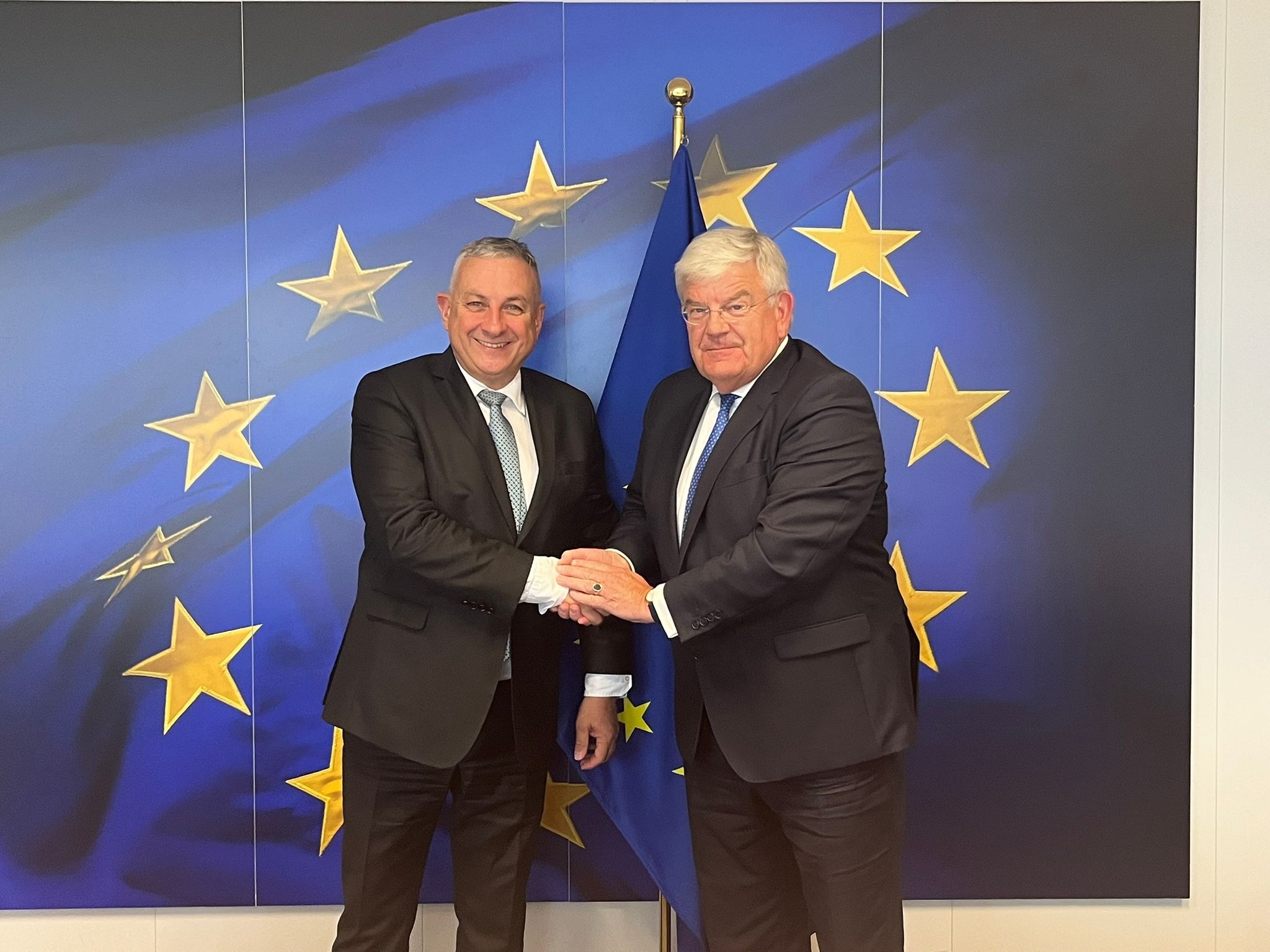
In a bilateral meeting on 10 June UCLG President and Mayor of The Hague Jan van Zanen met with the European Commissioner for International Partnerships Jozef Síkela at the occasion of 10 years of strategic partnership agreements between key associations of local and regional governments with DG INTPA (2015–2025), to advocate for a stronger role of local and regional governments (LRGs) in EU development cooperation – and to secure long-term support for decentralised cooperation in the next EU budget.

The delegation of CEMR and PLATFORMA, led by Mayor van Zanen, and including CEMR Secretary General Fabrizio Rossi, found promising common ground with the Commissioner. Both sides agreed that the goals of the Global Gateway strategy and the objectives of the EU international action – from sustainable development to infrastructure investment – can only be met by empowering the actors who are closest to the people: local governments.

Mayors and local leaders are not just implementers. They are political actors, democratically elected and accountable to their communities“, Mayor Jan van Zanen said. “They have a unique role to play in achieving the EU’s goals – but they need the means and the recognition to do so“.

Commissioner Síkela acknowledged the critical contribution of cities and regions to the EU’s Global Gateway strategy and international partnerships. As a former Czech Minister of Industry and Trade and a representative of the liberal “Mayors and Independents” party, Síkela expressed strong political sensitivity to the added value of local and regional leadership in global cooperation.

The meeting was part of a coordinated advocacy effort based on the PLATFORMA Political Declaration on the Role of Local and Regional Governments in the next Multiannual Financial Framework and EU External Action, adopted by local leaders in April 2025. CEMR and PLATFORMA underlined the need for a dedicated financial mechanism in the next Multiannual Financial Framework (MFF 2028–2034) that would allow LRGs and their associations to scale up their international cooperation and support peer-to-peer partnerships with their counterparts in partner countries.

They also called for improved dialogue with EU Delegations on the ground, clearer distinction between LRGs and civil society organisations in EU instruments, and tailored, realistic and impactful calls for proposals.

Beyond financial tools, CEMR and PLATFORMA emphasised the importance of political recognition of the role of local and regional governments and their associations and networks in the implementation and governance of the Global Gateway strategy. As Europe’s largest network of municipalities and regions, CEMR highlighted the importance of structured policy dialogue and inclusive governance – especially in fragile contexts where local actors are often the last line of defence of democratic values, and provision of basic public services to the local populations.

The exchange with Commissioner Síkela comes ahead of the “2025 Cities and Regions for International Partnerships” conference, scheduled for December, where the Commissioner is invited to continue the dialogue with the presidents of five key associations, signatories of a strategic partnership agreement with DG INTPA.

As the EU begins to shape its upcoming budget cycle, the message from Europe’s mayors and local leaders is clear: for EU development cooperation to succeed, and for the Global Gateway strategy to deliver on its ambition as a value-based offer to partner countries, the local level must be included.

For more information, contact:

Policy Forum on Development 

Policy Forum on Development - News 2023

CEMR Secretary General to Address Global Meeting of the Policy Forum on Development 2023


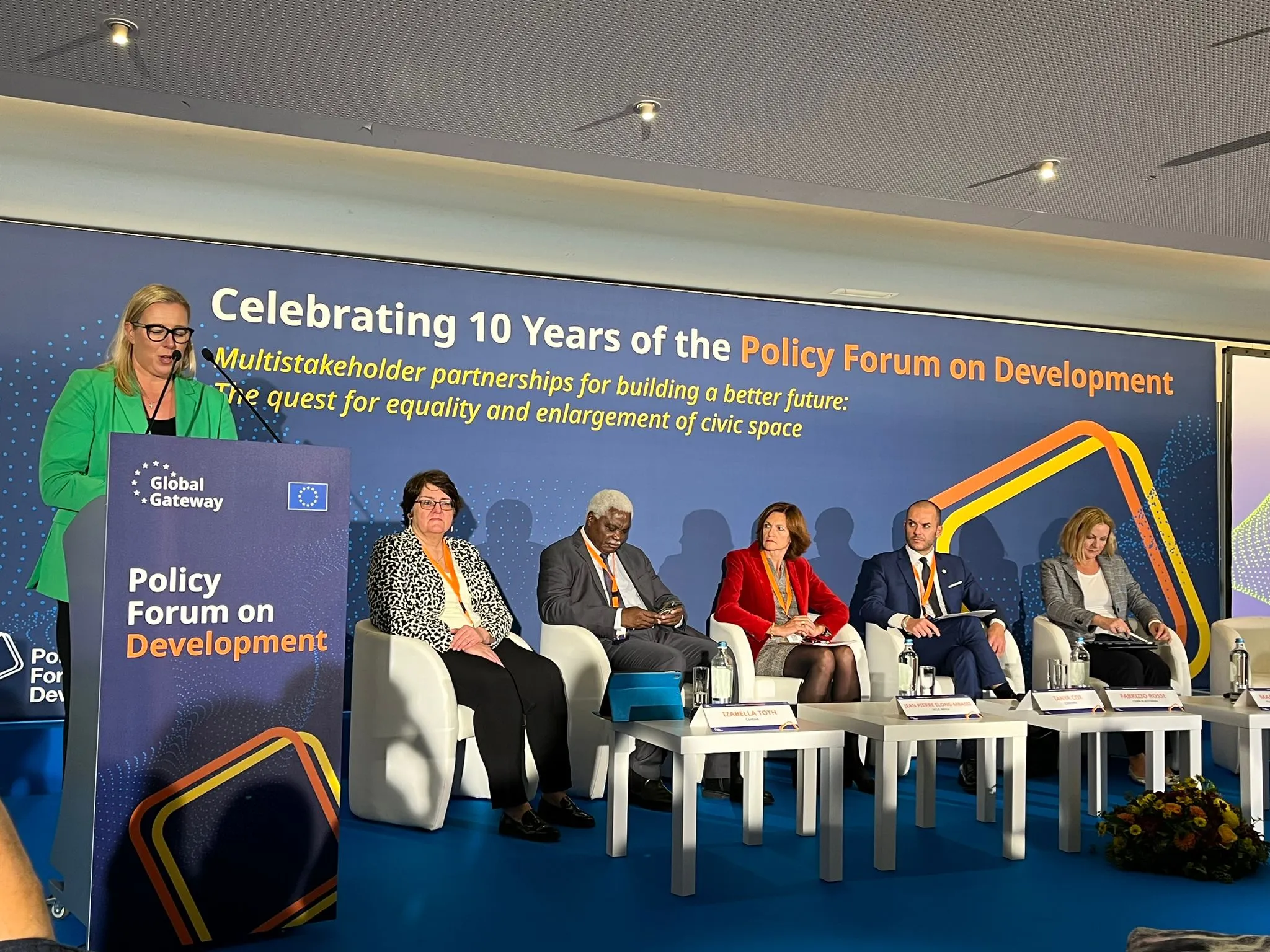
The upcoming “Global meeting of the Policy Forum on Development 2023” is set to kick off with a keynote address by the Secretary General of the Council of European Municipalities and Regions (CEMR), Fabrizio Rossi. Starting on September 27, the three-day Conference will serve as a vital platform for discussing multistakeholder partnerships, equality, and the civic space within the context of the Global Gateway initiative.
 
The Secretary General of CEMR will address the Conference’s inaugural session on September 27, drawing upon CEMR’s extensive experience, which champions active engagement of local governments and regions in influencing policies that directly affect their communities.
 
The opening session will feature Jutta Urpilainen, European Commissioner for International Partnerships. Commissioner Urpilainen will open the session with a keynote address on the Global Gateway initiative and its role in addressing global inequalities. Her insights will set the stage for discussions throughout the Conference.
 
The “Global Meeting of the Policy Forum on Development 2023” aims to facilitate constructive dialogue on topics ranging from sustainable development goals to inclusive governance. Participants will explore innovative solutions and strategies for advancing the Global Gateway initiative, which seeks to foster international cooperation and bridge disparities on a global scale.

“Rencontres de l’AICT” 

Rencontres de l'AICT - News 2023

Secretary General of CEMR Fabrizio Rossi to address the role of local and regional governments in solving global issues at “Rencontres de l’AICT” Conference


The Secretary General of the Council of European Municipalities and Regions (CEMR) will participate in the “Rencontres de l’AICT” Conference. This annual event, hosted by Cités Unies France, brings together thought leaders, policymakers, and experts from around the world to discuss the role of local and regional authorities in resolving major global issues.

The Secretary General, Fabrizio Rossi, will speak on Tuesday, September 19 in the plenary session. During his intervention, Mr Rossi will showcase how regional partnerships can contribute to achieving the Sustainable Development Goals (SDGs) through the prism of their international action and by presenting CEMR and Platforma’s on-field experience. 

The session will also be broadcast live via the Cités Uites France YouTube channel, with the option of asking questions.

  • Access the channel here

The Organisation will participate in the event:

  • On Tuesday, September 19, 14:30 to 15:00 – PLATFORMA workshop development education and awareness raising where the initiative “European Days of Local Solidarity” will be presented.

Study on SDGs localisation

Energy Behaviour Forum - image 1

Discover our new study on progress made by local governments in promoting the Global Goals


The Council of European Municipalities and Regions (CEMR) and PLATFORMA are releasing today (12 July) their annual study on the localisation of the Sustainable Development Goals (SDGs) at a United Nations special event in New York. The study is presented by CEMR President Gunn Marit Helgesen at the 6th Local and Regional Governments Forum on the 2030 Agenda, organised in the framework of the High-Level Political Forum (HLPF), the United Nations annual event on the SDGs.

The report collects data from 41 associations of local and regional governments from greater Europe and makes seven recommendations. As estimates show, 65% of the 169 targets underpinning the 17 SDGs cannot be achieved without the involvement of local and regional governments.

One more time, this report resonates as a strong call to national and European institutions to further recognise and include in their reports progress made by municipalities and regions in achieving the SDGs. More than ever, decentralised cooperation and partnerships are crucial instruments to achieve the 2030 Agenda at the local and regional levels.

“We are fast approaching the halfway point on the road to the 2030 Agenda and the implementation of the Sustainable Development Goals (SDGs), meaning there are only six summers left!” warns Gunn Marit Helgesen, CEMR President, in the foreword of the study.

The 6th Local and Regional Governments Forum on the 2030 Agenda is organised by UN DESA, the Global Taskforce of Local and Regional Governments (GTF), UN-Habitat, UNDP and Local 2030.

Mayors have a say

This year, the European delegation of local and regional governments is composed of several mayors and councillors:

  • Gunn Marit Helgesen, CEMR President and Councillor of Vestfold and Telemark, President of the Norwegian Association of Local and Regional Authorities (KS)
  • Magda Kostava, Member of Kutaisi Municipal Council, Georgia (NALAG), member of the CEMR Young elected officials committee
  • Wim Dries, VVSG President and Mayor of the City of Genk
  • Luisa Salgueiro, President of the National Association of Portuguese Municipalities (ANMP) and Mayor of Matosinhos, Portugal
  • Manueal Alvares, Councillor in the Municipality of Matosinhos, Portugal
  • Stephan Neher, Mayor, City of Rottenburg am Neckar, Germany
  • Anne-Marie Jean, Vice-President of Eurométropole de Strasbourg (CUF)
  • André Viola, Councillor, Department of Aude (AFCCRE)

Fabrizio Rossi, CEMR Secretary General, Emilia Saiz, UCLG Secretary General, Lucy Slack, CLGF Secretary General, Unai Tellería, Delegate of the Basque Government (Spain) in the United States, Leen Verbeek and Mathieu Mori, respectively President and Secretary General of the Congress of Local and Regional Authorities of the Congress of Europe are also attending HLPF and parallel dedicated to local and regional governments.

More information:

For more information, contact:

Promoting the Global Goals

Promoting the Global Goals - News 2023

Discover our new study on progress made by local governments in tracking & promoting the Global Goals


The Council of European Municipalities and Regions (CEMR) and PLATFORMA are releasing today (12 July) their annual study on the localisation of the Sustainable Development Goals (SDGs) at a United Nations special event in New York. The study is presented by CEMR President Gunn Marit Helgesen at the 6th Local and Regional Governments Forum on the 2030 Agenda organised in the framework of the High-Level Political Forum (HLPF), the United Nations annual event on the SDGs.

The report collects data from 41 associations of local and regional governments from greater Europe and makes seven recommendations. As estimates show, 65% of the 169 targets underpinning the 17 SDGs cannot be achieved without the involvement of local and regional governments.
One more time, this report resonates as a strong call to national and European institutions to further recognise and include in their reports the progress made by municipalities and regions in achieving the SDGs. More than ever, decentralised cooperation and partnerships are crucial instruments to achieve the 2030 Agenda at the local and regional levels.
“We are fast approaching the halfway point on the road to the 2030 Agenda and the implementation of the Sustainable Development Goals (SDGs), meaning there are only six summers left!” warns Gunn Marit Helgesen, CEMR President in the foreword of the study.
The 6th Local and Regional Governments Forum on the 2030 Agenda is organised by UN DESA, the Global Taskforce of Local and Regional Governments (GTF), UN-Habitat, UNDP and Local 2030.
Mayors have a say
This year, the European delegation of local and regional governments is composed of mayors and councillors:

  • Gunn Marit Helgesen, CEMR President and Councillor of Vestfold and Telemark, President of the Norwegian Association of Local and Regional Authorities (KS)
  • Magda Kostava, Member of Kutaisi Municipal Council, Georgia (NALAG), member of the CEMR Young elected officials committee
  • Wim Dries, VVSG President and Mayor of the City of Genk
  • Luisa Salgueiro, President of the National Association of Portuguese Municipalities (ANMP) and Mayor of Matosinhos, Portugal
  • Manueal Alvares, Councilor in the Municipality of Matosinhos, Portugal
  • Stephan Neher, Mayor, City of Rottenburg am Neckar, Germany
  • Anne-Marie Jean, Vice-President of Eurométropole de Strasbourg (CUF)
  • André Viola, Councillor, Department of Aude (AFCCRE)

Fabrizio Rossi, CEMR Secretary General, Emilia Saiz, UCLG Secretary General, Lucy Slack, CLGF Secretary General, Unai Tellería, Delegate of the Basque Government (Spain) in the United States, Leen Verbeek and Mathieu Mori, respectively President and Secretary General of the Congress of Local and Regional Authorities of the Congress of Europe are also attending HLPF and parallel dedicated to local and regional governments.
More information:

  • Discover the study online local-sdgs.eu
  • Read the study (pdf)
  • Follow the conversation online with #HLPF2023 & #LocalizingSDGs

EU Enlargement

EU Enlargement - News

Towards a new EU strategy for enlargement


The EU needs to step up the involvement of local and regional authorities of EU Member States and candidate countries in the accession process, states a European Parliament’s report on the new EU strategy for enlargement. It was presented by MEP Tonino Picula at the plenary session in Strasbourg on 22 November. 

During the debate, the Croatian MEP emphasised that in the situation of the Russian invasion of Ukraine, expansion must gain new momentum, be predictable and believable, “as the single most effective EU instrument for securing peace, prosperity and fundamental values on the European continent.”

The rapporteur Mr Picula also added that each candidate for membership must be evaluated according to progress in reforms, especially when it comes to the rule of law, and the judiciary, and that EU support funds should be accessible to candidates for membership before they become full members of the Union.

Regarding Eastern Partnership countries, the Report welcomes the European Council’s exceptionally swift decision on the EU membership applications of Ukraine, the Republic of Moldova and Georgia and calls upon the Commission and the Council to continue to provide them with political and technical support, while stepping up the involvement of local and regional authorities in the accession process.

Similarly, it invites the authorities of the three countries to unambiguously demonstrate their political determination to realise the European aspirations of their people by making significant progress on substantial reforms to effectively fulfil the criteria for EU membership as soon as possible. Focus is in particular on the independence of the judiciary, the fight against corruption, democratic oversight, human rights and “de-oligarchisation”.

Finally, it is stressed that the facilitation of these countries’ transitions from the Eastern Partnership to the enlargement framework would require the switchover from the NDICI – Global Europe instrument to the Instrument for Pre-accession Assistance (IPA). However, such a transition should be accompanied by a sufficient increase in the overall budget of IPA III in order to retain funding for current IPA III beneficiaries.