Our reaction to the Urban Wastewater Treatment directive 

Water management news 2026

CEMR warns EU Parliament’s move risks weakening the Polluter Pays Principle and undermining investments by local and regional governments and wastewater operators


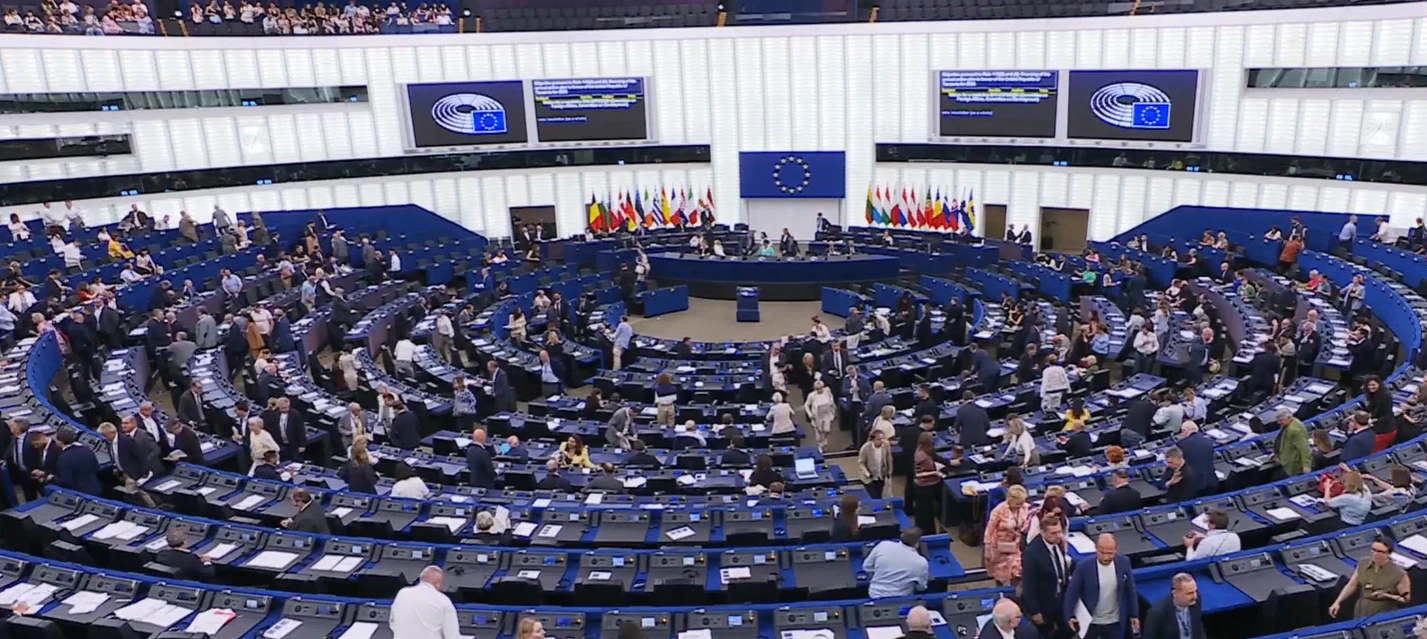
Following todays European Parliament vote on a motion for resolution calling for a “stop the clock” on the implementation of the revised Urban Wastewater Treatment Directive (UWWTD), the Council of European Municipalities and Regions (CEMR) regrets the adoption of amendments calling on the European Commission to consider suspending the implementation of the Extended Producer Responsibility (EPR) and quaternary treatment obligations*. CEMR finds the resolution to be contradictory to all the efforts that are currently being undertaken by local and regional governments, and wastewater operators, which include optimising the machinery to meet the requirements of the revised Directive. 

According to Andrea Carli, CEMR spokesperson for the environment and Regional Councillor of Friuli Venezia Giulia “we are deeply concerned with the outcome of today’s plenary vote. We are standing with Europe’s local and regional governments and wastewater operators that have already been preparing the investments needed to implement the revised Urban Wastewater Treatment Directive.  What they need now is a clear commitment that the agreed implementation timeline will be respected.” 

The polluter pays principle, which states that those responsible for causing pollution should bear the costs of managing it and repairing the damage caused, is one of the cornerstones of EU environmental policy. Any suggestion that the implementation of EPR could be suspended risks undermining investor confidence. The revised Directive reached a carefully negotiated balance between protecting public health, safeguarding the environment, and ensuring that those responsible for pollution contribute to the costs of its removal. 

CEMR recognises the legitimate need to monitor the impact of the Directive on the availability of critical and generic medicines. However, it strongly believes these concerns should be addressed through the monitoring and flexibility mechanisms already provided for in the legislation.   

Therefore, CEMR calls the Commission to maintain the agreed implementation timeline and provide the legal certainty that local and regional governments, and wastewater operators need to invest in quaternary treatment. As Member States will likely start preparing next year their National and Regional Partnership Plans (NRPPs) under the next EU budget, delaying implementation could result in wastewater infrastructure investments being deprioritised or excluded from future funding plans.  

In a letter written last year to Commission President Ursula von der Leyen, CEMR and 11 other European organisations representing local and regional governments, public utilities, environmental NGOs, trade unions, and water professionals urged the Commission to firmly uphold the EPR scheme introduced by the revised UWWTD, which entered into force on 1 January 2025. 

*The quaternary treatment is the additional treatment step for removing micropollutants from urban wastewater, which is now an obligation introduced in the last revision of the UWWTD. EPR is the scheme that makes the contributor (pharmaceutical and cosmetic industry), cover at least 80% of the related treatment costs. 

Read more about CEMR‘s advocacy on the UWWTD implementation:  https://ccre-cemr.org/impact-community-climate/water/protecting-europes-water-future 

For more information, contact:

Climate Chance Summit 2026

Climate Chance Summit 2026

Cities and regions must lead Europe’s climate adaptation 


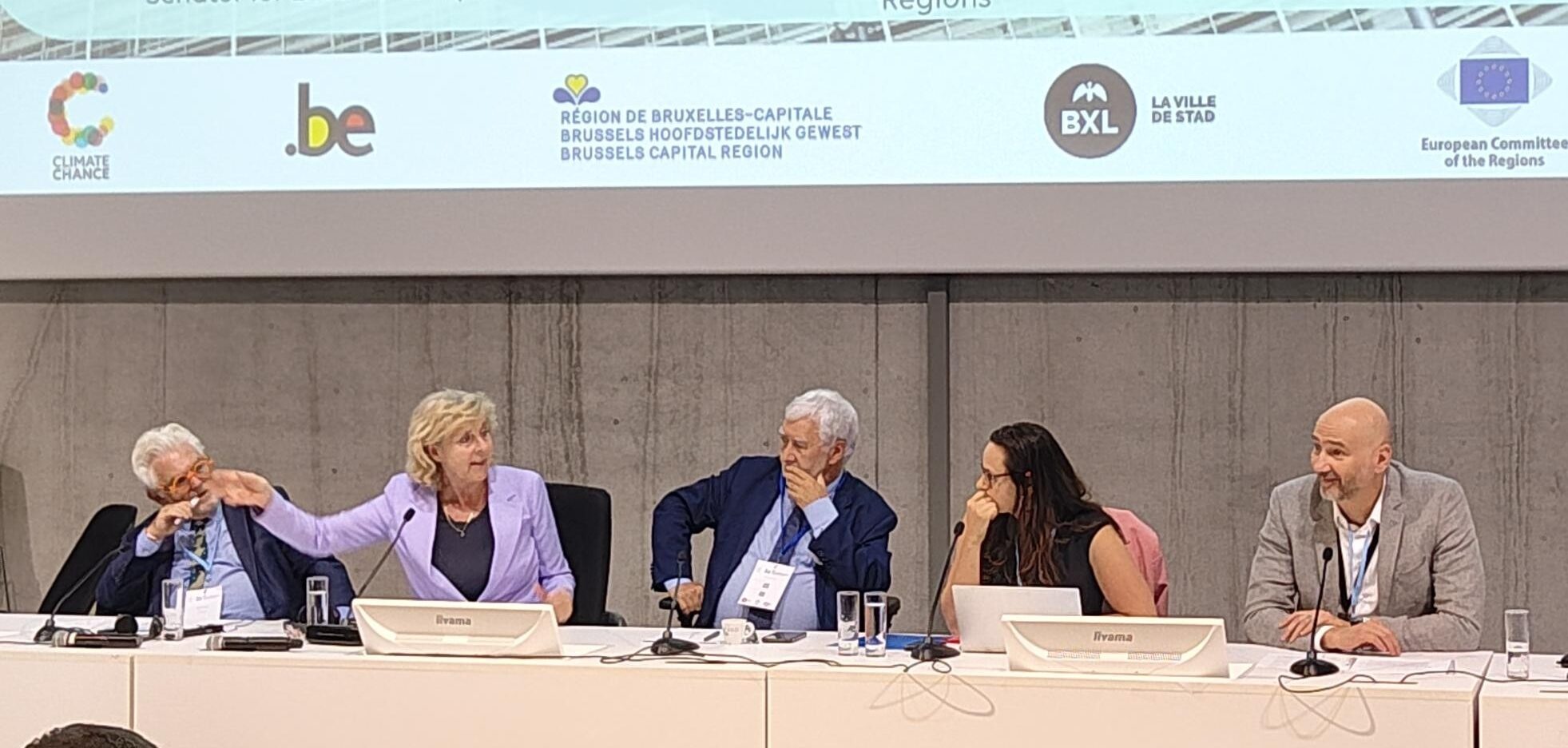
CEMR participated on 3 and 4 of June in the Climate Chance Europe Summit 2026 organised in Brussels by The Climate Chance association. The two-day event brought together local and regional leaders, European institutions, businesses, NGOs and civil society networks around a shared theme: climate adaptation as a lever for resilience and prosperity in Europe.  

The message shared by the Council of European Municipalities and Regions (CEMR) was that towns, cities and regions must be recognised as strategic partners in designing Europe’s climate response, not merely as implementers on the ground.  

The summit echoes the key messages of CEMR’s position paper “Adapting Together – A territorial approach to resilience and risk management”, published in February 2026. In this position paper, CEMR makes a case for a territorial approach to climate resilience, grounded in multi-level governance. A fundamental gap is highlighted: local and regional governments already implement most adaptation measures, yet their role remains insufficiently recognised and supported in EU and national frameworks.  

To close this gap, CEMR continues to flag six priorities:  

  1. Empowering local and regional governments with clear mandates and flexibility to act 
  1. Strengthening local capacity through better access to data and peer learning 
  1. Securing predictable and accessible funding for adaptation investments 
  1. Improving preparedness and disaster risk management 
  1. Restoring ecosystems and scaling nature-based solutions 
  1. Ensuring water resilience through integrated, locally driven water management 

The summit organised by Climate Chance came at a critical political moment. The European Commission is currently developing a new integrated framework for European Climate Resilience and Risk Management, expected to be adopted in the second half of 2026.  

Ronan Dantec, CEMR Spokesperson for Climate: “Climate adaptation will only succeed if local and regional governments are recognised as full partners in the future resilience framework. Territories need a common trajectory, the tools to understand their vulnerabilities and the long-term funding to turn resilience into reality.” 

Discussions at the summit on multi-level governance, funding adaptation and resilience at local level, technical support for LRG to prepare risk management strategies and investments, and solidarity mechanisms all reinforced what our position paper argues: coherent and effective climate action requires local and regional governments at the table from the very beginning — in the design, financing and monitoring of policy, not just its delivery. 

The summit closed with the adoption of the Brussels Declaration of European Non-State Actors on Climate Change Adaptation, signed by a wide range of local government networks, economic actors networks, and NGOs, including: Eurocities, FEDARENE and Association internationale des maires francophones (AIMF). 

It commits all signatories to playing an active role in shaping Europe’s climate resilience policies and calls for adaptation to be built into every level of decision-making, from EU policy down to local plans. 

CEMR will continue to push this message forward in the lead-up to the adoption of the EU framework by the end of the year. Europe’s resilience starts in its territories. 

Connie Heedegard, Chair of the Climate Adaptation Mission and former Commissioner for Climate Action: “Adaptation is crucial for resilience, but it is also key for citizens safety. The EU Adaptation Mission has laid the foundations; now is the time to harvest the fruits and scale up implementation.” 

Read our position paper Adapting Together – A territorial approach to resilience and risk management  

For more information, contact:

New MFF: EU funding and water 

Climate - Water management

Webinar report: EU funding opportunities for water resilience in local governments


How can towns, cities and regions secure the investments needed to strengthen water resilience in the face of climate change, ageing infrastructure and growing regulatory requirements?

On 13 May 2026, CEMR and Aqua Publica Europea (APE) hosted a webinar bringing together representatives from the European Commission, the European Investment Bank (EIB), local and regional governments, and public water operators to discuss EU funding opportunities for water resilience.

The discussions highlighted both the opportunities available under the current EU budget and the challenges that local and regional governments may face under the future Multiannual Financial Framework (MFF). The key messages and recommendations from the event are now available in a new webinar report jointly published by CEMR and APE.

Water resilience starts locally

Opening the webinar, Andrea Carli, CEMR spokesperson for Environment and Regional Councillor of Friuli Venezia Giulia, highlighted the growing pressures facing towns, cities and regions across Europe. From droughts and water scarcity to flooding, local and regional governments are increasingly at the forefront of climate adaptation while also facing rising investment needs.

For CEMR, this reinforces the need for strong governance frameworks, technical support and sufficient financial resources to ensure sustainable and affordable water services for all communities.

Financing remains the key challenge

A central message emerging from the discussions is clear: financing remains the main barrier to achieving Europe’s water policy objectives.

APE and CEMR highlight the significant investment gap identified by the European Commission, while also pointing to governance and capacity challenges that can limit access to available funding. Although water resilience has been recognised as a priority area in the mid-term review of cohesion policy, many local and regional governments and water operators continue to struggle to secure the resources needed for critical investments.

Looking ahead to the next MFF

With negotiations on the next Multiannual Financial Framework (MFF) underway, the webinar explored how the proposed future funding architecture could affect water investments.

While the new National and Regional Partnership Plans (NRPP) may offer greater flexibility, they also raise important questions about the involvement of local and regional governments in setting investment priorities. CEMR continues to advocate for a strong cohesion policy and meaningful participation of towns, cities and regions in shaping and implementing the future EU budget.

New opportunities through the EIB

During the webinar, participants also heard about EIB’s growing role in supporting water investments, including the forthcoming Sustainable Water Advisory Facility. The initiative aims to help local and regional governments and water operators access financing and advisory support more easily, strengthening the preparation and delivery of water projects across Europe.

As discussions on the future EU budget continue, achieving Europe’s water resilience objectives will require long-term investment, strong local governance and a central role for towns, cities and regions.

Read the webinar report to discover the main conclusions from the discussion, the latest funding opportunities, policy developments and recommendations for local and regional governments.

Read the article on APE´s website here: APE and CEMR host webinar on EU funding opportunities for Water Resilience | Aqua Publica Europea

 Check the presentations used during the event:

For more information, contact:

Protecting Europe’s water future

Water Management - Best Practices

CEMR calls for the timely implementation of the Urban Wastewater Treatment Directive (UWWTD)


The Council of European Municipalities and Regions (CEMR) call on Members of the European Parliament to support the timely and effective implementation of the revised Urban Wastewater Treatment Directive (UWWTD).

The Directive introduces a new treatment step for the removal of micropollutants from urban wastewater, a major requirement to protect public health and the environment. Its Extended Producer Responsibility (EPR) scheme ensures that the contributors to these pollutants cover at least 80% of the related treatment costs.

For local and regional governments, this mechanism is crucial to uphold the polluter-pays principle and to avoid placing the financial burden of quaternary treatment on users. The Directive already includes safeguards to address concerns around medicine affordability, supply and accessibility, as well as mechanisms for monitoring and adjustment once implementation begins.

CEMR firmly opposes proposals to suspend or delay the EPR provisions. Such a suspension would undermine long-term investment planning in wastewater infrastructure, increase uncertainty, and put essential public services at risk.

Local and regional authorities are already preparing investments to meet the Directive’s requirements. A stable regulatory environment is essential to safeguard public health, environmental protection, and Europe’s long-term competitiveness.

CEMR calls on EU decision-makers to move forward with implementation as agreed and to use the Directive’s existing review mechanisms to make any necessary adjustments based on data collected during the implementation process.

Learn more about CEMR action on water protection:

CEMR and partners’ joint call to MEPs to swiftly implement the recast of UWWTD

Protecting Clean Water

CEMR Policy paper on Urban Wastewater Treatment Directive

For more information, contact:

Climate adaptation position paper

ODELL - City of Bilbao, main banner

CEMR calls for a territorial approach to Europe’s climate resilience


Europe is the fastest-warming continent in the world. Heatwaves, floods, droughts and extreme weather events are already affecting communities, infrastructure and ecosystems across the continent — with impacts that vary widely from one territory to another. In this context, climate adaptation has become an urgent priority for towns, cities and regions, which are on the frontline maintaining essential services and strengthening resilience on the ground. 

While the European Commission is currently developing a new integrated framework for European Climate Resilience and Risk Management, CEMR has published a new policy paper, Adapting Together – A territorial approach to resilience and risk management, setting out concrete recommendations to strengthen Europe’s approach to climate adaptation and preparedness. 

A new policy paper: Adapting Together 

The policy paper highlights a clear reality: local and regional governments already implement the vast majority of adaptation measures, yet their role remains insufficiently recognised and supported in EU and national frameworks. The paper calls for a territorial approach to climate resilience, grounded in multi-level governance and built around six key priorities: 

  • Empowering local and regional governmentswith clear mandates and flexibility to act; 
  • Strengthening local capacity through better access to data, tools and peer learning; 
  • Securing predictable and accessible funding for adaptation investments; 
  • Improving preparedness and disaster risk management; 
  • Restoring ecosystems and scaling up nature-based solutions; 
  • Ensuring water resilience through integrated, locally driven water management. 

By combining horizontal enablers (governance, capacity and finance) with sector-specific recommendations, the paper demonstrates how empowering towns, cities and regions is essential to Europe’s overall resilience. 

Towns, cities and regions at the frontline of adaptation policies  

Ronan Dantec, CEMR spokesperson for Climate, underlines: Today, it is urgent to recognise that adaptation to climate change is pivotal for municipalities and regions of all sizes. Investing in sustainable infrastructure and using our resources more efficiently is not just an option, but an imperative for securing a thriving future for all. 

Climate impacts are inherently local. Even within the same country, risks can differ significantly between urban and rural areas, coastal and inland regions, or northern and southern territories. Towns, cities and regions are therefore best placed to: 

  • Assess local climate risks and vulnerabilities; 
  • Protect vulnerable populations; 
  • Plan and manage resilient infrastructure; 
  • Ensure continuity of essential services such as water, transport and energy; 
  • Deliver nature-based solutions and ecosystem restoration. 

Their proximity to citizens also allows them to integrate social resilience into adaptation policies, ensuring that no one is left behind as climate impacts intensify

Preparing for the EU’s upcoming integrated framework on climate resilience 

CEMR’s policy paper comes at a key political moment, as the new integrated framework for European ClimateResilience and Risk Management is expected to be adopted by the European Commission in the second half of 2026. It will aim to establish a comprehensive and coherent EU approach to climate resilience and preparedness.  

 The ongoing public consultation of the European Commission on the future integrated framework, includes a set of questions covering resilience-by-design across EU policies; harmonised and comparable climate risk assessments; funding for adaptation; support for local and regional level, consideration of climate-related health impacts.  

CEMR is currently developing a response in cooperation with its expert group, requesting that towns, cities and regions are recognised not only as implementers, but as strategic partners in the design, financing and monitoring of this future framework. The consultation is open until 23 February 2026. CEMR encourages its members to participate and make their voices heard. 


For more information contact:

On the EU Water Resilience Strategy

Head Banner - SUN4UKRAINE

CEMR priorities on the European Commission Water Resilience Strategy


The European Commission has just published its Water Resilience Strategy, a much-needed step toward safeguarding one of our most vital common goods.

At CEMR, we welcome the Strategy’s alignment with many of our long-standing priorities:
✅ Recognition of water as a public good
✅ Acknowledgement of the role of multi-level governance, cross-border cooperation and stakeholder engagement
✅ Emphasis on nature-based solutions, including the new Sponge Facility
✅ Improved tools for data access, drought management, and awareness-raising

We also welcome the reinforcement of the Polluter Pays Principle, especially for persistent pollutants like PFAS. However, we are particularly concerned by the provision for an updated study on the costs and potential impacts of the Extended Producer Responsibility (EPR) scheme under the Urban Wastewater Treatment Directive.

As addressed in our recent joint letter to President von der Leyen decision risks delaying the deployment of quaternary treatment technologies essential to remove micropollutants and could hinder the timely implementation of the recast Directive.

We strongly believe that local and regional governments are best placed to address water challenges — but to do so effectively, they must be empowered with the tools, flexibility, and funding they need.

The Strategy would benefit from:
🔹 Clear and firm commitment to dedicated funding for water management in the next MFF
🔹 Better access to emergency EU funds for municipalities and regions affected by extreme events
🔹 Stronger legal safeguards and technical support for public sector water services
🔹 Concrete support for urban-rural cooperation in integrated water management

Read our full position paper

These issues will be front and centre at the CEMR Leaders’ Summit in Oslo, 23–24 June, under the theme: “Local Solutions for Equitable and Sustainable Resource Management.”

Let’s ensure Europe’s water resilience starts where it matters most — in our cities and regions.

Protecting Clean Water

Head Banner - SUN4UKRAINE

Local and Regional Governments call on European Commission to safeguard the EPR Scheme in the Urban Wastewater Treatment Directive


As the European Parliament gathers in Strasbourg for a decisive vote on the EU Water Resilience Strategy, CEMR, along with 11 other European organisations representing Local and Regional Governments, public utilities, environmental NGOs, trade unions, and water professionals, has sent a joint letter to European Commission President Ursula von der Leyen. The signatories urge the Commission to firmly uphold the Extended Producer Responsibility (EPR) scheme introduced by the revised Urban Wastewater Treatment Directive (UWWTD), which entered into force on 1 January 2025.

The updated Directive sets ambitious targets for removing micropollutants from wastewater, achieving energy neutrality, improving transparency and sanitation access, and promoting water reuse and circular economy practices. A cornerstone of this legislative package is the EPR scheme, which requires producers of pharmaceuticals and cosmetics—responsible for 92% of micropollutants, according to the European Commission’s impact assessment—to cover at least 80% of the costs of the advanced ‘quaternary treatment’ process.

Local and Regional Governments, alongside wastewater operators, are already working to implement these new measures. However, concerns have emerged about potential efforts to revise or weaken the EPR scheme through future simplification packages or other instruments not foreseen by the Directive itself.

The EPR scheme reflects a balanced and fair compromise that ensures polluters contribute to the costs of pollution removal, rather than shifting this burden to water users and public budgets,” said Fabrizio Rossi, Secretary General of the Council of European Municipalities and Regions (CEMR). “This provision is a strong driver for eco-innovation and the development of more sustainable products. It doesn’t have to raise costs for consumers—by preventing pollution at the source, companies can lower treatment expenses and ease the financial burden on the public.

The signatories highlight that the EPR scheme:

  • Aligns with the EU Treaty’s polluter-pays principle (Article 191(2) TFEU)
  • Protects water affordability for households in line with SDG 6
  • Encourages eco-innovation and sustainable product design
  • Helps improve the quality of treated water and supports circular water solutions

The economic impact on industry is expected to be limited. According to the Commission’s analysis, the price of affected products would increase by a maximum of 0.59%, or companies could absorb the cost by reducing profit margins by up to 0.7%.

The letter concludes with a strong call to the European Commission to maintain its commitment to the Directive as adopted, and to resist any pressure to alter the scope or ambition of the EPR scheme. Doing so is vital to protect Europe’s water resources, public health, and the long-term resilience of local services.

The joint letter was signed by:

  • Aqua Publica Europea (Bernard Van Nuffel, President)
  • Council of European Municipalities and Regions – CEMR (Gunn Marit Helgesen, President)
  • EurEau (Oliver Loebel, Secretary General)
  • Eurocities (André Sobczak, Secretary General)
  • European Anglers Alliance – EAA (Mark Owen, President)
  • European Environmental Bureau – EEB (Patrick ten Brink, Secretary General)
  • European Federation of Public Service Unions – EPSU (Jan Willem Goudriaan, General Secretary)
  • European Water Association – EWA (Arthur Guischet, Secretary General)
  • Health Care Without Harm – HCWH Europe (Erik Ruiz, Programme Manager)
  • SGI Europe (Valeria Ronzitti, General Secretary)
  • Surfrider Foundation Europe (Eric Morbo, CEO)
  • Water Europe (Durk Krol, Executive Director)

You can read the full letter here

For more information, contact:

Renewables with communities first 

Energy - News Section

A European consensus sets guiding principles to accelerate renewable energy and grid deployment while ensuring fairness, transparency, biodiversity protection, and local benefits 


Europe is at a turning point. To reach climate neutrality by 2050, the EU must drastically expand renewable energy and electricity grids. This challenge is also an opportunity: renewables are cheaper than fossil fuels, can reduce biodiversity risks, and bring local economic benefits. Yet progress remains too slow, hampered by lengthy permits, weak community dialogue, and a lack of perceived value for citizens. 

To overcome these barriers, European stakeholders have united behind a set of baseline principles for fast and fair deployment of renewables and grids. These principles underline that projects must be shaped with communities, not imposed on them. Early engagement with mayors and citizens, transparent communication, and mechanisms for feedback are central to building trust. 

Equally important is ensuring that local communities share in the value of new projects. This means creating jobs, offering benefit-sharing schemes such as funds or co-ownership, and guaranteeing that revenues are used transparently for local improvements, from transport to housing. The principles also commit to nature-positive deployment, applying strategies to avoid or minimise harm and, where possible, enhance biodiversity. 

Finally, the consensus highlights the need to empower community-led initiatives, giving citizens and municipalities fair access to the energy market and the grid. By creating space for local ownership, Europe can ensure that the energy transition is not only fast but also fair. 

Together, these principles form a European consensus: a shared roadmap to accelerate the transition while protecting ecosystems and ensuring citizens see real, tangible benefits. 

Read the position paper here 

For more information, contact: 

The Green Deal Implementation

Energy Transition - News

The Green Deal at a crossroads: lessons from the first 100 days


In 2019, the European Commission announced a “man-on-the-moon moment” with the launch of the flagship initiative of the new President Von der Leyen: the Green Deal. Five years later, after setbacks and adjustments, is the course still the same? Under the growing pressure of the European industrial competitiveness decline, energy security issues, and unprecedented geopolitical challenges, the Green Deal finds itself at a critical turning point. Officially, the transition remains a priority for the new Commission, but its implementation is marked by strategic adjustments and compromises that tend to redefine its initial ambition.

For local and regional governments, the stakes are high. Since the launch of the Green Deal, they have been on the front lines of the green transition, with the adoption of a long series of European legislations regulating the costly implementation of sustainable mobility plans, the deployment of renewable energy, and the modernisation of infrastructure to achieve climate goals. However, the growing trend towards the nationalisation of European policies and funding threatens to marginalise them and lead to concentrating investments in already well-positioned territories, precisely at a time when action must be strengthened on the ground.

An increasingly centralised governance model for the green transition

Since President Von der Leyen is in office, the EU has adopted an increasingly centralised approach to implementing its policies, making national governments the preferred interlocutors. National Energy and Climate Plans, Social Climate Plans, the Recovery and Resilience Facility, and National Nature Restoration Plans have reinforced this model. Officially justified by efficiency and simplification imperatives,this choice has, in reality, widened the governance gap: while local governments are responsible for more than 70% of climate change mitigation measures, they are often left out of the formulation of national strategies that directly concern them.

Today, local governments are largely excluded from decision-making processes. According to the CEMR report Local Green Transition Prospects for an Inclusive and Competitive Deal, more than two-thirds of the local governments surveyed report not having had the opportunity to participate in consultations on the transposition of green legislation, and only 4% of regions and municipalities believe they were truly taken into account.

The next revision of the EU budget (MFF) could exacerbate this trend. The idea of consolidating all climate and green transition funding into a single national plan is gaining ground. On paper, this seems simpler. But this could further weaken the role of local governments, reducing them to mere implementers of top-down strategies, rather than considering them as essential actors in the transition. You can learn more about this at the CEMR position paper on MFF here.  

The OECD underscores the importance of a territorial approach to climate action, recommending that national governments facilitate the development of subnational climate targets tailored to local realities and ensure adequate funding for their implementation. Without direct involvement in shaping national strategies, local and regional governments are left with limited resources and influence, despite their critical role in building long-term investment strategies on the ground.

A green transition that cannot be disconnected from territories

The Draghi report highlighted the urgency for Europe to accelerate its transition to a carbon-neutral economy and to deploy substantial investments in green technologies to strengthen European competitiveness. Decarbonisation of industry, deployment of renewable energy, and development of sustainable transport infrastructure: The success of these political priorities depends highly on a territorial approach. Where will the new hydrogen valleys be located? How will rural areas adapt to new land uses and energy production? What role will medium-sized cities play in green industrial policy? How can competitiveness clusters be strengthened to structure these local dynamics and enhance synergies between businesses, research centres, and local governments? These are questions that cannot be answered solely at the national level (read also our reaction to the Competitiveness Compass).

Ignoring this dimension carries significant risks. Without a territorialised approach, the implementation of the Green Deal could lead to the concentration of green investments and jobs in a few already competitive regions, leaving others struggling to attract funding. The cohesion policy, which has historically been the EU’s main tool for ensuring balanced development, should be at the heart of the implementation of the new European Commission’s Clean Industrial Deal policy.

Embedding multi-level governance in the Green Transition

At the dawn of a new phase of its climate action, the EU must resolve a fundamental contradiction: the Green Deal can only succeed if it is implemented locally, but its governance model is becoming increasingly centralised. If the European Commission truly wants to achieve climate neutrality while preserving social and territorial cohesion, it must develop a robust and inclusive multi-level governance framework.

Considering this, three priorities must guide the EU’s approach:

  1. Grant local and regional governments a formal role in the development of national plans for implementing European legislation. These plans should not be limited to technocratic exercises but become true co-construction processes.
  2. Preserve and strengthen access to European funding for local and regional governments. The Commission’s emerging ideas for the next budget, namely a shift toward a national plan and a potential single European fund for competitiveness, risk sidelining local players and concentrating resources in already competitive regions, leaving others without the necessary financial means to support their transition. Ensuring direct access to funding for local and regional governments is essential to prevent growing investment disparities.
  3. Recognise local and regional governments as major investors. They account for more than half of public investments in climate-related infrastructure. Their investment capacity must be strengthened, not hindered.

Driving the Green Deal forward in a collaborative and territorially tailored way will not only enhance the EU’s competitiveness but also position it as a leader in the global transition towards a more sustainable economy. In light of the rapidly shifting geopolitical, economic and ecological landscape, a more inclusive governance model with a formal role to local and regional governments is more crucial than ever.

For more information, contact: 

EU’s Green Agenda 2025

Green City - News Section

Why It Matters for Local and Regional Governments (LRGs) and What to Watch Next


From new climate targets to updated waste regulations, the European Union is rolling out policies that will shape the future of cities and municipalities. While these decisions may seem distant from everyday life, they have a direct impact on local governments—affecting everything from energy bills to public transport, water management, and waste collection.

Local and regional authorities are on the front lines of the green transition. They are the ones turning EU policies into real-life projects: renovating buildings to be more energy-efficient, upgrading public transport, and ensuring clean air and water for their citizens. But with so many new EU initiatives in the pipeline, what should local governments pay attention to in the coming months?

1. Climate and Energy: New Targets, Local Impact

The European Commission’s Competitiveness Compass outlines key climate and energy measures for 2025, including a revised Climate Law and a Clean Industrial Deal. These will influence energy prices, local renewable energy projects, and even funding for green infrastructure.

Meanwhile, the EU is tackling energy poverty, with plans to better protect vulnerable households from rising costs. Local governments, which often manage social housing and community energy programs, will need to be prepared for these changes.

2. Water and Waste: Tighter Rules, Bigger Responsibilities

Water management is rising on the EU agenda, with the European Parliament’s Water Resilience Strategy pushing for stronger action on pollution, efficiency, and climate adaptation. This means cities may need to invest in better infrastructure to secure water supply and prevent flooding.

At the same time, the revised Urban Wastewater Treatment Directive introduces stricter water quality standards and a stronger application of the polluter-pays principle, ensuring that industries—not taxpayers—shoulder the costs of wastewater treatment.

On waste, new EU packaging rules taking effect this month will require cities to adjust collection programs to meet higher standards. Additionally, Extended Producer Responsibility (EPR) rules for textiles will require businesses to take more responsibility for the waste they create, easing some of the burden on local waste services.

3. Mobility: Changes Coming for Public Transport and Urban Planning

The EU’s Sustainable Transport Investment Plan and High-Speed Rail Plan will influence urban mobility strategies. Meanwhile, CEMR is ensuring that local governments have a say in the EU Expert Group on Urban Mobility, particularly on topics like city access for businesses and cycling infrastructure.

4. Green Finance: How Cities Can Access More EU Funding

One of the biggest challenges for local governments in the green transition is funding. The European Commission’s new Project Group on Affordable Housing will prioritise unlocking financing for energy-efficient renovations, including through the Social Climate Fund.

What’s Next? Stay Informed and Get Involved

With so many EU policies evolving, local governments need to stay ahead of the changes. The coming months will be crucial in determining how these policies are implemented—and how they affect cities and regions across Europe.

Want to know more about how CEMR advocates for local and regional governments in the green transition?

Contact Axelle Griffon (axelle.griffon@ccre-cemr.org) and Edoardo Bodo (edoardo.bodo@ccre-cemr.org)