From principles to practice, making the European Commission’s new Gender Equality Strategy 2026-2030 deliver
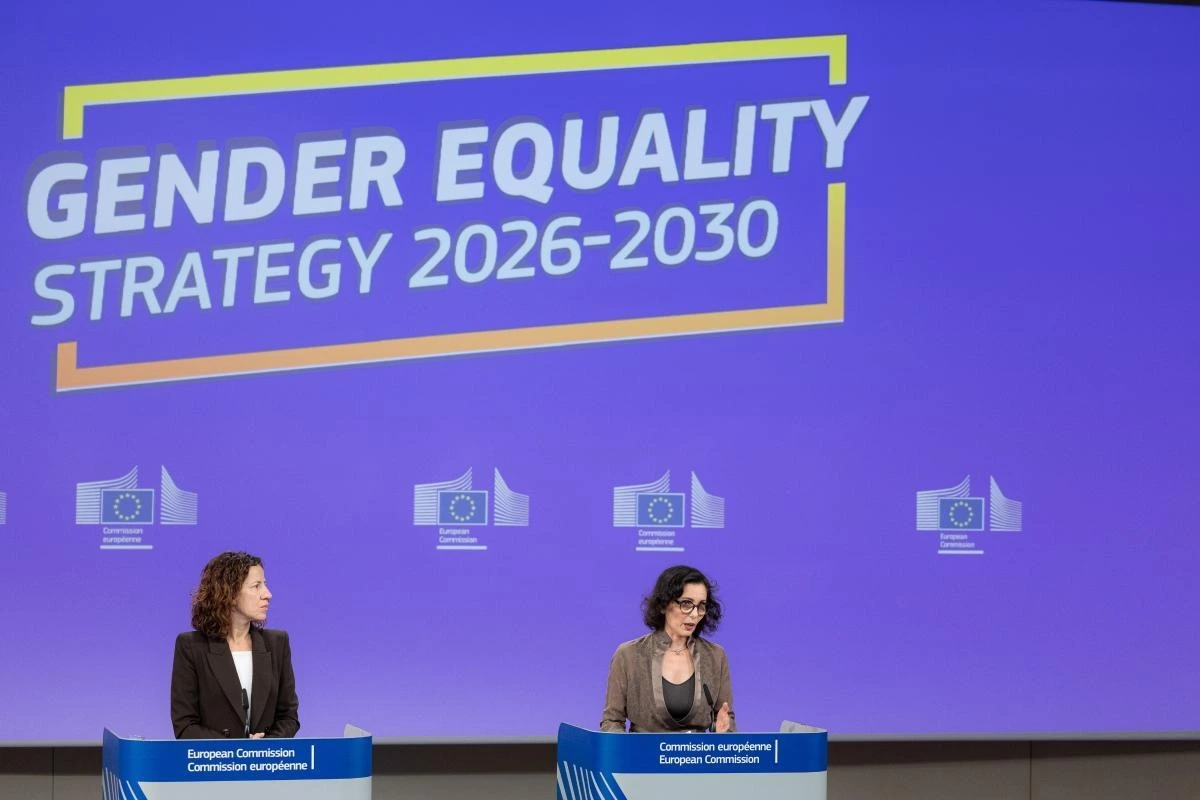
The European Commission’s new Gender Equality Strategy 2026–2030 starts from an important premise: gender equality is not a side issue, but a principle that must shape public life as a whole. Built on the Roadmap for Women’s Rights and its Declaration of principles for a gender-equal society, it sets out a broad vision across education, health, work, leadership and online life, while also confronting cyberviolence, anti-gender narratives and backlash against hard-won rights.
This approach closely reflects CEMR’s own long-standing work. For almost 20 years, the European Charter for Equality of Women and Men in Local Life has advanced the same principle: equality must be anchored in shared commitments, but progress only comes through action at every tier of government. That is why the real test of the new EU Strategy, as with the Charter itself, will be implemented.
That matters because women and girls are still too often pushed out of public life. CEMR’s Women in Politics: Local and European Trends shows that around 32% of women in politics have experienced violence, with cyberviolence rising sharply. The fact that the Commission’s Strategy itself draws on the CEMR study underlines the importance of local and regional experience in shaping the wider European agenda. The study also highlights wider structural barriers: women are still less likely to be drawn into political life and, once elected, are too often denied the most influential responsibilities. Politics cannot be meaningful if it excludes half the population.
Governments must therefore ensure that the safety of women and girls is never pushed to the margins when other priorities arise. Girls must feel that their voice will be heard and that it will lead to action. Only then will they believe there is a place for them in politics. CEMR’s more recent study, Local Truth, Shared Trust, reinforces this message by showing how closely trust in institutions is linked to people’s sense of safety and inclusion, especially for those considering entering public life. Women must have not only a voice in politics, but a safe space in which to use it.
While the Strategy acknowledges elements of CEMR’s work, this recognition represents a welcome first step rather than the destination. To ensure the Strategy’s ambitions translate into meaningful outcomes, there is value in more systematically integrating the depth of local and regional evidence that CEMR and its members have built over two decades. After all, gender equality is shaped on the ground: in towns, cities and regions where policies take effect and where women experience the impact of public action on their lives. Taking local and regional realities into account throughout the EU policy cycle, from data collection to programme design, delivery and monitoring, would help the Strategy reflect women’s lived experiences and enable more effective, inclusive implementation across Europe.
As CEMR marks the 20th year of its Charter, it looks forward to working with the European Commission and partners across Europe to turn principles into lasting change. That same message was recently carried to United Nations at this year’s 70th Conference on the Status of Women, where Flo Clucas, CEMR’s spokesperson on gender equality brought the local perspective into a wider discussion among women and men in public office: local political life must be genuinely open to both women and men, and women cannot participate fully if safety is not guaranteed. The work is far from finished. But the direction is clear: women and girls must be able to participate fully and safely in public life, without fear of violence or intimidation, in every town, city, region and country.
For more information, please contact:
———-
* Banner photo: EC – Audiovisual Service, Copyright European Union, 2026 – source: https://audiovisual.ec.europa.eu/en/media/photo/P-069195

Senior Adviser, Governance, Gender Equality, Local Democracy