CEMR local leaders adopt a political declaration calling for cohesion, competitiveness and global partnerships at the heart of the next EU budget
Gathered at the CEMR Leaders’ Summit in Rovaniemi, around 150 local leaders call on EU Heads of State to include the European Parliament’s EU budget recommendations on multilevel governance, territorial delivery and predictable funding into their negotiations with the Council
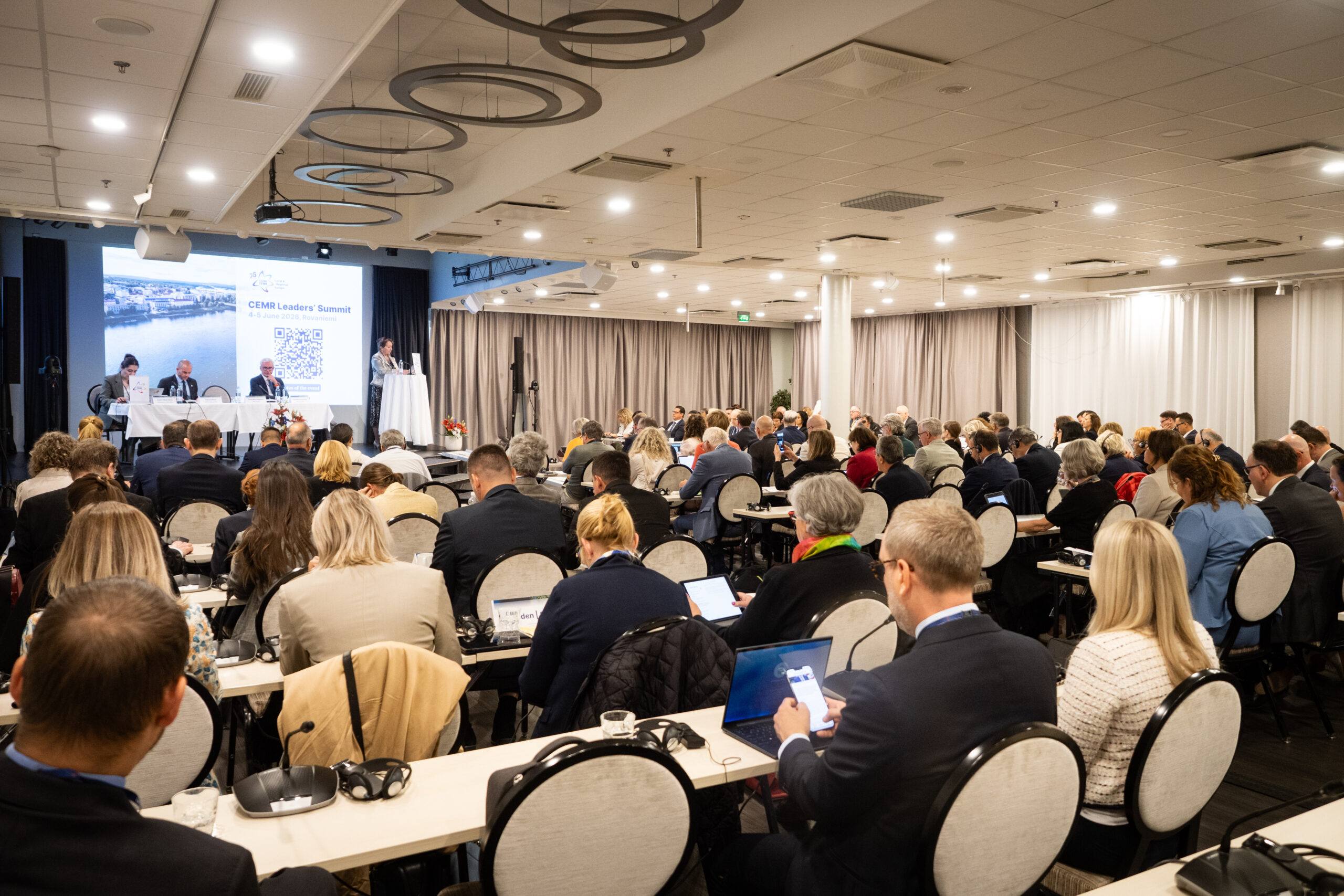
Over 150 local leaders from 29 countries across Europe gathered in Rovaniemi, Finland, for the Council of European Municipalities and Regions (CEMR) Leaders’ Summit, engaging in timely discussions on key European priorities.
A political declaration at a pivotal moment
One of the Summit’s main outcomes was the adoption of a political declaration signed by 55 local leaders who are calling on EU Heads of State to incorporate the European Parliament’s key recommendations on the next EU budget (2028-2034) into their negotiations in the European Council. Adopted during the CEMR Leaders’ Summit in Rovaniemi, the declaration comes at a crucial stage in the interinstitutional discussion on the upcoming Multiannual Financial Framework (MFF).
By endorsing this declaration in support of an EU budget that works for every territory, CEMR members urge that cohesion, competitiveness and global partnerships remain at the core of the next long-term EU budget. Addressed to national leaders, the declaration advocates for a place-based, predictable budget grounded in genuine multilevel governance.
The declaration follows the European Parliament’s adoption of its interim report on the 2028–2034 EU budget on its plenary meeting of 28 April 2026, in which the Parliament set out its political priorities and will be the basis of negotiations with the Council.
Given that the Member States will finalise their position at the Council meeting to be held on 18 and 19 June, CEMR calls on them to take into consideration the position and proposals put forward by the European Parliament towards an EU budget that delivers competitiveness, cohesion, and trust across all territories.
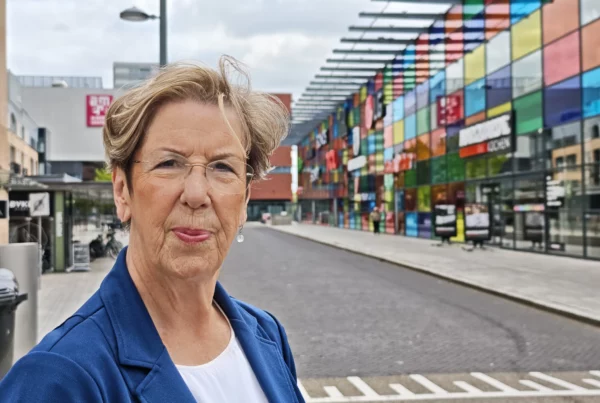
Christoph Schnaudigel, CEMR president, stated that: “The next EU budget must work for every territory in Europe. Cities and regions are where European policy meets real life — where floods are managed, where people need cooling centres, where businesses invest or leave. Europe’s competitiveness and resilience will only be as strong as its weakest territory. The time to act is now”.
Local leaders attending the CEMR Leaders’ Summit also had the opportunity to exchange views on the interinstitutional negotiations on the next MFF with the Member of the European Parliament, Vice-chair of the EU Budget Committee, Giuseppe Lupo. During the discussion, Luppo stated that “we are asking for the Council’s official position, therefore it is extremely important to develop any initiative in order to convince member states to accept the European Parliament proposal.”
Local and regional governments: strengthening resilience through foresight and preparedness
The Summit also provided a platform to discuss how local and regional governments can better use foresight and preparedness to anticipate and mitigate the impacts of crises and emergencies.
As the host country, Finland—internationally recognised as a global leader in crisis preparedness and long-term strategic foresight—offered valuable insights. Participants explored how democratic institutions at all levels must evolve to govern effectively in an era marked by uncertainty and disruption.
Katri Kulmuni, Former Deputy Prime Minister of Finland and the northernmost Member of the European Parliament, stated that “preparedness is a broader way of living. It is not a cost but an investment, and it will only work if the local communities are involved.”
The political discussion included voices from across the continent, from north to south.
Director of Technical Service of the City of Rovaniemi, Pertti Onkalo, expressed that “across Europe, cities and regions face similar challenges, even though each has its own unique characteristics. By sharing lessons learned, we can ensure that no one has to reinvent the wheel”. He also added that “these days the importance of preparedness is increasingly recognised; but preparedness must be built before a crisis, not during it.”
This is what Elisabeth Unell, the mayor of Västerås in Sweden, stated: “Building preparedness means practising different scenarios and preparing together. We need stronger coordination and experience sharing among local governments across Europe.”
“Preparedness and foresight are getting more into our DNA, especially in the western part of Europe. When there is a crisis, the most vital thing is the structure. But it is not always the government that can instantly help. It is also important to invest in the local governments.“ Ap Reinders, the Mayor of Stichtse Vecht.
The Mayor of Estarreja (Portugal), Isabel Simoes Pinto, argued that “for citizens, preparedness cannot be an abstract concept. It needs to come from the confidence of the local leaders. We must transform preparedness into a normal dimension of governance, a daily aspect of life.” – Mayor of Estarreja (Portugal), Isabel Simoes Pinto
Christoph Schnaudigel appointed CEMR President
During the Summit, the CEMR Policy Committee appointed Christoph Schaudigel as the new President of the organisation, following the resignation of Gunn Marit Helgesen after her election as President of the Congress of Local and Regional Authorities (CLRAE).
CEMR local leaders also decided that Gunn Marit Helgesen will continue to serve as CEMR Co-President alongside Philippe Laurent and Vince Maple.
In his initial speech, Christoph Schnaudigel stated: “I am honoured to take on the role of President of CEMR at such a crucial moment for Europe’s towns, cities and regions. As the negotiations on the next EU budget unfold, and as our values and local democracy are increasingly challenged in a turbulent geopolitical context, our unity matters more than ever. I look forward to working even more closely with all our members to ensure that local voices are heard and involved in the European process of decision-making. This also includes strengthening CEMR’s commitment to international partnerships to uphold peace, democracy, sustainability and solidarity.”
Christoph Schnaudigel is the President of the German Section of CEMR (RGRE) and the President of the County of Karlsruhe (Germany). He has been an active member of CEMR’s leadership since 2017, when he became the Spokesperson on Public Services.
Marking CEMR’s 75th anniversary
The Rovaniemi Summit built on CEMR’s 75-year legacy of supporting towns, cities and regions through major transformations—from post-war reconstruction to today’s climate and social transitions.
Local leaders celebrated this milestone with the launch of a new CEMR video presentation, as well as a series of interviews titled “Voices of our 75-year history.” A photobooth featuring a “Local Time” newspaper, showcasing “Our local leaders” as protagonists, also formed part of the celebrations.
The CEMR Leaders’ Summit in Rovaniemi was hosted by the city of Rovaniemi and the Association of Finnish Cities and Municipalities (Kuntaliitto).
For more information, contact:
Head of Communications