CEMR local leaders adopt a political declaration in support of an EU budget that works for every territory
Gathered in Rovaniemi on 5 June, local leaders call on the EU’s Heads of State and Government to include the European Parliament’s EU budget recommendations on multilevel governance, territorial delivery and predictable funding into their negotiations with the Council
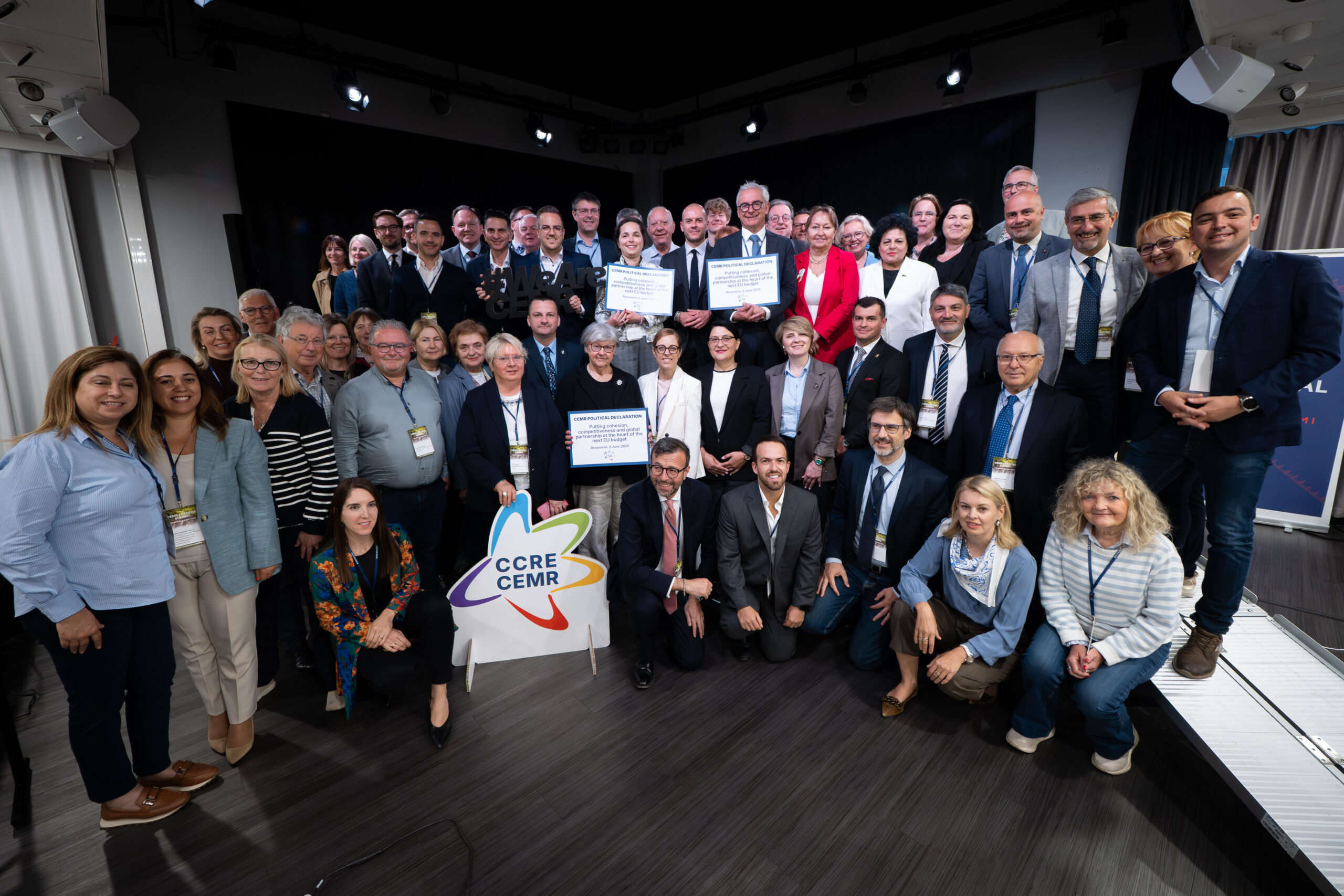
Local leaders of the Council of European Municipalities and Regions (CEMR) Policy Committee have adopted a political declaration calling on EU Heads of State and Government to incorporate the European Parliament’s key recommendations on the next EU budget (2028-2034) into their negotiations in the European Council. The declaration, with 55 signatories, approved during the CEMR Leaders’ Summit in Rovaniemi, comes at a crucial moment in the interinstitutional discussions on the upcoming Multiannual Financial Framework (MFF).
By endorsing this declaration in support of an EU budget that works for every territory, CEMR members urge to ensure that the next long-term budget is fit for the EU ambition for cohesion, competitiveness and global partnership. Addressed to national leaders, the declaration makes the case for a budget that is place-based, predictable, and grounded in genuine multilevel governance.
A particularly significant timing
The declaration follows the European Parliament’s adoption of its interim report on the 2028–2034 EU budget on its plenary meeting of 28 April 2026 in which the Parliament set out its political priorities and will be the basis of negotiations with the Council.
As Member States meeting on 18-19 June Council will finalise their position, CEMR calls on them to take into consideration the position and proposals put forward by the European Parliament towards an EU budget that delivers competitiveness, cohesion, and trust across all territories.
Key asks of the political declaration
In practical terms, the declaration encourages Heads of State and Government to uphold the European Parliament’s key recommendations on multilevel governance, territorial delivery and predictable funding under the future National and Regional Partnership Plans (NRPP). It also calls for the continuation of territorial innovation and competitiveness tools, as well as stable and predictable support for innovation, scale-up and investment in towns, cities and regions under the future European Competitiveness Fund (ECF).
Local and regional governments are essential to turning EU priorities into concrete projects, services and investments on the ground. Among the main calls of the political declaration, it urges to preserve strong and clearly allocated funding for Cohesion Policy, which will secure key investments for economic, social and territorial cohesion in all regions.
It also insists that local and regional governments must be properly involved in the design and implementation of future NRPP.
The text further calls for the protection of integrated territorial and urban development tools, stronger administrative capacity for local and regional governments, and a more realistic approach to performance and delivery rules for long-term investment.
On competitiveness, the declaration argues that the future ECF must be accessible across all territories and better connected to local realities. It also calls on the EU to recognise local and regional governments as full partners in external action and development cooperation.
The overall message is clear: if the EU wants its next budget to produce tangible results for citizens, it must give local and regional governments the means and the role to make that happen.
CEMR advocacy campaign on the next EU budget
This action is part of CEMR’s wider campaign on the future EU budget. The campaign stresses that the decisions now being negotiated will shape the European Union’s ability to invest in people and places for the next decade. It also warns that greater flexibility in the new budget architecture must not come at the expense of safeguards for place-based investment, multilevel governance and predictable funding for towns, cities and regions.
For more information, contact:

Director – Policy & Impact