Beyond 2030: How can territories help shape the future of sustainable development?
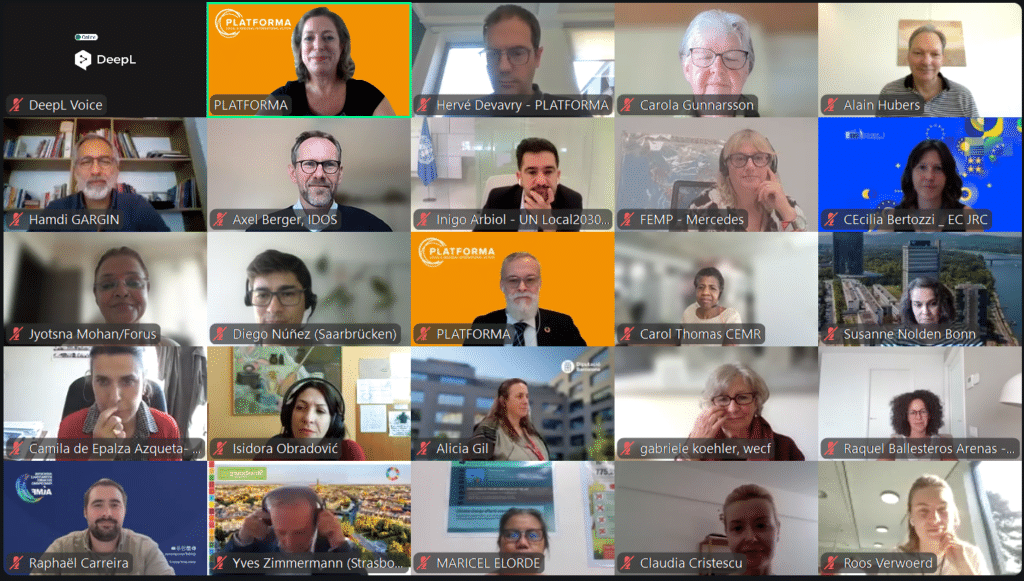
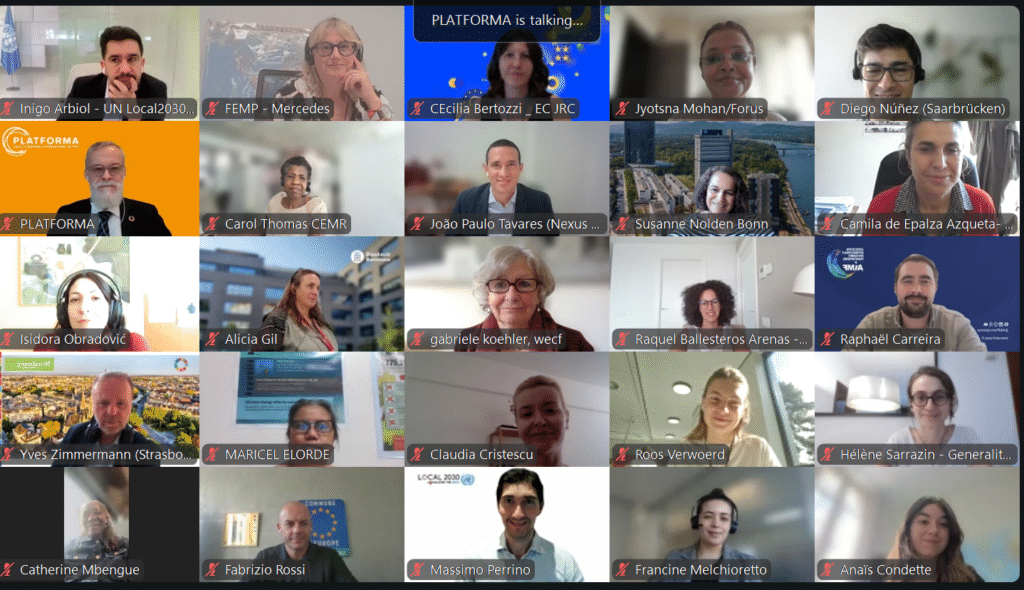
On 5 October, CEMR and PLATFORMA brought together almost 100 participants from over 50 countries for a public webinar on the future of the global sustainable development framework beyond 2030. The discussion gathered voices from research, civil society, women’s organisations and local government to answer one question: how can territories really be at the heart of the post-2030 framework?
Eleven years after the adoption of the Sustainable Development Goals (SDGs), many targets remain off track. The webinar, which followed CEMR spokespersons’ debate in June, examined lessons from SDG implementation and emerging challenges, from climate risks to technological disruption and geopolitical tensions, that will shape the next agenda.
Opening the meeting, Fabrizio Rossi, CEMR Secretary General, stressed that the SDGs remain the world’s most important shared political framework, but that implementation will only succeed if it is localised. Local and regional governments are not merely implementers of global agendas: they are political actors that turn commitments into services, investments and policies, and must be recognised as strategic partners and co-architects of the next agenda. He also called for better local data to anticipate risks, and for gender equality to move from commitment to leadership.
“The SDGs remain the world’s most important shared political framework, but implementation will only succeed if it is localised.
The local and regional governments should be part of the discussions; they should be at the table, not solely the implementers.” – Fabrizio Rossi
Four possible scenarios after 2030
Axel Berger, Deputy Director of the German Institute of Development and Sustainability (IDOS), opened the discussion with a keynote on a global sustainability agenda beyond 2030. He recalled that the SDGs have delivered real progress: 92% of the world’s population now has access to electricity, 74% of people were online in 2025 (up from 40% in 2015), and 134 countries have already met the target on under-5 child mortality.
Yet an implementation gap remains, driven by successive shocks and conflicts, a financing gap of around $4 trillion a year in developing countries, a weak implementation architecture, and eroding political ownership and trust.
“The debate should move from the number of goals to purpose and delivery, with resilience, new alliances and a role for subnational actors.”
Berger stressed that negotiations on a successor agenda will take place in a harder context than in 2015, marked by multipolarity, low trust and overlapping crises, which makes an inclusive and trust-building process even more important.
“At the moment, we are putting an emphasis on issues like competitiveness and security, and the SDGs in the Agenda 2030 falls to the wayside.”
Berger presented four possible paths: continuing the SDGs, extending them with new goals, reducing the number of goals, or building a new vision focused on delivery, resilience and new alliances, including the role of subnational actors. With the SDG Summit in September 2027 meant to launch the process, he called for negotiations that are inclusive, transparent, science-based and learning-oriented.
“Beyond pushing forward on SDG implementation, what we urgently need to do between now and September 2027 – and well beyond – is to build progressive alliances with like-minded nations and stakeholders.” – Axel Berger
Perspectives from civil society, research and women’s organisations
Jyotsna Mohan Singh, Advocacy Officer at Forus International, a network representing more than 24,000 civil society organisations, argued that putting territories at the heart means shifting power, resources and decision-making closer to people, not only localising implementation. She underlined the complementary roles of local governments, civil society and communities, including civil society’s independent accountability role, and presented Voluntary Local Reviews as a way to connect local evidence to budgets, national reviews and global accountability.
“Putting territories at the heart of the post-2030 framework should not mean simply asking territories to do more. It should mean giving territories, and the people within them, a greater voice, greater resources and greater influence over the decisions that affect their lives.”
“Local governments are not simply the last mile of implementation. They are important governance actors, with knowledge of what works, what does not work, and what people actually need.” – Dr Jyotsna Mohan Singh
João Tavares, Co-Founder and CEO of Nexus Governance, presented an analysis of 474 Voluntary Local Reviews from 359 cities in 72 countries. He pointed out that the local reviews are becoming more candid: challenges rose from 11% to 29% of reported items between 2017 and 2025. Cities name financing, institutional capacity and coordination across government tiers as their main barriers. In Europe, 45% of commitments are concrete, compared with 50% worldwide.
“Cities have already written the evidence. What we have done is make it countable: 474 local reviews, from 359 cities in 72 countries.”
“Local reviews are becoming more honest. Challenges have gone from 11% to 29% of what cities report, led by the most vulnerable territories.” – Joao Tavares
Gabriele Köhler, Board Member of Women Engage for a Common Future (WECF), warned of a global retrogression on women’s rights, with austerity and militarisation displacing social spending. She highlighted the intersecting inequalities and structural barriers, such as unequal access to resources and time poverty, that limit women’s representation and leadership. She also called for building CEDAW and Universal Periodic Review recommendations into SDG 5 accountability in a post-2030 framework.
“We need to look at the really disaggregated level to see what is happening to women and girls from disadvantaged communities, which can be anything from where they are located to their citizenship, sexual orientation, gender identity, or ethnicity.”
“I think that beyond 2030, what we really need to think about is binding accountability.” – Gabriele Köhler
The meeting was also joined by CEMR spokesperson on SDGs, Carola Gunnarsson, the Councillor of Sala Municipality and the Swedish Association of Local Authorities and Regions (SALAR).
“Trust is perhaps the most important resource we have for managing transformation.”
“If we can strengthen those partnerships and keep people at the centre of decision making, then local and regional governments will not only implement future global goals, but they will also help shape it being them.” – Carola Gunnarsson
Four key asks from local and regional governments
Closing the webinar, Boris Tonhauser, Director of PLATFORMA, stressed that the question is no longer whether territories matter for sustainable development, but whether the next framework will empower them to help shape decisions, not just implement them. He recalled the key asks that will structure the CEMR-PLATFORMA position:
- Put multilevel governance into practice, giving local and regional governments a defined role in shaping, implementing and reviewing the future framework
- Reflect the interconnections of today’s challenges, addressing climate, inequality, demographic change, digital transformation and peace and security in an integrated way
- Match ambitions with means of implementation, ensuring access to finance, capacities, data and knowledge
- Strengthen international and decentralised cooperation, recognising the contribution of local governments to global sustainable development
“The question is no longer whether territories matter for sustainable development. The real challenge is whether the post-2030 framework will empower local and regional governments to help shape decisions, not just implement them.”
“If sustainable development happens in territories, then territories must have a seat at the decision-making table. This means moving from a model of consultation to a model of genuine co-creation and shared governance.” – Boris Tonhauser
For more information, contact:

Senior Advisor – Global Agendas, SDGs & Climate