
Op-Ed on local democracy in Türkiye

Turkiye democracy - News 2025

Op-Ed on the local democracy in Türkiye co-signed by presidents of the Congress, CoR, ALDA and CEMR


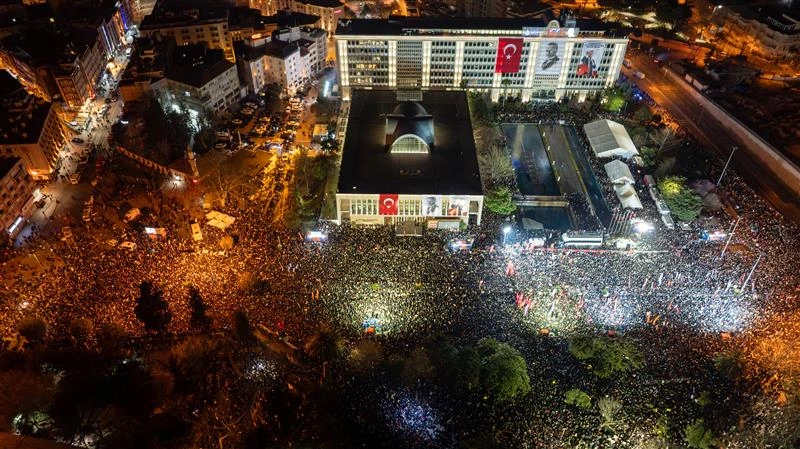
The recent arrests and dismissals of democratically elected mayors in Türkiye, and their replacement by appointed trustees, mark a dangerous turning point for local democracy, not only in Türkiye but for Europe as a whole. At its core, democracy is not just about casting ballots; it is about ensuring that those elected by the people can govern freely, without fear of persecution. The replacement of elected mayors through judicial intervention, without full transparency and due process, raises serious questions about democratic standards and political freedom. 

This is not an isolated event. It is part of a worrying trend of democratic backsliding that threatens the fundamental values upon which modern Europe has been built. From the ashes of World War II, Europe emerged with a commitment to decentralization, democracy, and human rights. The European Charter of Local Self-Government, adopted in 1985, was a direct response to past authoritarianism, ensuring that local governments have the autonomy to serve their communities without undue interference from central authorities. This principle of local self-government is a safeguard against the concentration of power and a guarantee that democracy remains rooted in the daily lives of citizens.  

Yet today, these hard-won principles are being undermined. The detention of local leaders in Türkiye is a blatant violation of the commitments the country made as a member of the Council of Europe. It is a direct assault on the principles enshrined in the Charter and an ominous signal to other governments that such actions might be tolerated.  

Local democracy is the first line of defense for our freedoms. When it is attacked, it is not just a city or a region that suffers—it is the very foundation of democracy. As local elected representatives, mayors are the bridge between national governments and citizens, the leaders who turn democratic principles into tangible actions—whether in public services, social cohesion, or crisis response.  

Ignoring the crackdown on local leaders in Türkiye is not just a failure to support our colleagues—it is a failure to defend democracy itself. If Europe allows the erosion of local democracy anywhere on the continent, it sets a dangerous precedent that could spread.  

EU institutions, together with Member states of the European Union and of the Council of Europe, must take a clear and firm stance. The defense of democracy must not be selective or conditional on political expediency. The right of people to choose their leaders—and for those leaders to govern without fear—must be upheld at all costs.  

Democracy in Europe was never guaranteed; it was built through struggle and commitment. In the face of new threats, we must show the same commitment. The free election of representatives is not a privilege; it is the foundation of a just and stable society. If we fail to defend it today, we risk losing it tomorrow. 

Signatories: 

  • President of the Congress of Local and Regional Authorities of the Council of Europe, Marc Cools 
  • President of the Committee of the Regions, Katta Tüttő 
  • President of ALDA: Nataša Vučković
  • President of CEMR: Gunn Marit Helgesen

*****

This opinion article was published on EU Observer on 15 April 2025. You can read it here

Related content:

For more information or media inquiries, please contact:

Cohesion Policy Mid-Term Review

MFF - Position paper News 2025

Cohesion Policy mid-term review: is the glass half empty or half full? 


The rationale for the Commission’s latest communication “A modernised Cohesion Policy: the mid-term review” is clear and compelling: the operational programmes of the Cohesion Policy  funds were negotiated four years ago: before a global pandemic, before the paradigm shift of massive EU joint borrowing, and before Russia’s war of aggression on Ukraine and its dramatic impact on inflation and cost of living. 

As Executive Vice President Raffaele Fitto reminded Members of the European Parliament’ Regional Development Committee on 9 April: the world has changed, and so too must the Union’s priorities and policies. 

This new proposal – yet another amendment to Cohesion Policy regulations in the last five years – intends to offer new spending possibilities for Managing Authorities. It does so by creating new specific objectives, expending the scope of eligible expenditures and beneficiaries in line with  five new key priorities identified by the Commission: 

  1. Competitiveness and decarbonisation of industry 
  1. Defence and security 
  1. Affordable housing 
  1. Water resilience 
  1. Energy transition 

These are undeniably pressing issues: Mayors have long raised awareness on the housing crisis, and recent dramatic floods across Europe highlighted the urgency of climate-resilient water management systems.  

At the same time, it also reflects the new Commission’s political priorities: competitiveness and defence. One could be satisfied that including them within Cohesion Policy underlines the role of local and regional governments in fostering Europe’s competitiveness, driving strategies for local economic development and creating attractive environment for business to settle in European municipalities and regions. 

And yet… 

Despite its forward-looking intention, the mid-term review feels like a glass half empy or half full: the proposal does open new funding possibilities, to be used on voluntary basis by Member States or regions – depending on who the managing authority is. But the potential uptake of the amendments, at this advanced stage of the programming period, is likely to be limited – raising questions on the real added value of the entire proposal. It is also a risk to undermine previously agreed priorities with the addition of new eligible activities and eligible beneficiaries – with very attractive conditions (pre-financing, 100% co-financing from the EU), but without any additional budget. 

The Commission seems haunted by its initial decision to reduce the timeline for completion of programmes to two years (N+2) after the end of the period, down from the current programming period N+3 rule. This despite the assurance of Managing Authorities that they are still on track to spend all their budget – based on decades of experience managing Cohesion policy funds. For the Commission, it is still not fast enough. With this new proposal, the Commission not only opens new eligible investment areas, but also further opens the door to large enterprises, notably  defence companies to apply to Cohesion Policy funding, without requiring justifications on how these beneficiaries will contribute to the economic, social and territorial cohesion where they are located, thanks to EU funded investments. 

And this last point could be the most dramatical change to Cohesion Policy as we know it. While the uptake of this new reform is likely to remain low given that most of the funds are already committed, it should be seen as a preview of the Commission’s proposal for the next budget period: It is the return of “EU structural investment policy” except that the focus will be much less on the treaty objectives of economic, social and territorial cohesion, but more on the political priorities of the moment. Less on the partnership principle and multi-level governance, more on the private sector that has the capacity to spend large sums fast.  

This communication is not reassuring in terms of respect for the multi-level governance and partnership principle. As we saw with the Recovery and Resilience Facility, it’s not enough to mention “in partnership with national, regional and local authorities”. The Commission must put in place methodologies and binding requirements for the multi-level governance to actually take place. Yet in this mid-term review, the Commission does not even encourage Member States and managing authorities to discuss the reprogramming opportunities together with the stakeholders.  

Lessons learned 

A serious structural investment policy cannot afford to be subject to constant regulatory changes within a programming period. Real flexibility should not come from the Commission’s possibility to periodically change its own political priorities; but from the very design of the programmes where investments priorities would be defined from a bottom-up perspective, driven by local and regional governments who best understand their territories’ long-term and specific needs.  

While the EU certainly define broad strategic goals such as decarbonisation of the society, increasing competitiveness of all European territories or strengthening the resilience of public administration at all levels; it must avoid overly narrow thematic concentrations that limit the investment opportunities in municipalities and regions, and are not always fit for purpose on the ground.  

Only then can the next EU budget deliver both on common European objectives and the unique needs of each territory. 

Local Governments in Ukraine’s Recovery

Bridges of Trust - News 2025

Local Governments at the Heart of Ukraine’s Resilience, Reconstruction, and European Integration 


As Ukraine continues its courageous and determined fight for freedom and democracy, local and regional governments stand at the forefront of the country’s resilience and recovery. Across Ukraine, municipalities are playing a pivotal role in responding to the challenges of wartime destruction, leading reconstruction efforts, and advancing Ukraine’s path toward European integration. 

Decentralisation as a Foundation for Resilience 

Ukraine’s decentralisation reform, initiated years before the full-scale Russian invasion, has become one of the country’s greatest strengths. Empowered local authorities have mobilised communities, safeguarded essential services, and led local reconstruction efforts, often in partnership with residents and civil society. Municipalities have ensured water, electricity, medical supplies, and shelter, even under occupation and communication blackouts. 

The example of Novobilouska hromada in Chernihiv region, where local authorities swiftly protected sensitive information and are now leading reconstruction efforts, highlights the importance of local self-governance in times of war. 

Bridges of Trust: Rebuilding Ukraine through partnership with the EU municipalities 

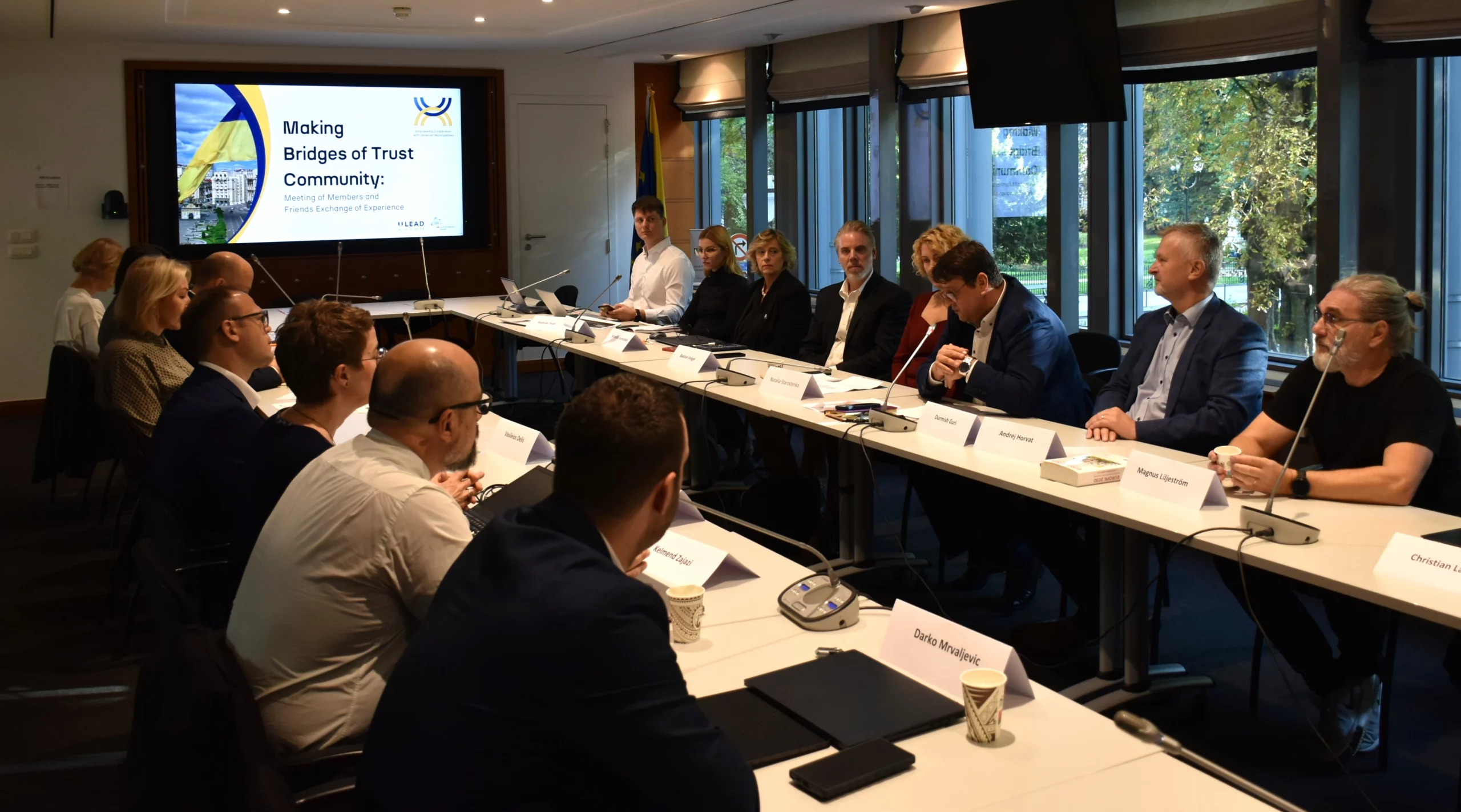
International cooperation has further enhanced local resilience. Projects such as Bridges of Trust, led by CEMR in cooperation with Association of Ukrainian Cities and with support of U-LEAD with Europe Programme, connect Ukrainian municipalities with European partners, fostering knowledge exchange and joint reconstruction projects. To date, over 30 Ukrainian municipalities have partnered with counterparts from across Europe, submitting more than 40 joint project proposals focused on recovery and sustainable development. 

These partnerships go beyond solidarity; they promote mutual learning, strengthen democratic governance, and contribute to Ukraine’s European integration by aligning local development practices with EU standards and values. 

Digital Tools for Transparency and Efficiency 

Innovative digital solutions also play a key role. Ukraine’s Prozorro e-procurement system and the DREAM (Digital Restoration Ecosystem for Accountable Management) platform ensure transparency and accountability in reconstruction projects. These tools not only increase public trust but also facilitate international donor engagement by offering real-time data on funded projects. 

The Big Recovery Portal empowers civil society and local communities to monitor reconstruction efforts, report issues, and uphold high standards of integrity and efficiency. Such digital initiatives are critical to ensuring effective use of resources and advancing Ukraine’s EU accession ambitions. 

  • CEMR has developed the Matchmaking Platform, a digital tool connecting towns, cities, and local authorities across Europe, with a special focus on Ukrainian communities. This online platform enables quick peer interactions, joint projects in key cooperation areas, access to funding opportunities, best practices, and enhances international visibility.  

The Way Forward 

Ukraine’s local and regional governments are driving recovery, resilience, and reform. Through international partnerships, digital innovation, and Community engagement through Bridges of Trust, they are shaping a democratic, European future for Ukraine. As CEMR and its members continue to stand with Ukraine, supporting municipalities in their efforts remains essential for a united and resilient Europe. 

Read more at the GMF article:  https://www.gmfus.org/news/defending-democracy-ukraines-resilient-reconstruction-1 

For more information, contact