The Denim Deal

Denim Deal - News 2022

How Amsterdam is reducing emissions by boosting the recycling of textiles


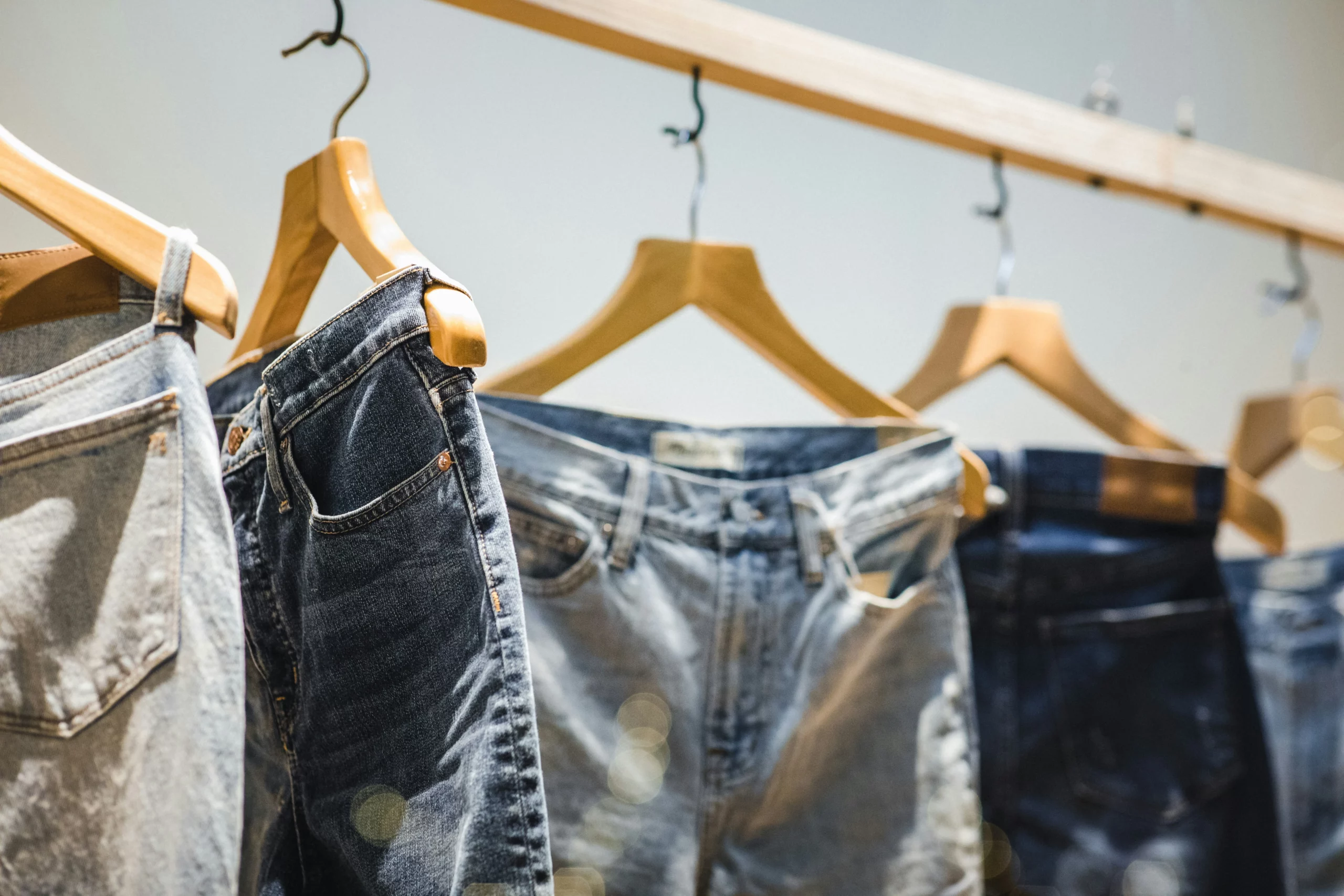
As the birthplace of denim labels and a European hub for global brands, the city of Amsterdam is renowned as an international denim capital. This sense of style is now going hand in hand with a growing environmental consciousness. As part of this, Amsterdam has launched the Denim Deal, an initiative to increase the share of recycled textiles in the city’s denim products.

The goal is that by the end of 2023, three million denim jeans containing 20% post-consumer recycled textiles will have been produced. In 2030, this will lead to reduction of carbon emissions by 2,400 kilotonnes, equivalent to a small coal plant.

The Denim Deal will work towards becoming the new industry standard in the denim industry and it is hoped its approach can be scaled up and replicated in other European municipalities. Indeed, the struggle for a waste-free circular economy cannot be achieved in isolation: work needs to be done with different actors along the whole supply chain.

A milestone contributing to the deal was the development of the automated sorting machine, Fibersort, which divides large volumes of mixed post-consumer textiles by fibre composition and colour. Such fine-grained sorting allows these materials to become uniform inputs for high-value textile-to-textile recyclers.

Multi-level cooperation brings results

The project, launched in 2020 by the City of Amsterdam, the Amsterdam Economic Board, the Dutch Ministry of Infrastructure and Water Management and the Municipalities of Haarlem and the Zaanstad, is a case study in cooperation across different levels of government.

The Denim Deal brings together over 40 partners including denim brands, policymakers, recycling companies and others. The initiative enables precise monitoring of the value chain of denim products and processes in the industry.

The project has been undertaken in the context of REFLOW, an EU-funded innovation project supporting the development of circular cities through the re-localisation of production and the reconfiguration of material flows.

Amsterdam is since 2009 a signatory of the Covenant of Mayors for Climate and Energy – Europe.

Solidarity with Ukraine

Bridges of Trust Branding - News 2024

Barleben in Germany raises 8,500 euros for their Ukrainian partner Shyroke municipality


As part of our coverage of the local and regional dimensions of Russia’s war in Ukraine, CEMR is highlighting the help given by European municipalities and regions to their Ukrainian peers. We hope these stories inspire other local and regional governments to heighten their efforts to support Ukraine.

According to the Mayor of Barleben, Frank Nase, the goal of the charity campaign was to send a signal of solidarity to the people of Shyroke in Ukraine. This was truly a community driven action. Many citizens as well as local business, pharmacies, medical practices, bakeries donated money or provided other forms of in-kind support for the benefit of their Ukrainian partner. With 1,000 euros, the Lions Club Börde provided the largest single donation that the association has made this year.

The mayor of Shyroke, Denis Korotenko, thanked Barleben for all the support and their sincerity and care.

The partnership between Barleben and Shyroke started in 2018 under Peer-to-Peer initiative with the support of the U-LEAD with Europe Programme.

Solidarity with Ukraine

Ukraine people - News

Lithuania’s Ukmergė district municipality sends aid to its Ukrainian partner Korosten municipality


As part of our coverage of the local and regional dimensions of Russia’s war in Ukraine, CEMR is highlighting the help given by European municipalities and regions to their Ukrainian peers. We hope these stories inspire other local and regional governments to heighten their efforts to support Ukraine.

Ukmergė district municipality, in Lithuania, was among the first municipalities in the “Bridges of Trust” Initiative to provide help to their Ukrainian partner, Korosten in Zhytomyr Region. 

Korosten was attacked on 25 February when a Russian shell hit a residential building. At the beginning of March, Russian forces fired on a TV tower and checkpoints in the city, killing and wounding at least four. This was followed by an air strike on the city.

Ukmergė is helping to address the urgent needs of its partner through “Ukmergė-Ukraine” campaign, which has found a wide support among the local people and businesses.

The humanitarian help was sent for the first time on the 7th of March. It included hygiene products and non-perishable food. On the 1st April, a second cargo left Ukmergė municipality, with food packages, flour, groats, soups, sugar, canned vegetables and meat, hygiene products, medicines, clothing and shoes. In total, Korosten already received 5 tons of humanitarian aid from Ukmergė.

“Ukmergė district municipality sent us a very substantial help and we are currently in the process of creating individual packages which will be distributed to the internally displaced people.”, said deputy mayor of Korosten, Nataliia Chyzhevska. “We sincerely thank Ukmergė district and Lithuania for their help.”

The support campaign “Ukmergė-Ukraine” continues. The municipalities are also planning to sign a partnership agreement on 29 April 2022.

The two municipalities first met in November 2021, in the framework of the “Bridges of Trust” Initiative, implemented by the Council of European Municipalities and Regions, PLATFORMA and supported by the U-LEAD with Europe programme.

Ukraine – Bucha

Mayors in Ukraine - News 2023

The Council of European Municipalities and Regions strongly condemns the atrocities committed in Bucha


The Council of European Municipalities and Regions (CEMR) has continuously expressed its full and unconditional support to the Ukrainian people and their local and regional elected representatives since the beginning of the Russian-led war in Ukraine. 

CEMR is horrified by the scenes of desolation and the atrocities that were witnessed following the liberation of the Kyiv region by the Ukrainian army and expresses its deepest condolences to the families of the victims. 

CEMR strongly condemns what could amount to war crimes committed by the Russian Federation, notably in the town of Bucha, North-East of Kyiv, where more than 410 Ukrainian civilians were killed. These abuses are part of a wider context of human rights violations committed by the Russian Federation army, including rape, summary executions, and unlawful use of violence against Ukrainian citizens. According to the Office of the UN High Commissioner for Human Rights, 1,417 civilians, including 121 children, have been officially killed in Ukraine – figures that are probably much higher in reality, according to the Office. 

Iryna Yarmolenko – Local elected Councillor of the City of Bucha, member of the CEMR Policy Committee, and a member of the CEMR Standing Committee for Gender Equality as a representative of the Association of Ukrainian Cities: 

“The massacre of peaceful civilians, rape of women, and brutal murders in Bucha, Irpin, and in many cities in Ukraine, are continually denied by the Russian military. I fled the war and I live in Poland now, I lost everything my house, my career, my dreams. It is hard to even imagine such horrific things happening in my own city where I used to organise events and training to promote green cities, gender equality, and strengthen young women’s rights.
With my colleagues, we continue to collect humanitarian aid and we count on the international community’s strong support.”

CEMR calls for an international investigation into the alleged war crimes committed in Ukraine in order to bring those responsible to justice and hold them accountable. Further sanctions must be taken as soon as possible.

CEMR reiterates its call on the Russian Federation to withdraw from the entire sovereign territory of Ukraine, including the Donbass region and Crimea.

Solidarity with Ukraine

Bridges of Trust - News 2023 2

Clothing, medicine, food and other aid were sent to Novohuyvinske municipality


As part of our coverage of the local and regional dimensions of Russia’s war in Ukraine, CEMR is highlighting the help given by European municipalities and regions to their Ukrainian peers. We hope these stories inspire other local and regional governments to heighten their efforts to support Ukraine.

Lazdijai District Municipality (Lithuania) has provided humanitarian aid to Novohuyvinske, a municipality in northern Ukraine.  The Lithuanian partner sent 183 thermal clothes, 100 shoes and 100 sleeping bags, as well as medicines, non-perishable foods and hygiene products.

Novohuyvinske Village Council thanked Lazdijai District saying: “In this difficult time, we felt a reliable shoulder of help and support. It is in trials that strong and reliable relationships are born. Thank you partners, friends, colleagues! Our Victory is your Victory!”

The two partners first met in November 2021, in the framework of the “Bridges of Trust” Initiative, implemented by CEMR and PLATFORMA with the support of the U-LEAD with Europe Programme.

Solidarity with Ukraine

Bridges of Trust Branding - News 2024

Lithuania’s Šiauliai district municipality sends 11 tonnes of aid to the city of Dolyna


As part of our coverage of the local and regional dimensions of Russia’s war in Ukraine, CEMR is highlighting the help given by European municipalities and regions to their Ukrainian peers. We hope these stories inspire other local and regional governments to heighten their efforts to support Ukraine.

Šiauliai district municipality in Lithuania has given over 11 tonnes of humanitarian and material aid, worth around 100,000 euros, to its Ukrainian partner, the city of Dolyna in southwest Ukraine.

The fully loaded lorry included long-lasting and nutritious food, high-quality overalls, knee pads, shoes, chainsaws and various tools. The shipment also included equipment for Ukraine’s soldiers, such as optical devices, radios, batteries, flashlights, medicines, bandages and first aid equipment.

“We are sincerely grateful to our Lithuanian friends from Šiauliai district, our brothers and sisters, for the significant help we received”, said Ivan Dyriv, mayor of Dolyna. “This is an invaluable contribution of our friends, of the Lithuanian people, to our common victory, the victory of Ukraine.”

In addition, as a gesture of support for Ukraine, Šiauliai district municipality terminated all cooperation agreements with partner municipalities in Russia and Belarus in the first days of the war.

The two municipalities first met in November 2021, in the framework of the “Bridges of Trust” Initiative, implemented by CEMR, PLATFORMA and supported by the U-LEAD with Europe programme.

IncluCities Interview

Inclucities Interview - News 2022

“The city is what unites us, regardless of where we came from”


Fuenlabrada is a Spanish municipality located in the Madrid metropolitan area. The IncluCities mentor city has experienced rapid population growth because of migration. In response, the municipal authorities developed policies of social cohesion and equality that have become a reference for effective inclusion practices.

Francisco Javier Ayala Ortega has extensive experience in the field of public policies and held various positions in the Fuenlabrada City Council before being elected mayor in 2018. He chairs the International Relations Commission of the Spanish Federation of Municipalities and Provinces (FEMP) and is CEMR Spokesperson for Employment. With a degree in law and a passion for the Andalusian dance, he promotes equal rights, active participation and collective work as the foundations of inclusive cities.

In the past year marked by COVID, mayors of cities across the world have faced unprecedented challenges. How did the city of Fuenlabrada manage the pandemic?

We had a clear strategy from the very beginning: making the municipal budget available to support the city hospital and to reach out to people most affected by the lockdown, especially the elderly and children. I am proud that within only a few days, we were able to set up an effective field hospital for COVID patients next to the city’s hospital centre.

The world is being rocked by challenging issues – the pandemic, recovery, climate change, migration. How do you see the role of cities in tackling them?

There is no doubt that local governments are the ones who are the closest to the citizens and, therefore, the ones who know best about their needs and understand the reality of their territories. Of course, the challenges are global, and they require the collaboration of the international community in order to create common efforts and achieve global goals. But the answers, the ways we reach these common objectives of recovery, the fight against climate change or the way we deal with migration, must be adapted to the population on the ground. In this process, the local governments play an essential and leading role.

The population of Fuenlabrada has grown in the past 40 years because of migration. The population tripled, and the average age of the population is now 6 years lower than the national average. How did the city adjust?

In my view, there are two main keys to addressing this challenge: one is civil participation and the other is social cohesion policies. Fuenlabrada is an important point of reference when we talk about citizens’ participation. We’ve managed to develop the participation of citizens through their involvement in transformation processes with a common goal of improving our city and the lives of the citizens. We’ve also been seen as a successful example of cohesion policies in the past decades. In parallel with the population growth, we have developed innovative programmes that helped us decrease the unemployment rate and improve inclusion.  

What is the current migrant situation in Fuenlabrada?

Currently, the foreign population represents slightly less than 13.5 per cent of the city’s population, and the majority are people between 20 and 49 years old. Most of them come from Romania, Morocco, Nigeria, Equatorial Guinea, Colombia and China. On integration, our efforts are focused on adequate municipal services responding to the basic needs of the newcomers. Furthermore, we support the development of intercultural and transversal integration projects. Our aim is also to promote the associations that best represent migrants, to motivate them to actively participate in city ​​life and to search for solutions to common problems. Thanks to all of these efforts, we established an important network of citizen participation. Among more than 400 registered entities, there are around 60 migrant-led or pro-immigration organizations.

How can we prevent social exclusion, especially among vulnerable groups such as migrants, if unemployment is already particularly high among less skilled young people?

In recent years, Fuenlabrada has developed an EU-funded project called MILMA, which was selected among hundreds of projects across Europe. Its objective was to foster collaboration among the public administration, companies and other organisations. More concretely, MILMA enables job seekers to connect with potential employers. With the development of efficient and innovative models to access employment, we managed to include the unemployed people, both nationals and migrants, in the city life in Fuenlabrada. The response in participation was beyond our expectations, and we intend to turn it into a model that could be exported to other cities across Europe.

What role is played by the narrative about migrants in the integration process? How do you tackle negative attitudes and disinformation in your city?

For years Fuenlabrada has participated in the Anti-Rumours Network. This programme is one of our best practices in tackling racism and xenophobia. It aims to teach children and adults the value of truth and warns against false harmful rumours and prejudice in the local community and society at large. In addition, we take part in an already well-established project like the Coexistence Board (Mesa por la Convivencia), where dozens of neighbourhoods and social or migrant organisations work together. This initiative has also launched a Solidarity Network to help people affected by the pandemic. This showcased how we can all work together side by side if we have a common goal – to fight the pandemic and help all fellow citizens, making sure no one is left behind.

As a mentor in IncluCities, you work together with the Greek city of Levadia to improve its integration practices and develop tools for decent employment of refugees and migrants. What do you expect from this participation?  

We will learn a lot from Levadia’s experience, its policies and its activities, as well as from the other cities, municipalities and associations participating in the project. On the other hand, working on an action plan to improve local integration of migrants and refugees, and sharing experiences, is a very good methodology that will allow us to assess our own actions and improve them.

Do you think that people are where they come from? How much, for instance, did the fact that you were born in Córdoba mark you as a person or as a politician in Fuenlabrada? Do you still visit the Andalusia regional house and dance “sevillanas”?

People have many dimensions. We are influenced by where we were born and where we spent our childhood, and we are also impacted by the places where we spend our lives. We are shaped not only by places but also by people. I was born in Córdoba, I spent part of my childhood in Almería and, since I was 6, I have been a neighbour of Fuenlabrada. I partially represent all those people whose parents came to this city 30 or 40 years ago from Andalusia, Extremadura or Castilla La Mancha in search of a better future. You see, I understand people coming from other countries with the dream of a better life. However, I can say I am from Fuenlabrada, and the city is what unites us regardless of where we come from. Yes, Andalusian blood also runs through my veins, and you can notice this too, especially when I dance.

How do you maintain contact with your city fellows?

Daily, I deal with many people, individuals who approach me on the street or address me through social media. I walk around my city every day. It is essential not to lose direct and permanent contact with citizens. However, it is also important to keep in touch with the space, the streets, the squares and the parks.

Gender Equality in Strasbourg

Strasbourg - News 2011

Strasbourg on the road to gender equality


The mayor of Strasbourg, Roland Ries, signed the European Charter for the equality of women and men in local life, on 18 January.

The signing of the charter was held at the Strasbourg city hall on the occasion of the meeting.

of the monitoring group of the charter chaired by Jocelyne Bougeard, President of CEMR’s Committee of Women elected representatives of local and regional authorities. French members of the European Parliament participated in the event.

An action plan will be implemented within two years, said city councillor in charge of gender equality, Mine Günbay. It will be based on three axes: first, within the administration, the second largest employer in the urban community of Strasbourg with 6 000 staff ; second, awareness and information campaigns will be organised among the population. ; finally, support will be given to local associations working in the field of gender equality.

The charter has been elaborated by the Council of European Municipalities and Regions. It aims to encourage local authorities in Europe to use their powers and partnerships to promote gender equality.

Strasbourg is the 65th French local government to have signed the charter.

– Website of the French section of the Council of European Municipalities and Regions (AFCCRE)