Cities and regions must lead Europe’s climate adaptation
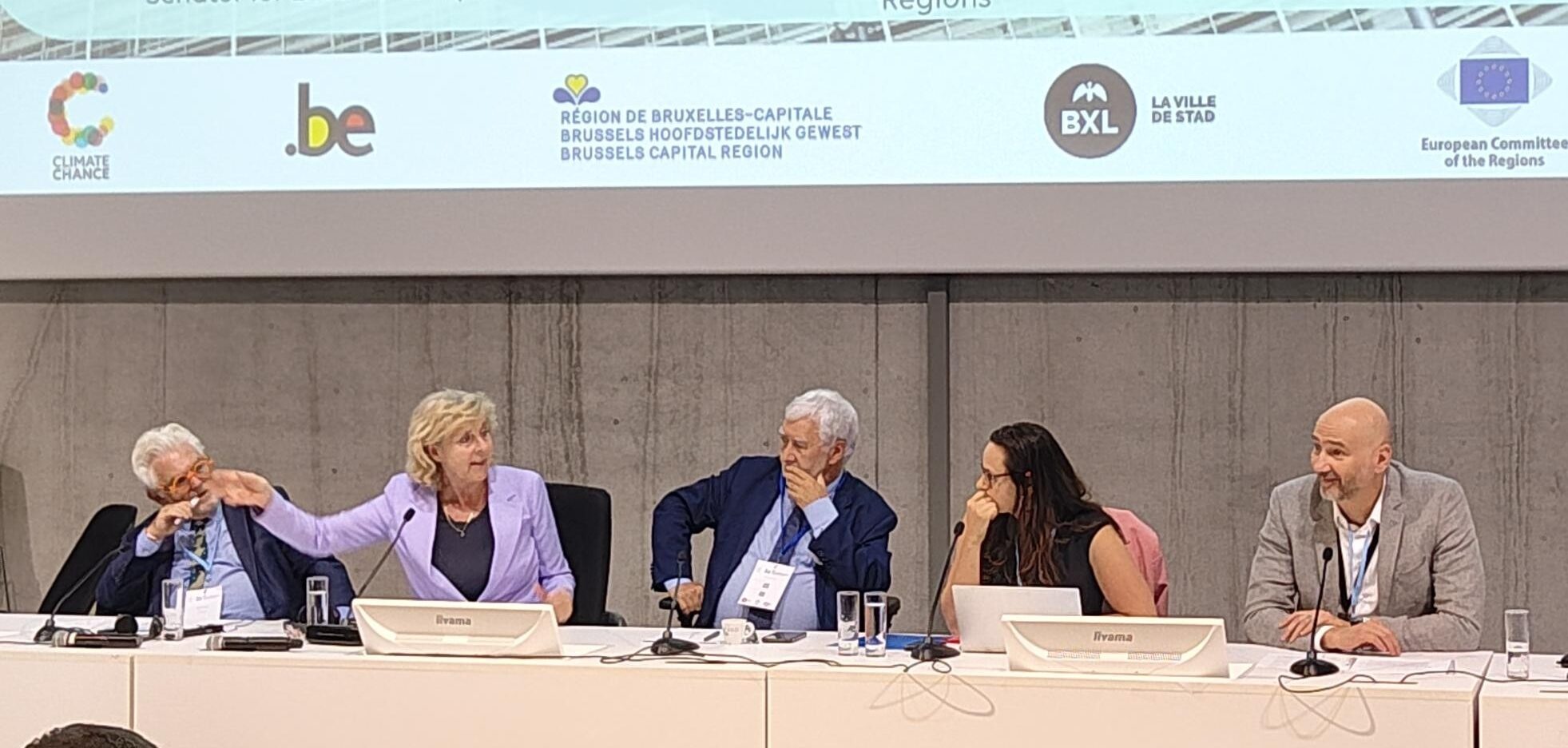
CEMR participated on 3 and 4 of June in the Climate Chance Europe Summit 2026 organised in Brussels by The Climate Chance association. The two-day event brought together local and regional leaders, European institutions, businesses, NGOs and civil society networks around a shared theme: climate adaptation as a lever for resilience and prosperity in Europe.
The message shared by the Council of European Municipalities and Regions (CEMR) was that towns, cities and regions must be recognised as strategic partners in designing Europe’s climate response, not merely as implementers on the ground.
The summit echoes the key messages of CEMR’s position paper “Adapting Together – A territorial approach to resilience and risk management”, published in February 2026. In this position paper, CEMR makes a case for a territorial approach to climate resilience, grounded in multi-level governance. A fundamental gap is highlighted: local and regional governments already implement most adaptation measures, yet their role remains insufficiently recognised and supported in EU and national frameworks.
To close this gap, CEMR continues to flag six priorities:
- Empowering local and regional governments with clear mandates and flexibility to act
- Strengthening local capacity through better access to data and peer learning
- Securing predictable and accessible funding for adaptation investments
- Improving preparedness and disaster risk management
- Restoring ecosystems and scaling nature-based solutions
- Ensuring water resilience through integrated, locally driven water management
The summit organised by Climate Chance came at a critical political moment. The European Commission is currently developing a new integrated framework for European Climate Resilience and Risk Management, expected to be adopted in the second half of 2026.
Ronan Dantec, CEMR Spokesperson for Climate: “Climate adaptation will only succeed if local and regional governments are recognised as full partners in the future resilience framework. Territories need a common trajectory, the tools to understand their vulnerabilities and the long-term funding to turn resilience into reality.”
Discussions at the summit on multi-level governance, funding adaptation and resilience at local level, technical support for LRG to prepare risk management strategies and investments, and solidarity mechanisms all reinforced what our position paper argues: coherent and effective climate action requires local and regional governments at the table from the very beginning — in the design, financing and monitoring of policy, not just its delivery.
The summit closed with the adoption of the Brussels Declaration of European Non-State Actors on Climate Change Adaptation, signed by a wide range of local government networks, economic actors networks, and NGOs, including: Eurocities, FEDARENE and Association internationale des maires francophones (AIMF).
It commits all signatories to playing an active role in shaping Europe’s climate resilience policies and calls for adaptation to be built into every level of decision-making, from EU policy down to local plans.
CEMR will continue to push this message forward in the lead-up to the adoption of the EU framework by the end of the year. Europe’s resilience starts in its territories.
Connie Heedegard, Chair of the Climate Adaptation Mission and former Commissioner for Climate Action: “Adaptation is crucial for resilience, but it is also key for citizens safety. The EU Adaptation Mission has laid the foundations; now is the time to harvest the fruits and scale up implementation.”
Read our position paper Adapting Together – A territorial approach to resilience and risk management
For more information, contact:

Advisor – Environment and mobility