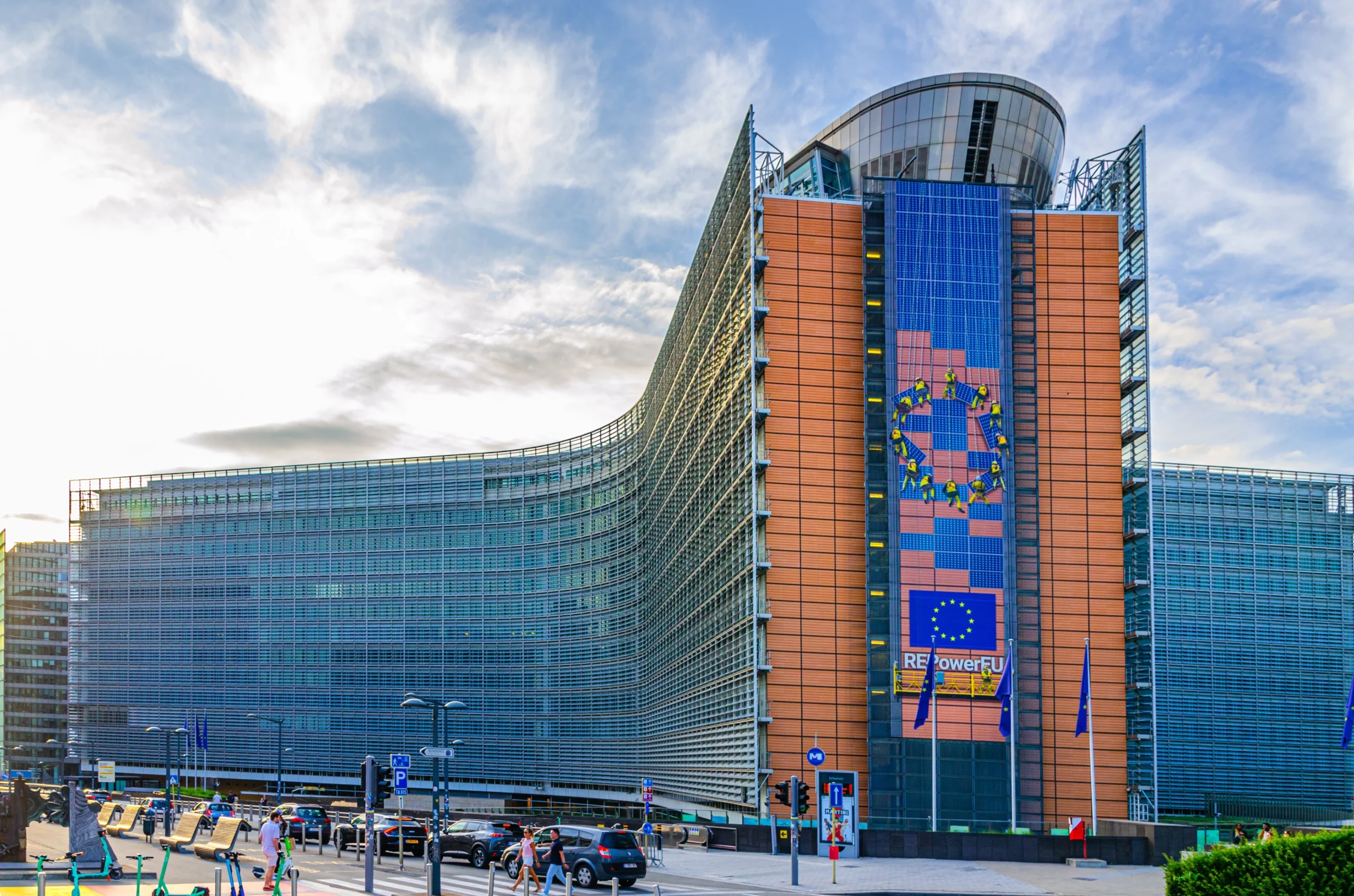
Local and regional leaders warn Von der Leyen against marginalising DG REGIO
The Council of European Municipalities and Regions (CEMR), representing 110,000 local and regional governments and 1,000,000 elected representatives across Europe, sends a letter to the Commission President amid continuous reports of a possible weakening of Directorate-General for Regional and Urban Policy (DG REGIO)
Brussels, 13 July 2026 – The Council of European Municipalities and Regions (CEMR), Europe’s largest association of local and regional governments, has sent a letter to European Commission President Ursula von der Leyen warning of the serious consequences that could result from any move to weaken or eliminate the Directorate-General for Regional and Urban Policy (DG REGIO), following persistent reports about a possible internal restructuring.
In a letter sent on behalf of 110,000 local and regional governments and 1,000,000 elected representatives across Europe, CEMR stresses that such a move would not be a simple administrative change but would represent a major political shift in the relationship between the European Union and the cities, towns and regions responsible for delivering many of the EU policies on the ground.
“Should DG REGIO be substantially weakened or its role reduced, this would send a profoundly negative political message to Europe’s local and regional governments: that they no longer have a central place in the Union’s institutional architecture”, writes Christoph Schanudigel, CEMR President and President of the County of Karlsruhe (Germany).
CEMR warns that weakening DG REGIO would undermine the expertise, territorial knowledge and long-standing partnerships that have made cohesion policy one of the EU’s most effective instruments for promoting development, competitiveness and solidarity across Europe.
The organisation also cautions that a reduced role for DG REGIO could weaken the European Commission’s ability to maintain direct contact with the Managing Authorities responsible for implementing EU funds, many of which are regional and local governments.
Rather than reducing DG REGIO’s role, CEMR argues that current challenges require stronger territorial capacity within the European Commission. In its letter, the organisation stresses that DG REGIO’s role will become even more important as the Commission prepares its proposed National and Regional Partnership Plans (NRPPs) for the post-2027 EU budget. It also points to recent Commission initiatives on islands, coastal communities, outermost regions and eastern border regions as evidence of the growing importance of place-based policymaking.
For these ambitions to succeed, Europe needs a strong institutional anchor capable of maintaining dialogue with regional and local governments and ensuring that territorial realities are reflected in EU policymaking.
The letter also recalls that local and regional governments are responsible for implementing up to 70% of EU legislation and are indispensable to the Union’s effectiveness, democratic legitimacy and capacity to deliver results for citizens.
CEMR is calling on the European Commission to clarify its intentions regarding DG REGIO and has requested a meeting with President von der Leyen and relevant Commissioners to discuss the future of the EU’s territorial agenda.
The letter, which was also addressed to Raffaele Fitto, Executive Vice-President for Cohesion and Reforms; Piotr Serafin, Commissioner for Budget, Anti-Fraud and Public Administration; and Ilze Juhansone, Secretary-General of the European Commission, was sent at this stage as, according to Politico, Valère Moutarlier, deputy director-general at the Directorate-General for Internal Market, Industry, Entrepreneurship and SMEs, who is overseeing the review of the Commission’s restructuring process, is expected to weigh in later this month. The final restructuring proposals are expected to be presented by Budget Commissioner Piotr Serafin to von der Leyen and the College by the end of 2026.
For more information, contact:

Head of Communications