CEMR – Development Aid

Development Aid - News 2023

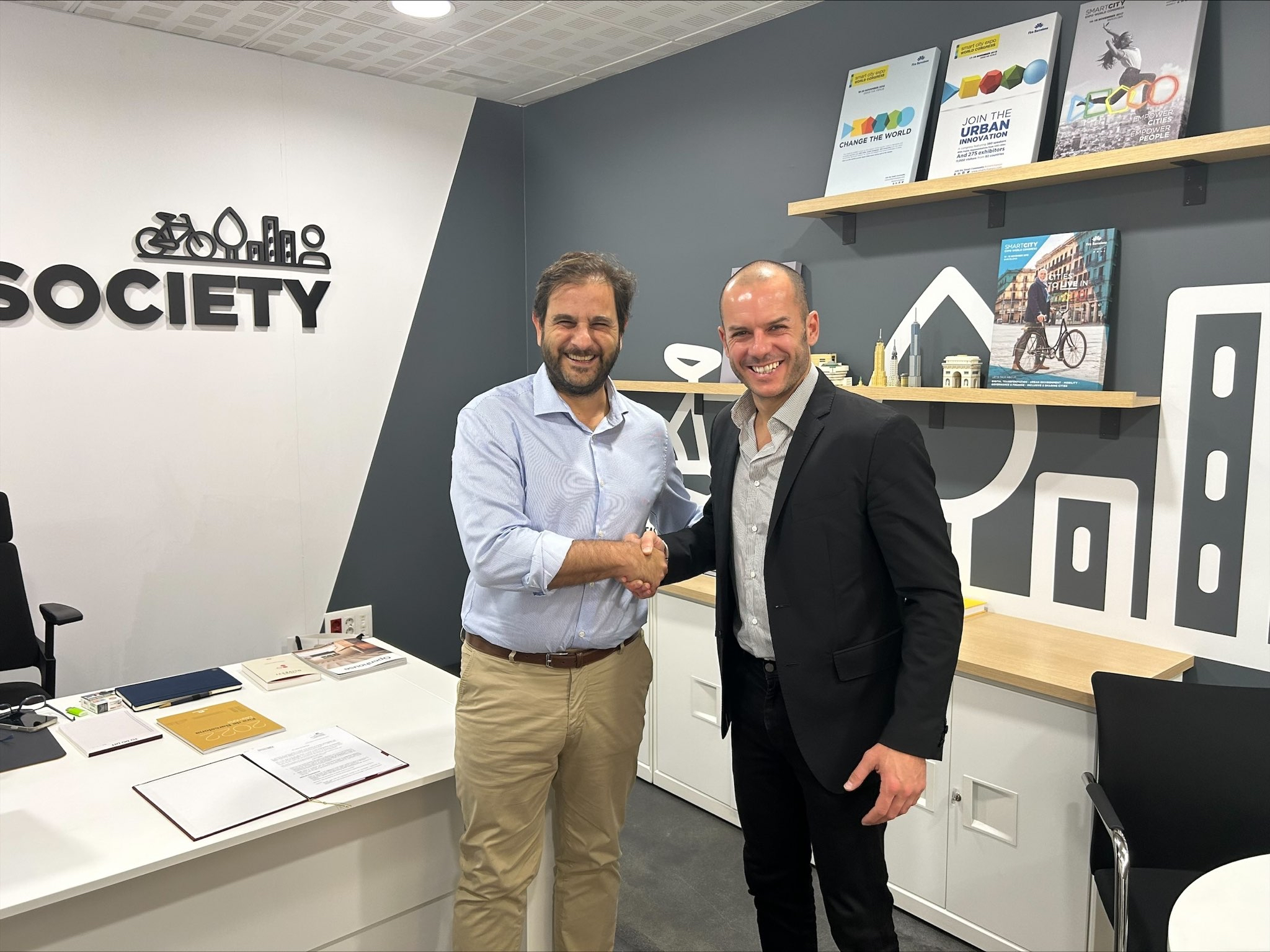
CEMR and DevelopmentAid partner for a more sustainable and innovative local communities


The Council of European Municipalities and Regions (CEMR) has signed a partnership agreement with DevelopmentAid, at a time when CEMR is working to make sustainable innovation accessible to local and regional governments.
 
DevelopmentAid is an innovative membership organisation founded in 2007. It provides essential information to donors, agencies, consultancies, non-governmental organisations, and individuals working in the international development sector. With a network of 500,000 aid stakeholders, the organisation aims to bring together the international development community.
 
Under the terms of the agreement, CEMR members will benefit from a number of services, including free access to the Calls4Partners Service and the DevelopmentAid Job Board.
 
CEMR will soon provide its members with information on how to access the DevelopmentAid platform and take advantage of the partnership benefits.

Safeguarding local investments 

Investing in Europe - News

Why EU economic governance reform must protect municipalities’ ability to invest 


The Council of European Municipalities and Regions (CEMR) has warned that the upcoming reform of the EU’s economic governance framework, including the Stability and Growth Pact (SGP), could risk undermining the investment capacity of municipalities and regions across Europe. 

Local and regional governments are responsible for almost half of all public investments in the EU. These investments are essential to deliver on European priorities such as the green transition, digitalisation, and resilient infrastructure. However, the proposed introduction of net expenditure ceilings risks unintentionally penalising local governments, who generally borrow only for long-term investments in capital assets. 

Reform and its implications 

The European Commission has announced plans to simplify the SGP by replacing certain rules, including the medium-term objective (MTO), with a new system of net expenditure ceilings. While CEMR welcomes the move away from the MTO, which had previously constrained local investment through deficit limits and reduced transfers from central governments, it raises serious concerns about the impact of the new ceilings. 

Applying net expenditure limits to municipalities would create three major risks

  • Higher administrative burdens arise because local governments do not use the net expenditure concept in their accounting. 
  • Political mismatches, since local electoral cycles rarely align with national fiscal programming. 
  • Cuts in public investment, as postponing infrastructure projects, are often the only quick adjustment available under tight expenditure ceilings. 

This is even though local government debt levels are prudent in every EU Member State, and are already strictly monitored under national rules. 

The solution: exclude local expenditure 

CEMR is therefore calling for the exclusion of local government expenditure from the definition of net expenditure ceilings in the reformed SGP. Much like cyclical unemployment spending is excluded, removing local investment from these calculations would ensure municipalities can continue to provide essential services, maintain infrastructure, and invest in the future without being penalised by centralised fiscal targets. 

At a time when Europe urgently needs stronger local action to address climate, digital, and social challenges, weakening municipalities’ ability to invest would be counterproductive. Protecting local public investment within the EU’s economic governance reform is not just about budgets, it is about safeguarding Europe’s capacity to deliver on its ambitions. 

Read the position paper here 

For more information, contact: 

Bringing Europe closer to its citizens 

EU Cohesion Policy - News

How ITI and CLLD strengthen local democracy, multi-level governance, and place-based development in EU cohesion policy 


The European Union’s Cohesion Policy is one of its most important instruments for promoting economic, social, and territorial cohesion across its member states. With nearly €392 billion allocated for 2021–2027, it tackles inequalities between regions while supporting a greener, more competitive, and more inclusive Europe. Central to this effort are Integrated Territorial Investments (ITI) and Community-Led Local Development (CLLD), two tools designed to put territorial needs and local actors at the heart of EU funding. 

Why integrated tools matter 

The foundations for a place-based approach were laid in the 2009 Barca Report, which argued that EU policy should focus on unlocking the potential of specific territories while addressing persistent exclusion. ITI and CLLD, introduced in 2014, operationalise this vision by giving local and regional governments a stronger role in programming, governance, and project implementation. 

These tools provide flexibility, enable cooperation across levels of government, and ensure that EU funds target the real needs of communities. For municipalities, regions, and their associations, they are among the most valued features of cohesion policy. 

ITI: Integrating strategies across territories 

ITI allows funding from several EU programmes to be combined in support of integrated strategies. It has been especially used for urban development, where at least 8% of ERDF funding is earmarked for sustainable urban projects. While designed to cover any functional area, urban, rural, or mixed, ITI is most common in metropolitan settings, where challenges like mobility, housing, and regeneration demand integrated solutions. 

CLLD: Communities leading the way 

CLLD builds on the LEADER approach to rural development, empowering local action groups of citizens, NGOs, and businesses to design and implement strategies. While most common in rural areas, it has the potential to strengthen participation and ownership in cities, too. CLLD fosters trust, encourages bottom-up innovation, and helps address the needs of vulnerable groups such as youth, migrants, or elderly people. 

What worked well 

CEMR’s analysis highlights several clear benefits: 

  • Flexibility and relevance – ITI and CLLD adapt EU funding to local needs. 
  • Capacity-building – local authorities gain expertise in managing EU programmes. 
  • Stronger governance – fostering trust and cooperation between local, regional, and national levels. 
  • Visibility of EU action – projects close to citizens showcase the value of EU funds. 
  • Community cohesion – encouraging cooperation among local actors and building metropolitan or regional identity. 

Persistent challenges 

Despite their value, integrated tools face obstacles: 

  • Administrative burden remains high, with complex procedures and slow fund absorption. 
  • Limited flexibility – strategies must still align with national operational programmes, sometimes restricting genuine local priorities. 
  • Time pressures – integrated projects require trust and participation, often at odds with the EU’s strict N+3 spending rule. 
  • Uneven use of PO5 (“Europe closer to citizens”) – some member states underfund this priority despite its direct link to ITI and CLLD. 
  • Urban uptake of CLLD – adapting the rural-focused model to cities remains difficult. 

CEMR recommendations 

Looking ahead, municipalities and regions urge the EU to: 

  • Maintain and strengthen integrated tools in cohesion policy. 
  • Simplify procedures at both EU and national levels, avoiding “gold-plating.” 
  • Clarify guidance on multi-funding, project selection, and the use of PO5. 
  • Exempt ITI/CLLD projects from the N+3 rule to allow more time for participatory approaches. 
  • Reintegrate the EAFRD into the Common Provision Regulation to ease multi-fund projects. 
  • Ensure meaningful local involvement in programming, implementation, and evaluation. 

Conclusion 

ITI and CLLD have proven their worth as vehicles for place-based development, democratic participation, and closer cooperation between Europe and its citizens. While challenges remain, strengthening these tools is essential for making the EU’s cohesion policy more visible, more inclusive, and more responsive to local realities. 

Read the study here 

For more information, contact: 

Urban renewal

Urban renewal - News 2022

Cadde54 Bazaar: Relaunching urban life after the pandemic


Revitalising urban life has become particularly important in the wake of the coronavirus pandemic. Shopping centres create jobs and businesses by providing useful goods and services, but they can also energize a neighbourhood and give it a unique identity.

That was the ambition of the “Cadde54 Bazaar Project” in Serdivan, a city of 160,000 people in northwest Turkey. Cadde54 combines the logic of a Turkish bazaar with cultural and social functions. Visitors can walk around several open-air plazas or spend time in cafes where they can taste local and international cuisine.

It is noteworthy that Cadde54 Bazaar’s launch coincided with the post-pandemic period. Lockdowns and the closing of public buildings left people longing to spend time in open spaces. Unlike indoor shopping centres, at Cadde54 visitors can walk in the open air in pleasant and healthy conditions.

The project has led to the creation of new office spaces, businesses and jobs. The centre brings together, for the first time in Sakarya Province, local tradesmen and world-class companies under the same roof.

Cadde54 Bazaar also contributes to a healthy and sustainable lifestyle. The centre features a vegetation-rich green roof and greywater recycling to limit environmental impact. The area is pedestrianised and features a sports centre. The project has also included the creation of new accommodation in the area.

​The project, completed in April 2022, received 1.5 billion Turkish lira (82 million euros) in investments from the municipality.

Muni World 2022

Muni World - News 2021

Save the date: Muni World 2022, an event focusing on smart cities


The Federation of Local Authorities in Israel, Masham, is organising its annual event MUNIWORLD 2022, in partnership with the municipality of Jerusalem. It is taking place from 6 to 8 December, in Tel-Aviv and Jerusalem.

Unique stages for global brainstorming on urban challenges and city innovation, the MUNIEXPO 2022 Exhibition, and the 6th international MUNIWORLD Conference being held as an integral part of it will host exhibitors, decision-makers from Israel and abroad, and thousands of visitors.

Discover last year’s MuniWorld with a short video.

For more information: click here!

Utility Park

Bucharest - News

How a utility park in Bucharest is fostering sustainability and inclusion


Green spaces can be a great way to foster community feeling and biodiversity in our cities. That’s why Bucharest’s Sector 2 decided to create a utility park in the Ion Creanga neighbourhood, an area suffering from social deprivation and a lack of recreational facilities.

The utility park was designed to tackle both social and environmental challenges, in accordance with the UN Sustainable Development Goals (SDGs), and finances by the European Regional Development Fund (ERDF).

The local authorities worked in close collaboration with local communities and empowered them to have a say in their future. As such, the city hall organised a series of debates and public consultations, communicated about the project online and actively integrated local demands into the project.

The park’s creation made a huge difference in the lives of residents:

  • The neighbourhood became more liveable because low-income families and at-risk youth benefited from recreational opportunities.
  • Residents’ sense of community increased as the park allowed people from diverse backgrounds and cultures to connect, facilitated the organisation of neighbourhood activities and exposed young people to nature.
  • The quality of the environment improved with sustainable and rational management of waste, enhanced energy efficiency and decreased of air pollution.
  • The park attracted homebuyers and the value of residential property rose by 15%.

To learn more about this and other local best practices, check out the website of URBACT, the European territorial cooperation programme which aims to promote sustainable integrated urban development in cities all over Europe.

Since 2021, the RFSC tool has been used by cities and partners of the “Global Goals for Cities” URBACT network, supporting the localisation of the SDGs across 19 European cities.

Boosting public investment for recovery

Cohesion Policy Alliance - News 2021

CEMR calls for investment-friendly EU economic governance reform


The COVID-19 crisis exposed vulnerabilities in Europe’s economic governance and the need to rethink how EU rules support long-term, sustainable investment at all levels of government. In its 2022 position, the Council of European Municipalities and Regions (CEMR) argues that the reform of the EU’s economic governance framework is a vital opportunity to unlock local and regional investment capacity.

Local and regional governments, which account for 45% of public investment in the EU, were heavily impacted by the crisis. While they expanded essential services and supported communities, they also faced falling revenues and limited fiscal space. CEMR warns that without urgent reform, municipalities risk being held back from investing in vital green, digital, and social transitions.

CEMR proposes several key changes:

  • Strengthen multi-level governance: Local and regional voices must be involved in economic coordination, including through a reformed European Semester with mandatory application of the partnership principle.
  • Recognise investment as a priority: The new framework must distinguish between current spending and long-term, sustainable investment to avoid penalising municipalities for future-oriented projects.
  • Grant borrowing flexibility: Local and regional borrowing for structural investments should not be constrained by national debt calculations under the Stability and Growth Pact.
  • Establish a European municipal and regional bank: This new facility within the EIB would support local investment, particularly through pooled resources and tailored green or social bonds.
  • Support local capacity building: Municipalities need the tools and skills to plan and deliver strategic investments, especially in health, care, and infrastructure.

CEMR also highlights the importance of maintaining local leadership in the implementation of National Recovery and Resilience Plans. Without adequate autonomy, funding, and engagement, the EU’s sustainable recovery goals, particularly those of the Green Deal, risk being delayed or derailed.

Ultimately, CEMR calls for a governance framework that enables, not restricts, local ambition, empowering municipalities and regions to invest in the future of Europe’s communities.

Read the position paper here

For more information, contact:

Rural development

Rural Development - News

Exclusive interview: Commissioner Dubravka Suica on the future of rural areas


On 30 June, the European Commission released the Communication “A long-term vision for the EU’s Rural Areas – Towards stronger, connected, resilient and prosperous rural areas by 2040”. The content of the communication is very comprehensive, ranging from the provision of public services in rural areas to digital solutions and the diversification of the economy. We spoke with the Vice-President of the European Commission and Commissioner for Democracy and Demography, Dubravka Šuica, about the challenges, objectives and next steps of this initiative.

What was the driver for the Commission in deciding to release this communication now and what will be its objectives? 

The demographic transition being experienced in the EU is felt in different ways in different regions, but there is no doubt that it has had a particular impact on our rural areas. The more remote rural areas in particular have experienced loss of population, ageing and challenges in provision of services and infrastructure. The COVID-19 pandemic only increased some of these gaps within the EU.

With this Vision we wanted to reach more than 137 million people living in around 80% of our territory and ensure that they can thrive in the areas they call home. 

This vision presents very concrete actions, which will immediately start contributing to creating jobs, upgrading infrastructure and mobility, attracting and retaining young talent.

Being a former mayor yourself, what do you think that are the most relevant aspects that will help local politicians address pressing challenges, such as demographic and economic decline in their rural territories and municipalities? 

The vision is very broad and implementation of the actions proposed in it requires involvement of all levels of governance: European, national, regional and local. We also need to engage the local civil society actors, associations and the business community. This is why the vision proposes the EU Rural Pact. 

As a former mayor, I know how important it is to build coalitions beyond the local community and this is why the overall objective of the vision is to create effective ways for engagement with multiple stakeholders. The EU Rural Pact will be a great opportunity for the mayors to exchange ideas and plan targetted projects with stakeholders who might otherwise be more difficult to reach.

The communication on long term vision for EU’s rural areas is just a first step: looking ahead to 2024, what are the next steps envisaged, both for the Commission and stakeholders?

By the end of this year the EU Rural Pact will be launched together with the Committee of the Regions. We will also start implementing the rural action plan that contains tangible and operative flagship projects to sustain rural areas. Altogether, we have nine flagships and 15 accompanying actions.

As an example, the first flagship project is the “rural revitalisation platform” that will predominantly support rural areas affected by population loss, ageing and a lack of economic opportunities while the flagship ‘rural digital futures’ proposes an integrated set of actions to boost the sustainable digital transformation of rural areas.

According to a recent Eurobarometer, 79% of EU citizens support the EU giving consideration to rural areas in public spending decisions and 65% of EU citizens think that the local area or province should be able to decide how the EU investment in rural is spent. To what extent will the new communication aim to influence how EU funds will be allocated in rural areas, in the upcoming years?

The Vision highlights the importance of achieving the full potential of rural areas. This can only be done with appropriate encouragement and support. The vision gives a clear message to all stakeholders, including national governments, on the importance of providing funding and a framework for support to the rural areas . Already last year I sent a letter to the Member States together with Commissioners Ferreira and Wojciechowski asking them to draw attention to rural areas in the preparation of the common agricultural policy strategic plans and the cohesion policy operational programmes. 

In addition, the Vision proposes a toolkit on access to, and optimal combination of, EU funding opportunities for rural areas. The toolkit will improve synergies and complementarities between funds and allow local residents to benefit from multiple funds.

How can the Next Generation Europe also contribute to the goal of revitalising rural and remote areas?  

Recovery and resilience facility, InvestEU, the European Investment Bank and other EU programmes can be used to promote activities in rural areas and we have invited the Member States to use these funds having the specific needs of rural areas in mind. 

In addition as proposed in the Long Term Vision for Rural Areas all of the future EU policies will be screened for effects on the rural areas through the process of rural proofing proposed in the Vision.  Beyond financial support, the Vision creates a momentum motivating action for the benefit of the rural areas from a range of stakeholders. 

There is a growing perception that rural areas are low down the EU’s priority list. According to the Commission’s public consultation, 56% of inhabitants of rural areas felt left behind. How can the Conference on the future of Europe contribute to cope with this feeling? How can we ensure the relevance of the debate on the future of Europe for citizens, especially those in rural territories? 

In launching the Long Term Vision for Rural areas, the European Commission has made a clear commitment to prioritise the well-being and prosperity of rural areas, looking at them in a way that goes beyond the traditional view of agriculture. The multiple actions proposed in it will touch the lives of many in our rural areas to help address this sense of being left behind. 

The Conference on the Future of Europe is designed to engage and include all of our citizens, also those who are sceptical towards EU and who feel left behind. It is an opportunity for the rural actors to express their views and have their voices heard primarily by taking the initiative to organise their own events and to feed them into the multilingual digital platform or through the conference panels and plenary,. 

How do you envisage local elected representatives – other than those representing the Committee of the Regions – , being able to exploit this opportunity to be present in the Plenary of the Conference on the future of Europe? How can their inputs effectively contribute to the debate at the level of EU institutions? 

The Committee of the Regions is co-ordinating to ensure a balanced participation of these elected representatives, who are not sitting members of the Committee of Regions. The members of the will debate recommendations from European and national Citizens’ Panels and input from the multilingual digital platform with citizens, national and European Members of Parliament and representatives of civil society organisations, social partners and other stakeholders. All of these inputs can be shaped by the local representatives’ points of view and the local representatives should engage with all of these levels to ensure their contributions are heard.

Rural development

Rural Development - Press

EU develops its vision for rural areas alongside local governments


Good news! The long-awaited EU’s long-term vision for rural areas towards 2040 was finally presented this week by the EU Commission’s Vice President, Dubravka Suica, and Commissioners for Cohesion, Elisa Ferreira, and for Agriculture, Janusz Wojciechowski.

Today, rural areas are home to almost 30% of Europe’s population (137 million people in total) which covers 80% of the EU’s territory. However, their situation is a cause for concern: depopulation and the decline of public services are driving alienation and political discontent across our continent.

With this new vision, the EU executive aims to ensure stronger and connected rural areas through mobility and digital solutions, areas more resilient to climate change and economic crisis and prosperous rural areas through diversified economy.

With no doubt, the EU is part of the answer, but it has to involve towns and regions as drivers for long-term territorial development. Here in short is what is planned: 

What place for local and regional governments?

The Commission aims to mobilise public authorities at all levels and rural stakeholders, with the launch of a Rural Pact by the end of 2021. It invites the different levels of government to design a strategy and an action plan addressing the challenges faced by rural areas.  

We need to ensure that Europe’s towns and regions will be at the centre of this strategy. In this regard, the creation of a “Rural revitalisation platform” represents a great step forward as the one-stop shop for rural communities, project holders and local governments offering guidance on funding opportunities and visibility for successful projects. 

According to the communication, a special focus will be put on the collection of best practices specifically for rural municipalities and regions, around sustainable multimodal mobility, energy transition and climate adaptation. 

At CEMR we have advocated a change in narrative towards more positive messages that promote assets of the countryside, from a cultural and tourism viewpoint, but also through economic diversification. It is a great step ahead that EU’s vision is clearly aligned with this recommendation and that it recognises the diversity of rural areas, calling for locally designed solutions. 

An EU Rural action plan to implement the vision 

The Commission also proposed a Rural action plan to implement its vision around some flagship initiatives. But in terms of funding, it doesn’t propose new financing sources beyond the European Agricultural Fund for Rural Development (EAFRD), the Cohesion Policy funds, the Recovery and Resilience Facility and InvestEU. Therefore, the Commission also intends to develop a toolkit on access to and optimal combination of EU funding opportunities in rural areas, accessible to local and other stakeholders. 

There is a need for more consistency between various EU policies and their impact at the local level. This is why we welcome the introduction of a “Rural proofing” mechanism to analyse any potential impact that EU policies may have on rural jobs, growth and sustainable development as part of the Better Regulation Agenda. 

As of now, all EU policies will be reviewed through a rural lens, the Commission is creating a rural observatory in 2022 to better understand and analyse economic, social and demographic trends in rural areas. 

Citizens support local decision making

A recently published Eurobarometer shed light on citizens’ concerns around the situation of rural areas. Some of the results resonate clearly with CEMR’s recommendations to revitalise the countryside: 

– 79% of EU citizens support the EU giving consideration to rural areas in public spending decisions

– 65% think that the local area or province should be able to decide how the EU investment in rural areas is spent

– 44% mentioned transport infrastructure and connections as a key need of rural areas

Nest steps

By mid-2023 the Commission will take stock of the achievements and highlight remaining gaps and funding needs. In 2024, it will come up with recommendations for the upcoming Commission’s budget (2028-2032).

For CEMR also our work will continue. Save the date for our session “Rural connections” on 14 October (11.30 – 13.00) during the European Week of Regions and Cities. We will discuss how to achieve the vision’s objective through mobility and digital innovation. 

Rural Areas and EU Funds

Rural Europe - News

How can local and regional governments in rural areas access EU funds, identify key challenges, and provide recommendations for improvement 


Rural areas are central to Europe’s territorial, social, and economic cohesion, but they often face persistent challenges, from ageing populations and digital divides to restricted access to services. Recognising this, the European Commission is developing a long-term vision for rural areas. In this context, the Council of European Municipalities and Regions (CEMR) has examined how local and regional governments (LRGs) in rural areas access and use EU funds, an essential tool for addressing local needs and unlocking development potential. 

In March 2021, CEMR conducted a targeted survey among nine national associations of municipalities across the EU to assess how effectively rural LRGs are utilising EU funds. The results point to a clear mismatch: while EU funding is recognised as highly relevant for rural areas, its actual use by LRGs remains limited in many cases. 

The European Agricultural Fund for Rural Development (EAFRD), European Regional Development Fund (ERDF) and European Social Fund (ESF) are considered the most relevant, and most used, by rural LRGs. However, other important programmes like LIFE, Erasmus+, and Connecting Europe Facility are seen as underused, despite their potential relevance. Several barriers contribute to this situation, including overly complex administrative requirements, lack of technical capacity in small municipalities, and limited awareness of support mechanisms. 

The analysis also reveals a concerning gap between the perceived importance of rural challenges and the effectiveness of EU funds in addressing them. While EU funding appears helpful in tackling issues like poverty, pollution, or lack of services, it is perceived as inadequate in dealing with demographic decline, public transport gaps, or the rise of populism, issues at the heart of rural fragility. 

CEMR’s study further shows that some Member States provide national or regional support to help rural LRGs access EU funds, but awareness and coordination are often lacking. There is also difficulty in combining different EU funding streams, such as CAP and cohesion funds, limiting the efficiency of investment. 

CEMR’s findings point to the need for a new narrative on rural areas, one that recognises them as drivers of opportunity, not merely recipients of aid. To make this vision a reality, EU funds must be more accessible, tailored, and coherent with rural priorities. This includes simplifying administrative processes, improving communication, and better aligning funding objectives with on-the-ground realities. 

As the EU shapes its long-term vision for rural areas, the voice of local and regional governments must be heard. They are not only implementers of EU policy, but they are also essential partners in building vibrant, resilient rural territories. A stronger focus on their role will be crucial to ensuring no place is left behind. 

Read the study here 

For more information, contact: