Fiscal tools must play a central role in tackling the housing crisis

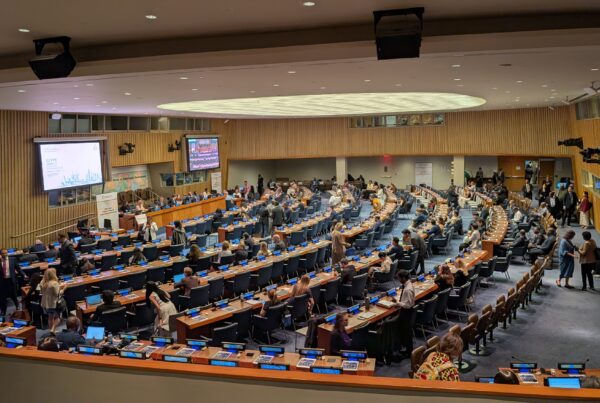
On 10 June 2026, CEMR held an online event that brought together policymakers, local leaders, researchers, EU institutions and financial experts to explore how local and regional public finance shapes housing affordability, availability and investments.
A key message emerged from the discussion: Europe’s housing crisis cannot be addressed through planning or construction policy alone. It also depends on whether local and regional governments have the fiscal room, investment tools and policy flexibility to act.
Opening the event, Ellen van Selm, Mayor of Purmerend (The Netherlands) and CEMR spokesperson on housing, underlined that housing must be approached as an integrated territorial challenge rather than a single policy field. “There are as many housing markets as there are local realities,” she said, warning against one-size-fits-all solutions. Her intervention set the tone for the discussion: local governments are on the frontline of housing pressures, yet they do not always have the resources, instruments or flexibility needed to respond effectively.
Why local solutions are a must in the housing crisis
Benedikt Herrmann from the European Commission’s Joint Research Centre invited participants to look more closely at the incentives created by local tax systems. His key point was that local finance does not simply support housing policy: it can also shape it in unexpected ways. Property taxation, often seen as a stable and appropriate local tax, may create unintended incentives when municipalities depend on rising property values for revenue. “Local taxes can play a fundamental role for mitigating local housing crisis. The property taxes on residential property can be a hidden catalyst of local housing crisis,” he noted.
Building on this framing, CEMR presented the first results of its survey on the links between local finance and housing. The preliminary findings point to a familiar but important contradiction: towns, cities and regions hold many of the practical responsibilities related to housing, but their room for manoeuvre often remains limited. In many countries, local governments rely heavily on property-related taxes, but within national limits that constrain their ability to use such tools strategically. At the same time, more targeted instruments, such as taxes on vacant dwellings or short-term rentals, remain fragmented, underdeveloped or unevenly available across Europe.
…And why so is multilevel governance
The panel discussion confirmed that housing is fundamentally a multilevel governance issue. Bringing the OECD perspective, Yugo Kimura from the Centre for Entrepreneurship, SMEs, Regions and Cities, highlighted both the scale of subnational involvement and the need for stronger coordination. Across OECD countries, local and regional governments account for a very large share of public expenditure linked to housing and community amenities. Yet many of them struggle to access funding, mobilise their own revenues, or navigate fragmented support structures. “Housing is not only cross-sectoral, it spans many policy sectors as well, but it’s also a multilevel governance issue,” he said.
This point resonated strongly with Michaela Haga, Councillor of the Region Stockholm and CEMR spokesperson on local finances, who brought the conversation back to the political reality faced by towns, cities and regions. In her intervention, she stressed that local and regional governments are expected to deliver housing solutions while also financing the wider ecosystem that makes housing liveable: transport, schools, care services, utilities and social infrastructure. “The real question is whether all places have the tools and resources they need to respond to their own realities,” she argued. Her final message was also one of the clearest takeaways of the day: match responsibilities with resources, make investment easier and more strategic, and trust local governments more and equip them better.
From EU frameworks to local realities
The event also offered a timely look at how housing is moving up the EU agenda. Edit Lakatos, from the European Commission’s Housing Task Force, explained the significance of the 2026 European Semester, which for the first time includes dedicated housing annexes in the country reports and a stronger housing dimension in the policy guidance to Member States. For local and regional governments, this matters because it opens a new channel to connect national reforms, investment priorities and local housing realities. She also pointed to the work under way on the Affordable Housing Act, which is expected to provide a framework for public authorities in areas under housing stress, including the possibility to address the impacts of short-term rentals.
This EU-level perspective found a strong echo in the contribution from Marlies Stubits, from the Austrian Association of Cities and Towns, who showed how Austrian cities combine fiscal instruments, regulation and investment strategies to respond to housing and tourism pressures. She pointed in particular to the Viennese model, where public land policy, limited-profit housing and long-term investment help the city to actively shape the market rather than merely react to it. At the same time, she highlighted the specific difficulties faced by smaller tourist municipalities in dealing with vacancy, holiday homes and short-term rentals. “The most effective Austrian approaches combine regulation, taxation and investment,” she said, insisting that taxation alone is not enough without a broader and more coherent housing strategy.
From the European Investment Bank, Grzegorz Gajda focused on the practical conditions needed to turn policy ambitions into housing delivery. Access to finance remains a major challenge, especially where local governments or housing providers struggle to build robust project pipelines or meet creditworthiness requirements. At the same time, he stressed that European-level decisions on state aid, procurement and debt treatment can make a decisive difference for what becomes possible locally. His message also added an important nuance to the debate: tools alone are not enough if decision-makers are not incentivised to use them. “We really need to work on both ends,” he said: both on the tools available, and on the motivations and incentives shaping local action.
The path forward
One conclusion stood out across all interventions: housing policy cannot be separated from local finance. Whether through land policy, taxation, transfers, investment rules, planning, or social infrastructure, the financial frameworks around housing shape what local and regional governments can actually do. If Europe wants more affordable, sustainable and inclusive housing, it must give local governments not just expectations, but also the means to act.
The discussion will now feed into CEMR’s ongoing analytical work on local finances and the housing crisis, with a publication expected in fall 2026. By connecting evidence, practice and policy, CEMR aims to continue strengthening the case for a housing agenda that fully recognises the role of cities, towns and regions in delivering solutions on the ground.
For more information, contact:

Advisor – Territorial Cohesion & Local Finances