EU Delegations engagement with local and regional governments: what will it take to make that cooperation more systematic?
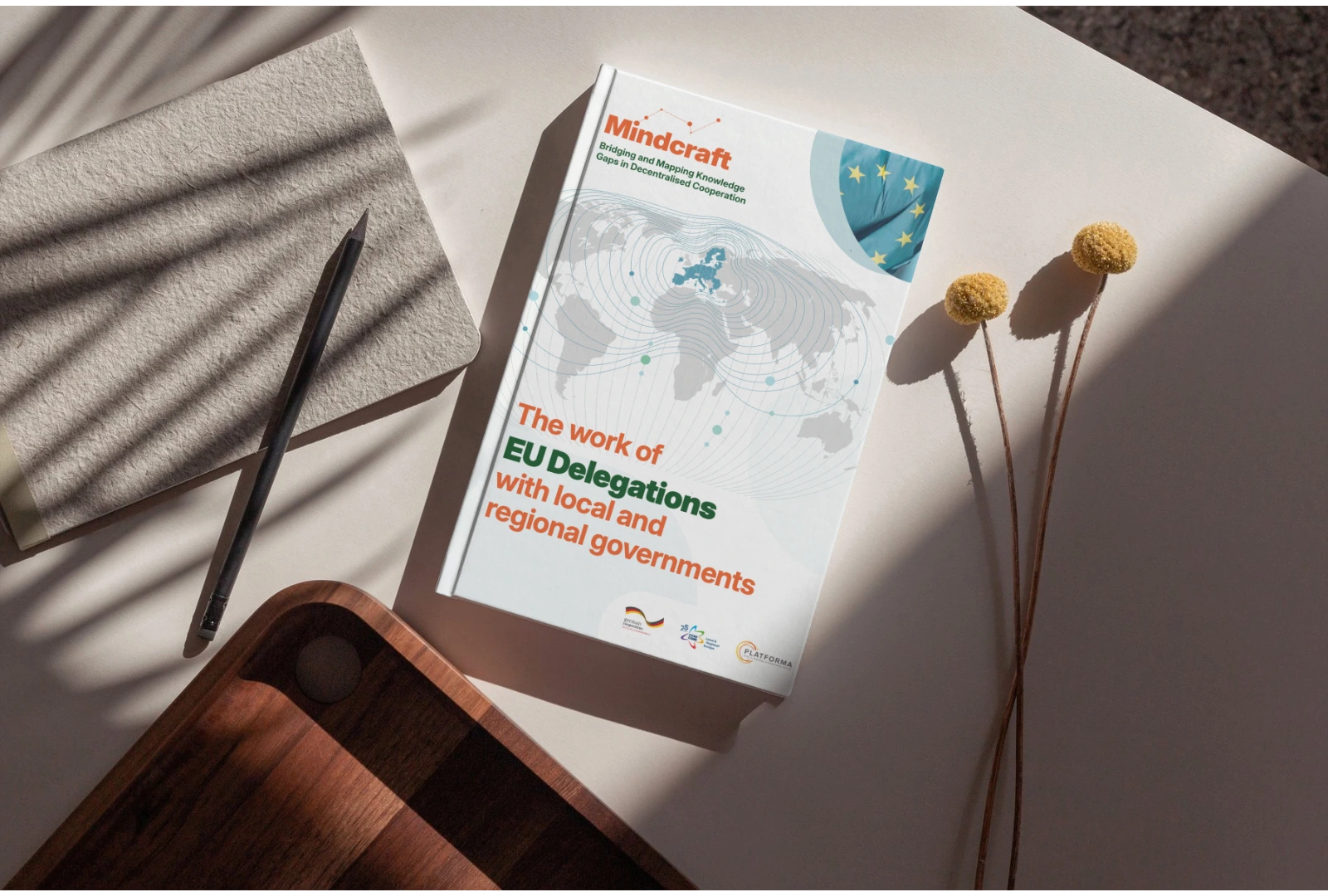
“The Work of EU Delegations with Local and Regional Governments” is a new Mindcraft publication, following on from the report published by PLATFORMA in 2021. Since 2021, the EU’s external action framework has undergone significant change. Under the Neighbourhood, Development and International Cooperation Instrument (NDICI) Global Europe and the Global Gateway strategy, EU international cooperation has moved towards a more geographic, investment-driven approach, with growing emphasis on the localisation of development cooperation.
This new study examines to what extent and how EU Delegations (EUDs) engage with Local and Regional Governments (LRGs) and their associations (LRGAs) in the partner countries. It is based on a 2025 survey of 40 EUDs worldwide and, interviews with five of them in Chad, Guatemala, Madagascar, Nepal and Zambia, as well as additional exchanges with EU Member States development cooperation agencies.
Key findings:
- Enabling environment is key for LRG engagement. 62.5% of surveyed EUDs assessed the decentralisation in the partner country as favourable, and 57.5% support decentralisation efforts. Examples across partner countries show that support to local governance and public finance management helps LRGs engage in territorial development and EU-funded initiatives, though access to finance and the preparation of bankable projects remain persistent challenges.
- LRG engagement in EU international cooperation remains uneven and rather limited. 57.5% of surveyed EUDs stated they engage with LRGs and LRGAs under the NDICI-Global Europe, while 20% stated they engage with them under the Global Gateway strategy. EUDs point to the lack of a right framework for structured cooperation as an obstacle. 69.2% consider that a specific budget line for LRGs would help.
- LRG engagement can be valuable in fragile contexts. Among EUDs working in fragile settings, 76.4% consider that engaging with LRG would facilitate their work.
- Decentralised cooperation remains generally underused. Illustrative examples of partnerships between European and partner-country LRGs, along with cooperation through LRGAs and their international cooperation structures, show real potential to strengthen local governance and support the localisation of EU initiatives but require greater visibility and emphasis.
- There is an ongoing need to strengthen EUDs capacities to work with LRGs. Only 30% of surveyed EUDs reported having received specialised training or support for engaging with LRGs, which were assessed useful for understanding territorial approaches to local development.
These findings come at a timely moment, as negotiations on the 2028–2034 Multiannual Financial Framework, including its proposed Global Europe Instrument, are underway. CEMR-PLATFORMA calls for a clear engagement framework, dedicated funding mechanisms for LRGs, and stronger support for decentralised cooperation as a route to shared development goals.
Read the full publication, available in:
For more information, contact:

Research Analyst – Decentralised Cooperation