A call to action: Europe can only succeed together with municipalities
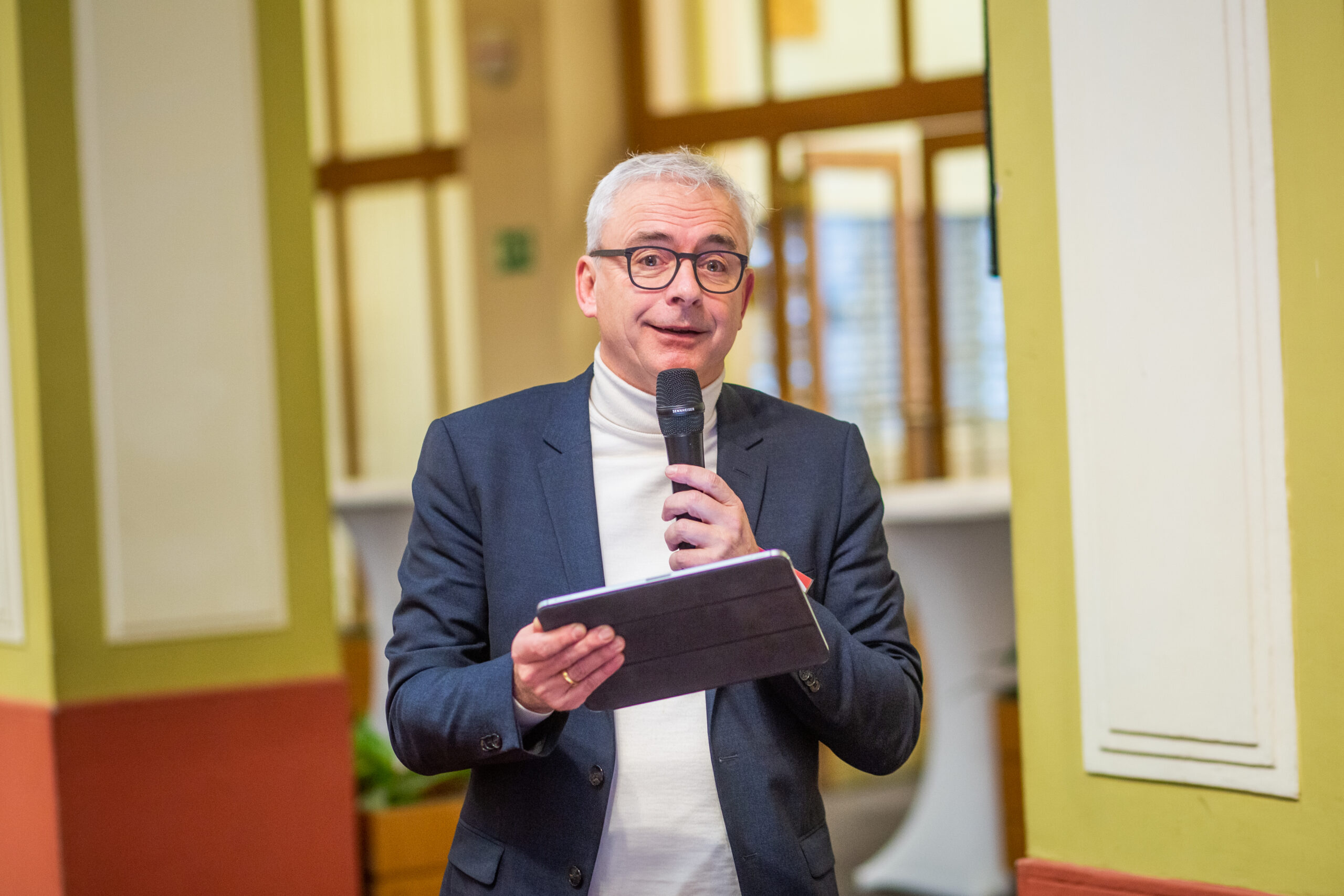
Christoph Schnaudigel, the Co-President of the German Association of Counties and CEMR (RGRE), Vice-President of the German Section of CEMR (RGRE), and President of the County of Karlsruhe, presents a compelling call to action for the upcoming tenth direct elections to the European Parliament scheduled for June 6 to 9, 2024. Highlighting the crucial role of Europe’s municipalities, Dr. Schnaudigel emphasises the need for collaboration between local authorities and European institutions to effectively address the complex challenges facing the European Union. Touching upon issues such as Russia’s aggression, energy and migration crises, and municipal finances, Dr. Schnaudigel l underscores the significance of local governments in implementing and influencing European policies. Dr. Schnaudigel also calls for a more streamlined and less burdensome regulatory environment, ensuring that European legislation aligns with the needs and capacities of local and regional authorities. Additionally, the editorial addresses the importance of a meaningful regional policy, highlighting the necessity for funds to be allocated based on local needs and emphasising the partnership principle.
A call to action: Europe only together with the municipalities
The tenth direct elections to the European Parliament, which will take place from June 6 to 9, 2024, will also be of great importance for Europe’s municipalities. The European Union (EU) and the world continue to face profound challenges to which national governments alone cannot respond adequately. The effects of Russia’s war of aggression against Ukraine, the energy and migration crises and the pressure on municipal finances are coming up against far-reaching economic and social transformations such as the Green Deal and digitalization.
In order to proactively address these challenges, the Council of European Municipalities and Regions (CEMR) adopted a “Call for Action” at its General Assembly in Prague in December 2023. This formulates demands for a successful municipal European policy, addressed to European institutions, candidates and new members of the European Parliament.
As the most comprehensive European association of local and regional authorities, CEMR has been bringing together one million democratically elected European politicians from 60 member associations in 40 countries since 1951. Its mission is to build a united, peaceful and democratic Europe, based on local self-government, the principle of subsidiarity and the appropriate participation of citizens.
More participation in European decision-making processes: Better regulation for and with local authorities
Local authorities are important public economic, societal and political actors, they are responsible for the development and maintenance of local infrastructure, healthcare, waste disposal and local public transport. In doing so, they directly apply the European regulations on public procurement and state aid law.
However, local authorities are not only responsible for providing important public services. They and their representative associations also build a bridge between Europe and its citizens. On the one hand, they help the inhabitants of counties, cities and municipalities to understand the importance of the EU for their daily lives, and on the other hand, they communicate and convey local interests and needs to the EU and other international decision-makers.
As a result of their responsibilities, local authorities are confronted with a large number of EU initiatives. This currently applies in particular to the European Green Deal. Climate, energy and the environment are areas in which the European legislator has been very active in recent years and still is. However, the successful implementation of a climate-neutral future depends to a large extent on the municipal level, which is closest to the citizens. Local authorities are already implementing around 70% of European legislation. Land use planning for renewable energy, the implementation of mandatory renovation rates for public buildings and the restoration of local ecosystems are just a few current examples of this.
For this reason alone, districts, cities and municipalities must be involved in the decision-making process at the European level in good time. Local know-how and experience are indispensable for the European legislative process. The model of governance in partnership in Europe, which has already found expression in cohesion policy, is an important instrument for achieving inclusive results that at least attempt to take local needs into account appropriately.
The next European Parliament and the Commission should therefore commit to a political agenda that fundamentally incorporates local conditions on the ground into their decisions. This includes, above all, strengthening the partnership principle in cohesion policy, as well as a strict review of the subsidiarity and proportionality of new directives and regulations concerning local and regional interests.
It must be taken into account that the local level is already confronted with an almost unmanageable level of overregulation and complexity of standards. This is further exacerbated by the existing shortage of staff and the poor financial resources of local authorities in many places. With a view to future new EU regulations, we must therefore refrain from greater regulation and an excessive density of rules. It will be essential to concentrate European legislation on major issues relevant to the internal market for which European regulations also offer genuine added value. In addition, existing European regulations must be simplified and streamlined and bureaucratic hurdles removed.
A European regional policy that generates real added value on the ground!
For a meaningful and generally recognised regional policy of the EU, it is also necessary that the funds are used according to need. This in turn presupposes that the municipalities, as the level closest to the citizens, are appropriately involved in the decisions on the funding objectives and measures following the so-called partnership principle. This principle already exists but is sometimes interpreted by the administrative authorities of the federal states in such a way that local authorities are only informed about decisions and are not involved in them. For this reason, the CEMR is committed to expanding and specifying the requirements of the principle.
The participation of local authorities of all types and sizes also brings benefits to the European level by making the diversity of the local level visible and highlighting existing strengths and needs. It enables the development of location-based strategies that are better suited to the concerns of the respective local authorities. Centralist approaches based on the motto “one size fits all” must be a thing of the past.
As CEMR, we therefore also demand that European decision-makers adhere to the principle of “do no harm to cohesion” when drafting new and existing legislation. This principle essentially states that European regulations must not adversely affect socio-economic development in areas, as otherwise the effect of the funding will be lost. For example, local authorities should not be obliged to carry out extensive renovations to existing buildings without being provided with the necessary funds.
Furthermore, we encourage the next European Commission to appoint a dedicated Commissioner for Territorial Development with a clear mandate to drive forward the EU’s strategic and long-term cohesion policy. Such a bundling of competencies could, in particular, help to create guidelines that can be implemented in both large cities and rural areas. The sometimes-incoherent support for urban and rural areas must be better coordinated with each other and with the local challenges. We call on the new MEPs to set up an intergroup on public services of general interest that focuses its work on improving local and regional public services.
Systemic approaches and innovative tools for better local cooperation
However, our vision goes beyond the current political debate; it also includes systemic approaches and innovative tools to promote fair, inclusive and sustainable local societies. The European Parliament must support the promotion of digital skills in local administrations. The EU framework must be developed in line with user-centred public services to improve their quality and accessibility for our citizens.
In an increasingly interconnected world, an open and responsible model of international cooperation is indispensable. More than ever, international developments have a concrete impact on the way we live together at the local level. European decision-makers must continue to support decentralized cooperation as a proven tool to promote inclusive international cooperation and democracy.
Municipal partnerships and twinning agreements also play an important role in this context. They promote shared values and contribute to openness and a better understanding between the citizens of Europe. Financing instruments for partnership work should continue to be made available to municipalities on a decentralized basis.
In summary, the 2024 European elections provide an important opportunity for the German Association of Counties and CEMR to advocate for a Europe that listens to its local voices. The implementation of our “Call to Action” can empower the European Parliament and the next European Commission to create a basis for a responsive and citizen-centred European Union that serves all citizens. With our common messages and recommendations, we want to shape Europe together.
Senior Adviser, Governance, Gender Equality, Local Democracy