Bridges of Trust Platform

Bridges of Trust Matchmaking - News 2024

Bridges of Trust: CEMR launched a Matchmaking Platform at the Ukrainian Recovery Conference in Berlin


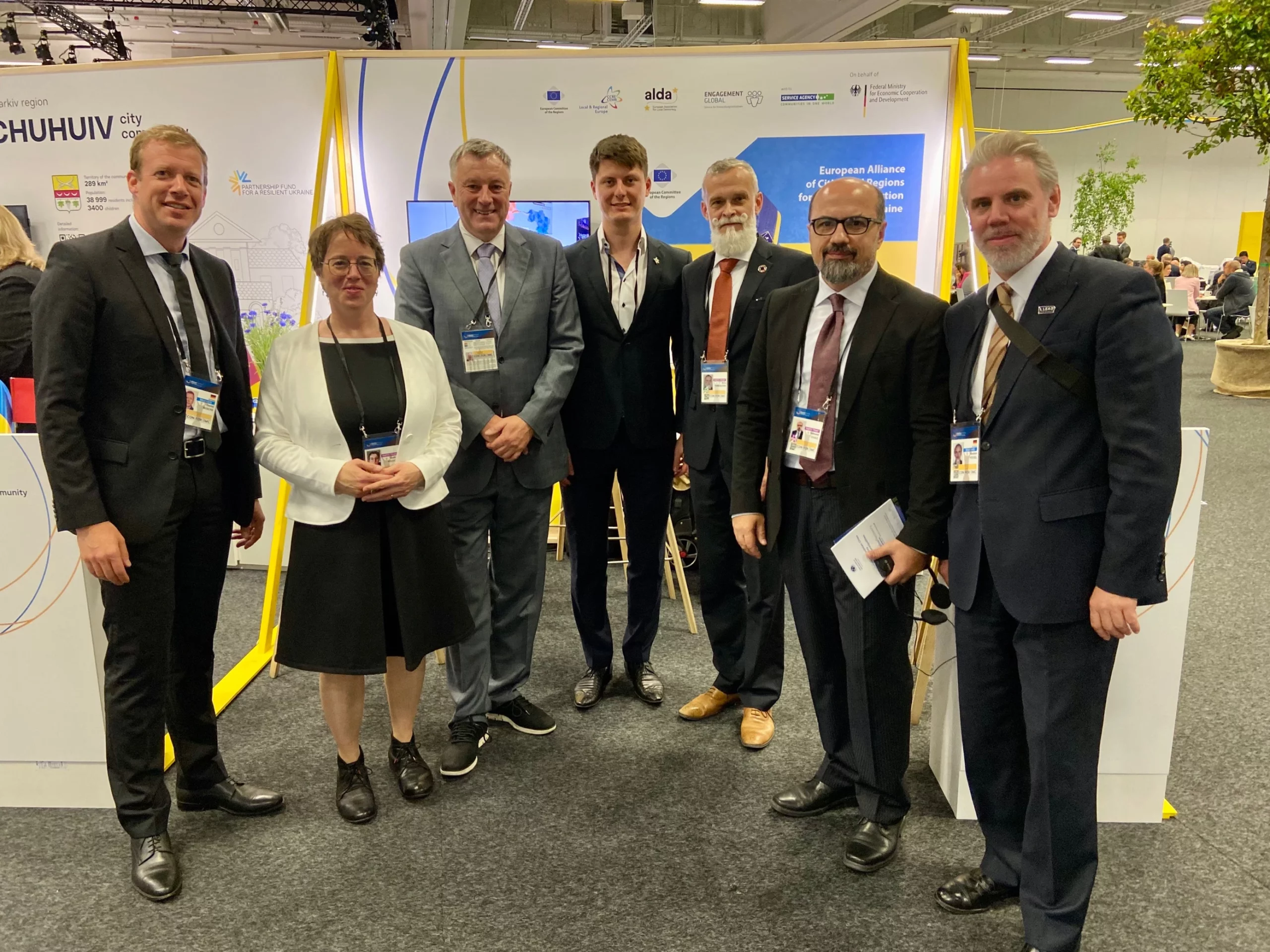
On June 11 and 12, CEMR and PLATFORMA participated in the Ukrainian Recovery Conference (URC) in Berlin. The two-day event, featuring the participation of the European Commission President Ursula von der Leyen, German Chancellor Olaf Scholz, and Ukrainian President Volodymyr Zelenskyy, brought together representatives from local authorities, associations, and mayors from Ukraine, Europe, and beyond. It provided a unique platform for knowledge sharing and dialogue among EU Institutions, civil society and local leaders cooperating for Ukraine’s recovery.

CEMR presented its contributions to the URC recommendations. Since 2021, CEMR and PLATFORMA have leveraged their network and expertise to support Ukraine by creating partnerships with EU member states municipalities through the Bridges of Trust initiative. In 2022, CEMR has become a core member of the European Alliance of Cities and Regions for the Reconstruction of Ukraine and, most recently, an implementing partner of the SUN4Ukraine project. Just before the event, CEMR and PLATFORMA were received by the German Federal Ministry for Economic Cooperation and Development to present how decentralised cooperation and multi-level dialogue are supporting European development policy in Ukraine. CEMR presented its contributions to the URC recommendations.

The highlight of CEMR’s participation in the 2024 URC has been the presentation of our latest project in partnership with BMW and GIZ, which aims to be a game changer for partnership building with Ukraine. The announcement came from CEMR’s Secretary General, Fabrizio Rossi, who unveiled the launch of the Platform “This is not merely a technological innovation but a political instrument that enables European municipalities to forge alliances with their Ukrainian counterparts, thereby expanding the scope of diplomatic engagement and strengthening bonds of friendship across borders,” stated Fabrizio Rossi. 

The platform is a digital matchmaking tool for Local and Regional Governments that want to be involved in decentralised international cooperation.  Featuring a partnership swipe feature, it allows local and regional governments to match with peers to create collaborative projects and build capacity for a stronger democratic future.

The project will officially be launched in the coming months, but it is already open for registration.

Register here to stay informed about the next steps of the initiatives

Climate Neutrality at Stake

Climate neutrality - News 2024

Climate Neutrality at Stake: Why Local Governments Must Lead in Decarbonising Heating and Cooling


Decarbonising cooling and heating is a climate imperative. Heating represents 80% of European households’ final energy use, with more than half of heat generation still relying on fossil fuels. This significant dependency on non-renewable energy sources poses a substantial challenge in achieving climate neutrality.

As buildings account for around 40% of the EU’s energy use, there is a vast potential for enhancing energy efficiency and integrating renewables in the energy mix through local solutions. The recent European Sustainable Energy Week (EUSEW) organised by the Covenant of Mayors, the European Energy Award, and the Smart Cities Marketplace, explored the role of Local and Regional Governments (LRGs) can play in this sector by promoting decentralised cooperation and efficient heating and cooling plans.

Local and Regional Governments leading Europe’s heating transition
Subnational governments are responsible for two-thirds of climate and energy policies, accounting for 58% of public climate-significant expenditures in Europe*. When it comes to heating and cooling policies, LRGs hold 89% of both decision-making and implementation responsibilities. This makes LRGs crucial enablers of the cooling and heating transition schemes. The challenges they face is ensuring energy efficiency in buildings while providing renewable heating and cooling through various technologies.

The case of Karlsruhe County
Dr. Schnaudigel, who is also the President of the County of Karlsruhe presented the solution found by his region at the EUSEW Conference.  The 32 municipalities of Karlsruhe cooperated to map the needs – present and potential – of the county and put in common their knowledge to find the most cost-efficient solution for Karlsruhe cooling and heating plans.  This allowed even small municipalities to become energy independent, by leveraging geothermal energy. This scheme granted Karlsruhe recognition as Gold District by the Energy Award Prize.

Addressing Municipal Challenges and Financial Constraints
Still, significant challenges remain. There is a constrained fiscal capacity to mitigate systemic crises, whether they are related to climate change or not.  Additionally, even though renewable energy is cheaper than fossil fuels, and the green heating and cooling districts have lower operational costs, they still require substantial upfront investments. For these reasons, Dr. Schnaudigel emphasised the need for national and European policymakers to support LRGs by providing financial resources through guarantee programs, direct funding lines, or investment-friendly fiscal rules. Without such support, individual solutions may prevail over sustainable, collective approaches, potentially exacerbating social and political inequalities.

Decarbonising Local Cooling and Heating under the Urban Agenda for the EU and the Covenant of Mayors
At the conclusion of the conference, the Covenant of Mayors launched the Cities Heat Detox initiative, which aims to detoxify urban heat sources to achieve climate benefits, cleaner air, and create new green jobs. This initiative emphasises the role of social policies in ensuring equitable transitions, with a particular focus on addressing the rural-urban divide. CEMR will participate in this initiative by promoting regional collaboration and advocating for supportive financial frameworks.


* ENG: https://ccre-cemr.org/wp-content/uploads/2024/04/NECP_Report_CEMR_2023.pd

* FR: https://ccre-cemr.org/wp-content/uploads/2024/04/NECP_Report_CEMR_FR_2023.pdf

Twinning – REALISE 2024

Twinning REALISE - News 2024

CEMR Announces Grant Recipients for REALISE 2024 Twinning Programme


The Council of European Municipalities and Regions (CEMR) is pleased to announce the recipients of its grant scheme established under the REALISE project. Funded by the European Commission’s CERV programme, the initiative aims to bolster subnational government Twinning endeavours.

The grant scheme not only supports the promotion of Twinning arrangements but also empowers national associations to undertake related initiatives that address specific challenges. Proposals with merit are eligible for funding of up to €30,000.

CEMR expresses its delight in selecting the following Local and Regional Government Associations for the REALISE 2024 grant programme:

Twinning serves a leading role in fostering connections between Local and Regional Governments. This collaborative approach facilitates the tackling of a wide range of pressing issues, encompassing urban development, climate change, service improvement, social inclusion, and migration.

Additionally, Twinning initiatives promote peace and solidify European values and belonging.

Since its inception in 1951, CEMR has been an advocate for Twinning, recognising its potential to connect communities, cultivate mutual understanding, and drive collaborative efforts. Today, these programmes extend beyond cultural exchanges, encompassing the sharing of best practices and the joint development of solutions to shared challenges.

CEMR extends its sincere gratitude to all associations that participated and submitted compelling proposals. We encourage you to stay informed of forthcoming updates on these exciting projects.

Adoption of the nature restoration law

Green City - News Section

Cities and regions urge swift adoption of EU Nature Restoration Law to combat climate and biodiversity crises


As Europe faces intensifying environmental challenges, from biodiversity loss to climate-driven heatwaves and pollution, cities and regions are stepping up their call for action. Partners of the Urban Agenda for the EU Partnership on Greening Cities, including many local and regional governments, have issued a joint letter urging EU Member States to swiftly adopt the long-delayed Nature Restoration Law. 

Local authorities are often at the frontline of environmental crises. With over 70% of Europeans living in urban areas, the need to restore green spaces is not only a climate priority but also a public health and quality-of-life imperative. The proposed law would provide a long-awaited framework to strengthen biodiversity, adapt cities to rising temperatures, and support sustainable land use. 

Delays in the law’s adoption not only undermine urgent environmental action but also threaten democratic trust in EU decision-making. A provisional agreement between the European Parliament and Council was reached months ago, and failure to finalise it now would send the wrong signal, both to EU citizens and the global community. 

CEMR and its partner’s stress: restoring nature is not optional. It is essential! Local governments stand ready to deliver, but they need the political will at the EU level to match their ambition. 

For more information, contact: