
Protecting Europe’s water future

Water Management - Best Practices

CEMR calls for the timely implementation of the Urban Wastewater Treatment Directive (UWWTD)


The Council of European Municipalities and Regions (CEMR) call on Members of the European Parliament to support the timely and effective implementation of the revised Urban Wastewater Treatment Directive (UWWTD).

The Directive introduces a new treatment step for the removal of micropollutants from urban wastewater, a major requirement to protect public health and the environment. Its Extended Producer Responsibility (EPR) scheme ensures that the contributors to these pollutants cover at least 80% of the related treatment costs.

For local and regional governments, this mechanism is crucial to uphold the polluter-pays principle and to avoid placing the financial burden of quaternary treatment on users. The Directive already includes safeguards to address concerns around medicine affordability, supply and accessibility, as well as mechanisms for monitoring and adjustment once implementation begins.

CEMR firmly opposes proposals to suspend or delay the EPR provisions. Such a suspension would undermine long-term investment planning in wastewater infrastructure, increase uncertainty, and put essential public services at risk.

Local and regional authorities are already preparing investments to meet the Directive’s requirements. A stable regulatory environment is essential to safeguard public health, environmental protection, and Europe’s long-term competitiveness.

CEMR calls on EU decision-makers to move forward with implementation as agreed and to use the Directive’s existing review mechanisms to make any necessary adjustments based on data collected during the implementation process.

Learn more about CEMR action on water protection:

CEMR and partners’ joint call to MEPs to swiftly implement the recast of UWWTD

Protecting Clean Water

CEMR Policy paper on Urban Wastewater Treatment Directive

For more information, contact:

On the EU Water Resilience Strategy

Head Banner - SUN4UKRAINE

CEMR priorities on the European Commission Water Resilience Strategy


The European Commission has just published its Water Resilience Strategy, a much-needed step toward safeguarding one of our most vital common goods.

At CEMR, we welcome the Strategy’s alignment with many of our long-standing priorities:
✅ Recognition of water as a public good
✅ Acknowledgement of the role of multi-level governance, cross-border cooperation and stakeholder engagement
✅ Emphasis on nature-based solutions, including the new Sponge Facility
✅ Improved tools for data access, drought management, and awareness-raising

We also welcome the reinforcement of the Polluter Pays Principle, especially for persistent pollutants like PFAS. However, we are particularly concerned by the provision for an updated study on the costs and potential impacts of the Extended Producer Responsibility (EPR) scheme under the Urban Wastewater Treatment Directive.

As addressed in our recent joint letter to President von der Leyen decision risks delaying the deployment of quaternary treatment technologies essential to remove micropollutants and could hinder the timely implementation of the recast Directive.

We strongly believe that local and regional governments are best placed to address water challenges — but to do so effectively, they must be empowered with the tools, flexibility, and funding they need.

The Strategy would benefit from:
🔹 Clear and firm commitment to dedicated funding for water management in the next MFF
🔹 Better access to emergency EU funds for municipalities and regions affected by extreme events
🔹 Stronger legal safeguards and technical support for public sector water services
🔹 Concrete support for urban-rural cooperation in integrated water management

Read our full position paper

These issues will be front and centre at the CEMR Leaders’ Summit in Oslo, 23–24 June, under the theme: “Local Solutions for Equitable and Sustainable Resource Management.”

Let’s ensure Europe’s water resilience starts where it matters most — in our cities and regions.

EU water resilience strategy

Recommendations for the EU water resilience strategy


As Europe faces increasing water challenges—ranging from severe droughts to devastating floods—CEMR is calling for action. In its recommendations for the upcoming European Water Resilience Strategy, CEMR outlines how local governments can lead the way in protecting water as a public good, addressing regional needs, and strengthening collaboration across all levels of governance. 

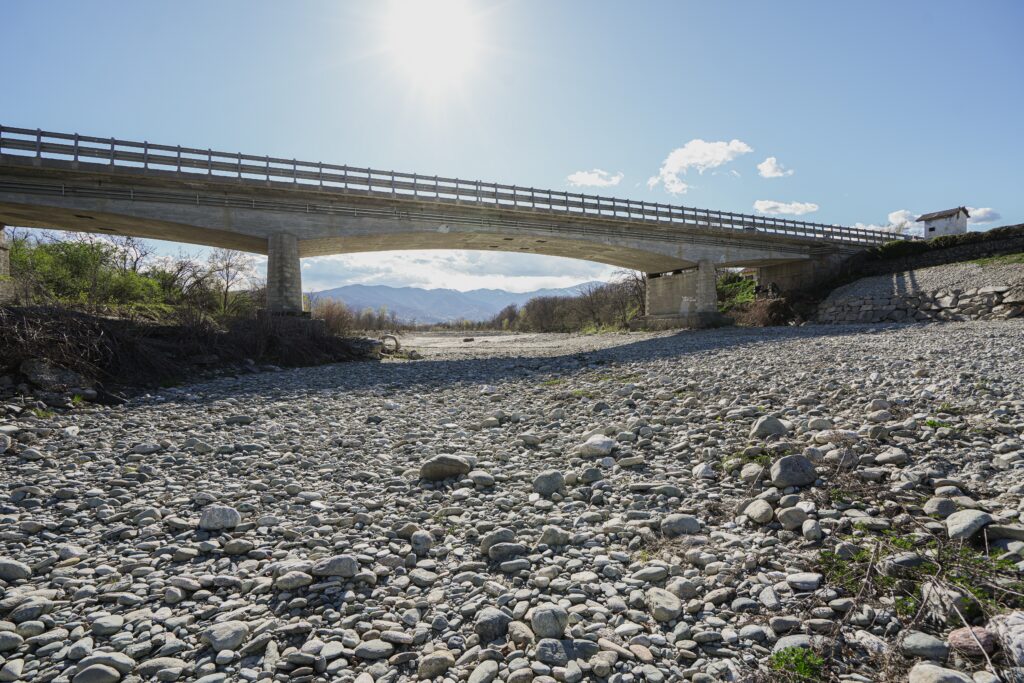
Access to water is a fundamental right, yet climate change and urbanisation pose increasing challenges to this vital resource. The drought that hit Europe in 2022, one of the worst in 500 years, left rivers like the Rhine and Po at record-low levels, disrupting ecosystems, agriculture, and transport. Meanwhile, frequent and severe flooding in Northern Europe has highlighted the urgent need for better water management systems. CEMR is taking a stand with its recommendations for the upcoming European Water Resilience Strategy.  

A bridge over the Po River completely dry due to the drought that has been affecting Piedmont for more than a year. Revello, Italy – April 2023 – MikeDotta/Shutterstock

In fact, the European Commission has announced its plan to develop a comprehensive Water Resilience Strategy as part of the 2024–2029 guidelines. This initiative aims to map risks, identify preparedness needs, and align with the ongoing revision of EU water directives. These discussions highlight the urgency of ensuring sustainable water management across urban and rural areas, addressing both immediate climate risks and long-term infrastructure needs. 

But water is not just a resource—it is a public good. This is why CEMR and its member associations emphasize the need for robust legal frameworks to ensure it is not treated as a commercial product and to guarantee universal access, calling for public sector-led water management to provide transparency and prioritize community welfare. 

But a one-size-fits-all approach will not work. Across Europe, water challenges range from droughts in the south to flooding in the north. That is why CEMR advocates for place-based solutions tailored to local realities, underpinned by nature-based strategies like wetland restoration and innovative urban planning. 

Achieving water resilience also requires financial investment. CEMR urges the EU to increase funding for ageing water infrastructure, climate adaptation measures, and innovative technologies, while streamlining access to emergency funds for regions affected by water-related crises. 

Finally, achieving water resilience requires stronger involvement from local and regional governments. As the level of governance closest to citizens, they are best positioned to design and implement water management strategies tailored to local realities. Whether it’s cities like Paris and Berlin successfully remunicipalising their water services to improve quality and affordability, or regions in the Netherlands pioneering flood prevention through integrated urban planning, local governments have proven their ability to manage water efficiently when given the right tools and resources. 

Ensuring that municipalities and regions have the necessary funding, decision-making power, and support to lead on water resilience is crucial for tackling interconnected challenges across urban and rural areas. CEMR calls for a governance framework that empowers local authorities to take proactive action, secure long-term investments, and foster cooperation with civil society and the private sector. Strengthening their role will be key to building a Europe where water systems are robust, adaptive, and sustainable. 

Ready to dive deeper? Explore the full CEMR policy paper for detailed insights and actionable recommendations. 

For more information, contact:

Adoption of the nature restoration law

Green City - News Section

Cities and regions urge swift adoption of EU Nature Restoration Law to combat climate and biodiversity crises


As Europe faces intensifying environmental challenges, from biodiversity loss to climate-driven heatwaves and pollution, cities and regions are stepping up their call for action. Partners of the Urban Agenda for the EU Partnership on Greening Cities, including many local and regional governments, have issued a joint letter urging EU Member States to swiftly adopt the long-delayed Nature Restoration Law. 

Local authorities are often at the frontline of environmental crises. With over 70% of Europeans living in urban areas, the need to restore green spaces is not only a climate priority but also a public health and quality-of-life imperative. The proposed law would provide a long-awaited framework to strengthen biodiversity, adapt cities to rising temperatures, and support sustainable land use. 

Delays in the law’s adoption not only undermine urgent environmental action but also threaten democratic trust in EU decision-making. A provisional agreement between the European Parliament and Council was reached months ago, and failure to finalise it now would send the wrong signal, both to EU citizens and the global community. 

CEMR and its partner’s stress: restoring nature is not optional. It is essential! Local governments stand ready to deliver, but they need the political will at the EU level to match their ambition. 

For more information, contact: 

Water framework and floods directive 

Floods - News

Balancing high environmental goals with realistic implementation, funding, and stronger local involvement 


The Water Framework Directive (WFD), in force since 2000, is one of the EU’s most ambitious environmental laws, aiming for good status of all EU waters by 2027. While progress has been made, challenges such as climate change, pollution, and increasing pressure on water resources demand a renewed and practical approach. In its response to the EU’s fitness check, the Council of European Municipalities and Regions (CEMR) underline the importance of keeping high ambition while ensuring realistic implementation for local and regional governments (LRGs). 

Key Messages 

  1. Maintain ambition, improve delivery 
    The WFD has led to clear improvements in Europe’s waters and should be continued. While full achievement by 2027 may not be possible everywhere, the Directive remains a vital tool. Environmental goals must be preserved, supported by realistic intermediate targets and achievable management cycles. 
  1. Adjust without lowering ambition 
    LRGs stress the need to adapt the WFD to 21st-century challenges such as land-use changes, climate impacts, and new pollutants. The Directive should move towards a more realistic framework, reflecting natural and historical influences on water quality. 
  1. Better harmonisation with other EU policies 
    Water protection cannot be addressed in isolation. The WFD must align with related legislation, including the Drinking Water Directive, Urban Wastewater Treatment Directive, and rules on water reuse. Agriculture, industry, and transport have major impacts on water quality, requiring stronger links with the Common Agricultural Policy, REACH, and strategies to reduce nitrates, pesticides, and pharmaceuticals in water. 
  1. Stronger local involvement and governance 
    Municipalities, as the level of government closest to citizens and water bodies, must be more involved in water governance. LRGs are best placed to enforce measures, raise awareness, and apply flexible, site-specific solutions. This aligns with SDG 6.5 on integrated water resources management. 
  1. Simplification and funding 
    Implementation of the WFD is often too complex and administratively burdensome for municipalities and water operators. Reporting requirements should be simplified, and EU or national funding must accompany new obligations to ensure effective delivery. 
  1. Polluter Pays Principle 
    A stronger source-control approach is needed. Responsibility for water quality should not fall solely on municipal treatment plants but be shared across all polluters. Applying the “polluter pays” principle will create transparency, fairness, and stronger engagement from all stakeholders. 
  1. More flexible derogations 
    The current rules on exemptions are too rigid, often blocking socially important projects like new wastewater treatment plants. CEMR calls for clearer and more balanced derogation rules, allowing essential societal developments while safeguarding water protection. 

 
CEMR’s position is clear: the WFD has proven its value and must remain ambitious, but reforms are needed to reflect new challenges, reduce administrative burdens, and empower local governments. By ensuring flexibility, proper funding, and shared responsibility, Europe can better safeguard its waters while supporting sustainable development at local and regional levels. 

Read the position paper here 

For more information, contact: