
Local Alliance calls to put cities at the heart of Europe’s climate plans

Local Alliance news

Local Alliance calls for a governance overhaul to put cities at the heart of Europe’s climate plans

408 words
2–3 minutes

In a new position paper, the Local Alliance – a coalition of CEMR, ACR+, Climate Alliance, Energy Cities, Eurocities, FEDARENE, ICLEI Europe, and POLIS – calls on the EU to seize the revision of the Governance Regulation to make National Energy and Climate Plans (NECP) truly implementable, investable, and grounded in local realities. 

Cities, towns and regions across Europe are already acting — renovating buildings, deploying renewables, transforming mobility systems. Yet the EU’s climate planning framework has not caught up. National Energy and Climate Plans (NECPs) continue to be drafted largely without the involvement of the local and regional governments that will ultimately deliver them. 

The revision of the Governance Regulation, expected from the European Commission in the last quarter of 2026, is therefore a critical opportunity — one the Local Alliance is determined not to miss. 

A structural disconnect 

A wealth of local data, investment pipelines and climate plans already exists across Europe — from Sustainable Energy and Climate Action Plans to Climate City Contracts and local heating strategies. Yet this territorial knowledge rarely feeds into NECPs, creating duplication, fragmentation and missed investment opportunities.  

Meanwhile, the multi-level dialogues already required under Article 11 of the current Regulation have largely remained disconnected from real implementation decisions or remained tick-the-box level only. 

The result is a dangerous two-speed dynamic: high ambition at European and national levels, too little attention to what happens on the ground. 

The Local Alliance’s answer: connect what already exists 

The position paper calls for the revised Regulation to be built around four mutually reinforcing elements:  

  1. a permanent multi-level dialogue platform in each Member State to align all levels of government around NECP preparation and monitoring, taking into account national governance structures and needs;  
  1. a territorial chapter in each NECP drawing on existing local plans to show where and how national objectives will be delivered;  
  1. territorially informed sectoral pathways linking national targets across buildings, transport, heating, renewable energy, and circular economy with the local realities that determine whether delivery is actually possible; 
  1. and investment strategies that take account of local investment and capacity needs. 

This is not a call for more bureaucracy. It is a call to make what already exists work together — reducing consultation fatigue, cutting administrative duplication, and turning NECPs from reporting exercises into genuine frameworks for implementation and investment. 

Read the full position paper here

For more information, contact:

Climate adaptation position paper

ODELL - City of Bilbao, main banner

CEMR calls for a territorial approach to Europe’s climate resilience


Europe is the fastest-warming continent in the world. Heatwaves, floods, droughts and extreme weather events are already affecting communities, infrastructure and ecosystems across the continent — with impacts that vary widely from one territory to another. In this context, climate adaptation has become an urgent priority for towns, cities and regions, which are on the frontline maintaining essential services and strengthening resilience on the ground. 

While the European Commission is currently developing a new integrated framework for European Climate Resilience and Risk Management, CEMR has published a new policy paper, Adapting Together – A territorial approach to resilience and risk management, setting out concrete recommendations to strengthen Europe’s approach to climate adaptation and preparedness. 

A new policy paper: Adapting Together 

The policy paper highlights a clear reality: local and regional governments already implement the vast majority of adaptation measures, yet their role remains insufficiently recognised and supported in EU and national frameworks. The paper calls for a territorial approach to climate resilience, grounded in multi-level governance and built around six key priorities: 

  • Empowering local and regional governmentswith clear mandates and flexibility to act; 
  • Strengthening local capacity through better access to data, tools and peer learning; 
  • Securing predictable and accessible funding for adaptation investments; 
  • Improving preparedness and disaster risk management; 
  • Restoring ecosystems and scaling up nature-based solutions; 
  • Ensuring water resilience through integrated, locally driven water management. 

By combining horizontal enablers (governance, capacity and finance) with sector-specific recommendations, the paper demonstrates how empowering towns, cities and regions is essential to Europe’s overall resilience. 

Towns, cities and regions at the frontline of adaptation policies  

Ronan Dantec, CEMR spokesperson for Climate, underlines: Today, it is urgent to recognise that adaptation to climate change is pivotal for municipalities and regions of all sizes. Investing in sustainable infrastructure and using our resources more efficiently is not just an option, but an imperative for securing a thriving future for all. 

Climate impacts are inherently local. Even within the same country, risks can differ significantly between urban and rural areas, coastal and inland regions, or northern and southern territories. Towns, cities and regions are therefore best placed to: 

  • Assess local climate risks and vulnerabilities; 
  • Protect vulnerable populations; 
  • Plan and manage resilient infrastructure; 
  • Ensure continuity of essential services such as water, transport and energy; 
  • Deliver nature-based solutions and ecosystem restoration. 

Their proximity to citizens also allows them to integrate social resilience into adaptation policies, ensuring that no one is left behind as climate impacts intensify

Preparing for the EU’s upcoming integrated framework on climate resilience 

CEMR’s policy paper comes at a key political moment, as the new integrated framework for European ClimateResilience and Risk Management is expected to be adopted by the European Commission in the second half of 2026. It will aim to establish a comprehensive and coherent EU approach to climate resilience and preparedness.  

 The ongoing public consultation of the European Commission on the future integrated framework, includes a set of questions covering resilience-by-design across EU policies; harmonised and comparable climate risk assessments; funding for adaptation; support for local and regional level, consideration of climate-related health impacts.  

CEMR is currently developing a response in cooperation with its expert group, requesting that towns, cities and regions are recognised not only as implementers, but as strategic partners in the design, financing and monitoring of this future framework. The consultation is open until 23 February 2026. CEMR encourages its members to participate and make their voices heard. 


For more information contact:

On the EU Water Resilience Strategy

Head Banner - SUN4UKRAINE

CEMR priorities on the European Commission Water Resilience Strategy


The European Commission has just published its Water Resilience Strategy, a much-needed step toward safeguarding one of our most vital common goods.

At CEMR, we welcome the Strategy’s alignment with many of our long-standing priorities:
✅ Recognition of water as a public good
✅ Acknowledgement of the role of multi-level governance, cross-border cooperation and stakeholder engagement
✅ Emphasis on nature-based solutions, including the new Sponge Facility
✅ Improved tools for data access, drought management, and awareness-raising

We also welcome the reinforcement of the Polluter Pays Principle, especially for persistent pollutants like PFAS. However, we are particularly concerned by the provision for an updated study on the costs and potential impacts of the Extended Producer Responsibility (EPR) scheme under the Urban Wastewater Treatment Directive.

As addressed in our recent joint letter to President von der Leyen decision risks delaying the deployment of quaternary treatment technologies essential to remove micropollutants and could hinder the timely implementation of the recast Directive.

We strongly believe that local and regional governments are best placed to address water challenges — but to do so effectively, they must be empowered with the tools, flexibility, and funding they need.

The Strategy would benefit from:
🔹 Clear and firm commitment to dedicated funding for water management in the next MFF
🔹 Better access to emergency EU funds for municipalities and regions affected by extreme events
🔹 Stronger legal safeguards and technical support for public sector water services
🔹 Concrete support for urban-rural cooperation in integrated water management

Read our full position paper

These issues will be front and centre at the CEMR Leaders’ Summit in Oslo, 23–24 June, under the theme: “Local Solutions for Equitable and Sustainable Resource Management.”

Let’s ensure Europe’s water resilience starts where it matters most — in our cities and regions.

Renewables with communities first 

Energy - News Section

A European consensus sets guiding principles to accelerate renewable energy and grid deployment while ensuring fairness, transparency, biodiversity protection, and local benefits 


Europe is at a turning point. To reach climate neutrality by 2050, the EU must drastically expand renewable energy and electricity grids. This challenge is also an opportunity: renewables are cheaper than fossil fuels, can reduce biodiversity risks, and bring local economic benefits. Yet progress remains too slow, hampered by lengthy permits, weak community dialogue, and a lack of perceived value for citizens. 

To overcome these barriers, European stakeholders have united behind a set of baseline principles for fast and fair deployment of renewables and grids. These principles underline that projects must be shaped with communities, not imposed on them. Early engagement with mayors and citizens, transparent communication, and mechanisms for feedback are central to building trust. 

Equally important is ensuring that local communities share in the value of new projects. This means creating jobs, offering benefit-sharing schemes such as funds or co-ownership, and guaranteeing that revenues are used transparently for local improvements, from transport to housing. The principles also commit to nature-positive deployment, applying strategies to avoid or minimise harm and, where possible, enhance biodiversity. 

Finally, the consensus highlights the need to empower community-led initiatives, giving citizens and municipalities fair access to the energy market and the grid. By creating space for local ownership, Europe can ensure that the energy transition is not only fast but also fair. 

Together, these principles form a European consensus: a shared roadmap to accelerate the transition while protecting ecosystems and ensuring citizens see real, tangible benefits. 

Read the position paper here 

For more information, contact: 

An incluve local green transition deal

Renewable Energy - News Section

CEMR launches groundbreaking report on the local green transition


CEMR is excited to announce the launch of its new report, “Local Green Transition: Prospects for an Inclusive and Competitive Deal”. This study examines how Local and Regional Governments adapt to and implement the European Green Deal, aiming for climate neutrality by 2050.  It provides a comprehensive assessment of the opportunities and challenges LRGs face in executing green policies, highlighting their critical role in achieving Europe’s climate goals. With over 300 LRGs participating in extensive surveys, the study presents sector-cross-cutting and specific recommendations to enhance local-level implementation of green strategies.

Key Insights:

  • High Awareness: An impressive 92% of LRGs are familiar with the decarbonisation legislation affecting their regions.
  • Impact of Climate Change and Preparedness: Many LRGs report feeling the effects of climate change acutely, with only a third feeling adequately prepared to implement necessary legislation.
  • Positive Outcomes: More than half of the surveyed LRGs have experienced benefits from green policies, including job creation and improved air quality, although challenges like funding access and regulatory complexity remain significant.
  • Social Equity: The report emphasises the need for equitable and responsive policies to the diverse needs of urban and rural areas.

Recommendations for EU Decision-Makers: CEMR identifies crucial priorities for European and national governments to support LRGs in their green transition efforts, including:

  1. Addressing local needs during EGD implementation.
  2. Fostering collaborative dialogue and partnerships with LRGs.
  3. Simplifying and increasing funding for local initiatives.
  4. Ensuring equitable implementation across regions.
  5. Making the green transition a priority for cross-border cooperation.

CEMR President Gunn Marit Helgesen emphasised the importance of local governments in facilitating real change, stating, “Municipalities and regions lay the groundwork for a more competitive Europe by implementing renewable energy projects and developing sustainable infrastructure.”

This report serves as a vital resource for local and regional governments, aiming to guide them in harnessing the green transition to foster economic growth while addressing the pressing challenges of climate change

Read study here

For more information, contact:

Adoption of the nature restoration law

Green City - News Section

Cities and regions urge swift adoption of EU Nature Restoration Law to combat climate and biodiversity crises


As Europe faces intensifying environmental challenges, from biodiversity loss to climate-driven heatwaves and pollution, cities and regions are stepping up their call for action. Partners of the Urban Agenda for the EU Partnership on Greening Cities, including many local and regional governments, have issued a joint letter urging EU Member States to swiftly adopt the long-delayed Nature Restoration Law. 

Local authorities are often at the frontline of environmental crises. With over 70% of Europeans living in urban areas, the need to restore green spaces is not only a climate priority but also a public health and quality-of-life imperative. The proposed law would provide a long-awaited framework to strengthen biodiversity, adapt cities to rising temperatures, and support sustainable land use. 

Delays in the law’s adoption not only undermine urgent environmental action but also threaten democratic trust in EU decision-making. A provisional agreement between the European Parliament and Council was reached months ago, and failure to finalise it now would send the wrong signal, both to EU citizens and the global community. 

CEMR and its partner’s stress: restoring nature is not optional. It is essential! Local governments stand ready to deliver, but they need the political will at the EU level to match their ambition. 

For more information, contact: 

Local Alliance for the Green Deal

Local Alliance: city and regional networks urge EU to stay the course on Green Deal implementation


Eight leading networks of European cities and regions – ACR+, CEMR, Climate Alliance, Energy Cities, Eurocities, FEDARENE, ICLEI Europe and POLIS – have come together to form the Local Alliance. 

In a joint letter, the Alliance calls on EU leaders to find new ways to effectively roll out the European Green Deal at the local level. The EU must “stay the course on the European Green Deal under this and the next mandate of the European Commission, the networks have stated.

Recent challenges, such as the passage of the Nature Restoration Law, which still languishes with the European Council, or the last-minute setbacks suffered by the internal combustion engine phase out, are undermining the Green’s Deal objectives. As the European elections approach, the EU must ensure it remains a global beacon for climate leadership.  

Given the more complicated arena for climate legislation that lies ahead, local leaders are adamant that the EU’s commitment to achieve climate neutrality by 2050 should remain a top priority, delivering a just transition that works for people and planet. 

Cities and regions are where at least 70% of the European Green Deal legislation must be implemented. European local and regional governments have already embarked on the journey to climate neutrality and started to transform European cities and regions, as well as ways of living, heating and cooling, housing, mobility, producing and consuming for millions of citizens. Today, the EU’s subnational governments mobilise around 58% of climate-significant public expenditures, surpassing their central governments. 

“Through this Local Alliance, we call on the EU institutions to listen to cities and regions that are already localising the Green Deal objectives by implementing 70% of the EU legislation. Putting the experience of local governments at the centre means prioritizing effective transition policies that will ensure fairness and acceptance of the Green Deal for all European citizens” – Fabrizio Rossi, Secretary General, CEMR.

In the letter sent to EU leaders, the Local Alliance highlights that Europe’s pace of success in achieving the Green Deal objectives will depend on the following help for cities and regions:  

  • More joined up support for investments from the EU, national and regional funds across different funding programmes and actors, which are more responsive to locally developed integrated and holistic action and investment plans. This would also be a prerequisite for creating local jobs and markets for the European green industry.   

Local leaders highlight that partnership between all levels of government is key as “Financing the local transition to climate neutrality will require mobilising the EU and national budgets.” 

  • Cities and regions need adequate in-house skills and a workforce to successfully do their part of the climate neutrality transition and by doing so, to create demand for European businesses and industries.   

“These opportunities are the best way to create local investment potential for European industry, and to share the transition benefits for all EU citizens,” say the Local Alliance leaders.

  • Establishing structured dialogues with the local and regional levels at the EU and national level will be critical to achieving the necessary transformation and societal resilience at scale in Europe.  

It is only with cities, regional and local governments on board – the closest level of government to people and the one responsible for implementing most of the European Green Deal legislation – that we can fully meet the objective of a climate neutral Europe by 2050. 

The Local Alliance further repeats its commitment to work with national governments, the European Council, the Commission, and the Parliament to turn the European Green Deal into reality for every citizen across Europe. 

For more information, contact:

Prague declaration in climate policy-making

Prague Declaration 2023 - News 2023

CEMR Policy Committee in Prague issues a Declaration Advocating Systematic Involvement of Local and Regional Governments (LRGs) in Climate Policy-Making


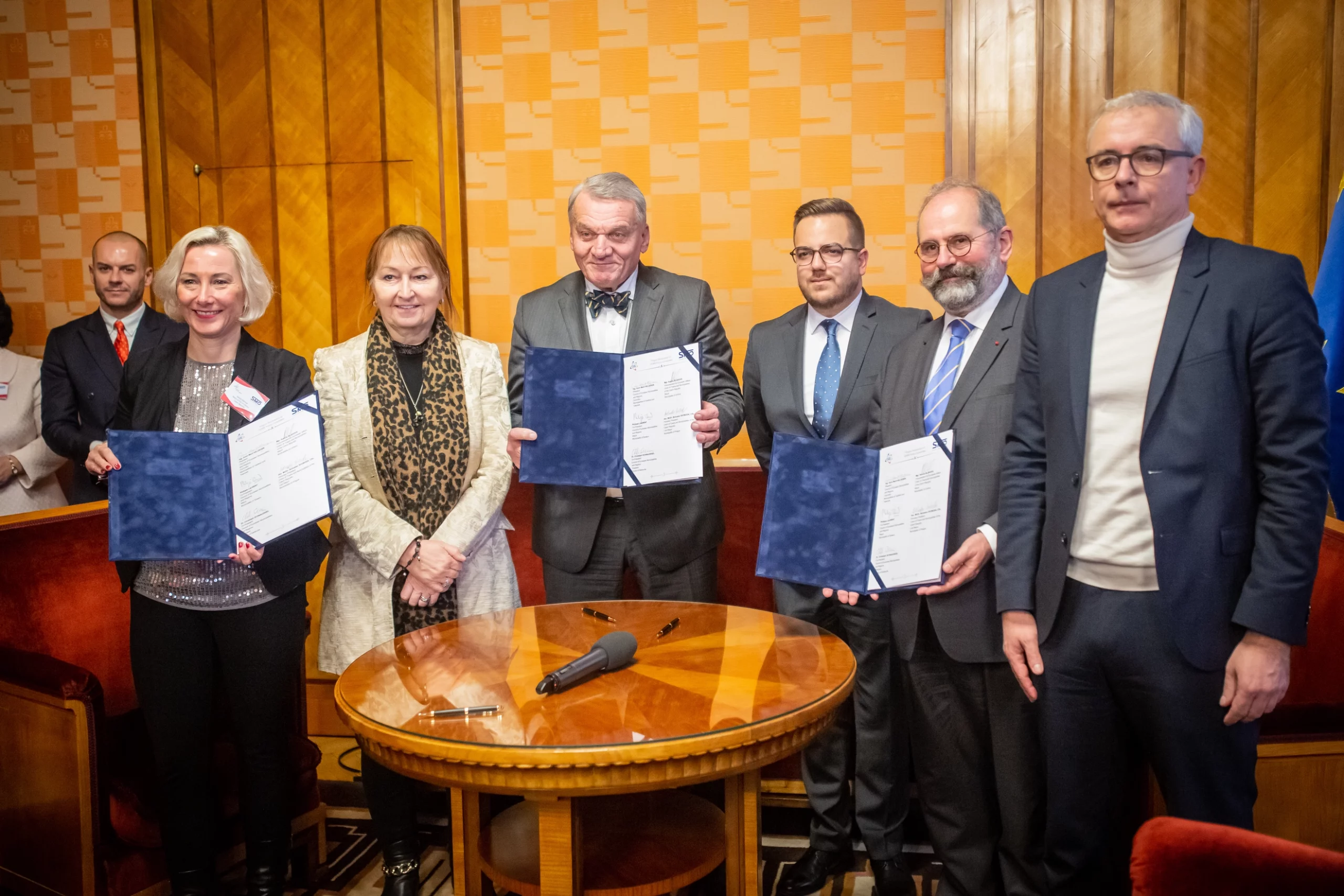
Policy Committee of the Council of European Municipalities and Regions (CEMR) is meeting in Prague on 6 and 7 December, and the first day of its deliberations culminated in the adoption of a landmark document titled “The Prague Declaration: More Trust in and Stronger Voice for Local and Regional Governments”. This significant political act underscores the pivotal role that local and regional governments (LRGs) play in confronting the formidable challenges facing our municipalities and regions.

“The Prague Declaration” sends a clear message about the imperative need for a stronger voice and a more vigorous partnership between the European Union, national governments, and LRGs. It calls for a more active involvement and consultation with LRGs throughout the entire policymaking process.

Fabrizio Rossi, CEMR Secretary General, expressed his gratitude, stating, “We extend our sincere appreciation to the Union of Towns and Municipalities of the Czech Republic SMO CR for their proactive role in initiating the Prague Declaration. This document reflects our shared commitment to effective governance, sustainability, and the well-being of our communities. Together, we are charting a course toward a more resilient and prosperous future.”

This declaration serves as a roadmap for empowering LRGs to effectively fulfil their responsibilities to citizens, highlighting their strategic role in the implementation of both European and national policies. Only in this way will it be possible to achieve the common goals of climate and social sustainability, preserve our planet for future generations, and ensure prosperity and well-being for the citizens of our towns and cities, municipalities, and regions.

CEMR welcomes media coverage and inquiries related to the Policy Committee meeting in Prague. For further information or to arrange interviews, please contact:

Martina Lehmannová
lehmannova@smocr.cz

CEMR is the broadest European association of local and regional governments that brings together one million democratically elected European politicians, in 60 member associations from 40 countries since 1951.

SMO ČR: The Union of Towns and Municipalities of the Czech Republic is a voluntary, apolitical, and nongovernmental organisation. The Union’s activity is primarily based on the efforts of mayors, lord mayors, and representatives who, beyond their duties, dedicate themselves to general self-government issues.

Sustainable textile waste management 

Textile Waste - News

Strengthening EU Waste Legislation Through Local Collaboration and Producer Responsibility 


As the EU prepares to implement key provisions of the revised Waste Framework Directive, including mandatory separate collection of textiles by January 2025, the Council of European Municipalities and Regions (CEMR) calls for urgent improvements to ensure fairness, clarity, and efficiency in textile waste management. Drawing from on-the-ground experience and policy best practices, particularly France’s Extended Producer Responsibility (EPR) scheme, CEMR offers targeted recommendations to close critical legislative gaps and empower local governments in achieving sustainable waste solutions. 

1. Expand the Definition of Textile Waste 

The current directive focuses narrowly on ‘household textiles,’ excluding significant sources of textile waste from commercial and institutional settings such as hotels, hospitals, restaurants, offices, and schools. CEMR recommends a broader, more inclusive definition of ‘textile waste’ that reflects its diverse origins and aligns with the Polluter-Pays Principle. 

2. Clarify the Role of Social Enterprises 

Social enterprises play a vital role in collection, sorting, reuse, and resale of textiles. These actors must be fully recognised within the waste legislation and EPR frameworks, with fair access to funding and partnership opportunities. Their unique contributions can enhance the circular economy while delivering strong social outcomes. 

3. Strengthen Extended Producer Responsibility (EPR) for Textiles 

a) Align Implementation Deadlines 

There is currently a mismatch between the 2025 obligation for separate textile collection and the proposed EPR deadline, which may not come into effect until 2027 or 2028. CEMR calls for the EPR scheme to be implemented simultaneously with the collection obligation, and for producers to retroactively reimburse municipalities for collection-related costs from January 2025. 

b) Recognise Local Authorities as Key Partners 

Municipalities are central to waste collection and citizen engagement, yet their role is not clearly defined in the proposed EPR framework. CEMR urges mandatory collaboration between Producer Responsibility Organisations (PROs) and municipalities to ensure streamlined collection systems and cohesive public communication. 

c) Ensure Full Cost Coverage 

EPR funding must comprehensively cover not only infrastructure and operational costs, but also continuous public communication campaigns, which are critical to successful sorting and reuse. Additionally, producers should bear partial responsibility for textiles that remain in mixed waste streams, incentivising better product design and citizen behaviour. 

d) Include Unsold Textiles in EPR Obligations 

To align with the Ecodesign Regulation for Sustainable Products, which bans the destruction of unsold goods, CEMR advocates for including unsold textiles in the scope of EPR. A clear definition should be added to the directive to ensure these products are managed responsibly and transparently. 

4. Introduce Clear Measures to Prevent Textile Waste 

Overproduction and fast fashion are key drivers of Europe’s textile waste crisis. The revised directive must go beyond waste management and address prevention at the source. This includes incentives for sustainable design, extended use, reuse systems, and anti-overproduction regulations. 

Case Study: France’s “Refashion” EPR Scheme 

France’s pioneering EPR program, “Refashion,” offers a proven model. Since 2007, it has tripled the collection and recycling rates of post-consumer textiles. In 2020 alone, it engaged over 4,000 producers and allocated €36 million toward sorting, community projects, and innovation. Nearly 40% of textiles placed on the market were collected, up from 27% in 2013, with a 90% material recovery rate and 50% direct reuse. 

This success story demonstrates how producer accountability, coupled with strong public-private cooperation, can drive significant progress. However, challenges such as labour-intensive sorting and the difficulty of recycling blended fibres remain and must be addressed at the EU level. 

Conclusion 

With the right revisions, the updated Waste Framework Directive can become a powerful tool in reshaping Europe’s approach to textile waste. CEMR urges EU institutions to act decisively by aligning deadlines, empowering municipalities, and ensuring that both social and environmental responsibilities are shared equitably across the textile value chain. Only then can the EU truly advance toward a circular, fair, and sustainable future. 

Read the position paper here 

For more information, contact: 

Fixing Textile Waste

Textile Waste Management - News

CEMR calls for a stronger local role and producer responsibility in EU textile waste reforms


In response to the European Commission’s proposal to revise the Waste Framework Directive, the Council of European Municipalities and Regions (CEMR) has published key messages to ensure that local and regional authorities are central to a fair and effective textile waste management system.

The revision, which includes mandatory Extended Producer Responsibility (EPR) schemes for textiles, is welcomed by CEMR. However, urgent improvements are needed to ensure timely implementation, comprehensive cost coverage, and clearer roles for public authorities and social enterprises.

CEMR’s recommendations highlight several critical areas:

  • Broaden the definition of textile waste to include non-household sources such as hotels, hospitals, and offices.
  • Clarify the role of social enterprises and ensure they are fully integrated into EPR schemes.
  • Align deadlines for separate collection (due by 2025) with the establishment of EPR schemes to avoid unfunded obligations for municipalities.
  • Guarantee full cost coverage for collection, sorting, treatment, and public awareness campaigns.
  • Include unsold textiles under EPR rules, in line with the upcoming Ecodesign Regulation.
  • Promote prevention, especially by tackling overproduction and fast fashion.

Drawing on best practices from France’s “Refashion” scheme, CEMR shows how EPR can drive higher collection and reuse rates, stimulate innovation, and improve cooperation across the value chain, but only when properly implemented.

CEMR urges EU institutions to embed these recommendations into the revised directive to ensure that local governments can continue to lead on circular economy goals without being burdened by unfunded mandates.

For more information, contact: