Antònia Sabartés: “I would like CEMR to be brave and bold”
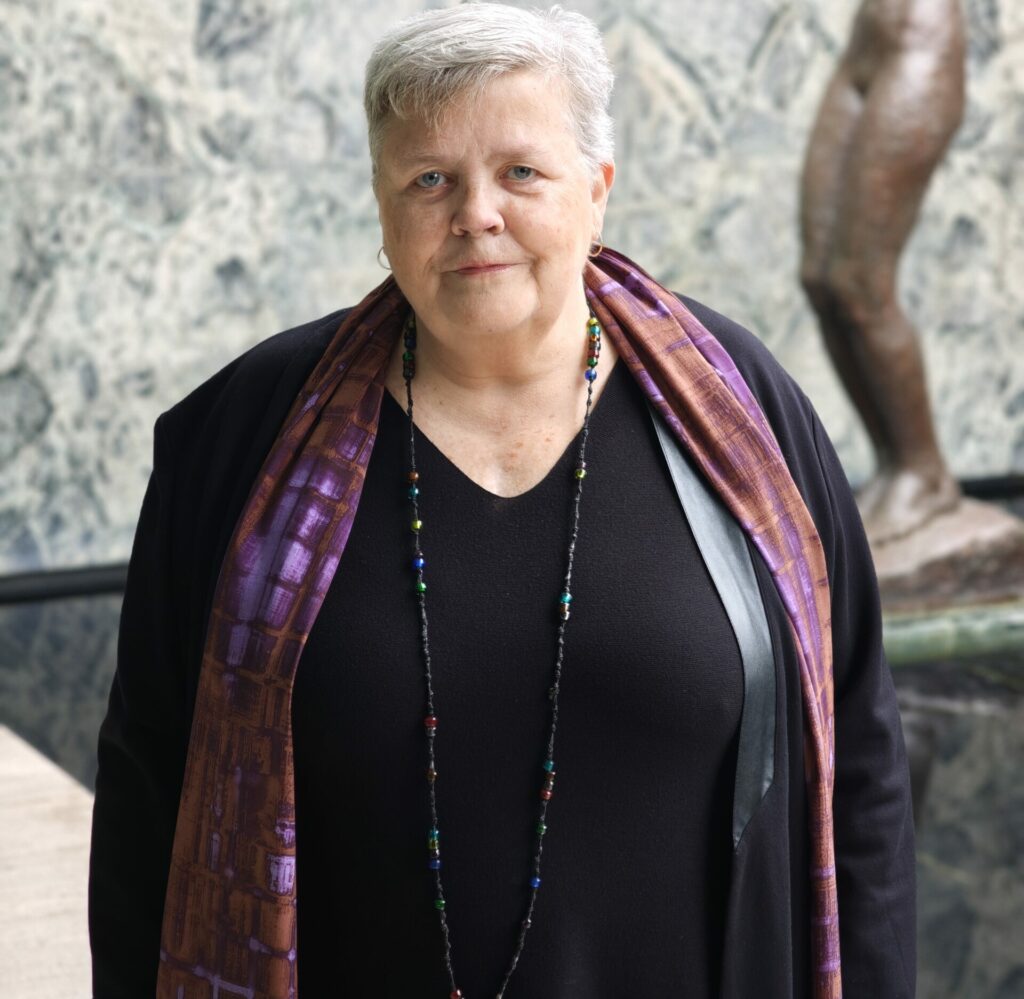
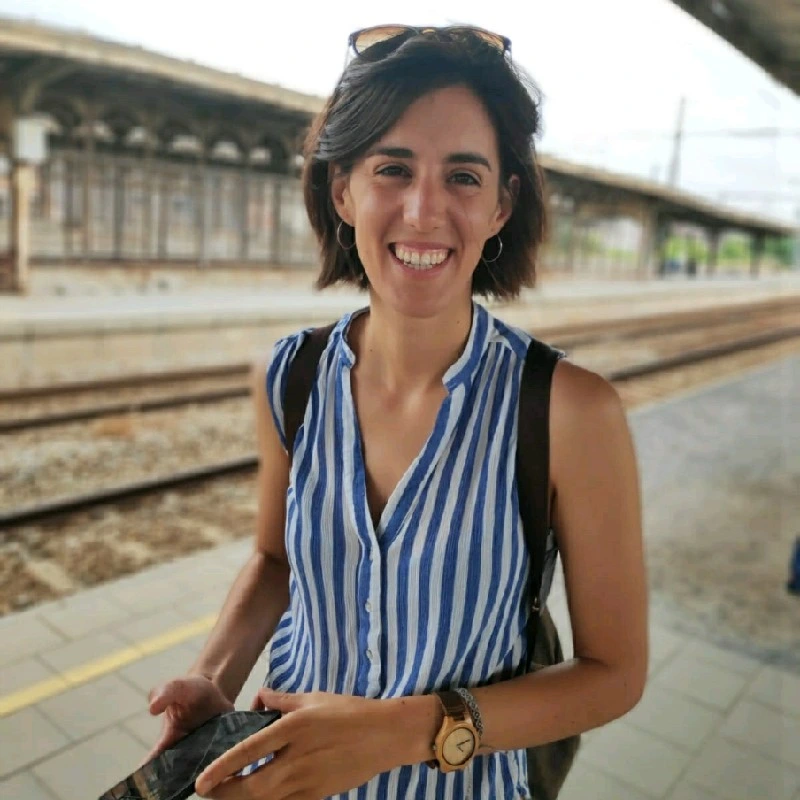
Antònia Sabartés was Head of Cabinet to Pasqual Maragall, Mayor of Barcelona, and President of the Council of European Municipalities and Regions (CEMR) from 1992 to 1997. Closely involved in the organisation’s leadership during a pivotal period for Europe, she witnessed first‑hand how CEMR helped shape the place of local and regional governments in the European project.
*Antònia Sabartés – Head of Cabinet to Pasqual Maragall, President of CEMR from 1992 to 1997.
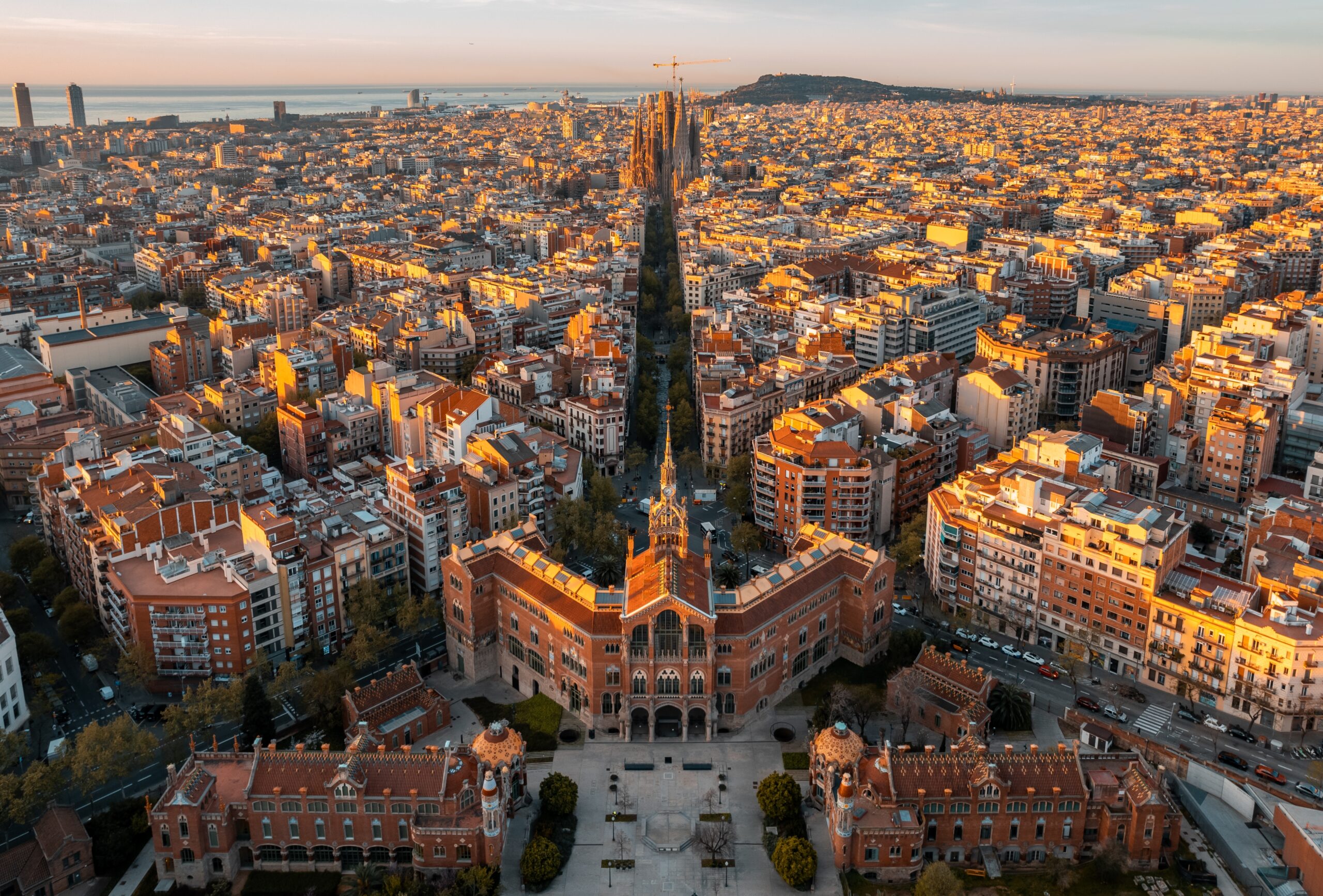
In this interview —recorded at the Fundació Mies Van der Rohe in Barcelona, rebuilt during Maragall’s time as the Mayor of the Catalan capital and closely linked to the European Union through the European Union Prize for Contemporary Architecture — she looks back on Maragall’s presidency, the defining moments of that period, and the legacy she believes continues to guide CEMR today.
Pasqual Maragall: a European by conviction and practice
Pasqual Maragall was elected President of CEMR in December 1991 in Paris and formally took office on 9 May 1992, at a moment of intense political, institutional and symbolic change for Europe. The year of his appointment coincided with the Olympic Games in Barcelona and with the ratification of the Maastricht Treaty, placing him — and CEMR — at the heart of Europe’s transformation.
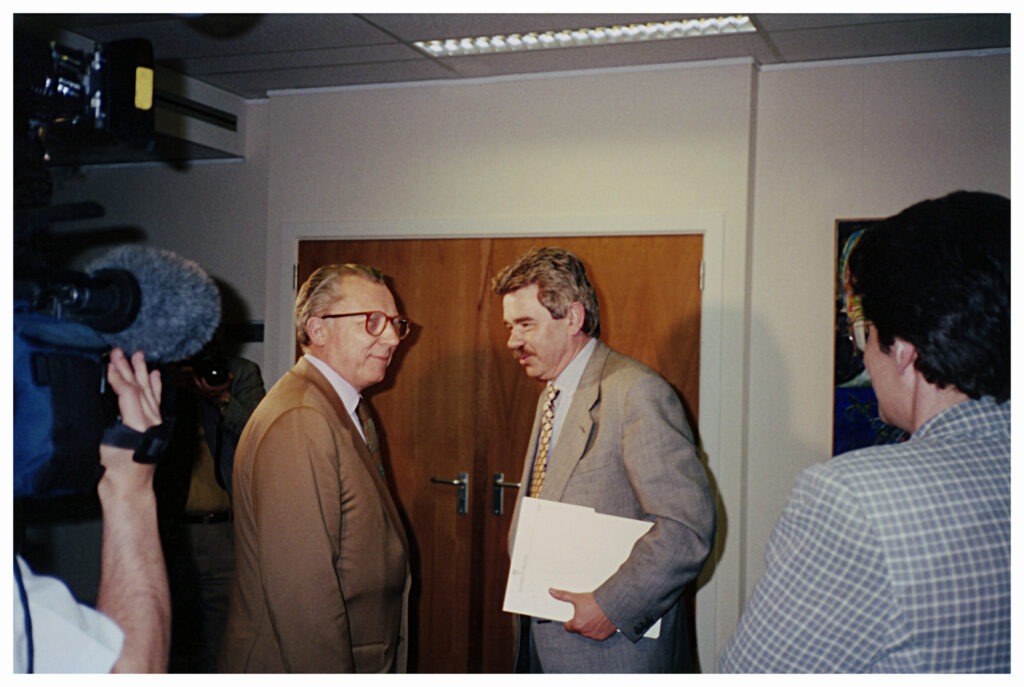
As Mayor of Barcelona, he embodied the growing international role of cities, having an active role also in the creation of Eurocities. His political and intellectual background reinforced this outlook: he had studied in Paris, been a student of Jacques Delors, knew key European figures such as Romano Prodi, and came from a deeply pro‑European family.
*Pasqual Maragall with Jacques Delors – Arxiu Digital Pasqual Maragall, Fundació Catalunya Europa
For Sabartés, this combination of experience and conviction made him particularly suited to leading CEMR at a time when local and regional governments were claiming a stronger voice in Europe.
Memories that mattered: from Delors in Barcelona to the Steering Committee in Prague
Certain moments remain particularly vivid in Sabartés’ memory for their symbolic weight and historical significance. One was Pasqual Maragall’s formal inauguration as CEMR President in Barcelona on Europe Day in 1992 — an event made exceptional by the presence of Jacques Delors. Delors rarely left Brussels, and his decision to attend underlined both the importance of the moment and the esteem in which Maragall and CEMR were held.
Another landmark was the 1992 Steering Committee meeting in Prague, held shortly after the Olympic Games. Beyond its timing, the meeting marked a turning point for CEMR, reinforcing its internal consolidation and expanding its European ambition at a crucial moment of transformation for the continent.
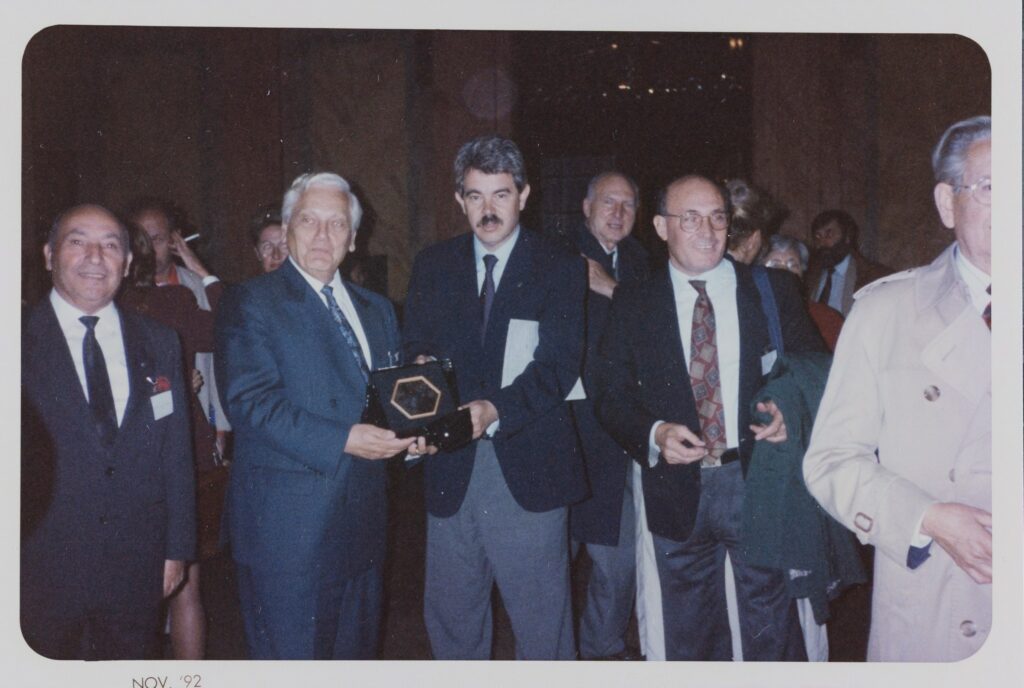
Alongside these emblematic events, Sabartés also recalls more personal memories linked to Maragall’s presidency. Initially, she admits to having doubts. As a mayor with major responsibilities, she wondered whether he would be able to devote enough time to CEMR. Those concerns were quickly dispelled. Maragall attended every single meeting without exception and treated the presidency as a true priority.
*Pasqual Maragall with Josef Hofmann, ECOS Conference (Prague), in the 90s. HAEU, CCRE-846
She also vividly remembers the intense spirit of collaboration within the CEMR team during those years. Working closely with Elisabeth Gateau and Christophe Chaillou, coordination between Paris and Barcelona was constant and often demanding. In a pre-digital era, communication relied on phone calls and faxes, with short messages sometimes exchanged several times a day. Achieving what today comes effortlessly thanks to the internet required at that moment a real level of coordination.
The relevant role of Maragall in the creation of the Committee of the Regions
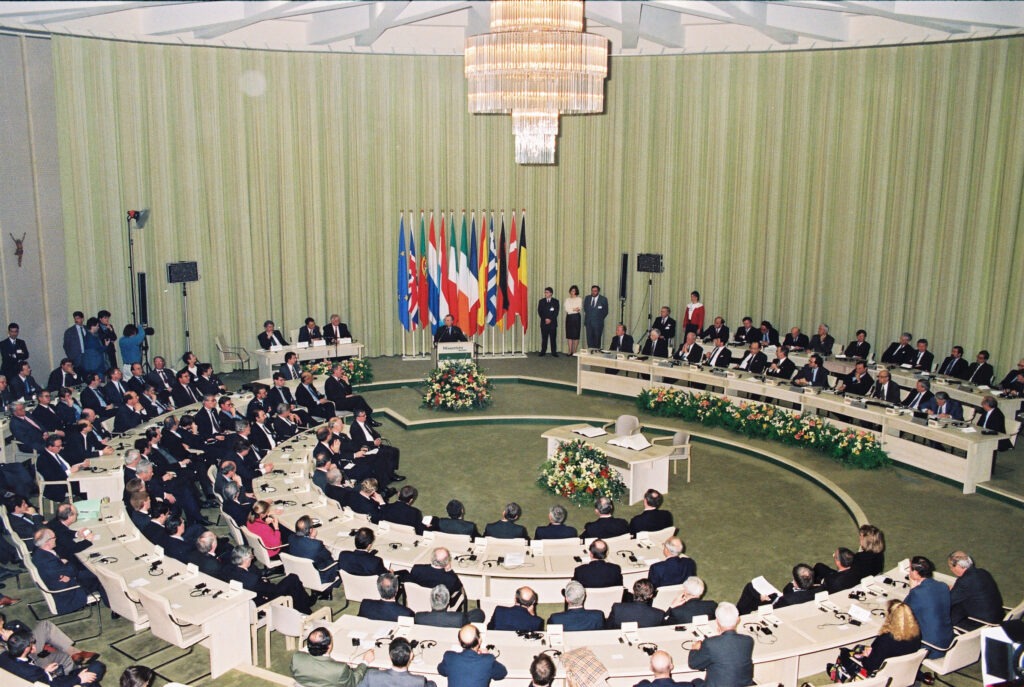
Under Maragall’s leadership, CEMR played a central role during one of the most important phases of European integration. The approval of the Maastricht Treaty created new opportunities, notably the future establishment of the Committee of the Regions.
*General view in the ceremony auditorium of the signature of the Maastricht Treaty. Copyright: European Communities, 1992.
Securing a place for the President of CEMR in the first presidency of the Committee of the Regions was a major success. From the moment Maastricht was approved until the Committee became operational in 1994, CEMR worked intensively to ensure that local and regional authorities would be taken seriously within the EU’s new institutional framework.
This effort was reinforced through a Consultative Council of Local and Regional Authorities set up by the European Commission, working closely with Eneko Landaburu, then Director‑General of DG REGIO. These relationships opened doors and ensured that CEMR was recognised as a key interlocutor.
Another complex but decisive achievement was the reform of the Conference of Local and Regional Authorities of the Council of Europe, which became the Congress of Local and Regional Authorities with two chambers. This process sparked debate between CEMR and the Assembly of European Regions, led by another Catalan, who, in this case, was the President of the Government of Catalonia, Jordi Pujol.
Throughout all the discussions, Maragall’s personal qualities made a difference. Multilingual, approachable and deeply European, he had a unique ability to connect people across political and cultural divides, even when positions were opposed.
Another greatest achievement: a vision that still matters
Beyond institutional successes, Sabartés believes Maragall’s most important contribution was strategic and ideological. He was a convinced federalist, defending a Europe built on subsidiarity, proximity and citizenship at a time when this narrative was far from mainstream.
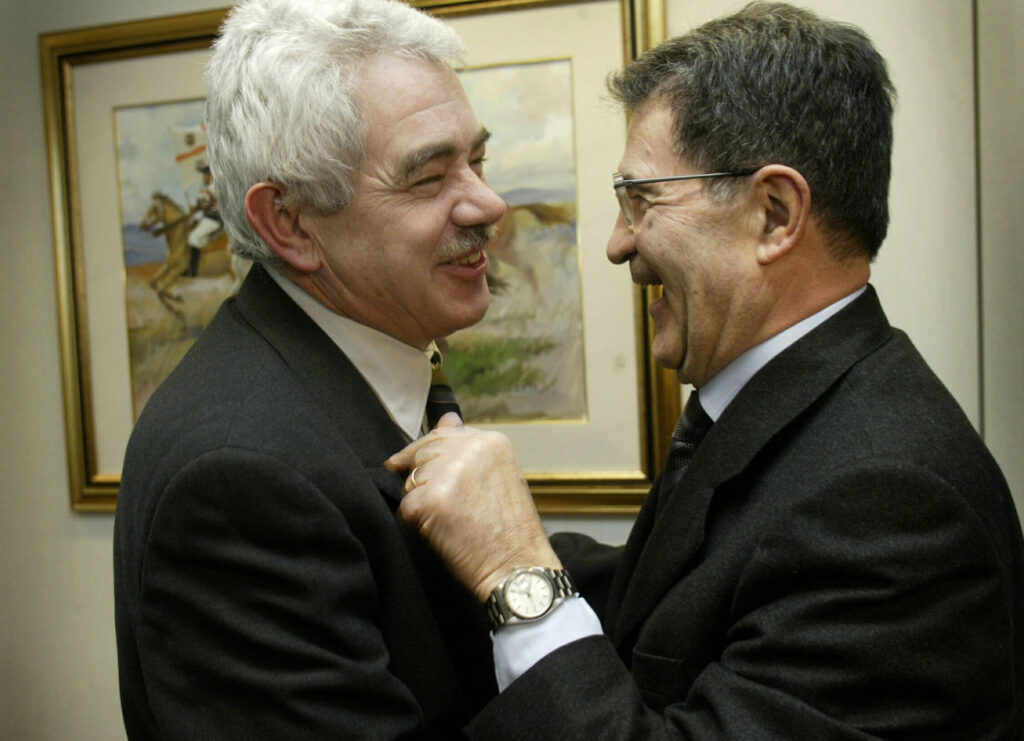
He also played a decisive role in shaping the path that would later lead to the creation of United Cities and Local Governments (UCLG). Working with mayors such as Jorge Sampaio of Lisbon, Pierre Mauroy of Lille, and leaders of IULA, he pushed for unification — particularly as a way to strengthen the presence of local governments within the United Nations system.
*Pasqual Maragall with Romani Prodí (2004) – Author: Bedmar, Jordi. Arxiu Digital Pasqual Maragall
Defending the European Charter of Local Self‑Government as a global reference helped open doors and positioned Europe as a leader in local democracy, also in the multilateral system.
“Brave and bold”, this is what CEMR needs to be in the next 10 years
Looking ahead, Sabartés is clear about what she hopes for CEMR today. In a context marked by geopolitical tensions, social inequalities, migration challenges and the rise of the far right, she believes CEMR must once again show courage.
“I would like CEMR to be brave and bold, as we were during the Maragall years,” she says. “Above all, it needs strong leadership. If we do not act, governments of proximity risk being sidelined. We must work to improve the lives of European citizens, confront prejudice and defend the values we believe in. That is my dream for CEMR.”
For more information, contact:
Head of Communications