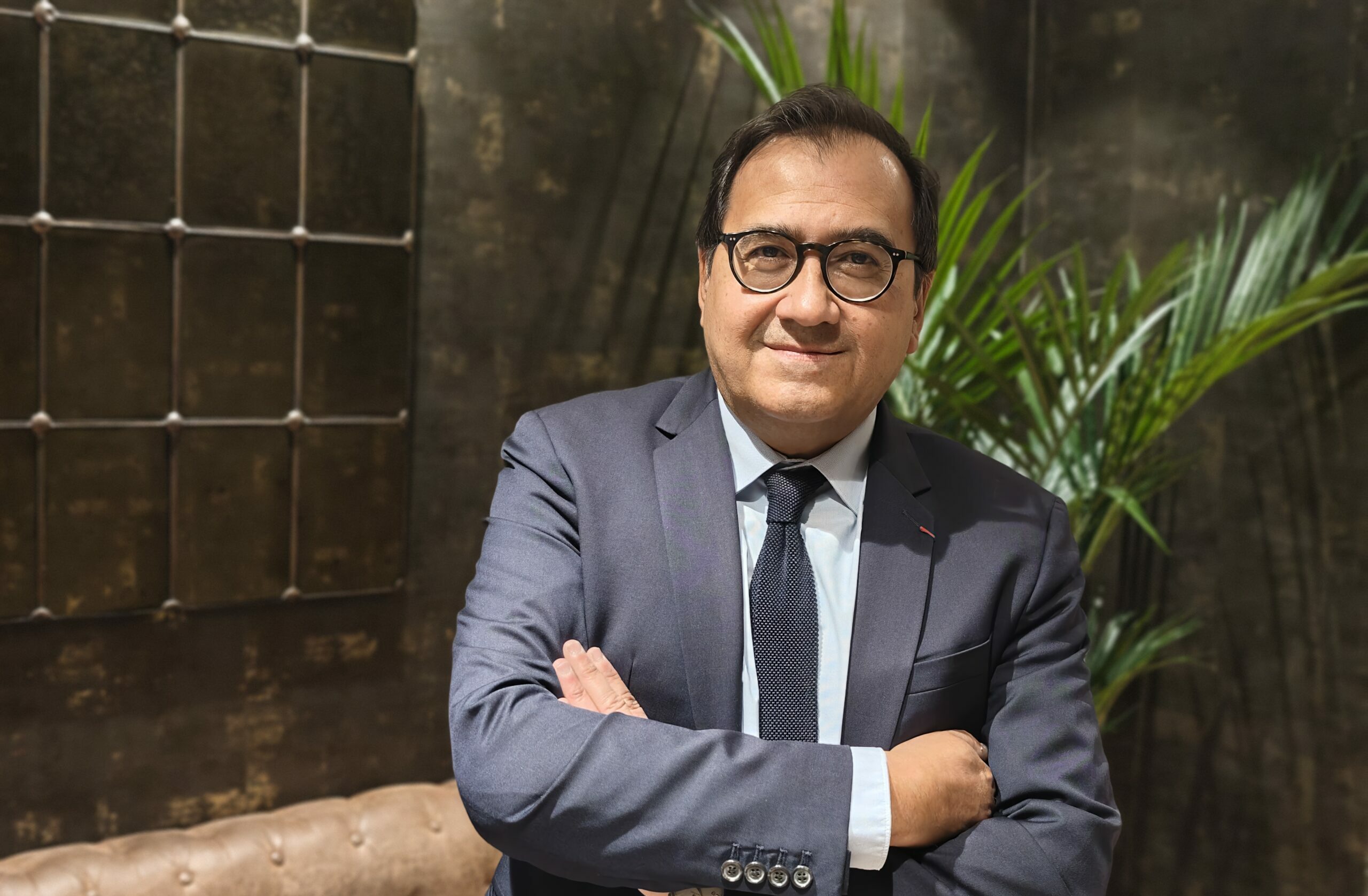
Christophe Chaillou: “Europe cannot be built without its local territories”
Christophe Chaillou served as Director of the Cabinet of the Secretary General of the Council of European Municipalities and Regions (CEMR) from 1992 to 2007, during one of the most transformative periods in European history. Accompanying the organisation through the great years of the Delors Commission, the democratic transitions in Eastern Europe, and the formal recognition of local and regional governments by European institutions, he witnessed first-hand how CEMR helped shape the place of towns, cities and regions within the European project.
In this interview, he looks back on the defining moments of his period in CEMR, the presidents he worked alongside, and the message he believes must continue to guide CEMR today.
A privileged witness to a founding era
Christophe Chaillou’s time at CEMR coincided with a period of exceptional momentum for European integration.
It was the moment during which local and regional governments gained formal recognition from European institutions, a long-held objective of CEMR that finally became reality. For Chaillou, this convergence of political, institutional and historical forces made it a remarkable moment to be part of the organisation.
“I had the privilege of accompanying CEMR at a time when the European project was especially valued,” he recalls. “It was a fantastic period. In many ways, it meant achieving many of our founding objectives.”
Central to that experience was the opportunity to work alongside exceptional leaders. Among the presidents he served with, he mentions Pasqual Maragall [read Maragall’s head of cabinet interview here] and Valéry Giscard d’Estaing as figures who left a remarkable impression. Each bringing their own vision and weight to CEMR’s work on the European stage.
A moment of reconciliation: Prague, 1993
Of all the moments that marked his years at CEMR, one stands out above the rest. The General Assembly held in Prague in 1993 remains, in Chaillou’s view, one of the most powerful and symbolically charged events in the organisation’s history.
It was the moment when CEMR welcomed the local and regional associations that had just been re-established across Central and Eastern Europe, organisations asking for their place after decades of authoritarian rule and joining, for the first time, the broader European family.
“It was a moment of European reconciliation,” he says. “All the associations across the continent, gathered. It was undoubtedly a very powerful moment of affirmation of our message and, once again, of European unity.”
The assembly carried a weight that went far beyond the institutional. For those present, it was a vivid demonstration of what CEMR stood for: local democracy and European integration were not separate ambitions, but deeply interconnected ones.
Local freedoms at the heart of CEMR’s advocacy work
Beyond the symbolic milestones, Chaillou also highlights the strategic advocacy done by CEMR during his period as Secretary General. He specifically mentions the recognition granted to local and regional governments, which ensured that local freedoms were not recognised in principle but also respected in practice within the European institutional framework.
That achievement, in his view, was the result of both political momentum and persistent effort. It was built through relationships, credibility and the clarity of the CEMR’s message at a time when Europe was still defining what it wanted to be.
CEMR’s founding message, still urgent today
Looking ahead, Chaillou is unambiguous about the challenge that matters most. In a period marked by rising threats to democracy, growing geopolitical instability, and renewed questions about the future of European integration, he believes CEMR must return to its roots and carry its founding message with renewed conviction.
“What we need today is to strengthen all of this,” he says. “The main challenge is to preserve and promote local democracy in all the territories; the spirit of both local autonomy and European integration. That is the founding message of CEMR.”
For Chaillou, that message is as relevant now as it was in the early 1990s. Europe, he insists, cannot be built from the top down. It must be rooted in its territories in the places where citizens live, where decisions are made, and where democracy either thrives or falters.
“Europe cannot be built without its local territories,” he says. “And it is in the territories that local freedoms must assert themselves. In times when there are many threats, including a clear challenge to democracy, it is important to defend this message.”
Check the full interview here
For more information, contact:
Head of Communications