EU elections call to action

CEMR advocates for local and regional priorities in call to action ahead of 2024 EU elections


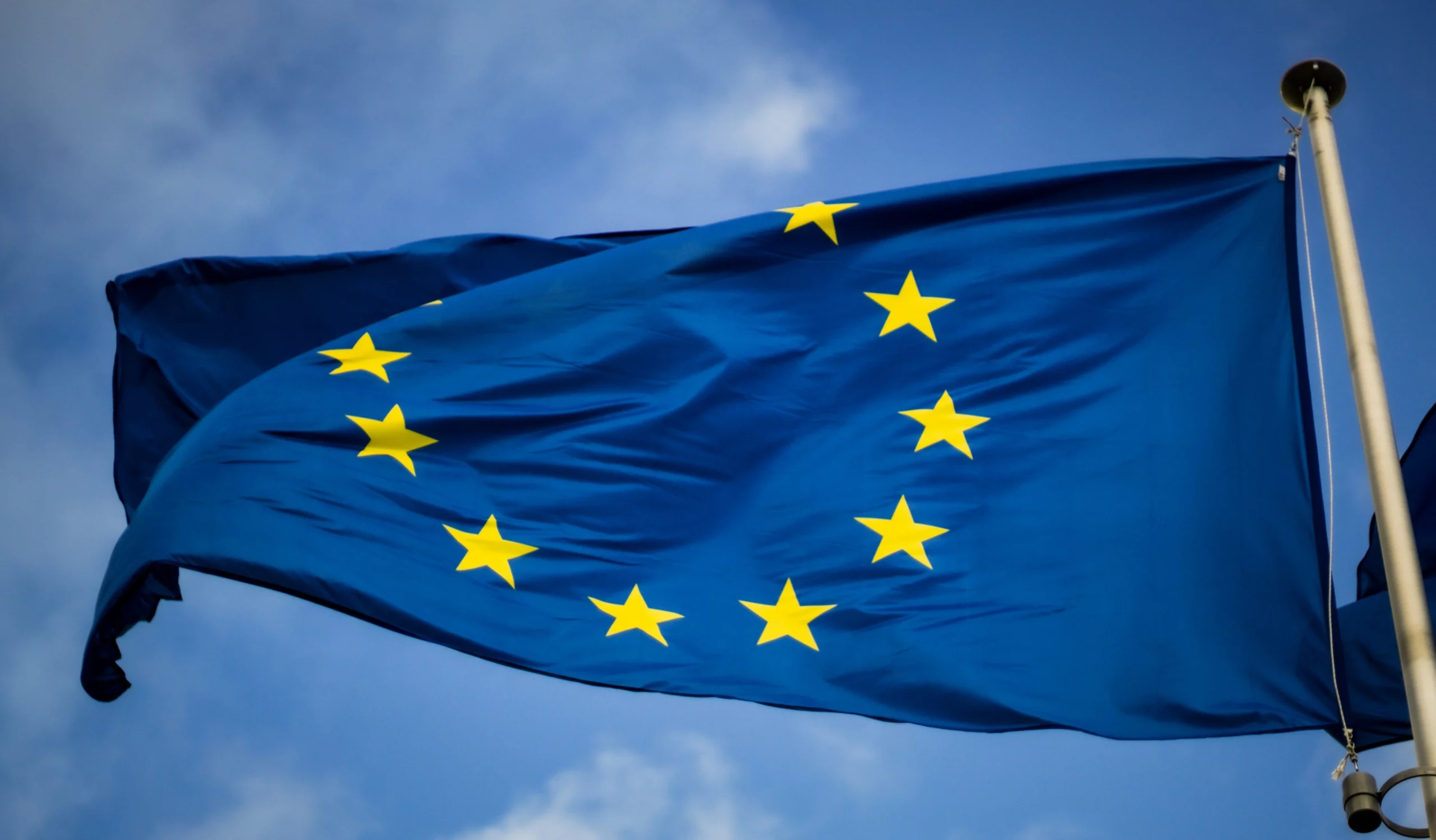
The Council of European Municipalities and Regions (CEMR) is gearing up for the upcoming European Parliament (EP) elections in 2024 by releasing its Call to Action, addressing the unprecedented challenges faced by Europe and the world.

In a time when national governments grapple with complex issues, such as climate change, the revision of its competition model and geopolitical shifts, CEMR and its national associations underscore their unwavering commitment to fundamental values such as democratic governance, human rights, subsidiarity, and sustainability. CEMR emphasises the critical role of local and regional autonomy in the face of re-centralisation trends and attempts to diminish power at the local level.

Fabrizio Rossi, Secretary General of CEMR, highlighted the significance of this Manifesto, stating, “Now, more than ever, it is imperative that local and regional governments actively participate in shaping policies that address the pressing challenges of our time. The upcoming EP elections provide a crucial opportunity for collaboration and co-creation with the new Members of the European Parliament (MEPs).”

CEMR EU Manifesto Four Key Advocacy Points

1. Active Subsidiarity and Multi-level Governance Cooperation:

Subnational governments are responsible for over 50% of public investment, and the involvement of LRGs in implementing EU legislation at the national level is at least 70%. CEMR emphasises the need for greater participation of LRGs at any level of decision-making to ensure the effective deployment of EU legislation, especially concerning the Green Deal package.

2. Systemic Approaches for Equitable, Inclusive, and Sustainable Societies:

LRGs are key enablers of the digital transition and, therefore, need sufficient public and private investment in digital services technologies, infrastructures, and skills to achieve this goal. CEMR urges the next European Parliament to be bold in promoting an enabling environment that supports the digital literacy of local public administrations.

3. Integrated Territorial Approach:

Urban and rural areas should be treated as mutually complementary assets, creating a reinforcing relationship that defines the concept of the urban-rural continuum. To accomplish this synergy, the upcoming EU co-legislators should advocate for appointing a dedicated Commissioner for Territorial Development within the next European Commission, scheduled to assume office in autumn 2024.

4. Open and Responsible Model of International Cooperation:

LRGs have attested to their commitment to fostering shared values and promoting openness within diverse communities through European partnerships, twinning arrangements, and city-to-city cooperation. This dedication extends to the context of EU enlargement. To amplify the impact of LRGs’ territorial diplomacy, it is imperative for EU policymakers to establish ongoing dialogues and involve local elected representatives in high-level meetings, including those convened by the United Nations and European institutions.

As the clock ticks down to the EP elections, CEMR encourages political parties to incorporate these priorities into their programs and candidate lists. CEMR believes that only through collaborative efforts with Europe’s future policymakers can meaningful outcomes be achieved on the ground.

For more information, contact:

Women in Politics

A Glimpse into the Life of a Women in Politics: CEMR Unveils First Data


The Council of European Municipalities and Regions (CEMR) has released the first infographics showcasing critical insights from their latest report, “Women in Politics.”

The data offer a visual snapshot of the representation of women in elected roles across various subnational levels. Additionally, a detailed breakdown of their portfolios at the local level is provided. The second page of the infographics unveils the results of an anonymous CEMR survey involving 2 424 participants from 31 countries. Focused on elected women in local and regional European roles, the survey explores their experiences of violence in the political realm.

Annelies Coessens CEMR Gender and Diversity Officer states the importance of the report findings: “This evidence-based data will contribute valuable insights to discussions and be an important instrument to advocate for improved policies that can foster safer and a more inclusive political environment for women”.

Prague declaration in climate policy-making

Prague Declaration 2023 - News 2023

CEMR Policy Committee in Prague issues a Declaration Advocating Systematic Involvement of Local and Regional Governments (LRGs) in Climate Policy-Making


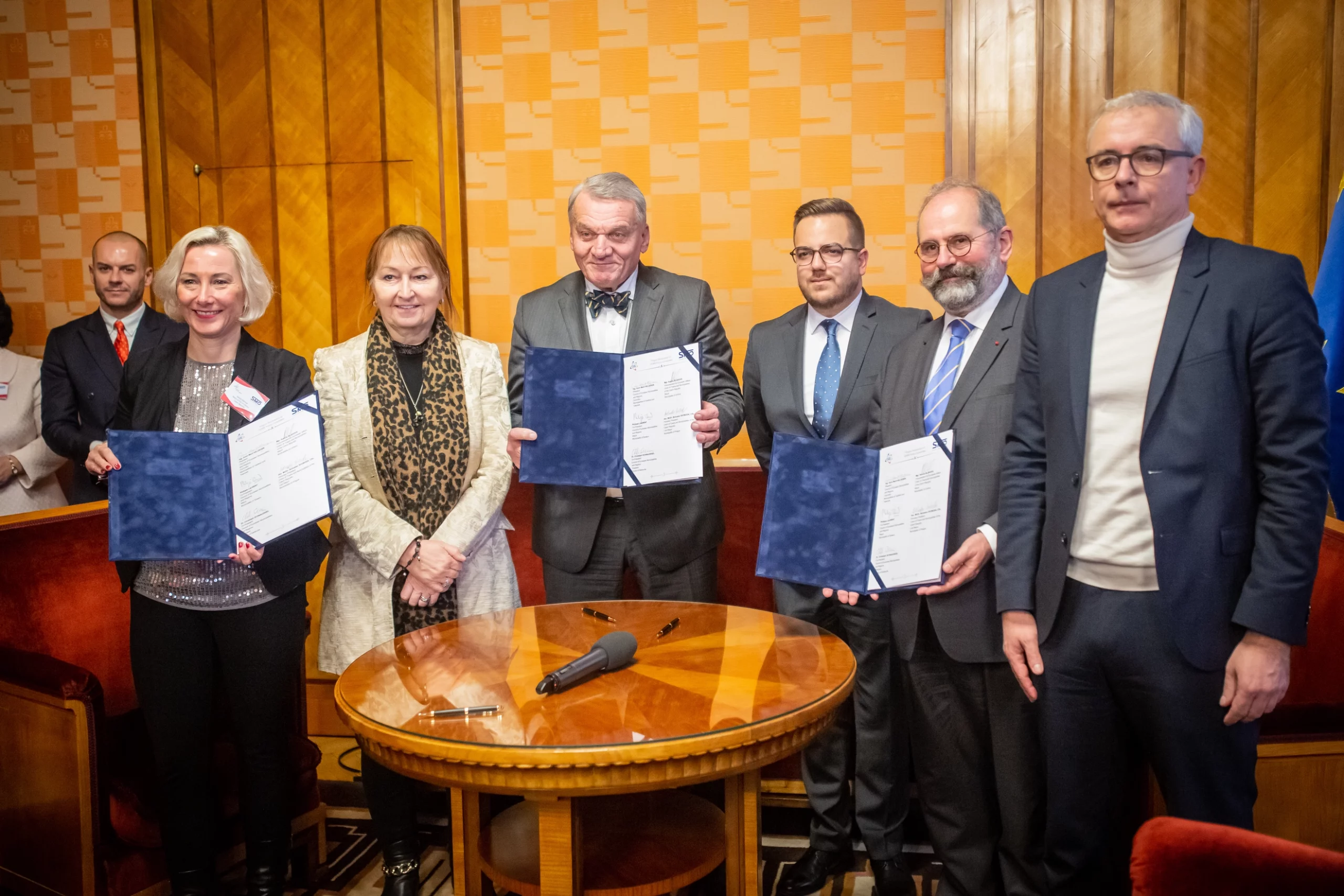
Policy Committee of the Council of European Municipalities and Regions (CEMR) is meeting in Prague on 6 and 7 December, and the first day of its deliberations culminated in the adoption of a landmark document titled “The Prague Declaration: More Trust in and Stronger Voice for Local and Regional Governments”. This significant political act underscores the pivotal role that local and regional governments (LRGs) play in confronting the formidable challenges facing our municipalities and regions.

“The Prague Declaration” sends a clear message about the imperative need for a stronger voice and a more vigorous partnership between the European Union, national governments, and LRGs. It calls for a more active involvement and consultation with LRGs throughout the entire policymaking process.

Fabrizio Rossi, CEMR Secretary General, expressed his gratitude, stating, “We extend our sincere appreciation to the Union of Towns and Municipalities of the Czech Republic SMO CR for their proactive role in initiating the Prague Declaration. This document reflects our shared commitment to effective governance, sustainability, and the well-being of our communities. Together, we are charting a course toward a more resilient and prosperous future.”

This declaration serves as a roadmap for empowering LRGs to effectively fulfil their responsibilities to citizens, highlighting their strategic role in the implementation of both European and national policies. Only in this way will it be possible to achieve the common goals of climate and social sustainability, preserve our planet for future generations, and ensure prosperity and well-being for the citizens of our towns and cities, municipalities, and regions.

CEMR welcomes media coverage and inquiries related to the Policy Committee meeting in Prague. For further information or to arrange interviews, please contact:

Martina Lehmannová
lehmannova@smocr.cz

CEMR is the broadest European association of local and regional governments that brings together one million democratically elected European politicians, in 60 member associations from 40 countries since 1951.

SMO ČR: The Union of Towns and Municipalities of the Czech Republic is a voluntary, apolitical, and nongovernmental organisation. The Union’s activity is primarily based on the efforts of mayors, lord mayors, and representatives who, beyond their duties, dedicate themselves to general self-government issues.

Violence Against Women

Violence Against Women - News 2023

Breaking the Silence: International Day for the Elimination of Violence Against Women


In a world that strives for progress and equality, violence against women remains a pervasive and deeply rooted issue that affects women across the globe. The International Day for the Elimination of Violence Against Women, observed annually on November 25th, serves as a poignant reminder of the collective responsibility to eradicate the scourge of violence that continues to plague countless lives.

In recent days, Italy has been shaken by the tragic death of 22-year-old Giulia Cecchettin at the hands of her boyfriend. Close to the World Day against violence against women, Giulia was yet another victim of femicide, the 105th since the start of 2023 in Italy. However, as Silvia Baraldi, CEMR Spokesperson for Gender Equality, poignantly reminds us, Giulia cannot be reduced to a mere statistic and “none of these women should be”.

“It is urgent to give a voice to Giulia and all women, to the victims and to those who, in the silence, can tear it apart in the next few hours,” says Baraldi. On average, one woman dies every 72 hours as a victim of femicide, a chilling statistic that highlights the severity of the issue. “Violence against women is a real social plague, born from the depths of patriarchy, and it can only be combated with joint and interconnected actions between institutions, politics, schools, the family, civil society, and a vast network of men and women committed to cultural change.”

Silvia Baraldi’s call to action is a stark reminder that each woman lost to violence represents a unique life, a story, and a potential future. As we observe the International Day for the Elimination of Violence Against Women, let us echo her plea to start the change now.
 

The battle against violence targeting women transcends a single day; it necessitates continuous dedication. At CEMR, we advocate seizing this moment to contemplate our shared responsibility and strive for a future where every woman can thrive with dignity, equality, and, most crucially, devoid of violence.

Pink boxes in Poland

Pink boxes - News 2023

Poland initative to help women access menstrual products


Access to menstrual products is still a marker of inequality in the sense that it still remains limited for certain women. This is why the Polish city of Rzeszow, a member of the Association of Polish Cities (ZMP), joined a national project: the “Pink Box” initiative.

These boxes have been used for several years in other Polish municipalities, such as Sopot and Łódź. They are usually found in libraries, parks, public transportation centers or schools; Currently, 43 schools in Rzeszow have implemented them. The pink boxes contain several types and sizes of sanitary products, from wipes to tampons to sanitary napkins. They also contain information on menstrual health and hygiene.

These boxes can be restocked by institutions or private sponsors, in accordance with the project principle: take some if you need it, leave some if you have too much.

Period poverty is a significant problem in Poland. According to a report by the Kulczyk Foundation, almost half a million people in Poland cannot afford sanitary products. In addition, 21% of students are forced to leave school due to lack of products, while 10% of them do not leave their homes during their period.

“That’s why I decided to introduce pink boxes in Rzeszów,” explained Konrad Fijołek, the mayor of Rzeszów. The pink boxes are a positive step in supporting the health and well-being of women in Rzeszów. They show that small community initiatives can have a big impact on people’s lives for minimal cost: the budget for the pink boxes is less than 600 euros.

Inclusive society 

Inclusive society - News 2023

A One-Stop-Shop for newcomers in Mechelen fosters inclusion


Twenty years ago, Mechelen suffered from one of the highest criminality rates in Belgium. Polarisation and deprivation were skyrocketing. Many middle-class families had no choice but to leave. However, little by little, as local authorities implemented inclusion policies, the situation started to evolve. Nowadays, the city is a vibrant symbol of inclusivity, with over 130 nationalities living in harmony. Innovative integration programmes are still being created, implemented and constantly improved. The “Welcome application” is one of them.

When the local authorities of Mechelen reviewed their tools supporting integration processes, they realised that people tend to use their smartphones more often, especially as they are on the move. It was then necessary to display information on a mobile-friendly platform. The Mechelen’s “Welcome App” was born.

With this smartphone app, newcomers can quickly find information about leisure, healthcare, housing, learning and social life in Mechelen. The information is provided in 9 different languages: Arabic, Dutch, English, French, Turkish, Ukrainian, Romanian, Russian, and Spanish. The app also displays a calendar with activities and a dictionary in which complicated words are explained. The app can easily be downloaded on the official website of the city of Mechelen.

With the support of the IncluCities project, the city identified an important issue that can affect the effectiveness of an app: outdated data. Indeed, as mobile apps can be tricky to manage, they sometimes tend to not be updated at all. Unfortunately, outdated information renders an app useless. Furthermore, adding new information manually is very time-consuming. These issues were resolved by developing an algorithm that simplifies the app updating process. As the city’s employees upload new information on a spreadsheet, it is automatically added to the app. Thus, the information on the mobile App will always be up-to-date, coherent and available in all languages.

To download the app, go to Mechelen’s official website.

International Women’s Day

International Women's Day - News 2023

International Women’s Day: Let’s talk about human rights!


Dr. Claudia Schöning-Kalender, Member of the SPD-parliamentary group in Mannheim City Council (Germany) and chair of the CEMR Standing Committee for Equality calls on EU institutions to “effectively translate words into action” on gender equality.

Women feature prominently in Greek mythology as heroines, goddesses, and warriors. The reality for them in ancient Greece was that they had few rights and were largely deprived of political voice and agency. This incongruity doesn’t prevent ancient Athens from being frequently cited as the cradle of democratic societies despite the lack of equal rights and representation for half of its people. Throughout history, women have been considered as second-class citizens and even denied their humanity.

Times have changed since Ancient Greece, but it would be mistaken to think that development for the better is straightforward or linear. Europe has been through terrible wars and progress is frequently punctuated by setbacks in social and political life. This is sadly true for women’s rights as well.

In the course of history, we also witness that there is no unique development in all nation-states. Have a look at Switzerland: towards the end of the 19th century, it was the country where ambitious women went to study and obtain university degrees. Despite being a safe haven for women searching to gain knowledge, women’s full suffrage was granted in Switzerland only in 1971. That is almost 80 years after New Zealand, 65 years after Finland and 50 years after many current EU Member States.

Looking at history helps to understand that the development of women’s rights in our European countries doesn’t follow a simple logic of always getting better in terms of more acceptance and more equal rights. It happens in some fields and it doesn’t in others. And this is not only true when looking at Switzerland’s history, it goes for all European countries.

We have come a long and successful way in many countries in terms of equal rights for men and women in Europe, including political rights. But it is only quite recently that the disparity between women and men in decision-making has come to be viewed as a challenge to democracy. At the close of the UN’s first world conference on women in Mexico in 1975, a then-adopted action plan stated that the increased and equal participation of women at all levels of decision-making would speed up development and foster peace.

It took the international community another 20 years to assert the fact that women’s rights were an integral part of human rights and to promote specific actions accordingly to ensure respect for these rights. That was done in 1995 at the 4th World Conference on women held in Beijing.

Two decades later, UN Member States committed to Sustainable Development Goal 5 “Achieve gender equality and empower all women and girls”, a dedicated objective among the 17 SDGs to be achieved by 2030, as well as a cross-cutting thread underpinning all these Global Goals.

Equality at risk

Unfortunately, challenges and catastrophes put equality and human rights at risk. In situations of disaster and war, such as the current war in Ukraine or the recent devastating earthquakes in Syria and Turkey, the burden of keeping life going on overwhelmingly falls on women. It is mainly them who protect and feed their families, serving their communities. How is it then that they are so easily overlooked, abandoned and abused, in such circumstances?

Added to the exploitation and sexual violence perpetrated against women in crisis and conflict situations, there is an astounding lack of awareness of their hygienic, reproductive and childcare needs. To address these challenges effectively and sustainably, it is imperative that women’s voices are heard and that women have an equal seat at the table. It is they who know what the stakes are and who can chart the proper course towards safety, peace and prosperity. That is not to say that the burden of righting the world’s wrongs is upon the shoulders of women, but that we cannot continue as we have for so long, neglecting the experience, expertise and potential of 50% of the population.

My question is: how can it be that in the European Union where nine in ten people think that promoting gender equality is important to ensure a fair and democratic society (Special Eurobarometer 465, 2017), it is not more effectively translated into action?

As local elected officials, we call for the swift adoption of the current proposal for a Directive combatting gender-based violence, decisive for European women, but also for the ones fleeing wars and disasters and finding refuge in our municipalities. We also count on MEPs to embrace these issues in their upcoming innovative humanitarian aid strategy, following the new Chapter 39 of the CEMR European Charter for Equality of women and men in local life.

As countless news articles show and we, as citizens, witness, it doesn’t matter if a woman is rich or poor, lesbian or straight, non-disabled or disabled, young or old, cisgender or trans, just being seen as or perceived as a woman exposes one to discrimination or be treated as less than human. Putting this to an end is a foremost duty of European governments and civil society organisations that refer to any democratic traditions in Europe. Athena or Aphrodite may maybe part of a fabled past, but all over the globe, their battles are not a myth.

This article was first published on Euractiv.

Training Local Police

Training Police - News 2023

Training local police forces on conflict-related sexual violence in Ukraine


Sexual violence has been used as a weapon of war in conflicts since time immemorial. Tragically, there is no exception with Russian armed forces invading Ukraine. Not only are women, men and children getting sexually assaulted, but they carry with them the stigma and trauma long after.

As part of its mission, the EU Advisory Mission to Ukraine (EUAM) has been advising and supporting the civilian security sector to ensure “effective and accountable law enforcement agencies”, “a trusted judiciary”, and “prevention of secondary stigmatisation of survivors” of conflict-related sexual violence (CRSV). In addition to providing advice, the EUAM has been providing training to the police, courts and prosecutors.

In July of 2022, a Ministry of Internal Affairs academy event was organised with 50 cadets from Lviv and Donetsk Police academies to raise their awareness about gender stereotypes. The EUAM has also organised community safety dialogues in Chernivtsi, Lviv and other Western Ukrainian territories which are “aimed at enhancing trust between civil society, authorities and law enforcement through a frank exchange of views and cooperation.” Priorities identified in the dialogues include “community safety, support for internally displaced people, fighting gender-based violence and disinformation.”

More than a year after the beginning of this violent conflict, many women and girls have suffered from sexual violence whether they stayed or fled their homes. With awareness and adequate initiatives, local and regional governments can better support victims of conflict-related sexual violence.

Additional resources

2023 International Women’s Rights Day series: “Five new Charter articles illustrated through local actions”

This article is part of a series published by CEMR to celebrate 2023 International Women’s Rights Day. This series informs on impactful initiatives carried out by local and regional governments to promote gender justice.

These projects embody the updated European Charter for Equality of Women and Men in Local Life as they show how five of its nine new articles can be put into practice. Together, they represent an inspiring step towards a more gender-equal Europe.

The updated Charter is available currently in EnglishFrench and easy-to-read English versions.

Any questions regarding the update or the actions highlighted in this series can be directed to contact@ccre-cemr.org or the relevant national coordinator for the Charter in your country.

Women’s Health

Women's Health - News 2023

The City of Liverpool fosters women’s health


While it may not seem obvious at first thought, some of Europe’s local and regional governments have competencies which allow them to make impactful policies and programming around sexual and reproductive health. A case in point is the City Council of Liverpool, which has put in place an effective collaboration with the National Health Service (NHS).

In the UK, women experience poor sexual and reproductive health in a higher proportion than their male counterparts. The situation is even more dire in lower socioeconomic or deprived areas. To improve women’s access to health services in Liverpool, a network of women’s health hubs was set up “across the city’s 10 primary care networks”. This was made possible through a joint commissioning group set up between the council and local NHS.

The hubs offer a range of services from long-acting reversible contraceptives (LARCs), such as coils (IUD), contraceptive implants and injections, to cervical screening, psychosexual services and treatment for menopause and heavy periods.

As data available in 2019 illustrated, the women’s health hubs have a positive impact: the rate of LARC prescribing locally increased from 13.1 per 1,000 women to 15.2 per 1,000. Additionally, wait times have been shortened and the City estimates that the increase in LARC distribution has prevented 415 unintended pregnancies.

If this model of specific health hubs expands beyond the city’s and the country’s borders, thousands of women could be positively impacted in their health, daily life and autonomy.

Additional resources

Contraception Policy Atlas Europe 2023


2023 International Women’s Rights Day series: “Five new Charter articles illustrated through local actions”

This article is part of a series published by CEMR to celebrate 2023 International Women’s Rights Day. This series informs on impactful initiatives carried out by local and regional governments to promote gender justice.

 These projects embody the updated European Charter for Equality of Women and Men in Local Life as they show how five of its nine new articles can be put into practice. Together, they represent an inspiring step towards a more gender-equal Europe.

The updated Charter is available currently in EnglishFrench and easy-to-read English versions.

Any questions regarding the update or the actions highlighted in this series can be directed to contact@ccre-cemr.org or the relevant national coordinator for the Charter in your country.

Guide on intersectionality

Intersectionality - News 2023

From toddlers to adults: municipalities embrace intersectionality at all ages


Intersectionality and diversity are at the heart of gender equality. As identities and lived experiences of people are not merely additive but intersecting and complex, it is necessary to include these dimensions in public policies to build a more equal society. In France and Italy, two municipalities are already working on it. From a multi-format help desk to representative toys, they show us that intersectionality is a concrete and transversal matter.

Creating an anti-discrimination help desk in Bologna

The municipality of Bologna is committed and active in its pursuit of equality and justice for all, both within its own administration as well as in service of its residents.

The city created a multi-annual positive action plan to implement its equal opportunities objectives and to address inequalities linked to gender, disability, age and sexual orientation. The plan includes measures to ensure accessible documents and websites, to provide training courses, and to organise exchanges of experience.
Since 2021, Bologna has been part of a campaign promoted by Period Think Tank – Data to Count —  to allow open and public access to data measuring the impact of public policies on gender dimensions.

Bologna, in cooperation with the Regional network against discrimination in the Emilia Romagna Region, offers residents an anti-discrimination help desk service. Its purpose is to welcome, listen, guide and support victims, direct and indirect witnesses of discrimination on a racial, ethnic, or religious basis.

The help desk offers three formats to make reports and obtain advice: a permanent office is open in the Intercultural Centre Zonarelli; a telephone number is serviced during weekdays and a WhatsApp number is available to leave vocal messages at any time; finally, an online form can be filled out to make reports.

Promoting understanding and acceptance through play in Saint-Médard-en-Jalles

As part of their commitment to the European Charter for Equality, the French municipality of Saint-Médard-en-Jalles has drafted a 2022-2024 Equality action plan. The plan includes an objective to raise awareness among staff working with children, youth, and adults about non-stereotyped education.

In addition to providing trainings to staff and encouraging them to reflect on inequalities within the municipal structure itself, they take action to present models of girls, boys, women, and men that go outside the stereotyped roles children are so frequently presented with.

For example, in the structures welcoming young children, the municipality is rethinking the types of toys that are purchased to include dolls with varying skin tones, characters with disabilities, and games representing people from all walks of life.

Additional resources

2023 International Women’s Rights Day series: “Five new Charter articles illustrated through local actions”

This article is part of a series published by CEMR to celebrate 2023 International Women’s Rights Day. This series informs on impactful initiatives carried out by local and regional governments to promote gender justice.

These projects embody the updated European Charter for Equality of Women and Men in Local Life as they show how five of its nine new articles can be put into practice. Together, they represent an inspiring step towards a more gender-equal Europe.

The updated Charter is currently available in EnglishFrench and easy-to-read English versions.
Any questions regarding the update or the actions highlighted in this series can be directed to contact@ccre-cemr.org or the relevant national coordinator for the Charter in your country.


Read the study here

For more information, contact: