UCLG World Congress: our participation

UCLG world Congress 2026

European local leaders meet in Tangier to champion Europe’s priorities in the global UCLG network

711 words
3–5 minutes

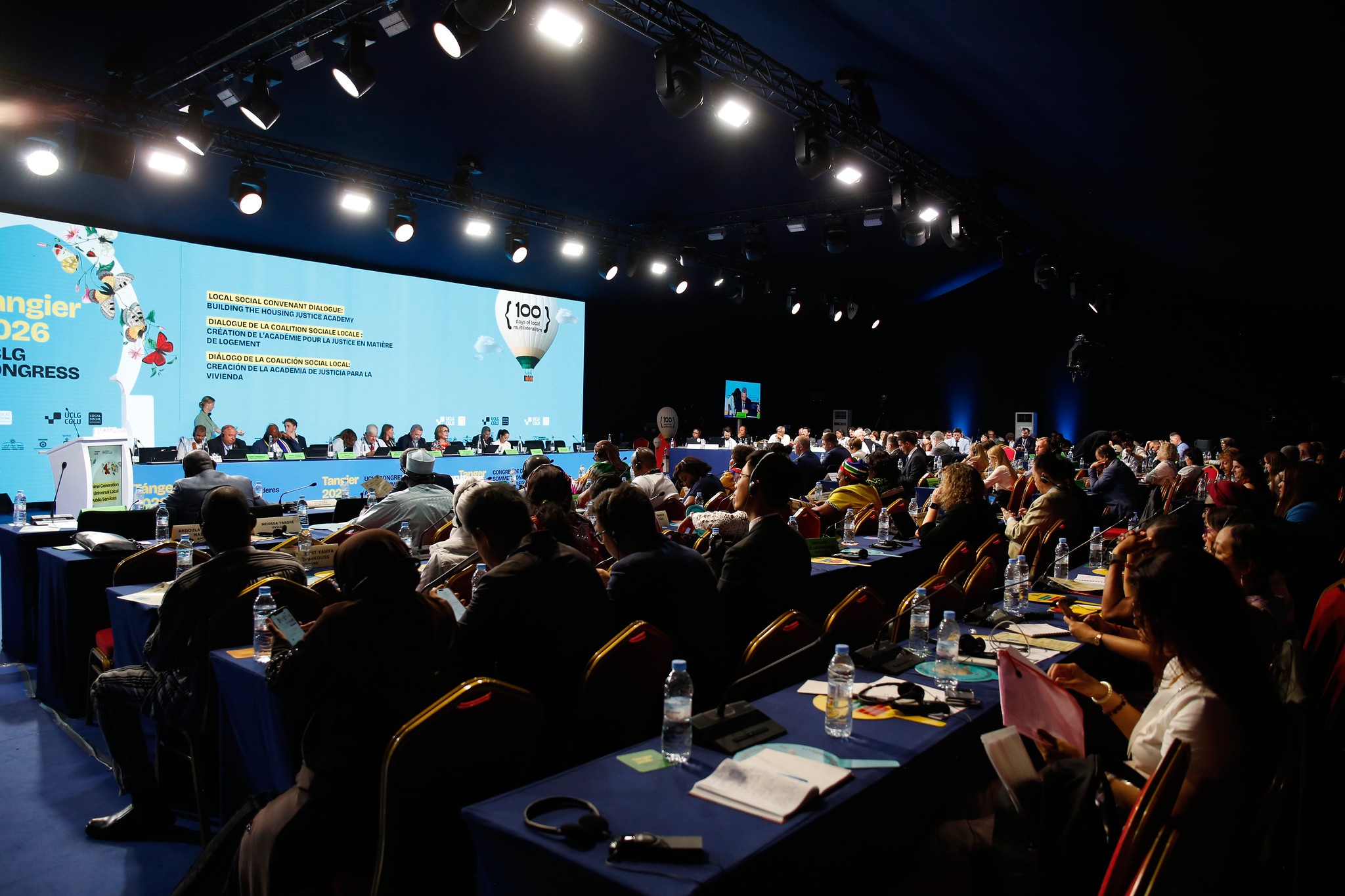
The City of Tangier hosted the 2026 United Cities and Local Governments (UCLG) World Congress and World Summit of Local and Regional Leaders from 22 to 26 June 2026, bringing together local and regional leaders from across the globe to shape a shared vision for the future of their communities. The Council of European Municipalities and Regions (CEMR), as the European section of UCLG, was present throughout the event, with two particularly significant days marking their contribution to the global programme.

Strengthening Europe’s voice in the global arena
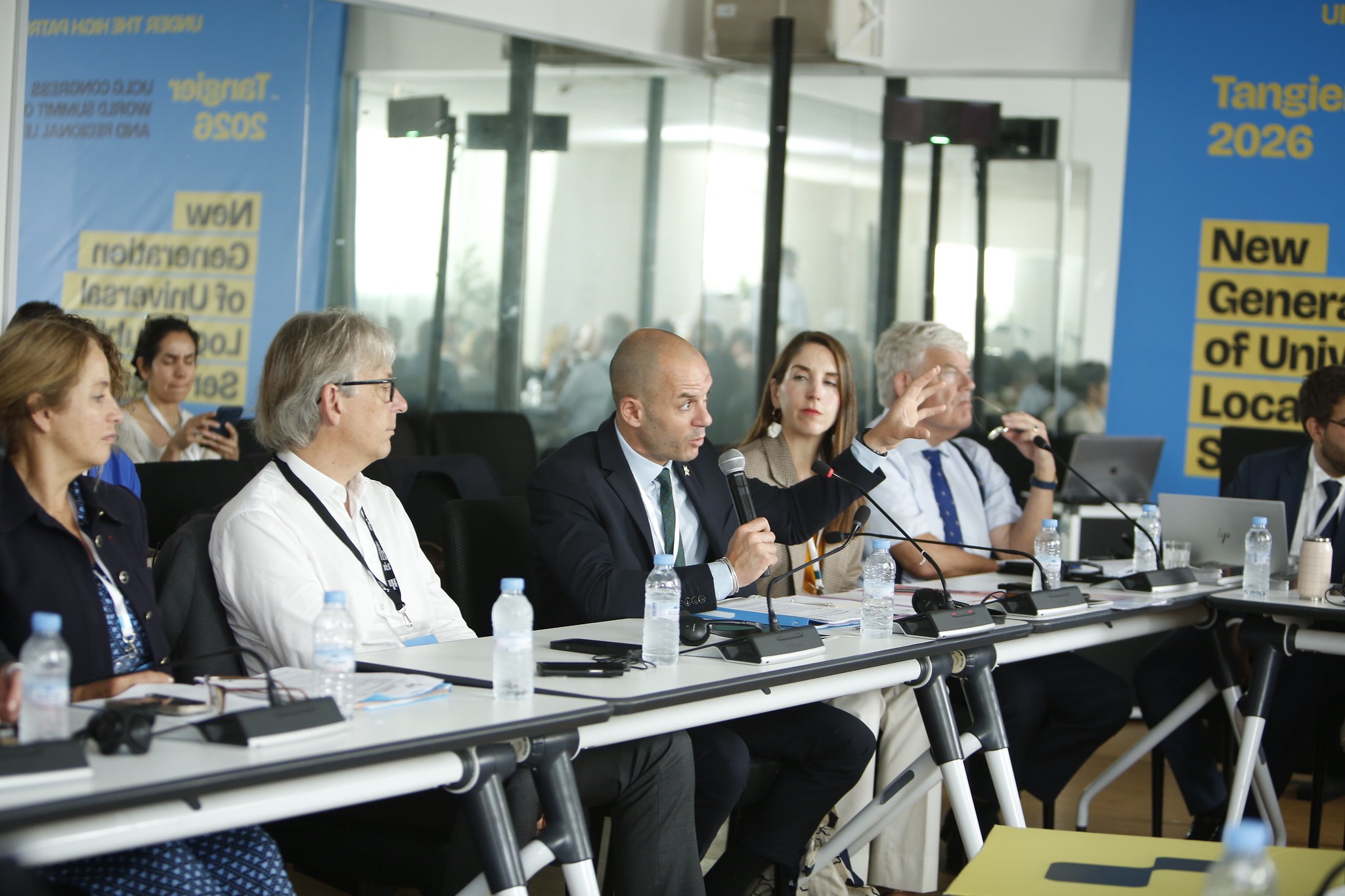
On June 23, CEMR convened the Assembly Track session “From Local Action to Global Impact: Strengthening Multilevel Governance from a European Perspective”. The session brought together local leaders from across the continent to chart European priorities for the 2026–2029 UCLG mandate, explore how local action can feed into global agendas through the Local Social Covenant, and strengthen the role of towns, cities and regions as genuine political partners in global governance.

Participants in the first two panels included Councillors and CEMR spokespersons Carola Gunnarsson and Eider Inuntziaga, as well as Shona Morrisson, Tiit Terik, and André Viola, Deputy Mayor Ursula Sautter and Regional President Marta Prates. Mayor Jan van Zanen, who served as UCLG President until this UCLG Congress, delivered the closing remarks, anchoring the session’s conclusions in a firm commitment to Europe’s role in shaping the next UCLG mandate.

New study on EU Delegations and local governments

On June 24, the third day of the Congress, PLATFORMA and CEMR announced the publication of an upcoming study on how EU Delegations engage with local and regional governments across the globe — the first update to their landmark 2021 report, due to be released in July 2026. Preliminary findings were presented at the session, highlighting opportunities for cooperation as well as ongoing challenges.

By offering a snapshot of how EU Delegations engage with cities, towns, regions and their representative associations under the NDICI–Global Europe framework and the Global Gateway initiative, the session contributed to the broader reflection on EU development policy ahead of the next Multiannual Financial Framework (MFF) for 2028–2034.
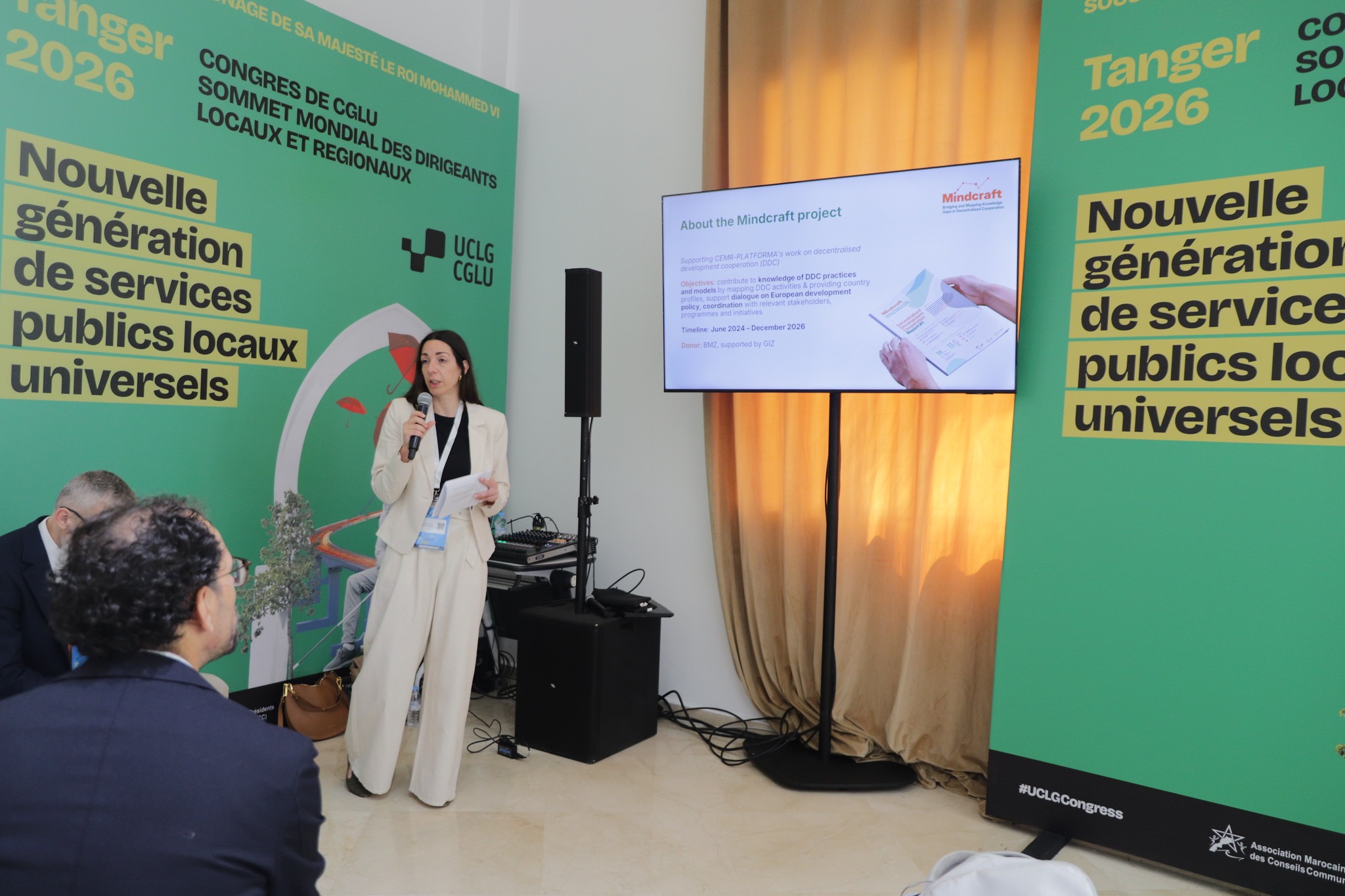
This study is produced in the framework of the Mindcraft project, funded by the German Federal Ministry for Economic Cooperation and Development (BMZ) and supported by Deutsche Gesellschaft für Internationale Zusammenarbeit (GIZ).

Advancing gender equality: the Feminist Municipal Movement

On the same day, the first-ever UCLG Women’s Assembly hosted women mayors, governors, and local leaders to advance gender equality and strengthen the Feminist Municipal Movement globally. CEMR’s Spokesperson on International Affairs, Councillor Carola Gunnarsson, reflected on eight years of progress within UCLG on gender equality — from the earliest proposals to embed gender activities in the UCLG workplan to the organisation’s broader commitment to becoming a Global Feminist Municipal Movement.

Gunnarsson was frank about the work that remains, in particular regarding female representation in upcoming leadership elections.

Gunnarsson stated: “Now it is time for us to strengthen our efforts to support and help all local governments to become Feminist Municipal Movements. Then we can see a real change and also give women and girls the rights to flourish and society the possibility to grow stronger and better for everyone.”

The UCLG Congress in Tangier reaffirmed the central role of European local and regional governments in the global municipal movement, and CEMR’s commitment to ensuring that local voices — in all their diversity — are at the heart of international decision-making.

Renewal of UCLG governance

During the UCLG Congress in Tangier, the governance bodies of the global organisation were renewed.
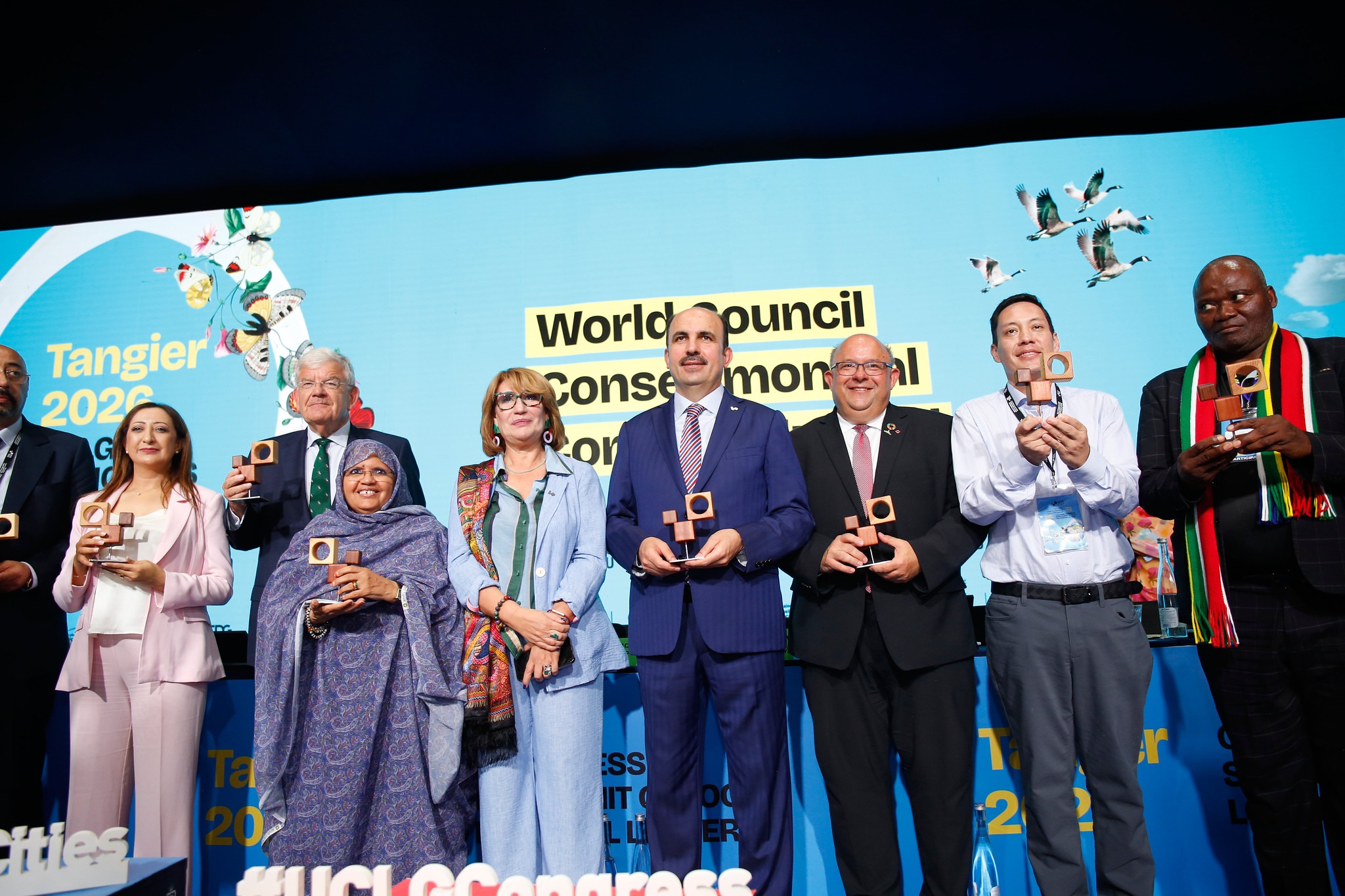
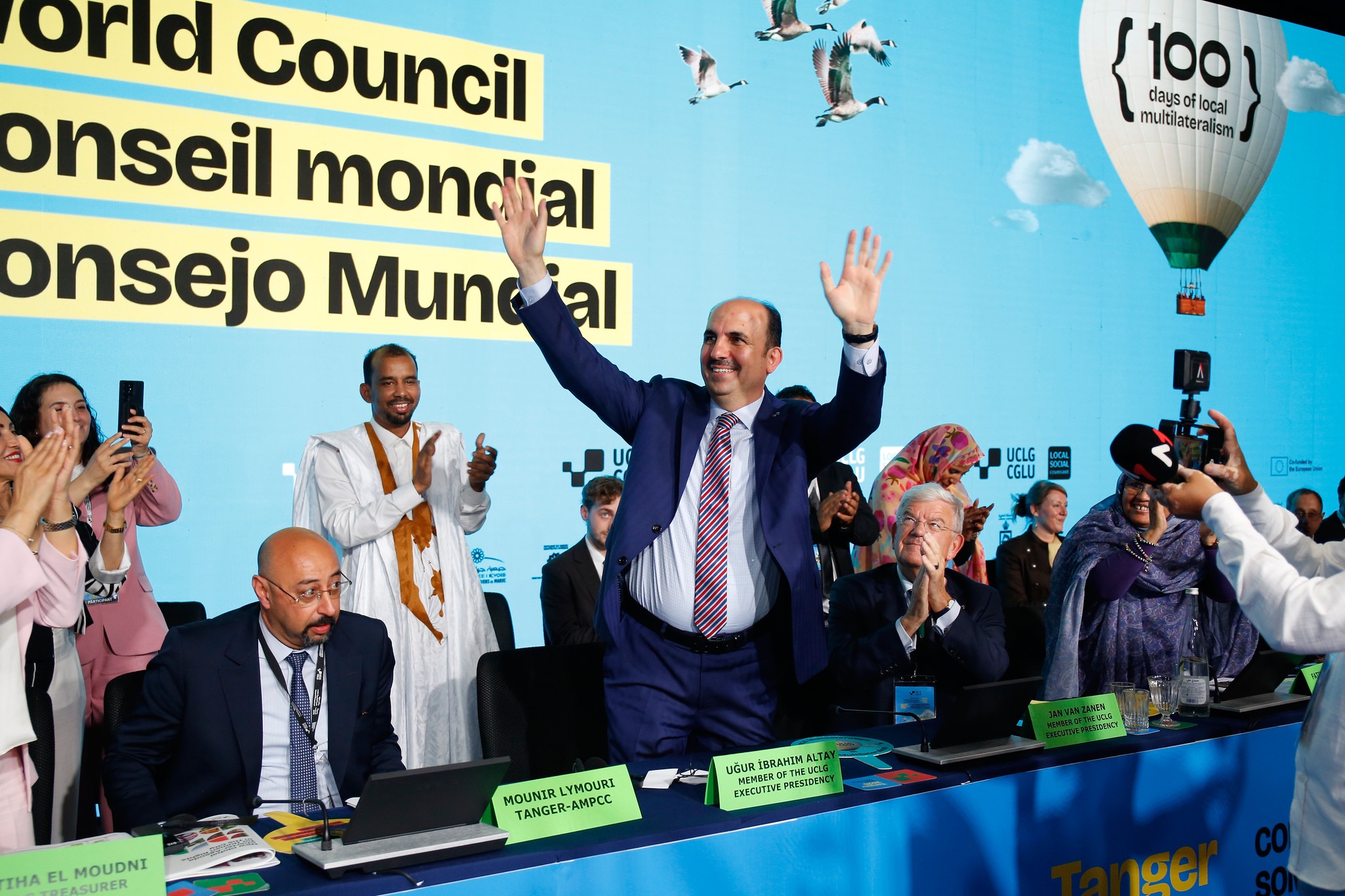
The Mayor of Konya, Uğur Ibrahim Altay, was elected President of UCLG, succeeding the Mayor of The Hague, Jan van Zanen, who served as President from 2024 to 2026.

CEMR warmly congratulates the new presidency and expresses its sincere thanks to the Mayor of The Hague for his work and the excellent collaboration throughout his mandate.

The new UCLG co-presidency was also appointed during the Congress and is composed of Bheke Stofile, President of SALGA; Aysen Nikolaev, Head of the Sakha Republic; Jan van Zanen, Mayor of The Hague; Cristian Zamora, Mayor of Cuenca; and Berry Vrbanovic, Mayor of Kitchener. Fatimetou Abdel Malick, was appointed President of the Standing Committee on Gender Equality and will also serve as Co-President of UCLG.

For more information, contact:

“Cities are laboratories for solutions”

ODELL - News 2026

Pol Morillas (CIDOB), MEP Hanna Jalloul and local leaders reflect on the current geopolitics and its effects in Europe, global disorder, and why local leaders matter more than ever


At a time when global politics is increasingly shaped by power rivalries and zero-sum logic, cities and regions may appear peripheral to the big geopolitical chessboard. But according to Pol Morillas, Director of CIDOB (Barcelona Centre for International Affairs), this perception is deeply misleading.

Speaking at a UCLG gathering of the European section, alongside MEP Hanna Jalloul, Vice-Chair of the European Parliament’s Foreign Affairs Committee, and representatives from municipalities and regions across Europe, Morillas offered a sharp diagnosis of the global moment, and a compelling argument for why local and regional leaders are essential actors in Europe’s response to it.

“We are entering a world we were not built for”

Morillas describes 2026 as the year when “brutal geopolitics” has fully taken shape. 

Pol Morillas - CIDOB

“We are not living in the world the European Union wanted”, he explained. “The open markets, rules-based globalisation, and cooperative multilateralism that Europe championed are giving way to power politics, transactional alliances, and the return of the state as the dominant actor”. 

*Pol Morillas, Director of CIDOB (Barcelona Centre for International Affairs)

This shift goes beyond any single election or leader. While the return of Donald Trump to the White House has accelerated trends, Morillas sees a broader transformation driven by major powers — including China and India — embracing national interest and zero-sum competition. 

In this emerging order, actors are reacting differently. Some are accommodating. Some are resisting, particularly youth movements across the globe. Others are disoriented. 

“And the European Union”, Morillas noted, “is navigating this disorientation”. 

Europe’s three strategic choices

According to Morillas, Europe is currently debating three broad strategies:

  1. Keep the United States engaged, even if it requires tactical appeasement, especially in areas like security and intelligence where Europe lacks full autonomy.
  2. Build new alliances with middle powers such as Japan, India, and Mercosur countries to preserve elements of a rules-based order.
  3. Pursue greater autonomy, particularly in areas like technology and geo-economics — though, as Morillas cautioned, “there is often more talk of autonomy than real action”.

These strategies coexist, sometimes uneasily, as Europe attempts to redefine itself in a harsher global landscape.

But this is only part of the story.

New diplomatic opportunities for cities and regions as “laboratories for finding solutions”

While geopolitics grabs headlines, Morillas argues that some of the most urgent crises are concentrated in cities and regions and that is precisely where their diplomatic relevance lies. “The role of cities and regions will be most important when they are laboratories for finding solutions to crises that are most held in cities and regions”, he said.

He pointed specifically to:

  • Housing
  • Cost of living
  • Energy
  • Youth mobilisation and the response to young people’s demands

“These areas are far away from brutal geopolitics and do not have defence as their main component”, Morillas explained. “They are low-hanging fruits for cities and regions to play an interesting diplomatic role”.

In other words, while states compete over security and strategic dominance, local governments are managing the everyday pressures that shape citizens’ trust in democracy. Their ability to innovate and respond effectively becomes a form of diplomacy in itself.

Youth mobilisation and democratic response

Morillas also underlined a growing global trend: youth resistance to national political systems perceived as unresponsive.

“We are seeing increasing numbers of young people resisting national politics and proposing alternative models of understanding society”, he said.

For cities and regions, this presents both a challenge and an opportunity. Local governments are often the first institutional level confronted with youth demands — from climate action to housing affordability. The quality of their response will shape democratic resilience in Europe.

A multipolar world, including the local level

The global order’s fragmentation is also reshaping inter-city cooperation. The CIDOB director pointed to new forums emerging beyond traditional Western-led networks, including initiatives linked to BRICS+.

“This multipolar world also takes place within regions”, he observed. “European cities and regions need to be aware of these new forums”.

Global alignment is no longer only a matter for foreign ministries. It is increasingly reflected in how cities cooperate, partner, and position themselves internationally.

From consultation to co-decision in Europe

Perhaps most significantly, Morillas sees cities and regions gaining weight within the European architecture itself. “It is not only a question of member states”, he argued. “Cities can play an important role in the European architecture — sometimes only as being consulted but increasingly having something to say about the future of European integration”.

From housing initiatives to urban energy transitions, European policy debates are increasingly touching areas where cities have primary competence.

To advance this agenda, CIDOB has launched the “Local Europe” initiative with the support of Barcelona City Council, aiming to reinforce what Morillas calls “the Europe of cities”.

The underlying message is clear: the future of European integration will not be decided solely in national capitals.

How should local leaders look at the world?

How, then, should local and regional leaders look at the world — and how are they perceived within it? 

The discussion made clear that towns, cities and regions are no longer peripheral actors but central pillars of Europe’s global credibility.

GUNNARSSON Carola

As Carola Gunnarsson, CEMR spokesperson for international affairs and local councillor of Sala, Sweden, underlined also during this session, “municipalities and regions are not merely implementers of European policy. We are co-creators of Europe’s credibility”. 

*Carola Gunnarsson, CEMR spokesperson for international affairs and Lord Mayor of Sala, at the Leaders’ Summit in 2025

In a geopolitical environment marked by ideological confrontation and democratic strain, consistency between local governance and global ambition becomes decisive. “If we would like Europe to be a strong global actor, we must be consistent both internationally and locally”, she stressed.

Echoing this call for coherence, MEP Hanna Jalloul, Vice-Chair of the European Parliament’s Foreign Affairs Committee, underlined the direct impact of EU decisions on citizens’ daily lives.

*MEP Hanna Jalloul, Vice-Chair of the European Parliament’s Foreign Affairs Committee

Yet, she questioned the persistent democratic disconnect: “Why have we reached only 50% participation in European elections?” According to Jalloul, “many citizens don’t fully realise how economic and agricultural decisions taken here directly affect them.”

*MEP Hanna Jalloul, Vice-Chair of the European Parliament’s Foreign Affairs Committee, European Parliament photo

Beyond internal policy, she stressed the importance of consistency in Europe’s external action. “We speak of peace, but our multilateral system — which we’ve defended since 1945 — must be consistent.” In a challenging geopolitical environment, she argued, the European Union must align its commercial priorities and strategic autonomy with its foundational values.

When democratic disconnect reaches the local level

This disconnect between European decision-making and citizens’ perception, participants warned, does not remain abstract. When people feel that decisions are distant, unclear or inconsistent with proclaimed values, frustration grows — and it often manifests first at the local level.

As highlighted by Eider Enunciaga, spokesperson for local democracy at CEMR and representative of Bilbao City Council, local leaders are increasingly experiencing hostility and intimidation — both offline and online. “The future of our democracies in Europe is at stake here,” he stressed, noting that geopolitical tensions, disinformation and polarisation are directly affecting municipalities and regions.

*Eider Enunciaga, spokesperson for local democracy at CEMR and representative of Bilbao City Council, at the CEMR event on the launch of the European Observatory

In response to this growing pressure, CEMR, together with the City of Bilbao, Bocconi University and the Basque Association of Municipalities, has launched the European Observatory for Democracy at the Local Level. The initiative aims to gather data on threats against local representatives, identify emerging trends and better understand the drivers behind attacks on democratic institutions.

“By strengthening democracy at the local level, we are also strengthening the European project,” Enunciaga concluded.

For more information, contact:

UCLG World Council in Xi’an

European cities and regions unite for peace and cooperation in Xi’an


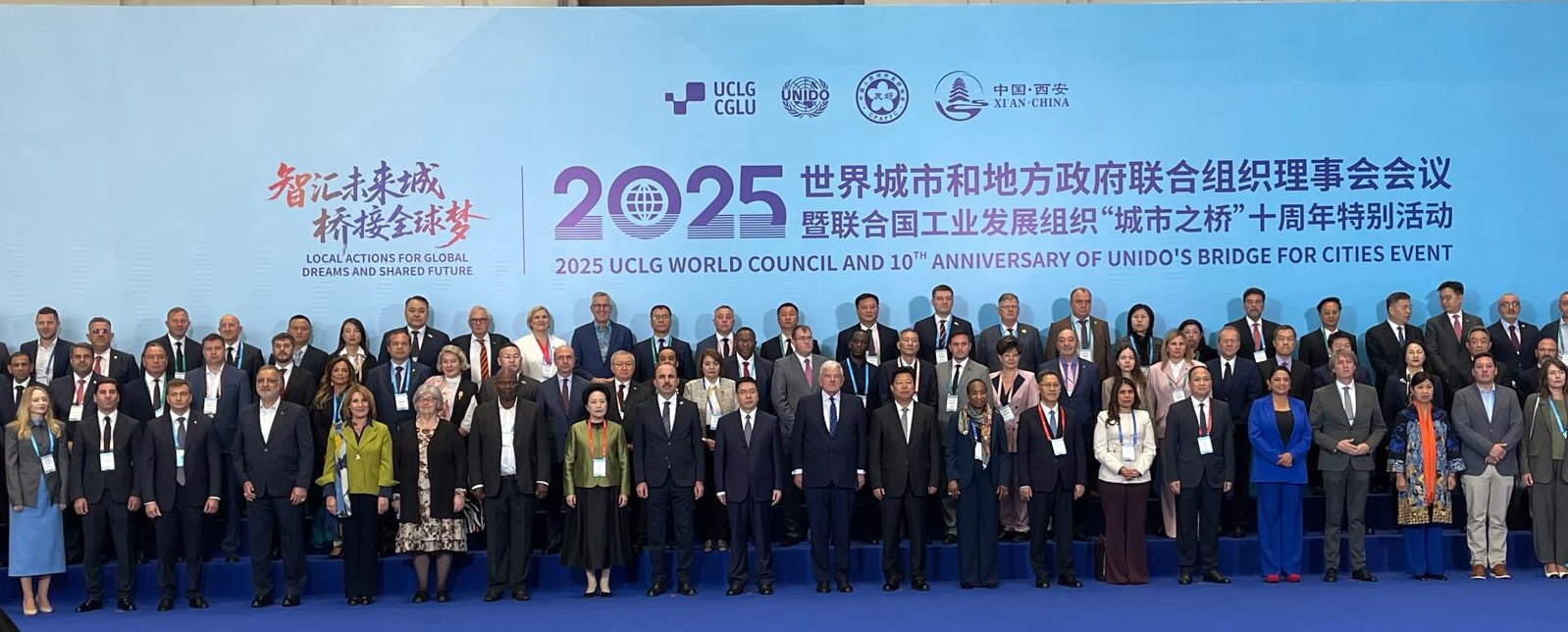
As the European section of UCLG, CEMR took part in the UCLG World Council, hosted in Xi’an, and held in synergy with the 10th anniversary of the United Nations Industrial Development Organisation’s (UNIDO) “Bridge for Cities” initiative. Under the motto “Shaping Communities for Current and Future Generations,” the summit brought together more than 300 participants from over 80 cities and local government networks.

The UCLG World Council was also an occasion for European local and regional representatives to engage with counterparts from around the world. During the European caucus meeting, CEMR members exchanged with Bernadia Irawati Tjandradewi, UCLG Asia-Pacific Secretary General, the priorities and potential areas of cooperation, particularly on gender equality.

The opening session, co-organised with UNIDO, reaffirmed the importance of collaboration between cities and international institutions. A joint statement was signed between UCLG, UNIDO and the city of Xi’an to deepen technical cooperation and capacity-building programmes. Speakers underlined that local transformation can only succeed when communities are fully involved as partners, not just beneficiaries.

CEMR also participated in the Bridge for Cities High-Level Plenary, which focused on innovation, sustainable urban development and the contribution of local leadership to global agendas.

During the World Council,  a new call for action open to all local and regional governments was approved. Under the title “Call for action on peace and reconstruction”, it expresses the commitment of local and regional governments to peace, human rights and reconstruction, particularly in territories affected by armed conflict. It builds on the values of the Pact for the Future of Humanity — People, Planet and Government — and highlights the unique role of cities in rebuilding coexistence and social ties.

By representing the European perspective and emphasising the key role of cities, towns and regions in democratic resilience and inclusive development, CEMR helped to reinforce this global movement and reaffirm the role of local governance in shaping peaceful and sustainable societies.

For more information, contact:

UN – Pact for the Future

United Nations Pact for the Future: A Seat for the LRGs


On 22-23 September 2024, the United Nations will organise the Summit for the Future where the UN Pact for the Future should be adopted. This document aims to better prepare our multilateral systems for the current and future challenges. It is also a great opportunity for our constituency of Local and Regional Governments (LRG) at the United Nations to advocate for strengthening LRGs engagement in intergovernmental processes. As of today, the document is still being negotiated between the different members of the UN.

In collaboration with UCLG and the Global Taskforce of Local and Regional Governments, CEMR is an advocation for supporting a reference in Chapter 5 of the UN Pact for the Future on “Transforming global governance” to “strengthen the engagement of local and regional authorities in United Nations intergovernmental bodies and processes”.

To support this initiative, the CEMR President, Ms Gunn Marit Helgesen has already sent four letters to:

  • The President of the European Commission;
  • The President of the European Council;
  • The High Representative of the Union for Foreign Affairs and Security Policy;
  • The EU Ambassador to the UN in New York (where the Summit of the Future will be held).

In addition, to strengthen our impact and maximise our chances of securing that the aforementioned reference is included in the final draft of the Pact for the Future, all CEMR members have been invited to send a letter on their behalf to their respective Ministry of Foreign Affairs and their permanent representation to the United Nations in New York before the end of June.

For more information about how to get involved in this advocacy action please get in touch with CEMR Attaché to Secretary General Martin Ravault martin.revault@ccre-cemr.org

City-Culture 21 Award 

City Award - News 2024

UCLG Culture Committee Launches 6th UCLG-Mexico City-Culture 21 Award


The Culture Committee of the United Cities and Local Governments (UCLG) announces the launch of the call for applications for the prestigious 6th UCLG-Mexico City-Culture 21 Award. This biennial award recognises outstanding projects and good practices led by cities, Local and Regional Governments and individuals that significantly promote cultural rights for sustainable local development.

  • About the Award:

The UCLG-Mexico City-Culture 21 Award highlights initiatives that champion cultural rights, fostering sustainable development at the local level. By celebrating innovative projects, the award aims to inspire and promote best practices in the realm of cultural sustainability.

  • Application Process:

The application process for Local and Regional Governments is divided into two phases:

Phase 1: Cities, Local and Regional Governments are invited to submit partially completed application forms, focusing on the highlighted fields, before 16 February 2024.

Phase 2: The finalists will be invited to submit their complete candidacy by sending the filled application form by 3 April 2024.

  • Jury Deliberation:

The distinguished Jury will convene for its final meeting in May 2024 to assess the submissions. The winner(s) of the 6th UCLG-Mexico City-Culture 21 Award will be announced in May 2024. The Award Ceremony is scheduled to take place in July or September 2024.

  • Learn More:

For detailed information on the award and the application process, please visit https://www.agenda21culture.net/award 

Pact for the Future

UCLG - News section

​​UCLG Congress adopts the ‘Pact for the Future’


Mayors, local and regional leaders from across Europe have adopted the ‘Pact for the Future‘, a key strategic document defining UCLG’s priorities from 2022 to 2028. 

The visions and aspirations reflected in the Pact will be shaped into actionable commitments throughout 2023 and serve as the strategic vision for the World Organisation in the coming years. Motions presented by all members will further deepen the policy visions and serve as a reference to the inputs of the whole local and regional government constituency represented by the Global Taskforce. 

Three political leaders have been appointed as Ambassadors for the Pact for the Future: Ada Colau, Mayor of Barcelona as Ambassador for the Future of People; Anne Hidalgo, Mayor of Paris as Ambassador for the Future of the Planet; Yücel Yilmaz, Mayor of Balikesir as Ambassador for the Future of Government. 

UCLG Leadership

UCLG - Banner

Discover Europe’s key appointments to UCLG’s new political leadership


Now that the curtains have just closed on the Congress of United Cities and Local Governments, discover Europe’s key appointments to our global network’s new political leadership.

Jan Van Zanen, UCLG President (Oct.2024/2025), Mayor of  The Hague
Carlos Martinez Minguez, UCLG Special Envoy for the New Urban Agenda, Mayor of Soria
Anne Hidalgo, UCLG Ambassador for the Future of the Planet, Mayor of Paris
Ada Colau, UCLG Ambassador for the Future of People, Mayor of Barcelona

Escalation of war against Ukraine

Escalation of war against Ukraine Declaration

European local leaders condemn renewed Russian attacks and pledge solidarity with Ukrainian cities and communities


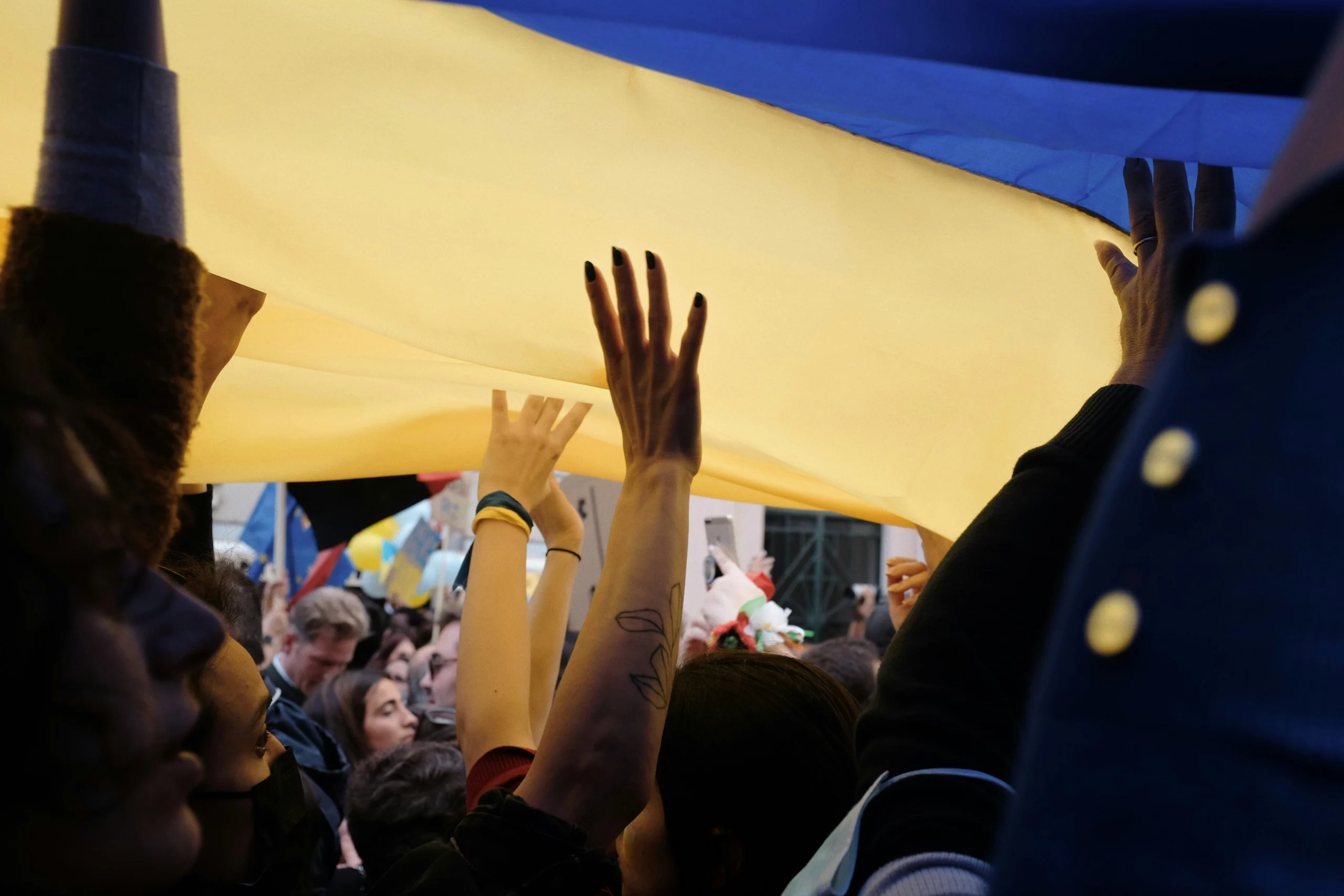
Meeting in Daejeon at the 7th UCLG World Congress and Summit of Local and Regional Leaders, European mayors and councillors expressed their deepest indignation at the recent escalation of Russia’s war against Ukraine. The renewed wave of violence continues to bring devastation to civilian populations and destruction to Ukrainian municipalities. 

Condemning Targeted Attacks 
The declaration strongly denounces deliberate strikes on civilians, including women and children, in violation of the Geneva Conventions. Equally condemned is the destruction of essential urban infrastructure, which deprives communities of the basic services needed to survive in wartime. 

Solidarity with Ukraine 
Local and regional leaders across Europe reaffirm their solidarity with Ukraine’s people, mayors, councillors, and associations of local governments who continue their work under extreme conditions. These partnerships are vital to ensuring communities can endure today’s challenges and prepare for tomorrow’s recovery. 

Shared Values 
The declaration recalls the core values upon which Europe is built—peace, democracy, justice, equality, inclusion, and dialogue. By standing with Ukraine, Europe also defends international law and human rights. 

A Call to Action 
European municipalities are invited to strengthen ties with Ukrainian peers through partnerships, twinning, and reconstruction efforts. The declaration also appeals directly to local leaders worldwide, and especially in Russia, to condemn the war and join the call for peace. 

Reconstruction will require joint efforts. The declaration highlights the need for European institutions to support rebuilding Ukrainian infrastructure through city-to-city cooperation, aligning with Ukraine’s Fast Recovery Plan. European local and regional leaders reaffirm their readiness to work hand-in-hand with Ukrainian communities, ensuring that from the ruins of war, democracy and peace prevail. 

Read the declaration here 

For more information, contact: 

GOLD VI report

UCLG - News

Toward urban and territorial equality


The 6th Global Observatory on Local Democracy & Decentralization Report, otherwise known as GOLD VI, has just been launched at UCLG Congress in Daejeon (South Korea)!

The focus is on the six pathways to urban and territorial equality, addressing inequalities through local transformation strategies.

Take a look at it here!

UCLG World Congress 

South Korea - News Section

Come to Daejeon and take part in the largest gathering of local leaders!


Take part in the largest gathering of mayors, presidents of associations, local elected officers, and practitioners from around the world, from 10 to 14 October 2022 in Daejeon (South Korea).

Convened by United Cities and Local Governments (UCLG) and for the first time hybrid, the World Summit of Local and Regional Leaders and World Congress will be the heart of the municipal movement with thousands of elected officials, members of the civil society, partners and other stakeholders.  

In 2022, the Congress’ programme will be based around different tracks, namely the “Local Action” track, the “Town Hall” track, the “Statutory” track, the “Assembly” track and the “Daejeon” track. Those will echo the components of the “Power of We”, the power of the municipal movement to break through as one.

Daejeon will also allow you to experience the culture, community, and public service associated with digital technology.

For more information on the Congress and how to register, click here. Please note that early bird registration ends on 31 August. Also make sure to sign up here for the latest news leading up to Daejeon 2022.